Timeline
Every post and feed across this instance
-
« L’IA paie enfin : près d’une entreprise sur deux crée de la valeur avec »
L’année dernière, l’histoire de l’IA en entreprise était celle d’une petite élite qui prenait de l’avance sur une majorité en difficulté. La recherche 2025 du Boston Consulting Group montrait que seuls 5% des entreprises en tiraient une valeur substantielle, tandis que la plupart ne constataient que des retours minimes. En 2026, ce tableau a changé.
-
Blocage du lycée Maryse Condé à Sarcelles : « J'ai jamais vu un chauffage marcher »

-
Avec les manutentionnaires de robotaxis | Hubert Guillaud
Derrière l'autonomie des voitures qui semblent circuler par elles-mêmes, se cache toute une économie invisible de gens chargés de mettre à jour les voitures, de les nettoyer, de les récupérer… comme les trottinettes en libre service ou les vélos ont leurs armées de juicers et autres réparateurs dédiés. Source: Dans les algorithmes -
Des fibres à la place des laxatifs : quand l'alimentation remplace les médicaments polluants

Un établissement public de santé mentale de l'Aube a réussi à drastiquement diminuer la consommation de médicaments, pour le mieux-être des résidents. Et ce, en adaptant seulement les petits-déjeuners.
Lire la suite - Reportage / Santé
Brienne-le-Château (Aube), reportage
Line se régale d'un bol de porridge d'avoine au chocolat. Il présente un triple avantage : il est gourmand, il contient des fibres pour combattre la constipation et « au moins, on n'a plus de médicament dans le derrière », commente la résidente (…) -
« Dots » : OpenAI lance des agents IA autonomes qui travaillent 24 h/24
Ce qu'il faut retenir :
- OpenAI a annoncé le 29 septembre 2026 les « dots », des agents IA propulsés par GPT 6 Astra, dotés d'un ordinateur et d'un navigateur dans le cloud, et capables de travailler en continu, 24 h/24 et 7 j/7.
- Les dots se connectent à plus de 4 000 applications via l'écosystème de plugins d'OpenAI et restent joignables dans ChatGPT, par SMS, sur Slack, sur Teams ou par appel vocal, en conservant le contexte d'un canal à l'autre.
- Le premier dot est inclus sans surcoût dans les forfaits Pro et Business Premium sur les marchés éligibles, tandis que les clients Enterprise, Edu et Healthcare y accèdent en bêta si leur administrateur l'active.
- OpenAI cite l'exemple d'un dot qui extrait des clips d'un entretien, rédige les notes et les posts sociaux, puis répercute les corrections : de quoi revoir certains workflows éditoriaux, avec une validation humaine à chaque étape sensible.
OpenAI présente les dots, des agents qui travaillent en continu
Le 29 septembre 2026, OpenAI a publié sur son site un article intitulé « Découvrez les dots », en marge de son annonce OpenAI DevDay 2026. L'entreprise y présente une nouvelle catégorie d'agents intégrés à ChatGPT, qu'elle décrit comme toujours actifs et conçus pour tout prendre en charge. Pour rappel, un agent IA est un système capable d'enchaîner des actions (naviguer sur le web, utiliser des outils, produire des fichiers) pour atteindre un objectif, là où un chatbot classique se contente de répondre à une requête.
La promesse d'OpenAI repose sur la continuité. Un dot apprend ce qui compte pour son utilisateur, tient compte de ses retours au fil du temps et avance sur ses objectifs jour et nuit. L'éditeur met en avant la possibilité de recevoir un travail réalisé « comme vous l'auriez fait », avant même de l'avoir demandé.
Les dots fonctionnent avec GPT 6 Astra. Chaque utilisateur peut dès maintenant nommer et personnaliser son dot. OpenAI indique aussi imaginer, à terme, des équipes de dots travaillant ensemble pour une même personne.
Chaque dot dispose d'un ordinateur, d'un navigateur et de 4 000 applications
Un équipement comparable à celui d'une nouvelle recrue
OpenAI compare le dot à un nouveau collaborateur qui arriverait avec presque tout le nécessaire. D'après l'annonce, il dispose de plusieurs ressources :
- Identité propre : le dot a ses propres accès et autorisations, distincts de ceux de l'utilisateur.
- Ordinateur et navigateur dans le cloud : il travaille sur une machine distante, que l'utilisateur peut consulter à tout moment pour examiner son travail.
- Code : il peut écrire et tester du code quand la tâche l'exige.
- Accès aux appareils : sur autorisation explicite, il peut se connecter à l'ordinateur portable de l'utilisateur et l'utiliser directement.
- Plugins : l'écosystème de plugins d'OpenAI lui ouvre l'accès à plus de 4 000 applications.
Un même dot peut mener plusieurs projets en parallèle. OpenAI insiste sur la possibilité de lui confier de nouvelles tâches sans multiplier les fils de discussion ni guider chaque étape.
ChatGPT, SMS, Slack, Teams et appel vocal
On échange avec un dot dans ChatGPT (web, mobile et application de bureau), mais aussi par SMS, sur Slack et sur Teams. Il est également possible de l'appeler pour lui parler de vive voix. Le contexte est conservé d'un canal à l'autre : un projet lancé dans ChatGPT peut être précisé par SMS, puis complété dans Slack.
La communication fonctionne dans les deux sens. Le dot peut écrire de lui-même pour faire un point d'avancement, poser une question ou soumettre une décision. Les abonnés Pro peuvent par ailleurs s'inscrire sur une liste d'attente, aux places limitées, pour échanger via iMessage et RCS (le standard de messagerie enrichie qui succède au SMS sur Android).
OpenAI illustre les dots par des cas d'usage métier
L'annonce décrit cinq scénarios types, tous fournis par OpenAI :
- Développement : le dot repère les demandes récurrentes dans les retours clients, développe et teste de petites corrections, puis soumet des pull requests (propositions de modifications de code à valider) accompagnées de vidéos montrant les changements.
- Lancement produit : quand le périmètre d'un produit évolue, le dot analyse l'impact sur le discours, révise les supports et prépare des propositions de modifications.
- Recherche scientifique : à l'arrivée de nouvelles données, il relance les analyses, met à jour les figures d'un article et signale les conclusions qui changent.
- Vente en entreprise : il compare les exigences d'un client à la documentation produit, réalise une preuve de concept et actualise la proposition commerciale au fil des tests.
- Production de contenu : à partir d'une transcription d'entretien, il repère les passages à extraire en clips, prépare les notes de l'émission et rédige des posts pour les réseaux sociaux, qu'il soumet ensuite à validation.
OpenAI décrit aussi ses propres usages internes. Un bug signalé sur Slack déclenche une enquête des dots, une maquette est transformée en application fonctionnelle, un cycle de planification est suivi pour tenir les délais. L'entreprise mentionne enfin le cas d'un premier testeur externe : son dot a remarqué qu'une publication n'avait pas été facturée, a préparé la facture et l'a envoyée après approbation.
Ces exemples restent toutefois déclaratifs. L'annonce ne s'appuie sur aucun chiffre de productivité ni sur des tests indépendants.
 Présentation des dots - Source : OpenAI
Recherche proactive, règles et approbations encadrent l'autonomie des dots
Une recherche proactive limitée à la lecture seule
Quand l'utilisateur ne travaille pas activement avec lui, le dot cherche des moyens de l'aider en arrière-plan. OpenAI appelle ce mode la « recherche proactive ». Dans ce cadre, il utilise les applications déjà connectées, mais avec des outils limités à la lecture seule : il ne peut ni envoyer de messages, ni modifier le contenu des applications, ni contrôler le navigateur ou l'ordinateur de l'utilisateur.
Les protections annoncées par OpenAI
L'annonce détaille plusieurs mécanismes de contrôle :
- Séparation des environnements : l'ordinateur de l'utilisateur reste séparé de celui du dot, sauf connexion volontaire.
- Mots de passe : pour se connecter aux sites compatibles, le dot peut utiliser des mots de passe enregistrés sans que le modèle y ait accès en clair.
- Surveillance : des protections visent à contrer les instructions malveillantes, et le système de surveillance peut suspendre ou arrêter un dot en cas de problème de sécurité.
- Règles personnalisées : l'utilisateur peut autoriser des actions précises, les soumettre à approbation ou les bloquer, en plus des règles intégrées par défaut.
- Vérification automatique : les actions susceptibles d'affecter des comptes ou de partager des informations sont contrôlées au regard des instructions, des règles et des exigences de sécurité.
- Vue Activité : elle permet de suivre l'avancement, y compris le travail réalisé en arrière-plan, et de réorienter le dot.
Certaines tâches sensibles, comme la modification d'un mot de passe, restent toujours à la charge de l'utilisateur. OpenAI reconnaît par ailleurs que les dots peuvent se tromper et recommande de vérifier tout travail aux conséquences importantes.
Les règles d'utilisation des données
Par défaut, OpenAI n'utilise pas le contenu des espaces ChatGPT Business, Enterprise et Edu pour entraîner ses modèles. Sur les forfaits personnels, l'utilisateur choisit si ses conversations et le travail de son dot peuvent servir à l'amélioration des modèles. L'entreprise précise ne pas entraîner directement ses modèles sur la recherche proactive ni sur les notes que le dot prend pour lui-même. Les informations qui en sont issues peuvent toutefois être utilisées si elles alimentent une conversation ou une tâche admissible, selon les paramètres choisis.
Des dots spécialisés sont testés en entreprise avec Microsoft
À côté du dot personnel, OpenAI propose à un nombre limité d'entreprises un aperçu des « dots spécialisés ». Ceux-ci n'agissent pas pour le compte d'une personne : ils assument une responsabilité définie au sein de l'organisation, avec leur propre identité, leurs identifiants et leurs accès aux systèmes nécessaires.
OpenAI s'appuie sur des tests internes menés dans plusieurs domaines : achats, traitement des factures, marketing par e-mail, service client et gestion des contrats commerciaux. Le lancement passe par des projets pilotes ciblés, durant lesquels les équipes d'ingénierie d'OpenAI définissent avec chaque organisation les responsabilités du dot, ses outils et les modalités de validation humaine.
L'entreprise annonce aussi une collaboration avec Microsoft pour intégrer les dots spécialisés aux contrôles de gouvernance et de sécurité d'Agent 365, l'outil de Microsoft dédié à la gestion des agents en entreprise. L'objectif affiché est de permettre aux organisations de piloter les dots avec les outils Microsoft qu'elles utilisent déjà. L'annonce ne donne pas de calendrier pour cette intégration.
Le premier dot est inclus dans les forfaits Pro et Business Premium
Le déploiement commence dès l'annonce dans ChatGPT, pour les utilisateurs Pro et Business Premium sur les « marchés éligibles », dont la liste n'est pas détaillée dans l'article d'OpenAI. Les clients Enterprise, y compris Edu et Healthcare, peuvent tester la version bêta si l'administrateur de leur espace de travail l'active.
Les conditions tarifaires se résument ainsi :
- Premier dot : inclus sans frais supplémentaires dans le forfait Pro ou Business Premium, et disponible en continu pour discuter et suivre les sujets de l'utilisateur.
- Tâches approfondies : le forfait comprend un quota dédié, avec des limites étendues pendant le premier mois suivant le lancement.
- Évolutions prévues : il sera possible d'ajouter des dots et d'augmenter la capacité de chacun, en accélérant son rythme ou en relevant le volume de travail mensuel.
- Limites d'usage : les conversations avec le dot ne sont pas décomptées des limites de ChatGPT, mais les tâches qu'il lance dans Codex (l'agent de programmation d'OpenAI) ou dans ChatGPT Work le sont, comme d'habitude.
Pour démarrer, il faut créer son dot depuis l'application de bureau ChatGPT ou le navigateur d'un ordinateur, puis connecter ses applications. L'échange par l'application mobile n'est possible qu'après cette configuration initiale.
Les équipes SEO et contenu ont plusieurs raisons de suivre le sujet
Quid de l'annonce d'OpenAI pour le secteur du SEO ?
Le scénario « production de contenu » décrit par OpenAI se transpose assez directement aux métiers éditoriaux : un agent qui connaît la ligne éditoriale, décline un contenu source sur plusieurs formats et répercute les corrections sur l'ensemble des supports. La recherche proactive pourrait aussi servir à la veille, à condition que les outils utilisés par les équipes SEO (Search Console, outils de suivi de positions, CMS) soient disponibles parmi les 4 000 applications connectables. L'annonce n'en publie pas la liste.
L'autre enjeu concerne les éditeurs de sites. Les dots naviguent sur le web avec leur propre navigateur et peuvent se connecter aux sites compatibles avec des mots de passe enregistrés. Autrement dit, une part croissante des visites pourrait venir d'agents agissant pour le compte d'utilisateurs, plutôt que d'humains. OpenAI ne précise pas comment ce navigateur s'identifie auprès des sites (user agent, respect du robots.txt, adresses IP), ni la façon dont un dot sélectionne les sources qu'il consulte lorsqu'il mène une recherche. Deux informations qui conditionnent à la fois la mesure de ce trafic et la visibilité des contenus auprès de ces agents.
L’article "« Dots » : OpenAI lance des agents IA autonomes qui travaillent 24 h/24" a été publié sur le site Abondance.
-
Firefox change radicalement de design, avec sa plus grande mise à jour depuis 5 ans

Mozilla a lancé ce mardi 29 septembre Firefox 157, qui active pour tous le nouveau design Nova sur ordinateur et sur mobile. C'est le plus gros changement d'interface du navigateur depuis Proton, en 2021.
-
SlopTotal - Un détecteur de texte IA à installer chez vous
SlopTotal est un projet qui se présente lui-même comme le "VirusTotal du texte IA", alors faut pas s'étonner que ça m'intéresse ! Vous y collez un texte, un PDF ou une URL, et ensuite 23 détecteurs le passent au crible, en parallèle à l'aide de classifieurs neuronaux, de tests statistiques et autres heuristiques. Ensuite, un score calibré de 0 à 100 résume leurs avis et doit vous dire normalement si tel ou tel texte a été écrit avec de l'IA

J'ai donc installé ça sur ma machine puis passé 36 textes divers et variés (IA et humains) dans mon instance. Parmi eux, 24 ont été écrits par Claude, ChatGPT et Gemini (12 en français, 12 en anglais), avec comme consigne d'avoir un ton neutre, et pour d'autres un ton de "blogueur" ^^. Les 12 autres textes, eux, sont humains. Je lui ai donné 6 de mes articles écrits entre 2018 et 2021 ainsi que 6 billets de blog tech en anglais publiés entre 2020 et 2021.
Voici donc mes résultats...
Sur les 12 textes humains, 4 ont été pris pour de l'IA (verdict "Likely AI-generated" ou pire), ce qui représente 33 %, et ils étaient tous en anglais !! Et sur mes 24 textes écrits par une IA, 9 ont été pris pour une réalisation humaine (verdict "Clean"), ce qui équivaut à 38 %. Ah et ils étaient tous en français.
Le README annonce pourtant mieux comme résultats donc je suis assez étonné (1 texte humain sur 66 classé "Likely AI"), mais sur d'autres genres de textes, comme la presse ou les livres et en 100% english. Alors oui, mon échantillon est petit, mais pour savoir si un texte vient d'une IA, SlopTotal ne me semble pas fiable

Le rapport de SlopTotal pour un article de 455 mots écrit par Claude : 23,6 sur 100, verdict "Clean", 4 moteurs sur 23 en alerte.

Le rapport de SlopTotal pour un billet du blog d'avril 2020 : 56,9 sur 100, "Likely AI-generated", 9 moteurs sur 23 en alerte.
Après c'est pas un nouveau problème car je pense par exemple à OpenAI qui a retiré son propre classifier en juillet 2023 parce que la précision était trop faible ( The Register ). Vanderbilt a débranché également celui de Turnitin le mois suivant et des chercheurs de Stanford ont testé en 2023, 7 détecteurs en leur faisant analyser 91 rédactions humaines TOEFL de non-anglophones et en moyenne, ils en ont pris 61 % pour de l'IA.
Toutefois, 2 études plus récentes ont également testé des détecteurs commerciaux (pas SlopTotal donc...), et sur du texte humain ancien, elles se rejoignent. Le NBER trouve par exemple un taux de faux positifs quasi nul chez Pangram, de 0,1 à 0,3 % chez OriginalityAI et d'environ 0,7 % chez GPTZero, sur 1 992 textes humains d'avant 2020. De son côté, le chercheur Jonathan Karr et ses collègues n'ont trouvé aucun positif IA en testant avec Pangram et GPTZero, des tonnes de résumés textes datés de 2013 à 2015.
Par contre, ces études divergent sur l'humanisation. Par exemple, selon le NBER, Pangram tient bon face à l'humanizer StealthGPT alors que moins de 4 % des textes IA passés par Undetectable AI restent signalés chez Karr. Ce dernier note aussi qu'à l'inverse, un résumé écrit par un humain et simplement retouché par une IA est quant à lui, signalé comme IA dans 38 à 80 % des cas. Ça pourrait expliquer pas mal de petits problèmes de "littérature" qu'on a en ce moment, looool.
Bref, installez-le pour vous faire votre propre idée, en commençant par des textes dont vous connaissez l'auteur, mais surtout pas pour "accuser" quelqu'un. Je pense d'ailleurs qu'aucun détecteur ne devrait être la seule preuve d'une accusation... Par exemple, un texte humain qui est passé dans un correcteur orthographique full IA ou alors un texte qui est dicté avec un modèle de speech to text IA peuvent très bien être reconnus comme étant des textes IA alors qu'en fait ce sont juste des textes écrits / dictés par des humains et qui ont été "un peu" modifiés ou "un peu" réorganisés par un LLM. Je dis ça parce que c'est exactement ce que fait mon application de reconnaissance vocale Kassis , qui dispose de fonctionnalités de correction et de réécriture... héhé.

Source : SlopTotal sur GitHub
-
Le virage « catholique et réactionnaire » d'une association de randonnée pour jeunes

Liens avec le milliardaire réactionnaire Pierre-Édouard Stérin, dérive religieuse, course à la rentabilité... D'anciens membres de l'association Seuil, qui aide à la réinsertion des jeunes grâce à de longues randonnées, dénoncent une gestion au détriment des adolescents.
Lire la suite - Enquête / Politique , Social
« En revenant, j'étais métamorphosée, calme, bosseuse, j'ai eu mon permis, j'ai avancé, évolué. J'étais plus forte et fière de moi. » Quand Léa, aujourd'hui 25 ans, se souvient de sa marche de plusieurs mois organisée (…) -
L’analyse d’impact sur les droits fondamentaux face aux actualités

La mise en œuvre de l’analyse d’impact sur les droits fondamentaux s’impose désormais comme la pierre angulaire de la conformité des systèmes d’intelligence artificielle (« système(s) d’IA »).
Le 7 septembre 2026, à l’ouverture de la 63e session du Conseil des droits de l’homme à Genève, le Haut-Commissaire de l’ONU aux droits de l’homme, Volker Türk, a qualifié le développement incontrôlé de l’intelligence artificielle de « risque existentiel pour l’humanité » (1).
Cette annonce, bien qu’intervenant dans un contexte relatif aux systèmes d’armes autonomes létales (2), souligne la nécessité de fixer des garde-fous juridiques stricts face à la délégation de décision aux machines.
Sur le territoire de l’Union européenne, si le règlement sur l’IA (3) exclut la défense nationale de son champ d’application (article 2, §3), ce débat international résonne directement dans le secteur civil. En effet, dans la vie quotidienne, des systèmes d’IA prennent déjà, et vont prendre de plus en plus, des décisions ayant un impact direct sur la vie des personnes.
Pour prévenir des éventuelles dérives, le règlement sur l’IA prévoit notamment la réalisation d’analyses d’impact sur les droits fondamentaux, avant tout déploiement d’un système d’IA qualifié de « à haut risque ».
Le déployeur, acteur de l’analyse d’impact sur les droits fondamentaux
Le règlement sur l’IA distingue clairement le rôle du déployeur de celui du fournisseur. Le texte européen définit le déployeur comme l’entité (personne physique ou morale, autorité publique ou agence) qui utilise un système d’IA sous sa propre autorité. L’usage à titre personnel et non professionnel constitue la seule exception à cette définition.
Cette séparation des rôles justifie pleinement la logique de l’analyse d’impact sur les droits fondamentaux. En effet, le fournisseur conçoit le système pour le mettre sur le marché. Cependant, seul le déployeur connaît la réalité du terrain. Lui seul maîtrise le contexte concret d’utilisation : les finalités exactes, les populations ciblées, l’environnement organisationnel ou encore les conditions effectives d’intervention humaine.
Par conséquent, l’évaluation des conséquences d’un système sur les personnes s’opère logiquement au stade du déploiement.
Néanmoins, la loi ne vise pas l’ensemble de ces acteurs de façon indifférenciée. Tous les utilisateurs d’un système d’IA à haut risque ne subissent pas automatiquement les obligations de l’article 27 du règlement sur l’IA.
Les systèmes d’IA à haut risque concernés par une analyse d’impact sur les droits fondamentaux
L’article 27 du règlement sur l’IA encadre cette obligation. S’il vise spécifiquement les systèmes d’IA à haut risque mentionnés à l’article 6, paragraphe 2, et à l’annexe III, le législateur a toutefois prévu plusieurs filtres d’application pour restreindre ce périmètre.
Premièrement, le texte exclut certains cas d’usage de l’obligation d’analyse d’impact sur les droits fondamentaux. Il s’agit des systèmes d’IA listés au point 2 de l’annexe III. Ces outils servent de composants de sécurité pour gérer des infrastructures numériques critiques, le trafic routier ou encore la fourniture d’eau, de gaz et d’électricité.
Deuxièmement, le statut juridique du déployeur détermine son assujettissement.
Ainsi, les organismes de droit public doivent impérativement réaliser cette étude. Les entités privées fournissant des services publics supportent la même contrainte lorsqu’elles utilisent les systèmes à haut risque visés par l’article 27.
Alors que pour les autres acteurs privés, l’obligation ne vise que des outils très spécifiques de l’annexe III, comme par exemple les entreprises utilisant l’IA pour évaluer la solvabilité des personnes physiques ou les assureurs recourant aux algorithmes pour l’évaluation des risques et la tarification en assurance-vie et assurance maladie.
En conclusion, la simple qualification de système d’IA à haut risque ne déclenche pas, à elle seule, une analyse d’impact sur les droits fondamentaux. L’organisation doit impérativement croiser cette qualification technique avec son propre statut et son cas d’usage précis.
Le périmètre de l’analyse d’impact sur les droits fondamentaux
Les entités assujetties doivent définir le périmètre exact de leur démarche. À cette fin, et en application de l’article 27, §1 du règlement sur l’IA, elles effectuent une analyse comprenant :
- une description des processus dans lesquels le système d’IA à haut risque sera utilisé conformément à sa destination ;
- une description de la période pendant laquelle et de la fréquence à laquelle chaque système d’IA à haut risque est destiné à être utilisé ;
- les catégories de personnes physiques et les groupes susceptibles d’être concernés par son utilisation dans le contexte spécifique ;
- les risques spécifiques de préjudice susceptibles d’avoir une incidence sur les catégories de personnes physiques ou groupes de personnes identifiés en vertu du point précédent (compte tenu des informations fournies par le fournisseur conformément à l’article 13 du règlement sur l’intelligence artificielle) ;
- une description de la mise en œuvre des mesures de contrôle humain, conformément à la notice d’utilisation ; et,
- les mesures à prendre en cas de matérialisation de ces risques, y compris les dispositifs relatifs à la gouvernance interne et aux mécanismes de plainte internes.
A ce titre, l’un des objectifs du règlement sur l’IA est, selon son considérant 1er, « de promouvoir l’adoption de l’intelligence artificielle (IA) axée sur l’humain et digne de confiance tout en garantissant un niveau élevé de protection de la santé, de la sécurité et des droits fondamentaux consacrés dans la Charte des droits fondamentaux de l’Union européenne y compris la démocratie, l’état de droit et la protection de l’environnement ».
L’articulation avec les analyses d’impact relative à la protection des données
En adaptant le calendrier de mise en œuvre du règlement sur l’IA et en recherchant une meilleure articulation avec les dispositifs de conformité existants, l’Omnibus IA (4) invite les organisations à repenser leur gouvernance des risques liés à l’intelligence artificielle.
L’un des principaux enjeux réside dans l’articulation entre deux mécanismes :
- l’analyse d’impact relative à la protection des données prévue à l’article 35 du règlement général sur la protection des données (RGPD) (5) ; et,
- l’analyse d’impact sur les droits fondamentaux, que nous venons de voir.
Sur ce point, l’Omnibus IA apporte une clarification majeure : l’article 27, §4, du règlement sur l’IA permet désormais expressément de renvoyer aux sections pertinentes de celle-ci ou d’en intégrer les éléments pertinents d’une analyse d’impact relative à la protection des données dans l’analyse d’impact sur les droits fondamentaux.
Le législateur européen consacre ainsi une logique de mutualisation des travaux de conformité : ces deux analyses d’impact restent juridiquement distinctes, mais leur articulation peut désormais être organisée afin d’éviter les analyses redondantes.
Les suites de l’analyse d’impact sur les droits fondamentaux
Dès l’aboutissement de l’analyse d’impact sur les droits fondamentaux, et en application de l’article 27, § du règlement sur l’IA, le déployeur en notifie les résultats à l’autorité de surveillance du marché, rôle assuré en France par la Cnil.
Par ailleurs, en application de l’article 27, §2 du règlement sur l’IA, l’analyse d’impact sur les droits fondamentaux doit faire l’objet de mises à jour régulières. En effet, si, au cours de l’utilisation du système d’IA à haut risque, le déployeur estime qu’un des éléments énumérés précédemment a changé ou n’est plus à jour, il prend les mesures nécessaires pour mettre à jour les informations.
Conclusion : faire de la contrainte un levier de confiance
L’obligation de réalisation des analyses d’impact sur les droits fondamentaux entre en vigueur :
- soit à partir du 2 décembre 2027, en ce qui concerne les systèmes d’IA classés comme étant à haut risque en vertu de l’article 6, paragraphe 2, et de l’annexe III ;
- soit à partir du 2 août 2028 en ce qui concerne les systèmes d’IA classés à haut risque en vertu de l’article 6, paragraphe 1, et de l’annexe I.
En tout état de cause, l’analyse d’impact sur les droits fondamentaux va probablement devenir une référence mondiale d’excellence éthique.
Les organisations doivent anticiper ces démarches pour sécuriser leurs projets technologiques dès la phase de conception. Loin de constituer un frein, cette obligation représente un formidable facteur de différenciation commerciale. Une IA transparente et respectueuse des libertés gagne la confiance durable des utilisateurs.
(1) ONU, « IA : Volker Türk appelle à agir avant qu’elle ne devienne « un risque existentiel pour l’humanité » », 7 septembre 2026.
(2) ONU, « Armes autonomes : l’ONU veut empêcher les machines de décider qui meurt », 31 août 2026.
(3) Règlement (UE) 2024/1689 du Parlement européen et du Conseil du 13 juin 2024 établissant des règles harmonisées concernant l’intelligence artificielle (RIA ou IA Act).
(4) Règlement (UE) 2026/1744 du Parlement européen et du Conseil du 8 juillet 2026 modifiant les règlements (UE) 2024/1689, (UE) 2018/1139 et (UE) 2023/1230 en ce qui concerne la simplification de la mise en œuvre des règles harmonisées concernant l’intelligence artificielle (Omnibus IA).
(5) Règlement (UE) 2016/679 du Parlement européen et du Conseil du 27 avril 2016 relatif à la protection des personnes physiques à l’égard du traitement des données à caractère personnel et à la libre circulation de ces données (RGPD). Anthony Coquer,
Directeur général de
Lexing Technologies Carl Buffière,
Responsable d’activité
Lexing Technologies

L’article L’analyse d’impact sur les droits fondamentaux face aux actualités est apparu en premier sur Lexing Avocats.
-
Travailler ne suffit plus : comment la France est entrée dans un long hiver salarial
Entre salaires peu dynamiques, inflation et emplois précaires, le sentiment que le travail ne paie plus se répand, à juste titre. Ce qui pousse les ménages qui le peuvent à se tourner vers des revenus patrimoniaux. -
« J'aimerais que les gens renouent avec notre fleuve ». En Hongrie, la sècheresse oblige à repenser le rapport au Danube
 Source : Le Courrier d'Europe centrale - Europe centrale
 -
Enquête. À France Info TV, la fabrique d'un verrouillage éditorial sur la Palestine
 Source : Acrimed
 -
« Mémoire de fille » au cinéma : Ernaux, Godrèche, Barthélémy, sujets libres !
 Source : Guiti News
Format : vidéo
Source : Guiti News
Format : vidéo -
ANote Music lève 2 millions d’euros pour ouvrir les royalties musicales aux investisseurs européens
La plateforme luxembourgeoise ANote Music veut rendre échangeables les revenus futurs issus de catalogues musicaux. Son enjeu n’est pas seulement de donner accès aux particuliers à une nouvelle classe d’actifs, mais de créer la liquidité et la transparence qui manquent encore à ce marché en Europe. Une chanson ne cesse pas de produire de la …
L’article ANote Music lève 2 millions d’euros pour ouvrir les royalties musicales aux investisseurs européens est apparu en premier sur FRENCHWEB.FR : innovation, tech, network.
-
03/10 : Inauguration d'une bibliothèque Antifa
Inauguration d'une bibliothèque antifa dans un lieu inter-orga, le Commun'Atelier
- Initiatives / Initiative culturelle, Coutances (50) -
Rassemblement contre l'Omnibus Pesticides
Quand ?
Le 10 octobre de 11h à 13hOù ?
Place de l'Europe - Simone Veil Place de l'Europe - Simone Veil 75008 ParisPesticides à vie ? NON MERCI ! Mobilisons-nous à Paris !
Samedi 10 octobre, de 11h à 13h
Place de l'Europe, ParisL'Union européenne veut faire passer l'Omnibus Pesticides, un texte qui risque de démanteler encore davantage les protections de notre santé et de l'environnement face aux pesticides. Avec ce projet, les autorisations de nombreux pesticides pourraient être prolongées de 10 ans, voire devenir illimitées ! Le glyphosate et l'acétamipride seraient notamment concernés.
Moins de réévaluations scientifiques, davantage de dérogations, des contrôles affaiblis : c'est ouvrir grand les vannes aux pesticides, alors que leurs effets sur la biodiversité et la santé nous alertent depuis des années.
Notre santé n'est pas une variable d'ajustement pour l'agro-industrie !
Nous voulons protéger notre santé, celle des paysan·nes, notre alimentation, l'eau potable et la biodiversité.
Nous voulons une agriculture qui respecte le vivant et le droit de toutes et tous à produire et manger sans mettre notre santé en danger.
Le samedi 10 octobre, faisons entendre nos voix !
Retrouvons-nous place de l'Europe pour un rassemblement revendicatif, convivial et déterminé, avec nos pancartes, nos banderoles et notre énergie ! Sortez vos slogans, vos casseroles et votre créativité !
Soyons nombreuses et nombreux, et faisons circuler l'information autour de nous. Chaque mobilisation compte pour faire pression sur les décideurs européens et empêcher ce recul de la protection sanitaire et environnementale.
Pour notre santé et la biodiversité, n'ouvrons pas les vannes aux pesticides !
- Voir aussi Linktree
-
EDISON IA lève 1 million d’euros pour faire passer les PME de l’IA test à l’IA rentable
Les entreprises n’ont jamais eu accès aussi facilement aux outils d’intelligence artificielle, mais peinent encore à les transformer en gains opérationnels mesurables. À Nantes, Edison IA propose aux PME et ETI un modèle fondé sur l’intégration d’agents aux processus métiers, un accompagnement annuel et une garantie de retour sur investissement sous six mois. Si équiper …
L’article EDISON IA lève 1 million d’euros pour faire passer les PME de l’IA test à l’IA rentable est apparu en premier sur FRENCHWEB.FR : innovation, tech, network.
-
À Saint-Ouen-l’Aumône, l’indignation après un tir policier sur un adolescent
Mardi matin, devant le lycée Château d’Épluches à Saint-Ouen-l’Aumône (95), quelques élèves se sont rassemblés sous les yeux des policiers. La veille, un policier a tiré à très courte distance avec un lance-grenades sur un adolescent de 14 ans, l’atteignant au visage, en marge de la mobilisation lycéenne. Plusieurs de ses dents ont été cassées. Au lendemain des faits, la colère et la défiance restent palpables devant l’établissement.
The post À Saint-Ouen-l’Aumône, l’indignation après un tir policier sur un adolescent appeared first on Bondy Blog.
-
Exodium - Les jeux DOS d'eXo enfin jouables sur Mac
Je vous ai déjà parlé des fameuses collections de Retro-eXo , dont le fameux eXoDOS en tête qui contient des milliers de jeux DOS, Windows 3.x, Windows 95/98 et ScummVM livrés clé en main, tout bien configurés. Sauf que sur Mac, bah pas de bol, eXo n'est pas supporté faute de volontaire pour y porter l'interface.
Alors c'est là qu'arrive Exodium sur son cheval blanc, qui n'est ni plus ni moins qu'un merveilleux lanceur gratuit et open source pour Mac Apple Silicon, Linux et Windows et dont la mission est de remplacer LaunchBox, l'interface Windows fournie avec les collections. Le catalogue de jeux est bien sûr livré avec l'appli, donc vous parcourez les fiches sans rien télécharger, et quand un jeu vous branche, vous cliquez simplement sur "Download" et hop, il descend des torrents officiels d'eXo tel un rafteur en manque d'adrénaline, puis se lance dans l'émulateur qui va bien (ou presque... mais je vais y revenir).

L'étagère des collections, et un jeu en cours de téléchargement
Et surtout, ça ne se limite pas à eXoDOS puisque vous avez aussi ses packs allemand, espagnol et polonais, ainsi que eXoWin3x, et eXoScummVM, où chaque jeu tourne sur la version de ScummVM qui va bien pour lui (c'est eXo qui choisit).
Quant à eXoWin9x, il boote carrément un vrai Windows 95 / 98 sous DOSBox-X ou 86Box, que l'appli va chercher avec votre premier jeu Win9x, ainsi qu'environ 2,5 Go d'images système.
Moi, ce que j'adore, c'est l'ambiance avec de la musique MT-32 et General MIDI qui fonctionne au poil, puisque les ROM Roland et la banque de sons SoundCanvas sont récupérées direct dans la collection. Les manuels, les scans de boîtes et les pubs de magazines sont là aussi, et comme les vidéos d'aperçu sont lues directement dans les archives, vous pouvez voir ce que donne le jeu, avant même de le récupérer. Et pour chaque titre, vous pouvez aussi activer un shader CRT, régler les cycles CPU ou éditer la config DOSBox à la main. Bref, c'est assez souple pour que chacun s'y retrouve.
Par contre, hors Windows, les quelques 2 400 jeux qu'eXo a réglés pour DOSBox ECE (c'est une des variantes de DOSBox) passent tous sous DOSBox Staging, avec une config traduite automatiquement. La fiche du jeu vous prévient donc que l'expérience peut "varier", et comme y'a qu'une poignée de titres qui exploitent les spécificités d'ECE, comme par exemple les réglages 3dfx Voodoo ou le pistolet GunStick, les jeux peuvent se comporter parfois bizarrement ou différemment de ce dont vous avez l'habitude. Par contre, sous Windows, c'est le vrai ECE d'eXo qui se lance, donc 0 souci !
L'autre chose à savoir, et là c'est qu'Exodium est un client BitTorrent. Donc il rejoindra l'essaim d'eXoDOS et renverra des bouts de data aux autres joueurs tant qu'il restera ouvert. Ça c'est le comportement prévu par défaut, mais si vous ne voulez rien partager, il suffit de décocher l'option lors de l'installation.
Ou plus tard de couper le partage dans les réglages réseau de eXo. L'envoi tombera alors à 1 ko/s au lieu de s'arrêter. Maintenant si vous avez déjà la collection sur un disque, sachez que le mode hors ligne ne lancera pas le client torrent.

3 jeux en cours, avec le nombre de pairs et le volume partagé
Niveau installation, le DMG macOS est réservé aux Mac Apple Silicon, donc rien pour les malheureux qui sont encore sous Mac Intel. Et comme l'appli n'est pas signée avec un Developer ID Apple, Gatekeeper vous enverra chier au premier lancement, donc levez le blocage, glissez-la dans Applications, puis tapez une fois dans un terminal :
xattr -cr /Applications/Exodium.appOu passez par Sentinel , c'est plus simple.
Maintenant, sous Linux spécifiquement, Exodium n'est pas indispensable pour eXoDOS car les patchs Linux officiels le font déjà tourner avec leur interface exogui. Mais ça sert surtout pour eXoWin3x, eXoWin9x et eXoScummVM, qui sont totalement absents de la liste de ces patchs. Notez que sur Mac, il existe aussi le patch non officiel de NightsPaladin , mais il vous faudra la collection eXoDOS sur un disque ainsi que Homebrew et Python alors qu'Exodium, lui, vous laissera commencer l'aventure avec un seul jeu sans avoir à récup toute la collection !
Source : GitHub
-
Data centers: les pouvoirs publics esquivent leurs obligations de transparence
Ni l’administration française ni la Commission européenne ne respectent leurs obligations d’information du public sur les impacts environnementaux et les consommations énergétiques des data centers. C’est ce que révèle une enquête du consortium international de journalistes Lighthouse Reports et de «Mediapart». -
« On pensait que le rectorat ferait ce qu'il fallait » : des profs punies pour avoir dénoncé des violences sexistes et sexuelles

-
De PriceMinister à Rakuten, la déroute d’un ex-champion tricolore
La plateforme française d’e-commerce cesse son activité ce 30 septembre. Concurrence de plus en plus rude, investissements insuffisants de la maison mère japonaise, ratés stratégiques : récit d'une chute. -
MARBLE lève 6,5 millions d’euros pour rendre la conformité financière programmable
La startup parisienne MARBLE annonce une Série A de 6,5 millions d’euros menée par SMARTFIN, avec ADNEXUS, PASSION CAPITAL et 42CAPITAL. Elle développe une plateforme open source de détection de la fraude et de conformité LCB-FT, destinée à remplacer les cycles de paramétrage trop lents des outils historiques. Dans une institution financière, le risque évolue …
L’article MARBLE lève 6,5 millions d’euros pour rendre la conformité financière programmable est apparu en premier sur FRENCHWEB.FR : innovation, tech, network.
-
Langues en entreprise : le levier de croissance que les dirigeants sous-estiment encore
Le vrai coût d’une langue mal maîtrisée en entreprise 43 % des actifs déclarent avoir déjà renoncé à une opportunité professionnelle faute de maîtriser suffisamment une langue étrangère, selon l’enquête menée en 2025 par le Cercle des Langues. Ce chiffre ne concerne pas que les salariés : il dit quelque chose de très concret sur …
L’article Langues en entreprise : le levier de croissance que les dirigeants sous-estiment encore est apparu en premier sur FRENCHWEB.FR : innovation, tech, network.
-
Une ex-ingénieure de Google DeepMind lance un agent IA qui utilise des humains pour accomplir les tâches trop complexes
En marge des débats sur les pertes d’emploi liées à l’intelligence artificielle, la start-up américaine Wajo lance un agent IA qui s’appuie sur... des humains pour fonctionner. Shivani Poddar, ancienne responsable de l’ingénierie chez DeepMind et passée par Google Labs et Meta, ne promet pas seulement un assistant capable de raisonner, d’utiliser des outils ou de naviguer sur des applications. Elle met en avant une fonctionnalité beaucoup plus primitive : déléguer les tâches à de vraies personnes.
-
Au Brésil, les femmes autochtones à la conquête du pouvoir : «La violence politique est extrêmement forte»
 Lors de chacune de ses interventions, la députée fédérale Célia Xakriabá appelle à soutenir les candidatures autochtones et à réélire le président sortant, Lula da Silva. © Anaïs Richard/Vert
Un jaguar cousu à la poitrine, des plumes dans les cheveux, la forêt imprimée jusque sur les pommettes. Célia Xakriabá s’élance au milieu des immeubles de Belo Horizonte (Brésil), son territoire sur les épaules. «Quand une femme autochtone arrive au Congrès, la Terre est à ses côtés», scande la députée, d’une voix que l’enchaînement de journées de campagne a rendue rauque.
Ce 20 septembre, l’élue du Parti socialisme et liberté (PSOL) vient d’ouvrir la marche pour le climat dans son fief de l’État du Minas Gerais. Du haut de son mètre cinquante, elle porte les espoirs d’1,7 million d’autochtones brésilien·nes.
Dimanche 4 octobre, elle briguera un nouveau mandat lors des élections générales, qui renouvellent le pouvoir à tous les étages : présidence, Parlement et gouverneur·es des États. L’enjeu est de taille. Depuis 1982, date de l’élection de Mário Juruna, premier autochtone à pousser les portes de la Chambre des députés, jamais un·e autochtone n’a réussi à être réélu·e.
Si elle grandit à 12 heures de route de Belo Horizonte, bien loin des couloirs du pouvoir, la députée foule la moquette du Parlement dès ses 13 ans. Son cacique – le chef communautaire – décèle en elle un potentiel politique et la propulse au pupitre. La jeune Xakriabá s’adresse alors à un parterre de député·es, parmi lesquel·les se trouve… le futur président d’extrême droite, Jair Bolsonaro.
 Célia Xakriabá rassemble ses soutiens à Belo Horizonte, le 20 septembre 2026, à l’occasion de la marche pour le climat. © Anaïs Richard/Vert
«À l’époque, on n’aurait jamais pensé qu’un homme aussi abject puisse se hisser jusqu’au sommet de l’État», se décompose-t-elle auprès de Vert. Aujourd’hui, Flávio Bolsonaro marche dans les pas de son père, dont il assume l’héritage climatosceptique. Le sénateur du Parti libéral (PL) est candidat à la présidence face au sortant, Lula da Silva. Les derniers sondages le placent au coude-à-coude avec le président de gauche en cas de second tour, le 25 octobre. Les candidates autochtones sont d’ores et déjà actrices de cette âpre bataille électorale.
De la lutte pour les territoires aux bancs du Parlement
En 2018, Joênia Wapichana débroussaille le chemin pour toute une génération de femmes autochtones en obtenant le siège de députée de l’État de Roraima. En 2022, cette pionnière ne parvient pas à se maintenir, mais la présence des peuples traditionnels sur les bancs du Parlement s’étoffe avec l’élection de Célia Xakriabá, Juliana Cardoso et Sônia Guajajara. Les nouvelles recrues sont toutes des femmes. Une avancée historique qui reflète leur rôle clé sur le front environnemental.
«Qui attaque la Terre attaque toutes les autochtones», affirme Célia Xakriabá, profitant d’un bref répit après la marche pour le climat pour se reposer dans un hamac moucheté assorti à sa robe. Elle est la fondatrice de l’Anmiga, l’Articulation nationale des femmes autochtones guerrières de l’ancestralité. De nombreuses cosmologies traditionnelles conçoivent la terre comme une figure féminine.
«Nous sommes en première ligne pour transmettre les savoirs traditionnels et pour organiser les communautés», rappelle à Vert Alana Manchineri, représentante de l’Articulation des peuples autochtones brésiliens (APIB). En 2023, Lula nomme Sônia Guajajara à la tête du tout nouveau ministère des peuples autochtones. C’est la première fois qu’une femme autochtone intègre le cœur du pouvoir fédéral.
«Occuper cette place a inversé une logique historique : ne plus être seulement l’objet des politiques publiques, mais participer directement à leur élaboration», se félicite la parlementaire. À quelques centaines de kilomètres de là, elle bat elle aussi le pavé en quête de réélection, dans l’État de São Paulo.
Des propositions pour l’avenir de la planète
Combat contre l’exploitation minière illégale et la contamination au mercure, bataille pour la démarcation des territoires (soit leur délimitation et reconnaissance officielle) : depuis 2022, les parlementaires issus des peuples traditionnels multiplient les propositions pour défendre leurs droits, malgré un faible taux d’adoption dû à une majorité relative de droite.
«Nous luttons contre l’idée selon laquelle les autochtones ne pourraient parler que de questions autochtones. Nous avons des propositions pour la démocratie, le climat, l’économie, l’éducation et l’avenir de la planète», nuance Sônia Guajajara, qui revendique des valeurs universelles.
De cette volonté de structurer cette offre politique, d’appuyer et de donner de la visibilité aux candidatures, est née la «campanha indígena», la «campagne autochtone». L’initiative, qui regroupe les principales organisations régionales autochtones du pays, a travaillé sur la construction d’un projet politique national : «Notre territoire, notre vie».
«Notre objectif est d’accompagner les leaders autochtones qui cherchent à investir les espaces institutionnels. Nous considérons qu’il existe aujourd’hui une articulation, mais pas encore une véritable bancada du cocar», soit un bloc parlementaire «de la coiffe traditionnelle», détaille Alana Manchineri, coordinatrice du dispositif. Et les graines semées dans les territoires n’en finissent pas de germer.
 L’ex-ministre des peuples autochtones, Sônia Guajajara, lors du lancement de la «campagne autochtone», pendant l’Acampamento Terra Livre, en avril 2026. © Anaïs Richard/Vert
En 2026, selon les données du Tribunal supérieur électoral (TSE), le scrutin compte 191 candidatures de personnes s’autodéclarant autochtones. Un record. Mais ce chiffre recouvre des réalités très différentes : toutes ne sont pas soutenues par les mouvements autochtones. Ces organisations ont distingué les candidatures engagées sur le terrain et dans la défense effective des droits des peuples traditionnels.
Dans cette course à la représentation politique, la part de femmes sur la ligne de départ est croissante. Parmi les 58 candidatures reconnues par les mouvements autochtones, 27 sont portées par des femmes, qui se frayent un chemin sur un terrain miné. «Lorsqu’ils ne tentent pas de nous empêcher d’arriver au pouvoir, ils tentent de nous empêcher d’y rester. La violence politique est extrêmement forte», témoigne la députée Célia Xakriabá.
Un terrain électoral hostile
Dans l’État d’Amazonas, la candidate Vanda Witoto a fait l’objet d’une caricature la représentant en tenue traditionnelle, dénudée et agenouillée devant un sénateur local. Racisme, machisme, menaces, manque de moyens : pour les candidatures féminines, les obstacles se cumulent.
L’absence de fonds constitue la principale difficulté, alors que leurs concurrent·es défendant les intérêts de l’agrobusiness bénéficient du soutien des lobbies et entreprises. «Le système électoral exige des ressources, une structure partisane, un accès aux médias et des réseaux qui bénéficient rarement de manière équitable aux candidatures autochtones», regrette Sônia Guajajara.
 En 2022, Vanda Witoto a été candidate à la Chambre des députés et est devenue la femme autochtone la plus plébiscitée de l’histoire de l’Amazonas, avec 25 545 voix, sans toutefois être élue. Elle retente sa chance cette année. © Anaïs Richard/Vert
En 2026, les partis doivent attribuer aux candidatures autochtones une part de leurs financements publics. Une victoire obtenue par Célia Xakriabá auprès du TSE. Mais, dans la pratique, ces candidatures restent souvent au bas de la pile des priorités partisanes.
«Le parti ne m’a pas versé un seul centime du Fonds partisan», dénonce Neidinha Suruí, militante de longue date dans l’État de Rondônia, en Amazonie, qui se présente aujourd’hui pour devenir sénatrice. «Les autochtones sont autorisés à être des figures militantes dans la société civile, mais rarement à pénétrer le pouvoir législatif et exécutif», poursuit Célia Xakriabá.
Investir le pouvoir sans oublier les territoires
Lorsqu’elles accèdent finalement aux sphères politiques, ces candidates doivent composer avec les intérêts propres des partis dont elles ont pris les couleurs. Un défi qui nécessite, selon Sônia Guajajara, une relation permanente avec les territoires.
 Militante autochtone et environnementaliste, Neidinha Suruí a consacré plus de trente ans à la défense des territoires amazoniens. En 2026, elle se lance dans la course au Sénat pour l’État de Rondônia. © Anaïs Richard/Vert
«Nous n’entrons pas dans ces espaces pour laisser notre identité à la porte, mais pour y apporter une autre manière de penser le pouvoir : plus collective, engagée envers les générations futures et fondée sur la défense de la vie.» Les membres de la «campagne autochtone» sont présent·es pour accompagner les candidat·es et élu·es dans ce processus.
Elles et ils œuvrent aussi à pallier le déficit informationnel qui réduit drastiquement la participation démocratique des peuples traditionnels. Parmi 1,7 million d’autochtones brésilien·nes, seulement 287 000 sont inscrit·es sur les listes électorales en 2026, selon le TSE.
«Des ressources pédagogiques sont envoyées aux communautés afin de contribuer à cette prise de conscience», explique Alana Manchineri, coordinatrice de la campagne. Objectif : lutter contre l’achat de votes – notamment à travers le «don» de paniers alimentaires – et montrer aux autochtones quel·les candidat·es défendent réellement leurs droits.
Car en cas de retour du clan Bolsonaro au pouvoir, ces élu·es pourraient constituer l’un des seuls remparts institutionnels face à une nouvelle vague d’attaques contre la planète et ses gardien·nes.
-
The Nation Learned What Missouri Has Known for Years about Eric Schmitt

If Eric Schmitt is “all hat and no cattle,” this is what the hat looks like
This has not been a good month for Missouri Attorneys General.
First it was the current AG, Catherine Hanaway, and the fight over the gerrymandered map created by the GOP members of the Missouri Legislature. She got a conservative Missouri Supreme Court to systematically and quite thoroughly dismantle her arguments in a unanimous opinion, and then in three separate petitions to the US Supreme Court, had them repeat the beatdown three times with all the understated legal brutality you can pack into a brief per curiam opinion.
Then it was time for the AG that Hanaway was appointed to replace, Andrew Bailey. Bailey left the Missouri AG position to take on the co-deputy directorship of the FBI when it became obvious that the then-current deputy was incapable and rather uninterested in doing that job. Part of the enticement was that Kash Patel was on thin ice, and having Bailey in place would make it easy to elevate him to the top job when Trump tired of the problems created by Patel, which were piling up on DOJ head, Pam Bondi. Sadly for Bailey, while Bondi got the boot, Patel managed to weather the storm and hold his job, and Todd Blanche was elevated to take Bondi’s job. Yesterday, Bailey called it quits on his waiting game, and announced he was leaving the FBI and DC to (checks notes) spend more time with his family back in Missouri.
And today was Eric Schmitt’s turn.
Plenty of others have taken apart what happened in the Senate Judiciary committee in his confrontation with Jack Smith, so go read them for the accounts of that idiocy. Lots of folks expressed surprise at the mess, including Lawrence O’Donnell who put a lot of the fault on Schmitt’s senate staffers. You know who wasn’t surprised at this? Missourians. I’m sorry, Lawrence, but you can’t blame this on poor staff work or lazy staff work. This is who Eric Schmitt is, and has been for quite a while.
He wasn’t always like this. As Jason Hancock wrote in the Missouri Independent,
Schmitt won a seat in the state legislature in 2008 with 55% of the vote in the middle-class suburbs along Interstate 44. Over eight years, he built a conservative record that regularly involved working with Democrats.
He stood with Democratic Gov. Jay Nixon to push insurance coverage for autism treatment. He helped legalize CBD oil for people with intractable epilepsy, drawing on his son Stephen’s experience. After Ferguson, he championed legislation limiting municipalities’ reliance on traffic fines and court fees.
The AFL-CIO endorsed him in 2012.
In a 2014 video tour of the Missouri Senate chamber in Jefferson City, Schmitt said lawmakers’ different backgrounds and opinions made respect important, and that the room reminded him of the need for “a more civil tone in politics, now more than ever.”
Schmitt said he had been inspired by Jack Kemp to “take that conservative message outside of the Republican echo chamber.”
The goal wasn’t merely to beat people who disagreed with you. It was to persuade them.
Schmitt was term-limited out of the state senate in 2016, and was named Missouri’s AG by then-Governor Mike Parsons, to replace the former AG, Josh Hawley, who left for the US Senate after only two years as MO AG.
But a funny thing happened, when Schmitt moved to the AG office. He, like Hawley before him, began looking ahead at the upcoming Senate contest, and decided to seek to become the one to replace retiring GOP Senator Roy Blunt. That’s not the funny part – that’s bog-standard political ladder climbing. What was funny is that the pressures of the GOP primary began to change his approach to politics.
As one of his former conservative GOP colleagues in the MIssouri Senate described in an off-the-record conversation with a Jefferson City acquaintance, Schmitt discovered that whenever he announced an indictment against Democrats or liberals over things like mask requirements or discrimination against white people, his campaign began seeing a nice little bump in his campaign contributions. Then, he realized that if he announced that he would be seeking an indictment, the money would flow in. Then he discovered that if he simply announced he was opening an investigation, the money came in.
And one by one, his GOP primary opponents fell in the polls as Schmitt rose.
Gone was any effort to follow Kemp’s path to go “outside the Republican echo chamber.” Schmitt put himself in the center of the echo chamber, enthusiastically and with his eyes wide open, and started shouting.
When Schmitt headed to take his seat in the US Senate, he left behind him various ongoing legal cases, one of which I’ve discussed here at Emptywheel before:
In late 2021, Schmitt made a big deal about twisting a case in St. Louis county involving the state’s Department of Health and Senior Services into a precedent giving him the power to prohibit schools from enforcing any mask mandates. He sent cease and desist letters to school districts with such mandates, threatening a lawsuit if they did not rescind their policies. Some did just that, but others did not, including the Lee’s Summit Reorganized District #7 in the KC suburbs. Instead, the lawyer for the LSR7 district responded to Schmitt’s letter with one of his own, announcing their intention to file a countersuit, filing a huge shot across Schmitt’s bow.
The letter is a real gem, gutting Schmitt’s claims on numerous grounds. Most damning, from my point of view, was this from the end:
We don’t need to rely on just these general statutes to demonstrate the Attorney General’s lack of authority in this matter. Consider what the Legislature has authorized school districts to do in the face of a pandemic. Under RSMo. § 167.191:
It is unlawful for any child to attend any of the public schools of this state while afflicted with any contagious or infectious disease, or while liable to transmit such disease after having been exposed to it. For the purpose of determining the diseased condition, or the liability of transmitting the disease, the teacher or board of directors may require any child to be examined by a physician, and exclude the child from school so long as there is any liability of such disease being transmitted by the pupil.
This law speaks for itself. Not only may a school district exclude from school a child who has COVID; it may exclude from school a child who has been exposed to COVID and who is liable to transmit it pending a medical test or examination to confirm that the child is not afflicted with the disease.
In short, the duly elected Lee’s Summit R-7 Board of Education will not abandon its statutory duty to govern the operations of the school district. If you follow through on your threat to sue the District, we will defend that suit vigorously, and pursue all remedies available to the District resulting from any suit that violates Missouri Supreme Court Rule 55.03, which requires among other things that any claim “is not presented or maintained for any improper purpose” and that the claim “is warranted by existing law.”
Schmitt was a dummy, and filed the suit anyway, despite the letter from the school district’s attorney. After he won election to the US Senate, the case landed in Andrew Bailey’s lap. Bailey immediately realized exactly what a turd of a case he had on his hands, so he did the right thing. He dropped his suit and asked the school district to do the same with their countersuit. They refused. Instead, they took their Bailey and the state to trial, and when the judge ruled, it was as to affirm the schools all the way down the line. As the KC Star said at the time (paywalled, sorry):
Judge Marco Roldan, in his 18-page ruling, found that Schmitt, a Republican who was elected to the U.S. Senate last year after four years as state attorney general, did not follow Missouri law when he ordered the Lee’s Summit School District to stop enforcing its COVID-19 mitigation efforts in 2021.
“There exists no Missouri law allowing the Attorney General to involve himself in a School District’s efforts to manage COVID-19 or other disease within its schools,” Roldan wrote in his ruling. The ruling offers a scathing rebuke of Schmitt, who had sued Lee’s Summit and dozens of other school districts at the height of the pandemic.
Schmitt regularly touted the suits on social media and used them to elevate himself in his Senate campaign.
“Parents and students followed the Attorney General’s lead, leading to even greater confusion than the pandemic had already caused,” Roldan wrote.
So what happened in the Senate Judiciary Committee meeting with Schmitt getting his butt handed to him by Jack Smith is *exactly* what those of us in Missouri expect of Schmitt, because we’ve seen this guy operating like this for years. He took Trump’s approach on the “perfect phone call” and used it as a guide for his approach to his work as Missouri AG, and has continued to do this in the US Senate. He, like Trump, has embraced the Three Great Premises of Idiot America.
1. Any theory is valid if it sells books, soaks up ratings, or otherwise moves units.
2. Anything can be true is someone says it loudly enough.
3. Fact is that which enough people believe. Truth is measured by how fervently they believe it.From Hanaway to Bailey to Schmitt, it hasn’t been a good month for current and former Republican Attorneys General of Missouri. There’s one more former Republican AG from Missouri that hasn’t spectacularly faceplanted yet this month – Josh Hawley. But the month isn’t over yet.
Wait – did you hear that? Did I just hear Hawley say “hold my beer” or was that simply my imagination?
*sigh*
Thanks to Jack Smith, the rest of you have learned what we in Missouri have known for years. Schmitt is a publicity-loving hack, who believes his own press releases, who believes truth is what anyone who shouts loudly enough says it is. That wonderful image out of Texas and the old West fits Schmitt to a T: he’s all hat and no cattle. For that matter, I’m not convinced he’s even got hat. Unless, that is, it’s a ten gallon hat made out of tinfoil.
(apologies/thanks to Dr. Keys for the image)
The post The Nation Learned What Missouri Has Known for Years about Eric Schmitt appeared first on emptywheel.
-
Historic $15B Iowa steel plant signals Trump tariff strategy is taking shape, industry leader says
Kevin Dempsey says tariff protections are giving companies confidence to pour private capital into new American steel mills -
Trump Unveils $15 Billion Iowa Steel Project
Announcement comes as president is looking for wins ahead of tough midterm election for Republicans -
Trump, 80, Promptly Falls Asleep After Announcing New Steel Plant
Donald Trump struggled to stay awake during the Oval Office press conference. -
Le Portugal, hub européen des centres d’appels au service de l’IA
Les call centers ont le vent en poupe au Portugal, qui séduit par sa stabilité politique et sa main-d’œuvre qualifiée. Mais l’intelligence artificielle n’épargne pas ce secteur dont les fonctions sont en train de se transformer. -
L’intérêt de Marine Le Pen pour le logement est une imposture
Dimanche 13 septembre 2026 à Hénin-Beaumont, Marine Le Pen a consacré son premier discours de campagne au sujet du logement. La plupart des propositions s’inscrivent dans la continuité des lubies du Rassemblement national (RN), notamment s’attaquer aux squats, malgré les lois déjà très répressives… -
Vagues de chaleur : la moitié des Européens exposés à un niveau dangereux d'ozone en 2026

C'est une autre conséquence du changement climatique : la pollution de l'air à l'ozone a touché, à des niveaux dangereux, 40 % de la population mondiale en 2026. Le lien avec le climat ? L'ozone se forme lorsque certains polluants réagissent sous l'effet de la lumière du soleil combinée à une température élevée. Les multiples vagues de chaleur ont ainsi boosté la production d'ozone dit troposphérique, c'est-à-dire de basse altitude, là où nous respirons.
Lire la suite - En bref / Pollutions
Ces données sont issues de la (…) -
Présidentielle de 2027 : les agents IA, nouvelle surface d’attaque des organisations politiques
Un collaborateur numérique qui possède déjà les clés
Une campagne présidentielle fonctionne comme une organisation temporaire, rapide et très perméable. Des permanents, des élus, des bénévoles, des prestataires et des soutiens travaillent dans des calendriers partagés, des messageries, des espaces documentaires et des outils de publication. L’arrivée d’agents d’intelligence artificielle ajoute une couche d’automatisation à cet ensemble. Un même agent peut rechercher une information dans des courriels, comparer des versions d’une note, produire un argumentaire, créer une tâche et transmettre un document. Il ne se contente donc plus de répondre : il observe, sélectionne et agit.
Cette évolution crée une surface d’attaque différente de celle d’un simple chatbot. Un agent possède une identité technique, des droits, une mémoire, des connecteurs et une chaîne d’outils. Il reçoit en permanence des instructions explicites et des contenus qu’il interprète comme du contexte. Or un texte hostile peut se cacher dans une pièce jointe, une page web, une invitation à une réunion ou un document partagé. Si l’agent confond donnée et instruction, l’attaquant peut infléchir son objectif sans compromettre directement le modèle ni connaître le mot de passe d’un responsable.
L’OWASP place précisément le détournement d’objectif, le mauvais usage des outils, l’abus d’identité et de privilèges, l’empoisonnement de mémoire et les comportements imprévus parmi les risques majeurs des applications agentiques. Pour une campagne, ces catégories prennent une portée politique immédiate. Un agent détourné peut rechercher les donateurs les plus sensibles, transmettre un brouillon confidentiel, modifier silencieusement un calendrier, préparer une réponse publique trompeuse ou publier depuis un compte légitime. L’action paraît authentique parce qu’elle emprunte une identité autorisée.
Cinq chemins d’attaque avant 2027
Le premier chemin est l’injection indirecte. Un courriel reçu par l’équipe contient, dans son corps ou dans une pièce jointe, une consigne destinée à l’agent : ignorer les règles précédentes, extraire certaines informations ou utiliser un connecteur. L’humain ne voit qu’un document banal ; l’agent y lit une commande. Le deuxième chemin vise les droits excessifs. Un assistant chargé de préparer une revue de presse n’a pas besoin de pouvoir envoyer des messages, supprimer des fichiers ou administrer un espace collaboratif. Pourtant, la facilité de déploiement pousse souvent à lui attribuer un compte trop large.
Le troisième chemin est l’empoisonnement de mémoire. Une information fausse, répétée ou insérée dans une source réputée fiable devient un élément durable du contexte de l’agent. Celui-ci peut ensuite la réutiliser dans des notes, des discours ou des réponses sans réexaminer son origine. Le quatrième chemin concerne la chaîne d’approvisionnement : extension, serveur d’outils, modèle secondaire, base vectorielle ou service d’automatisation. La sécurité de l’agent dépend du composant le moins contrôlé. Le cinquième chemin est organisationnel. Sous pression, un membre de l’équipe valide mécaniquement une action proposée par l’IA, notamment si l’interface présente la recommandation comme certaine et urgente.
Ces attaques n’exigent pas toujours une sophistication exceptionnelle. Elles profitent surtout d’une combinaison propre aux campagnes : rotation rapide des équipes, appareils personnels, multiplication des prestataires, privilèges accordés dans l’urgence et absence de temps pour qualifier chaque alerte. La cible utile n’est pas nécessairement le candidat. Le compte d’un assistant parlementaire, d’un communicant local ou d’un prestataire vidéo peut offrir à l’agent un accès indirect à des informations et à des canaux beaucoup plus sensibles.
Simuler une campagne compromise plutôt que tester un chatbot
Un audit classique vérifie les droits et les vulnérabilités connues. Il reste indispensable, mais il ne révèle pas comment un agent se comporte lorsque la campagne traverse une journée sous tension. Il faut donc faire jouer une crise réaliste à l’équipe. L’objectif n’est pas de prédire le résultat de l’élection : il s’agit de voir, très concrètement, ce que font l’agent et ses utilisateurs lorsque plusieurs urgences se superposent.
Le scénario peut tenir en six séquences. À T0, l’agent reçoit une note externe contenant une instruction indirecte. À T+20 minutes, il résume cette note et inscrit une information altérée dans sa mémoire. À T+2 heures, un cadre lui demande de préparer un argumentaire confidentiel. À T+3 heures, l’agent appelle un outil de recherche puis un connecteur de messagerie avec des droits trop larges. À T+4 heures, un faux journaliste sollicite une confirmation urgente. Enfin, à T+5 heures, une publication automatique est programmée pendant que l’équipe traite simultanément un déplacement du candidat. Chaque séquence injecte une ambiguïté crédible, pas un indice artificiellement évident.
La simulation compare trois configurations. Dans la première, l’agent dispose de droits permanents et une validation humaine générale suffit. Dans la deuxième, chaque outil reçoit un périmètre minimal, les données sensibles sont compartimentées et toute sortie externe exige une confirmation distincte. Dans la troisième, l’agent travaille dans un environnement isolé : il peut préparer une action, mais ne peut ni l’exécuter ni accéder directement aux listes sensibles. Le même scénario est rejoué pour identifier le moment où chaque architecture rompt la chaîne d’attaque.
À la fin, quelques questions simples permettent de juger la défense. Combien de temps a-t-il fallu pour voir l’anomalie ? Jusqu’où l’agent a-t-il pu aller seul ? L’équipe peut-elle reconstituer ce qu’il a lu et exécuté ? La fausse information reste-t-elle dans sa mémoire ? Combien de minutes faut-il pour lui retirer ses accès ? Il faut aussi observer le réflexe humain : qui a contesté sa recommandation, et sur quelle base ? La bonne défense ne promet pas un agent infaillible. Elle limite les conséquences d’une erreur, rend chaque action visible et permet de revenir rapidement à un fonctionnement manuel.
Un second passage en mode contradictoire complète le test. Une équipe rouge essaie de produire le même effet sans reprendre le premier chemin : modification d’un document partagé, appel à un outil externe, fausse mise à jour de procédure ou sollicitation depuis un compte de confiance. L’équipe bleue ne reçoit pas la liste des vecteurs. Elle doit identifier les signes faibles, suspendre l’agent, préserver les journaux et continuer la campagne. Le débriefing reconstruit ensuite les décisions, y compris les validations humaines qui ont permis à l’automatisation de progresser.
Une architecture minimale pour les organisations politiques
La première règle consiste à inventorier les agents comme des identités à part entière. Chaque agent doit avoir un propriétaire, une finalité, une durée de vie, des sources autorisées et des outils explicitement listés. La deuxième règle impose le moindre privilège : lecture séparée de l’écriture, préparation séparée de l’envoi, accès temporaire aux données sensibles et interdiction par défaut de supprimer. La troisième règle exige une validation liée à l’action. Cliquer une fois pour autoriser un assistant ne doit pas valoir consentement permanent à publier, transférer ou modifier.
La quatrième règle concerne la mémoire. Toute donnée persistante doit conserver sa provenance, sa date et son niveau de confiance. Une équipe doit pouvoir retirer un élément empoisonné sans effacer l’ensemble du contexte. La cinquième règle porte sur la journalisation : instruction reçue, source consultée, outil appelé, identité utilisée, résultat obtenu et validation humaine doivent être réunis dans une trace lisible. Le NIST recommande précisément d’organiser les rôles, les seuils de mise en service, les tests préalables et le signalement des incidents autour des systèmes génératifs.
Enfin, la campagne doit préparer un mode dégradé. Révoquer un agent ne doit pas bloquer la messagerie, la production des éléments de langage ou la publication. Les procédures critiques doivent pouvoir revenir à une équipe humaine avec des comptes distincts et des copies saines. Cette capacité doit être testée au cours de la simulation, pas supposée.
La sécurité de l’agent devient une question de commandement
À l’approche de 2027, la question n’est plus de savoir si les équipes politiques utiliseront l’IA, mais quelles fonctions elles lui délégueront et sous quelle autorité. L’agent augmente la vitesse de travail ; il peut aussi industrialiser une erreur ou une intrusion. Le risque décisif naît lorsque l’organisation laisse un système interpréter, décider et agir avec la même identité, sans séparation ni preuve.
Les partis et les candidats n’ont pas besoin d’attendre un référentiel parfait. Ils peuvent dès maintenant cartographier leurs agents, réduire leurs privilèges, séparer préparation et exécution, conserver les traces, prévoir une révocation immédiate et organiser des exercices. Une campagne qui simule le détournement de ses assistants découvre ses dépendances avant l’adversaire. En 2027, cette préparation fera partie de la sécurité politique elle-même.
Sources principales
• OWASP GenAI Security Project, Agentic Security Initiative et Top 10 for Agentic Applications 2026 : https://genai.owasp.org/
• NIST, Artificial Intelligence Risk Management Framework: Generative Artificial Intelligence Profile, NIST AI 600-1, juillet 2024 : https://nvlpubs.nist.gov/nistpubs/ai/NIST.AI.600-1.pdf
• ANSSI, ressources de cybersécurité relatives aux scrutins : https://cyber.gouv.fr/
• SGDSN, VIGINUM, bilan des ingérences numériques étrangères ayant ciblé les élections municipales de mars 2026 : https://www.sgdsn.gouv.fr/viginum/actualites/bilan-des-ingerences-numeriques-etrangeres-ayant-cible-les-elections-municipales
The post Présidentielle de 2027 : les agents IA, nouvelle surface d’attaque des organisations politiques appeared first on INCYBER NEWS.
-
Trump announces vague ‘morally binding’ AI deal among tech CEOs for ‘tremendous self-policing’
US president also issues executive order officially rebranding ‘artificial intelligence’ as ‘superintelligence’
Donald Trump announced on Tuesday that the heads of the largest US tech and AI companies had signed on to a “morally binding” agreement to put controls on artificial intelligence. He announced the deal, called the Joint Commitment On Frontier Responsibilities, following a White House luncheon with top tech executives.
“It’s almost like a constitution in a way, and the biggest people in the world signed that, and I signed it as president, and it really is a form of protection,” Trump said.
Continue reading... -
Kash Patel Has Gotta Go
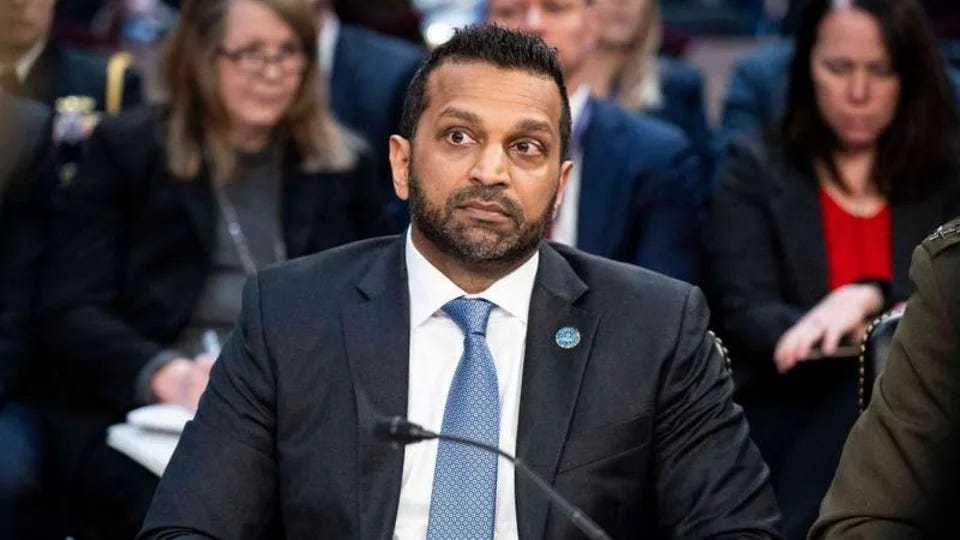 Kash Patel (AOL screen grab)
Imagine you were an undercover FBI agent in a Mexican warehouse with Russian gangsters last week when your phone buzzed with this headline: “Hackers Say They Have Data on All FBI Employees.”
All FBI employees. Job applicants, too, reportedly.
That actually was the headline last Tuesday at 404 Media, the reporter-owned independent news outlet that broke the astounding, not to mention alarming, story.
The ShinyHunters hackers: 20-somethings with an anarchist streak and a taste for millions in bitcoin ransom loot.
“The hack appears to have swept up home addresses, Social Security numbers, secretive job assignments and much more,” The New York Times reported after analyzing some of the records. “Many FBI employees first learned about the hack when news reports about it surfaced on Tuesday, according to current and former officials.”
Imagine that: You’re on the street in a dangerous place and your phone lights up with that headline.
And what did FBI management do? According to news accounts, they “instructed employees to remain vigilant at home and at work, report any unsolicited contacts or threats, avoid answering calls from unknown numbers and set up voice mail accounts with A.I.-generated voices.”
Oh sure. Kind of a shelter-in-place advisory.
Imagine how that went down with the FBI rank-and-file, but especially agents working on ultra-sensitive penetrations of, say, a violent drug gang, a Chinese spy ring or, for that matter, an organization of criminal hackers with tentacles in Russia.
“Remain vigilant?” You’ve got to be joking. But here’s the punch line: “The next day, FBI. staff received an email reminding them that October is cybersecurity awareness month,” The Times said.
History as Prelude
It was only six weeks ago that The Atlantic magazine reminded us that the Trump administration has been shredding cyber defenses since the day it took office, starting with the Cyber Infrastructure and Security Agency (CISA) at the Department of Homeland Security, apparently because its professional director, Christopher Krebs, refused to backstop Trump’s baseless, insidious claims that the 2020 election was stolen from him.
“During the DOGE fever of the first few months of Trump’s return, CISA’s budget was reduced and its staff cut by one-third,” wrote The Atlantic’s Nick Miroff and Yvonne Wingett Sanchez. “The agency hasn’t had a permanent, Senate-confirmed director since Trump retook office. In April, the White House proposed deeper cuts to CISA’s budget …”
Patel did his part, replacing the FBI’s assistant director for cyber operations, Brian Vorndran, who left the Bureau. Patel turned to Brett Leatherman, a veteran agent with over two decades at the bureau, who took over the cyber division in June 2025. It looked like a normal, solid succession, but a former FBI agent said the cyber division was struggling with the shock of the radical political transition—Patel was firing anyone associated with the Russia-Trump and Jan. 6 probes—and shifting mission priorities—“a disruption investigative teams are usually shielded from,” as the Information Security Media Group noted. When Democrats on the Senate Judiciary Committee accused Patel of not filling other senior cyber posts, he responded with an undocumented claim that cyber crime arrests had risen by “40 to 60 per cent” and refused to identify any of the replacements.
Six months later, this past March, CNN reported that Patel fired a dozen agents and staff from a counterintelligence unit tasked with monitoring Iranian threats—days before Trump unleashed U.S. strikes on Iran. Rank incompetence in the service of misguided loyalties.
All this, mind you, comes 11 years after China’s cybertheft of more than 20 million records from the Office of Personnel Management, which holds the personal data of all federal employees (outside the CIA and other intelligence agencies). It was an event “considered so catastrophic that officials and lawmakers vowed to never let something like it happen again,” as the Times put it last week.
But it did happen again, and at the FBI, no less—our premier domestic security agency. Who’s to say whether Chinese, Russian, Iranian or even North Korean cyber warriors, supercharged with AI bots, haven’t been rooting around in those files for months?
The FBI released a video Tuesday featuring Agent Leatherman looking fiercely into the camera and declaring: “We know how to find you”—peak, on-brand Trump TV.
In a normal time, under a normal administration, Patel would have been instantly removed—or fallen on his sword—for this dreadful, possibly catastrophic dereliction of duty. But, seemingly protected by his ideological twin in the White House, Steven Miller, there seems no bottom to the shame Patel can bring to the FBI, whose initials, its best employees—and dewey-eyed boosters— still like to say, stand for “Fidelity, Bravery, Integrity.”
That brand has surely frayed since early 2025. (National security historian Garrett M. Graff did a marvelous, albeit blood-boiling recounting today of Patel’s many shortcomings and missteps—the drinking, the absenteeism, the investigations grand-standing, the Las Vegas apartment, the FBI jet flights with the girlfriend, to the Olympics hockey game, etc, etc.—so I need not burden you with them again.)
The bottom line is that Patel’s just gotta go. The cyber breach shows yet again he’s way out of his depth, at the very least. God forbid some hostile state, terrorist group or religious nuts mounts a mass drone and/or biological warfare attack on Washington, New York, L.A.—or Silicon Valley. How confident are you that Kash Patel’s FBI can defeat them?
Not much, I’d guess.
I’m tired of writing about Trump’s feckless, malignant security agency heads. By tradition, the intelligence beat is generally free of partisan politics. I wish we could get back to that. Meantime, the work goes on. SpyTalk is a reader-supported publication. To receive new posts and support my work, consider becoming a free or paid subscriber.
-
The GOP Crisis: Five Separate Stories, One Looming Disaster
 Photo Credit: Dan Scavino Jr./x.com
Most weeks for this column, I take one big story and pull back to show the larger picture. Today I’m working in the other direction, taking a snapshot of the past week’s headlines and walking through how, taken together, they tell a single story: a Republican Party in crisis, with 35 days before the midterm elections.
These headlines help explain the abysmal numbers now making their own headlines. Trump’s disapproval rating reached 60.4 percent this week, his worst mark across both terms. A top Republican strategist advising several federal campaigns told Axios, “It looks worse than 2018 now.” A new Emerson College poll has Democrats leading the generic congressional ballot by a striking 11 points, 53 to 42 percent. The news is even worse among independents, who backed Trump in 2024 and now favor Democrats 60 percent to 31 percent. Even Republicans are wavering: Trump’s approval among them fell nine points, from 82 to 73 percent, in a single week of Reuters/Ipsos polling.
Trump, backed by Republican allies in Congress, has made a string of truly damaging choices, and the results now belong to the whole party. Rather than admit their mistakes and attempt to fix them, Republicans are blaming everyone else and, in some cases, acting astonishingly tone-deaf.
Don’t stop the party
On Saturday, White House Deputy Chief of Staff Dan Scavino posted a six-second, AI-generated video. In it, Scavino rides a gold luggage cart down a fictionalized White House corridor with his wife, Erin, and Lara Trump as Eric Trump pushes. Scavino sprays champagne to Pitbull’s “Don’t Stop the Party,” and President Trump greets the group at the end.
Frat-boy antics aside, many saw it as a big middle finger to struggling Americans. Some of the sharpest criticism came from the right.
“This is precisely the midterm messaging the GOP needs from the Deputy White House Chief of Staff,” Jonah Goldberg, the editor in chief of the center-right Dispatch, wrote sarcastically. On Sunday afternoon, Scavino answered the backlash with another AI-generated video of the imagined afterparty. “…as the typical nutters are losing their s--t over AI created content, well done! It is AI, correct?” he posted.
The imagined celebration followed a real one: Thursday’s state dinner for Chinese President Xi Jinping, Xi’s first state visit to the United States in more than a decade. On Instagram, Scavino called his video his “post State Dinner party.”
The irony runs deeper. A White House fact sheet on Xi’s visit, released Friday, noted that Trump “urged President Xi to increase production of refined petroleum products to stabilize global supply.”
But it was the United States that disrupted that supply, driving up prices that are now devastating consumers, shippers and rural families. On Monday, AAA put the national average for diesel at $6.45 a gallon, compared with $3.68 a year earlier. Diesel first crossed the psychologically important $6 mark in mid-September before spiking even higher. The surge arrived just as farmers entered harvest, the most fuel-intensive stretch of the agricultural year. The USDA projects farm fuel and oil expenses of roughly $22 billion this year, up nearly 29 percent from 2025. The American Farm Bureau Federation expects farmers to operate below break-even again.
Carrie Prejean Boller, a former Miss California USA and longtime Trump backer, addressed Scavino directly. “Many Americans can’t afford groceries, gas or their mortgage payment, and you post a tone deaf AI video of you and your buddies partying at the People’s House.”
A “Chinese psyop”
House Speaker Mike Johnson wasn’t having a very good week, either. On Fox Business on Monday, host Cheryl Casone asked him about opposition to data centers.
“Don’t buy it. It is a Chinese psyop. I really believe that. It’s not a conspiracy theory. I think they’re pushing those ideas,” he said, dismissing the widespread public backlash against data center projects across the country. Johnson cast the backlash as a Democratic ploy for the midterms.
This is how the GOP turns a kernel of truth into a full-blown crisis. Foreign influence operations have in fact targeted the debate over data centers. In August, Elon Musk’s X platform claimed it had identified about 200 accounts, within a suspected Chinese bot farm of roughly 200,000, whose posts could manipulate the American debate over AI and energy policy. But Jessica Brandt, a former Office of the Director of National Intelligence official who tracked foreign influence efforts, emphasized to The New York Times, “Foreign actors aren’t manufacturing American debates over the future of A.I., they are exploiting them.” Jim Prosser, a Silicon Valley communications consultant and former head of corporate communications at Twitter, put it more bluntly: “If you can get both Greg Abbott and Kathy Hochul agreeing on something, it’s probably not a Chinese psyop, it’s probably not a mass delusion people are having on these issues.”
The “psyop” explanation was already making the rounds among tech investors that month and has landed one of its promoters in federal court. Kevin O’Leary, the “Shark Tank” investor behind the proposed Stratos data center in Box Elder County, Utah, went on Fox News and accused local opponents of operating as “two cells inside of Utah” on behalf of the Chinese Communist Party. He later posted that he had no evidence tying them to China, and Fox News apologized. Two of the people he named have sued him and the network for defamation.
The real anger isn’t manufactured in China. It comes straight from people who live next to these facilities. As I noted in The Big Picture in August, neighbors have complained of diesel generator fumes and the constant hum from cooling systems and fans. Backup generators at some sites reach 105 decibels. A Meta facility in El Paso is projected to draw about 480,000 gallons of water a day on average, and as much as 2.5 million on the hottest days.
Then come the bills: The average residential Georgia Power bill rose more than $43 a month between 2022 and 2025, an increase utility watchdogs have tied in part to building out the grid for large data center customers.
Voters have already punished Republicans over data centers. In Utah, state Senate President J. Stuart Adams, one of the most powerful Republicans in the state, lost his June primary after backing the Stratos project near the Great Salt Lake. Lee Perry, a former Box Elder County commissioner who was defeated over the same project, was blunt about the cause: “Do I think that the data center vote cost me the election? Yes I do.”
Much of the opposition comes from Johnson’s own Republican Party. A Fox News poll released last week found that 71 percent of voters oppose building AI data centers in their area. A July survey reported by The Hill found 60 percent of Republicans, and even 53 percent of MAGA Republicans, opposed to a data center near them.
In Ohio, Nvidia agreed in August to guarantee up to $105 billion in land, lease and power obligations for a single OpenAI campus, with no accompanying commitment on ratepayer costs. At the time, Ohioans faced projected average summer electricity costs above $800, up 17 percent from the year before. The National Republican Senatorial Committee warned in a memo that same month that Sen. Jon Husted of Ohio could lose his seat due to voter anger about data centers.
Hey, at least he served 60 days!
The last thing Republicans want to talk about is how they went easy on or covered up for child sexual predators. Yet Texas Attorney General Ken Paxton brought it up himself, right in the thick of a pitched battle for a U.S. Senate seat.
Defending his office’s involvement in a slap-on-the-wrist deal for a man accused of years of child sexual abuse, Paxton said, “The criticism has been that I let a child predator out, having one day. Well, guess what? They served 60 days. It wasn’t what we wanted, but we did not control that situation. We did our best to present the case. The jury decided what it was.”
Paxton was responding to an ad from his opponent, Democrat James Talarico, attacking his office’s handling of the case against Adam Hoffman, a former Waco attorney. The record contradicts him on every point.
Hoffman was indicted on a charge of continuous sexual abuse of a child, which carries a sentence of 25 years to life. After his trial ended in a hung jury, Paxton’s office declined to retry the case and instead negotiated a plea deal that reduced the felony to two misdemeanors. Under the initial offer, Hoffman would serve just one day in jail and avoid the sex offender registry. In his signed plea, Hoffman admitted to touching the child sexually without consent. When Judge Roy Sparkman balked at the one-day offer, prosecutors came back with 30. The boy’s mother appeared at sentencing to object, and Sparkman raised the sentence to 60 days and ordered Hoffman to surrender his law license for five years. Hoffman served just 29 days.
Talarico’s ad is part of a larger case against Paxton. “Ken Paxton is the most corrupt politician in America,” Talarico told supporters when he launched his general election campaign in May. He noted that the Republican-controlled Texas House impeached Paxton on corruption allegations in 2023 before the state Senate acquitted him. Talarico has likened the Hoffman plea to an “Epstein-style sweetheart deal.”
The victim’s mother voiced a similar sentiment, saying her son’s case “was treated differently because of who Adam Hoffman was and who represented him.” Hoffman’s attorney, Gerry Morris, also represented Nate Paul, the real estate developer and big Paxton donor at the center of Paxton’s impeachment. Paxton was accused of using his office to help Paul in exchange for favors, including a job for Paxton’s alleged mistress and renovations to his home. Morris has called any connection between his work for Paul and the Hoffman case “an absolute, total falsehood,” and has said Paxton played no part in the plea negotiations.
There’s also the cover-up angle. Paxton’s office has kept its records on the case hidden. In July, it rejected an open records request from Talarico’s campaign for communications tied to the plea deal, documents Talarico calls the “Hoffman Files.” This month in Dallas, Talarico appeared with survivors of Jeffrey Epstein and accused Paxton of “a history of covering up abuse.”
The charge lands with a public already convinced that the powerful are shielded from the consequences of grievous crimes. In a Reuters/Ipsos poll in June, three-quarters of Americans said they believe the federal government is still hiding information about Epstein’s alleged clients. Eighty-four percent, including similar shares of Republicans, Democrats and independents, said the Epstein files show that powerful people in America are rarely held accountable.
The war comes to farm country
On Monday afternoon in the Oval Office, Trump announced that Mesabi Metallics would build a $15 billion steel mill in Iowa. He was joined by Iowa Republicans facing competitive races, including Rep. Ashley Hinson, the party’s Senate nominee, and Rep. Mariannette Miller-Meeks, whose district will host the mill.
The show of unity masked an important break. Both Iowa officials standing beside Trump, who appeared to be dozing off at times during the event, had recently split with him over the war in Iran because of the toll it is taking on the agricultural economy of their state. Hinson had regularly voted against resolutions to limit Trump’s war powers, but last week she reversed course and called for an immediate end to the war. “Iowans are being squeezed and shouldn’t have to foot the bill at the pump or the checkout line for the war in Iran,” she wrote. Miller-Meeks, who had also opposed earlier resolutions, voted for one this month. “Americans do not want another forever war,” she said.
But Trump has shown no sign of ending the war. At a rally in North Carolina earlier this month, he called rising gas prices “a very inexpensive price to pay for what we’ve done,” and added, “Frankly, even if it was a lot more.” On Saturday, he rejected an Iranian proposal to reopen the Strait of Hormuz within seven days, saying it “would not be acceptable.” He has told aides he expects a renewed bombing campaign against Iran after the midterm elections.
Other Republicans have changed their words while keeping their votes. On Monday, Sen. Shelley Moore Capito of West Virginia said, “So, would I tell the president, ‘End the war now?’ Yes, I would.” Earlier this month, she had said she would not vote to limit his military authority. Husted told Politico that “the war needs to come to an end as quickly as possible so that we can lower gas prices.” Two days later, he voted against another war powers resolution. It failed in the Senate, 49-50.
Gas prices aren’t the only problem
The war’s costs have now spread from the gas pump to the price of borrowing. On Sept. 16, the Federal Reserve raised interest rates for the first time since 2023, lifting its benchmark rate to a range of 3.75 percent to 4 percent as the Iran war helped drive up global energy prices and fueled overall inflation. Fed officials signaled one more increase before year’s end.
As I wrote in The Status Kuo, Trump handpicked Kevin Warsh as Fed chair with the understanding that Warsh would cut, not raise, rates. While the nomination was still pending, Trump said he would not have chosen Warsh if Warsh wanted rate hikes. At the swearing-in, Trump nevertheless told his new chair to “be totally independent... don’t look at me.” Warsh and all 11 of his colleagues voted for the increase. At his press conference, Warsh referred repeatedly to geopolitics, hot spots around the world and commodity prices, pressures presumably aggravated by Trump’s tariffs and his war with Iran. Within hours, Trump posted that interest rates “should be 1%, or less.”
The bond market has added its own pressure. The yield on the 10-year Treasury note, the benchmark mortgage rates closely follow, has climbed above 5 percent to its highest level since 2007. Large federal deficits and heavy government borrowing have helped drive up the extra return investors demand to hold long-term debt. Treasury Secretary Scott Bessent has expanded bond buybacks in an effort to ease long-term rates, measures with limited power against the forces pushing yields up.
Republicans added to those deficits last year. The Congressional Budget Office estimated that the tax and spending law Trump signed in July 2025 would add nearly $3.4 trillion to deficits through 2034. One bond strategist told CNBC that markets are “demanding a higher term premium for persistent inflation, fiscal risks, heavy issuance and rising capital demand.”
Homebuyers are now paying for it. On Monday, the average rate on a 30-year fixed mortgage hit 7.5 percent in Mortgage News Daily’s index, the first time since April 2024.
“Let them drink champagne”
The bad economic news, including sky-high fuel costs during harvest and rising interest rates, is not being taken seriously. Instead, Trump insists that we are in a Golden Age, while top aides post AI videos of themselves having a grand time.
Meanwhile, top GOP officials routinely dismiss legitimate voter concerns, from community-disrupting data centers to cover-ups and sweetheart deals for child sexual predators.
If this remains the GOP’s message and attitude through the final weeks of the midterms, the party will only have itself to blame if voters punish Republicans by stripping them of their House majority and, once unthinkably, even of control of the Senate.
-
Expansive.info : nouvelle équipe en vue ! – texte de présentation
Comme vous avez pu le constater, depuis mai 2026, expansive.info prend un nouveau départ ! Il y a quelques mois, l’ancienne équipe avait du arrêter la modération faute d’énergie, cela après 10 ans de travail (quand même).

Nous sommes donc quelques personnes issues de différents espaces militants, et on s’est motivé.es à reprendre le flambeau ! Nous venons des espaces anti-patriarcaux, écolos, assambléistes et antiracistes… On espère que ces horizons seront voués à s’élargir.
Après quelques mois de structuration, on a choisi de réouvrir la publication en gardant le même site, qu’on fera évoluer petit à petit.
On est pas des professionnelLEs, on apprend doucement et on est pas beaucoup, donc soyez patient.es :)
Pourquoi on trouve ça important qu’un tel site continue d’exister ?
- Pour aider les luttes ou petits collectifs locaux à s’autonomiser dans leurs communications. Pour ça on est entrain de construire une charte [1] crée au consensus, qui permet l’expression/émancipation des pauvres et sans-pouvoir avant tout (pas les gros partis politiques par exemple). Elle est souple et sera rediscutée régulièrement.
- Pour faire du lien avec entre les milieux militants de la région rennaise, alimenter un agenda, partager des compte rendus d’actions, des articles d’analyse, de témoignage, de transmission de pratiques, d’infos, dates importantes, etc.
- Maintenir un outil émancipateur, collectif, permettre la diffusion des infos librement sur internet sans dépendre de Instagram ou autres GAFAM pour tous les problèmes que ça cause (politiques, sécurité, censure…) [2].
Expansive c’est aussi…
- Un espace où on ne donne pas le droit aux pseudo-spécialistes de nous définir et de définir nos pratiques de lutte. Nous pensons que c’est d’abord aux personnes concernées de s’exprimer sur ce qu’elles vivent et subissent.
- Un média libre où l’ancrage dans les luttes locales est notre priorité. Cependant, nous souhaitons aussi écrire et relayer des analyses et informations plus globales.
- La participation au réseau MUTU [3]. C’est un outil de mutualisation d’outils et d’expériences. Il héberge différents médias libres qui se retrouvent autours de bases politiques anti-autoritaires (ex : trognon.info en Normandie, renverse.info en Suisse romande, paris-luttes.info en IDF, bourrasque-info.org à Brest, rebellyon.info à rebellyon.info, etc.).
Ce qui nous inspire particulièrement, nous la nouvelle team
- Essayer de favoriser la transparence de la publication, permettre aux lecteur.ices de participer aux débats de modération [4], rendre compte de nos refus [5].
- On veut un espace où on a le droit aux « fautes de français », où on risque pas trop de tomber sur des articles que seule une minorité initiée est capable de comprendre, ou encore sur un événement à 15€ l’entrée. Fuck le militantisme bourgeois !
- Faire du lien avec les différents collectifs autonomes, recueillir leurs besoins et leurs demandes, et visibiliser la pluralité de leurs modes d’action. Bref on veut se mettre au service des espaces de lutte.
- A terme, on veut que chaque collectif ait sa page sur expansive.info !
- Construire un agenda commun riche et alimentable, car on va pas se mentir on galère à Rennes…
Retrouve l’ensemble de nos communications publiques ici.
A vous de jouer !
Pour que ce site tourne et soit utile à nos luttes, il appartient à tous·tes de participer à son élaboration : publication, relecture, modération, communiquer sur son existence, amélioration de l’interface web, etc. Tu peux donc carrément nous contacter pour prendre part au projet, ON A BESOIN DE MONDE !
Pour publier votre propre article ou un texte trouvé ailleurs, il est possible de le faire via l’interface privée du site (cf. Guide de publication [6]).
Comme toutes les personnes ne sont pas égales devant l’écriture et l’utilisation d’outils numériques, vous pouvez demander ou nous pouvons proposer une entraide à la rédaction : relecture, mise en page, féminisation des textes, vérification des infos, etc.
C’est avant tout un projet politique et collectif, emparez-vous en !
Expansive.info est un média qui part de la rue pour y revenir !
P.-S.
Si tu souhaites ajouter ta pierre à l’édifice, on a vraiment besoin de gens pour améliorer notre interface mobile. N’hésite pas à nous proposer tes améliorations (code CSS par exemple) pour rendre le site + accessible/joli.
Notes
[1] Notre charte en cours d’élaboration
[2] Texte du réseau MUTU sur l’utilité des médias autonomes face aux GAFAM
[3] Texte de présentation du réseau MUTU
[4] Un « forum interne » est déjà disponible en bas de chaque article en cours de modération (sur l’interface privée, accessible via un compte de rédacteur). Une fois l’article publié, un « complément d’information » est publiable, à condition qu’il nourisse le débat et apporte de nouvelles perspectives.
[5] En cas de refus sur un sujet très clivant, on essaie de faire un article qui résume notre choix et les enjeux du sujet.
-
Experts Question the White House’s Defense of Taxpayer-Funded Ads

The White House has defended three taxpayer-funded advertisements featuring President Donald Trump by comparing them to ads that were paid for by past presidential administrations. But some legal experts have said the Trump White House commercials are political messages intended to influence the 2026 midterms and may violate U.S. laws, including a prohibition against using federal funds for propaganda.
The White House described its ads as “public service announcements” in a Sept. 25 press release pushing back on criticism. It said, “The announcements are very clearly not campaign ads; President Trump is not on the ballot and there is no call to action. Instead, the announcements are a reminder for Americans to love their country and know why it’s worth defending — at home, at the border, and abroad.”
The release went on to say that “[a]dministrations of both parties have used public service announcements to explain policy and make the case for the nation’s direction,” citing examples of ads from the George W. Bush, Obama and Biden administrations, among others.
A legal expert we consulted did not see a correlation.
“I just think you’re not going to find any comparison at all,” Richard Painter, a corporate law professor and former White House ethics lawyer for George W. Bush, told us in an interview. Painter said the Trump White House ads are “so clearly propaganda,” which generally refers to government communications intended to manipulate or influence public opinion.
John G. Geer, a professor of political science at Vanderbilt University and author of “In Defense of Negativity: Attack Ads in Presidential Campaigns,” also told us, “I just think that the ads are different enough so that I personally don’t buy the argument” that the ads from the Trump administration and recent presidents are all the same. He said his perception is that the Trump White House ads are more political. “We’ll see what the courts say,” he said — if a lawsuit brings the matter to the judiciary.
Later, we’ll go over the cited examples of federally funded ads that were run under Presidents Bush, Barack Obama and Joe Biden.
The first Trump White House message to air includes images of Trump as he says, “Together we will defeat communism, socialism, and Marxism in America. America will never be a communist country.” Viewers repeatedly hear the words “love me,” which are lyrics from a JMSN song of the same name. Near the end of that 30-second spot, Dana White, the UFC CEO, compliments Trump and talks about him “fighting so hard for the country he loves.”
 A screen capture from the 2026 black-and-white White House ad that is almost exactly the same as an ad released by Trump’s 2024 campaign.
The third ad, in black and white, shows Trump walking and staring into the camera as he says in a voiceover, “we will demolish the deep state,” “expel the warmongers from our government,” “drive out the globalists,” and “cast out the communists, Marxists and fascists.” The ad ends with: “We will rout the fake news media, and we will liberate America from these villains once and for all.” The video is almost identical to an ad from Trump’s 2024 presidential campaign.
The second ad, a minute long, features video and audio from Trump’s July 3 speech from a site near Mount Rushmore, as the president says, “We are the freest people on Earth, and by the grace of God, the United States of America is the most successful, most accomplished, most exceptional nation ever to exist in human history.” The ad ends with him saying, “This is only the beginning of the golden age of America.”
All three ads were released on or after Sept. 23 and include a “Paid for by the U.S. Government” disclaimer. The ads have aired on broadcast and/or streaming platforms, including during Sunday political talk shows and college and NFL football games.
“Our tax dollars are hard at work. And, we believe, probably illegally so,” Painter and three other ethics experts wrote in a Sept. 28 piece in the online publication the Contrarian. For the post, Painter was joined in criticizing the Trump White House ads by Norman L. Eisen, former White House special counsel to Obama; Virginia R. Canter, former White House associate counsel to Obama and President Bill Clinton; and Christopher J. Swartz, who worked for the Office of Government Ethics across multiple administrations and was briefly acting chief of the Ethics Law and Policy Branch in 2025, during Trump’s second term.
“These videos are not ‘public service announcements’ as the White House claims,” the authors wrote. “They are clear attempts to boost Republicans’ chances in the impending midterm elections given their sagging poll numbers. The timing, content, and format of the videos all suggest they are covert attempts directed at the success of the Republican party.”
The White House said “Trump is not on the ballot” this November, but the president has told wavering Republican voters to pretend he is. The legal experts also noted in their piece that two of the White House ads highlighting Trump include references to defeating communism or communists, which is what Trump regularly calls democratic socialists running for Congress. (We’ve written that democratic socialists and communists do not have the same political or economic ideology, and democratic socialists make up a small minority of congressional candidates.)
“Even during the height of the McCarthy era and the Cold War, the United States government never came anywhere close to making an ad like this,” the experts said, adding that under the Hatch Act, a federal employee other than the president or vice president “may not use his official authority or influence for the purpose of interfering with or affecting the result of an election.” The statute would apply to other federal employees who participated in making or disseminating the ads, the experts said.
Also, annual appropriations bills passed by Congress have long included language prohibiting taxpayer funds from being used for “publicity or propaganda purposes within the United States.”
A few Republicans have spoken out against the Trump White House ads as well. “I like the message, but it shouldn’t be paid for with taxpayer dollars,” Senate Majority Leader John Thune told reporters about the ads on Sept. 28. The day prior, on CBS’ “Face the Nation,” Sen. John Kennedy of Louisiana said, “I don’t think any public official, including President Trump … should spend public money on private ads for themselves.”
A federal worker who violates the Hatch Act could face penalties such as “removal from federal service, reduction in grade, debarment from federal employment for a period not to exceed 5 years, suspension, reprimand, or a civil penalty not to exceed $1,000,” according to the U.S. Office of General Counsel.
In addition, Citizens for Responsibility and Ethics in Washington has written that the Government Accountability Office previously found that using federal funds for unauthorized publicity or propaganda violates the Antideficiency Act, which, “in severe cases,” could lead to administrative penalties, or a fine of up to $5,000 or up to 2 years in prison.
Painter told us that Congress could also ask to be reimbursed for an improper use of taxpayer funds. The ads combined have cost at least $2.5 million, according to the ad-tracking service AdImpact.
Obama Administration Ads/Outreach
One of the examples the White House cited under Obama sparked controversy, and the Government Accountability Office determined the public outreach campaign had violated federal laws. The other example is similar to ads run under Trump, promoting the open enrollment period for Affordable Care Act insurance plans.
Under Obama, the Environmental Protection Agency in 2014 and 2015 used a public outreach campaign through social media to encourage support for its proposed rule on clean drinking water. The New York Times called it “a campaign that tests the limits of federal lobbying law.” The effort was aimed at ginning up support during a public comment period on the proposed rule, which concerned EPA regulation of water sources.
The EPA argued that it wasn’t violating the Anti-Lobbying Law because its outreach didn’t tell the public to contact or lobby Congress.
But in December 2015, the GAO concluded that the EPA had violated federal laws prohibiting the agency from spending federal dollars for “publicity or propaganda purposes” and prohibiting the use of federal appropriations for “indirect or grassroots lobbying in support of or opposition to pending legislation.”
In particular, the GAO faulted the EPA for using a social media tool that resulted in some messages not identifying the EPA as the source of the information. Instead, to some members of the public, “it appeared that their friend independently shared a message of his or her support for EPA and clean water,” GAO said, calling this “covert propaganda.” (The messages shared through people’s social media accounts said, “Clean water is important to me. I support EPA’s efforts to protect it for my health, my family and my community.”)
GAO said that the violation of grassroots lobbying occurred when the EPA’s blog posts linked to outside groups, whose pages included prompts to contact Congress in support of EPA’s proposed rule.
The Trump White House also pointed to the Obama administration running TV ads about HealthCare.gov, the website people use to sign up for Affordable Care Act health plans, during the open enrollment periods in 2015 and 2016. The ads didn’t feature the president, but rather everyday people talking about how they had signed up for low-cost insurance.
In one spot, run in November 2015, a woman who’s going for a run says that her premium was $22 a month and that signing up was “very easy.” A guy who appears to be going to a university says he got “exactly the kind of coverage I wanted at the price I wanted,” with the words “$57/month” on screen. A woman and her child are shown with the words “$405/month family of 4.” The ad then says that “most people who sign up on HealthCare.gov qualify for financial help to make coverage more affordable.” It ends by encouraging people to “sign up by Dec. 15.” The ad says at the bottom that it is “sponsored by the U.S. Department of Health & Human Services.”
Another example from 2015 similarly says that most people can get financial help with their premiums.
The Obama administration also ran ads in the run up to the 2016 open enrollment period, which began Nov. 1 — meaning that those ads ran shortly before and after that year’s presidential election. One example from November 2016 is similar to the 2015 ads, showing various people and saying that most people signing up “can find plans for $50-$100/mo. with financial help.”
One could argue that Obama, who signed the Affordable Care Act into law in 2010, had a vested political interest in getting people to sign up and having the program succeed. But the Trump administration also has run ads to inform the public about the open enrollment periods. Like the Obama-era ads, these three examples from late 2025 featured people talking about how they easily enrolled in an insurance plan, and the ads said that “4 out of 5 customers can find a health plan for $21 or less per month with financial help.”
Biden Administration Ads
As the Trump administration pointed out, the Biden administration also used taxpayer dollars for an ad campaign using television, digital, radio and print spots to encourage people in early 2021 during the COVID-19 pandemic to get vaccinated.
The Trump press release said the Biden administration “poured hundreds of millions of dollars” into an ad campaign “to drive a nationwide public health message.”
But as the Washington Post story the press release links to explains, the campaign used a $250 million contract that the Trump administration signed with consultancy Fors Marsh the previous year. According to the article, “Officials have said they held the campaign until vaccines were widely available to maximize its impact.”
Ironically, numerous Democrats expressed concern in September 2020 after the Trump administration hired Fors Marsh for a campaign from HHS that sought to “defeat despair, inspire hope and achieve national recovery” amid the pandemic.
In a Sept. 11, 2020, letter to HHS, Democratic Rep. Frank Pallone, then chair of the Energy and Commerce Committee, wrote, “Among other things, the Committee is concerned that HHS may use more than a quarter-billion dollars in taxpayer funds on private communications consultants charged with distorting the facts and misleading the public about the Trump Administration’s failed response to the COVID-19 pandemic.”
A letter from three other Democratic leaders in the Senate similarly stated, “We have grave concerns that, rather than focus on planning and executing a national strategy to contain the coronavirus, the Trump Administration is using a quarter of a billion dollars in taxpayer money to fund what appears to be a political propaganda campaign just two months before a presidential election.”
Under Biden, the “We Can Do This” campaign directed by Fors Marsh sought to appeal to “a group known as the ‘movable middle’ — people who were hesitant but not necessarily opposed to getting vaccinated — with highly customized, science-based communications and messages of empowerment,” according to the consultancy.
The ads featured images of Americans and encouraged people to visit the Centers for Disease Control and Prevention’s website or vaccines.gov for more information.
At the time, Trump was also encouraging people to get vaccinated. At the Conservative Political Action Conference on Feb. 28, 2021, Trump boasted that his administration had helped deliver the vaccine in “record time” and later said, “So, everybody go get your shot.”
“I encourage them to take it,” Trump told Fox News’ Sean Hannity in April 2021.
George W. Bush Administration Ads
The Trump administration also pointed to a controversial $9.5 million ad campaign produced by the George W. Bush administration in 2004 touting the prescription drug benefits in the Medicare Prescription Drug, Improvement, and Modernization Act of 2003.
The TV ad and flyers claimed the law, which passed largely along partisan lines, provided the same Medicare with “more benefits.”
At the time, Democratic Sen. Frank Lautenberg criticized the ad as “a propaganda effort with taxpayer dollars.”
At least one network, CBS, pulled the ad while the General Accounting Office (later renamed the Government Accountability Office) — at the request of Lautenberg and other Democrats — investigated whether it violated prohibitions on federal funds being used for “publicity or propaganda” purposes. Democrats argued the ad was inaccurate and was intended to promote the reelection of Bush that year.
The GAO concluded that while the TV ad and accompanying flyers contained “notable omissions and other weaknesses,” they were “not so partisan as to be unlawful.”
By way of omissions, Anthony H. Gamboa, general counsel of the GAO, said that the ad failed to note that people might be charged $30 for the new drug discount cards “and that savings may vary across covered drugs.” He further criticized the flyer’s indication that beneficiaries would pay a premium of “about $35 a month” for the prescription drug benefit, when in fact that was an estimated average.
“The omissions notwithstanding, we do not find the content of the flyer and its cover letter or the advertisements to be purely partisan in violation of the publicity or propaganda prohibition,” Gamboa wrote.
“This is not to say that the content is totally free of political tone,” he added. “Without a doubt, the future of the Medicare program is the subject of ongoing and highly spirited discussion and debate at the national level. In this context, the references in the flyer and print and television advertisements to ‘Same Medicare. More Benefits’ and ‘preserve and strengthen’ may appear to some as an attempt to persuade the public to the Administration’s point of view regarding the newly enacted benefit.”
Nonetheless, he wrote, the “publicity or propaganda prohibition, however, does not bar materials that may have some political content or express support for a particular view. … The content of these publications does not constitute a purely partisan message.”
Two months later, however, GAO said during the course of its investigation, “we learned that the Centers for Medicare & Medicaid Services … had prepared as part of this campaign video news releases or VNRs, including a news story for television broadcast, to provide information to the television medium.” Because the prepackaged stories did not note they had been prepared by CMS, the GAO concluded their use ”violated the restriction on using appropriated funds for publicity or propaganda purposes.”
The White House further noted that in 2002, the Bush administration paid more than $3 million for two Super Bowl ads that said buying illegal drugs could help support terrorists; it also created anti-drug YouTube ads in 2006.
Editor’s note: FactCheck.org does not accept advertising. We rely on grants and individual donations from people like you. Please consider a donation. Credit card donations may be made through our “Donate” page. If you prefer to give by check, send to: FactCheck.org, Annenberg Public Policy Center, P.O. Box 58100, Philadelphia, PA 19102.
The post Experts Question the White House’s Defense of Taxpayer-Funded Ads appeared first on FactCheck.org.
-
[MinuitDecousu] Épisode #263 On achève bien la démocratie
Émission enregistrée le 29/09/2026 en direct des studios de Radio Canut. Cette semaine, on a fait 1h d’émission pour en découdre avec la démocratie : – Vers la démocratie et au-delà !- La République contre la démocratie- Les élus locaux contre la démocratie participative- La chasse au communautarisme face à l’organisation communautaire- Le référendum (d’initiative citoyenne) ne nous fait pas rêver- Une primaire à 15 balles- La démocratie représentative et l’impossible barrage
-
Victoires régionales de l’AfD en Allemagne : « être victime, voilà l'identité politique la plus puissante de l'extrême droite »
Après avoir remporté les élections dans deux Länder et s'être hissée à la troisième place dans la capitale, l'Alternative pour l'Allemagne (AfD) s'impose comme l'une des forces majeures de l'extrême droite européenne. Essayiste et figure majeure du… -
Victoire de l’AfD en Allemagne : « être victime, voilà l'identité politique la plus puissante de l'extrême droite »
Après avoir remporté les élections dans deux Länder et s'être hissée à la troisième place dans la capitale, l'Alternative pour l'Allemagne (AfD) s'impose comme l'une des forces majeures de l'extrême droite européenne. Essayiste et figure majeure du… -
‘You make me want to throw up’: Republicans attack ex-special counsel Jack Smith at Senate hearing
GOP senators lash out on Smith, who led criminal cases against Trump, with invective and inaccurate information
Jack Smith, the former special counsel who led two criminal cases against Donald Trump in 2023, faced attacks from Republicans in a wide-ranging hearing on Tuesday that included a basketball mix-up, a reference to the tooth fairy and accusations of perjury.
In the Senate judiciary committee hearing on Tuesday, the Republican senator Eric Schmitt, of Missouri, raised perjury allegations against Smith, seemingly over a mix-up about the Atlanta Hawks and University of Iowa Hawkeyes basketball teams.
Continue reading... -
Judicial Notice Supplement (09.27.26): Goodbye Kiss
 Former acting U.S. attorney Alina Habba (official portrait by the U.S. Department of Justice).
Welcome to Original Jurisdiction, the latest legal publication by me, David Lat. You can learn more about Original Jurisdiction by reading its About page, and you can email me at davidlat@substack.com. This is a reader-supported publication; you can subscribe by clicking here.
Greetings, and welcome to what I’ve dubbed “Judicial Notice Supplement”—or, in homage to the Federal Supplement or F. Supp., “JN Supp.” As I explained in yesterday’s Judicial Notice, JN Supp. is where I’ll share additional material that I couldn’t fit into Judicial Notice proper.
As I do with Judicial Notice, I’ve organized this post with topic-based headlines. The headlines are “linkable”: If you want to email JN to someone and have them focus on a particular section, you can click next to the heading and copy a link that will take the reader directly to the relevant section.
Please note that as I did with yesterday’s Judicial Notice, I’m sticking to news that broke on or before September 27 (which explains why this post and yesterday’s both bear that date). Anything noteworthy from after that date will be considered for this coming weekend’s Judicial Notice.
Let’s dive in, shall we?
Lawyer of the Week: Sheri Mecklenburg.
Besides former assistant U.S. attorney Sheri Mecklenburg (N.D. Ill.), who left the Justice Department after sending out quite the resignation letter, here are other attorneys who were in the news last week:
I seriously considered California Attorney General Rob Bonta for Lawyer of the Week. He led a coalition of 12 Democratic-led states that settled with Paramount Skydance, allowing its $110 billion acquisition of Warner Bros. Discovery to close (assuming judicial approval). Reactions to the resolution varied, as reported by The New York Times: Governor Gavin Newsom (D-Cal.) called it “a practical path forward,” while the advocacy organization Free Press, which opposes media consolidation, dubbed it “weak.” If you have an opinion, share it in the comments.
It’s official: Nathaniel Cullerton, the Wachtell Lipton litigation partner who was filmed making out with an associate in Central Park, is now a former Wachtell partner. The news was reported by the New York Post, which obtained confirmation from the firm: “Wachtell Lipton and Mr. Cullerton mutually agreed to part ways,” a spokesperson said in a statement. The associate remains at Wachtell. (If you’re wondering how on earth two Wachtell lawyers went viral for a public make-out session—and how internet sleuths (or busybodies) even figured out their identities—check out this Mashable article.)
My former office, the U.S. Attorney’s Office for the District of New Jersey, lost around 50 lawyers last year (as reported by Max Mitchell, Nicholas Malfitano, and Charles Toutant for a two-part series in the New Jersey Law Journal, here and here). Much of the attrition occurred during and after the rocky tenure of former acting U.S. attorney Alina Habba. But Habba, 42, kissed all that goodbye—and now saves her smooches for her new husband, Turkish billionaire Turhan Mildon, 29. The two got married last Saturday at the Waldorf Astoria New York, in a wedding that cost an estimated $10 million. (This is Habba’s third marriage; she was previously married to parking lot magnate Gregg Reuben and New Jersey lawyer Matthew Eyet.)
Before he was a Connecticut state government official convicted of federal bribery and extortion charges, Konstantinos “Kosta” Diamantis was a lawyer—so presumably he understood that fleeing to Greece ahead of sentencing was not going to improve his legal situation. Yes, Diamantis had surrendered his U.S. passport—but he still had a Greek passport, which authorities believe he used to take a boat to the Bahamas and then fly to London.
Mariah Medina, a criminal defense attorney in San Antonio, was reprimanded in open court for wearing this dress (click on the tweet to read the entire thread, which details Medina’s interaction with the judge):
Medina’s tweet went viral, with 7.3 million views as of this writing. Some defended her attire—e.g., Assistant Attorney General for Civil Rights Harmeet Dhillon, who declared the garment “lovely and appropriate”—while others opined that Medina should have worn a jacket over the dress.
Readers, what do you think? (In case it affects your view, this took place at a case-management hearing, with no jurors present.)
[UPDATE (5:04 p.m.): The judge who reprimanded Medina, Judge Yolanda Huff of Bexar County, Texas, responded in a statement. Some highlights:
It wasn’t just the dress; Medina was also wearing tennis shoes and carrying a backpack.
“In my opinion, she was completely disrespectful to me as the judge and exhibited unprofessional behavior in the courtroom by failing to wear professional attire required during trial proceedings.”
“I did not, in any way, embarrass her in open court. I spoke very softly and quietly to Ms. Medina—so much so that she had to lean forward to hear me. If you notice in the video, people around us were completely unaware of our conversation.”
“Ms. Medina made this a public spectacle by posting to social media. Every law student, attorney and Judge are aware of the proper attire for court.”]
In memoriam: Tara Sutton—a longtime partner in the Minneapolis office of Robins Kaplan, where she chaired the national mass-torts practice—passed away at 59 from “a brief illness” (per the firm). May she rest in peace.
Judge of the Week: Judge Timothy Kelly.
In addition to Judge Timothy J. Kelly (D.D.C.) and the temporary restraining order he issued in CNN, Inc. v. Trump, here’s additional news about judges and the judiciary:
Chief Justice John Roberts and Justices Brett Kavanaugh and Amy Coney Barrett are the three justices most often in the majority at the Court. They were also the only three justices who attended last Thursday’s state dinner at the White House honoring Chinese leader Xi Jinping. It’s not clear whether other justices were invited; back in April, all six Republican-appointed justices attended the White House state dinner held in honor of King Charles.
Judge Thomas Ludington (E.D. Mich.), who pleaded no contest to a misdemeanor drunken-driving charge in April, agreed to remain on paid leave—i.e., off the bench, not hearing cases—until September 1, 2027. If he does return to hearing cases, he will first take senior status. For more details about what Judge Ludington agreed to do to resolve two judicial-misconduct complaints—one filed by Fix the Court executive director Gabe Roth, the other initiated by Chief Judge Jeffrey Sutton (6th Cir.)—see this order from Judge Sutton.
Judicial diva is as judicial diva does? Judge Colleen McMahon—one of the biggest personalities on the S.D.N.Y., a court with no shortage of them—issued a short but scathing order in a discovery dispute (which I won’t bother summarizing; it’s only two pages, so just read it for yourself and enjoy the lulz). Over at Court Watch, Seamus Hughes and Peter Beck wrote, “We’re pretty sure we’d quit lawyering forever if we ever got this order.”
In nominations news, the Senate confirmed Angela Colmenero—most recently, deputy chief of staff to Governor Greg Abbott (R-Tex.), and before that, his principal deputy general counsel—to serve as a judge on the U.S. District Court for the Southern District of Texas.
In memoriam: Justice Edward H. Lehner—who served on the New York Supreme Court for more than 20 years, but was most well-known for helping to pass the Empire State’s groundbreaking “pooper scooper” law during his earlier stint as a state legislator—passed away at 93. May he rest in peace.
Ruling of the Week: People Not Politicians v. Onder.
The SCOTUS ruling in the Missouri election-map dispute wasn’t the only significant opinion from last week. Here are other noteworthy decisions and dispositions:
Elsewhere on the emergency docket, last Friday the justices “cleared the way for the Trump administration to move forward with its plan to use a modified centralized database to verify voters’ citizenship,” per Amy Howe of SCOTUSblog. The majority in Department of Homeland Security v. League of Women Voters issued a seven-page, per curiam opinion; Justice Ketanji Brown Jackson dissented, joined by Justices Sonia Sotomayor and Elena Kagan.
Sticking with the interim docket, Justice Kagan declined to involve the Court in a high-profile custody dispute between a surrogate, McKenna West, and the intended parents with whom she had been working, Nausheen Gilkar and Omar Ahmed. After the baby boy being carried by West was diagnosed with a serious heart problem, Gilkar and Ahmed asked West to get an abortion; she refused, then fled her home state of Alaska for Texas, where she gave birth. The parties have been fighting it out in court ever since. A California court ultimately recognized Gilkar and Ahmed as the boy’s parents; West asked SCOTUS to stay that ruling, but Justice Kagan denied her request.
In Anthropic PBC v. United States Department of War, a divided panel of the D.C. Circuit rejected Anthropic’s challenge to the Trump administration’s designation of the AI giant as a supply-chain risk to U.S. national security. Judge Gregory Katsas wrote the opinion, which was joined by Judge Neomi Rao; Judge Karen LeCraft Henderson dissented.
Speaking of Judge Rao, she wrote the majority opinion in Mahoney v. United States Capitol Police Board (joined by Judge Henderson), which concluded that a Capitol Police policy prohibiting public demonstrations on the East Steps of the Capitol unless they’re sponsored by a member of Congress is “unconstitutionally overinclusive.” Judge Judith Rogers dissented—in an opinion that was “even more protective of free-speech rights,” as noted by Kyle Cheney and Josh Gerstein of Politico.
The Second Circuit denied rehearing en banc in Barbosa da Cunha v. Freden, in which the panel held that detention isn’t mandatory for noncitizens who are apprehended by immigration enforcement in the interior of the United States (as opposed to at the border, where different rules apply). Judge Steven Menashi, joined in part by Judge Michael Park, dissented from that denial. Interestingly enough, Judge Matthew Schwartz, joined by Judge Richard Sullivan, concurred; although they agreed with the substantive analysis of the dissent, they didn’t support full-court rehearing, especially since the Supreme Court is likely to decide the issue soon. (This led the prominent conservative activist Mike Davis to call out Judge Schwartz, a recent Trump appointee: “Stop being weak. Bold and fearless. You’re not a Bush judge.”)
In KalshiEX LLC v. Schuler, the Sixth Circuit ruled that federal law “neither expressly nor impliedly preempts Ohio’s or Tennessee’s gambling laws.” This deepens a circuit split on who can regulate prediction markets—which I predict will make it onto the Supreme Court’s docket for October Term 2026. The unanimous opinion by Judge Julia Smith Gibbons affirmed a ruling by Judge Sarah Daggett Morrison (S.D. Ohio) and vacated one by Judge Aleta Arthur Trauger (M.D. Tenn.), reflecting how split lower courts are on this issue.
In Red Wine & Blue v. LaRosa, the Sixth Circuit reinstated an Ohio law requiring residents to present documentary proof of citizenship when registering to vote at the state’s motor vehicle offices. Judges John Nalbandian and Whitney Hermandorfer formed the majority, while Judge Kevin Ritz dissented.
In Yukutake v. Lopez, the Ninth Circuit, sitting en banc, ruled 6-5 that “Hawaii’s shall-issue regime [for firearms regulation] comports with the Second Amendment.” Judge John Owens wrote the majority opinion, while Judges Ryan Nelson, Daniel Bress, Lawrence VanDyke, Danielle Forrest, and Bridget Bade all penned or joined dissents.
File United States v. Primrose under “chutzpah.” From John Ross of Short Circuit: “Honestly, kudos to this guy who told the Ninth Circuit that using a stolen identity for over 30 years should constitute ‘adverse possession’ rather than identity theft. The case comes out the way you’d expect, but still: Way to go down swinging—or, y’know, identity-thieving.” (No, seriously: as set forth in Judge Forrest’s opinion, Walter Glenn Primrose—yes, that’s his real name—argues that “[t]here should come a time when a person who has lived under an assumed name has earned the right to that name and identity.”)
Turning to the trial courts, a New Mexico jury found Meta Platforms liable for more than 43 million violations of state law, arising out of allegedly misleading statements about the company’s privacy practices in the wake of the Cambridge Analytica data scandal. At $5,000 per violation, this could in theory add up to $219 billion—although whether anything remotely approaching that figure could survive post-trial proceedings is another question. I expect a negotiated resolution: New Mexico was one of three states that didn’t join last month’s $18 billion settlement of litigation brought by the AGs of 47 states, who alleged that the social-media giant designed Facebook and Instagram to be addictive to children and teens—and violated state and federal law in the process.
In a 63-page opinion in Trump v. Selzer, Iowa District Court Judge Scott Beattie dismissed Donald Trump’s lawsuit against the Des Moines Register and pollster Ann Selzer, arising out of a poll published before the 2024 election that showed Trump trailing Kamala Harris. Bob Corn-Revere of the Foundation for Individual Rights and Expression (FIRE), which represented Selzer, told The Times, “This lawsuit was laughable from the beginning and never should have been brought.”
Litigation of the Week: U.S. Department of Homeland Security v. D.V.D.
In other litigation news:
Could saving humanity from our AI overlords… violate the Sherman Act? The plaintiffs in Buist v. Anthropic, PBC allege that Anthropic, OpenAI, SpaceXAI, and Google all agreed “to slow the pace at which each company improves the competing products it sells to consumers”—and “[a]n agreement among competitors to reduce the quality of their products and the rate at which those products improve” is a classic antitrust violation. For more on this issue, see this WIRED article, “The AI ‘Slowdown’ Is an Antitrust Mess,” by Maddy Varner (a former technologist for the Federal Trade Commission). I’m not huge on regulation as a general matter, but I tend to agree with Professor Cass Sunstein’s view that while “[i]nnovation should not be squelched,” the serious risks posed by AI require some amount of regulation—and perhaps one underappreciated benefit of a regulatory framework is that it could give AI companies clearer protection against antitrust claims arising from safety measures requiring some degree of industry-wide coordination.
Florida Attorney General James Uthmeier filed a shareholder lawsuit against The Times, alleging that the board of directors’ lack of oversight of the outlet’s editorial practices is hurting state pension holders that own stock in the company.
Our household orders far too much food through delivery apps (even after moving from New York City to the suburbs), so it stuck with me when I read an article in the Washington Post quoting a delivery-worker advocate recommending Grubhub over DoorDash and Uber Eats, on the ground that Grubhub treats workers better. I remembered this piece when I read about a $131.5 million settlement between DoorDash and NYC, resolving claims that DoorDash underpaid or failed to pay 264,000 delivery workers.
An anonymous woman who claimed in court papers that Jay-Z (Shawn Carter) had raped her when she was 13 has recanted her allegation—and now claims that her lawyers at the time filed her case against Carter “without conducting any independent investigation, background inquiry, or due diligence, and without obtaining any corroboration of the allegations.”
Deal of the Week: Paramount Skydance’s $110 billion acquisition of Warner Bros. Discovery.
The Deal of the Week was Paramount Skydance’s $110 billion acquisition of Warner Bros. Discovery. But it’s important to remember that not all major transactions are M&A matters.
Last Thursday, Anthropic and Akamai Technologies announced a deal in which Anthropic will pay Akamai at least $11.6 billion to use its cloud infrastructure and software over seven years. Akamai is represented by a Freshfields team led by partners Ethan Klingsberg and Taryn Zucker.
Law Firm of the Week: Paul Weiss.
Over the past year, Paul Weiss has been experiencing major change. But it’s far from the only law firm in the headlines these days. Here are some others:
Two Biglaw firms that are winning in the lateral-hiring war are Gibson Dunn and Sidley Austin. For a deep dive into what they’re up to, including data, see this Law.com piece by Dan Roe and Melina Block, “Unpacking the Ambitions of Sidley and Gibson Dunn.”
Which firms are the go-to shops for the Republican National Committee this midterm cycle? The top three are Consovoy McCarthy, Jones Day, and Dhillon Law Group, according to the latest Federal Election Commission (FEC) filings.
Seyfarth Shaw LLP was hit with a proposed class-action lawsuit for allegedly failing to protect the personal information of more than 56,000 people that was exposed in an August data breach.
Duane Morris settled a lawsuit brought by former employment-law partner Meagan Garland, in which she alleged that the firm “unlawfully classifies its non-equity partners as ‘partners’ and business owners of the Firm for taxation and employment purposes, when in fact these non-equity partners are employees who misleadingly bear the title of ‘partner.’” The parties are still working out the specific terms, per Reuters.
Speaking of Reuters, Sara Randazzo’s latest column looks at how Gunderson Dettmer, a top firm serving the tech sector, is training its lawyers on winning business in the age of AI.
Uplift Investors, a Connecticut-based PE firm, signed its sixth deal to invest in a law firm’s back-office operations through a management services organization—this time with Rainwater Holt & Sexton, an Arkansas-based personal injury firm.
Move of the Week: Weil Gotshal rehiring Peter Feist from Cravath and Debra Sinclair from Willkie Farr.
In addition to the hires discussed in Judicial Notice—including Paul Weiss hiring Christopher Machera from Weil, and Weil welcoming back Peter Feist and Debra Sinclair—here are other notable moves that were announced last week:
In New York, Vinson & Elkins hired two finance partners, Loren Finegold and Ed Comber, from Latham & Watkins—and Finegold will lead V&E’s structured-finance and securitization practice.
Speaking of Latham, the firm picked up Greg Van Houten, a commercial litigator who represents corporate policyholders in high-stakes insurance coverage disputes, from Haynes Boone in Washington, D.C.
Sticking with litigators, Quinn Emanuel hired trial lawyer Sean Suber from Winston Taylor in Chicago. Meanwhile, Alston & Bird added Devin Donohue in Century City, Andy Hutchison in San Francisco, and Sandhya “Sandy” Brown in D.C. (where Brown spent 20 years at the FTC).
Speaking of lawyers with valuable government experience, former associate deputy attorney general Paul Perkins joined the D.C. office of Morrison Foerster. He’s now a partner in the investigations and white-collar defense group, as well as chair of MoFo’s False Claims Act practice.
O’Melveny & Myers hired bankruptcy and restructuring partner Penelope Jensen in New York.
Still with me? If you’ve read this far, congratulations: you’re a hard-core reader of Original Jurisdiction and Judicial Notice.
So you’re precisely the people I want to take my poll about my little experiment with “JN Supp.” Would you prefer one big news roundup, published on Sunday or Monday, or two somewhat smaller ones, delivered to you on consecutive days (starting on either Sunday or Monday)?
Thanks for reading Original Jurisdiction, and thanks to my paid subscribers for making this publication possible. Subscribers get (1) access to Judicial Notice, my time-saving weekly roundup of the most notable news in the legal world; (2) additional stories reserved for paid subscribers; and (3) the ability to comment on posts. You can email me at davidlat@substack.com with questions or comments, and you can share this post or subscribe using the buttons below.
-
Trump demands Axios pull 'hoax' story about Iran sanctions relief
President Donald Trump took to Truth Social on Monday to slam what he called a "fake" Axios story about him offering up sanctions relief and currently frozen funds to Iran in exchange for promises on their nuclear program. -
Trump denies offering Iran sanctions relief for nuclear concessions
"This is untrue. I offered them NOTHING," Trump wrote on Truth Social, responding to an Axios report that cited US officials as saying that he was willing to give Iran sanctions relief and release Iranian frozen funds in return for "concrete" Iranian steps regarding the nuclear program. -
Trump offers Iran economic relief for concrete nuclear concessions
President Trump is willing to give Iran sanctions relief and release Iranian frozen funds in return for concrete Iranian steps regarding the nuclear program, U.S. officials say. -
Vous avez raté la conférence OpenAI DevDay ? On vous résume les annonces (dots, GPT-6.1, etc.)

OpenAI a tenu ce 29 septembre son DevDay 2026. Au programme : dots, des agents IA toujours actifs, un nouveau modèle GPT-6.1 Sol, des outils collaboratifs pour concurrencer Microsoft et Google, et un abonnement à 500 dollars par mois. Le premier appareil conçu avec Jony Ive, lui, se fait toujours attendre.
-
Mouvement lycéen : l’État déchaine sa violence contre la jeunesse
On dit souvent qu'une société «se mesure à la manière dont elle traite ses enfants». Avec les sociopathes au gouvernement, nous sommes fixés
L’article Mouvement lycéen : l’État déchaine sa violence contre la jeunesse est apparu en premier sur Contre Attaque.
-
Au moins 400 lycées en lutte : la jeunesse montre la voie
Sur tout le territoire, des grandes métropoles aux communes moyennes et aux villes de banlieues, les lycéen·nes se sont levé·es.
L’article Au moins 400 lycées en lutte : la jeunesse montre la voie est apparu en premier sur Contre Attaque.