TrumpWatch publisher
-
Violent and abusive language is seeping into our political debate. We have Donald Trump to blame | Paul Daley
www.theguardian.comLiberal MP Angie Bell’s rhetoric and Warren Mundine’s joke about murder at CPAC are part of a dangerous trend
Get our new political email, free app or daily news podcast
At some point, though it’s hard to pinpoint precisely when, the language of supposedly civilised public discourse started to become imbued with a dark malevolence.
Given the long history of American influence on pretty much all things culturally Australian, it seems inevitable that Maga’s violent and abusive rhetoric would make its way into our politics. And it’s pretty fair to say the current US president has led the western populist way when it comes to saying out loud the ugly and violent things that might once have remained internal.
Continue reading... -
Ukraine says new Starlink restrictions disrupt military as it reels from intel gaps and Trump clash
Ukraine has accused Elon Musk's SpaceX of undermining its ability to defend itself by limiting Starlink internet services, as the country reeled from intense Russian ballistic missile attacks that it said came without the usual advance warning from allies. Elon Musk put the responsibility for the restrictions on Trump's shoulders in a social media post, saying the military version of Starlink, called Starshield, is owned and controlled by the U.S. government.www.allsides.com -
Volodymyr Zelenskyy feels ‘betrayed’ by Donald Trump over Starlink access
www.theguardian.comUkrainian president accused US president of picking the other side after four years of war
Volodymyr Zelenskyy has said he feels personally betrayed by Donald Trump after it emerged that Ukraine’s military has had its access to Elon Musk’s Starlink satellite squeezed, raising doubts about long-term US support for Kyiv.
The Ukrainian president, on a visit to London, accused Trump of picking the other side after more than four years of war, risking a breakdown in relations already strained by the US agreeing to buy diesel from Moscow.
Continue reading... -
Israel blocks construction of key Gaza base created by Trump peace board
www.theguardian.comExclusive: Israel has not permitted US-led project to house 150 international troops to move forward
Israel is refusing to allow a key military outpost project for Donald Trump’s Board of Peace to proceed in Gaza, the Guardian has learned.
In early August, the Board of Peace, the international organization authorized in 2025 by the UN and chaired by the US president, issued its first construction contract for Gaza: Louisiana-based Arkel International would construct a military outpost for 150 international troops that would be the vanguard of an international stabilization force.
Continue reading... -
This Week In The Big Picture
thinkbigpicture.substack.comIf you’ve been considering upgrading, we would appreciate your support more than ever right now. As we get closer to the election, independent media matters more than ever and paid support from our readers enables us to continue our work. For just $6/month or $50/year (as low as 13 cents a day), you can help us continue our mission of taking back our democracy.
We are now just 20 days from Election Day, and voters in 24 states are already voting early, with even more to begin later this week. From the available data, Democrats are currently outperforming their early vote numbers, not just from four years ago, but also from the 2024 general election.
With Donald Trump threatening mail-in ballot and Election Day election interference, many Democrats are making sure to vote as early as possible. It’s why Indivisible’s final pre-election No Kings rally this coming Saturday will be focused on Early Voting.
In tomorrow’s piece, digs into the numbers. Where are we seeing the biggest surges in the early vote, which voters are turning out early, and what might that tell us about the top tier elections in those states?
And in case you missed it yesterday, dug into Trump’s latest sketchy deal with Putin to sell 300,000 tons of diesel fuel to the global market, completely waiving our own sanctions against Russia. While Trump touts the deal as relief for our truckers and farmers ahead of the election, the amount of actual fuel—and the actual impact on diesel prices—expected to result from this deal is laughable.
-
MAGA Built The Censorship Machine It Spent Years Falsely Accusing Democrats Of Building
www.techdirt.comThis is not a unique or new observation, but so many MAGA attacks on others are projection, claiming that Democrats were doing the very things that MAGA always knew they would do if they were in charge. We’ve certainly spent plenty of time talking about Donald Trump’s myriad and non-stop attacks on free speech, and just recently I wrote about how Trump has turned his FCC into the very “ministry of truth” that Fox News falsely claimed Biden had created. But two recent articles show how MAGA has gone all in on doing the two things it most loudly (and falsely) accused the other side of: suppressing free speech on campus, and running a “censorship industrial complex” to coerce private companies into silencing speech it doesn’t like.
On the “free speech on campus” thing, we already know that the Trump admin has disappeared students for their speech. But Adam Serwer, over at The Atlantic, has an incredible story on how MAGA officials in Texas have effectively silenced all kinds of speech across universities in Texas.
At Texas Tech, medical students no longer learn about racial disparities in medical care. Faculty at the university’s medical center in Lubbock were advised to “refrain from treating transgender patients, for any medical condition, if a medical student was present,” according to a lawsuit filed by the American Association of University Professors. (When asked for comment, a spokesperson said that the university’s “written guidance is publicly available and expressly protects instruction necessary for licensure and patient care.”) According to the same lawsuit, the censorship bot—officially known as the Course Content Review Process—ordered a Tech philosophy professor to remove Plato’s Republic from a syllabus because “it references Plato’s beliefs concerning gender roles and homosexuality.”
Professors in the Texas A&M system have had to strip their syllabi too. According to an ACLU lawsuit, last January, Aaron George, a professor at Tarleton State University, was told by administrators to remove A Gay Manifesto, a Stonewall-era LGBTQ-rights pamphlet, and White Flight, a history of urban segregation, from his American-political-history course. After a student complained that a different class the professor taught violated university policy, George was informed by administrators that it would be canceled if he did not make “necessary” (but unspecified) changes. He cut a reference in the course description to the significance of the Fourteenth Amendment for LGBTQ rights, and the class was allowed to proceed.
The University of Texas at Austin, the flagship school of the UT system, announced last month that it was eliminating majors in Africana studies, Mexican American and Latino studies, women’s and gender studies, and race and migration studies. More than 100 courses have been flagged for removal from the core curriculum, primarily ones relating to slavery, race, gender, sexuality, and the environment. Consolidating majors isn’t necessarily nefarious, nor is rethinking a core curriculum (a central group of courses from which students must take a certain number to graduate). But these changes are happening, Lauren Gutterman, an American studies professor at UT, told me, “entirely because of the political context.”
Where are all the folks who spent years screaming about “academic freedom” and insisting that colleges were censoring conservative speech? Remember how Bari Weiss and Joe Lonsdale created their “University of Austin” because (they falsely claimed) there were no universities where people could speak freely — and then they fired someone for suggesting that there might be some value in thinking about the importance of diversity.
Hilariously, Texas Governor Greg Abbott had signed a bill back in 2019 guaranteeing “free speech on campus.” But as Serwer’s piece details, these days there are all sorts of banned topics on Texas college campuses, and basically none of free speech grifters who spent years crying crocodile tears over supposed attacks on “campus speech” seem to have anything to say about it.
Even more ridiculous, Serwer details how Texas Tech is using AI to scan syllabi for wrongthink, with predictably stupid results:
Alan Barenberg, a history professor who specializes in the Soviet Union, was told to remove readings by the Princeton historian Joan Scott and the French philosopher Michel Foucault from his Ph.D.-level historiography class, after they were flagged by the AI—whose assessments he described to me as “completely inaccurate.” It also seemed to have mixed his course up with a different one. The texts were part of a unit of the class related to how treatment of gender in historical research has changed over time. “These things have been taught in classes for a long time,” Barenberg told me. The material is controversial, he said, only “in the eyes of a few people who aren’t even actually on campus.”
“The fact that the system AI doesn’t work, that it makes inaccurate pronouncements—that’s a feature, not a bug. They don’t care if it’s accurate or not. They just want to be able to say, Look, we’re making sure that your children are not being exposed to these horrible ideas from these radical professors,” Barenberg said. “A key part of how authoritarian systems often work is that, through the vagueness and sending up signals and vibes, they’re essentially saying, You know what not to do, but being deliberately vague about it.”
Although the AI is now reviewing only some courses, the university could extend the process to more. For now, professors are the ones responsible for volunteering whether their own materials may be considered controversial. Many, unsure of what might trigger the bot, told me that they had private conversations with administrators who told them to simply self-censor and remove materials from their courses in advance, so as not to draw the wrath of leadership or lawmakers.
So the “free speech on campus” crowd is now actively censoring speech on campus because a computer program told them it was woke. What could go wrong?
Now, the other story: Anthony Fisher, at MS Now, is pointing out how Donald Trump has absolutely created the “censorship industrial complex” that a bunch of factually challenged “free speech” grifters insisted the Biden admin had built.
MAGA-adjacent journalists, one of whom now runs CBS News, have claimed there was a vast “censorship industrial complex” — run exclusively by Democrats, of course. In 2022, they peddled Elon Musk’s nothingburger “Twitter Files” as the free speech scandal of the century. It was, in fact, a fake controversy driven by politically motivated reasoning and faux-journalistic laziness, and none of them ever had the integrity to admit they were led by the nose by the world’s richest man or that they got the story completely wrong.
But the Trump Censorship Industrial Complex is very real. It is chilling speech in the media, academia and everyday life.
“Over the last two years, there’s been escalating threats against ABC,” Wilkinson said in court Tuesday. She added that the president “has control over vast regulatory powers that he’s willing to use against those he does not like” and “has put in place a chairman at the FCC who understands his marching orders and is not shy about saying so. These are blatant violations of the U.S. Constitution.”
You can follow the links there to get more details, but the most important detail is that when some individuals and two MAGA-run states sued the Biden admin over the supposed “censorship industrial complex,” it was two Trump-appointed Supreme Court Justices — Brett Kavanaugh and Amy Coney Barrett — who pointed out how wrong they were.
During oral arguments Kavanaugh practically laughed at the lawyer making these claims, pointing out that government officials merely pressing their side of the story with no associated threats or coercion happens every damn day in the government, and is not even remotely close to censorship. Then Coney Barrett wrote the decision of the court, noting the complete lack of evidence tying any government outreach to actual moderation decisions, and called the lower court judge’s factual findings “clearly erroneous.” That resulted in the case being sent back for lack of standing due to the fact that there was zero evidence presented of any coercive behavior.
So there was no Biden “censorship industrial complex,” but there absolutely is a Trump one. As Fisher notes:
The Trump administration’s juvenile bullying has already restricted The Associated Press’ White House access for more than a year over its refusal to call the Gulf of Mexico the Gulf of America. And those efforts have now bled over into MAGA Republican-dominated states, like Alabama, where a new law requires “all state and local entities and their employees” to refer to the body of water as the Gulf of America. That means public schools, colleges and even the state’s NPR affiliate have to abide by Trump’s embarrassing attempt at patriotic virtue signaling.
Carr has threatened broadcasters’ licenses for reporting accurately on Trump’s asinine and failing war on Iran. The administration is still in a legal battle with MS NOW, CNN and Politico, as it preposterously claims its ban on the three news organizations is a national security issue. And the administration has been siccing its secret police force on private citizens who’ve written social media posts criticizing Immigrations and Customs Enforcement’s brutal crackdown on immigrants — and U.S. citizens caught in their lawless dragnets.
And not a peep from those who falsely argued that it existed under Biden. How strange.
Once again, those complaints were all lies and projection. Richard Hanania, the far right commentator who spent years spreading hate and white supremacy online and now pretends to have turned against the very MAGA Trumpism he long supported, at least admitted clearly, back before Elon Musk took over Twitter, that right wingers like himself only scream about “censorship” because they want to do it themselves. This was in response to him getting banned from (again, pre-Elon) Twitter for violating its rules against hateful conduct. At the time, he said:
I don’t feel particularly oppressed by leftists. They give me a lot more free speech than I would give them if the tables were turned. If I owned Twitter, I wouldn’t let feminists, trans activists, or socialists post. Why should I? They’re wrong about everything and bad for society. Twitter is a company that is overwhelmingly liberal, and I’m actually impressed they let me get away with the things I’ve been saying for this long.
But that kind of honesty about how much MAGA authoritarians want to censor people while screaming about non-existent “censorship” from the other side is rare.
Still, it would be nice if everyone stopped pretending that Greg Abbott, Donald Trump, or Elon Musk ever stood for free speech at all. They all whined about free speech solely as a means to make sure that they were in charge of censoring those they disliked.
-
Soaring Energy Prices Push Inflation Higher
Higher energy prices drove up inflation in the United States in September, a warning shot to President Trump ahead of midterm elections that have centered primarily on affordability concerns. The uptick in consumer prices will also keep the Federal Reserve under pressure to raise interest rates again after last month's move.www.allsides.com -
The Guardian view on Trump’s deal with Putin: grim and grubby, but not gamechanging | Editorial
www.theguardian.comPresident Zelenskyy’s allies must show the Russian president that American perfidy won’t alter the course of a war the Kremlin is losing
When Donald Trump pledged to end the war in Ukraine within 24 hours of re-entering the White House last year, no one with any depth of insight into the conflict believed him. But Mr Trump took his own words seriously enough to feel the lack of a ceasefire as an affront to his self-image as a master dealmaker. After a period when it seemed that Kyiv’s European allies had steered the US president away from pro‑Kremlin partisanship, he has reverted to the grotesque view that Ukrainian capitulation is a necessary precondition for peace.
These are the perilous circumstances in which President Volodymyr Zelenskyy met Andy Burnham on Wednesday in Downing Street. In recent days, the US president has called for a change of government in Ukraine. He claimed that a partial ceasefire had been agreed, while Russia escalated its bombardments. According to Mr Zelenskyy, the latest missile strikes have come without the intelligence warnings from the US that have, in the past, facilitated self-defence. There have been reports of Ukrainian soldiers losing access to the Starlink satellite network, controlled by Elon Musk, the US tech oligarch. This raises suspicion of coordinated pressure to tip the scales in Russia’s favour after many months when Mr Putin’s forces have failed to deliver significant advances and his country’s economy has been suffering from the effect of Ukrainian missile and drone counterstrikes.
Do you have an opinion on the issues raised in this article? If you would like to submit a response of up to 300 words by email to be considered for publication in our letters section, please click here.
Continue reading... -
Container ship sinks near strait of Hormuz amid surge in Iranian attacks
www.theguardian.comSecond vessel also reportedly sinking as rise in strikes suggests Iran trying to close waterway before US elections
A container ship has sunk near the strait of Hormuz and a second cargo vessel was reportedly sinking amid the sharpest rise in Iranian attacks on shipping since the start of the US-Israel war with Iran.
The increase in attacks suggests Iran is trying to fully close the strategic waterway in a deliberate attempt to frustrate Donald Trump’s efforts to bring down fuel prices before the US midterm elections on 3 November.
Continue reading... -
Nicola Jennings on the public row between Trump and Zelenskyy – cartoon
www.theguardian.com -
US inflation rose to 3.7% in September in blow to Republicans before midterms
www.theguardian.comFinal inflation report before voters go to polls comes amid widespread anger over cost of living under Trump
Republicans are entering the midterm elections with the highest rate of inflation since the spring, according to a government report released on Wednesday.
US price increases reached an annual rate of 3.7% in September, according to the latest data from the Bureau of Labor Statistics, up from 3.4% in August. This final inflation report before the pivotal midterm elections comes amid polls showing widespread dissatisfaction with the Trump administration over the cost of living.
Continue reading... -
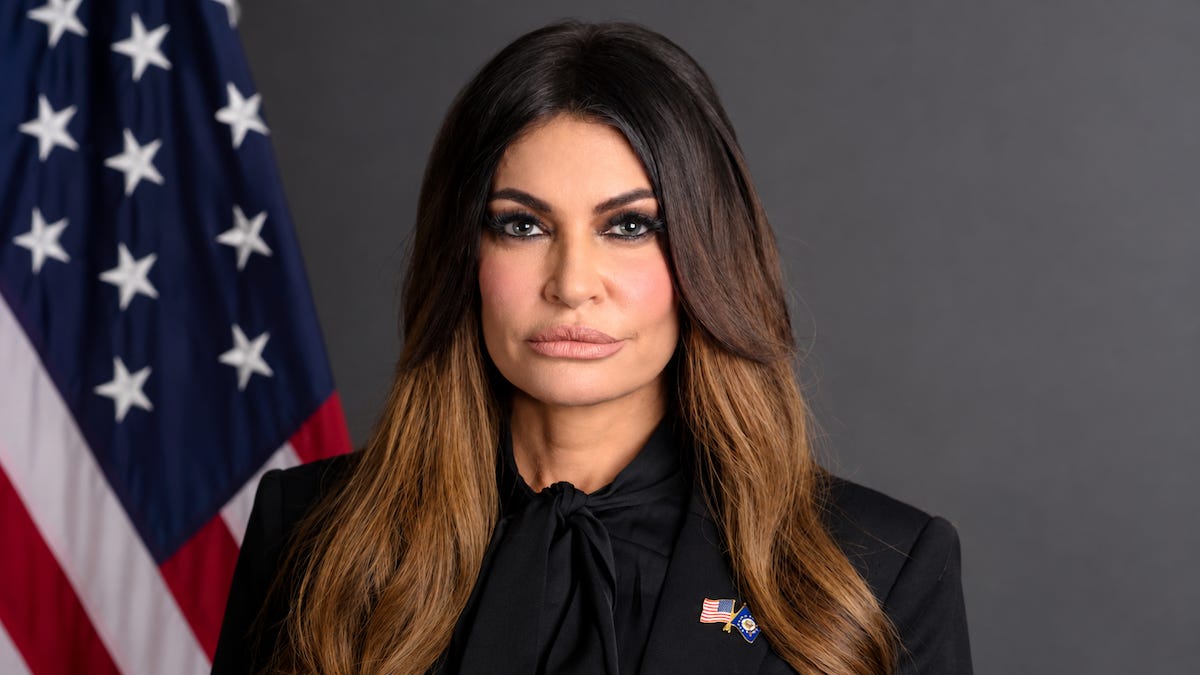
'Honey Please': The Steep Rise and Sudden Fall of Kimberly Guilfoyle.
It started out so well for her. Kimberly Guilfoyle, the U.S. ambassador to Greece until she was effectively fired on live television on Tuesday when the new White House press secretary said that President Trump had asked for her resignation, was at one point engaged to Donald Trump Jr., the president's eldest son. The couple owned a $9.7 million home in Florida, appeared at Trump rallies together and sent each other adoring posts on Instagram.www.allsides.com -
Kimberly Guilfoyle resigns as ambassador to Greece amid allegations of improper conduct
U.S. Ambassador to Greece Kimberly Guilfoyle stepped down Tuesday after the White House requested her resignation over allegations of improper conduct during her tenure at the embassy. In her resignation statement, Ms. Guilfoyle rejected accusations that she had abused her position in the Trump administration and vowed to defend her name. "While my time as Ambassador may be coming to an end, my commitment to President Trump, the America First movement, and the country I love will never end," she wrote on X.www.allsides.com -
Trump ousts Kimberly Guilfoyle as US ambassador to Greece after corruption allegations
President Donald Trump's administration has asked Kimberly Guilfoyle to resign from her position as US ambassador to Greece, according to new White House Press Secretary Katie Zacharia. Guilfoyle, a former Fox News host, was facing mounting scrutiny over allegations she asked a Trump donor to pay her hefty credit card bill in exchange for access to the administration and behaved inappropriately while in Athens.www.allsides.com -
Stephen Miller Desperate to Stave Off Accountability for Losing Texas
emptywheel.net
Deep in a worthwhile profile of Stephen Miller from Zeteo, it describes his fear that Democrats will come after him.In these private, candid moments, Miller has told others that he’s convinced Democrats are going to be coming after him, his family, and his colleagues maybe for the rest of his days. Miller has talked about civil lawsuits, and Capitol Hill investigations and subpoenas – but perhaps the thing that stands tallest in his mind is local and state prosecutors who he says want to put him in a “prison cell.” Federal pardons can make it harder to prosecute former U.S. appointees locally, but such clemency does not preempt local and state prosecutions and investigations in the same way that it would federal probes.
Miller has also privately said he’s worried that Democratic members of a future federal administration may try to get creative, and hunt for ways to get around Trump’s federal clemency actions. (Trump himself, thanks to his far-right pals on the Supreme Court, enjoys an expanded protection of presidential immunity; his underlings, however, don’t enjoy the same privileges… at least not yet!) Miller has also lamented the possibility that liberals will be filing lawsuits against him for years, if not decades, and complained about how the left will try to use “lawfare” to bleed him and his wife – former Trump official and current right-wing lifestyle podcaster Katie Miller – dry financially. (The Millers have a lot of money between them, and they lead at times extravagant lives and enjoy projecting an image of being some of the nation’s top MAGA socialites. Furthermore, multiple sources who’ve dined at different homes that the Millers have resided at over the years say their food was made by a private chef.)
I doubt that’s his primary worry.
After all, polls still show James Talarico leading Ken Paxton in the Senate race, and (far more shockingly) Gina Hinajosa is in striking distance of Greg Abbott (though I think both races have moved towards Republicans as right wing money floods the state in recent weeks). Abbott’s gerrymander looks increasingly like a dummymander, as Harry Enten ranted yesterday.


And while this 41% swing in Latino support towards Dems is not entirely due to Stephen Miller’s gulag — a good deal of it is the same affordability complaint everyone else hates Trump over — his gulag is what has made the difference.
This is why, I suspect, Stephen Miller is so desperate to make the dumbass Talarico hitjob a thing.
If the GOP loses Texas — even if they lose just the Senate and some of the intended gerrymander seats — Stephen Miller will be the obvious scapegoat.
I would not want to be the Jewish guy largely responsible for losing the crown jewel of the GOP electorate if I were part of an increasingly violent fascist party.
To be fair, as Zeteo also notes in their profile, Stephen Miller is really well practiced at scapegoating others.
Two administration sources tell Zeteo that in the wake of the killings, Miller even told Trump and other senior officials that he thought Greg Bovino, the Border Patrol “commander” who became a viral jack-booted presence during Trump’s siege of Minnesota, was acting like a buffoon, and that the administration and then-DHS secretary Kristi Noem didn’t need to engage in the kinds of overtly militarized tactics that they brought to the Twin Cities. The Trump administration could instead, Miller insisted, achieve their mass deportation goals without all that smashing, beating, and shooting.
The two sources say that they and other officials aggressively eye-rolled about this behind Miller’s back, viewing his hurling of Bovino under the bus as transparent ass-covering, once Miller realized that Trump was looking for somebody to blame for the spectacular political and independent-voter backlash to the slayings. Miller had been the chief planner of Trump’s attempted domination of Minneapolis and St. Paul. He had publicly insulted the dead and labeled protesters “terrorists,” reveling in their fear and loathing. But Miller has always had a knack for self-preservation and throwing supposed friends to the wolves, if he feels he needs to do it to survive. And then he got to work at making Trump’s masked secret police, well, more secretive as they roamed America’s suburbs, cities, and rural landscapes.
It’s what fascists do best!
But as the Zeteo profile makes clear, there are a great number of people, even in the Republican Party, who loathe Stephen Miller. And then there are an increasing number of antisemites who’ve been welcomed into the fold.
I’d love if Democrats were, one day, able to hold Stephen Miller and his spouse legally and financially accountable for the crimes against humanity and deaths that they’ve caused.
But if Texas goes Blue, Democrats will likely not have that chance because the Republican Party will be right to hold Miller accountable for the party’s demise.
The post Stephen Miller Desperate to Stave Off Accountability for Losing Texas appeared first on emptywheel.
-
China Still Has Easy Access To TikTok Despite Trump ‘Fixes’
www.techdirt.comRemember how the Trump administration — and folks like Brendan Carr — spent four straight years fear-mongering about China’s purported control over TikTok and its owner, ByteDance? And remember how the Trump administration (with incompetent Democratic lawmaker help) “fixed” the problem by offloading Tiktok to Trump’s billionaire buddies while still maintaining co-ownership with the Chinese?
It was basically a five-year xenophobic fear campaign designed to steal the revenues of a top short-form video company that U.S. giants like Meta were struggling to compete with. And it was propped up by endless empty lip service to propaganda, consumer privacy, and national security; in turn propped up by a tech press that struggled to explain how silly and corruption-fueled it all was.
After the Trump deal, U.S. operations of TikTok now had three “managing investors” that collectively owned 45 percent of the company: Oracle Corporation (Larry Ellison), Silver Lake, and MGX. Another 5 percent is owned by other new investors, 30.1 percent is “held by affiliates of certain existing investors of ByteDance; and 20 percent was retained by ByteDance.
The Trump administration offloaded most of TikTok’s infrastructure to Oracle — a company with a long list of privacy violations — so they could pretend they “fixed privacy issues” with the app. They also set up a bunch of “safeguards” designed to pretend they’d cut off Chinese influence, without actually doing so.
Unsurprisingly, a deep dive by Politico found that little has actually changed in terms of Chinese access to some of the core components of the app and user data. And there’s little to no indication the Trump administration is doing anything to ensure adherence to the deal. Employees are still using AI and internal chat systems built by ByteDance, which would likely make Chinese data collection trivial:
“Employees at the new company, officially named TikTok USDS Joint Venture, still work regularly with the global TikTok organization, according to current and former employees, who were granted anonymity to speak candidly, and internal communications reviewed by POLITICO Magazine. That includes coordinating over new features, sharing information about dangerous trends on the app and collaborating over policies. U.S. employees also still use an internal chat system called Lark, which was built by TikTok’s former Beijing-based parent company, ByteDance, to communicate and share information with both their U.S. and global counterparts.”
Great stuff. There are other instances of largely performative attempts to keep Chinese and U.S. TikTok employees separated, but there’s no real indication this is working or being overseen by anybody competent in the U.S. government:
“At TikTok office buildings, U.S. employees can go to TikTok global offices on different floors but are required to get a chaperone, an employee said, and are prohibited from bringing laptops. Prior to the deal, U.S. employees could mostly move freely between the U.S. and global offices.”
It’s equally murky as to whether “the algorithm” (a subject of endless debate during the fearmongering campaign) is still maintained and updated by ByteDance engineers.
Again, there’s no real indication that this was ever about anything but Trump and his allies hijacking the revenues of a profitable short-form video company under the pretense of national security. You could also easily argue that under Byetance ownership the company was at least incentivized to behave to remain in the U.S.; guys like Larry Ellison — with a long history of ethical and privacy “lapses” — really has no worries that the government will ever hold him accountable for much of anything.
As we noted early on, the Chinese really don’t need TikTok to spy on Americans or funnel propaganda to the electorate. Because we’re too corrupt to regulate data brokers or pass a privacy law, most U.S. consumer data is openly accessible via the public market to anybody — including Chinese intelligence.
The Trump administration is still facing a lawsuit alleging the deal is illegal. And Democrats continue to look positively feckless and ignorant for helping the Trump administration hijack an app (popular with young voters) during a presidential election season where the youth vote mattered more than ever.
-
Ken Paxton stirs vaccine skepticism to ingratiate himself with Maha movement
www.theguardian.comTexas AG and US Senate hopeful announced inquiry into alleged conspiracy between pediatricians, vaccine makers and insurance firms
Ken Paxton, the attorney general of Texas and the Republican candidate for the US Senate, is aligning himself with the Make America Healthy Again (Maha) movement by investigating pediatricians for giving vaccines – actions that could further restrict access to vaccines as deadly outbreaks unfold.
Paxton announced he would investigate an alleged conspiracy between pediatricians, vaccine makers and insurance companies in January, and at least one Texas pediatrician now says she is under investigation. Paxton linked his efforts to a campaign against vaccines from Donald Trump and Robert F Kennedy Jr, the secretary of the US Department of Health and Human Services (HHS), and directly referenced the Maha movement in his announcement. The president endorsed Paxton’s Senate run in May.
Continue reading... -
Republicans are squandering the Latino vote
In 2024 Donald Trump carried 55% of the Latino vote in Texas, up from around 41% in 2020. He also won 14 of 18 counties in heavily-Latino South Texas, within 20 miles of the Mexican border, doubling his showing from four years earlier. But as the midterms approach, support for Trump and the Republican Party among Latino voters in the Lone Star State and elsewhere is dwindling, according to new reports. A poll last month found that 22% of Texan Latino voters who previously supported the President would oppose a Republican House candidate, while 18% disapprove of the job Trump is doing.www.allsides.com -
White House ousts Kimberly Guilfoyle as US ambassador to Greece
Kimberly Guilfoyle, the embattled US ambassador to Greece, has been forced out of her job by the White House following a string of reports about alleged misconduct, marking a sudden and spectacular downfall for a high-profile figure in the MAGA movement with close ties to President Donald Trump's family. New press secretary Katie Zacharia said in her first press briefing Tuesday that the White House had "asked Ambassador Guilfoyle to resign," adding, "She has been a wonderful asset to the team, and we wish her luck."www.allsides.com -
Family of man killed by tiger criticise online content after Trump reposts video
www.theguardian.comRelatives of William Chapman say footage of attack shared online ‘deeply offensive’ and causing them ‘severe distress’
The family of a man killed by a tiger at a wildlife park in the UK have spoken about their “severe distress” at the circulation of online media after Donald Trump reposted a video of the incident.
William Chapman, 23, was mauled to death after entering an enclosure at Yorkshire Wildlife Park, near Doncaster, on Saturday.
Continue reading... -
Abdulrahman Alfozan Was Allegedly Snooping While the Houthis Invaded
emptywheel.net
Because I continue to wonder when Crown Prince Bonesaw Mohammed bin Salman will tire of the poor returns on his billions of investment in the Trump family, I want to compare the timeline of the alleged snooping on OpenAI by Saudi national Abdulrahman Alfozan and the burgeoning conflict between the Houthis and Saudis, in which conflict Trump has done nothing (at least publicly) to intervene and indeed, in which Trump pointedly ignored MbS’ plea for help back on September 10.To be sure, at least as laid out in the affidavit, OpenAI did not find the camera Alfozan is alleged to have placed in a key conference room until several weeks after Trump started ignoring MbS’ pleas for help in mid-September.
They did not find the camera itself until the day after Trump hosted an AI summit in DC on September 29.

But as the Houthis struck two critical points — the Riyadh airport and Aramco — Alfozan was in custody over a long weekend, the kind of thing you arrange to get someone to talk.
There are at least two details in the complaint that suggest Alfozan was targeting this conference room specifically. A query he or his spouse submitted on September 16 asked, “how about external partners, where would those usually meet with [OpenAI] at?” And OpenAI described that conference room as one that,
can be reserved only by executives and executive assistants’ and (ii) typically is used for internal leadership meetings and technical product sessions, as well as external briefings with government officials and business counterparts.
None of this suggests Trump is letting the Saudis sweat an invasion elicited by his own war in Iran because he caught them spying on him.
But he did say, months ago, that he wanted MbS to kiss his ass.
The post Abdulrahman Alfozan Was Allegedly Snooping While the Houthis Invaded appeared first on emptywheel.
-
Democrats cheered Mar-a-Lago raid in 2022, but now call search of Omar's home 'weaponization'
Democratic lawmakers who said in 2022 that an FBI search of former President Donald Trump's Florida home proved that no one is above the law are now calling the search of Rep. Ilhan Omar's home a political attack and an example of a weaponized Department of Justice (DOJ). Omar was first under the DOJ's microscope in 2024 to scrutinize her finances, campaign spending and interactions with a foreign citizen, The New York Times reported in January of this year. Purportedly, that investigation stalled because of a lack of evidence, but her abode was not searched.www.allsides.com -
Rep. Ilhan Omar under investigation by Jeanine Pirro's office
U.S. Attorney Jeanine Pirro said her office is probing Rep. Ilhan Omar's (D-Minn.) financial disclosures, the day after federal agents searched the congresswoman's Washington, D.C. home. The big picture: It's another example of the administration's escalating fight with the progressive lawmaker, who has clashed with the White House over its immigration crackdown — and whom President Trump has labeled as "crooked."www.allsides.com -
Trump press secretary Katie Zacharia says she passed bar exam in China, raising eyebrows
Katie Zacharia, US President Donald Trump's newly appointed White House press secretary, faces questions about her legal credentials after telling reporters on Tuesday that she passed a bar exam "when I moved to China", without identifying the jurisdiction. Zacharia, who has repeatedly described herself as a lawyer, made the remark after her first official White House press briefing. According to her LinkedIn profile, she worked as an associate at Zhong Lun Law Firm, one of China's largest, in Beijing from 2011 to 2013.www.allsides.com -
Trump pardons diesel mechanics for Clean Air Act violations at Alaska rally
President Trump issued pardons at a campaign rally in Alaska on Tuesday for two diesel mechanics who were previously charged with and plead guilty to violating the Clean Air Act. The president signed the pardons for Zachary Czubak and Patrick Fleming on stage at the campaign event in Wasilla after he invited then up on stage.www.allsides.com -
DoJ threatens California over alleged noncitizen voting as Trump tries to rally support for Republicans – US politics live
www.theguardian.comJustice department gives state officials 48 hours to review list of ‘likely noncitizens’ as president heads to campaign rallies in Arizona and Montana
Donald Trump has yet to weigh in on the late night ruling from a federal judge that blocks him from barring CNN, MS Now and Politico access to the White House grounds.
Previously, the president had blasted Judge Timothy Kelly – a Trump appointee – for issuing a temporary pause on his media ban. That expired on Tuesday, and Kelly handed down a preliminary injunction that stops the administration from blocking the outlets while the litigation plays out.
Continue reading... -
The raid on Ilhan Omar’s house is dangerous political theater | Moira Donegan
www.theguardian.comThe raid is meant to cast an air of suspicion and criminality over Democratic candidates who, like Omar, are facing the voters in a matter of weeks
On Monday, federal agents from the Department of Homeland Security raided the Washington DC area home of Ilhan Omar, a Minnesota congresswoman and a progressive Democrat, in the latest instance of Donald Trump’s effort to weaponize the national security state to harass, punish and embarrass his political opponents.
The raid, which was approved by a judge after a reportedly extensive back-and-forth with federal security officials, was nominally carried out in connection with a spurious criminal investigation into Omar’s childhood immigration to the US.
Moira Donegan is a Guardian US columnist
Continue reading... -
Decoding America: Everything you need to know about the midterms – video
www.theguardian.comIn this episode of Guardian Australia’s US politics podcast, co-hosts Reged Ahmad and Jonathan Yerushalmy take a look at the midterms, which are coming up in early November. All 435 house seats are up in this election as representatives only serve fixed two-year terms. In the Senate, 35 of 100 seats are up for grabs too, as senators serve six-year terms.
There are many predictions of a blue wave – a big win for the Democrats, who are tipped to take back the House and Senate. But are pollsters being too optimistic? What are the factors that could instead allow the Republican party and the Trump administration to hold onto power in Congress? They also look at why the US ambassador to Greece, Kimberly Guilfoyle, has been ousted from her job – and whether criticism of the new White House press secretary, Katie Zacharia, is fair
Abdul El-Sayed: Democrats must ‘win by massive numbers’ to fend off Trump election denial
Federal judge orders temporary halt to taxpayer-funded pro-Trump TV ads
-
Everything you need to know about the midterms – podcast
www.theguardian.comIn this episode of Guardian Australia’s US politics podcast, co-hosts Reged Ahmad and Jonathan Yerushalmy take a special look at the midterms which are coming up in early November. All 435 House seats are up in this election as representatives only serve fixed two-year terms. In the Senate, 35 of 100 seats are up for grabs too as senators serve six-year terms.
There are many predictions of a blue wave -– a big win for the Democratic party who are tipped to take back the House and Senate. But are pollsters being too optimistic? What are the factors that could instead allow the Republican party and the Trump administration to hold on to power in Congress? They also look at why US ambassador to Greece Kimberly Guilfoyle has been ousted from her job – and whether criticism of new White House press secretary Katie Zacharia is fair
Continue reading... -
Trump urges Alaskans to vote for the ‘real’ Dan Sullivan in tight midterms battle
www.theguardian.comRepublican senator Dan S Sullivan is vying for re-election against Democrat Mary Peltola – and another candidate called Dan J Sullivan
Donald Trump has encouraged Alaskans to vote for the “real” Dan Sullivan, as he sought a breakthrough for the Republican incumbent senator in a tightly fought Senate race complicated by a rival candidate with a near-identical name.
Sullivan’s re-election campaign this year against Democrat Mary Peltola, a former US House lawmaker, has turned into one of the most hotly contested battles of the midterm elections, in which Democrats are hoping to seize back control of Congress and hamper Trump for the final two years of his presidency.
Continue reading... -
Judge extends White House access to banned media outlets CNN, MS Now and Politico
www.theguardian.comDistrict court judge Timothy Kelly was ruling after Trump administration blocked access to three outlets last month
A federal judge ordered the White House on Tuesday to continue allowing journalists from CNN, MS Now and Politico to access the building as the media coalition’s lawsuit against the Trump administration plays out.
Timothy Kelly, a district court judge, had on 24 September granted a 14-day reprieve for the news organizations, which six days earlier had been banned by the president in an extraordinary move from entering the White House grounds “as a result of their constant ‘reporting’ FAKE NEWS”.
Continue reading... -
Trump Tyranny Tracker | Day 628: Oct. 13, 2026
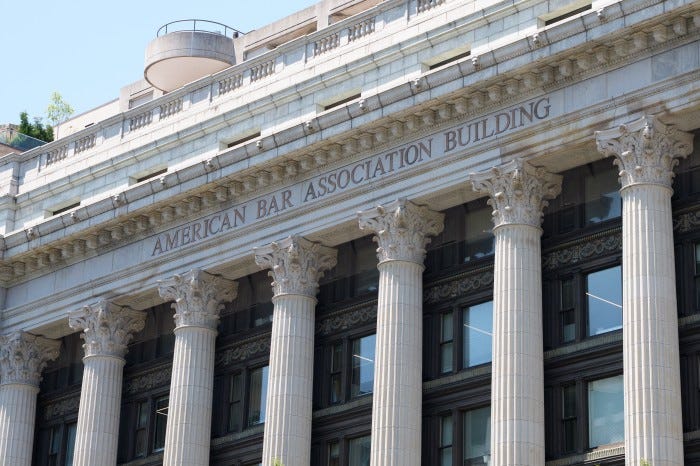
trumptyrannytracker.substack.com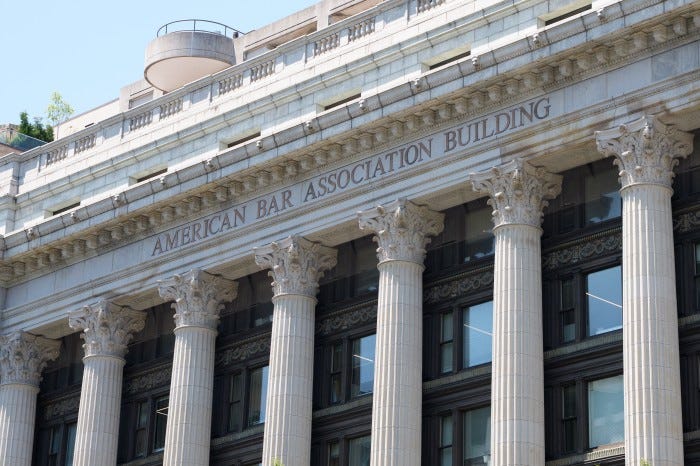 The American Bar Association building in Washington. Aaron Schwartz/Sipa USA/Reuters
Welcome to today’s Trump Tyranny Tracker…
The Justice Department threatening the American Bar Association, federal investigators expanding their investigation into Rep. Ilhan Omar, and former DOGE operatives profiting from their government connections are among today’s top stories.
Today at a Glance
The Justice Department threatens to investigate the American Bar Association.
Federal investigators target Rep. Ilhan Omar’s citizenship and subpoena her family.
Diesel prices surge as Trump eases sanctions on Russia.
What We Need to Pay Attention To
Justice Department Threatens Probe of American Bar Association on Law School Rules
What Happened: The Justice Department threatened to investigate the American Bar Association unless it changes rules restricting how much part-time professors can teach first-year law students. Associate Attorney General Stanley Woodward gave the ABA 15 days to respond and criticized its positions on abortion, affirmative action, and transgender healthcare.
Why It Matters: The Justice Department is threatening an independent legal organization that has challenged Trump in court, while targeting its positions on abortion, affirmative action, and transgender healthcare. Yet again, the DOJ is being weaponized to go after organizations that oppose Trump’s policies.
Source: Wall Street Journal
Corruption News
A Trump Loyalist, a Turkish Investor and a Battle for Wealth and Influence
What Happened: Trump’s former personal lawyer Alina Habba married Turkish investor Turhan Mildon, whose business dealings with people close to Maduro had been investigated by U.S. officials. Venezuela’s interim president reportedly decided not to cancel Mildon’s lucrative contracts after learning that he married Habba.
Why It Matters: Mildon’s marriage to Trump’s former lawyer reportedly helped protect his business interests in Venezuela. People close to Trump continue to use their connections to secure lucrative deals and protect their financial interests.
Source: New York Times
Ken Paxton Partied in Dubai With Fugitives Ahead of High-Stakes Texas Senate Race
What Happened: Texas Attorney General Ken Paxton attended a New Year’s Eve party in Dubai with two fugitives indicted on federal healthcare fraud charges who remained outside the United States. One of them, Anosh Ahmed, donated $190,000 to Paxton, including $25,000 just days after his indictment. Trump endorsed Paxton despite warnings about the trip.
Source: Wall Street Journal
They came to Washington to dismantle government. Now, they’re profiting from it.
What Happened: Roughly two dozen former DOGE operatives have secured private-sector jobs, investments, and business opportunities after leaving government. Companies founded or backed by former DOGE operatives have raised at least $500 million, including a cybersecurity company valued at $1.4 billion that is seeking federal contracts.
Source: The Washington Post
Power Consolidation
Supreme Court agrees to hear watchdog lawsuit seeking records on Elon Musk’s DOGE
What Happened: The Supreme Court agreed to hear Trump’s challenge to a lawsuit seeking public records from Musk’s DOGE. Lower courts ruled that DOGE must comply with public records requests, but Trump argues that it is a presidential advisory body exempt from the Freedom of Information Act.
Why It Matters: Trump is fighting to keep DOGE’s activities secret despite its role in dismantling federal agencies and accessing sensitive information about Americans and the government. Will the Supreme Court require DOGE to follow federal transparency laws or allow Trump to hide its operations?
Source: Associated Press
Weaponization of Institutions
U.S. probe of Rep. Ilhan Omar focuses on birth date, citizenship papers, people familiar say
What Happened: Federal investigators are looking into decades-old allegations that Rep. Ilhan Omar or her late father provided false information on immigration documents, including her birth date. Investigators searched Omar’s home and subpoenaed family members, including her sister, even though previous federal investigations resulted in no charges. Trump has repeatedly attacked Omar, and the investigation could lead to an attempt to revoke her U.S. citizenship. Omar denies the allegations.
Why It Matters: Trump has repeatedly attacked Omar, and now federal investigators are targeting her citizenship, searching her home, and subpoenaing her family weeks before an election. This is how political persecution works in countries like Russia, where law enforcement is used to intimidate political opponents and threaten their families.
Source: The Washington Post and New York Times
Media Suppression & Authoritarian Tactics
Pentagon Names One of Its Own Public Affairs Officials to Run Stars and Stripes
What Happened: The Pentagon appointed public affairs official Christian Devine as acting publisher of Stars and Stripes, allowing him to keep his Pentagon job while overseeing the independent military newspaper. The appointment follows the firings of the paper’s editor-in-chief, publisher, a reporter, and ombudsman following disputes over editorial independence.
Why It Matters: The Pentagon is putting one of its own communications officials in charge of a newspaper that is supposed to report independently on the military. This gives the Pentagon direct influence over its leadership and coverage.
Source: Military.com
Human & Civil Rights Abuses
Trump administration cuts refugees’ deadline to contest status termination, raising fears
What Happened: Trump officials are cutting the time refugees have to challenge the termination of their legal status from 30 days to 10, starting October 14. Officials are also reviewing at least 185,000 refugees admitted under Biden who have pending green card applications.
Why It Matters: Refugees who entered the country legally now have just 10 days to find a lawyer, gather evidence, and fight to remain in the United States. People who fled persecution and violence face losing their legal status and being sent back to the countries they escaped.
Source: Associated Press
Trump’s Medicaid cuts strip refugees and other legal immigrants of their health coverage
What Happened: Medicaid restrictions that took effect October 1 have stripped health coverage from hundreds of thousands of legal immigrants, including refugees and human trafficking survivors. The cuts are part of Trump’s 2025 tax and spending law, which the Congressional Budget Office estimates will leave 7.5 million more people uninsured.
Source: Associated Press
As Trump’s Wall Closes in, DHS Intimidates a Border Tribe With Surveillance, Masked Agents and Drones
What Happened: Trump’s Department of Homeland Security deployed masked agents, surveillance equipment, and drones against members of Arizona’s Tohono O’odham Nation while building a 62-mile border wall opposed by the tribe. Federal agents monitored religious ceremonies, questioned tribal members, and blocked the tribe’s police chief from entering a construction site.
Why It Matters: DHS is surveilling Native Americans, monitoring their religious ceremonies, and interfering with tribal authorities to build Trump’s border wall. The federal government is disregarding tribal sovereignty and threatening sacred lands to push forward a project the tribe opposes.
Source: ProPublica
Government Disruption
Judge halts USDA’s reorganization
What Happened: A federal judge temporarily blocked Agriculture Secretary Brooke Rollins from using federal funds to relocate thousands of USDA employees and reorganize agencies responsible for food assistance, forestry, agricultural research, and farm services. Federal employee unions sued to stop the plan, which has already led to resignations and early retirements.
Source: Politico
Hunger grips a rural community hit by Trump’s cuts
What Happened: More than 5 million Americans, including at least 1 million children, have lost food assistance following Trump’s SNAP restrictions. Nearly three-quarters of major food banks surveyed reported rising demand, while more than 80% received less federal food and funding, forcing some to cut back on distributions.
Source: NBC News
Imperial & Geopolitical Watch
Iran Fortifying Nuclear Sites and Rallying Its People for Return to Fighting
What Happened: Iran is reinforcing its nuclear facilities and preparing for renewed fighting, threatening to attack Saudi oil infrastructure, Gulf states, and regional communications networks if the U.S. launches more strikes. Trump has ruled out attacking Iran before the November 3 election, while the Pentagon is sending a third aircraft carrier strike group and additional Marines to the Middle East.
Source: Wall Street Journal
Saudi Arabia strikes key fuel depot in Yemen as conflict with Houthis escalates
What Happened: Saudi Arabia struck a major Houthi fuel depot in northern Yemen after a week of missile and drone attacks that killed at least 20 people and shut down Riyadh’s main airport. The Houthis launched further attacks on Riyadh and southern Saudi Arabia, including a strike on a Saudi Aramco facility that started a fire.
Source: CNN
Far-Right & Russian Influence Watch
Ukraine Says It Received No Intelligence About Strikes 2 Nights in a Row
What Happened: Ukraine received no advance intelligence warnings from Western allies before Russian missile attacks on October 12 and 13, including a strike on a Kyiv residential building that killed two people and injured 21. The missed warnings came after reports that Trump threatened to cut off intelligence sharing unless Ukraine stopped attacking Russian oil refineries.
Source: New York Times
Economic News
Diesel futures jump, signaling higher prices to come despite Trump’s Russia deal
What Happened: U.S. diesel futures jumped 5% Tuesday despite Trump’s deal with Putin to buy Russian diesel and suspend sanctions on Russia. Diesel prices have risen 70% since the war with Iran began, while Russian supplies would cover less than two weeks of U.S. demand.
Source: NBC News
The latest inflation data is expected to show price increases are accelerating
What Happened: Economists expect September inflation to rise 0.6% from August and 3.6% from a year earlier, driven largely by higher energy prices. Brent crude rose more than 14% in September as Trump’s war with Iran pushed oil prices higher, increasing pressure on the Federal Reserve to raise interest rates.
Source: CNBC
Resistance
Check out 50501 for local and nationwide events…
Source: 50501
By the Numbers
$500 million — Raised by companies founded or backed by former DOGE operatives after their brief time in government.
185,000 — Refugees admitted under Biden whose pending green card applications are being reviewed by Trump officials.
5 million — Americans who have lost food assistance under Trump’s SNAP restrictions, including at least 1 million children.
7.5 million — Additional Americans projected to lose health insurance because of Trump’s tax cuts for the wealthy.
70% — Increase in diesel prices since the U.S. war with Iran began.
What to Watch Next
The DOJ issues subpoenas to Ilhan Omar’s family — Will federal investigators attempt to revoke Omar’s citizenship as Trump continues attacking her and pursuing an investigation weeks before the midterms?
The Supreme Court will decide whether DOGE can keep its operations secret — Will the justices require DOGE to comply with federal transparency laws or allow Trump to keep its records hidden?
DOJ threatens to investigate the American Bar Association — Will the ABA comply with the Justice Department’s demands or face an investigation for refusing to change its rules?
Iran and the U.S. are preparing for another round of fighting — Will the growing U.S. military buildup and Iran’s threats against Gulf energy infrastructure lead to another round of attacks?
Key Takeaways
Political Weaponization — Trump’s Justice Department is threatening to investigate the American Bar Association, while federal investigators are digging into decades-old allegations against Ilhan Omar, searching her home, and subpoenaing her family.
Cronyism — Trump’s associates are using their connections to protect lucrative business deals, while former DOGE operatives are making money in the private sector after helping dismantle federal agencies.
Government Cuts — Millions of Americans have lost food assistance, food banks are struggling to keep up with demand, and a federal judge has blocked Trump’s plan to reorganize the Agriculture Department.
Russia First — Trump eased sanctions on Russian energy while pressuring Ukraine to stop attacking Russian oil refineries. At the same time, Ukraine went two consecutive nights without advance intelligence warnings before deadly Russian missile attacks.
Economic Strain — Diesel prices have risen 70% since Trump’s war with Iran began, while higher energy costs are driving up inflation and making everyday goods more expensive.
Call to Action
Document Everything: Document purges, corruption, and power grabs. Share credible information with journalists, watchdogs, and legal experts. Silence enables authoritarianism—see something, say something.
Defend Press Freedom: Support independent journalism by subscribing to and sharing reporting that challenges Trump’s power grab.
Mobilize for Action: Organize or join legal efforts and resistance movements to protect democracy and human and civil rights.
Support Whistleblowers: Encourage legal defense funds for government workers facing retaliation for exposing corruption.
Follow my work on YouTube → Subscribe to Unmasking Russia
https://youtube.com/@unmaskingrussia
Preorder My New Book…
Putin’s Pawns takes you on a journey from the earliest days of the Cold War and Soviet KGB active measures through Russia’s attacks on Western elections, the rise of the far right, Trump and Russia, the genocidal war against Ukraine, influence operations across Europe, and the shadow war unfolding today.
It is the story of how Moscow spent decades learning to exploit the weaknesses of democracies and how those tactics brought us to this moment.
Preorder now: https://us.macmillan.com/books/9781250796547/putinspawns/
Thanks for reading the Trump Tyranny Tracker. Stay tuned for more updates.
-
BBC asks judge to force Trump to sit for deposition as part of his $10bn lawsuit
www.theguardian.comBBC asks US federal judge to compel Trump’s lawyers to schedule deposition after his team canceled initial session
The BBC is asking a federal judge in Florida to force Donald Trump to sit for a deposition as part of the president’s $10bn defamation lawsuit against the British broadcaster.
According to a Tuesday filing, the BBC and Trump’s legal team had agreed for him to be deposed on Friday. The BBC’s lawyers wrote to the judge that they had spent months trying to secure a location for the deposition from Trump’s team.
Continue reading... -
New White House press secretary a 'devoted fan' of Trump and MAGA
President Trump's new White House press secretary Katie Zacharia is expected to take the podium on Tuesday for her first press briefing. Zacharia steps in as Trump's chief spokesperson at a moment when his popularity has fallen to record lows and Republicans are scrambling to limit potential losses in the midterm elections. The Trump administration is also engaged in a legal battle with the press corps that work to cover Trump. Last month, the White House restricted access by CNN, MS NOW and Politico, news organizations that Trump views as unfriendly. The Justice Department has since launched an investigation into the five television networks that share pool video coverage of Trump.www.allsides.com -
Katie Zacharia's 5 Biggest Challenges as Trump's New Press Secretary
Katie Zacharia begins her new role as President Donald Trump's White House press secretary on Monday, stepping into the spotlight less than a month before the midterm elections. She is taking the highly visible post at a challenging moment for the president and his party. Republicans are embroiled in tough midterm campaigns; the administration's moves on foreign policy are facing intense scrutiny; and the relationship between the White House and the press has been strained by ongoing disputes over media access.www.allsides.com -
Trump’s October Diesel Surprise
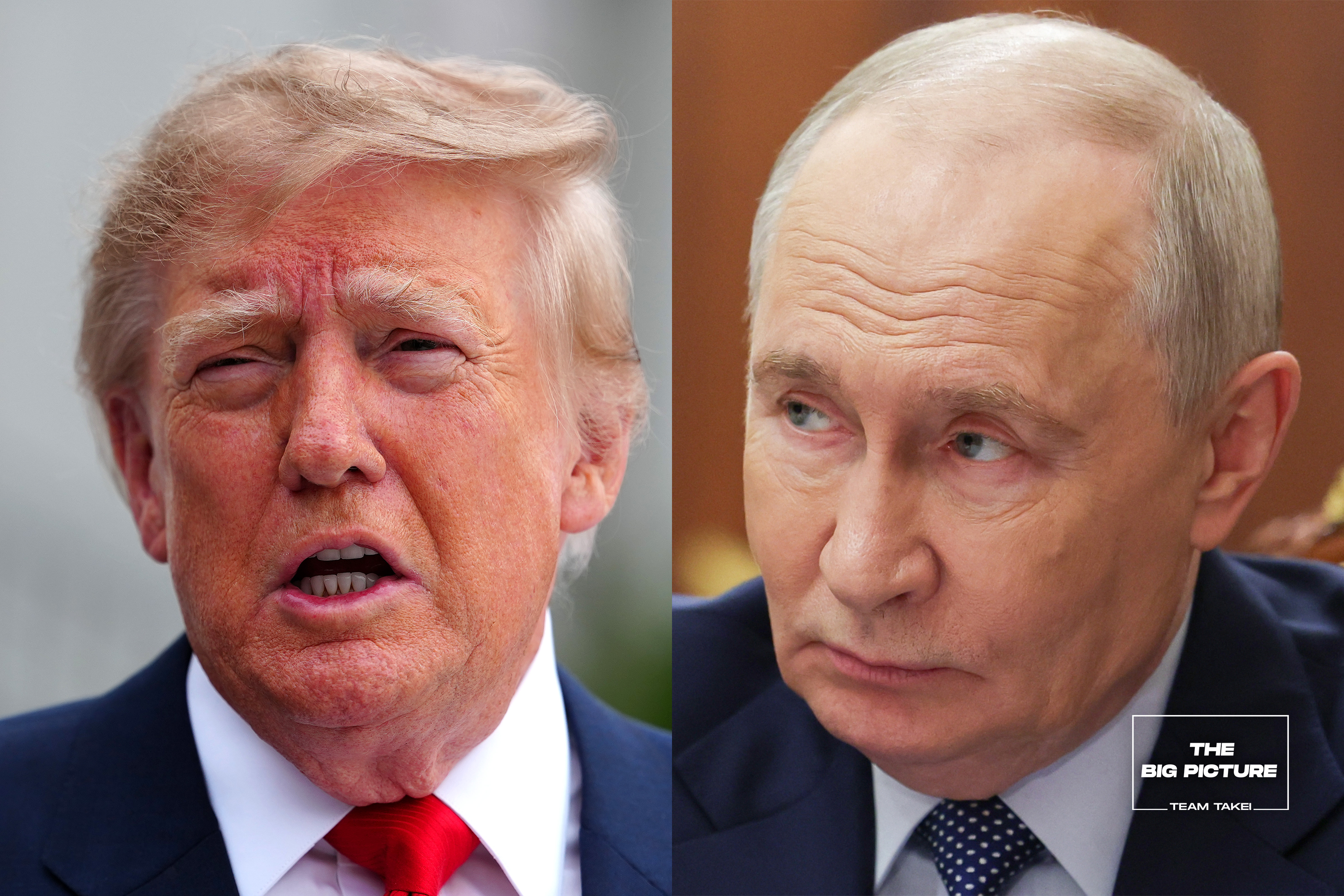
thinkbigpicture.substack.com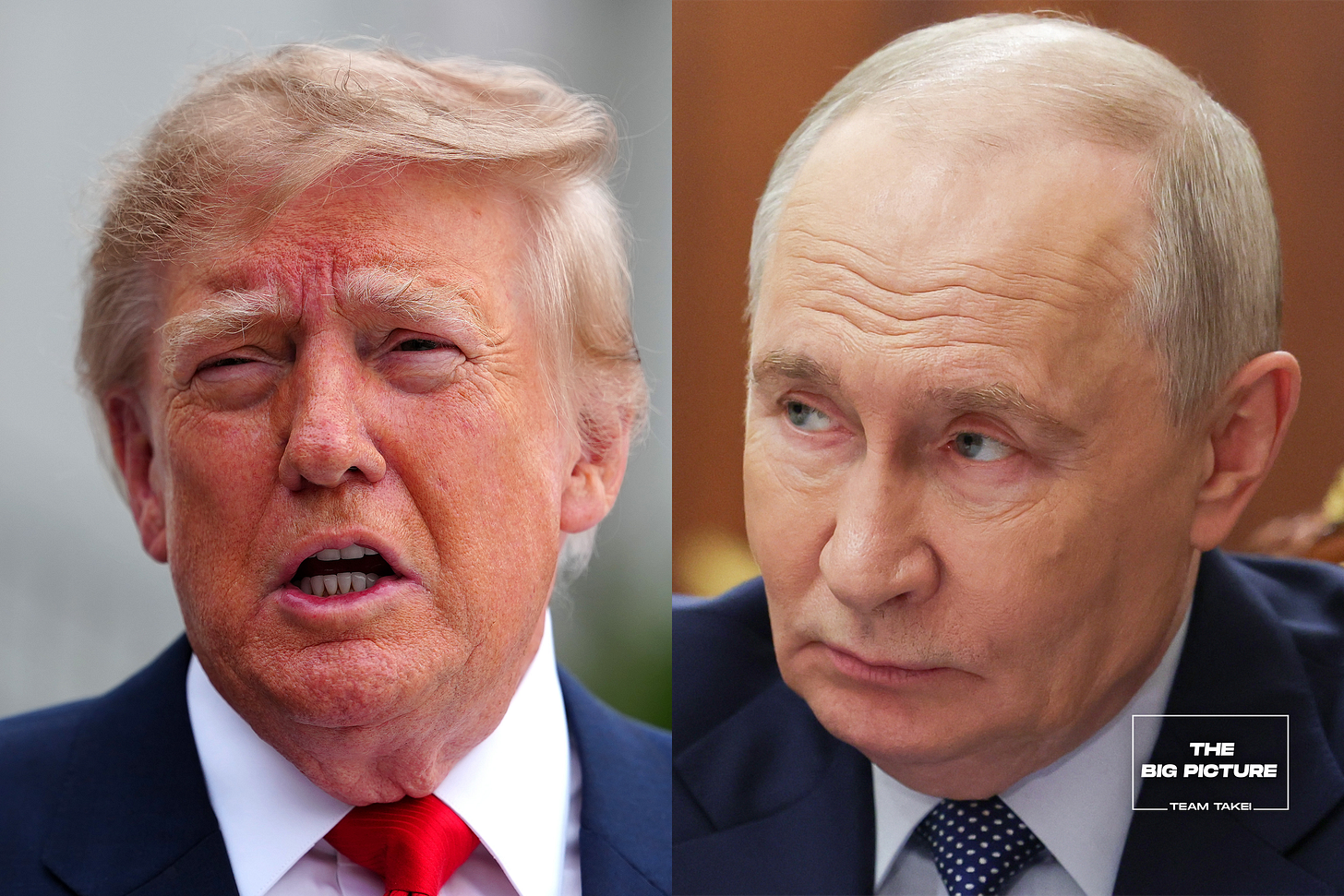 LEFT: U.S. President Donald Trump. Photo by Aaron Schwartz/Getty Images. RIGHT: Russia’s President Vladimir Putin. Photo by Mikhail METZEL / POOL / AFP via Getty Images.
Three and a half weeks before the midterms, President Trump made a surprise announcement. After a phone call with Russian President Vladimir Putin last Friday, Trump declared that Russia would “immediately supply over 300,000 Tons of Diesel Fuel to the American and Global Marketplace,” with millions more tons to follow. Within hours, the Treasury Department, ever willing to follow orders no matter how illegal, issued a waiver letting anyone buy, ship and import Russian diesel, including into the United States, without running afoul of Treasury’s sanctions on Russia. That waiver runs through April 7, 2027.
Trump touted the deal as relief for farmers, ranchers and truckers paying $6.28 a gallon or more for diesel. But many, even in his own party, heard it differently. Bloomberg’s evening briefing on Monday summed up the mood:
“The president’s moves amount to an unwanted October surprise for some Republicans in tough races as their party struggles to maintain its slim majorities in the House and Senate.”
If this was meant as price relief, consumers shouldn’t get their hopes up. Putin’s opening delivery would cover about 13 hours of what Americans used in a day before the Iran war.
The Big Picture is reader-supported.
To receive new posts and support our work,
consider becoming a free or paid subscriber.What Trump agreed to
In his Truth Social post, Trump wrote that Russia would send 300,000 tons of diesel right away, another 500,000 tons in November, 1 million tons after that and then 3 million tons more, depending on the condition of its refineries. He promised diesel prices would fall quickly (they won’t), and later told reporters, “I want to thank President Putin.”
The White House didn’t say who would pay for the diesel or when it would arrive. The Kremlin’s version of the call said only that Russia stood ready to supply oil and oil products to American and global markets, and a Putin aide would not say whether Washington had offered anything in return. A Russian deputy prime minister said Moscow would begin lifting its ban on diesel exports ahead of schedule and could start shipping this month. Russia had barred those exports since July after repeated Ukrainian strikes on its refineries.
The Treasury waiver goes further than Trump’s announcement. It sets no limit on volume or destination. For six months, Russian diesel can be bought, shipped and sold anywhere in the world, including the United States, without violating Treasury’s sanctions on Russia.
The announcement landed while Trump’s envoys, Steve Witkoff and Jared Kushner were meeting Ukrainian officials in Miami to discuss a proposal to end the war. Ukrainian President Volodymyr Zelenskyy was frank: “I believe our team is simply being used as a smokescreen.”
The sanctions Trump and the Treasury set aside
There are laws on the books supposed to prevent this. One was enacted just three weeks before the call, when Trump signed a bill designed to choke off the oil and gas money that pays for Russia’s war in Ukraine. The law is named for the late Sen. Lindsey Graham, the South Carolina Republican and longtime Russia hawk who championed it and died suddenly in July, shortly after returning from Kyiv.
The diesel waiver sets the regime on a collision course with the Graham law and the 2022 ban on all Russian energy imports, which passed the Senate 100-0. That 2022 law allows a president to lift the ban only if Russia agrees to withdraw from Ukraine (it has not), and only after weeks of consultation with Congress and a mandatory waiting period (the White House observed neither). Rep. Lloyd Doggett, a Texas Democrat who was the chief sponsor of that law, says Trump is “directly violating” it.
One provision of the Graham law may trip up Trump’s plans. It orders the president, “notwithstanding any other provision of law,” to raise tariffs on all Russian goods imported into the United States, fuel included, by this weekend. A president may waive that requirement only after formally certifying to Congress that doing so serves the national interest and explaining why. Separately, a bipartisan group of seven senators confirmed the regime neither consulted Congress nor offered any explanation as required by the 2022 import ban. Sen. Thom Tillis, a North Carolina Republican, said there is “a legitimate case for saying the president’s not following the law.”
It’s very on brand.
The Treasury used to sing a different tune about Putin’s military adventurism. Last October, announcing sanctions on Rosneft and Lukoil, Treasury Secretary Scott Bessent called them “Russia’s two largest oil companies that fund the Kremlin’s war machine.”
Now, Treasury is clearing the way for Russian diesel sales that will help fund that same war machine. The Graham law expressly preserves Treasury’s power to issue licenses allowing otherwise prohibited transactions, though that clause says nothing about the 2022 import ban. On Sunday, Bessent told Fox News that “anyone in Congress who says whether it’s an old bill or the current Lindsey Graham bill (that) prohibits us from doing it is wrong.”
Less than 10 days of diesel
The first shipment amounts to about 2.2 million barrels, according to Bloomberg energy columnist Javier Blas. Americans used an average of 3.9 million barrels of diesel and heating oil a day in 2025. Trump’s full package, all 4.8 million tons, comes to roughly 36 million barrels, about nine days of that demand spread over the coming months.
A week before the Putin call, the G7 had agreed to release 100 million barrels of crude oil and diesel from emergency reserves. By back-of-the-napkin math, Putin’s entire offer comes to just over a third of that.
Energy analysts were unimpressed. “What does this do to prices? I think probably not much,” remarked Clayton Seigle of the Center for Strategic and International Studies. As for price relief, don’t hold your breath. Michael Lynch of the Energy Policy Research Foundation noted that every barrel Russia sends to America is a barrel its current buyers won’t get, so those buyers will look elsewhere and prices will stay about where they are.
Tom Kloza, an adviser at Gulf Oil, said market prices fell 7 to 8 cents a gallon on the news, and nearly every trader he spoke with doubted it would change the trend. “Diesel molecules are scarce and promise to be scarce through October, into November and perhaps beyond,” he said. University of Houston energy economist Ed Hirs predicted that relief at the pump would arrive only after Election Day.
Russia may not have much to give. Ukrainian strikes have cut Russian diesel output by about 30 percent, according to the International Energy Agency, and Moscow is keeping its own tanks full. Seigle added that the deal is a boon to Putin, who is trying to sell off summer-grade diesel before Russians need heavier winter grades.
Putin had publicly dangled the offer on Oct. 1 at the Valdai forum outside Moscow, he said, “We already have enough diesel fuel. But it won’t reach global markets because of the bans and sanctions against our oil and petroleum products.” Eight days later, Washington issued its diesel sanctions waiver.
Allies and Ukraine balk
Europe moved quickly to distance itself from Trump’s chummy new deal with Putin.
The European Union’s foreign policy chief, Kaja Kallas, noted that Russian strikes had killed more than 80 Ukrainian civilians in two days and warned that suspending sanctions on Russian diesel would hand Moscow more money to wage war. “This is not the time to ease pressure on Russia, and Europe won’t,” she said. On Monday, Kallas announced that EU foreign ministers had adopted nearly 1,600 new sanctions listings targeting Russia’s military-industrial complex. Germany’s fuel trade association said it expected the U.S.-Russia deal to have little effect on prices at German pumps.
German Chancellor Friedrich Merz declared such a move was out of the question for Germany and Europe, arguing that Russia would negotiate seriously only under pressure. Canadian Prime Minister Mark Carney told Zelenskyy in a call on Sunday that the deal “is in direct opposition to the efforts of Ukraine, Canada, and our allies to create peace and stability in Europe,” his office said. Zelenskyy warned that Moscow would repay the deal “with further terror and perfidy.”
Trump predictably blamed Zelenskyy. He said Saturday that the U.S. had urged Ukraine to stop striking Russian refineries, adding, “He better damn well stop!” He also said Ukraine should “get a new leader who can make a deal.” His remarks came hours after Russian strikes killed at least 20 people in the Ukrainian city of Zaporizhzhia.
Congress pushes back
The deal has opened a rift within the GOP just weeks before Election Day. Rep. Brian Fitzpatrick, a Pennsylvania Republican and co-chair of the Congressional Ukraine Caucus, announced the “Ronald Reagan Peace Through Strength Act,” a bill to block all purchases of Russian oil. He plans to force a vote with a discharge petition, a maneuver that bypasses House leadership if 218 members sign on. Rep. Don Bacon, a Nebraska Republican, agreed to co-sponsor it. “The president has always had a moral blindness when it comes to Putin,” Bacon said. Rep. Marie Gluesenkamp Perez, a centrist Washington Democrat, said she is working with members of both parties on similar legislation.
Other Republicans also broke ranks with Trump. Sen. Lisa Murkowski of Alaska urged Trump to wield the Graham law’s penalties against Moscow, and former House Foreign Affairs Committee Chairman Michael McCaul warned that lifting sanctions would bankroll Russia’s military. Michigan Senate candidate Mike Rogers and Alaska Sen. Dan Sullivan also distanced themselves from the deal, the New York Times reported.
Sen. Richard Blumenthal, the Connecticut Democrat who wrote the sanctions law with Graham, blasted the deal. “This agreement with a murdering dictator is a stain on our nation’s character, an insult to Lindsey Graham’s memory, and directly contrary to Congress’s intent in our bipartisan sanctions bill,” he said.
The White House still has defenders. Senate Majority Whip John Barrasso of Wyoming said on CBS that Trump is focused on bringing down costs. “The president is balancing and has to make tough decisions,” he said. House Majority Whip Tom Emmer of Minnesota also defended the deal on ABC.
Any legislative fix faces long odds. Congress isn’t scheduled to resume voting for several weeks, and its term ends in January. Any bill would also need to clear the Senate and secure Trump’s signature or enough votes to override his veto.
Diesel weasel
Given how little the move is expected to affect prices, and the strong opposition within his own party, a question hangs over the whole deal: Why even bother?
For starters, Trump may feel he needs to look like he’s doing something about high diesel costs. He can’t publicly turn to allies like Canada, where he has already burned bridges. And he can’t get more oil from the Middle East because of the growing war in the region that he himself started with Israeli Prime Minister Benjamin Netanyahu.
As The Atlantic’s Anne Applebaum argues, there may be something else afoot:
“The amount of fuel that Russia could export is too small, the impact on pricing too slight, the narrative too late to shape electoral outcomes. This looks, instead, like something very different: an abrupt, Hail Mary attempt to force Ukraine to surrender and to save the Russian economy, perhaps in order to finally complete the multiple business deals that the Russians are known to have discussed with American negotiators and others in Trump’s orbit.”
Among those deals, as I wrote earlier, is the proposed sale of Lukoil’s foreign oil assets to a group of investors with close ties to Trump’s family and his negotiators. That sale also needs Treasury’s blessing — something that doesn’t seem to be much of an obstacle these days.
Indeed, by accustoming the public and Congress to broad, shady waivers of otherwise strong Russia sanctions, Treasury may be teeing up its next outrageous move: greenlighting a massively corrupt oil asset sale to investors tied to the very people now supposedly negotiating peace between Russia and Ukraine.
Thanks for reading!
This post is public so feel free to share it. -
Enter the Zachbot: Trump’s new press secretary malfunctions on podium debut
www.theguardian.comKatie Zacharia’s maiden briefing was excruciating – at least her predecessor had delivered her propaganda hot
Well, that was weird. Katie Zacharia, the new White House press secretary, made her debut on the podium on Tuesday with all the warmth, wisdom and political dexterity of an AI avatar.
Zacharia was all stilted delivery, nervous tics and lack of eye contact. With an eerie lack of emotion, she served up pro-Trump talking points, took only three questions and vanished after 14 minutes. It was like the West Wing had turned into uncanny valley.
Continue reading... -
Judge orders Trump administration to halt work on historic DC golf course
www.theguardian.comDistrict judge Ana Reyes halts tree-cutting at the East Potomac golf course until 26 October, and now requires advance notice before making course changes
US district judge Ana Reyes on Tuesday ordered a halt to tree-cutting at the East Potomac golf course until 26 October, putting a further pause on work at the historic Washington DC course that has been part of Donald Trump’s plans to remake the country’’s capital city.
Reyes issued the order one day after a tense three-hour hearing in which she harshly criticized the government for having deceived her with its actions over the holiday weekend.
Continue reading... -
Trump speaks on Kimberly Guilfoyle resignation: 'We didn't like what we were reading' – video
www.theguardian.comWhen asked about the decision to request US ambassador Kimberly Guilfoyle's resignation, Donald Trump told the press she 'was doing a good job' but that the administration 'didn't like what we were reading', referring to allegations that Guilfoyle had asked a Trump donor to pay her credit card bill. Guilfoyle, who was once engaged to Trump’s son, Donald Jr, was a longstanding political ally
Continue reading... -
Trump Bans CNN, Then Has DOJ Investigate CNN For Not Covering Him
www.techdirt.comRemember when Elon Musk told advertisers to go fuck themselves… and then sued them (unsuccessfully) for not advertising on his personal propaganda and manipulation site? Well, it appears that Donald Trump is trying a government-backed variation on that abusive power play: claiming that news networks choosing not to cover him after he announced he was initiating a “free press ban” in the White House… is somehow an antitrust violation.
The Justice Department is investigating whether the major television networks — ABC, CBS, CNN, NBC and Fox News — violated federal antitrust laws when the group briefly suspended their pooled coverage of President Trump, according to six people with knowledge of the department’s action.
Officials from the Justice Department contacted networks on Friday and demanded communications and materials related to the White House TV pool, the people said. The pool is a longstanding system where the networks share the responsibility of providing footage of the president and distributing it to other news outlets.
So, before we get into the details here, let’s just do a quick refresher of the same “antitrust 101” lesson I suggested for Elon Musk two years ago during his lawsuit. While there can be antitrust concerns when a group of businesses get together to engage in a boycott, that only applies to situations where that boycott is focused on actual harms to consumers or competition. A boycott with political and expressive aims is protected under the First Amendment, and publicity campaigns aimed at influencing government are not an antitrust violation. This has been established over and over again at the Supreme Court and beyond.
Indeed, as former FTC chair William Kovacic tells the NY Times, the biggest missing factor here is that for there to be antitrust, there needs to be a commercial motive:
“The critical ingredient in successful antitrust cases is to demonstrate that there is unmistakably a commercial motive and that the commercial motive predominates,” Mr. Kovacic said. “And I don’t think they would ever be able to do that here.”
So this “investigation” is little more than fan service for the MAGA faithful in an attempt to create chilling effects on the media after Trump threw a hissy fit that the media wasn’t covering his every damn word as closely as before. The White House TV “pool” reporting involves a rotating group of media entities which share their work with others so that not every journalism org has to have their own camera crew (there are separate pools for radio and print, again to avoid overlap and crowding).
As a reminder, on Friday, September 18th, Donald Trump announced that he was “banning the free press” from the White House, specifically in the form of pulling the press passes from CNN, Politico, and MSNow reporters. On Monday the 21st of September, CNN had been scheduled to handle the TV pool that day, but since it was barred, it didn’t do so. And the other members of the TV pool — ABC, CBS, NBC, and Fox News — all agreed they would not step in to cover for the White House’s clearly unconstitutional attack on CNN and the other media entities barred from the White House.
Thus, for a few days there wasn’t TV pool coverage, which seemed to piss off Trump, even though it was all in response to his own First Amendment-violating censorial actions. He took to his own personal pinboard, Truth Social, to whine about the lack of coverage of Chinese leader Xi Jinping’s state visit:
CNN and MSDNC, to show you how fake they are, today refused to cover one of the Biggest and Most Beautiful Events to take place in many years, the arrival at the White House of the Highly Respected President of China, Xi Jinping, and his beautiful wife, Madam Peng. The event was magnificent—Actually made for Television but, because they’re Fake News, and because they knew how good it would be, they didn’t want credit to be given to ‘TRUMP,’ they refused to be there. That’s why they have such poor Ratings.
Yes, that’s Donald Trump literally complaining that CNN and MSNow “refused to cover” an event days after he had personally banned them from the White House where the event was happening.
The MAGA base, of course, quickly spun up nonsense claims about how not covering the president was clearly an antitrust violation (it’s not) with Laura Loomer attacking the current boss of the DOJ’s antitrust division, Stanley Woodward, as secretly a “Democrat.”

This is all kinds of stupid, given that Woodward has been a MAGA faithful Trump supporter for years. He represented January 6th rioters, and a whole bunch of people in and around Donald Trump, including Peter Navarro, Dan Scavino, and Kash Patel, among others. Politico even dubbed him “the legal nerd who MAGA bigwigs” turn to when they need help. Woodward was also involved in the ridiculous, illegal $1.776 billion slush fund Trump tried to create as part of a “settlement” with himself over his fight with the IRS.
Meanwhile, back in the actual story, by Thursday of that week a judge had granted a temporary restraining order against the White House, telling the White House to let the reporters back in. It took some time to do so, but eventually CNN, MS Now, and Politico reporters were given their WH press passes back, at least while the TRO remains in effect. And by Friday morning, September 25th, after just four days of no TV pool coverage, the networks restarted the press pool.
The White House almost immediately tested the boundaries of the TRO by blocking CNN from Air Force One (claiming the TRO only applied to the White House itself) the very next day. CNN was scheduled to handle the TV pool for that Trump trip to Tennessee, so the pool went dark again directly because the White House barred CNN from the flight. That same day, however, the networks announced they would restart the TV pool coverage, just without CNN, effectively caving to the Trump White House.
So, to sum up, the non-banned networks stood firm to boycott Trump’s TV pool for… five whole days (Monday through Thursday, and then Saturday) before totally caving and continuing to provide Trump pool coverage.
But Laura Loomer called Stanley Woodward the worst insult you can imagine for a MAGA cultist: “a Democrat.” And thus there must be action to feed the culture war beasts. Hence… an investigation into the networks for refusing to run the TV pool for less than a week in response to Trump illegally banning one member of the pool, that, Trump complained, wasn’t covering him even after he had banned them.
In a statement on Saturday, a Justice Department spokeswoman, Emily Covington, described the five networks as having “proudly boycotted covering White House events.”
“Group boycotts among commercial competitors can violate the Sherman Act,” a core antitrust law, Ms. Covington wrote. “The Antitrust Division is simply investigating to determine whether these news organizations have violated the antitrust laws.”
Again, as discussed above, that’s not at all how the Sherman Act works. And everyone involved knows that full well. The only purpose of this is to (once again) punish the press for its editorial choices — and possibly to get private insight into the networks’ editorial decision-making process as part of the investigation.
I mean, it really needs to be emphasized here that the DOJ is investigating CNN for “boycotting” pool coverage it was literally banned from providing. In the MAGA cultist worldview, Donald Trump can ban whoever he wants from the “free press” but those he does not ban are absolutely required to cover him and spread his conspiracy theories and bullshit to the world.
It’s just a continuation of FCC chair Brendan Carr’s threatened investigation into networks that didn’t broadcast Trump’s conspiracy theory-laden speech about China’s supposed interference in the 2020 election (where the documents he declassified actually showed Russia interfered, not China).
But these stories are all the same basic story: Trump has such a fragile but inflated ego that he believes news networks are required to cover him positively, and that he can punish news orgs that (1) don’t cover him positively or (2) don’t cover him at all.
That’s not how the First Amendment works, but it is how the MAGA Trump world punishes news organizations for their editorial choices. But, of course, all the people who spent years screaming about “Biden admin censorship” are suddenly very, very quiet.
-
Trump Sends $500 Obamacare Refunds to Nearly 1 Million Americans in 30 States
Trump Sends $500 Obamacare Refunds to Nearly 1 Million Americans in 30 Stateswww.allsides.com -
Ben Jennings on Donald Trump and the energy ceasefire between Russia and Ukraine – cartoon
www.theguardian.comOrder your own print of this cartoon from the Guardian Print Shop
Ben’s latest book, Drawn to the Chaos, is available to pre-order now
-
‘I will not be silenced’: Trump critic Ilhan Omar defiant after home raided - The Latest
www.theguardian.comDemocrats have described a raid on the home of Congresswoman Ilhan Omar as “deeply disturbing” and a “rogue abuse of power” by the Trump administration. The Democratic representative for Minnesota has long been a target of highly personal attacks by Donald Trump, who claims he was not involved in ordering the Justice Department raid. Omar criticised the raid as an attempt to “weaponize law enforcement” as part of a “campaign of political intimidation” against her. Lucy Hough speaks to Guardian US political reporter Shrai Popat – watch on YouTube
Continue reading... -
Loves Trump, lies and conspiracies: Katie Zacharia is the perfect presidential press secretary | Arwa Mahdawi
www.theguardian.comThe Maga member believes the 2020 election was stolen and seemingly her new boss is saving the world from a cabal of satanic paedophiles. She’ll fit right in then
Poor Donald Trump. His (third) wife seemingly can’t bear to be near him and his (fifth) press secretary recently abandoned him to be with a baby she had only recently met.
“She decided she loved her children more than she loved Donald Trump,” the president lamented in August when Karoline Leavitt decided to step down a few months after giving birth. “I’m very upset about this. She has to go home and spend time with her children. That does happen on occasion with some people – when they love their children.”
Continue reading... -
Donald Trump accused of ‘abuse of power’ after Ilhan Omar home raid
www.theguardian.comDemocrats have described a raid on the home of Congresswoman Ilhan Omar as ‘deeply disturbing’ and a ‘rogue abuse of power’ by the Trump administration. The Democratic representative for Minnesota has long been a target of highly personal attacks by Donald Trump, who claims he was not involved in ordering the Justice Department raid. Omar criticised the raid as an attempt to ‘weaponize law enforcement’ as part of a ‘campaign of political intimidation’ against her. Lucy Hough speaks to Guardian US political reporter Shrai Popat – watch on YouTube
Continue reading... -
Trump says he cares for Americans. They think he's more focused on his wealth, an AP-NORC poll finds
Most Americans think Donald Trump is profiting off the presidency in unethical or illegal ways and is focused more on his wealth than helping people like them, a new AP-NORC poll finds. As Trump's family business pulls in record money from new ventures helped by his policies, the survey from The Associated Press-NORC Center for Public Affairs Research finds that when it comes to allegations that Trump is profiting from the presidency, about 6 in 10 U.S. adults believe he is either illegally profiting or doing something unethical but not illegal. Only about 2 in 10 think the Republican president is doing nothing wrong, while a similar share say they don't know enough to say.www.allsides.com -
In Trump's pardons for public officials, Republicans win most of the mercy
In October 2024, a federal jury in Las Vegas convicted Michele Fiore, a local elected official and ardent supporter of President Donald Trump, of charity fraud. Fiore, the jury found, solicited donations for a slain police officer's memorial and spent nearly $80,000 of it on plastic surgery, her daughter's wedding and rent. The jury deliberated for less than two hours, including a lunch break, before finding Fiore guilty on seven charges brought by the Department of Justice. Weeks before she was to be sentenced last year, Trump granted Fiore "a full and unconditional pardon," sparing her the prospect of decades in prison, payment of criminal fines, and any restitution to donors whose funds she misspent. In a statement at the time, a White House spokesperson noted Fiore's support for the president and said that Biden-era prosecutors had targeted the politician, known in Nevada as "Lady Trump," because of "outspoken conservative views."www.allsides.com -
Trump Has Asked Kimberly Guilfoyle to Resign, White House Says
President Trump has asked Kimberly Guilfoyle to resign as U.S. ambassador to Greece following a string of damaging reports, including that she asked a Republican donor to pay off her credit card, the White House press secretary said Tuesday. In response to a question from a reporter about Ms. Guilfoyle's status, Mr. Trump's new press secretary, Katie Zacharia, said: "We have asked Ambassador Guilfoyle to resign. She has been a wonderful asset to the team and we wish her well."www.allsides.com -
Trump picks fight with GOP senators over Russia diesel deal
President Trump is picking a fight with Senate Republicans right before the midterm elections with his surprise deal to allow Russia to export diesel to the United States. Four Republican senators — Sens. Susan Collins (Maine), Lisa Murkowski (Alaska), John Curtis (Utah) and Thom Tillis (N.C.) — have already spoken out against the controversial deal between Trump and Russian President Vladimir Putin.www.allsides.com -
Judicial Notice Supplement (10.11.26): High Drama
davidlat.substack.com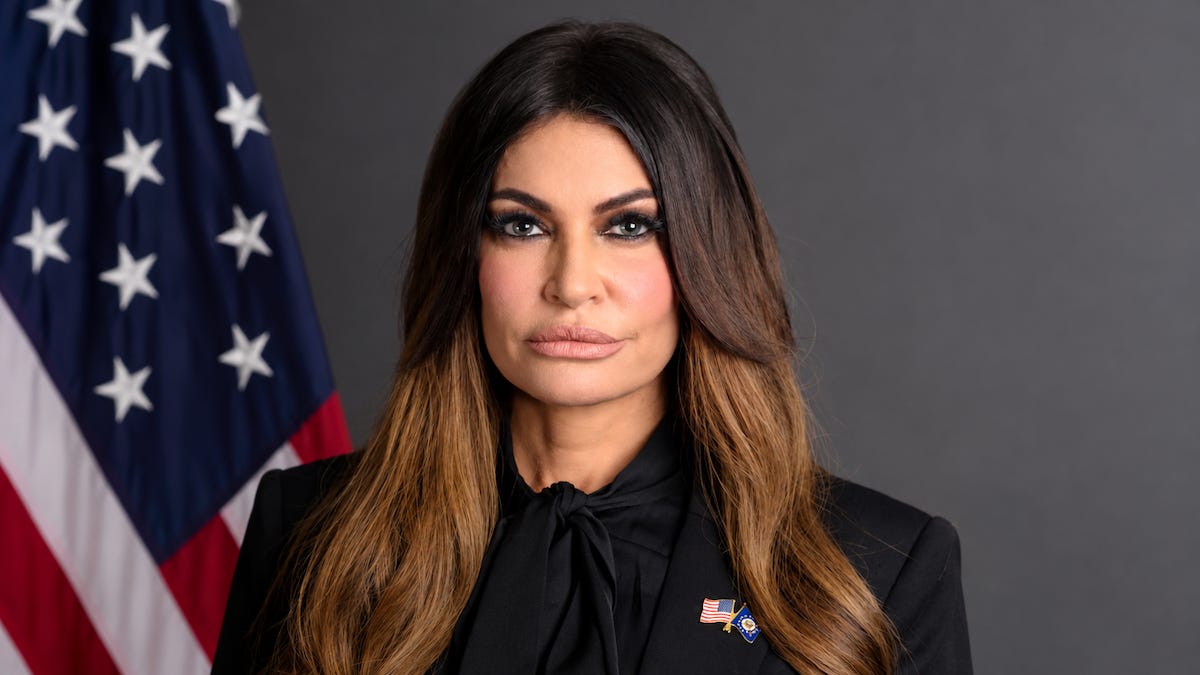 U.S. Ambassador to Greece Kimberly Guilfoyle, a lawyer with possible legal issues (official portrait, cropped by ChatGPT).
Welcome to another edition of “Judicial Notice Supplement” or “JN Supp.”—a “pocket part” of sorts to Judicial Notice proper, for those of you old enough to know what a pocket part is. In JN Supp., I highlight noteworthy legal news from the prior week that I couldn’t squeeze into the main edition of Judicial Notice.
As I mentioned in the comments to the last installment of Judicial Notice, I’m hoping to return to the traditional format of a single JN post in the near future—perhaps as early as next weekend. I resorted to the two-post format this time around only because of scheduling issues related to our short family trip down to Disney World (which was a lot of fun, but is now over).
As usual with JN Supp., this post covers only news that broke last week, i.e., during the week ending October 11 (reflected in the date in the title of this post). Stories from this week will be mentioned in this coming weekend’s Judicial Notice.
Let’s dive in, shall we?
Lawyer of the Week: Mathew Rosengart.
Besides Mathew Rosengart, who secured an excellent outcome for the Grammy-winning singer FKA twigs in her litigation against the actor Shia LaBeouf, these lawyers were in the news last week:
In last week’s JN Supp., I mentioned senior prosecutor Kurt Olsen’s resignation from the U.S. Department of Justice’s “grand conspiracy” investigation into how some of Donald Trump’s adversaries allegedly worked in concert to violate his civil rights. According to articles in The New York Times and The Wall Street Journal about the difficulties and delays that are plaguing this probe, Olsen resigned after failing a polygraph test, which created problems for his security clearance. Olsen denied these claims to both publications.
Speaking of the DOJ, Assistant Attorney General for Civil Rights Harmeet Dhillon has been hailed as a hero in conservative circles for how she has reshaped the DOJ Civil Rights Division—which now focuses on issues such as alleged racial preferences in elite-university admissions, rather than the division’s traditional enforcement priorities. Not surprisingly, this has led to massive turnover, with around 300 lawyers leaving and 130 coming in—and some of her new hires have unorthodox backgrounds, as reported by Glenn Thrush of The Times.
In other Justice Department news, the DOJ’s Office of Professional Responsibility is investigating the conduct of Chicago federal prosecutors in the “Broadview Six” investigation (a controversy previously discussed, at length, in these pages).
Speaking of possible prosecutorial misconduct, what’s the latest about embattled Philadelphia District Attorney Larry Krasner? Two prosecutors in his office, Katherine Ernst and Steven Wildberger, accuse Krasner of filing court documents “filled with misrepresentations aimed transparently and shamefully at harming our reputations.” It’s a long story (also covered in past editions of Judicial Notice), but Ernst and Wildberger are antagonists of Krasner in a drama that could end with him getting charged with federal offenses.
Yes, this is more political than legal in nature. But because Kimberly Guilfoyle is a lawyer (and former prosecutor) and her alleged conduct could have legal implications, I thought I’d mention the allegations—first reported by the WSJ—that she pleaded with a Trump donor to pay off $100,000 of her Amex bill. I doubt she’ll face any legal consequences, but the controversy could cause Donald Trump to fire her from her current post as U.S. ambassador to Greece. [UPDATE (11:29 a.m.): Trump asked Guilfoyle to resign, according to the new White House Press Secretary, Katie Zacharia—and Guilfoyle promptly tendered her resignation, tweeting that “[s]erving as the United States Ambassador to Greece has been the honor of a lifetime” and that the allegations against her “are false, and I intend to vigorously defend my name, my reputation, and my integrity.”]
Turning to happier news, kudos to Jeffrey Chen of Bondurant Mixson & Elmore, who became the rare associate to argue before the U.S. Supreme Court. Representing the petitioner in Johnson v. United States Congress, he faced tough questions from the justices, according to Kelsey Dallas of SCOTUSblog. But regardless of the outcome, it’s obviously an honor to argue before the high court, especially as an associate. (Jeff Chen won’t be an associate for much longer; he’s getting promoted to partner next year, per Jordan Fischer of Bloomberg Law.)
Congratulations and best wishes to Conor Kennedy, an associate at the California-based plaintiffs’ firm Wisner Baum, and Giulia Be, the Brazilian pop star, who celebrated their marriage last Saturday in Rio de Janeiro. The hundreds of guests who attended three days of wedding festivities included Secretary of Health and Human Services Robert F. Kennedy Jr., the groom’s father; actress Cheryl Hines, Conor’s stepmother; and a slew of Brazilian celebrities.
In memoriam:
Gordon Davis—a Harvard Law School graduate and former Biglaw partner, best known for helping to turn around Central Park during his successful tenure as head of New York City’s Department of Parks and Recreation—passed away at 85.
Joseph P. “Joe” Klock Jr.—described by the SDFLA Blog as “one of the best-known Miami trial lawyers of his generation,” who argued before the U.S. Supreme Court in Bush v. Gore (on behalf of then-Florida Secretary of State Katherine Harris)—passed away at 77.
Theodore St. Antoine, dean of the University of Michigan Law School from 1971 to 1978, passed away at 97.
May they rest in peace.
Judge of the Week: Judge James Ho.
In addition to Judge James Ho (5th Cir.) and his latest colorful concurrence, last week brought other news about judges and the judiciary:
Justice Samuel Alito is still making the rounds to promote his new book, So Ordered: An Originalist’s View of the Constitution, the Court, and Our Country—and there are a number of Alito-related articles I’d like to bring to your attention:
When Greg Stohr of Bloomberg asked whether he might retire from the Supreme Court if the Democrats won control of the Senate in the midterm elections, Justice Alito said, “I intend to stick around through this Term. I made that decision many months ago.” As conservative commentators noted on X, committing to stay through the end of October Term 2026 doesn’t foreclose announcing a retirement after the midterms, but making it effective at the end of the Term—which would let a lame-duck Senate, still controlled by Republicans, confirm his successor. But I think it’s fair to read Justice Alito’s comments as a clue that he is highly unlikely to do that.
For broad overviews of Justice Alito’s tenure on the Court and distinctive jurisprudence, check out the justice’s own words—in a wide-ranging podcast interview with Kyle Peterson of the WSJ editorial board—as well as profiles by Maureen Groppe for USA Today and Justin Jouvenal for The Washington Post.
And for a discussion of Justice Alito’s SCOTUS service and jurisprudence that engages substantively with So Ordered, check out Jack Goldsmith’s essay in The Atlantic, “Zombie Originalism: Samuel Alito’s efforts to revamp the conservative legal philosophy reveal that a new movement is ascendant.”
If Justice Alito were to retire with Donald Trump still in the White House, who might be nominated to fill the justice’s seat? One factor worth noting is that when it comes to his judicial picks, Trump likes them young—and “has appointed far more federal judges who are under 40 than his predecessors,” as reported by Erica Orden in an interesting piece for Politico (in which I’m quoted).
On the other end of the age spectrum, the judicial misconduct proceedings against Judge Pauline Newman (Fed. Cir.) have been transferred from the Federal Circuit to the Eleventh Circuit, as reported by Michael Shapiro for Bloomberg Law. As Josh Blackman pointed out at the Volokh Conspiracy, Chief Justice John Roberts made this reassignment not long after the Court declined to hear Judge Newman’s appeal in Newman v. Moore, the case she filed to challenge her suspension from the bench. Might these developments be related?
Back in August, I wrote about how Judge Jennifer “Jenn” Mascott (3d Cir.) played a role in running a public-affairs firm that had been led by her late husband Jeff Mascott, after inheriting his ownership stake following his death at 48. Senators Chris Coons and Lisa Blunt Rochester—the two Democratic senators representing Delaware, where Judge Mascott maintains her chambers—have filed an ethics complaint against the judge over this, as reported by Politico (via Howard Bashman’s How Appealing).
Speaking of judicial ethics, the DOJ is asking the Fifth Circuit to remove Judge Fred Biery (W.D. Tex.) from future proceedings in the case of Liam Ramos, the five-year-old boy who was detained by ICE in Minnesota and sent with his father to Texas before Judge Biery ordered his release. As noted by Kyle Cheney of Politico, the government is supporting its claim that Judge Biery is biased by citing, among other things, a rather unusual email that the judge sent to counsel in the case (although note that the Fifth Circuit denied the DOJ’s request to add it to the record on appeal).
Some friendly advice for Los Angeles Superior Court Judge Robert Draper: when defending yourself at a judicial disciplinary hearing against allegations that you made inappropriate sexual and racial comments, don’t refer to a lawyer who previously appeared before you as a “beautiful young woman.”
In memoriam: Judge Patrick “Pat” Conmy, who served on the U.S. District Court for the District of North Dakota for 15 years, passed away at 92. May he rest in peace.
Ruling of the Week: Martin v. United States.
Aside from a pair of Fifth Circuit cases and Martin v. United States, a decision by the Eleventh Circuit in a case on remand from the Supreme Court, last week’s news didn’t bring many big rulings. One of the most interesting decisions of the past couple of weeks came not from a federal court or a state high court, but from a state intermediate appellate court—specifically, the Arizona Court of Appeals.1
In State of Arizona v. Horcasitas, the Arizona Court of Appeals affirmed the manslaughter conviction of Gabriel Paul Horcasitas, but vacated his sentence and remanded for resentencing. Writing for a unanimous panel, Presiding Judge D. Steven Williams explained that the trial judge “heard and relied on an [AI video] rendering of the victim speaking to his family, the court, and Horcasitas.” But Judge Williams and his colleagues ruled that this video “was not reliable”:
[The AI video] does not reflect actual events. Indeed, rather than documenting an event or recording a particular moment, the AI video presents a depiction of the victim and his thoughts created from the imaginings of the victim’s sister.
Moreover, despite the explanations concerning the genesis of the AI video, it presents the statement (including non-verbal communications made through facial expressions and the like) as coming directly from the victim. It erases the interpretive distance between the family’s belief about what the victim would have said and the victim’s own voice and opinions. Indeed, the AI victim stated, “this here is a true representation of who I was, you know, not how the courtroom portrayed me.” No disclaimer could cure that error.
The victim’s sister, Stacey Wales—who presented the AI video featuring her deceased brother at sentencing—had this to say to The Times:
Nobody lied or attempted to deceive the court into believing Chris was alive or had recorded the video before he died. Everyone that reached out to me that saw it that knew Chris emphatically agreed and affirmed the message in the AI video is what Chris believed and could hear him saying in real life.
The appellate court drew an arbitrary line between media formats. Families routinely play slide shows, display collages, recite hypothetical conversations, or read poetry to convey their grief.
This is, as far as I know, the first published opinion by an appellate court addressing the use of an AI-generated victim-impact video at sentencing. But I doubt it will be the last, as AI continues to make its presence felt in more and more areas of American life—and law. And I could see other courts coming out differently on this issue.
Readers, what do you think? (I realize this poll question might be overly simplistic; feel free to qualify or explain your vote in the comments.)