Conversation
-
Trump’s October Diesel Surprise
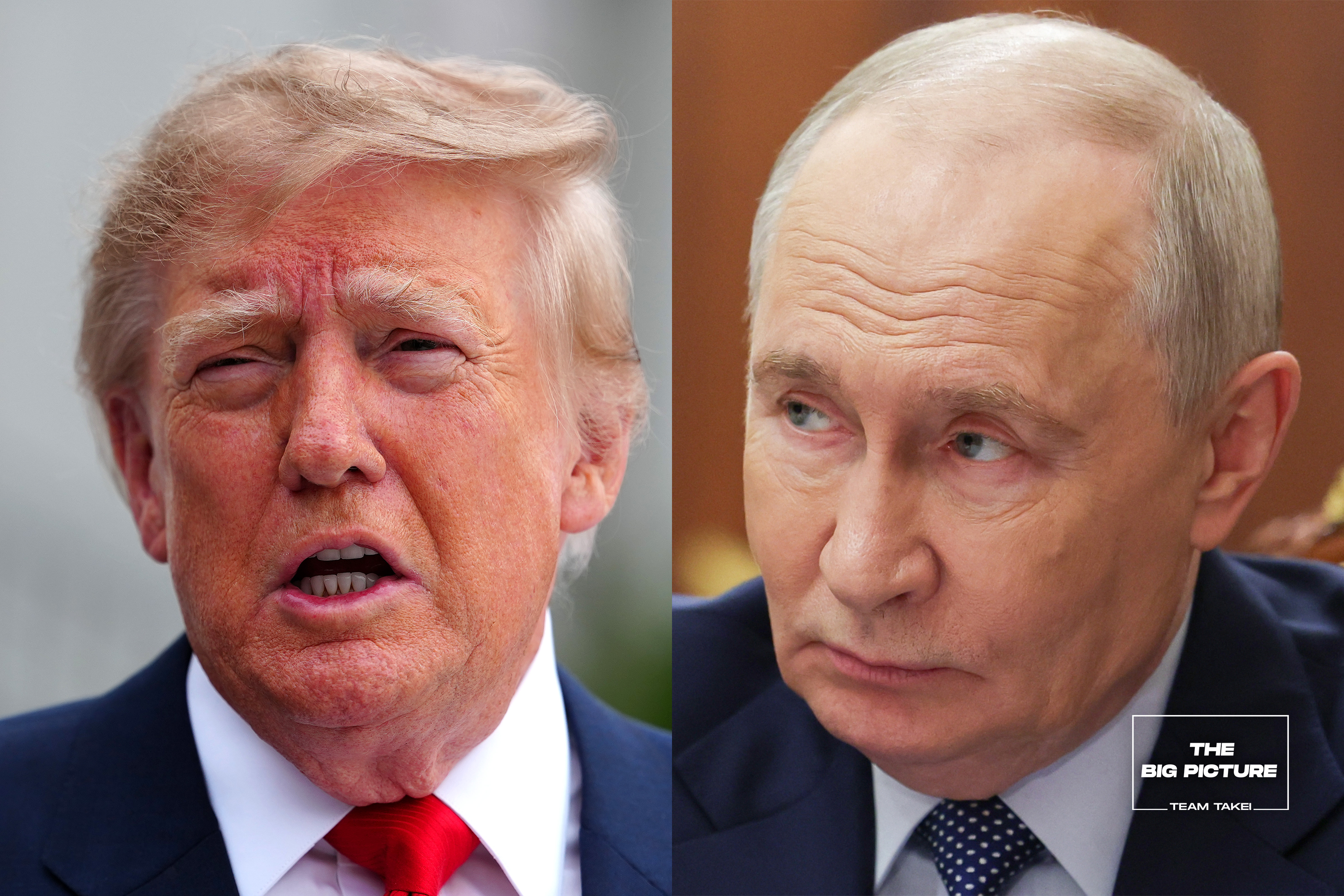
source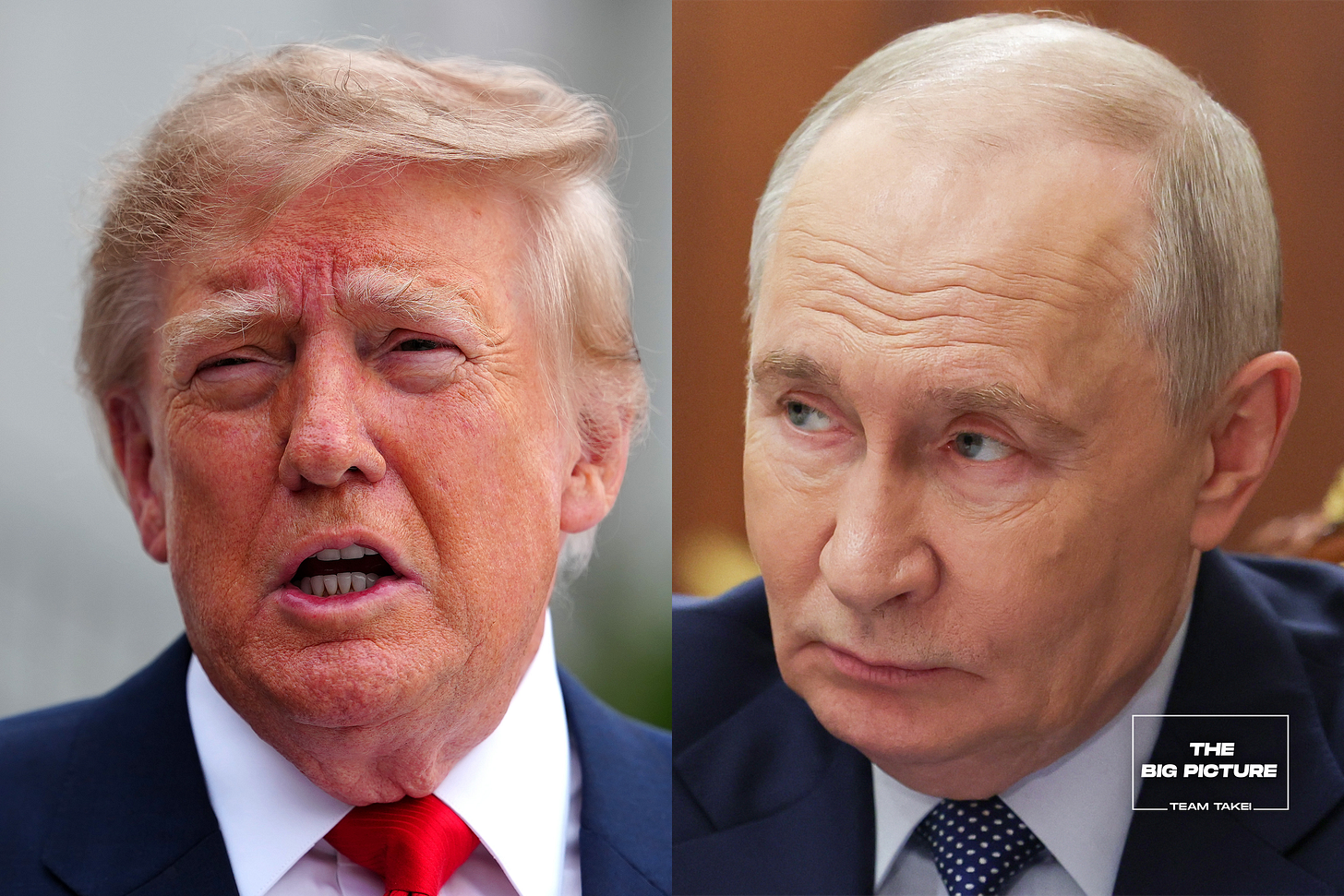 LEFT: U.S. President Donald Trump. Photo by Aaron Schwartz/Getty Images. RIGHT: Russia’s President Vladimir Putin. Photo by Mikhail METZEL / POOL / AFP via Getty Images.
Three and a half weeks before the midterms, President Trump made a surprise announcement. After a phone call with Russian President Vladimir Putin last Friday, Trump declared that Russia would “immediately supply over 300,000 Tons of Diesel Fuel to the American and Global Marketplace,” with millions more tons to follow. Within hours, the Treasury Department, ever willing to follow orders no matter how illegal, issued a waiver letting anyone buy, ship and import Russian diesel, including into the United States, without running afoul of Treasury’s sanctions on Russia. That waiver runs through April 7, 2027.
Trump touted the deal as relief for farmers, ranchers and truckers paying $6.28 a gallon or more for diesel. But many, even in his own party, heard it differently. Bloomberg’s evening briefing on Monday summed up the mood:
“The president’s moves amount to an unwanted October surprise for some Republicans in tough races as their party struggles to maintain its slim majorities in the House and Senate.”
If this was meant as price relief, consumers shouldn’t get their hopes up. Putin’s opening delivery would cover about 13 hours of what Americans used in a day before the Iran war.
The Big Picture is reader-supported.
To receive new posts and support our work,
consider becoming a free or paid subscriber.What Trump agreed to
In his Truth Social post, Trump wrote that Russia would send 300,000 tons of diesel right away, another 500,000 tons in November, 1 million tons after that and then 3 million tons more, depending on the condition of its refineries. He promised diesel prices would fall quickly (they won’t), and later told reporters, “I want to thank President Putin.”
The White House didn’t say who would pay for the diesel or when it would arrive. The Kremlin’s version of the call said only that Russia stood ready to supply oil and oil products to American and global markets, and a Putin aide would not say whether Washington had offered anything in return. A Russian deputy prime minister said Moscow would begin lifting its ban on diesel exports ahead of schedule and could start shipping this month. Russia had barred those exports since July after repeated Ukrainian strikes on its refineries.
The Treasury waiver goes further than Trump’s announcement. It sets no limit on volume or destination. For six months, Russian diesel can be bought, shipped and sold anywhere in the world, including the United States, without violating Treasury’s sanctions on Russia.
The announcement landed while Trump’s envoys, Steve Witkoff and Jared Kushner were meeting Ukrainian officials in Miami to discuss a proposal to end the war. Ukrainian President Volodymyr Zelenskyy was frank: “I believe our team is simply being used as a smokescreen.”
The sanctions Trump and the Treasury set aside
There are laws on the books supposed to prevent this. One was enacted just three weeks before the call, when Trump signed a bill designed to choke off the oil and gas money that pays for Russia’s war in Ukraine. The law is named for the late Sen. Lindsey Graham, the South Carolina Republican and longtime Russia hawk who championed it and died suddenly in July, shortly after returning from Kyiv.
The diesel waiver sets the regime on a collision course with the Graham law and the 2022 ban on all Russian energy imports, which passed the Senate 100-0. That 2022 law allows a president to lift the ban only if Russia agrees to withdraw from Ukraine (it has not), and only after weeks of consultation with Congress and a mandatory waiting period (the White House observed neither). Rep. Lloyd Doggett, a Texas Democrat who was the chief sponsor of that law, says Trump is “directly violating” it.
One provision of the Graham law may trip up Trump’s plans. It orders the president, “notwithstanding any other provision of law,” to raise tariffs on all Russian goods imported into the United States, fuel included, by this weekend. A president may waive that requirement only after formally certifying to Congress that doing so serves the national interest and explaining why. Separately, a bipartisan group of seven senators confirmed the regime neither consulted Congress nor offered any explanation as required by the 2022 import ban. Sen. Thom Tillis, a North Carolina Republican, said there is “a legitimate case for saying the president’s not following the law.”
It’s very on brand.
The Treasury used to sing a different tune about Putin’s military adventurism. Last October, announcing sanctions on Rosneft and Lukoil, Treasury Secretary Scott Bessent called them “Russia’s two largest oil companies that fund the Kremlin’s war machine.”
Now, Treasury is clearing the way for Russian diesel sales that will help fund that same war machine. The Graham law expressly preserves Treasury’s power to issue licenses allowing otherwise prohibited transactions, though that clause says nothing about the 2022 import ban. On Sunday, Bessent told Fox News that “anyone in Congress who says whether it’s an old bill or the current Lindsey Graham bill (that) prohibits us from doing it is wrong.”
Less than 10 days of diesel
The first shipment amounts to about 2.2 million barrels, according to Bloomberg energy columnist Javier Blas. Americans used an average of 3.9 million barrels of diesel and heating oil a day in 2025. Trump’s full package, all 4.8 million tons, comes to roughly 36 million barrels, about nine days of that demand spread over the coming months.
A week before the Putin call, the G7 had agreed to release 100 million barrels of crude oil and diesel from emergency reserves. By back-of-the-napkin math, Putin’s entire offer comes to just over a third of that.
Energy analysts were unimpressed. “What does this do to prices? I think probably not much,” remarked Clayton Seigle of the Center for Strategic and International Studies. As for price relief, don’t hold your breath. Michael Lynch of the Energy Policy Research Foundation noted that every barrel Russia sends to America is a barrel its current buyers won’t get, so those buyers will look elsewhere and prices will stay about where they are.
Tom Kloza, an adviser at Gulf Oil, said market prices fell 7 to 8 cents a gallon on the news, and nearly every trader he spoke with doubted it would change the trend. “Diesel molecules are scarce and promise to be scarce through October, into November and perhaps beyond,” he said. University of Houston energy economist Ed Hirs predicted that relief at the pump would arrive only after Election Day.
Russia may not have much to give. Ukrainian strikes have cut Russian diesel output by about 30 percent, according to the International Energy Agency, and Moscow is keeping its own tanks full. Seigle added that the deal is a boon to Putin, who is trying to sell off summer-grade diesel before Russians need heavier winter grades.
Putin had publicly dangled the offer on Oct. 1 at the Valdai forum outside Moscow, he said, “We already have enough diesel fuel. But it won’t reach global markets because of the bans and sanctions against our oil and petroleum products.” Eight days later, Washington issued its diesel sanctions waiver.
Allies and Ukraine balk
Europe moved quickly to distance itself from Trump’s chummy new deal with Putin.
The European Union’s foreign policy chief, Kaja Kallas, noted that Russian strikes had killed more than 80 Ukrainian civilians in two days and warned that suspending sanctions on Russian diesel would hand Moscow more money to wage war. “This is not the time to ease pressure on Russia, and Europe won’t,” she said. On Monday, Kallas announced that EU foreign ministers had adopted nearly 1,600 new sanctions listings targeting Russia’s military-industrial complex. Germany’s fuel trade association said it expected the U.S.-Russia deal to have little effect on prices at German pumps.
German Chancellor Friedrich Merz declared such a move was out of the question for Germany and Europe, arguing that Russia would negotiate seriously only under pressure. Canadian Prime Minister Mark Carney told Zelenskyy in a call on Sunday that the deal “is in direct opposition to the efforts of Ukraine, Canada, and our allies to create peace and stability in Europe,” his office said. Zelenskyy warned that Moscow would repay the deal “with further terror and perfidy.”
Trump predictably blamed Zelenskyy. He said Saturday that the U.S. had urged Ukraine to stop striking Russian refineries, adding, “He better damn well stop!” He also said Ukraine should “get a new leader who can make a deal.” His remarks came hours after Russian strikes killed at least 20 people in the Ukrainian city of Zaporizhzhia.
Congress pushes back
The deal has opened a rift within the GOP just weeks before Election Day. Rep. Brian Fitzpatrick, a Pennsylvania Republican and co-chair of the Congressional Ukraine Caucus, announced the “Ronald Reagan Peace Through Strength Act,” a bill to block all purchases of Russian oil. He plans to force a vote with a discharge petition, a maneuver that bypasses House leadership if 218 members sign on. Rep. Don Bacon, a Nebraska Republican, agreed to co-sponsor it. “The president has always had a moral blindness when it comes to Putin,” Bacon said. Rep. Marie Gluesenkamp Perez, a centrist Washington Democrat, said she is working with members of both parties on similar legislation.
Other Republicans also broke ranks with Trump. Sen. Lisa Murkowski of Alaska urged Trump to wield the Graham law’s penalties against Moscow, and former House Foreign Affairs Committee Chairman Michael McCaul warned that lifting sanctions would bankroll Russia’s military. Michigan Senate candidate Mike Rogers and Alaska Sen. Dan Sullivan also distanced themselves from the deal, the New York Times reported.
Sen. Richard Blumenthal, the Connecticut Democrat who wrote the sanctions law with Graham, blasted the deal. “This agreement with a murdering dictator is a stain on our nation’s character, an insult to Lindsey Graham’s memory, and directly contrary to Congress’s intent in our bipartisan sanctions bill,” he said.
The White House still has defenders. Senate Majority Whip John Barrasso of Wyoming said on CBS that Trump is focused on bringing down costs. “The president is balancing and has to make tough decisions,” he said. House Majority Whip Tom Emmer of Minnesota also defended the deal on ABC.
Any legislative fix faces long odds. Congress isn’t scheduled to resume voting for several weeks, and its term ends in January. Any bill would also need to clear the Senate and secure Trump’s signature or enough votes to override his veto.
Diesel weasel
Given how little the move is expected to affect prices, and the strong opposition within his own party, a question hangs over the whole deal: Why even bother?
For starters, Trump may feel he needs to look like he’s doing something about high diesel costs. He can’t publicly turn to allies like Canada, where he has already burned bridges. And he can’t get more oil from the Middle East because of the growing war in the region that he himself started with Israeli Prime Minister Benjamin Netanyahu.
As The Atlantic’s Anne Applebaum argues, there may be something else afoot:
“The amount of fuel that Russia could export is too small, the impact on pricing too slight, the narrative too late to shape electoral outcomes. This looks, instead, like something very different: an abrupt, Hail Mary attempt to force Ukraine to surrender and to save the Russian economy, perhaps in order to finally complete the multiple business deals that the Russians are known to have discussed with American negotiators and others in Trump’s orbit.”
Among those deals, as I wrote earlier, is the proposed sale of Lukoil’s foreign oil assets to a group of investors with close ties to Trump’s family and his negotiators. That sale also needs Treasury’s blessing — something that doesn’t seem to be much of an obstacle these days.
Indeed, by accustoming the public and Congress to broad, shady waivers of otherwise strong Russia sanctions, Treasury may be teeing up its next outrageous move: greenlighting a massively corrupt oil asset sale to investors tied to the very people now supposedly negotiating peace between Russia and Ukraine.
Thanks for reading!
This post is public so feel free to share it.