Timeline
Every post and feed across this instance
-
Trump announces vague ‘morally binding’ AI deal among tech CEOs for ‘tremendous self-policing’
US president also issues executive order officially rebranding ‘artificial intelligence’ as ‘superintelligence’
Donald Trump announced on Tuesday that the heads of the largest US tech and AI companies had signed on to a “morally binding” agreement to put controls on artificial intelligence. He announced the deal, called the Joint Commitment On Frontier Responsibilities, following a White House luncheon with top tech executives.
“It’s almost like a constitution in a way, and the biggest people in the world signed that, and I signed it as president, and it really is a form of protection,” Trump said.
Continue reading... -
Kash Patel Has Gotta Go
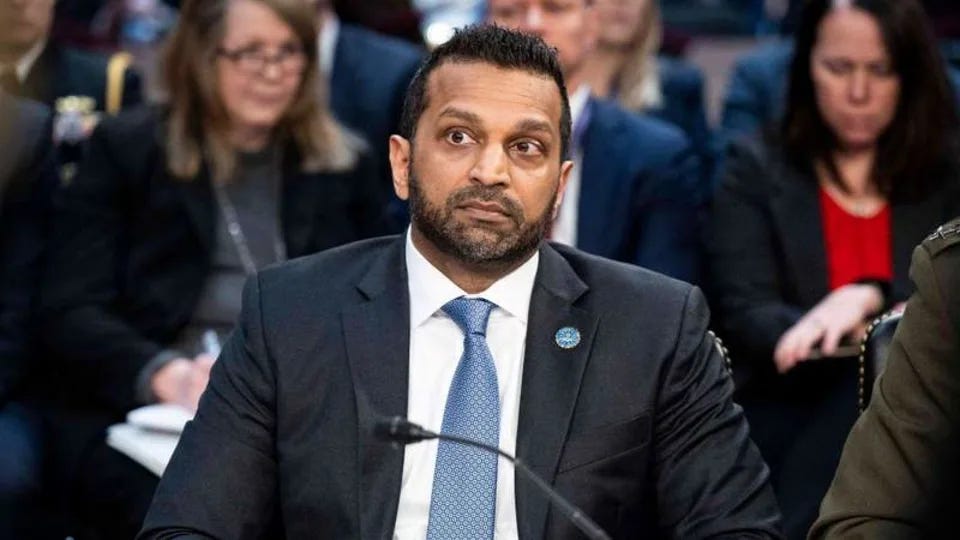 Kash Patel (AOL screen grab)
Imagine you were an undercover FBI agent in a Mexican warehouse with Russian gangsters last week when your phone buzzed with this headline: “Hackers Say They Have Data on All FBI Employees.”
All FBI employees. Job applicants, too, reportedly.
That actually was the headline last Tuesday at 404 Media, the reporter-owned independent news outlet that broke the astounding, not to mention alarming, story.
The ShinyHunters hackers: 20-somethings with an anarchist streak and a taste for millions in bitcoin ransom loot.
“The hack appears to have swept up home addresses, Social Security numbers, secretive job assignments and much more,” The New York Times reported after analyzing some of the records. “Many FBI employees first learned about the hack when news reports about it surfaced on Tuesday, according to current and former officials.”
Imagine that: You’re on the street in a dangerous place and your phone lights up with that headline.
And what did FBI management do? According to news accounts, they “instructed employees to remain vigilant at home and at work, report any unsolicited contacts or threats, avoid answering calls from unknown numbers and set up voice mail accounts with A.I.-generated voices.”
Oh sure. Kind of a shelter-in-place advisory.
Imagine how that went down with the FBI rank-and-file, but especially agents working on ultra-sensitive penetrations of, say, a violent drug gang, a Chinese spy ring or, for that matter, an organization of criminal hackers with tentacles in Russia.
“Remain vigilant?” You’ve got to be joking. But here’s the punch line: “The next day, FBI. staff received an email reminding them that October is cybersecurity awareness month,” The Times said.
History as Prelude
It was only six weeks ago that The Atlantic magazine reminded us that the Trump administration has been shredding cyber defenses since the day it took office, starting with the Cyber Infrastructure and Security Agency (CISA) at the Department of Homeland Security, apparently because its professional director, Christopher Krebs, refused to backstop Trump’s baseless, insidious claims that the 2020 election was stolen from him.
“During the DOGE fever of the first few months of Trump’s return, CISA’s budget was reduced and its staff cut by one-third,” wrote The Atlantic’s Nick Miroff and Yvonne Wingett Sanchez. “The agency hasn’t had a permanent, Senate-confirmed director since Trump retook office. In April, the White House proposed deeper cuts to CISA’s budget …”
Patel did his part, replacing the FBI’s assistant director for cyber operations, Brian Vorndran, who left the Bureau. Patel turned to Brett Leatherman, a veteran agent with over two decades at the bureau, who took over the cyber division in June 2025. It looked like a normal, solid succession, but a former FBI agent said the cyber division was struggling with the shock of the radical political transition—Patel was firing anyone associated with the Russia-Trump and Jan. 6 probes—and shifting mission priorities—“a disruption investigative teams are usually shielded from,” as the Information Security Media Group noted. When Democrats on the Senate Judiciary Committee accused Patel of not filling other senior cyber posts, he responded with an undocumented claim that cyber crime arrests had risen by “40 to 60 per cent” and refused to identify any of the replacements.
Six months later, this past March, CNN reported that Patel fired a dozen agents and staff from a counterintelligence unit tasked with monitoring Iranian threats—days before Trump unleashed U.S. strikes on Iran. Rank incompetence in the service of misguided loyalties.
All this, mind you, comes 11 years after China’s cybertheft of more than 20 million records from the Office of Personnel Management, which holds the personal data of all federal employees (outside the CIA and other intelligence agencies). It was an event “considered so catastrophic that officials and lawmakers vowed to never let something like it happen again,” as the Times put it last week.
But it did happen again, and at the FBI, no less—our premier domestic security agency. Who’s to say whether Chinese, Russian, Iranian or even North Korean cyber warriors, supercharged with AI bots, haven’t been rooting around in those files for months?
The FBI released a video Tuesday featuring Agent Leatherman looking fiercely into the camera and declaring: “We know how to find you”—peak, on-brand Trump TV.
In a normal time, under a normal administration, Patel would have been instantly removed—or fallen on his sword—for this dreadful, possibly catastrophic dereliction of duty. But, seemingly protected by his ideological twin in the White House, Steven Miller, there seems no bottom to the shame Patel can bring to the FBI, whose initials, its best employees—and dewey-eyed boosters— still like to say, stand for “Fidelity, Bravery, Integrity.”
That brand has surely frayed since early 2025. (National security historian Garrett M. Graff did a marvelous, albeit blood-boiling recounting today of Patel’s many shortcomings and missteps—the drinking, the absenteeism, the investigations grand-standing, the Las Vegas apartment, the FBI jet flights with the girlfriend, to the Olympics hockey game, etc, etc.—so I need not burden you with them again.)
The bottom line is that Patel’s just gotta go. The cyber breach shows yet again he’s way out of his depth, at the very least. God forbid some hostile state, terrorist group or religious nuts mounts a mass drone and/or biological warfare attack on Washington, New York, L.A.—or Silicon Valley. How confident are you that Kash Patel’s FBI can defeat them?
Not much, I’d guess.
I’m tired of writing about Trump’s feckless, malignant security agency heads. By tradition, the intelligence beat is generally free of partisan politics. I wish we could get back to that. Meantime, the work goes on. SpyTalk is a reader-supported publication. To receive new posts and support my work, consider becoming a free or paid subscriber.
-
The GOP Crisis: Five Separate Stories, One Looming Disaster
 Photo Credit: Dan Scavino Jr./x.com
Most weeks for this column, I take one big story and pull back to show the larger picture. Today I’m working in the other direction, taking a snapshot of the past week’s headlines and walking through how, taken together, they tell a single story: a Republican Party in crisis, with 35 days before the midterm elections.
These headlines help explain the abysmal numbers now making their own headlines. Trump’s disapproval rating reached 60.4 percent this week, his worst mark across both terms. A top Republican strategist advising several federal campaigns told Axios, “It looks worse than 2018 now.” A new Emerson College poll has Democrats leading the generic congressional ballot by a striking 11 points, 53 to 42 percent. The news is even worse among independents, who backed Trump in 2024 and now favor Democrats 60 percent to 31 percent. Even Republicans are wavering: Trump’s approval among them fell nine points, from 82 to 73 percent, in a single week of Reuters/Ipsos polling.
Trump, backed by Republican allies in Congress, has made a string of truly damaging choices, and the results now belong to the whole party. Rather than admit their mistakes and attempt to fix them, Republicans are blaming everyone else and, in some cases, acting astonishingly tone-deaf.
Don’t stop the party
On Saturday, White House Deputy Chief of Staff Dan Scavino posted a six-second, AI-generated video. In it, Scavino rides a gold luggage cart down a fictionalized White House corridor with his wife, Erin, and Lara Trump as Eric Trump pushes. Scavino sprays champagne to Pitbull’s “Don’t Stop the Party,” and President Trump greets the group at the end.
Frat-boy antics aside, many saw it as a big middle finger to struggling Americans. Some of the sharpest criticism came from the right.
“This is precisely the midterm messaging the GOP needs from the Deputy White House Chief of Staff,” Jonah Goldberg, the editor in chief of the center-right Dispatch, wrote sarcastically. On Sunday afternoon, Scavino answered the backlash with another AI-generated video of the imagined afterparty. “…as the typical nutters are losing their s--t over AI created content, well done! It is AI, correct?” he posted.
The imagined celebration followed a real one: Thursday’s state dinner for Chinese President Xi Jinping, Xi’s first state visit to the United States in more than a decade. On Instagram, Scavino called his video his “post State Dinner party.”
The irony runs deeper. A White House fact sheet on Xi’s visit, released Friday, noted that Trump “urged President Xi to increase production of refined petroleum products to stabilize global supply.”
But it was the United States that disrupted that supply, driving up prices that are now devastating consumers, shippers and rural families. On Monday, AAA put the national average for diesel at $6.45 a gallon, compared with $3.68 a year earlier. Diesel first crossed the psychologically important $6 mark in mid-September before spiking even higher. The surge arrived just as farmers entered harvest, the most fuel-intensive stretch of the agricultural year. The USDA projects farm fuel and oil expenses of roughly $22 billion this year, up nearly 29 percent from 2025. The American Farm Bureau Federation expects farmers to operate below break-even again.
Carrie Prejean Boller, a former Miss California USA and longtime Trump backer, addressed Scavino directly. “Many Americans can’t afford groceries, gas or their mortgage payment, and you post a tone deaf AI video of you and your buddies partying at the People’s House.”
A “Chinese psyop”
House Speaker Mike Johnson wasn’t having a very good week, either. On Fox Business on Monday, host Cheryl Casone asked him about opposition to data centers.
“Don’t buy it. It is a Chinese psyop. I really believe that. It’s not a conspiracy theory. I think they’re pushing those ideas,” he said, dismissing the widespread public backlash against data center projects across the country. Johnson cast the backlash as a Democratic ploy for the midterms.
This is how the GOP turns a kernel of truth into a full-blown crisis. Foreign influence operations have in fact targeted the debate over data centers. In August, Elon Musk’s X platform claimed it had identified about 200 accounts, within a suspected Chinese bot farm of roughly 200,000, whose posts could manipulate the American debate over AI and energy policy. But Jessica Brandt, a former Office of the Director of National Intelligence official who tracked foreign influence efforts, emphasized to The New York Times, “Foreign actors aren’t manufacturing American debates over the future of A.I., they are exploiting them.” Jim Prosser, a Silicon Valley communications consultant and former head of corporate communications at Twitter, put it more bluntly: “If you can get both Greg Abbott and Kathy Hochul agreeing on something, it’s probably not a Chinese psyop, it’s probably not a mass delusion people are having on these issues.”
The “psyop” explanation was already making the rounds among tech investors that month and has landed one of its promoters in federal court. Kevin O’Leary, the “Shark Tank” investor behind the proposed Stratos data center in Box Elder County, Utah, went on Fox News and accused local opponents of operating as “two cells inside of Utah” on behalf of the Chinese Communist Party. He later posted that he had no evidence tying them to China, and Fox News apologized. Two of the people he named have sued him and the network for defamation.
The real anger isn’t manufactured in China. It comes straight from people who live next to these facilities. As I noted in The Big Picture in August, neighbors have complained of diesel generator fumes and the constant hum from cooling systems and fans. Backup generators at some sites reach 105 decibels. A Meta facility in El Paso is projected to draw about 480,000 gallons of water a day on average, and as much as 2.5 million on the hottest days.
Then come the bills: The average residential Georgia Power bill rose more than $43 a month between 2022 and 2025, an increase utility watchdogs have tied in part to building out the grid for large data center customers.
Voters have already punished Republicans over data centers. In Utah, state Senate President J. Stuart Adams, one of the most powerful Republicans in the state, lost his June primary after backing the Stratos project near the Great Salt Lake. Lee Perry, a former Box Elder County commissioner who was defeated over the same project, was blunt about the cause: “Do I think that the data center vote cost me the election? Yes I do.”
Much of the opposition comes from Johnson’s own Republican Party. A Fox News poll released last week found that 71 percent of voters oppose building AI data centers in their area. A July survey reported by The Hill found 60 percent of Republicans, and even 53 percent of MAGA Republicans, opposed to a data center near them.
In Ohio, Nvidia agreed in August to guarantee up to $105 billion in land, lease and power obligations for a single OpenAI campus, with no accompanying commitment on ratepayer costs. At the time, Ohioans faced projected average summer electricity costs above $800, up 17 percent from the year before. The National Republican Senatorial Committee warned in a memo that same month that Sen. Jon Husted of Ohio could lose his seat due to voter anger about data centers.
Hey, at least he served 60 days!
The last thing Republicans want to talk about is how they went easy on or covered up for child sexual predators. Yet Texas Attorney General Ken Paxton brought it up himself, right in the thick of a pitched battle for a U.S. Senate seat.
Defending his office’s involvement in a slap-on-the-wrist deal for a man accused of years of child sexual abuse, Paxton said, “The criticism has been that I let a child predator out, having one day. Well, guess what? They served 60 days. It wasn’t what we wanted, but we did not control that situation. We did our best to present the case. The jury decided what it was.”
Paxton was responding to an ad from his opponent, Democrat James Talarico, attacking his office’s handling of the case against Adam Hoffman, a former Waco attorney. The record contradicts him on every point.
Hoffman was indicted on a charge of continuous sexual abuse of a child, which carries a sentence of 25 years to life. After his trial ended in a hung jury, Paxton’s office declined to retry the case and instead negotiated a plea deal that reduced the felony to two misdemeanors. Under the initial offer, Hoffman would serve just one day in jail and avoid the sex offender registry. In his signed plea, Hoffman admitted to touching the child sexually without consent. When Judge Roy Sparkman balked at the one-day offer, prosecutors came back with 30. The boy’s mother appeared at sentencing to object, and Sparkman raised the sentence to 60 days and ordered Hoffman to surrender his law license for five years. Hoffman served just 29 days.
Talarico’s ad is part of a larger case against Paxton. “Ken Paxton is the most corrupt politician in America,” Talarico told supporters when he launched his general election campaign in May. He noted that the Republican-controlled Texas House impeached Paxton on corruption allegations in 2023 before the state Senate acquitted him. Talarico has likened the Hoffman plea to an “Epstein-style sweetheart deal.”
The victim’s mother voiced a similar sentiment, saying her son’s case “was treated differently because of who Adam Hoffman was and who represented him.” Hoffman’s attorney, Gerry Morris, also represented Nate Paul, the real estate developer and big Paxton donor at the center of Paxton’s impeachment. Paxton was accused of using his office to help Paul in exchange for favors, including a job for Paxton’s alleged mistress and renovations to his home. Morris has called any connection between his work for Paul and the Hoffman case “an absolute, total falsehood,” and has said Paxton played no part in the plea negotiations.
There’s also the cover-up angle. Paxton’s office has kept its records on the case hidden. In July, it rejected an open records request from Talarico’s campaign for communications tied to the plea deal, documents Talarico calls the “Hoffman Files.” This month in Dallas, Talarico appeared with survivors of Jeffrey Epstein and accused Paxton of “a history of covering up abuse.”
The charge lands with a public already convinced that the powerful are shielded from the consequences of grievous crimes. In a Reuters/Ipsos poll in June, three-quarters of Americans said they believe the federal government is still hiding information about Epstein’s alleged clients. Eighty-four percent, including similar shares of Republicans, Democrats and independents, said the Epstein files show that powerful people in America are rarely held accountable.
The war comes to farm country
On Monday afternoon in the Oval Office, Trump announced that Mesabi Metallics would build a $15 billion steel mill in Iowa. He was joined by Iowa Republicans facing competitive races, including Rep. Ashley Hinson, the party’s Senate nominee, and Rep. Mariannette Miller-Meeks, whose district will host the mill.
The show of unity masked an important break. Both Iowa officials standing beside Trump, who appeared to be dozing off at times during the event, had recently split with him over the war in Iran because of the toll it is taking on the agricultural economy of their state. Hinson had regularly voted against resolutions to limit Trump’s war powers, but last week she reversed course and called for an immediate end to the war. “Iowans are being squeezed and shouldn’t have to foot the bill at the pump or the checkout line for the war in Iran,” she wrote. Miller-Meeks, who had also opposed earlier resolutions, voted for one this month. “Americans do not want another forever war,” she said.
But Trump has shown no sign of ending the war. At a rally in North Carolina earlier this month, he called rising gas prices “a very inexpensive price to pay for what we’ve done,” and added, “Frankly, even if it was a lot more.” On Saturday, he rejected an Iranian proposal to reopen the Strait of Hormuz within seven days, saying it “would not be acceptable.” He has told aides he expects a renewed bombing campaign against Iran after the midterm elections.
Other Republicans have changed their words while keeping their votes. On Monday, Sen. Shelley Moore Capito of West Virginia said, “So, would I tell the president, ‘End the war now?’ Yes, I would.” Earlier this month, she had said she would not vote to limit his military authority. Husted told Politico that “the war needs to come to an end as quickly as possible so that we can lower gas prices.” Two days later, he voted against another war powers resolution. It failed in the Senate, 49-50.
Gas prices aren’t the only problem
The war’s costs have now spread from the gas pump to the price of borrowing. On Sept. 16, the Federal Reserve raised interest rates for the first time since 2023, lifting its benchmark rate to a range of 3.75 percent to 4 percent as the Iran war helped drive up global energy prices and fueled overall inflation. Fed officials signaled one more increase before year’s end.
As I wrote in The Status Kuo, Trump handpicked Kevin Warsh as Fed chair with the understanding that Warsh would cut, not raise, rates. While the nomination was still pending, Trump said he would not have chosen Warsh if Warsh wanted rate hikes. At the swearing-in, Trump nevertheless told his new chair to “be totally independent... don’t look at me.” Warsh and all 11 of his colleagues voted for the increase. At his press conference, Warsh referred repeatedly to geopolitics, hot spots around the world and commodity prices, pressures presumably aggravated by Trump’s tariffs and his war with Iran. Within hours, Trump posted that interest rates “should be 1%, or less.”
The bond market has added its own pressure. The yield on the 10-year Treasury note, the benchmark mortgage rates closely follow, has climbed above 5 percent to its highest level since 2007. Large federal deficits and heavy government borrowing have helped drive up the extra return investors demand to hold long-term debt. Treasury Secretary Scott Bessent has expanded bond buybacks in an effort to ease long-term rates, measures with limited power against the forces pushing yields up.
Republicans added to those deficits last year. The Congressional Budget Office estimated that the tax and spending law Trump signed in July 2025 would add nearly $3.4 trillion to deficits through 2034. One bond strategist told CNBC that markets are “demanding a higher term premium for persistent inflation, fiscal risks, heavy issuance and rising capital demand.”
Homebuyers are now paying for it. On Monday, the average rate on a 30-year fixed mortgage hit 7.5 percent in Mortgage News Daily’s index, the first time since April 2024.
“Let them drink champagne”
The bad economic news, including sky-high fuel costs during harvest and rising interest rates, is not being taken seriously. Instead, Trump insists that we are in a Golden Age, while top aides post AI videos of themselves having a grand time.
Meanwhile, top GOP officials routinely dismiss legitimate voter concerns, from community-disrupting data centers to cover-ups and sweetheart deals for child sexual predators.
If this remains the GOP’s message and attitude through the final weeks of the midterms, the party will only have itself to blame if voters punish Republicans by stripping them of their House majority and, once unthinkably, even of control of the Senate.
-
Expansive.info : nouvelle équipe en vue ! – texte de présentation
Comme vous avez pu le constater, depuis mai 2026, expansive.info prend un nouveau départ ! Il y a quelques mois, l’ancienne équipe avait du arrêter la modération faute d’énergie, cela après 10 ans de travail (quand même).

Nous sommes donc quelques personnes issues de différents espaces militants, et on s’est motivé.es à reprendre le flambeau ! Nous venons des espaces anti-patriarcaux, écolos, assambléistes et antiracistes… On espère que ces horizons seront voués à s’élargir.
Après quelques mois de structuration, on a choisi de réouvrir la publication en gardant le même site, qu’on fera évoluer petit à petit.
On est pas des professionnelLEs, on apprend doucement et on est pas beaucoup, donc soyez patient.es :)
Pourquoi on trouve ça important qu’un tel site continue d’exister ?
- Pour aider les luttes ou petits collectifs locaux à s’autonomiser dans leurs communications. Pour ça on est entrain de construire une charte [1] crée au consensus, qui permet l’expression/émancipation des pauvres et sans-pouvoir avant tout (pas les gros partis politiques par exemple). Elle est souple et sera rediscutée régulièrement.
- Pour faire du lien avec entre les milieux militants de la région rennaise, alimenter un agenda, partager des compte rendus d’actions, des articles d’analyse, de témoignage, de transmission de pratiques, d’infos, dates importantes, etc.
- Maintenir un outil émancipateur, collectif, permettre la diffusion des infos librement sur internet sans dépendre de Instagram ou autres GAFAM pour tous les problèmes que ça cause (politiques, sécurité, censure…) [2].
Expansive c’est aussi…
- Un espace où on ne donne pas le droit aux pseudo-spécialistes de nous définir et de définir nos pratiques de lutte. Nous pensons que c’est d’abord aux personnes concernées de s’exprimer sur ce qu’elles vivent et subissent.
- Un média libre où l’ancrage dans les luttes locales est notre priorité. Cependant, nous souhaitons aussi écrire et relayer des analyses et informations plus globales.
- La participation au réseau MUTU [3]. C’est un outil de mutualisation d’outils et d’expériences. Il héberge différents médias libres qui se retrouvent autours de bases politiques anti-autoritaires (ex : trognon.info en Normandie, renverse.info en Suisse romande, paris-luttes.info en IDF, bourrasque-info.org à Brest, rebellyon.info à rebellyon.info, etc.).
Ce qui nous inspire particulièrement, nous la nouvelle team
- Essayer de favoriser la transparence de la publication, permettre aux lecteur.ices de participer aux débats de modération [4], rendre compte de nos refus [5].
- On veut un espace où on a le droit aux « fautes de français », où on risque pas trop de tomber sur des articles que seule une minorité initiée est capable de comprendre, ou encore sur un événement à 15€ l’entrée. Fuck le militantisme bourgeois !
- Faire du lien avec les différents collectifs autonomes, recueillir leurs besoins et leurs demandes, et visibiliser la pluralité de leurs modes d’action. Bref on veut se mettre au service des espaces de lutte.
- A terme, on veut que chaque collectif ait sa page sur expansive.info !
- Construire un agenda commun riche et alimentable, car on va pas se mentir on galère à Rennes…
Retrouve l’ensemble de nos communications publiques ici.
A vous de jouer !
Pour que ce site tourne et soit utile à nos luttes, il appartient à tous·tes de participer à son élaboration : publication, relecture, modération, communiquer sur son existence, amélioration de l’interface web, etc. Tu peux donc carrément nous contacter pour prendre part au projet, ON A BESOIN DE MONDE !
Pour publier votre propre article ou un texte trouvé ailleurs, il est possible de le faire via l’interface privée du site (cf. Guide de publication [6]).
Comme toutes les personnes ne sont pas égales devant l’écriture et l’utilisation d’outils numériques, vous pouvez demander ou nous pouvons proposer une entraide à la rédaction : relecture, mise en page, féminisation des textes, vérification des infos, etc.
C’est avant tout un projet politique et collectif, emparez-vous en !
Expansive.info est un média qui part de la rue pour y revenir !
P.-S.
Si tu souhaites ajouter ta pierre à l’édifice, on a vraiment besoin de gens pour améliorer notre interface mobile. N’hésite pas à nous proposer tes améliorations (code CSS par exemple) pour rendre le site + accessible/joli.
Notes
[1] Notre charte en cours d’élaboration
[2] Texte du réseau MUTU sur l’utilité des médias autonomes face aux GAFAM
[3] Texte de présentation du réseau MUTU
[4] Un « forum interne » est déjà disponible en bas de chaque article en cours de modération (sur l’interface privée, accessible via un compte de rédacteur). Une fois l’article publié, un « complément d’information » est publiable, à condition qu’il nourisse le débat et apporte de nouvelles perspectives.
[5] En cas de refus sur un sujet très clivant, on essaie de faire un article qui résume notre choix et les enjeux du sujet.
-
Experts Question the White House’s Defense of Taxpayer-Funded Ads

The White House has defended three taxpayer-funded advertisements featuring President Donald Trump by comparing them to ads that were paid for by past presidential administrations. But some legal experts have said the Trump White House commercials are political messages intended to influence the 2026 midterms and may violate U.S. laws, including a prohibition against using federal funds for propaganda.
The White House described its ads as “public service announcements” in a Sept. 25 press release pushing back on criticism. It said, “The announcements are very clearly not campaign ads; President Trump is not on the ballot and there is no call to action. Instead, the announcements are a reminder for Americans to love their country and know why it’s worth defending — at home, at the border, and abroad.”
The release went on to say that “[a]dministrations of both parties have used public service announcements to explain policy and make the case for the nation’s direction,” citing examples of ads from the George W. Bush, Obama and Biden administrations, among others.
A legal expert we consulted did not see a correlation.
“I just think you’re not going to find any comparison at all,” Richard Painter, a corporate law professor and former White House ethics lawyer for George W. Bush, told us in an interview. Painter said the Trump White House ads are “so clearly propaganda,” which generally refers to government communications intended to manipulate or influence public opinion.
John G. Geer, a professor of political science at Vanderbilt University and author of “In Defense of Negativity: Attack Ads in Presidential Campaigns,” also told us, “I just think that the ads are different enough so that I personally don’t buy the argument” that the ads from the Trump administration and recent presidents are all the same. He said his perception is that the Trump White House ads are more political. “We’ll see what the courts say,” he said — if a lawsuit brings the matter to the judiciary.
Later, we’ll go over the cited examples of federally funded ads that were run under Presidents Bush, Barack Obama and Joe Biden.
The first Trump White House message to air includes images of Trump as he says, “Together we will defeat communism, socialism, and Marxism in America. America will never be a communist country.” Viewers repeatedly hear the words “love me,” which are lyrics from a JMSN song of the same name. Near the end of that 30-second spot, Dana White, the UFC CEO, compliments Trump and talks about him “fighting so hard for the country he loves.”
 A screen capture from the 2026 black-and-white White House ad that is almost exactly the same as an ad released by Trump’s 2024 campaign.
The third ad, in black and white, shows Trump walking and staring into the camera as he says in a voiceover, “we will demolish the deep state,” “expel the warmongers from our government,” “drive out the globalists,” and “cast out the communists, Marxists and fascists.” The ad ends with: “We will rout the fake news media, and we will liberate America from these villains once and for all.” The video is almost identical to an ad from Trump’s 2024 presidential campaign.
The second ad, a minute long, features video and audio from Trump’s July 3 speech from a site near Mount Rushmore, as the president says, “We are the freest people on Earth, and by the grace of God, the United States of America is the most successful, most accomplished, most exceptional nation ever to exist in human history.” The ad ends with him saying, “This is only the beginning of the golden age of America.”
All three ads were released on or after Sept. 23 and include a “Paid for by the U.S. Government” disclaimer. The ads have aired on broadcast and/or streaming platforms, including during Sunday political talk shows and college and NFL football games.
“Our tax dollars are hard at work. And, we believe, probably illegally so,” Painter and three other ethics experts wrote in a Sept. 28 piece in the online publication the Contrarian. For the post, Painter was joined in criticizing the Trump White House ads by Norman L. Eisen, former White House special counsel to Obama; Virginia R. Canter, former White House associate counsel to Obama and President Bill Clinton; and Christopher J. Swartz, who worked for the Office of Government Ethics across multiple administrations and was briefly acting chief of the Ethics Law and Policy Branch in 2025, during Trump’s second term.
“These videos are not ‘public service announcements’ as the White House claims,” the authors wrote. “They are clear attempts to boost Republicans’ chances in the impending midterm elections given their sagging poll numbers. The timing, content, and format of the videos all suggest they are covert attempts directed at the success of the Republican party.”
The White House said “Trump is not on the ballot” this November, but the president has told wavering Republican voters to pretend he is. The legal experts also noted in their piece that two of the White House ads highlighting Trump include references to defeating communism or communists, which is what Trump regularly calls democratic socialists running for Congress. (We’ve written that democratic socialists and communists do not have the same political or economic ideology, and democratic socialists make up a small minority of congressional candidates.)
“Even during the height of the McCarthy era and the Cold War, the United States government never came anywhere close to making an ad like this,” the experts said, adding that under the Hatch Act, a federal employee other than the president or vice president “may not use his official authority or influence for the purpose of interfering with or affecting the result of an election.” The statute would apply to other federal employees who participated in making or disseminating the ads, the experts said.
Also, annual appropriations bills passed by Congress have long included language prohibiting taxpayer funds from being used for “publicity or propaganda purposes within the United States.”
A few Republicans have spoken out against the Trump White House ads as well. “I like the message, but it shouldn’t be paid for with taxpayer dollars,” Senate Majority Leader John Thune told reporters about the ads on Sept. 28. The day prior, on CBS’ “Face the Nation,” Sen. John Kennedy of Louisiana said, “I don’t think any public official, including President Trump … should spend public money on private ads for themselves.”
A federal worker who violates the Hatch Act could face penalties such as “removal from federal service, reduction in grade, debarment from federal employment for a period not to exceed 5 years, suspension, reprimand, or a civil penalty not to exceed $1,000,” according to the U.S. Office of General Counsel.
In addition, Citizens for Responsibility and Ethics in Washington has written that the Government Accountability Office previously found that using federal funds for unauthorized publicity or propaganda violates the Antideficiency Act, which, “in severe cases,” could lead to administrative penalties, or a fine of up to $5,000 or up to 2 years in prison.
Painter told us that Congress could also ask to be reimbursed for an improper use of taxpayer funds. The ads combined have cost at least $2.5 million, according to the ad-tracking service AdImpact.
Obama Administration Ads/Outreach
One of the examples the White House cited under Obama sparked controversy, and the Government Accountability Office determined the public outreach campaign had violated federal laws. The other example is similar to ads run under Trump, promoting the open enrollment period for Affordable Care Act insurance plans.
Under Obama, the Environmental Protection Agency in 2014 and 2015 used a public outreach campaign through social media to encourage support for its proposed rule on clean drinking water. The New York Times called it “a campaign that tests the limits of federal lobbying law.” The effort was aimed at ginning up support during a public comment period on the proposed rule, which concerned EPA regulation of water sources.
The EPA argued that it wasn’t violating the Anti-Lobbying Law because its outreach didn’t tell the public to contact or lobby Congress.
But in December 2015, the GAO concluded that the EPA had violated federal laws prohibiting the agency from spending federal dollars for “publicity or propaganda purposes” and prohibiting the use of federal appropriations for “indirect or grassroots lobbying in support of or opposition to pending legislation.”
In particular, the GAO faulted the EPA for using a social media tool that resulted in some messages not identifying the EPA as the source of the information. Instead, to some members of the public, “it appeared that their friend independently shared a message of his or her support for EPA and clean water,” GAO said, calling this “covert propaganda.” (The messages shared through people’s social media accounts said, “Clean water is important to me. I support EPA’s efforts to protect it for my health, my family and my community.”)
GAO said that the violation of grassroots lobbying occurred when the EPA’s blog posts linked to outside groups, whose pages included prompts to contact Congress in support of EPA’s proposed rule.
The Trump White House also pointed to the Obama administration running TV ads about HealthCare.gov, the website people use to sign up for Affordable Care Act health plans, during the open enrollment periods in 2015 and 2016. The ads didn’t feature the president, but rather everyday people talking about how they had signed up for low-cost insurance.
In one spot, run in November 2015, a woman who’s going for a run says that her premium was $22 a month and that signing up was “very easy.” A guy who appears to be going to a university says he got “exactly the kind of coverage I wanted at the price I wanted,” with the words “$57/month” on screen. A woman and her child are shown with the words “$405/month family of 4.” The ad then says that “most people who sign up on HealthCare.gov qualify for financial help to make coverage more affordable.” It ends by encouraging people to “sign up by Dec. 15.” The ad says at the bottom that it is “sponsored by the U.S. Department of Health & Human Services.”
Another example from 2015 similarly says that most people can get financial help with their premiums.
The Obama administration also ran ads in the run up to the 2016 open enrollment period, which began Nov. 1 — meaning that those ads ran shortly before and after that year’s presidential election. One example from November 2016 is similar to the 2015 ads, showing various people and saying that most people signing up “can find plans for $50-$100/mo. with financial help.”
One could argue that Obama, who signed the Affordable Care Act into law in 2010, had a vested political interest in getting people to sign up and having the program succeed. But the Trump administration also has run ads to inform the public about the open enrollment periods. Like the Obama-era ads, these three examples from late 2025 featured people talking about how they easily enrolled in an insurance plan, and the ads said that “4 out of 5 customers can find a health plan for $21 or less per month with financial help.”
Biden Administration Ads
As the Trump administration pointed out, the Biden administration also used taxpayer dollars for an ad campaign using television, digital, radio and print spots to encourage people in early 2021 during the COVID-19 pandemic to get vaccinated.
The Trump press release said the Biden administration “poured hundreds of millions of dollars” into an ad campaign “to drive a nationwide public health message.”
But as the Washington Post story the press release links to explains, the campaign used a $250 million contract that the Trump administration signed with consultancy Fors Marsh the previous year. According to the article, “Officials have said they held the campaign until vaccines were widely available to maximize its impact.”
Ironically, numerous Democrats expressed concern in September 2020 after the Trump administration hired Fors Marsh for a campaign from HHS that sought to “defeat despair, inspire hope and achieve national recovery” amid the pandemic.
In a Sept. 11, 2020, letter to HHS, Democratic Rep. Frank Pallone, then chair of the Energy and Commerce Committee, wrote, “Among other things, the Committee is concerned that HHS may use more than a quarter-billion dollars in taxpayer funds on private communications consultants charged with distorting the facts and misleading the public about the Trump Administration’s failed response to the COVID-19 pandemic.”
A letter from three other Democratic leaders in the Senate similarly stated, “We have grave concerns that, rather than focus on planning and executing a national strategy to contain the coronavirus, the Trump Administration is using a quarter of a billion dollars in taxpayer money to fund what appears to be a political propaganda campaign just two months before a presidential election.”
Under Biden, the “We Can Do This” campaign directed by Fors Marsh sought to appeal to “a group known as the ‘movable middle’ — people who were hesitant but not necessarily opposed to getting vaccinated — with highly customized, science-based communications and messages of empowerment,” according to the consultancy.
The ads featured images of Americans and encouraged people to visit the Centers for Disease Control and Prevention’s website or vaccines.gov for more information.
At the time, Trump was also encouraging people to get vaccinated. At the Conservative Political Action Conference on Feb. 28, 2021, Trump boasted that his administration had helped deliver the vaccine in “record time” and later said, “So, everybody go get your shot.”
“I encourage them to take it,” Trump told Fox News’ Sean Hannity in April 2021.
George W. Bush Administration Ads
The Trump administration also pointed to a controversial $9.5 million ad campaign produced by the George W. Bush administration in 2004 touting the prescription drug benefits in the Medicare Prescription Drug, Improvement, and Modernization Act of 2003.
The TV ad and flyers claimed the law, which passed largely along partisan lines, provided the same Medicare with “more benefits.”
At the time, Democratic Sen. Frank Lautenberg criticized the ad as “a propaganda effort with taxpayer dollars.”
At least one network, CBS, pulled the ad while the General Accounting Office (later renamed the Government Accountability Office) — at the request of Lautenberg and other Democrats — investigated whether it violated prohibitions on federal funds being used for “publicity or propaganda” purposes. Democrats argued the ad was inaccurate and was intended to promote the reelection of Bush that year.
The GAO concluded that while the TV ad and accompanying flyers contained “notable omissions and other weaknesses,” they were “not so partisan as to be unlawful.”
By way of omissions, Anthony H. Gamboa, general counsel of the GAO, said that the ad failed to note that people might be charged $30 for the new drug discount cards “and that savings may vary across covered drugs.” He further criticized the flyer’s indication that beneficiaries would pay a premium of “about $35 a month” for the prescription drug benefit, when in fact that was an estimated average.
“The omissions notwithstanding, we do not find the content of the flyer and its cover letter or the advertisements to be purely partisan in violation of the publicity or propaganda prohibition,” Gamboa wrote.
“This is not to say that the content is totally free of political tone,” he added. “Without a doubt, the future of the Medicare program is the subject of ongoing and highly spirited discussion and debate at the national level. In this context, the references in the flyer and print and television advertisements to ‘Same Medicare. More Benefits’ and ‘preserve and strengthen’ may appear to some as an attempt to persuade the public to the Administration’s point of view regarding the newly enacted benefit.”
Nonetheless, he wrote, the “publicity or propaganda prohibition, however, does not bar materials that may have some political content or express support for a particular view. … The content of these publications does not constitute a purely partisan message.”
Two months later, however, GAO said during the course of its investigation, “we learned that the Centers for Medicare & Medicaid Services … had prepared as part of this campaign video news releases or VNRs, including a news story for television broadcast, to provide information to the television medium.” Because the prepackaged stories did not note they had been prepared by CMS, the GAO concluded their use ”violated the restriction on using appropriated funds for publicity or propaganda purposes.”
The White House further noted that in 2002, the Bush administration paid more than $3 million for two Super Bowl ads that said buying illegal drugs could help support terrorists; it also created anti-drug YouTube ads in 2006.
Editor’s note: FactCheck.org does not accept advertising. We rely on grants and individual donations from people like you. Please consider a donation. Credit card donations may be made through our “Donate” page. If you prefer to give by check, send to: FactCheck.org, Annenberg Public Policy Center, P.O. Box 58100, Philadelphia, PA 19102.
The post Experts Question the White House’s Defense of Taxpayer-Funded Ads appeared first on FactCheck.org.
-
[MinuitDecousu] Épisode #263 On achève bien la démocratie
Émission enregistrée le 29/09/2026 en direct des studios de Radio Canut. Cette semaine, on a fait 1h d’émission pour en découdre avec la démocratie : – Vers la démocratie et au-delà !- La République contre la démocratie- Les élus locaux contre la démocratie participative- La chasse au communautarisme face à l’organisation communautaire- Le référendum (d’initiative citoyenne) ne nous fait pas rêver- Une primaire à 15 balles- La démocratie représentative et l’impossible barrage
-
Victoires régionales de l’AfD en Allemagne : « être victime, voilà l'identité politique la plus puissante de l'extrême droite »
Après avoir remporté les élections dans deux Länder et s'être hissée à la troisième place dans la capitale, l'Alternative pour l'Allemagne (AfD) s'impose comme l'une des forces majeures de l'extrême droite européenne. Essayiste et figure majeure du… -
Victoire de l’AfD en Allemagne : « être victime, voilà l'identité politique la plus puissante de l'extrême droite »
Après avoir remporté les élections dans deux Länder et s'être hissée à la troisième place dans la capitale, l'Alternative pour l'Allemagne (AfD) s'impose comme l'une des forces majeures de l'extrême droite européenne. Essayiste et figure majeure du… -
‘You make me want to throw up’: Republicans attack ex-special counsel Jack Smith at Senate hearing
GOP senators lash out on Smith, who led criminal cases against Trump, with invective and inaccurate information
Jack Smith, the former special counsel who led two criminal cases against Donald Trump in 2023, faced attacks from Republicans in a wide-ranging hearing on Tuesday that included a basketball mix-up, a reference to the tooth fairy and accusations of perjury.
In the Senate judiciary committee hearing on Tuesday, the Republican senator Eric Schmitt, of Missouri, raised perjury allegations against Smith, seemingly over a mix-up about the Atlanta Hawks and University of Iowa Hawkeyes basketball teams.
Continue reading... -
Judicial Notice Supplement (09.27.26): Goodbye Kiss
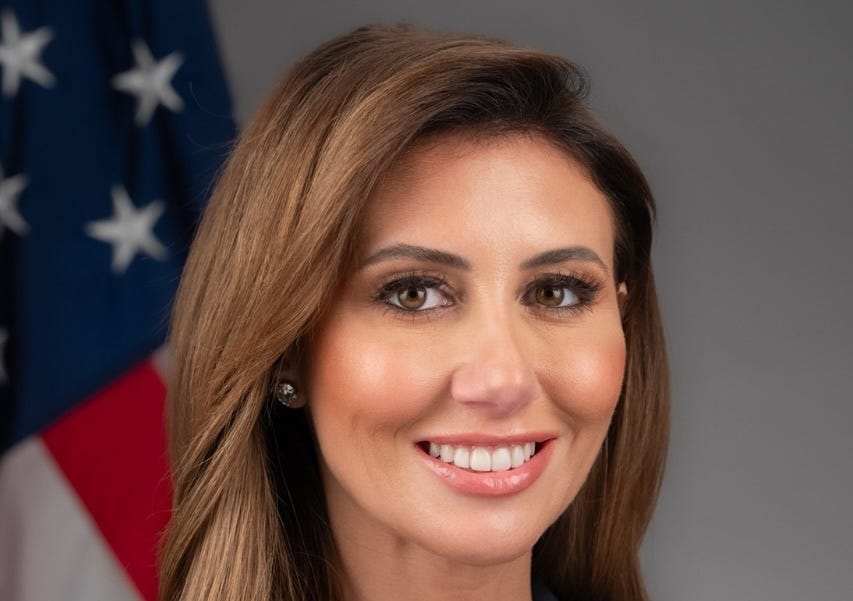 Former acting U.S. attorney Alina Habba (official portrait by the U.S. Department of Justice).
Welcome to Original Jurisdiction, the latest legal publication by me, David Lat. You can learn more about Original Jurisdiction by reading its About page, and you can email me at davidlat@substack.com. This is a reader-supported publication; you can subscribe by clicking here.
Greetings, and welcome to what I’ve dubbed “Judicial Notice Supplement”—or, in homage to the Federal Supplement or F. Supp., “JN Supp.” As I explained in yesterday’s Judicial Notice, JN Supp. is where I’ll share additional material that I couldn’t fit into Judicial Notice proper.
As I do with Judicial Notice, I’ve organized this post with topic-based headlines. The headlines are “linkable”: If you want to email JN to someone and have them focus on a particular section, you can click next to the heading and copy a link that will take the reader directly to the relevant section.
Please note that as I did with yesterday’s Judicial Notice, I’m sticking to news that broke on or before September 27 (which explains why this post and yesterday’s both bear that date). Anything noteworthy from after that date will be considered for this coming weekend’s Judicial Notice.
Let’s dive in, shall we?
Lawyer of the Week: Sheri Mecklenburg.
Besides former assistant U.S. attorney Sheri Mecklenburg (N.D. Ill.), who left the Justice Department after sending out quite the resignation letter, here are other attorneys who were in the news last week:
I seriously considered California Attorney General Rob Bonta for Lawyer of the Week. He led a coalition of 12 Democratic-led states that settled with Paramount Skydance, allowing its $110 billion acquisition of Warner Bros. Discovery to close (assuming judicial approval). Reactions to the resolution varied, as reported by The New York Times: Governor Gavin Newsom (D-Cal.) called it “a practical path forward,” while the advocacy organization Free Press, which opposes media consolidation, dubbed it “weak.” If you have an opinion, share it in the comments.
It’s official: Nathaniel Cullerton, the Wachtell Lipton litigation partner who was filmed making out with an associate in Central Park, is now a former Wachtell partner. The news was reported by the New York Post, which obtained confirmation from the firm: “Wachtell Lipton and Mr. Cullerton mutually agreed to part ways,” a spokesperson said in a statement. The associate remains at Wachtell. (If you’re wondering how on earth two Wachtell lawyers went viral for a public make-out session—and how internet sleuths (or busybodies) even figured out their identities—check out this Mashable article.)
My former office, the U.S. Attorney’s Office for the District of New Jersey, lost around 50 lawyers last year (as reported by Max Mitchell, Nicholas Malfitano, and Charles Toutant for a two-part series in the New Jersey Law Journal, here and here). Much of the attrition occurred during and after the rocky tenure of former acting U.S. attorney Alina Habba. But Habba, 42, kissed all that goodbye—and now saves her smooches for her new husband, Turkish billionaire Turhan Mildon, 29. The two got married last Saturday at the Waldorf Astoria New York, in a wedding that cost an estimated $10 million. (This is Habba’s third marriage; she was previously married to parking lot magnate Gregg Reuben and New Jersey lawyer Matthew Eyet.)
Before he was a Connecticut state government official convicted of federal bribery and extortion charges, Konstantinos “Kosta” Diamantis was a lawyer—so presumably he understood that fleeing to Greece ahead of sentencing was not going to improve his legal situation. Yes, Diamantis had surrendered his U.S. passport—but he still had a Greek passport, which authorities believe he used to take a boat to the Bahamas and then fly to London.
Mariah Medina, a criminal defense attorney in San Antonio, was reprimanded in open court for wearing this dress (click on the tweet to read the entire thread, which details Medina’s interaction with the judge):
Medina’s tweet went viral, with 7.3 million views as of this writing. Some defended her attire—e.g., Assistant Attorney General for Civil Rights Harmeet Dhillon, who declared the garment “lovely and appropriate”—while others opined that Medina should have worn a jacket over the dress.
Readers, what do you think? (In case it affects your view, this took place at a case-management hearing, with no jurors present.)
[UPDATE (5:04 p.m.): The judge who reprimanded Medina, Judge Yolanda Huff of Bexar County, Texas, responded in a statement. Some highlights:
It wasn’t just the dress; Medina was also wearing tennis shoes and carrying a backpack.
“In my opinion, she was completely disrespectful to me as the judge and exhibited unprofessional behavior in the courtroom by failing to wear professional attire required during trial proceedings.”
“I did not, in any way, embarrass her in open court. I spoke very softly and quietly to Ms. Medina—so much so that she had to lean forward to hear me. If you notice in the video, people around us were completely unaware of our conversation.”
“Ms. Medina made this a public spectacle by posting to social media. Every law student, attorney and Judge are aware of the proper attire for court.”]
In memoriam: Tara Sutton—a longtime partner in the Minneapolis office of Robins Kaplan, where she chaired the national mass-torts practice—passed away at 59 from “a brief illness” (per the firm). May she rest in peace.
Judge of the Week: Judge Timothy Kelly.
In addition to Judge Timothy J. Kelly (D.D.C.) and the temporary restraining order he issued in CNN, Inc. v. Trump, here’s additional news about judges and the judiciary:
Chief Justice John Roberts and Justices Brett Kavanaugh and Amy Coney Barrett are the three justices most often in the majority at the Court. They were also the only three justices who attended last Thursday’s state dinner at the White House honoring Chinese leader Xi Jinping. It’s not clear whether other justices were invited; back in April, all six Republican-appointed justices attended the White House state dinner held in honor of King Charles.
Judge Thomas Ludington (E.D. Mich.), who pleaded no contest to a misdemeanor drunken-driving charge in April, agreed to remain on paid leave—i.e., off the bench, not hearing cases—until September 1, 2027. If he does return to hearing cases, he will first take senior status. For more details about what Judge Ludington agreed to do to resolve two judicial-misconduct complaints—one filed by Fix the Court executive director Gabe Roth, the other initiated by Chief Judge Jeffrey Sutton (6th Cir.)—see this order from Judge Sutton.
Judicial diva is as judicial diva does? Judge Colleen McMahon—one of the biggest personalities on the S.D.N.Y., a court with no shortage of them—issued a short but scathing order in a discovery dispute (which I won’t bother summarizing; it’s only two pages, so just read it for yourself and enjoy the lulz). Over at Court Watch, Seamus Hughes and Peter Beck wrote, “We’re pretty sure we’d quit lawyering forever if we ever got this order.”
In nominations news, the Senate confirmed Angela Colmenero—most recently, deputy chief of staff to Governor Greg Abbott (R-Tex.), and before that, his principal deputy general counsel—to serve as a judge on the U.S. District Court for the Southern District of Texas.
In memoriam: Justice Edward H. Lehner—who served on the New York Supreme Court for more than 20 years, but was most well-known for helping to pass the Empire State’s groundbreaking “pooper scooper” law during his earlier stint as a state legislator—passed away at 93. May he rest in peace.
Ruling of the Week: People Not Politicians v. Onder.
The SCOTUS ruling in the Missouri election-map dispute wasn’t the only significant opinion from last week. Here are other noteworthy decisions and dispositions:
Elsewhere on the emergency docket, last Friday the justices “cleared the way for the Trump administration to move forward with its plan to use a modified centralized database to verify voters’ citizenship,” per Amy Howe of SCOTUSblog. The majority in Department of Homeland Security v. League of Women Voters issued a seven-page, per curiam opinion; Justice Ketanji Brown Jackson dissented, joined by Justices Sonia Sotomayor and Elena Kagan.
Sticking with the interim docket, Justice Kagan declined to involve the Court in a high-profile custody dispute between a surrogate, McKenna West, and the intended parents with whom she had been working, Nausheen Gilkar and Omar Ahmed. After the baby boy being carried by West was diagnosed with a serious heart problem, Gilkar and Ahmed asked West to get an abortion; she refused, then fled her home state of Alaska for Texas, where she gave birth. The parties have been fighting it out in court ever since. A California court ultimately recognized Gilkar and Ahmed as the boy’s parents; West asked SCOTUS to stay that ruling, but Justice Kagan denied her request.
In Anthropic PBC v. United States Department of War, a divided panel of the D.C. Circuit rejected Anthropic’s challenge to the Trump administration’s designation of the AI giant as a supply-chain risk to U.S. national security. Judge Gregory Katsas wrote the opinion, which was joined by Judge Neomi Rao; Judge Karen LeCraft Henderson dissented.
Speaking of Judge Rao, she wrote the majority opinion in Mahoney v. United States Capitol Police Board (joined by Judge Henderson), which concluded that a Capitol Police policy prohibiting public demonstrations on the East Steps of the Capitol unless they’re sponsored by a member of Congress is “unconstitutionally overinclusive.” Judge Judith Rogers dissented—in an opinion that was “even more protective of free-speech rights,” as noted by Kyle Cheney and Josh Gerstein of Politico.
The Second Circuit denied rehearing en banc in Barbosa da Cunha v. Freden, in which the panel held that detention isn’t mandatory for noncitizens who are apprehended by immigration enforcement in the interior of the United States (as opposed to at the border, where different rules apply). Judge Steven Menashi, joined in part by Judge Michael Park, dissented from that denial. Interestingly enough, Judge Matthew Schwartz, joined by Judge Richard Sullivan, concurred; although they agreed with the substantive analysis of the dissent, they didn’t support full-court rehearing, especially since the Supreme Court is likely to decide the issue soon. (This led the prominent conservative activist Mike Davis to call out Judge Schwartz, a recent Trump appointee: “Stop being weak. Bold and fearless. You’re not a Bush judge.”)
In KalshiEX LLC v. Schuler, the Sixth Circuit ruled that federal law “neither expressly nor impliedly preempts Ohio’s or Tennessee’s gambling laws.” This deepens a circuit split on who can regulate prediction markets—which I predict will make it onto the Supreme Court’s docket for October Term 2026. The unanimous opinion by Judge Julia Smith Gibbons affirmed a ruling by Judge Sarah Daggett Morrison (S.D. Ohio) and vacated one by Judge Aleta Arthur Trauger (M.D. Tenn.), reflecting how split lower courts are on this issue.
In Red Wine & Blue v. LaRosa, the Sixth Circuit reinstated an Ohio law requiring residents to present documentary proof of citizenship when registering to vote at the state’s motor vehicle offices. Judges John Nalbandian and Whitney Hermandorfer formed the majority, while Judge Kevin Ritz dissented.
In Yukutake v. Lopez, the Ninth Circuit, sitting en banc, ruled 6-5 that “Hawaii’s shall-issue regime [for firearms regulation] comports with the Second Amendment.” Judge John Owens wrote the majority opinion, while Judges Ryan Nelson, Daniel Bress, Lawrence VanDyke, Danielle Forrest, and Bridget Bade all penned or joined dissents.
File United States v. Primrose under “chutzpah.” From John Ross of Short Circuit: “Honestly, kudos to this guy who told the Ninth Circuit that using a stolen identity for over 30 years should constitute ‘adverse possession’ rather than identity theft. The case comes out the way you’d expect, but still: Way to go down swinging—or, y’know, identity-thieving.” (No, seriously: as set forth in Judge Forrest’s opinion, Walter Glenn Primrose—yes, that’s his real name—argues that “[t]here should come a time when a person who has lived under an assumed name has earned the right to that name and identity.”)
Turning to the trial courts, a New Mexico jury found Meta Platforms liable for more than 43 million violations of state law, arising out of allegedly misleading statements about the company’s privacy practices in the wake of the Cambridge Analytica data scandal. At $5,000 per violation, this could in theory add up to $219 billion—although whether anything remotely approaching that figure could survive post-trial proceedings is another question. I expect a negotiated resolution: New Mexico was one of three states that didn’t join last month’s $18 billion settlement of litigation brought by the AGs of 47 states, who alleged that the social-media giant designed Facebook and Instagram to be addictive to children and teens—and violated state and federal law in the process.
In a 63-page opinion in Trump v. Selzer, Iowa District Court Judge Scott Beattie dismissed Donald Trump’s lawsuit against the Des Moines Register and pollster Ann Selzer, arising out of a poll published before the 2024 election that showed Trump trailing Kamala Harris. Bob Corn-Revere of the Foundation for Individual Rights and Expression (FIRE), which represented Selzer, told The Times, “This lawsuit was laughable from the beginning and never should have been brought.”
Litigation of the Week: U.S. Department of Homeland Security v. D.V.D.
In other litigation news:
Could saving humanity from our AI overlords… violate the Sherman Act? The plaintiffs in Buist v. Anthropic, PBC allege that Anthropic, OpenAI, SpaceXAI, and Google all agreed “to slow the pace at which each company improves the competing products it sells to consumers”—and “[a]n agreement among competitors to reduce the quality of their products and the rate at which those products improve” is a classic antitrust violation. For more on this issue, see this WIRED article, “The AI ‘Slowdown’ Is an Antitrust Mess,” by Maddy Varner (a former technologist for the Federal Trade Commission). I’m not huge on regulation as a general matter, but I tend to agree with Professor Cass Sunstein’s view that while “[i]nnovation should not be squelched,” the serious risks posed by AI require some amount of regulation—and perhaps one underappreciated benefit of a regulatory framework is that it could give AI companies clearer protection against antitrust claims arising from safety measures requiring some degree of industry-wide coordination.
Florida Attorney General James Uthmeier filed a shareholder lawsuit against The Times, alleging that the board of directors’ lack of oversight of the outlet’s editorial practices is hurting state pension holders that own stock in the company.
Our household orders far too much food through delivery apps (even after moving from New York City to the suburbs), so it stuck with me when I read an article in the Washington Post quoting a delivery-worker advocate recommending Grubhub over DoorDash and Uber Eats, on the ground that Grubhub treats workers better. I remembered this piece when I read about a $131.5 million settlement between DoorDash and NYC, resolving claims that DoorDash underpaid or failed to pay 264,000 delivery workers.
An anonymous woman who claimed in court papers that Jay-Z (Shawn Carter) had raped her when she was 13 has recanted her allegation—and now claims that her lawyers at the time filed her case against Carter “without conducting any independent investigation, background inquiry, or due diligence, and without obtaining any corroboration of the allegations.”
Deal of the Week: Paramount Skydance’s $110 billion acquisition of Warner Bros. Discovery.
The Deal of the Week was Paramount Skydance’s $110 billion acquisition of Warner Bros. Discovery. But it’s important to remember that not all major transactions are M&A matters.
Last Thursday, Anthropic and Akamai Technologies announced a deal in which Anthropic will pay Akamai at least $11.6 billion to use its cloud infrastructure and software over seven years. Akamai is represented by a Freshfields team led by partners Ethan Klingsberg and Taryn Zucker.
Law Firm of the Week: Paul Weiss.
Over the past year, Paul Weiss has been experiencing major change. But it’s far from the only law firm in the headlines these days. Here are some others:
Two Biglaw firms that are winning in the lateral-hiring war are Gibson Dunn and Sidley Austin. For a deep dive into what they’re up to, including data, see this Law.com piece by Dan Roe and Melina Block, “Unpacking the Ambitions of Sidley and Gibson Dunn.”
Which firms are the go-to shops for the Republican National Committee this midterm cycle? The top three are Consovoy McCarthy, Jones Day, and Dhillon Law Group, according to the latest Federal Election Commission (FEC) filings.
Seyfarth Shaw LLP was hit with a proposed class-action lawsuit for allegedly failing to protect the personal information of more than 56,000 people that was exposed in an August data breach.
Duane Morris settled a lawsuit brought by former employment-law partner Meagan Garland, in which she alleged that the firm “unlawfully classifies its non-equity partners as ‘partners’ and business owners of the Firm for taxation and employment purposes, when in fact these non-equity partners are employees who misleadingly bear the title of ‘partner.’” The parties are still working out the specific terms, per Reuters.
Speaking of Reuters, Sara Randazzo’s latest column looks at how Gunderson Dettmer, a top firm serving the tech sector, is training its lawyers on winning business in the age of AI.
Uplift Investors, a Connecticut-based PE firm, signed its sixth deal to invest in a law firm’s back-office operations through a management services organization—this time with Rainwater Holt & Sexton, an Arkansas-based personal injury firm.
Move of the Week: Weil Gotshal rehiring Peter Feist from Cravath and Debra Sinclair from Willkie Farr.
In addition to the hires discussed in Judicial Notice—including Paul Weiss hiring Christopher Machera from Weil, and Weil welcoming back Peter Feist and Debra Sinclair—here are other notable moves that were announced last week:
In New York, Vinson & Elkins hired two finance partners, Loren Finegold and Ed Comber, from Latham & Watkins—and Finegold will lead V&E’s structured-finance and securitization practice.
Speaking of Latham, the firm picked up Greg Van Houten, a commercial litigator who represents corporate policyholders in high-stakes insurance coverage disputes, from Haynes Boone in Washington, D.C.
Sticking with litigators, Quinn Emanuel hired trial lawyer Sean Suber from Winston Taylor in Chicago. Meanwhile, Alston & Bird added Devin Donohue in Century City, Andy Hutchison in San Francisco, and Sandhya “Sandy” Brown in D.C. (where Brown spent 20 years at the FTC).
Speaking of lawyers with valuable government experience, former associate deputy attorney general Paul Perkins joined the D.C. office of Morrison Foerster. He’s now a partner in the investigations and white-collar defense group, as well as chair of MoFo’s False Claims Act practice.
O’Melveny & Myers hired bankruptcy and restructuring partner Penelope Jensen in New York.
Still with me? If you’ve read this far, congratulations: you’re a hard-core reader of Original Jurisdiction and Judicial Notice.
So you’re precisely the people I want to take my poll about my little experiment with “JN Supp.” Would you prefer one big news roundup, published on Sunday or Monday, or two somewhat smaller ones, delivered to you on consecutive days (starting on either Sunday or Monday)?
Thanks for reading Original Jurisdiction, and thanks to my paid subscribers for making this publication possible. Subscribers get (1) access to Judicial Notice, my time-saving weekly roundup of the most notable news in the legal world; (2) additional stories reserved for paid subscribers; and (3) the ability to comment on posts. You can email me at davidlat@substack.com with questions or comments, and you can share this post or subscribe using the buttons below.
-
Trump demands Axios pull 'hoax' story about Iran sanctions relief
President Donald Trump took to Truth Social on Monday to slam what he called a "fake" Axios story about him offering up sanctions relief and currently frozen funds to Iran in exchange for promises on their nuclear program. -
Trump denies offering Iran sanctions relief for nuclear concessions
"This is untrue. I offered them NOTHING," Trump wrote on Truth Social, responding to an Axios report that cited US officials as saying that he was willing to give Iran sanctions relief and release Iranian frozen funds in return for "concrete" Iranian steps regarding the nuclear program. -
Trump offers Iran economic relief for concrete nuclear concessions
President Trump is willing to give Iran sanctions relief and release Iranian frozen funds in return for concrete Iranian steps regarding the nuclear program, U.S. officials say. -
Vous avez raté la conférence OpenAI DevDay ? On vous résume les annonces (dots, GPT-6.1, etc.)

OpenAI a tenu ce 29 septembre son DevDay 2026. Au programme : dots, des agents IA toujours actifs, un nouveau modèle GPT-6.1 Sol, des outils collaboratifs pour concurrencer Microsoft et Google, et un abonnement à 500 dollars par mois. Le premier appareil conçu avec Jony Ive, lui, se fait toujours attendre.
-
Mouvement lycéen : l’État déchaine sa violence contre la jeunesse
On dit souvent qu'une société «se mesure à la manière dont elle traite ses enfants». Avec les sociopathes au gouvernement, nous sommes fixés
L’article Mouvement lycéen : l’État déchaine sa violence contre la jeunesse est apparu en premier sur Contre Attaque.
-
Au moins 400 lycées en lutte : la jeunesse montre la voie
Sur tout le territoire, des grandes métropoles aux communes moyennes et aux villes de banlieues, les lycéen·nes se sont levé·es.
L’article Au moins 400 lycées en lutte : la jeunesse montre la voie est apparu en premier sur Contre Attaque.
-
Aux Nations unies, une semaine à l’image d’un monde déréglé
L’Assemblée générale de l’ONU s’est achevée lundi 28 septembre à New York. Les interventions les plus choquantes, de Trump à Lavrov, en passant par Nétanyahou, ne doivent pas masquer les efforts en faveur de la justice globale, pour l’instant empêchés par les puissances néo-impériales. -
«On ne peut plus servir correctement l’intérêt général»: des centaines de milliers d’agents publics dans la rue
Selon la CGT, 300 000 personnes se sont mobilisées mardi à l’appel d’une intersyndicale totale dans la fonction publique. Gel du point d’indice, difficultés à boucler les fins de mois, sous-effectif, conditions de travail dégradées…: elles dénoncent une paupérisation des services publics. -
La mobilisation dans les lycées monte en puissance, portée par la banlieue parisienne
Plus de 400 lycées étaient mobilisés mardi à travers la France, pour défendre un droit à l’éducation identique pour tous. Les accusations de violences policières, et la présence massive des forces de l’ordre notamment en banlieue parisienne, ajoutent à cette mobilisation. Au sommet de l’État, on accuse LFI de souffler sur les braises. -
Burnham has a clear vision for Britain – but not for how it fits into a troubled world | Rafael Behr
The Labour leader has set out his plans with passion and ambition, but the story he tells lacks a vital chapter on managing global chaos
Andy Burnham is at home at Labour conference, and not only because it is in Liverpool and he has Merseyside roots. The prime minister is native to his political tribe wherever it gathers. He is fluent in its sentimental vocabulary and indigenous to its folk traditions.
Keir Starmer had solid Labour bona fides. He joined the party as a teenager. His parents named him after Keir Hardie. But he didn’t have Burnham’s knack for turning those red-team credentials into an emotional connection.
Rafael Behr is a Guardian columnist
Do you have an opinion on the issues raised in this article? If you would like to submit a response of up to 300 words by email to be considered for publication in our letters section, please click here.
Continue reading... -
OpenAI lance déjà GPT-6.1 Sol, une semaine seulement après GPT-6 Sol

Sept jours seulement après GPT-6 Sol, OpenAI annonce déjà son successeur : GPT-6.1 Sol, toujours cinq fois moins cher que son modèle phare GPT-6 Astra. La course au meilleur modèle n'en finit plus.
-
OpenAI dévoile « dots », ses assistants mignons pour démocratiser l’IA agentique (sauf en Europe)

OpenAI répond à Meta et à son agent Muse avec « dots », le nom donné à son service d'agents « toujours actifs » qui travaillent pour leurs utilisateurs en permanence. Les dots se différencient de ChatGPT grâce à leur propre ordinateur dans le cloud et leur accès permanent à vos comptes, tout en étant joignables depuis n'importe quelle messagerie.
-
Émission spéciale: nos révélations sur Jordan Bardella
Après nos révélations sur les écrits antisémites de Jordan Bardella, le Rassemblement national menace «Mediapart». Notre émission spéciale avec les journalistes qui ont enquêté. -
Maricarmen, la «grand-mère universelle» qui impose le droit au logement en Espagne
L’expulsion de chez elle d’une femme de 87 ans, il y a une semaine, a déclenché une vague d’indignation qui a forcé les partis espagnols à s’accorder. Deux décrets-lois royaux, annoncés mardi 29 septembre, doivent être votés au Parlement vendredi, une procédure d’une rapidité rare. -
Dans un collège de Bagnolet, élèves et personnels ont bu de l’eau contaminée pendant des mois
Le département de Seine-Saint-Denis a tardé à réagir après avoir reçu des analyses montrant que l’eau d’un collège de Bagnolet était «non conforme à la consommation». Il reconnaît des «défaillances» et un «retard». Le personnel éducatif alertait depuis février 2026 sur une «eau marron». -
Documents Expose Even More About Stephen Miller’s Ghoulish Anti-Migrant Directives
Let’s start this off by clearing the air: Stephen Miller looks exactly like the sort of person who wants to elevate white people above everyone else. Sure, he doesn’t have the Hitler ‘stache or a blond pompadour, but he’s the same bit of unspectacular “whiteness” Hitler was. Miller is bald, mostly chinless, and looks like someone who’s been banned from both Venmo and Uber for being way too violently creepy. Bro looks like he’d ask Pat Sajak if he could buy a jowl.
But we’re not here to insult Stephen Miller’s looks. I mean, we did do a bit of that but that’s not the larger, more salient point. Miller’s proximity to the president — and more importantly, to Trump’s vague goals of making the country more “white” and more less-white people dead/disappeared/hunted — has generated the onslaught that similarly generated the kind of things no MAGA shitheel would utter publicly: violence against white citizens who have chosen to defend migrants against ICE’s kidnapping squads.
Whatever killing the government can’t get done in the streets, it can (non-verbally) ask other countries to do on their behalf. After shuttling arrestees from detention center to detention center ahead of court filings, these migrants are then violently ejected from the country. That’s not a phrase I’m using lightly. This administration has made a concerted effort to secure agreements with various hellholes around the world in order to inflict as much misery as possible to people it doesn’t even consider to be human beings.
And that’s where Stephen Miller has been so instrumental. DHS and ICE encourage voluntary “deportation,” promising migrants tens or hundreds of dollars for leaving the country of their own free will and volition. (This is also a lie, but what else did you expect?) For those swept up in ICE purges that most frequently target areas bereft of Trump voters, the alternative is much worse. If you don’t end up in El Salvador’s worst prison, you’ll likely be dumped in whatever war-torn, human-rights-violating country that will have you, especially in exchange for federal payments they’d be otherwise banned from receiving.
The New Republic, building on earlier reporting from the Washington Post, expounds on just what a horrific human being White House advisor Stephen Miller is.
Relying on a series of leaked documents, the Post reports that at Stephen Miller’s direction, the agency is effectively paying out huge sums of taxpayer money to some really nasty governments in exchange for their acceptance of third-country deportees who, for various reasons, cannot be returned to their countries of origin.
It’s really sleazy, ghoulish stuff. The administration has authorized or pledged over $400 million for such agreements with more than 30 countries, mostly in Africa and Latin America. As the Post reports, the deals place many migrants in countries to which they have no previous connections, and are structured to skirt “human rights safeguards” that typically are built into U.S. foreign assistance payments abroad.
Any normal administration that just wanted to toughen up migration law enforcement would round up migrants and ship them back to the countries they came from. That’s simply not painful enough for this administration, especially when it’s allowing Stephen “Please, My Father Is Mr. Ghoul” Miller to be the brass knuckles he wished to see in the (anti-migrant) world.
Instead, the White House is actively seeking agreements with some of the worst countries in the world to engage in some perverse form of “revenge” against migrants. In many cases, the migrants being subjected to this Trump-specific cruelty aren’t criminals. They’re just people who’ve recently seen their protected status unilaterally revoked, their still-valid visas stripped, or their attempts to abide by the legal naturalization process preemptively terminated by a government that just wants to see as many non-white people ejected/destroyed as possible.
To reiterate: this administration, under the “advisement” of Stephen Miller, is seeking to inflict maximum pain on people who desired nothing more than to live a life free of violence and persecution. The message being sent now is the opposite: “Get fucked for trying, non-whites. Smooches, the US Government.”
The truly vile kicker here? Also at Miller’s direction, this agency is turning the original purpose of the State Department’s refugee architecture on its head. The Office of Remigration is a part of the department’s Bureau of Population, Refugees, and Migration, which has historically been devoted to resettling people fleeing horrors abroad in the United States.
But now, civil servants who previously carried out that mission are leaking to the Post their dismay at being ordered to do the opposite. They’re now working to get other countries to agree to accept deportees who have no ties whatsoever to their new destinations, even as we pay these countries foreign assistance money to do so.
Are you happy with your representation? I direct that question to the MAGA faithful as well — people who seem to believe the USA is the best country ever, but only if no one desiring access to our level of freedoms ever dares to seek asylum here. And by “no one,” we’re not counting white South Africans, who are, of course, free to take our jobs and leech off of our social services and fuck with the purity of our fluids.
Miller and the people who listen to him are exactly who we think they are: Nazis who don’t have the strength of character to actually own it.
So “remigrations” are understood as part of a civilizational rescue mission of sorts: Masses of human civilizational contaminants are rounded up, expelled from the West, and dumped outside our charmed hemisphere, into that geographic mass that Trump calls “shithole countries,” which is of course where they belong. If this is terrifying, so much the better. It’s all rooted in a series of delusions, not least delusions of world-historical grandeur.
The DHS and its agencies continue to make transparently false claims about ridding this nation of the “worst of the worst.” Trump continues to just be casually racist on the regular. Stephen Miller lurks behind the curtain, touching himself furtively as all of his white nationalist dreams become reality. Being exposed won’t change his Nazi tendencies, though. All it’s likely to do is provoke him to double-down on his blatant hatred.
-
« Justice pour Djamel » : rassemblement jeudi 1er octobre place de la République
-
Près de 80 morts au Népal et en Inde après des pluies diluviennes et des glissements de terrain

Nouvelle tragédie au Népal et dans le nord de l'Inde. Depuis le 24 septembre, des pluies diluviennes s'abattent sur le Népal, entraînant des inondations et des glissements de terrain. Des images publiées sur les réseaux sociaux montrent des bâtiments entiers qui basculent dans la rivière, ou encore des pans entiers de montagne qui s'effondrent, dans le district de Manang (ouest du pays). D'après un premier bilan établi par l'Agence nationale de gestion des catastrophes, le 28 septembre au (…)
Lire la suite - En bref / Monde -
Au moins 80 morts au Népal et en Inde après des pluies diluviennes et des glissements de terrain
Nouvelle tragédie au Népal et dans le nord de l'Inde. Depuis le 24 septembre, des pluies diluviennes s'abattent sur le Népal, entraînant des inondations et des glissements de terrain. Des images publiées sur les réseaux sociaux montrent des bâtiments entiers qui basculent dans la rivière, ou encore des pans entiers de montagne qui s'effondrent, dans le district de Manang (ouest du pays). D'après un premier bilan établi par l'Agence nationale de gestion des catastrophes, le 28 septembre au (…)
Lire la suite - En bref / Monde -
Plus de 300 lycées bloqués : « On nous ramène des policiers, mais jamais des solutions »

-
Pompiers, profs, bibliothécaires : à Montpellier, la fonction publique craint de nouvelles coupes en 2027
Ce mardi 29 septembre, 7 000 agents publics ont manifesté à Montpellier selon l’intersyndicale, pour leurs salaires et contre les économies annoncées sur leur dos
Le cortège s’élance depuis la place Albert-Ier. Parmi les secteurs représentés, une présence qu’on remarque rarement en manifestation : celle des pompiers du Sdis, venus en nombre. Les étudiants sont eux aussi bien représentés, après un rassemblement devant l’université Paul-Valéry contre la hausse des frais d’inscription. Selon le Syndicat de combat universitaire de Montpellier (SCUM), un décret du ministre Philippe Baptiste daté du 19 mai 2026 a généralisé les frais différenciés pour les nouveaux inscrits en licence et en master, et les étudiants extra-européens qui arrivent à Paul-Valéry doivent désormais payer 2 895 euros par an en licence et 3 941 euros en master. Le syndicat étudiant affirme aussi que le gouvernement évoque une hausse de 800 à 1 500 euros pour l’ensemble des étudiants.
Un point d’indice figé depuis 2023
La journée est nationale. L’appel émane de la CGT, FO, la CFDT, l’Unsa, la FSU, Solidaires, la CFE-CGC et la Fédération autonome, qui recensent au moins 155 manifestations et rassemblements au 24 septembre.
Déclencheur principal : le point d’indice, qui sert de base au calcul des salaires des fonctionnaires. Comme le rappelle La Gazette des communes, le ministre de l’Action et des Comptes publics David Amiel a annoncé dès le 8 juillet qu’aucune hausse n’était prévue, lors d’une réunion que les huit organisations représentatives ont quittée avant la fin. Le 17 septembre, dans Le Figaro, le Premier ministre Sébastien Lecornu confirmait le gel pour 2027, dont le gouvernement espère tirer 2 milliards d’euros d’économies. Le point n’a pas bougé depuis le 1er juillet 2023, et 2027 serait la quatrième année sans revalorisation générale si le Parlement adopte le budget. L’union syndicale Solidaires rappelle que plus de 860 000 agents ont dû toucher une indemnité compensatoire début juin pour ne pas être payés sous le Smic.
Les revendications communes de l’intersyndicale tiennent en quelques lignes : une hausse significative du point d’indice indexée sur l’inflation, une refonte des grilles pour sortir les débuts de carrière du niveau du Smic et revaloriser les filières très féminisées, le retour de la garantie individuelle du pouvoir d’achat (Gipa), la suppression du jour de carence avec un salaire maintenu à 100 % en congé maladie ordinaire, l’égalité salariale entre femmes et hommes et des moyens budgétaires à la hauteur des missions.
Pompiers : « Deux concours pour rester en catégorie C »
La reconnaissance, c’est justement ce que réclame Benjamin, sapeur-pompier au Sdis de l’Hérault. « On manque d’avions bombardiers d’eau, de personnel. Pour aller en renfort dans un autre département, on doit poser un congé pour ne pas apparaître dans les effectifs mobilisables chez nous. » Il pointe aussi la santé : « Sur les incendies, nos cagoules sont trop fines, on inhale des fumées pendant des heures et on n’a pas de visite médicale au retour des renforts. Beaucoup de collègues développent des cancers qui ne sont pas reconnus comme liés au travail. » Et de conclure : « On passe deux concours pour rester en catégorie C. Sans parler du personnel administratif qui vérifie les pompes des camions ou lave nos tenues après les feux : ils sont encore moins reconnus que nous. »
À l’Abes, une fusion « menée en dépit du bon sens »
Dans le cortège, on croise aussi des agents de l’Agence bibliographique de l’enseignement supérieur (Abes), établissement montpelliérain d’environ 90 personnes qui mutualise données, outils et services pour les bibliothèques universitaires. En septembre 2025, l’État a annoncé sa fusion avec deux autres structures locales : l’Amue (environ 190 agents, qui fournit des logiciels de scolarité, de finances et de RH aux universités) et le Cines (calcul intensif, hébergement et archivage de données). « Sans aucune concertation ni étude d’impact », dénonce l’un d’eux. « C’est tellement mené en dépit du bon sens qu’en février, le Cines est finalement sorti du projet. »
Selon lui, l’objectif affiché d’un « État efficace » revient à rapatrier les fonctions stratégiques vers les administrations centrales et à réduire le nombre d’opérateurs, « pour, on l’imagine, en faciliter le démantèlement ». L’Amue étant composée majoritairement de contractuels, le futur établissement devrait en être profondément modifié. Le calendrier, lui, tombe en même temps que la refonte complète du système informatique de l’agence. Un mouvement réclamant un moratoire s’est constitué ; il revendique le soutien de plus de 1 000 bibliothécaires universitaires.
Notre interlocuteur évoque des alertes pour risques psychosociaux qui se multiplient. Une délégation, accompagnée d’élus syndicaux nationaux, a été reçue la semaine dernière par le cabinet du ministre de l’Enseignement supérieur. « Ils doivent commencer à sentir que ça s’agite, » commente-t-il. Avant de rejoindre la manifestation, les agents ont tenu un pique-nique revendicatif sur le rond-point du 18-Juin, entre Malbosc et Euromédecine. Des membres de l’Institut de recherche pour le développement (IRD), eux aussi visés par un projet de fusion éclair avec le CNRS, étaient de la partie.
Dans les lycées, « le mode dégradé est devenu la norme »
Diane, de Sud Collectivités territoriales, décrit la situation dans les lycées gérés par la Région Occitanie : « Il y a de moins en moins d’agents. Ceux qui font la maintenance sont remplacés par des prestataires privés et ceux qui font le ménage par des robots. » Elle cite aussi des contractuels affectés loin de chez eux alors que des postes existent plus près :« Ils passent leur salaire en pleins d’essence. » Avec les arrêts maladie et les départs non remplacés, « les gens arrivent le matin sans savoir à quelle tâche ils vont être affectés pour combler les trous ».
« Notre institution est prête à basculer »
Du côté de l’éducation nationale, Jordan Homps, du SNES-FSU Montpellier, revient sur une rentrée caniculaire : « On a eu des salles à 35 degrés, avec des élèves qui tombent dans les pommes. » Il réclame un plan d’urgence pour adapter les établissements au changement climatique, tout en notant que « l’État se décharge sur les collectivités qu’il ne finance plus ». Le budget à venir l’inquiète : « L’école et l’hôpital risquent de payer pour l’armée et la police. » Des institutions qu’il voit d’ailleurs « s’inviter de plus en plus à l’école », via les « classes défense ». « À l’heure où l’extrême droite peut prendre le pouvoir dans quelques mois, on se dit que notre institution est prête à basculer », s’alarme le professeur de physique-chimie.
Alliance dans le cortège
Autre présence remarquée : celle d’Alliance Police nationale 34. Ce très droitier syndicat policier entretient de longue date des rapports orageux avec les manifestations montpelliéraines. Le Poing rappelait en 2019 qu’un de ses drapeaux avait été dérobé par un manifestant à Montpellier le 10 octobre 2017, et que la plainte du syndicat, directement relayée par le ministère de l’Intérieur, avait conduit à trois perquisitions trois mois plus tard. En août 2019, la section héraultaise d’Alliance s’était distinguée en qualifiant de « sous-êtres humains » les personnes mobilisées après la mort de Steve Maia Caniço, lors de la Fête de la musique à Nantes.
Sept ans plus tard, le même syndicat défile pour le point d’indice, à quelques rangs des profs qui s’inquiètent de voir l’uniforme entrer à l’école, et qui ont assisté à la répression de leurs élèves alors qu’ils bloquaient leurs établissements le matin-même par des collègues des-dits syndicalistes policiers. Le gel des salaires a au moins un mérite : il rassemble large…
L’article Pompiers, profs, bibliothécaires : à Montpellier, la fonction publique craint de nouvelles coupes en 2027 est apparu en premier sur Le Poing.
-
Pesticides : comment mettre fin à l’empire toxique de l’agrochimie ?
Le samedi 3 octobre, une mobilisation internationale est organisée pour dénoncer les ravages des pesticides et du modèle agro-chimique, et elle promet d'être historique. En France, des milliers de personnes se sont donné rendez-vous à… -
Diesel export ban: will Trump push global energy prices even higher? – The Latest
As the fallout from the Iran conflict continues, the price of diesel has soared to record highs in the UK, Europe and US. With his country facing an increase of 70% in costs compared with this time last year, Donald Trump is threatening a ban on US diesel exports to keep costs low for American consumers. But the plans have been met with alarm – the UK is holding talks with US counterparts to try to block the move, which France says would be ‘catastrophic’ if introduced. Lucy Hough speaks to energy correspondent Jillian Ambrose – watch on YouTube
Continue reading... -
Avion, radiologie, crustacés... À quel point êtes-vous exposé à la radioactivité ?

L'immense majorité de la population reçoit chaque jour une dose de radioactivité, que ce soit via l'imagerie médicale, l'avion ou même les crevettes. L'ASNR propose désormais d'évaluer son propre niveau d'exposition.
Lire la suite - Info / Santé , Nucléaire
Quel est le point commun entre Céleste Cosmos, adepte des voyages en avion ; Manon Radon, habitante d'une vieille ferme en granit dans la Creuse ; Honoré Crustacé, accro aux crevettes et fumeur invétéré ; et Nacim Scanner, obligé de multiplier les radios après une fracture ? (…) -
Diesel export ban: will Trump push global energy prices even higher? - The Latest
As the fallout from the Iran conflict continues, the price of diesel has soared to record highs in the UK, Europe and US. With his country facing an increase of 70% in costs compared with this time last year, Donald Trump is threatening a ban on US diesel exports to keep costs low for American consumers. But the plans have been met with alarm – the UK is holding talks with US counterparts to try to block the move, which France says would be ‘catastrophic’ if introduced. Lucy Hough speaks to energy correspondent Jillian Ambrose – watch on YouTube
Continue reading... -
Sciences dans la ville. Adopte un·e chercheur·e !
Quand ?
Du 2 octobre à 0h au 18 octobre à 0hOù ?
Lieux multiplesÀ l'occasion de la Fête de la science, en octobre, nous proposons aux Bagnoletaises et Bagnoletais d'accueillir un·e scientifique pour une conférence ouverte à tous·tes. Les rencontres ont lieu au domicile des hôtes ou dans un lieu public, à Bagnolet.
« Sciences dans la ville. Adopte un.e chercheur.e ! » est un festival qui s'invite à la maison ou s'organise dans le quartier. Un ou une scientifique se déplace sur l'invitation de son hôte autour d'un thé, d'un apéro, d'un repas. Ainsi les Bagnoletais et Bagnoletaises tiennent salon ! Un festival qui va chercher le public là où il se trouve, dans sa vie quotidienne, à son domicile, dans son quartier.
Cette année, l'Unipop organise son festival du 2 au 18 octobre.
Retrouvez le programme sur notre flyer et le lien d'inscription à l'adresse suivante
Une fois inscrit·e pour une ou plusieurs conférences, vous recevrez les informations nécessaires pour vous y rendre peu avant la date indiquée.
Au plaisir de vous y voir, n'hésitez pas à partager l'information autour de vous !
- Voir aussi Unipop Bagnolet
-
Soirée de solidarité franco-roumaine avec la projection du film 'L'été je ne dors pas'
Quand ?
Le 9 octobre de 20h à 22h30Où ?
Le Dorothy 85 bis Rue de Ménilmontant, 75020, Paris, FranceDans la cadre du cinquantenaire de St Merry, l'atelier solidarité vous invite à une soirée organisée en partenariat avec l'Adéfro (association de développement des échanges entre la France et la Roumanie) avec laquelle nous entretenons des liens de longue date.
Le film « L'été, je ne dors pas » sera projeté en présence de la réalisatrice et de la présidente de l'Adéfro. Une bonne occasion de soirée conviviale mêlant dégustation de plat roumain, projection d'un film et échanges avec ceux qui pratiquent la solidarité par le théâtre.
-
Install partie et ateliers auto-hébergement
Quand ?
Le 3 octobre de 14h à 18hOù ?
Cité des Sciences et de l'Industrie Avenue Corentin Cariou 75019 ParisInstall partie sur ordinateurs, tablettes et téléphones
– Auto-hébergement avec la Brique Internet
– Ateliers auto-hébergement avec installation de YunoHost sur des Thinkcenter Lenovo
– Sensibilisation autour des logiciels libres, les hébergeurs éthiques et militants, les Fournisseurs d'Accès Internet associatifs.
– Campagne déMAILnagement pour quitter gmail et consortsQuittons les MAGAM (Meta-Amazon-Google-Apple-Microsoft), prolongeons la vie de notre matériel informatique et reprenons (un peu) le pouvoir sur nos machines !
- Voir aussi Parinux
- Voir aussi Samedis du Libre
-
Donald Trump's Maga cult is finally crumbling | Arwa Mahdawi
With the midterms looming, and after the Epstein files and the war on Iran, Trump superfans are losing faith in their lame duck president
It took a dead child sex offender and a disastrous war to do it, but it looks as though the Maga faithful are slowly beginning to lose confidence in dear leader. As Donald Trump’s approval ratings drop to record lows, some of his most fervent supporters are turning on him.
See, as exhibit one, Trisha Hope, who was once a proud member of the Front Row Joes, a group of Trump superfans who follow the president to rallies around the country. They have custom-made T-shirts! They have branded baseball caps! They even have the attention of Trump himself, who frequently shouts out the group. He did once accidentally call them the “front row Jacks and Joes”, but who can expect a man of his calibre to pay attention to the plebs, eh?
Continue reading... -
L’extrême droite menace «Mediapart»: le droit de savoir est l’affaire de tous et toutes
Au lendemain de nos révélations sur les écrits antisémites de Jordan Bardella, Marine Le Pen a tenu des propos menaçants d’une grande gravité contre notre journal. Encore une fois, l’extrême droite révèle sa nature profonde, sa violence et son hostilité à la presse. «Mediapart» rétablit les faits. -
The Mystery Man Shadowing Kimberly Guilfoyle as She Pushes Deals Across Europe
Kimberly Guilfoyle was a long way from Mar-a-Lago. The U.S. ambassador to Greece—Donald Trump Jr.'s former fiancée—was shuttling back and forth to Bulgaria's capital on a mission this spring. The Trump administration wanted allies on Europe's eastern edge to buy billions of dollars of American natural gas. -
Donald Trump's ambassador to Greece causes stir in Romania
Kimberly Guilfoyle, a former fiancée of Donald Trump Jr who was appointed to the post last year, was reported by the Wall Street Journal to have alluded to the impending collapse of the Romanian government during an exchange with Greek energy minister Stavros Papastavrou. "We can do that to any country we want. We can do that here," she said, according to the WSJ, to which Papastavrou retorted that the US could not replace Greece's democratically elected government. -
Kimberly Guilfoyle Is a Master of Mafia Diplomacy
Kimberly Guilfoyle has too long been treated merely as a shadow of the men in her life—but she's actually a formidable villain in her own right. From 2001 to 2007, she was married to Gavin Newsom, then mayor of San Francisco. From 2018 to 2024, she was affianced to Donald Trump Jr., which when he started being photographed in the company of another woman, the Palm Beach jet-setter Bettina Anderson, whom he married this year. -
Ses puces permettent aux modèles d’IA de tourner en local sur des robots humanoïdes : la start-up américaine SiMa.ai lève 150 millions de dollars
SiMa.ai, start-up américaine spécialisée dans les puces et logiciels pour robots, drones et véhicules, a annoncé le 28 septembre une levée de fonds en série C de 150 millions de dollars (132 millions d’euros). Le tour de table a été mené par Fidelity Management et Amplify, avec la participation, entre autres, d’AllianceBernstein, de JPMorgan, de l’État du Michigan et du bras d’investissement de Dell. La jeune pousse avait déjà récolté 85 millions de dollars (75 millions d’euros) en juillet 2025.
-
Spotify est en panne chez vous ce mardi ? Vous n’êtes pas les seuls

L'application Spotify est en panne pour de très nombreux internautes ce mardi 29 septembre 2026. Les problèmes ont commencé en milieu d'après-midi. Interpellée sur les réseaux sociaux, la plateforme de streaming musical indique être au courant du problème et examiner la situation.
-
US senator blocks bill to ban Trump from demolishing Kennedy Center without Congress’s approval
Mike Lee objected to the safeguard against the demolition of any presidential memorial Congress designates
A Republican senator has blocked a bipartisan bill that would have prevented Donald Trump from demolishing the Kennedy Center without the approval of Congress.
Mike Lee, of Utah, objected on Monday night when the Oregon Democrat Jeff Merkley asked the Senate to pass the Protecting Presidential Memorials Act by unanimous consent. The bill, co-written with the Alaska Republican Lisa Murkowski, would have banned the demolition of any presidential memorial designated by Congress, including the Lincoln and Jefferson memorials, unless lawmakers explicitly approved it.
Continue reading... -
Israël ne peut plus s'endetter auprès de l'Espace économique européen
-
Laure Moriot, pompière atteinte d’un cancer : «C’est un métier qui nous détruit de l’intérieur»
 Laure Moriot a été surexposée aux PFAS. © DR
Laure Moriot est en arrêt maladie depuis un an. Une année de lutte contre son second cancer, peut-être lié à son métier. En tant que pompière en Seine-Maritime, elle a été surexposée aux PFAS, ces «polluants éternels». Utilisés pour leurs propriétés imperméabilisantes, on les retrouve presque toujours dans les tenues des soldat·es du feu ou les mousses anti-incendies. Ces molécules peuvent perturber le système hormonal, voire provoquer des cancers.
Dans cet entretien à Vert, Laure Moriot revient sur son parcours. Elle raconte les solutions mises en place par son service départemental d’incendie et de secours pour limiter l’exposition aux produits toxiques. Surtout, la pompière alerte. Comme nombre de ses collègues, elle se mobilise ce mardi, à Paris, pour mettre en lumière le sujet tabou des maladies professionnelles.
Vous avez pris conscience de l’exposition des pompiers aux produits toxiques de la plus brutale des manières : pouvez-vous nous raconter ce qui vous est arrivé ?
J’ai eu un double cancer. En 2024, j’ai été frappée par une maladie endocrinienne qui s’est déclenchée au niveau de la thyroïde, et j’ai fini par développer des nodules avec cellules cancéreuses, ce qui a donné lieu à une opération.

En 2025, j’ai découvert que j’étais porteuse d’un cancer du sein pour lequel j’ai eu tout un traitement très long, qui se poursuit encore actuellement. J’ai été mutilée : j’ai perdu mon sein gauche, j’ai perdu mes ganglions, j’ai perdu mes cheveux.
«Est-ce que mon métier est en train de me tuer ?»
J’ai pris conscience que le métier que j’exerce pouvait être la source de ces problèmes de santé : après des tests, on s’est rendu compte que je n’avais aucun facteur génétique. Cela signifie que les cancers que j’ai eus proviennent d’une source extérieure. Demain, j’aimerais que ce quotidien soit différent pour les femmes pompiers, les pompiers en général, la population.
Avez-vous fait immédiatement le lien entre le cancer et votre métier ?
Ça m’a tout de suite traversé l’esprit parce que c’est dans l’actualité, on en parle de plus en plus. Des études menées chez nos voisins américains ou anglo-saxons démontrent que de plus en plus de sapeurs-pompiers ont des cancers. Je me suis demandé : «Est-ce que mon métier est en train de me tuer ?»
Donc vouloir sauver les autres, c’est aussi prendre le risque de s’exposer ?
Malgré tout, je suis passionnée par mon métier. C’est un travail qui n’est pas routinier, qui permet d’aider les autres, d’apporter parfois du réconfort. On est dans l’adrénaline, aussi.
Est-ce que je serais capable de renoncer à ce métier pour sauver ma vie ? C’est une question que je me pose ; et c’est une question à laquelle je n’ai pas encore la réponse. Ça m’interroge, notamment pour mes enfants, mon conjoint. Je n’ai pas envie de les sacrifier pour mon métier.
Quelles peuvent être les solutions face à l’exposition des pompiers aux polluants, et en particulier aux PFAS ?
J’ai la chance d’être dans un SDIS [Service départemental d’incendie et de secours, NDLR] qui a pleinement pris conscience de cette problématique des PFAS, notamment pour la santé des agents, mais également pour celle de la population.
«Même si on est entouré, même si la médecine est là pour nous aider, c’est un combat qui reste personnel.»
Il a fait le choix de remplacer les mousses anti-incendies qui contenaient des PFAS et du fluor par des mousses non fluorées. C’est un choix qui représente plusieurs milliers d’euros, donc c’est un investissement important, mais c’est pour la santé des agents et de la population.
Existe-t-il d’autres solutions, au-delà des mousses anti-incendies ?
Des réflexions sont aussi portées sur les textiles. Il existe des textiles sans PFAS qui répondent au cahier des charges imposé pour nous protéger lorsqu’on va au feu.
Ça passe aussi par des gestes quotidiens que chacun peut faire à la maison : j’ai remplacé mes poêles anti-adhésives, qui contenaient du Téflon [ou PTFE, un PFAS, NDLR], par des poêles en pierre ou en inox. J’ai pris l’habitude de boire de l’eau dans des carafes en verre, dans lesquelles on peut mettre des billes de céramique ou du charbon actif, ce qui permet de dépolluer. J’ai regardé aussi tout ce qui était cosmétiques, puisque les PFAS sont également présents dedans.
Connaissez-vous d’autres pompiers qui ont été atteints d’un cancer, possiblement lié à leur métier ?
Malheureusement, on est plusieurs sapeurs-pompiers en Seine-Maritime atteints de cancers. J’ai une pensée pour une collègue féminine qui a traversé exactement la même histoire que moi et qui vient, elle, de reprendre le travail, après presque un an et demi de combat ; et une particulière pour un collègue qui est parti en six mois, l’année dernière.
«J’ai vu de nombreuses images de mes collègues sapeurs-pompiers dans les fumées, non protégés.»
J’ai aussi des pensées pour mes collègues qui se battent, qui sont dans des processus de chimiothérapie, de radiothérapie. Même si on est entouré, même si la médecine est là pour nous aider, c’est un combat qui reste personnel.
Y a-t-il un tabou autour de ce sujet des cancers dans la profession ?
De moins en moins, parce que la réalité rattrape les services de médecine ; elle rattrape aussi les SDIS. On constate qu’il y a de plus en plus de pompiers malades. Mais ça reste un sujet complexe, ce sont des mots qu’on n’aime pas entendre, que nos services n’aiment pas entendre. Derrière, il y a toujours l’aspect financier.
Est-ce qu’on est un métier à risque ? Pour moi oui, parce qu’au-delà du risque en intervention, c’est un métier qui nous détruit de l’intérieur au niveau de la santé, du rythme du travail, des toxiques auxquels on peut être exposés.
Votre cancer est-il reconnu comme une maladie professionnelle ?
Depuis 2025, quatre cancers sont reconnus en maladie professionnelle pour les pompiers. Le dernier à être entré dans la liste, c’est le cancer de la vessie. C’est un énorme progrès, qui représente des années de combat. Le cancer du foie est aussi reconnu, par exemple. Mais celui qui me touche, le cancer du sein, n’en fait pas partie.
«Combien de vies, combien de sapeurs-pompiers faudra-t-il encore sacrifier ?»
Il faut savoir que ce cancer ne touche pas uniquement les femmes : il peut également exister chez les hommes. C’est plus rare, mais ça existe. Je pense aussi à mes collègues masculins, touchés au niveau des parties génitales, mais qui ne sont pas considérés comme victimes de maladies professionnelles.
Quel regard portez-vous sur l’été que nous venons de vivre ?
Je suis heureuse d’être passée au travers des campagnes de feux de forêt. J’ai vu de nombreuses images de mes collègues sapeurs-pompiers dans les fumées, non protégés. Le matériel manque, les camions ne sont pas équipés en conséquence, il y a du retard dans les renouvellements du matériel parce que les SDIS, dans toute la France, n’ont pas les moyens financiers.
C’était un été catastrophique, pour les gens qui ont perdu leur maison, pour les animaux, les insectes, le sol, les forêts entières… Et pour mes collègues sapeurs-pompiers. Si cette période peut faire prendre conscience au niveau politique, au niveau national, des besoins qu’ont les sapeurs-pompiers, eh bien je dois dire que c’est le seul aspect positif que je trouve à ces feux.
Comment percevez-vous les prises de parole gouvernementales de cet été, face aux difficultés des pompiers ?
J’ai un mot pour ça : l’hypocrisie. Ils sont capables de venir sur place, de féliciter les pompiers, de les écouter, de dire qu’il va y avoir des moyens et, quand tout s’arrête, les actes ne suivent pas. D’où le fait que la colère gronde et que, ce 29 septembre, les sapeurs-pompiers se mobilisent en masse.
Si j’avais un message à adresser à nos politiciens, je leur demanderais combien de vies, combien de sapeurs-pompiers il faudra encore sacrifier.
-
Claude est en panne, les signalements explosent : voici ce que l’on sait

Interface inaccessible, erreurs en cascade : Claude traverse ce mardi 29 septembre une panne majeure, massivement signalée par les utilisateurs.
-
US ban on Canadian imports likely to weaken already fragile relationship
It marks another ratcheting up of Trump’s trade war and affects nearly $1bn in imports of a $880bn trade relationship
US-Canada relations, already tense, are likely to deteriorate further after the United States went ahead early on Tuesday with a decision to ban nearly $1bn worth of Canadian imports, including alcoholic beverages, dairy products and motorcycles.
The ban amounts to barely a ripple in $880bn worth of annual two-way trade between the two northern neighbors. But it marks another ratcheting up of Donald Trump’s second-term trade war with the US’s longtime ally and trading partner.
Continue reading...