@rick — following
Follow buttons here act as you, not as @rick.
@rick follows
| Label | Kind | State | Action |
|---|---|---|---|
| rss.skyfleet.blue | source | — | — |
| rss.skyfleet.blue | source | — | — |
| rss.skyfleet.blue | source | — | — |
| rss.skyfleet.blue | source | — | — |
Timeline
-
Bremgarten (Suisse) : salon du livre anarchiste, du 7 au 9 août 2026 au KuZeB
Reply sourceNous sommes des gens qui se sont nouvellement réunis pour organiser un salon du livre anarchiste cette année. Il est prévu du 7 au 9 août 2026 au KuZeB (centre culturel) à Bremgarten. Le but du salon est de représenter différents courants anarchistes. Le KuZeB offre assez de place pour le salon du livre et un programme-cadre. Si tu/vous souhaitez organiser un atelier, vous présenter avec un stand ou nous aider à organiser le salon du livre, contactez-nous ici :
info@@@buechermesse.chNous avons hâte de vous voir en août !

-
Après le rapport APTEIS : l’heure n’est plus aux constats,mais à un plan d’urgence, sérieux et conséquent ! Appel de l’intersyndicale du ministère du travail
Le rapport « APTEIS » doit marquer un tournant. Ce que les agent.es, lesreprésentant.es du personnel et les formations spécialisées documentent depuis des années n’est plus contestable : les risques psychosociaux au ministère du Travail, de l’Emploi et des Solidarités relèvent d’un phénomène systémique, structurel et national.Le rapport ne décrit ni des difficultés individuelles, ni […]Reply source -
Quel avenir pour les salarié-es d’AP Solutions du site de St Ouen (93) après 2026?
Face aux perspectives d’un plan social, avec 450 emplois menacés, et des réorganisations brutales chez AP Solutions, filiale d’Allianz, l’équipe syndicale du Syndicat des Institutions Financières et Assurances (SIFA CNT-SO) se mobilise et a interpellé la direction du site de St-Ouen (93). Le combat continue !Reply source -
Cagnotte de soutien à Rachel Keke dans son combat contre STN
La CNT-SO HPE défend syndicalement, Rachel Keke, face à son employeur, le sous-traitant STN qui ne respecte pas les termes de l’accord de fin de grève à l’Ibis Batignolles et vient de la licencier ! Le syndicat a ouvert une cagnotte en ligne 👉 https://www.papayoux.com/fr/cagnotte/soutien-total-a-rachel-keke SOUTIEN SYNDICAL TOTAL A RACHEL KEKE Rachel KEKE, syndiquée à […]Reply source -
NON A LA TRAITE DES ÊTRES HUMAINS ! Rassemblement à Perpignan, jeudi 11 juin
La CNT-SO 66 appelle à un rassemblement devant le Tribunal de Perpignan ce jeudi 11 juin à 9h à l’occasion de l’audience devant le tribunal correctionnel d’un restaurateur de Canet-en-Roussillon (66), dans le cadre d’une affaire de traite d’être humain à l’encontre de travailleurs migrants.Reply source -
Aide à domicile : 63 euros, deux centimes et l’oubli de la majorité !
Le gouvernement a fini par agréer, le 29 mai 2026, les avenants 75 et 76 de la branche de l’aide à domicile (BAD), après les avoir bloqués à trois reprises depuis 2025. Cette validation est présentée comme une avancée pour les « métiers essentiels ». Dans les faits, elle concède une miette à une minorité […]Reply source -
Grève générale en Bolivie !
Les manifestations et blocages battent leur plein en Bolivie depuis le début du mois de mai. Dans la capitale de La Paz et dans divers points du pays, la COB (centrale ouvrière bolivienne) et diverses organisations de travailleur·euses agricoles, de peuples originels, d’ouvriers miniers manifestent et bloquent des routes afin de dénoncer la hausse des […]Reply source -
Communiqué du COLLECTIF « Pour un vrai printemps de la liberté d’expression et contre l’extrême droite » (Perpignan)
Pour la troisième année, la mairie de Perpignan et le Centre Méditerranéen de Littérature organisent une manifestation aux frais des contribuables, plus de 300.000 €, nommée « Printemps de la liberté d’expression ». Il suffit de regarder la liste des invités et les sujets des tables rondes pour comprendre qu’il y a un problème de […]Reply source -
Take Action: The Self-serving Slush Fund is Impeachable
Reply sourceReady to take the next step?
If you’re fed up with cowardly representation by those who are unresponsive to their constituents, you should meet our Courage Candidates! They have committed to bringing impeachment on their first day in Congress. Please consider supporting Courage for Democracy if you believe in our mission. Or contribute directly to a Courage Candidate as they fight for a better future!
To settle a ludicrous ten billion dollar from Trump the citizen against the Trump administration, the Department of Justice — headed by Trump’s personal attorney, Todd Blanche — has created a $1.7 billion slush fund for victims of “weaponization” of the department under Biden. This is plain corruption, benefiting Trump’s allies at the expense of U.S. taxpayers. To make it worse, Trump has the unilateral authority to fire anyone charged with administering the fund, and any payments from the fund are completely opaque — all this despite the fact that it’s public money.
Impeachment is the only acceptable response to this tyrannical, corrupt behavior, and Congress must act now.
Select a Representative:SelectUse the following template to schedule an email to the appropriate office. Send the email as soon as possible.
DON’T FORGET TO ADD YOUR NAME AT THE BOTTOM OF THE EMAIL.
Want to grow your power?
We put out regular calls to action. Clear, simple ways that you can use your voice to fix our democracy. We’re here to empower you — because holding Trump and his ghouls accountable is going to take all of us. Sign up today.
The post Take Action: The Self-serving Slush Fund is Impeachable appeared first on Citizens' Impeachment.
-
Take Action: The Senate must push impeachment
Reply sourceReady to take the next step?
If you’re fed up with cowardly representation by those who are unresponsive to their constituents, you should meet our Courage Candidates! They have committed to bringing impeachment on their first day in Congress. Please consider supporting Courage for Democracy if you believe in our mission. Or contribute directly to a Courage Candidate as they fight for a better future!
Impeachment is already defining the November midterm elections. And your senator needs to be prepared to convict!
No matter how much Hakeem Jeffries wants to discourage impeachment, preparations are already starting to impeach Trump on the first day Democrats take back the House. We couldn’t have gotten this far without you! Your consistent pressure has made impeachment the issue that won’t go away. Meanwhile, our Courage Candidates have brought the fight to incumbents, creating a litmus test for elected Democrats. Now, it’s time to email your Senators and prepare them to vote to convict!
Take action now, and push them to start coordinating with their House colleagues to remove Trump from office.
Select a Representative:SelectUse the following template to contact your state’s senators. You will need to find and complete the contact form on their website!
DON’T FORGET TO ADD YOUR NAME AT THE BOTTOM OF THE MESSAGE.
Senator,
Donald Trump’s impeachment in the House is increasingly becoming a certainty. If not now, then when the Democrats take control of Congress after the midterm elections. As one of your constituents, I urge you to collaborate with your House colleagues to make the case for, and secure a conviction in the Senate.
Plainly, Trump is unfit for office. His genocidal threats against Iran, the deaths of Alex Pretti and Renee Good under his authority, suppression of the Epstein files in violation of a near-unanimously passed law, and a hundred other reasons make it clear that he must be removed from office. We urge you: Please begin making the public case for impeachment, conviction, and removal. In November, voters must have confidence that their fears and anxieties will be addressed, and that the Constitution they love will be defended. As elected officials, you have immense power to guide the conversation and build the will for action to be taken. And you have the responsibility to stand up for the Constitution, according to your oath of office.
You must take this seriously. Begin working with your House colleagues, and begin setting in motion the accountability that is so desperately needed.
Thank you for your time.
The post Take Action: The Senate must push impeachment appeared first on Citizens' Impeachment.
-
Citizens’ Impeachment movement: One Year In
Reply sourceMartin Falbisoner, CC BY-SA 3.0 https://creativecommons.org/licenses/by-sa/3.0, via Wikimedia Commons
On April 7, 2025 600 people sent 600 emails to 435 members of Congress, asking every single representative from every single district to pursue impeachment. Three weeks later, the article of impeachment we provided was brought to the House floor. That’s how fast Congress can move when it wants to. That glimpse of how much impact a coordinated, citizen-led movement can have has powered Citizens’ Impeachment for the last year. We know beyond a shadow of a doubt that Congress CAN move to hold this administration accountable. They’re simply choosing not to.
Since then, Citizens’ Impeachment has grown to nearly 13,000 members and sent over 16,000 emails to congressional staff. We’ve helped more than 50 constituents meet their representative’s staff, sometimes for the very first time, and coordinated district office visits with other grassroots organizations. As Executive Director, I’ve moved to DC to continue the lobbying work in person, sitting down with staffers to emphasize that their boss holds the power to reign in this administration and choosing not to is a dereliction of duty.
We know they are listening because their leadership has shifted from refusing to take up the question of impeachment in June of 2025 to simply standing aside and voting “PRESENT” in a December 2025 vote that saw a 77% surge in support for impeachment. In January, leadership moved even further towards accountability when Minority Leader Jeffries told CNN how and why each member of the House has both the privilege and the responsibility to bring articles of impeachment to a vote.
Make no mistake, Jeffries hates the idea of impeachment and will do everything in his power to prevent it, especially if he is not the one to coordinate the effort. But he can no longer deny that impeachment is a constitutional power he and every other representative has, and that is a start.
The single most infuriating part of this work is learning deep in my bones how little members of Congress respect the oath they took and the citizens they serve. I have heard constituents pour out their hearts only to be stonewalled by staffers patently uninterested in them. Sometimes, staffers can barely contain their disdain for their oath and their constituents. Offices have even told constituents that “the representative sleeps well at night.” (Rep. Peters, CA-50; DeLauro, CT-03).
As the Trump administration celebrates is 3,000th undemocratic action, this Congress continues to believe they are doing enough. I have watched as the smug dismissiveness of these offices radicalizes their constituents into my boldest volunteers: our constitutional scholar joins us from Rep. Raskin’s district; Rep. Peters’ constituent is celebrating one year with our organization; and Rep. DeLauro’s constituent Andrew Rice, is now one of our Courage Candidates, running to replace a complacent member of Congress that sees nothing, does nothing, and says nothing except “send me $5.”
Andrew is not the only Courage Candidate in Connecticut – there are Courage Candidates in all five Connecticut districts and the Governor’s race. In fact, Courage for Democracy is home to more than 120 pro-impeachment, pro-democracy Courage Candidates running in 38 states and more than 105 districts. Every single one of them has pledged to introduce articles of impeachment on Day 1 of their term.
Just one year after Citizens’ Impeachment started pushing Congress to act, establishment Democrats worried about these younger primary challengers are introducing articles of impeachment. And guess what? As of last week, Congress apparently ALSO has a plan to begin impeachment proceedings on Day 1.
The Courage Candidates didn’t need 18 months to decide that the Trump administration had to be held accountable. This Congress has chosen not to uphold their oath of office. They are only starting to change their tune because the Courage Candidates are coming for their job.
Why this work matters.
Congress and their staffers apparently see their work as outlasting this administration rather than outfighting them.
While Congress waits, we die.
We die from lack of healthcare and from filthy conditions in detention centers. We are shot in broad daylight and on camera. Our soldiers die overseas as part of the abject strategic failure that is Trumps’ Iran War.
Every single issue voters are concerned about – affordability, threats to democracy, taxes and spending, the actions of ICE and immigration raids, and the clawback of benefits programs – stem from specific impeachable actions of this President, actions that Congress has failed to meaningfully address in any way, shape, or form. The usurpation of War Powers a second time to bomb Iran? Impeachable. The usurpation of the power of the purse to claw back benefits? Impeachable. Repeated violations of the first and fifth amendments and most recently an effort to subvert the 14th amendment? Impeachable. Tariffs, now deemed illegal by the Supreme Court? Violates Article 1, Section 8, Clause 1. Impeachable. The deployment of paramilitary forces to American cities to harm American people? Treason: impeachable, and one of the only crimes the Constitution names in the impeachment clause.
We cannot debate policy while our democracy is in crisis.
After a surreal week in which the President threatened genocide, picked a fight with the Pope, and posted images of himself as Jesus on social media, it seems that there has been a change in the conversation. Liberal pundits are coming around.
Robert Reich said he’s leaving the Democrats’ sanctioned message of affordability, endorsing impeachment in a column titled “How to impeach the bastard, for real.” Elie Mystal thinks that while impeachment might not make Trump a normal president, it would probably stave off the vaporization of an entire people. And Ralph Nader, the eternal champion of the people, has called for exactly what my organization is here to do; a citizens’ impeachment movement to galvanize our spineless Congress and hold their feet to the fire.
Year 2: Conviction and removal
We couldn’t be prouder of our volunteers, our candidates, and our members. In April of 2025, the atmosphere was one of intense fear. Folks were worried they’d be punished for speaking their mind, and they worried about being “put on a list.” They showed up anyway to call for accountability. They met the moment in a way that members of Congress – the people charged by the Constitution with removing an unfit president – have repeatedly failed to do.
In the space of a year, Citizens Impeachment has changed the accountability conversation so dramatically that members of Congress are filing articles of impeachment on their own (even if they aren’t ready or willing to force a vote on those articles). This is due in no small part to the Courage Candidates: firefighters, social workers, teachers, and healthcare professionals willing to leave theri careers to replace this do-nothing Congress. These are the impeachment midterms, and our primary challengers are forcing even long-time incumbents like John Larson (CT-01) to take action.
The question now is not if, but when impeachment will happen. That means our job is to focus on the next step: conviction and removal. We need to go after the Senate.
Just as we did with the House, we will put the Senate on the record as to whether or not they support the impeachment, conviction and removal of Donald Trump. Just as we did with the House, it will be constituents that carry this message to their electeds. And just like the House, Citizens’ Impeachment will force the Senate to take notice and take action to hold this government accountable.
Citizens’ Impeachment and Courage for Democracy are the foundation of a new kind of politics. We do not follow the crowd, we lead it into the future we want to see. We work with people who have integrity, who can say what they mean, and who know how to commit to a course of action and see it through. And most importantly, we show up. We show up in every race, in every representative’s inbox, and in every district across the nation.Every single member of Congress swore an oath to support and defend the Constitution.
We will hold every single one of them responsible for and accountable to that oath.
And if they fail the American people, we will replace them.
The post Citizens’ Impeachment movement: One Year In appeared first on Citizens' Impeachment.
-
Mine bretonne d’Imerys : plus de 3.000 litres de produits chimiques déversés en amont d’une réserve naturelle
Reply sourceSelon les éléments obtenus par « Splann ! », la mine bretonne d'Imerys a déversé environ 3.000 litres de produits chimiques illégalement en juillet 2021. Un élu de la commune de Glomel vient de signaler cette infraction au procureur de la République. Ce scandale met en lumière les pratiques du groupe minier, alors que l’État a annoncé un investissement de 50 millions pour soutenir le projet de mine de lithium de la multinationale en Auvergne.
L’article Mine bretonne d’Imerys : plus de 3.000 litres de produits chimiques déversés en amont d’une réserve naturelle est apparu en premier sur Splann ! | Premier média d'enquête indépendant en Bretagne.
-
Trump Vows ‘Retaliation’ After ISIS Kills Three Americans in Syria
Reply source Mark Schiefelbein/APPresident Donald Trump over the weekend promised retaliation against the Islamic State, also known as ISIS, after the reported deaths of three American citizens, including two soldiers, in a late-night attack in Syria.
“This was an ISIS attack against the U.S., and Syria, in a very dangerous part of Syria, that is not fully controlled by them,” Trump posted Saturday on Truth Social. “The President of Syria, Ahmed al-Sharaa, is extremely angry and disturbed by this attack. There will be very serious retaliation.”
Three American military personnel and two members of Syrian security forces were also wounded in the attack, along with the two U.S. Army soldiers and a civilian interpreter. The American soldiers killed were part of an Iowa National Guard contingent assigned to the Syria mission.
The group came under fire from a lone gunman while supporting counterterrorism operations against the Islamic State in central Syria, The New York Times reported.
“I can tell you in Syria there will be a lot of damage done to the people that did it,” Trump said about the attack during a Sunday afternoon speech from the White House. “They got the person, the individual person, but there’ll be big damage done."
Central Command said in a post on X that the identities of those killed “will be withheld until 24 hours after their next of kin have been notified.”
Defense Secretary Pete Hegseth also condemned the attack, writing in a post on X, “if you target Americans — anywhere in the world — you will spend the rest of your brief, anxious life knowing the United States will hunt you, find you, and ruthlessly kill you.”
The U.S. has been slowly ramping down its presence in Syria since Trump assumed office, pulling nearly half of the 2,000 American troops stationed in the country. American troops have had a presence in the country since 2014, working for most of that time with the Syrian Democratic Forces, a Kurdish-led militia that controls much of the nation’s northeast, to provide training and equipment in their efforts to counter the Islamic State.
The stability of the Syrian state continues to fracture following a rebellion that ousted the country’s dictator Bashar al-Assad, who led the country through 14 years of civil war.
Trump welcomed Syria’s new president, Ahmed al-Sharaa, who led the rebel forces against al-Assad and previously had a $10 million U.S. bounty on his head due to his ties to Al Qaeda, to the White House last month. Shortly after, the country announced that it had joined the U.S.-led international coalition fighting against the Islamic State.
“We want to see Syria become a country that's very successful, and I think this leader can do it,” Trump said in November. “I really do. I think this leader can do it. And people said he's had a rough past. We have all had rough pasts.”
Democratic Sen. Jack Reed, the ranking member of the Armed Services Committee, said during an interview on “Fox News Sunday” that he hoped the U.S. and the new Syrian government could work together to accomplish their shared goal of “defeating ISIS.”
“We have to be very aggressive and work with the new government in Syria. We have our opportunity, for the first time in a long time, to work with a Syrian government that shares many of our own hopes and aspirations in terms of defeating ISIS,” Reed
said.
Trump and al-Sharaa first met in May in Saudi Arabia, according to NPR, the first official encounter between the U.S. and Syrian leaders since 2000, when then-President Bill Clinton met with Bashar al-Assad’s father, then-President Hafez al-Assad.
Speaking Sunday morning on "Fox News Sunday," Republican Sen. Lindsey Graham celebrated the administration’s hard-line response to the attack, saying “ISIS would come here if they could.”
“God bless President Trump for wanting to retaliate,” Graham added. -
Trump Vows ‘Retaliation’ After ISIS Kills Three Americans in Syria
Reply sourceMark Schiefelbein/APPresident Donald Trump over the weekend promised retaliation against the Islamic State, also known as ISIS, after the reported deaths of three American citizens, including two soldiers, in a late-night attack in Syria.
“This was an ISIS attack against the U.S., and Syria, in a very dangerous part of Syria, that is not fully controlled by them,” Trump posted Saturday on Truth Social. “The President of Syria, Ahmed al-Sharaa, is extremely angry and disturbed by this attack. There will be very serious retaliation.”
Three American military personnel and two members of Syrian security forces were also wounded in the attack, along with the two U.S. Army soldiers and a civilian interpreter. The American soldiers killed were part of an Iowa National Guard contingent assigned to the Syria mission.
The group came under fire from a lone gunman while supporting counterterrorism operations against the Islamic State in central Syria, The New York Times reported.
“I can tell you in Syria there will be a lot of damage done to the people that did it,” Trump said about the attack during a Sunday afternoon speech from the White House. “They got the person, the individual person, but there’ll be big damage done."
Central Command said in a post on X that the identities of those killed “will be withheld until 24 hours after their next of kin have been notified.”
Defense Secretary Pete Hegseth also condemned the attack, writing in a post on X, “if you target Americans — anywhere in the world — you will spend the rest of your brief, anxious life knowing the United States will hunt you, find you, and ruthlessly kill you.”
The U.S. has been slowly ramping down its presence in Syria since Trump assumed office, pulling nearly half of the 2,000 American troops stationed in the country. American troops have had a presence in the country since 2014, working for most of that time with the Syrian Democratic Forces, a Kurdish-led militia that controls much of the nation’s northeast, to provide training and equipment in their efforts to counter the Islamic State.
The stability of the Syrian state continues to fracture following a rebellion that ousted the country’s dictator Bashar al-Assad, who led the country through 14 years of civil war.
Trump welcomed Syria’s new president, Ahmed al-Sharaa, who led the rebel forces against al-Assad and previously had a $10 million U.S. bounty on his head due to his ties to Al Qaeda, to the White House last month. Shortly after, the country announced that it had joined the U.S.-led international coalition fighting against the Islamic State.
“We want to see Syria become a country that's very successful, and I think this leader can do it,” Trump said in November. “I really do. I think this leader can do it. And people said he's had a rough past. We have all had rough pasts.”
Democratic Sen. Jack Reed, the ranking member of the Armed Services Committee, said during an interview on “Fox News Sunday” that he hoped the U.S. and the new Syrian government could work together to accomplish their shared goal of “defeating ISIS.”
“We have to be very aggressive and work with the new government in Syria. We have our opportunity, for the first time in a long time, to work with a Syrian government that shares many of our own hopes and aspirations in terms of defeating ISIS,” Reed
said.
Trump and al-Sharaa first met in May in Saudi Arabia, according to NPR, the first official encounter between the U.S. and Syrian leaders since 2000, when then-President Bill Clinton met with Bashar al-Assad’s father, then-President Hafez al-Assad.
Speaking Sunday morning on "Fox News Sunday," Republican Sen. Lindsey Graham celebrated the administration’s hard-line response to the attack, saying “ISIS would come here if they could.”
“God bless President Trump for wanting to retaliate,” Graham added. -
Climate change has sent coffee prices soaring. Trump’s tariffs will send them higher.
Reply sourceEight years ago, when Debbie Wei Mullin founded her company Copper Cow, she wanted to bring Vietnamese coffee into the mainstream.
Vietnam, the world’s second-largest exporter of coffee, is known for growing robusta beans. Earthier and more bitter than the arabica beans grown in Brazil, Colombia, and other coffee-growing regions near the Equator, robusta beans are often thought of as producing lower-quality coffee.
In an effort to rebrand robusta, Mullin signed deals with coffee farming cooperatives in Vietnam and created smooth blends. Over the years, she helped a cohort of farmers convert their operations to organic. “We put in huge investments and were certified as the first organic specialty-grade coffee farms ever in Vietnam,” said the CEO and founder. In a few weeks, Copper Cow is planning to launch its first line of organic coffee at Whole Foods and Target.
But the second Trump administration has changed the calculus of her business. Mullin said she “was bullish” about her company’s prospects when President Donald Trump first took office, believing that Vietnam would likely be exempt from exorbitant tariffs since the president has many supporters in the coastal Southeast Asian country. Then, in April of this year, the White House announced a 46 percent tariff on goods from Vietnam.
The shock left Mullin rethinking the very thesis she had set out to prove. “A big part of our mission is about how robusta beans, when treated better, can provide this really great cup of coffee at a lower price,” she said. “Once you put a 46 percent tariff on there, does this business model work anymore?”
Trump soon paused his country-specific tariffs for a few months, replacing them with a near-universal 10 percent tax. This month, Trump announced on social media that he would lower Vietnam’s eventual tariff from 46 to 20 percent — a sharp price hike that still worries Mullin. Meanwhile, Trump has threatened to impose an astounding 50 percent tariff on goods from Brazil, the nation’s largest importer of coffee, starting August 1.
“I joke with my partner that I feel like I’m in a macroeconomics class,” said Mullin. In lieu of raising its prices, Copper Cow, which sells directly to consumers as well as to retailers, has scrambled to cut costs by reconsidering its quarterly team get-togethers and slowing down its timeline for helping more farmers go organic. The price of coffee hit an all-time high earlier this year, a dramatic rise due in part to ongoing climate-fueled droughts in the global coffee belt. As the U.S. considers fueling a trade war with coffee-producing countries, “it just feels like such an insult to an injury,” said Mullin. “It’s like, let’s have an earthquake hit a place that is in the middle of a hurricane.”
 Coffee beans being roasted in a traditional coffee roasting store in India.
Abhishek Chinnappa / Getty Images
Economists like to say that demand for coffee is relatively inelastic — drinkers are so attached to their daily caffeine fix that they keep buying it even when prices increase. As the Trump administration mounts its retaliatory trade agenda, that theory will be put to the test. Coffee growers, as well as the roasters and sellers that purchase them in the U.S., are now facing unforeseen geopolitical and economic challenges. “We have not seen tariffs of this magnitude before,” said David Ortega, a professor of food and economics policy at Michigan State University. “There’s no playbook for this.”
Should Trump’s threatened tariffs go into effect next month, it will likely hurt consumers, as many businesses will pass on the costs by raising prices. But it could also have ripple effects on coffee farms, as companies may cut costs by pulling back on investments in environmentally-conscientious practices like organic or regenerative agriculture. “Our goal was always to slowly convert the rest of our products to certified organic,” said Mullin. “And we feel like that is not an option anymore because of the tariffs.”
Even if the tariffs do not go into effect in August, the ongoing economic uncertainty will likely impact coffee growers in Brazil, which provided 35 percent of America’s unroasted coffee supply as of 2023. As U.S. coffee companies navigate the Trump administration’s evolving trade policies, they are likely to seek out new, cheaper markets for coffee beans. “Suddenly, they become less attached to where they source their coffee from,” said João Brites, director of growth and innovation at HowGood, a data platform that helps food companies measure and reduce carbon emissions along their supply chain.
The problem with that, according to Ortega, is that other countries in the coffee belt, such as Colombia, do not have the production capacity to match Brazil’s and meet U.S. demand for coffee. If the threat of punitive tariffs on Brazil kickstarts an increase in demand for coffee from other countries, that will likely raise prices. For coffee drinkers, “there are very few substitutes,” said Ortega.
These pressures on coffee farmers and buyers are coming after a period of worsening climate impacts. A majority of coffee grown in Brazil — about 60 percent — comes from smallholder farms, grown on about 25 or fewer acres of land. “The current reality they’re operating in is that they’re already very stretched,” particularly because of weather disruptions, said Brites. Coffee grows best in tropical climates, but in recent years unprecedented droughts in Brazil have stunted growers’ yields, forcing exporters to dip into and almost deplete their coffee reserves. Vietnam has been rocked by drought and heat waves — and though robusta beans need less water to grow than arabica beans, making them a relatively climate-resilient crop, growers have also seen their yields decline. (Mullin said she is seeing early signs of harvests rebounding this year.)
Brites speculated that U.S. companies buying from smallholder farms in Brazil may be able to pressure growers into selling their beans at lower prices, adding to the economic precarity that these growers face. “For a lot of these coffee growers, the U.S. is such a big market,” he said, adding that it would take time for them to find new buyers in other markets.
 Charts showing President Donald Trump’s country-specific “reciprocal tariffs” on April 2 in Washington, DC.
Alex Wong / Getty ImagesGrowers themselves are worried. Mariana Veloso, a Brazilian coffee producer and exporter, said producers are facing logistical challenges — and anticipating more. “If we want to ship a coffee in the next month, we will probably not be able to,” said Veloso, remarking that sometimes cargo ships holding coffee sit at Brazilian ports for weeks before setting out. Shipping companies seem to be delaying shipments from Brazil, said Veloso, perhaps in anticipation of the looming tariffs.
In the U.S., not every coffee company sources from Brazil or Vietnam. But the Trump administration’s existing 10 percent across-the-board tariffs are still rattling the coffee business. “We source coffees from all around the world. So we’re not immune to anything,” said Kevin Hartley, founder and CEO of Cambio Roasters, an aluminum K-cup coffee brand. He added, “You know, 10 percent here and 30 percent there, that’s not trivial.”
Hartley added that one of the impacts of droughts on coffee growers is that younger farmers worried about the future are considering leaving the business. “In coffee farming families around the world, it’s a tough life and the current generation is showing reticence to take off where their parents began,” he said.
Regardless of whether the U.S. imposes prohibitive tariffs on individual coffee-growing countries, climate change is already taking a toll on this workforce. “Everyone’s looking for a solution for this,” said Mullin, who believes robusta beans can offer a drought-resistant alternative to the ever-popular arabica beans.
Copper Cow has even started experimenting with a lesser-known varietal of coffee beans called liberica, which requires even less water to grow than robusta beans. “And it’s delicious,” Mullin said. It’s an extremely labor-intensive crop because the coffee plant grows so tall, but one of the farmer cooperatives she works with is starting to plant them now, thinking the investment will be worth it as temperatures keep rising.
This new era of environmental, economic, and geopolitical challenges has shaken coffee brands. “Everybody’s wondering, in 50 years, will there be much coffee anymore? People are trying to be really realistic about what that world is going to look like,” said Mullin. In the midst of that broader uncertainty, the impact of Trump’s tariffs is another question only time can answer.
This story was originally published by Grist with the headline Climate change has sent coffee prices soaring. Trump’s tariffs will send them higher. on Jul 29, 2025.
-
Trump Is Not Getting Sentenced in New York Anytime Soon
Reply source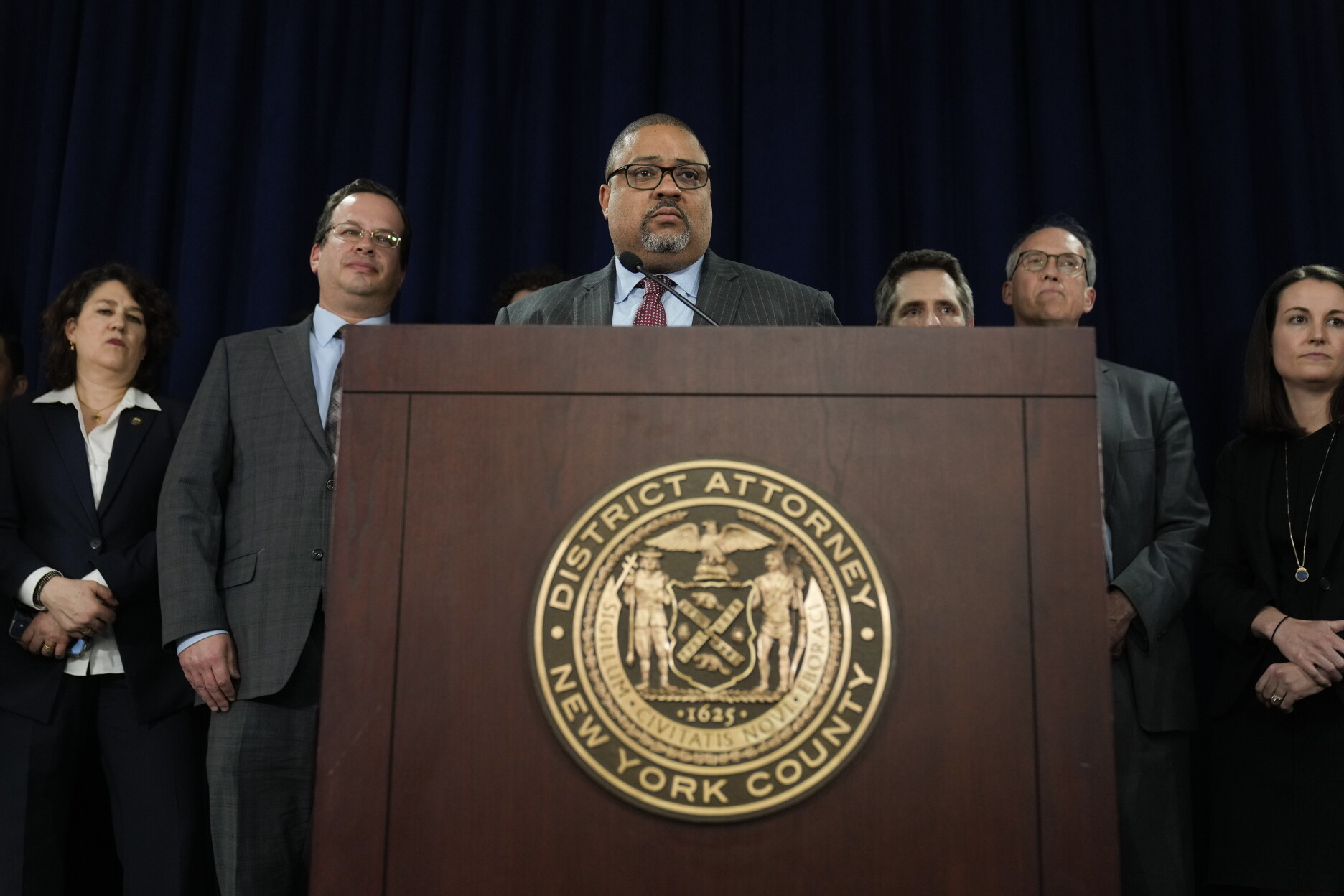 A jury found Trump guilty on 34 felony counts of falsifying business records stemming from the hush money case. Seth Wenig/APDonald Trump isn’t getting sentenced in New York anytime soon, with local prosecutors effectively pausing the hush money case as they fight off the president-elect’s attempts to dismiss his criminal conviction altogether.
Manhattan District Attorney Alvin Bragg Jr. indicated his team will continue to back the jury’s guilty verdict even after he returns to the White House. Though, Bragg’s office also showed an openness to a four-year freeze, until Trump — who will become the first felon ever to serve as president — is done with his term.
“The people deeply respect the office of the president, are mindful of the demands and obligations of the presidency, and acknowledge that defendant’s inauguration will raise unprecedented legal questions. We also deeply respect the fundamental role of the jury in our constitutional system,” Bragg wrote in a letter to the court Tuesday.
“Consideration must be given to various non-dismissal options … such as deferral of all remaining criminal proceedings until after the end of defendant’s upcoming presidential term,” he added, quoting a 2000 Justice Department memo about presidential protections when noting that “immunity should not lead to consequences that ‘forever thwart the public’s interest in enforcing its criminal laws.’”
With only 62 days until Inauguration Day, it’s unclear what this legal fight will look like. Expect letters, maybe a judicial order, and appeals — but no definitive sentencing. Former prosecutors and judges have told NOTUS there’s no chance Trump could be forced to appear in court for a sentencing after he’s back in office.
Prosecutors had until Tuesday to lay out how they plan to proceed with the case. This morning, Bragg himself authored a letter asking the state court judge to wipe out any remaining deadlines in the case — including a sentencing scheduled to take place next week — so that both sides can duke it out.
“The people believe that further proceedings before this court should be adjourned,” Bragg wrote.
If New York Supreme Court Justice Juan Merchan agrees, the case that was about to reach its much-anticipated conclusion will instead take a circular detour that relitigates one of the basic issues that has dogged every prosecution against Trump thus far: whether prosecutors can chase after him in the first place.
Trump’s felony conviction in New York is only one of several cases currently in limbo.
In Georgia, an indictment against him for 2020 election interference is on pause as a higher court considers whether Fulton County District Attorney Fani Willis should be yanked off the case. In Florida, a federal judge dismissed the indictment that accused Trump of mishandling classified records after she concluded that Justice Department special counsel Jack Smith didn’t have the authority to even bring the case. And in Washington, Smith has already begun to wind down his federal case for election interference, anticipating that Trump will kill the investigation as soon as he takes office.
That leaves only the Manhattan DA’s case, where a jury of 12 New Yorkers in May found that Trump was guilty of 34 felony counts of faking business records in an attempt to cover up a hush money deal that kept porn star Stormy Daniels from exposing their extramarital sexual affair before the 2016 presidential election.
But Tuesday’s letter makes clear that prosecutors and Trump’s defense team are about to spar over whether a president-elect is somehow immune from accountability by the mere nature of his political status.
The DA’s decision to wipe the calendar follows a Nov. 8 letter to the court from Trump defense lawyer Todd Blanche, who wrote that “dismissal is required because a sitting president may not be prosecuted.”
“A sitting president is completely immune from indictment or any criminal process, state or federal, and the same immunity extends to a president-elect during his transition into the presidency,” Blanche asserted.
Trump’s legal team more or less ensured this chaotic final stretch by relentlessly pushing to delay the New York case while simultaneously seeking a friendly ruling from the U.S. Supreme Court on presidential immunity. Defense lawyers have since latched onto that high court ruling by claiming that some evidence should never have been presented at trial, like the fact that Trump was at the Oval Office when he signed checks to his lawyer, Michael Cohen.
In Tuesday’s letter, Bragg acknowledged that his office’s options are few and narrow. He noted that even if the judge keeps the case alive and intends to inch toward sentencing, Trump’s team will surely appeal that decision and halt proceedings anyway.
—
Jose Pagliery is a reporter at NOTUS. -
Trump Is Not Getting Sentenced in New York Anytime Soon
Reply sourceA jury found Trump guilty on 34 felony counts of falsifying business records stemming from the hush money case. Seth Wenig/APDonald Trump isn’t getting sentenced in New York anytime soon, with local prosecutors effectively pausing the hush money case as they fight off the president-elect’s attempts to dismiss his criminal conviction altogether.
Manhattan District Attorney Alvin Bragg Jr. indicated his team will continue to back the jury’s guilty verdict even after he returns to the White House. Though, Bragg’s office also showed an openness to a four-year freeze, until Trump — who will become the first felon ever to serve as president — is done with his term.
“The people deeply respect the office of the president, are mindful of the demands and obligations of the presidency, and acknowledge that defendant’s inauguration will raise unprecedented legal questions. We also deeply respect the fundamental role of the jury in our constitutional system,” Bragg wrote in a letter to the court Tuesday.
“Consideration must be given to various non-dismissal options … such as deferral of all remaining criminal proceedings until after the end of defendant’s upcoming presidential term,” he added, quoting a 2000 Justice Department memo about presidential protections when noting that “immunity should not lead to consequences that ‘forever thwart the public’s interest in enforcing its criminal laws.’”
With only 62 days until Inauguration Day, it’s unclear what this legal fight will look like. Expect letters, maybe a judicial order, and appeals — but no definitive sentencing. Former prosecutors and judges have told NOTUS there’s no chance Trump could be forced to appear in court for a sentencing after he’s back in office.
Prosecutors had until Tuesday to lay out how they plan to proceed with the case. This morning, Bragg himself authored a letter asking the state court judge to wipe out any remaining deadlines in the case — including a sentencing scheduled to take place next week — so that both sides can duke it out.
“The people believe that further proceedings before this court should be adjourned,” Bragg wrote.
If New York Supreme Court Justice Juan Merchan agrees, the case that was about to reach its much-anticipated conclusion will instead take a circular detour that relitigates one of the basic issues that has dogged every prosecution against Trump thus far: whether prosecutors can chase after him in the first place.
Trump’s felony conviction in New York is only one of several cases currently in limbo.
In Georgia, an indictment against him for 2020 election interference is on pause as a higher court considers whether Fulton County District Attorney Fani Willis should be yanked off the case. In Florida, a federal judge dismissed the indictment that accused Trump of mishandling classified records after she concluded that Justice Department special counsel Jack Smith didn’t have the authority to even bring the case. And in Washington, Smith has already begun to wind down his federal case for election interference, anticipating that Trump will kill the investigation as soon as he takes office.
That leaves only the Manhattan DA’s case, where a jury of 12 New Yorkers in May found that Trump was guilty of 34 felony counts of faking business records in an attempt to cover up a hush money deal that kept porn star Stormy Daniels from exposing their extramarital sexual affair before the 2016 presidential election.
But Tuesday’s letter makes clear that prosecutors and Trump’s defense team are about to spar over whether a president-elect is somehow immune from accountability by the mere nature of his political status.
The DA’s decision to wipe the calendar follows a Nov. 8 letter to the court from Trump defense lawyer Todd Blanche, who wrote that “dismissal is required because a sitting president may not be prosecuted.”
“A sitting president is completely immune from indictment or any criminal process, state or federal, and the same immunity extends to a president-elect during his transition into the presidency,” Blanche asserted.
Trump’s legal team more or less ensured this chaotic final stretch by relentlessly pushing to delay the New York case while simultaneously seeking a friendly ruling from the U.S. Supreme Court on presidential immunity. Defense lawyers have since latched onto that high court ruling by claiming that some evidence should never have been presented at trial, like the fact that Trump was at the Oval Office when he signed checks to his lawyer, Michael Cohen.
In Tuesday’s letter, Bragg acknowledged that his office’s options are few and narrow. He noted that even if the judge keeps the case alive and intends to inch toward sentencing, Trump’s team will surely appeal that decision and halt proceedings anyway.
—
Jose Pagliery is a reporter at NOTUS. -
Republicans Are Starting to Ask a New Question: Do They Need to Be More Like Trump to Win?
Reply source Evan Vucci/APThere’s at least one thing almost every Republican candidate who ran this year had in common: They got fewer votes than Donald Trump.
In states across the country, the president-elect performed better than Republican candidates running for Congress and other statewide positions, often exceeding their support by enough votes to make the difference between victory and defeat. Trump did so much better, in fact, that he scored a decisive victory in the presidential race even as Republicans made significant but still relatively modest gains in the Senate and little new headway in the House.
The over-performance was a reversal from his two previous presidential runs, when Trump frequently received fewer votes than GOP candidates running down the ballot. And it raises a provocative question for a party that has spent much of the last decade trying to carve out ways to differentiate itself from its polarizing leader: Should Republican candidates in future elections try to be more like Donald Trump?
“You can’t authentically replicate the Trump persona,” Giancarlo Sopo, a Republican strategist, said. “But what you can do is take a look at parts of his policies that do appeal to people and embrace them.”
Sopo and other party operatives cautioned that replicating Trump’s appeal is, at some level, impossible. They add that amid an ongoing postelection assessment from the party, they aren’t yet exactly sure why the former president did better than his Republican allies.
But that Republicans are even contemplating such a question is a testament to how Trump is poised to further re-create the party in his own image, driven by his popularity with voters beyond even the Republican base.
“Candidates matter, and that’s the most important thing,” Alex Stroman, a Republican strategist, said. “Donald Trump is a super candidate and is finally maybe getting recognition for that.”
Eric Hovde (2024 RNC) AP-24198836581741 (4896x3264, AR: 1.50)
Trump’s strong returns compared to many Republican lawmakers, especially in the Senate, is a reason they might find it difficult to resist even the most controversial nominations for his cabinet, including his selection of Fox News host Pete Hegseth as secretary of defense, former Rep. Tulsi Gabbard as director of national intelligence and Rep. Matt Gaetz for attorney general.
Trump’s 2024 election results speak for themselves, especially in states with marquee Senate races that doubled as presidential battlegrounds. In Wisconsin, for instance, he received about 50,000 more votes than GOP Senate nominee Eric Hovde, winning the state by 1 percentage point while Hovde lost it by roughly 1 percentage point. In Pennsylvania, the former president outperformed Republican Senate candidate Dave McCormick by nearly 150,000 votes. (Hovde lost his race against Democratic Sen. Tammy Baldwin, while McCormick defeated Democratic Sen. Bob Casey.)
In Nevada, the gap was even bigger as a share of the overall vote: Trump won a majority of voters, per vote tallies posted Thursday, besting Kamala Harris by more than 40,000 votes. But GOP Senate nominee Sam Brown received just over 46% of the vote, trailing Trump’s vote total by roughly 75,000 votes.
In those three states, GOP Senate candidates took on entrenched Democratic incumbents, who traditionally outrun their party’s top of the ticket. But even in open-seat contests, where the GOP candidates were at less of a disadvantage, Trump still won more votes.
In Michigan, Trump won about 2.8 million votes, with 49.7% of the vote, on his way to victory. But GOP Senate nominee Mike Rogers managed fewer than 2.7 million votes, losing with just 48.3% of the vote.
The difference was larger in another open-seat race in Arizona, where Trump was on track to better Republican Senate nominee Kari Lake by more than 4 percentage points, winning more than 52% of the vote compared to her total of less than 48%. With 99% of precincts reporting Thursday, Lake had received 200,000 fewer votes than Trump.
The Republican presidential nominee outran GOP Senate candidates in nearly every competitive Senate race, in fact, including in Montana, Ohio, Texas, Florida and Nebraska.
Comparisons to House races, where results of the presidential race were not always immediately known, are more difficult. But in at least one key race, in Maine’s 2nd Congressional District, Trump won the district’s lone electoral vote easily, with nearly 53% of the vote, while the GOP House nominee appeared to fall short of defeating Democratic Rep. Jared Golden.
In North Carolina, Trump performed better than not only scandal-plagued Republican gubernatorial nominee Mark Robinson, but also Republican candidates down the ballot like attorney general nominee Dan Bishop. The difference helped Democrats in the state win a handful of competitive races even as Trump won a relatively comfortable majority of the vote in the presidential contest.
Trump hadn’t fared nearly as well compared to other Republican candidates during his prior campaigns, when GOP contenders frequently earned more votes than he did.
In 2016, Trump underperformed Republican Senate nominees in swing states like Pennsylvania, Florida and New Hampshire. That year, GOP Sen. Ron Johnson easily outran Trump in Wisconsin, winning 50.2% of the vote while Trump received only 47.8% of the vote.
The outcomes were more mixed in 2020. But Republican Senate nominees like John James in Michigan and Susan Collins in Maine still received a higher share of the vote than Trump that year.
Dave McCormick AP- 24310157105515 (4237x2825, AR: 1.50)
Trump did better this year, according to veteran Republican strategist Brad Todd, in part because many of his former critics, including those within the GOP, had reconciled with him by 2024.
“And part of it was because they decided they had more to worry about with the Democrats,” Todd said.
Republican strategists cautioned that a complete assessment of where and why Trump did better than other GOP candidates remains in process.
Some also point out that, even this year, there were multiple examples of Republicans who performed much better than the president-elect, citing Rep. Don Bacon in Nebraska’s 2nd Congressional District, Senate nominee Larry Hogan in Maryland and gubernatorial nominee Kelly Ayotte in New Hampshire. All candidates exceeded Trump’s vote total in the suburbs, where he has usually struggled the most.
But Trump’s overperformance was also hardly a surprise to many GOP strategists in the weeks leading up to the election. The National Republican Congressional Committee, the House GOP’s political arm, issued a preelection memo touting the former president’s popularity as the top reason it was poised to retain a congressional majority.
His popularity, the memo said, would help counteract House Democrats’ heavy spending advantage in many races, one reason GOP strategists say their candidates often underperformed Trump. Many Democratic Senate candidates, like Baldwin and Casey, had also developed specialized appeal to their states, winning reelection multiple times and tailoring their message to their state’s specific demographics.
Republicans are set to gain four seats in the Senate, boosting their membership from 49 members to a majority-making 53. The outcome of several key House races remains uncertain, but Republicans will retain their majority narrowly.
In Wisconsin, that background and appeal helped Baldwin perform better among the state’s rural voters and farming communities, according to one GOP strategist who reviewed the state’s election results.
Todd, who advised the successful McCormick campaign, said Casey did better with blue-collar men, though the differences between the Senate campaign and Trump’s campaign were overall minute.
“We did a little bit better with college men. He did better with non-college men,” Todd said. “That’s pretty much it.”
Republicans say they suspect that many new voters who turned out in 2024, a cohort of young men, backed Trump but potentially left the rest of their ballot blank. Trump’s campaign aggressively courted those voters during the campaign, trying to persuade many of them to cast a ballot for the first time.
“He draws people to the polls who would otherwise not vote,” Sopo said. “Your typical podcast bro does not care about his local Senate race — but he will show up and vote for Trump.”
“Trump embodies a middle finger to the cultural establishment,” Sopo added. “So if you don’t like your corporate DEI department or the excessively politically correct HR lady, you’re going to channel that energy through him. He’s a proxy for those frustrations."
Donald Trump AP-21012750712028 (3743x2495, AR: 1.50)
Winning over voters who turned out for Trump but ignored other GOP candidates should be a goal for the party in future elections, said GOP strategists, adding that they could help the party win a multitude of swing states and battleground districts.
That also might be easier said than done, they said, especially for candidates who try to emulate the brash personality of perhaps the most unique presidential candidate in recent American history.
“If you model yourself on Trump, or try to be a mini-me, it’s not going to have the same authenticity,” said David Urban, a former Trump campaign adviser. “It’s not going to be authentic.”
Republican candidates, like Lake in Arizona, who did seem to embrace Trump the most also suffered the worst defeats last week.
But Republicans nonetheless urged the party to take some lessons from Trump’s victory. They focused, for instance, on his campaign’s emphasis on finding nontraditional Republican voters, a strategy that saw him making appearances on podcasts and campaigning in solidly blue states like New York and California.
The influx of younger and more working-class voters into the GOP gives the party a chance to win voters who campaigns might otherwise ignore, strategists said.
“Candidates have to understand this shift and make sure they’re reaching out outside these traditional Republican constituencies, because it certainly worked for Donald Trump,” Stroman said.
Other operatives cited his professed support for entitlement programs like Medicare and Social Security as a policy platform for others to adopt.
Todd also praised Trump and his campaign’s willingness to attack Democrats over issues like transgender athletes in school sports, which he said has the support of four-fifths of the public but scares away too many Republicans. That boldness should be embraced by other Republicans, he said.
“When you see the number 80/20, you have to believe it,” Todd said. “And the Trump campaign was willing to go to the 80/20 issue that wasn’t in the normal matrix of issues, and that’s a lesson.”
—
Alex Roarty is a reporter at NOTUS. -
Republicans Are Starting to Ask a New Question: Do They Need to Be More Like Trump to Win?
Reply sourceEvan Vucci/APThere’s at least one thing almost every Republican candidate who ran this year had in common: They got fewer votes than Donald Trump.
In states across the country, the president-elect performed better than Republican candidates running for Congress and other statewide positions, often exceeding their support by enough votes to make the difference between victory and defeat. Trump did so much better, in fact, that he scored a decisive victory in the presidential race even as Republicans made significant but still relatively modest gains in the Senate and little new headway in the House.
The over-performance was a reversal from his two previous presidential runs, when Trump frequently received fewer votes than GOP candidates running down the ballot. And it raises a provocative question for a party that has spent much of the last decade trying to carve out ways to differentiate itself from its polarizing leader: Should Republican candidates in future elections try to be more like Donald Trump?
“You can’t authentically replicate the Trump persona,” Giancarlo Sopo, a Republican strategist, said. “But what you can do is take a look at parts of his policies that do appeal to people and embrace them.”
Sopo and other party operatives cautioned that replicating Trump’s appeal is, at some level, impossible. They add that amid an ongoing postelection assessment from the party, they aren’t yet exactly sure why the former president did better than his Republican allies.
But that Republicans are even contemplating such a question is a testament to how Trump is poised to further re-create the party in his own image, driven by his popularity with voters beyond even the Republican base.
“Candidates matter, and that’s the most important thing,” Alex Stroman, a Republican strategist, said. “Donald Trump is a super candidate and is finally maybe getting recognition for that.”
Eric Hovde (2024 RNC) AP-24198836581741 (4896x3264, AR: 1.50)
Trump’s strong returns compared to many Republican lawmakers, especially in the Senate, is a reason they might find it difficult to resist even the most controversial nominations for his cabinet, including his selection of Fox News host Pete Hegseth as secretary of defense, former Rep. Tulsi Gabbard as director of national intelligence and Rep. Matt Gaetz for attorney general.
Trump’s 2024 election results speak for themselves, especially in states with marquee Senate races that doubled as presidential battlegrounds. In Wisconsin, for instance, he received about 50,000 more votes than GOP Senate nominee Eric Hovde, winning the state by 1 percentage point while Hovde lost it by roughly 1 percentage point. In Pennsylvania, the former president outperformed Republican Senate candidate Dave McCormick by nearly 150,000 votes. (Hovde lost his race against Democratic Sen. Tammy Baldwin, while McCormick defeated Democratic Sen. Bob Casey.)
In Nevada, the gap was even bigger as a share of the overall vote: Trump won a majority of voters, per vote tallies posted Thursday, besting Kamala Harris by more than 40,000 votes. But GOP Senate nominee Sam Brown received just over 46% of the vote, trailing Trump’s vote total by roughly 75,000 votes.
In those three states, GOP Senate candidates took on entrenched Democratic incumbents, who traditionally outrun their party’s top of the ticket. But even in open-seat contests, where the GOP candidates were at less of a disadvantage, Trump still won more votes.
In Michigan, Trump won about 2.8 million votes, with 49.7% of the vote, on his way to victory. But GOP Senate nominee Mike Rogers managed fewer than 2.7 million votes, losing with just 48.3% of the vote.
The difference was larger in another open-seat race in Arizona, where Trump was on track to better Republican Senate nominee Kari Lake by more than 4 percentage points, winning more than 52% of the vote compared to her total of less than 48%. With 99% of precincts reporting Thursday, Lake had received 200,000 fewer votes than Trump.
The Republican presidential nominee outran GOP Senate candidates in nearly every competitive Senate race, in fact, including in Montana, Ohio, Texas, Florida and Nebraska.
Comparisons to House races, where results of the presidential race were not always immediately known, are more difficult. But in at least one key race, in Maine’s 2nd Congressional District, Trump won the district’s lone electoral vote easily, with nearly 53% of the vote, while the GOP House nominee appeared to fall short of defeating Democratic Rep. Jared Golden.
In North Carolina, Trump performed better than not only scandal-plagued Republican gubernatorial nominee Mark Robinson, but also Republican candidates down the ballot like attorney general nominee Dan Bishop. The difference helped Democrats in the state win a handful of competitive races even as Trump won a relatively comfortable majority of the vote in the presidential contest.
Trump hadn’t fared nearly as well compared to other Republican candidates during his prior campaigns, when GOP contenders frequently earned more votes than he did.
In 2016, Trump underperformed Republican Senate nominees in swing states like Pennsylvania, Florida and New Hampshire. That year, GOP Sen. Ron Johnson easily outran Trump in Wisconsin, winning 50.2% of the vote while Trump received only 47.8% of the vote.
The outcomes were more mixed in 2020. But Republican Senate nominees like John James in Michigan and Susan Collins in Maine still received a higher share of the vote than Trump that year.
Dave McCormick AP- 24310157105515 (4237x2825, AR: 1.50)
Trump did better this year, according to veteran Republican strategist Brad Todd, in part because many of his former critics, including those within the GOP, had reconciled with him by 2024.
“And part of it was because they decided they had more to worry about with the Democrats,” Todd said.
Republican strategists cautioned that a complete assessment of where and why Trump did better than other GOP candidates remains in process.
Some also point out that, even this year, there were multiple examples of Republicans who performed much better than the president-elect, citing Rep. Don Bacon in Nebraska’s 2nd Congressional District, Senate nominee Larry Hogan in Maryland and gubernatorial nominee Kelly Ayotte in New Hampshire. All candidates exceeded Trump’s vote total in the suburbs, where he has usually struggled the most.
But Trump’s overperformance was also hardly a surprise to many GOP strategists in the weeks leading up to the election. The National Republican Congressional Committee, the House GOP’s political arm, issued a preelection memo touting the former president’s popularity as the top reason it was poised to retain a congressional majority.
His popularity, the memo said, would help counteract House Democrats’ heavy spending advantage in many races, one reason GOP strategists say their candidates often underperformed Trump. Many Democratic Senate candidates, like Baldwin and Casey, had also developed specialized appeal to their states, winning reelection multiple times and tailoring their message to their state’s specific demographics.
Republicans are set to gain four seats in the Senate, boosting their membership from 49 members to a majority-making 53. The outcome of several key House races remains uncertain, but Republicans will retain their majority narrowly.
In Wisconsin, that background and appeal helped Baldwin perform better among the state’s rural voters and farming communities, according to one GOP strategist who reviewed the state’s election results.
Todd, who advised the successful McCormick campaign, said Casey did better with blue-collar men, though the differences between the Senate campaign and Trump’s campaign were overall minute.
“We did a little bit better with college men. He did better with non-college men,” Todd said. “That’s pretty much it.”
Republicans say they suspect that many new voters who turned out in 2024, a cohort of young men, backed Trump but potentially left the rest of their ballot blank. Trump’s campaign aggressively courted those voters during the campaign, trying to persuade many of them to cast a ballot for the first time.
“He draws people to the polls who would otherwise not vote,” Sopo said. “Your typical podcast bro does not care about his local Senate race — but he will show up and vote for Trump.”
“Trump embodies a middle finger to the cultural establishment,” Sopo added. “So if you don’t like your corporate DEI department or the excessively politically correct HR lady, you’re going to channel that energy through him. He’s a proxy for those frustrations."
Donald Trump AP-21012750712028 (3743x2495, AR: 1.50)
Winning over voters who turned out for Trump but ignored other GOP candidates should be a goal for the party in future elections, said GOP strategists, adding that they could help the party win a multitude of swing states and battleground districts.
That also might be easier said than done, they said, especially for candidates who try to emulate the brash personality of perhaps the most unique presidential candidate in recent American history.
“If you model yourself on Trump, or try to be a mini-me, it’s not going to have the same authenticity,” said David Urban, a former Trump campaign adviser. “It’s not going to be authentic.”
Republican candidates, like Lake in Arizona, who did seem to embrace Trump the most also suffered the worst defeats last week.
But Republicans nonetheless urged the party to take some lessons from Trump’s victory. They focused, for instance, on his campaign’s emphasis on finding nontraditional Republican voters, a strategy that saw him making appearances on podcasts and campaigning in solidly blue states like New York and California.
The influx of younger and more working-class voters into the GOP gives the party a chance to win voters who campaigns might otherwise ignore, strategists said.
“Candidates have to understand this shift and make sure they’re reaching out outside these traditional Republican constituencies, because it certainly worked for Donald Trump,” Stroman said.
Other operatives cited his professed support for entitlement programs like Medicare and Social Security as a policy platform for others to adopt.
Todd also praised Trump and his campaign’s willingness to attack Democrats over issues like transgender athletes in school sports, which he said has the support of four-fifths of the public but scares away too many Republicans. That boldness should be embraced by other Republicans, he said.
“When you see the number 80/20, you have to believe it,” Todd said. “And the Trump campaign was willing to go to the 80/20 issue that wasn’t in the normal matrix of issues, and that’s a lesson.”
—
Alex Roarty is a reporter at NOTUS. -
Matt Gaetz Resigns From His House Seat After Trump Attorney General Nomination
Reply source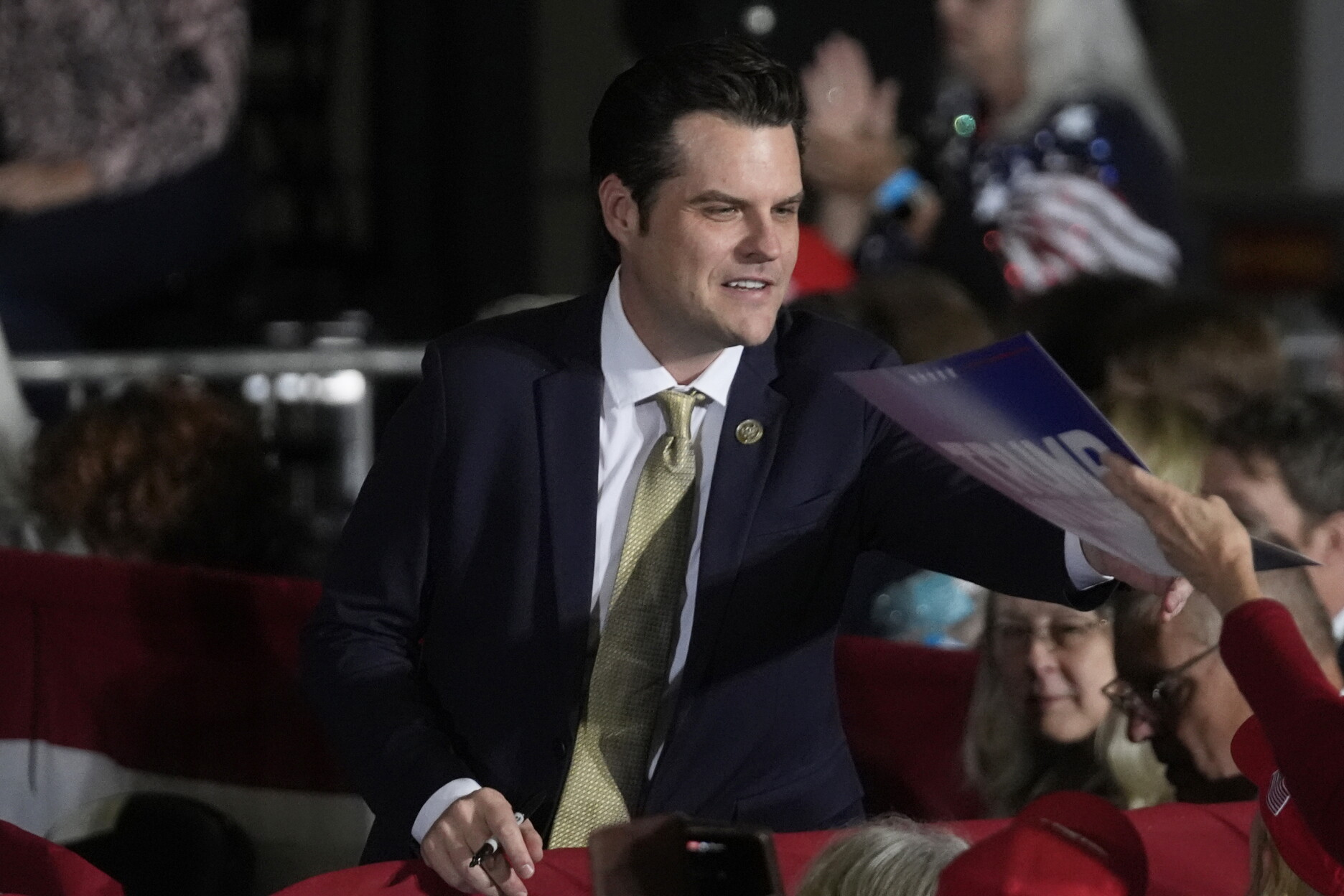 Gaetz stepped down the same day Donald Trump nominated him to serve as attorney general. John Bazemore/APRep. Matt Gaetz resigned from his House seat hours after Donald Trump announced he would nominate the Florida congressman to serve as attorney general.
Speaker Mike Johnson said Gaetz would resign effective immediately.
The resignation comes as the House Ethics Committee was investigating Gaetz for alleged sex trafficking of a minor. Now with his resignation, the committee will immediately cease their investigation and no report will be released.
Given the slim margin in the House, Johnson said Gaetz told him the resignation would give Republicans an opportunity to run a special election to fill the seat quickly.
"I think out of deference to us, he issued his resignation letter effective immediately, of Congress. That caught us by surprise a little bit. But I asked him what the reasoning was, and he said, 'Well, you can't have too many absences,'" Johnson said.
Under Florida law there's "about an eight-week period to select and fill in a vacancy," and Johnson hoped that Gov. Ron DeSantis would start the clock in order to get the seat filled before Jan. 3.
The FBI previously investigated Gaetz for allegedly paying for sex with a 17-year-old girl. Federal prosecutors did not charge Gaetz, but he has since been under investigation in the House.
"It is true that the House Ethics Committee, with a former member of Congress, would have no further jurisdiction over that person ... so that would not be unprecedented," Johnson said when asked about the timing of the resignation in regard to the ethics investigation. "But as far as the timing of the release of the report, the speaker of the House is not involved in that."
Senators met the news of the Gaetz nomination with shock, and there were doubts he would be able to get through a Senate confirmation process.
Gaetz did not respond to a request for comment.
This is a breaking story and will be updated.
—
Reese Gorman is a reporter at NOTUS. Oriana González, a reporter at NOTUS, contributed to this story. -
Matt Gaetz Resigns From His House Seat After Trump Attorney General Nomination
Reply sourceGaetz stepped down the same day Donald Trump nominated him to serve as attorney general. John Bazemore/APRep. Matt Gaetz resigned from his House seat hours after Donald Trump announced he would nominate the Florida congressman to serve as attorney general.
Speaker Mike Johnson said Gaetz would resign effective immediately.
The resignation comes as the House Ethics Committee was investigating Gaetz for alleged sex trafficking of a minor. Now with his resignation, the committee will immediately cease their investigation and no report will be released.
Given the slim margin in the House, Johnson said Gaetz told him the resignation would give Republicans an opportunity to run a special election to fill the seat quickly.
"I think out of deference to us, he issued his resignation letter effective immediately, of Congress. That caught us by surprise a little bit. But I asked him what the reasoning was, and he said, 'Well, you can't have too many absences,'" Johnson said.
Under Florida law there's "about an eight-week period to select and fill in a vacancy," and Johnson hoped that Gov. Ron DeSantis would start the clock in order to get the seat filled before Jan. 3.
The FBI previously investigated Gaetz for allegedly paying for sex with a 17-year-old girl. Federal prosecutors did not charge Gaetz, but he has since been under investigation in the House.
"It is true that the House Ethics Committee, with a former member of Congress, would have no further jurisdiction over that person ... so that would not be unprecedented," Johnson said when asked about the timing of the resignation in regard to the ethics investigation. "But as far as the timing of the release of the report, the speaker of the House is not involved in that."
Senators met the news of the Gaetz nomination with shock, and there were doubts he would be able to get through a Senate confirmation process.
Gaetz did not respond to a request for comment.
This is a breaking story and will be updated.
—
Reese Gorman is a reporter at NOTUS. Oriana González, a reporter at NOTUS, contributed to this story. -
Trump’s Pete Hegseth Nomination Has Left Republicans Confused On and Off the Hill
Reply source Andrew Harnik/APWhen Donald Trump announced Pete Hegseth as his secretary of defense nominee, House Republicans were, to say the least, surprised.
In a private conversation on the House floor, one Republican lawmaker remarked: “Who the fuck is this guy?” per sources familiar with the conversation.
On Capitol Hill, Hegseth’s appointment raised a lot of eyebrows and didn’t garner much immediate praise. An opinion host on Fox News and a National Guard officer, his résumé is punctuated by years worth of controversial comments, from “we should not have women in combat roles” to advocating for then-President Trump to pardon convicted war criminals.
Do Republicans think Hegseth has enough experience to be the Secretary of Defense?
"What matters is that the President elect believes so," one House Republican told NOTUS over text.
The confusion extends beyond the Hill: One defense industry lobbyist reportedly asked the exact same question as the one expressed on the House floor, per Politico, telling the outlet they were hoping for “someone who actually has an extensive background in defense. That would be a good start.”
Publicly, House Republicans weren’t shy about their lack of familiarity with Hegseth — though notably shared as much with less colorful language.
“I honestly don’t know enough about him. I want to research, certainly familiar with his work on TV,” Rep. Nick LaLota told NOTUS.
Even the chairman of the House Armed Services Committee said he isn’t aware of who Hegseth is.
“I just know him from his being on TV,” Rep. Mike Rogers said. When asked if Hegseth had the experience needed to be the secretary of defense, he gave a similar answer.
“I have no idea. You know as much about Pete Hegseth as I do,” he said.
Sen. John Hoeven was similarly unaware of his background and assumed Hegseth must have been in the Marines like his dad.
“So he’s a Marine, and I’m a big fan of Marines, and I’m looking forward to getting to know him,” Hoeven said. “He’s got an excellent track record, both in the military and he’s been a tremendous success at everything he’s done.”
As an Army combat veteran with experience in Afghanistan and Iraq, Hegseth’s résumé overseas is what many Republicans in Congress are leaning into in support of him. House Speaker Mike Johnson was quick to point out his deployments while still playing up Hegseth’s public attacks on the current “woke” military leadership.
“Pete is dedicated to ensuring that our military is focused on lethality and readiness, not woke ideology,” Johnson said. “He served our country faithfully in Guantanamo, Afghanistan and Iraq and is a believer in peace through strength and the America First agenda.”
Earlier this month, Hegseth was a guest with podcaster and former Navy SEAL Shawn Ryan. The two talked at length about Hegseth’s fears around “the institutions going sideways” and becoming more “woke.”
“Any general that was involved, general, admiral, whatever, that was involved in any of the DEI, woke shit, has got to go,” he said.
Republicans are spinning Hegseth’s lack of experience as an upside for the job. One Republican lawmaker, also a veteran, said they see it as part of the reason Hegseth got the nomination.
“President Trump is following through on his promise,” they said, “to shake up the entrenched bureaucracy in our government, including the Pentagon.”
But even his defenders say Hegseth will need a solid staff. Republicans said they expect he’ll have the support of extremely “experienced deputies” who “know their way around” the Pentagon. They expect him to be “saddled with success.”
—
John T. Seward is a NOTUS reporter and an Allbritton Journalism Institute fellow. -
Trump’s Pete Hegseth Nomination Has Left Republicans Confused On and Off the Hill
Reply sourceAndrew Harnik/APWhen Donald Trump announced Pete Hegseth as his secretary of defense nominee, House Republicans were, to say the least, surprised.
In a private conversation on the House floor, one Republican lawmaker remarked: “Who the fuck is this guy?” per sources familiar with the conversation.
On Capitol Hill, Hegseth’s appointment raised a lot of eyebrows and didn’t garner much immediate praise. An opinion host on Fox News and a National Guard officer, his résumé is punctuated by years worth of controversial comments, from “we should not have women in combat roles” to advocating for then-President Trump to pardon convicted war criminals.
Do Republicans think Hegseth has enough experience to be the Secretary of Defense?
"What matters is that the President elect believes so," one House Republican told NOTUS over text.
The confusion extends beyond the Hill: One defense industry lobbyist reportedly asked the exact same question as the one expressed on the House floor, per Politico, telling the outlet they were hoping for “someone who actually has an extensive background in defense. That would be a good start.”
Publicly, House Republicans weren’t shy about their lack of familiarity with Hegseth — though notably shared as much with less colorful language.
“I honestly don’t know enough about him. I want to research, certainly familiar with his work on TV,” Rep. Nick LaLota told NOTUS.
Even the chairman of the House Armed Services Committee said he isn’t aware of who Hegseth is.
“I just know him from his being on TV,” Rep. Mike Rogers said. When asked if Hegseth had the experience needed to be the secretary of defense, he gave a similar answer.
“I have no idea. You know as much about Pete Hegseth as I do,” he said.
Sen. John Hoeven was similarly unaware of his background and assumed Hegseth must have been in the Marines like his dad.
“So he’s a Marine, and I’m a big fan of Marines, and I’m looking forward to getting to know him,” Hoeven said. “He’s got an excellent track record, both in the military and he’s been a tremendous success at everything he’s done.”
As an Army combat veteran with experience in Afghanistan and Iraq, Hegseth’s résumé overseas is what many Republicans in Congress are leaning into in support of him. House Speaker Mike Johnson was quick to point out his deployments while still playing up Hegseth’s public attacks on the current “woke” military leadership.
“Pete is dedicated to ensuring that our military is focused on lethality and readiness, not woke ideology,” Johnson said. “He served our country faithfully in Guantanamo, Afghanistan and Iraq and is a believer in peace through strength and the America First agenda.”
Earlier this month, Hegseth was a guest with podcaster and former Navy SEAL Shawn Ryan. The two talked at length about Hegseth’s fears around “the institutions going sideways” and becoming more “woke.”
“Any general that was involved, general, admiral, whatever, that was involved in any of the DEI, woke shit, has got to go,” he said.
Republicans are spinning Hegseth’s lack of experience as an upside for the job. One Republican lawmaker, also a veteran, said they see it as part of the reason Hegseth got the nomination.
“President Trump is following through on his promise,” they said, “to shake up the entrenched bureaucracy in our government, including the Pentagon.”
But even his defenders say Hegseth will need a solid staff. Republicans said they expect he’ll have the support of extremely “experienced deputies” who “know their way around” the Pentagon. They expect him to be “saddled with success.”
—
John T. Seward is a NOTUS reporter and an Allbritton Journalism Institute fellow. -
‘He Has No Chance’: Matt Gaetz’s Ethics Probe Takes Center Stage After Attorney General Nomination
Reply source Alex Brandon/APDonald Trump announced on Truth Social that Rep. Matt Gaetz is his nominee for attorney general of the United States, appointing him to oversee a Justice Department that once investigated the Florida Republican for sex trafficking a minor.
“It is my Great Honor to announce that Congressman Matt Gaetz, of Florida, is hereby nominated to be The Attorney General of the United States,” Trump wrote in his post, going on to call him a “tenacious attorney.”
Trump said Gaetz would be charged with ending “Weaponized Government” and restoring “Americans’ badly-shattered Faith and Confidence in the Justice Department,” in addition to addressing the border.
Just two years ago, the FBI investigated Gaetz for allegedly paying for sex with a 17-year-old girl — allegations that were supported by Venmo transactions and a confession letter written by his friend, disgraced local tax official Joel Greenberg. Greenberg said Gaetz would use him as a middleman for arranging sexual encounters. Gaetz has denied allegations that he ever had sex with a minor or engaged in sex trafficking.
Gaetz sought a presidential pardon during Trump’s first term, according to testimony delivered to the House Jan. 6 Committee. Former White House aide John McEntee testified that Gaetz had told him that “he did not do anything wrong, but they are trying to make his life hell, and you know, if the president could give him a pardon, that would be great.”
Federal prosecutors ultimately declined to criminally charge the congressman. Since, the House Ethics Committee has recommenced its own probe into Gaetz. The Ethics panel had previously paused its investigation, deferring the matter to the DOJ.
The investigation by the committee is ongoing; it is specifically looking at allegations of “sexual misconduct and illicit drug use.” Sources have previously told NOTUS that the probe is centered around the allegation that he had sexual relations with a minor.
Separately, a civil lawsuit involving one of Gaetz’s friends, a Florida lobbyist, has revealed additional details about drug-fueled sex parties with young women. Legal documents filed to a Florida federal court cited sealed affidavits from three eyewitness testimonies that place Gaetz at a 2017 sex party, where minors were present, as NOTUS previously reported.
This ongoing controversy has people close to Trump skeptical of Gaetz’s ability to get through a Senate confirmation process.
“He has no chance at getting confirmed,” one source close to Trump told NOTUS. “I’d be shocked if his nomination makes it out of committee.”
When the news was announced, House members were at a hotel on Capitol Hill for leadership elections.
In the lobby, a congressman shared the news with three other lawmakers. “Y’all are gonna love this,” they said. In response, one lawmaker put their hands over their face in shock, and another said, “Seriously, he put Matt Gaetz?”
Gaetz has remained a stout defender of Trump and the MAGA movement, dubbing himself a “firebrand.” Gaetz’s remained loyal to Trump, despite Florida Gov. Ron DeSantis’ presidential campaign.
Politics is a family business in the Gaetz family. The House Republican’s father, Don Gaetz, was a powerhouse in local politics, before serving as the state’s Senate president until 2014. Before getting elected to Congress, Matt Gaetz was a lawyer and state representative.
Read more:
• New Court Filings Place Matt Gaetz at a Party at the Center of the Sex Trafficking Scandal
—
Reese Gorman and Jose Pagliery are reporters at NOTUS. -
‘He Has No Chance’: Matt Gaetz’s Ethics Probe Takes Center Stage After Attorney General Nomination
Reply sourceAlex Brandon/APDonald Trump announced on Truth Social that Rep. Matt Gaetz is his nominee for attorney general of the United States, appointing him to oversee a Justice Department that once investigated the Florida Republican for sex trafficking a minor.
“It is my Great Honor to announce that Congressman Matt Gaetz, of Florida, is hereby nominated to be The Attorney General of the United States,” Trump wrote in his post, going on to call him a “tenacious attorney.”
Trump said Gaetz would be charged with ending “Weaponized Government” and restoring “Americans’ badly-shattered Faith and Confidence in the Justice Department,” in addition to addressing the border.
Just two years ago, the FBI investigated Gaetz for allegedly paying for sex with a 17-year-old girl — allegations that were supported by Venmo transactions and a confession letter written by his friend, disgraced local tax official Joel Greenberg. Greenberg said Gaetz would use him as a middleman for arranging sexual encounters. Gaetz has denied allegations that he ever had sex with a minor or engaged in sex trafficking.
Gaetz sought a presidential pardon during Trump’s first term, according to testimony delivered to the House Jan. 6 Committee. Former White House aide John McEntee testified that Gaetz had told him that “he did not do anything wrong, but they are trying to make his life hell, and you know, if the president could give him a pardon, that would be great.”
Federal prosecutors ultimately declined to criminally charge the congressman. Since, the House Ethics Committee has recommenced its own probe into Gaetz. The Ethics panel had previously paused its investigation, deferring the matter to the DOJ.
The investigation by the committee is ongoing; it is specifically looking at allegations of “sexual misconduct and illicit drug use.” Sources have previously told NOTUS that the probe is centered around the allegation that he had sexual relations with a minor.
Separately, a civil lawsuit involving one of Gaetz’s friends, a Florida lobbyist, has revealed additional details about drug-fueled sex parties with young women. Legal documents filed to a Florida federal court cited sealed affidavits from three eyewitness testimonies that place Gaetz at a 2017 sex party, where minors were present, as NOTUS previously reported.
This ongoing controversy has people close to Trump skeptical of Gaetz’s ability to get through a Senate confirmation process.
“He has no chance at getting confirmed,” one source close to Trump told NOTUS. “I’d be shocked if his nomination makes it out of committee.”
When the news was announced, House members were at a hotel on Capitol Hill for leadership elections.
In the lobby, a congressman shared the news with three other lawmakers. “Y’all are gonna love this,” they said. In response, one lawmaker put their hands over their face in shock, and another said, “Seriously, he put Matt Gaetz?”
Gaetz has remained a stout defender of Trump and the MAGA movement, dubbing himself a “firebrand.” Gaetz’s remained loyal to Trump, despite Florida Gov. Ron DeSantis’ presidential campaign.
Politics is a family business in the Gaetz family. The House Republican’s father, Don Gaetz, was a powerhouse in local politics, before serving as the state’s Senate president until 2014. Before getting elected to Congress, Matt Gaetz was a lawyer and state representative.
Read more:
• New Court Filings Place Matt Gaetz at a Party at the Center of the Sex Trafficking Scandal
—
Reese Gorman and Jose Pagliery are reporters at NOTUS. -
John Thune Picked to Lead Senate Republicans Over Trumpworld Objections
Reply source Mariam Zuhaib/APSen. John Thune will be the new Republican majority leader, ushering in the first leadership shift in 18 years but a sign that senators aren’t totally willing to relinquish the Mitch McConnell era.
Thune won, 29-24, on the second ballot against Sen. John Cornyn, despite an intense outside pressure campaign led by conservative commentators and MAGA allies in favor of Florida Sen. Rick Scott. Scott positioned himself as the most Trump-aligned of the three men running but lost on the first ballot.
Still, in his first press conference as leader, Thune vowed to be a unifying force for the GOP with a single-minded mission: advancing Donald Trump’s agenda and unwinding Joe Biden and Chuck Schumer’s record.
“This Republican team is uniting,” Thune said. “We are on one team.”
Thune had just four public backers heading into the conference meeting: Sens. Mike Rounds, Markwayne Mullin, Kevin Cramer and NRSC Chair Steve Daines. Scott had more public supporters, but in a closed-door process via secret ballot, Thune had the numbers where Scott had met his ceiling. Thune has been a loyal McConnell ally and is currently his top deputy in the Senate. McConnell has led Senate Republicans since 2007, two years into Thune’s first term as senator.
Despite not making a public endorsement in the race, Trump’s influence loomed large. He has criticized Thune for years, calling him a RINO and openly pushing South Dakota Gov. Kristi Noem to primary him in 2022 (Noem, now being tapped to lead the Department of Homeland Security, declined). Earlier this week, senators told NOTUS that Trump staying out of the race was a good thing and they hoped he would continue to do so — despite some of his fiercest allies like billionaire Elon Musk publicly advocating for Scott.
With a secret-ballot process unlike the House, senators were largely shielded from the criticism that could come from Trump acolytes for backing Thune.
Scott largely ran on his Trump bona fides. In a postelection statement, he said, “While it isn’t the result we hoped for, I will do everything possible to make sure John Thune is successful in accomplishing President Trump’s agenda.” Whether that means he’ll make Thune’s reign as leader harder or easier remains to be seen.
In February, McConnell announced he would be stepping down from leadership after the election, though he will remain in the Senate (his term expires in 2027).
Immediately after McConnell’s announcement, the two “Johns” emerged as the two contenders. But some conservative senators looking to fundamentally shake up the Senate coalesced around Scott.
Scott touted himself as an outsider compared to Thune and Cornyn, though he led the NRSC in 2022 through a disastrous cycle, losing races in Georgia, Nevada, Arizona and Pennsylvania that were seen as winnable but stymied by weak candidates and poor fundraising under Scott’s leadership. Scott then challenged McConnell for leadership in 2022 — the first challenge of McConnell’s tenure — and lost 37-10. This time, Scott only picked up three additional votes on the first ballot, earning 13 votes vs. Cornyn’s 15 and Thune’s 23 votes.
Thune and Cornyn ran on largely similar platforms geared toward opening the amendment process and engaging senators on legislation well ahead of votes. McConnell’s critics on the right point to his strong-arming of power among leadership, weakening the committee chairs and other senators’ ability to push amendments or shape legislation in a meaningful way.
Thune is pushing to open the process, but as McConnell’s number two, wasn’t seen by senators as the leader to shake the Senate to its core.
What Thune does bring to the table is a depth of relationships among colleagues and a strong fundraising arm that Scott lacks.
Thune transferred $4 million to the NRSC in September, the largest ever transfer for a Senate Republican. He broke his own record of $2 million in 2016.
One of Thune’s top supporters, Sen. Kevin Cramer, told NOTUS after the election that he’s feeling “great.”
But he also signaled that the new leader might already have his hands full balancing his conference and Trump, particularly over a procedural move to fast-track nominations that the president-elect has pressured Thune to approve.
“I’d like to avoid them, if I can,” Cramer said. “I think the separation of powers is pretty fundamental.”
—
Katherine Swartz, Casey Murray and Claire Heddles are NOTUS reporters and Allbritton Journalism Institute fellows. Riley Rogerson is a reporter at NOTUS. -
John Thune Picked to Lead Senate Republicans Over Trumpworld Objections
Reply sourceMariam Zuhaib/APSen. John Thune will be the new Republican majority leader, ushering in the first leadership shift in 18 years but a sign that senators aren’t totally willing to relinquish the Mitch McConnell era.
Thune won, 29-24, on the second ballot against Sen. John Cornyn, despite an intense outside pressure campaign led by conservative commentators and MAGA allies in favor of Florida Sen. Rick Scott. Scott positioned himself as the most Trump-aligned of the three men running but lost on the first ballot.
Still, in his first press conference as leader, Thune vowed to be a unifying force for the GOP with a single-minded mission: advancing Donald Trump’s agenda and unwinding Joe Biden and Chuck Schumer’s record.
“This Republican team is uniting,” Thune said. “We are on one team.”
Thune had just four public backers heading into the conference meeting: Sens. Mike Rounds, Markwayne Mullin, Kevin Cramer and NRSC Chair Steve Daines. Scott had more public supporters, but in a closed-door process via secret ballot, Thune had the numbers where Scott had met his ceiling. Thune has been a loyal McConnell ally and is currently his top deputy in the Senate. McConnell has led Senate Republicans since 2007, two years into Thune’s first term as senator.
Despite not making a public endorsement in the race, Trump’s influence loomed large. He has criticized Thune for years, calling him a RINO and openly pushing South Dakota Gov. Kristi Noem to primary him in 2022 (Noem, now being tapped to lead the Department of Homeland Security, declined). Earlier this week, senators told NOTUS that Trump staying out of the race was a good thing and they hoped he would continue to do so — despite some of his fiercest allies like billionaire Elon Musk publicly advocating for Scott.
With a secret-ballot process unlike the House, senators were largely shielded from the criticism that could come from Trump acolytes for backing Thune.
Scott largely ran on his Trump bona fides. In a postelection statement, he said, “While it isn’t the result we hoped for, I will do everything possible to make sure John Thune is successful in accomplishing President Trump’s agenda.” Whether that means he’ll make Thune’s reign as leader harder or easier remains to be seen.
In February, McConnell announced he would be stepping down from leadership after the election, though he will remain in the Senate (his term expires in 2027).
Immediately after McConnell’s announcement, the two “Johns” emerged as the two contenders. But some conservative senators looking to fundamentally shake up the Senate coalesced around Scott.
Scott touted himself as an outsider compared to Thune and Cornyn, though he led the NRSC in 2022 through a disastrous cycle, losing races in Georgia, Nevada, Arizona and Pennsylvania that were seen as winnable but stymied by weak candidates and poor fundraising under Scott’s leadership. Scott then challenged McConnell for leadership in 2022 — the first challenge of McConnell’s tenure — and lost 37-10. This time, Scott only picked up three additional votes on the first ballot, earning 13 votes vs. Cornyn’s 15 and Thune’s 23 votes.
Thune and Cornyn ran on largely similar platforms geared toward opening the amendment process and engaging senators on legislation well ahead of votes. McConnell’s critics on the right point to his strong-arming of power among leadership, weakening the committee chairs and other senators’ ability to push amendments or shape legislation in a meaningful way.
Thune is pushing to open the process, but as McConnell’s number two, wasn’t seen by senators as the leader to shake the Senate to its core.
What Thune does bring to the table is a depth of relationships among colleagues and a strong fundraising arm that Scott lacks.
Thune transferred $4 million to the NRSC in September, the largest ever transfer for a Senate Republican. He broke his own record of $2 million in 2016.
One of Thune’s top supporters, Sen. Kevin Cramer, told NOTUS after the election that he’s feeling “great.”
But he also signaled that the new leader might already have his hands full balancing his conference and Trump, particularly over a procedural move to fast-track nominations that the president-elect has pressured Thune to approve.
“I’d like to avoid them, if I can,” Cramer said. “I think the separation of powers is pretty fundamental.”
—
Katherine Swartz, Casey Murray and Claire Heddles are NOTUS reporters and Allbritton Journalism Institute fellows. Riley Rogerson is a reporter at NOTUS. -
Will a More Diverse Trump Coalition Mean a More Diverse Administration?
Reply source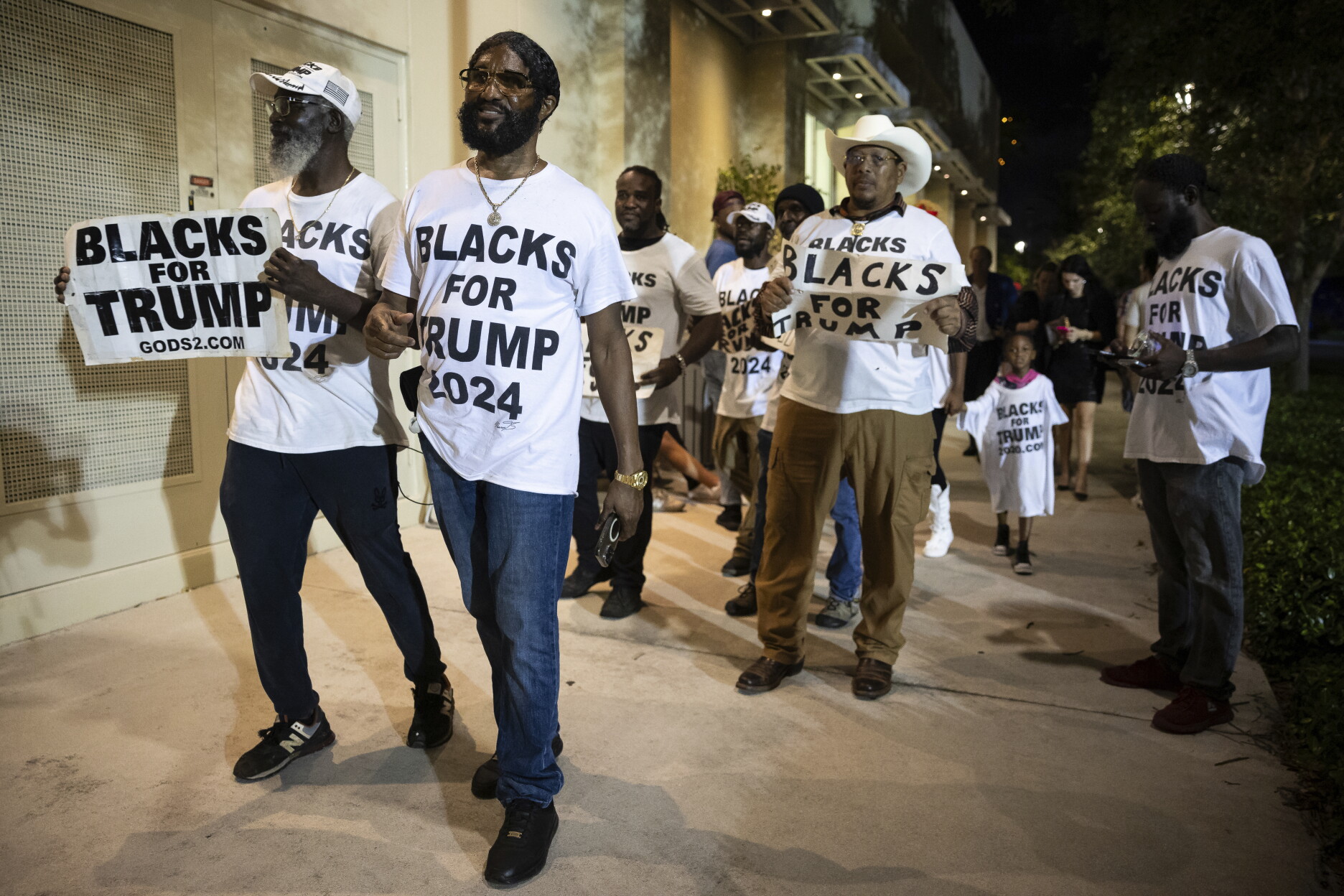 Early vote totals show Trump doubled his 2020 numbers with young Black men. Francis Chung/POLITICO via APDonald Trump’s slight but significant gains with Black and Hispanic voters have Republicans grappling with how to maintain his winning coalition. Already, operatives and Trump allies are discussing the need for policy wins and building a ground game.
Where there’s less consensus? Whether diversity should be a priority for Trump’s second administration.
The Republican Party has long decried identity politics and diversity initiatives. But now, some say intentional representation wouldn’t hurt Republicans’ efforts to build a more diverse coalition.
Trump is already expected to appoint Sen. Marco Rubio as his secretary of state, which would make him the highest-ranking Hispanic cabinet official in history. He also tapped Vivek Ramaswamy (along with Elon Musk) to lead a new Department of Government Efficiency. Having Black representation in the administration wouldn’t hurt either, one Black Trump campaign surrogate told NOTUS.
Though this person — and every Republican NOTUS spoke to — was quick to caveat that merit is the primary criteria.
“It would be great to see more minorities front facing like in our campaign,” the campaign surrogate said. “It was very diverse, which is something that he’s been proud of. We have the first female chief of staff. That’s something no one else has done yet, right? Because Susie [Wiles] is the best, regardless of being a woman, she is the best option.”
A former Trump administration staffer said something similar.
“Success is the biggest thing,” this Black former Trump administration official said. “We don’t really prioritize the DEI like representation matters … that’s not in our party. But on top of your success, it does help when you elevate qualified individuals to roles in which they have more visibility in the White House.”
Early numbers show that Trump chipped away at Democrats’ hold on Black, Hispanic and women voters. He doubled his 2020 numbers with young Black men, getting the vote of about 3 in 10 Black men under 45, according to AP VoteCast. His share of the vote from women increased from 43% against Joe Biden to 46% against Kamala Harris. NBC News exit polls show Trump has had a 13-point gain in Hispanic voters since 2020.
To keep that base, Trump allies argue that his administration will need to deliver on its promises.
Appointing minorities to the Trump administration is simply smoke and mirrors, said Pastor Lorenzo Sewell, a Trump ally in Detroit who spoke on the Republican National Convention stage in July.
“That means absolutely nothing,” he said. “The only thing that matters is one thing: that he regulates the resources that are already in poor Black communities.”
Policy matters more, Sewell said, rather than how many people of color are installed in the administration.
This was a common refrain among Trump’s supporters.
“The First Step Act was a receipt,” said a Black Georgia delegate of the Republican National Committee. “The permanent funding for HBCUs was a receipt. Extending a pardon to Alice Johnson was a receipt. Opportunity zones were a receipt. There were very specific things that helped Black people. So if he delivers the receipts again, we’ll be fine.”
However, this delegate acknowledged that Black leaders don’t have the same opportunities as their counterparts.
“In the party, Black people who earn it are respected and Black people who don’t earn it are not,” the delegate said. “We have to earn it differently than white folks, but guess what? That’s everywhere. It’s always going to be that way. It has always been that way.”
Republicans who wave away the need for diversity initiatives, focused discussions around outreach tactics. Trump’s 2024 campaign put a significant amount of resources into a legal operation to purge states’ voter rolls, create tighter regulations for mail-in ballots and restrict methods of mobile voting — all in an effort, Republicans say, to ensure that noncitizens did not vote. In doing so, it enlisted the help of independent conservative organizations to run ground game operations. Investing heavily into those groups will be essential to keeping the party’s gains, these Republicans say.
“Organizations like ours, the infrastructure needs to be developed and built out from now,” said John Jose, founder of the American Tomorrow Project, a GOP outreach organization focusing on Asian, Black and Hispanic voters. “That’ll help maintain the relationships we’ve already built with community leaders and communicate the policy results they’ve trusted us to achieve.”
Orlando Owens, a Black GOP operative and founder of Project Move the Needle, agreed. His grassroots organization focused on minimizing Democrats’ margin of victory in the deep blue Milwaukee County. “There was no one on the ground here for Republicans the way we were,” Owens told NOTUS.
As Republicans strategize to maintain their gains with minorities, Democrats are reckoning with their slippage with voters of color, despite putting forward a historic candidate. A senior adviser to one member of the Congressional Black Caucus, who chalks Trump’s gains with Harris’ failure to woo the working class, said the party may need to revisit its approach to this voting bloc.
“What probably hurt us with this group is a disconnect in our tone when talking directly to working-class Americans,” the adviser said. “Trump just has a way of tapping into any frustration people have with the way the economy is going. [Democrats] have to break that wall.”
—
Calen Razor is a NOTUS reporter and an Allbritton Journalism Institute fellow. -
Will a More Diverse Trump Coalition Mean a More Diverse Administration?
Reply sourceEarly vote totals show Trump doubled his 2020 numbers with young Black men. Francis Chung/POLITICO via APDonald Trump’s slight but significant gains with Black and Hispanic voters have Republicans grappling with how to maintain his winning coalition. Already, operatives and Trump allies are discussing the need for policy wins and building a ground game.
Where there’s less consensus? Whether diversity should be a priority for Trump’s second administration.
The Republican Party has long decried identity politics and diversity initiatives. But now, some say intentional representation wouldn’t hurt Republicans’ efforts to build a more diverse coalition.
Trump is already expected to appoint Sen. Marco Rubio as his secretary of state, which would make him the highest-ranking Hispanic cabinet official in history. He also tapped Vivek Ramaswamy (along with Elon Musk) to lead a new Department of Government Efficiency. Having Black representation in the administration wouldn’t hurt either, one Black Trump campaign surrogate told NOTUS.
Though this person — and every Republican NOTUS spoke to — was quick to caveat that merit is the primary criteria.
“It would be great to see more minorities front facing like in our campaign,” the campaign surrogate said. “It was very diverse, which is something that he’s been proud of. We have the first female chief of staff. That’s something no one else has done yet, right? Because Susie [Wiles] is the best, regardless of being a woman, she is the best option.”
A former Trump administration staffer said something similar.
“Success is the biggest thing,” this Black former Trump administration official said. “We don’t really prioritize the DEI like representation matters … that’s not in our party. But on top of your success, it does help when you elevate qualified individuals to roles in which they have more visibility in the White House.”
Early numbers show that Trump chipped away at Democrats’ hold on Black, Hispanic and women voters. He doubled his 2020 numbers with young Black men, getting the vote of about 3 in 10 Black men under 45, according to AP VoteCast. His share of the vote from women increased from 43% against Joe Biden to 46% against Kamala Harris. NBC News exit polls show Trump has had a 13-point gain in Hispanic voters since 2020.
To keep that base, Trump allies argue that his administration will need to deliver on its promises.
Appointing minorities to the Trump administration is simply smoke and mirrors, said Pastor Lorenzo Sewell, a Trump ally in Detroit who spoke on the Republican National Convention stage in July.
“That means absolutely nothing,” he said. “The only thing that matters is one thing: that he regulates the resources that are already in poor Black communities.”
Policy matters more, Sewell said, rather than how many people of color are installed in the administration.
This was a common refrain among Trump’s supporters.
“The First Step Act was a receipt,” said a Black Georgia delegate of the Republican National Committee. “The permanent funding for HBCUs was a receipt. Extending a pardon to Alice Johnson was a receipt. Opportunity zones were a receipt. There were very specific things that helped Black people. So if he delivers the receipts again, we’ll be fine.”
However, this delegate acknowledged that Black leaders don’t have the same opportunities as their counterparts.
“In the party, Black people who earn it are respected and Black people who don’t earn it are not,” the delegate said. “We have to earn it differently than white folks, but guess what? That’s everywhere. It’s always going to be that way. It has always been that way.”
Republicans who wave away the need for diversity initiatives, focused discussions around outreach tactics. Trump’s 2024 campaign put a significant amount of resources into a legal operation to purge states’ voter rolls, create tighter regulations for mail-in ballots and restrict methods of mobile voting — all in an effort, Republicans say, to ensure that noncitizens did not vote. In doing so, it enlisted the help of independent conservative organizations to run ground game operations. Investing heavily into those groups will be essential to keeping the party’s gains, these Republicans say.
“Organizations like ours, the infrastructure needs to be developed and built out from now,” said John Jose, founder of the American Tomorrow Project, a GOP outreach organization focusing on Asian, Black and Hispanic voters. “That’ll help maintain the relationships we’ve already built with community leaders and communicate the policy results they’ve trusted us to achieve.”
Orlando Owens, a Black GOP operative and founder of Project Move the Needle, agreed. His grassroots organization focused on minimizing Democrats’ margin of victory in the deep blue Milwaukee County. “There was no one on the ground here for Republicans the way we were,” Owens told NOTUS.
As Republicans strategize to maintain their gains with minorities, Democrats are reckoning with their slippage with voters of color, despite putting forward a historic candidate. A senior adviser to one member of the Congressional Black Caucus, who chalks Trump’s gains with Harris’ failure to woo the working class, said the party may need to revisit its approach to this voting bloc.
“What probably hurt us with this group is a disconnect in our tone when talking directly to working-class Americans,” the adviser said. “Trump just has a way of tapping into any frustration people have with the way the economy is going. [Democrats] have to break that wall.”
—
Calen Razor is a NOTUS reporter and an Allbritton Journalism Institute fellow. -
Rep. Garret Graves in Discussions to Become Secretary of Transportation
Reply source Rep. Garret Graves departs a House Republican Conference meeting at the Capitol Hill Club. Francis Chung/POLITICO/APRetiring Rep. Garret Graves of Louisiana is in talks with Donald Trump’s transition team about the possibility of him becoming secretary of transportation, according to two sources.
While there hasn’t been an official offer — and nothing is final until Trump says it — Graves is supposedly a contender to lead the Department of Transportation.
Graves, who is leaving Congress at the end of this year, is currently a member of the House Transportation and Infrastructure Committee. Before he ran for Congress, Graves served as a staffer for the Transportation committees in the House and Senate, among other congressional positions.
In 2008, Graves left Capitol Hill and then-Gov. Bobby Jindal appointed him to chair the Louisiana Coastal Protection and Restoration Authority, where he was the lead trustee and negotiated on behalf of the state over the Deepwater Horizon oil spill.
On Capitol Hill, Graves is known for his policy prowess on infrastructure and transportation issues, with President Joe Biden inviting him and seven other members to the White House in 2021 to start negotiations on a bipartisan infrastructure bill. (Graves eventually voted against the legislation.)
Selecting Graves would be one work-around for GOP reservations about taking any more Republicans out of the House for the administration, while also giving the House GOP another one of their own working for Trump. Graves chose not to run for reelection after redistricting left him with a deep blue seat.
Trump has already announced that he plans to nominate Rep. Mike Waltz to be his national security adviser and Rep. Elise Stefanik to be ambassador to the United Nations, leaving Speaker Mike Johnson to say on Tuesday that he didn’t think Trump intended to tap any more House Republicans for the administration given the tight numbers in the House.
“President Trump fully understands and appreciates the math here, and it’s just a numbers game,” Johnson said.
Trump already made major transition news Tuesday when he shared his intentions to nominate Fox News personality Peter Hegseth to become the secretary of defense, and said he wanted to create a new agency — the Department of Government Efficiency, or “DOGE” — that Elon Musk and Vivek Ramaswamy would lead.
Meanwhile, asked for comment about Graves being considered for secretary of transportation, the Trump team recycled their standard transition statement.
“President-Elect Trump will begin making decisions on who will serve in his second Administration soon. Those decisions will be announced when they are made,” Karoline Leavitt, a spokesperson for Trump, said.
—
Reese Gorman is a reporter at NOTUS. -
Rep. Garret Graves in Discussions to Become Secretary of Transportation
Reply source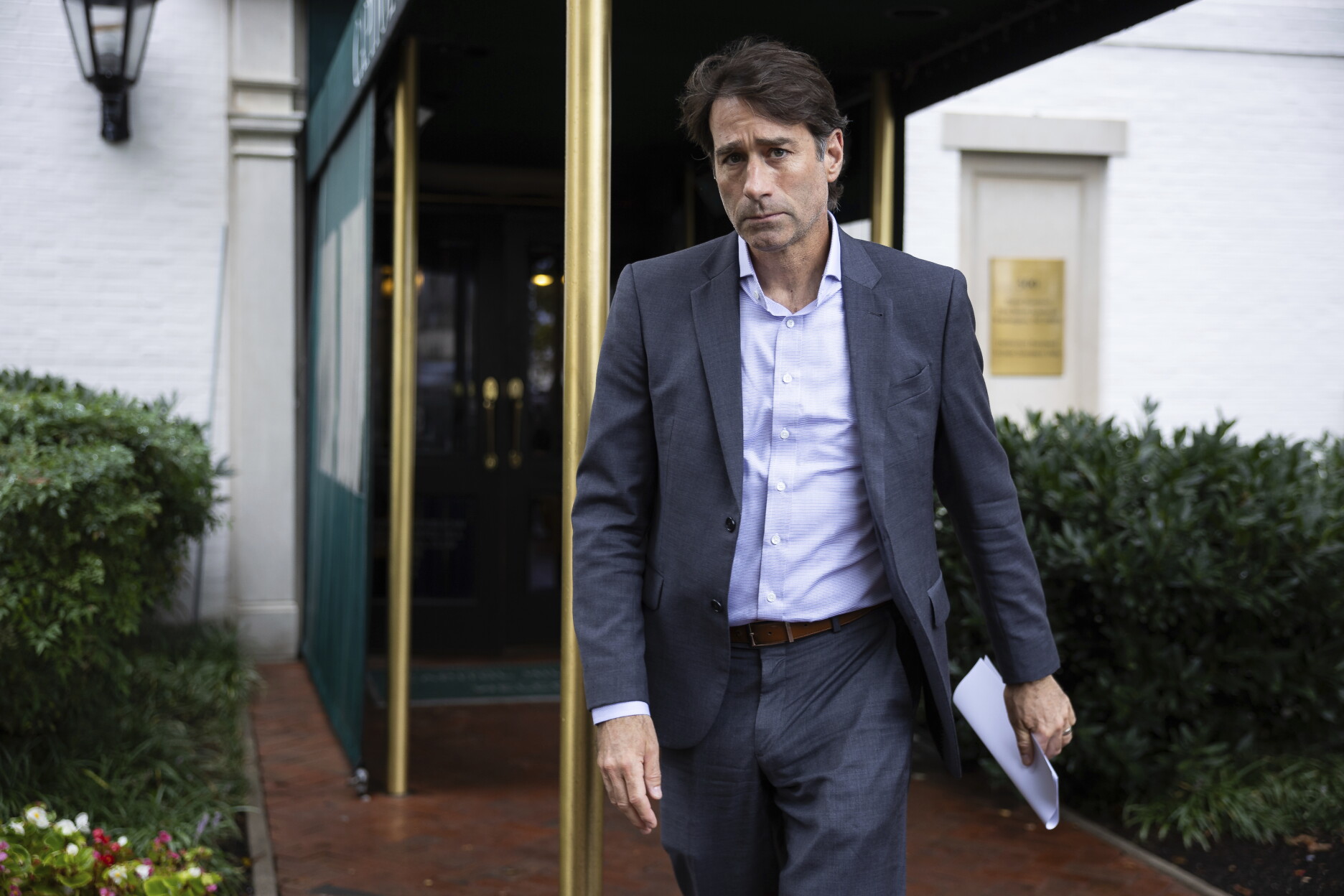 Rep. Garret Graves departs a House Republican Conference meeting at the Capitol Hill Club. Francis Chung/POLITICO/APRetiring Rep. Garret Graves of Louisiana is in talks with Donald Trump’s transition team about the possibility of him becoming secretary of transportation, according to two sources.
While there hasn’t been an official offer — and nothing is final until Trump says it — Graves is supposedly a contender to lead the Department of Transportation.
Graves, who is leaving Congress at the end of this year, is currently a member of the House Transportation and Infrastructure Committee. Before he ran for Congress, Graves served as a staffer for the Transportation committees in the House and Senate, among other congressional positions.
In 2008, Graves left Capitol Hill and then-Gov. Bobby Jindal appointed him to chair the Louisiana Coastal Protection and Restoration Authority, where he was the lead trustee and negotiated on behalf of the state over the Deepwater Horizon oil spill.
On Capitol Hill, Graves is known for his policy prowess on infrastructure and transportation issues, with President Joe Biden inviting him and seven other members to the White House in 2021 to start negotiations on a bipartisan infrastructure bill. (Graves eventually voted against the legislation.)
Selecting Graves would be one work-around for GOP reservations about taking any more Republicans out of the House for the administration, while also giving the House GOP another one of their own working for Trump. Graves chose not to run for reelection after redistricting left him with a deep blue seat.
Trump has already announced that he plans to nominate Rep. Mike Waltz to be his national security adviser and Rep. Elise Stefanik to be ambassador to the United Nations, leaving Speaker Mike Johnson to say on Tuesday that he didn’t think Trump intended to tap any more House Republicans for the administration given the tight numbers in the House.
“President Trump fully understands and appreciates the math here, and it’s just a numbers game,” Johnson said.
Trump already made major transition news Tuesday when he shared his intentions to nominate Fox News personality Peter Hegseth to become the secretary of defense, and said he wanted to create a new agency — the Department of Government Efficiency, or “DOGE” — that Elon Musk and Vivek Ramaswamy would lead.
Meanwhile, asked for comment about Graves being considered for secretary of transportation, the Trump team recycled their standard transition statement.
“President-Elect Trump will begin making decisions on who will serve in his second Administration soon. Those decisions will be announced when they are made,” Karoline Leavitt, a spokesperson for Trump, said.
—
Reese Gorman is a reporter at NOTUS. -
Alaska Gov. Mike Dunleavy Has Discussed Becoming Interior Secretary With Trump’s Transition Team
Reply source Alaska Gov. Mike Dunleavy speaks to reporters during a news conference on his proposed budget. Becky Bohrer/APAlaska Gov. Mike Dunleavy and Donald Trump’s transition team have discussed the prospect of him becoming the next secretary of the interior, three sources familiar with the conversations told NOTUS.
Trump and Dunleavy have a strong relationship dating back to 2018, when he first ran for governor. The then-president endorsed Dunleavy when he was facing a recall in 2019 and when he was up for reelection in 2022. The Alaska governor was an early endorser of Trump in August of 2023, when Trump was facing a full GOP primary field.
But it’s not just Trump and Dunleavy who are close; the Alaska governor also has a strong relationship with Linda McMahon, the co-chair of Trump’s transition team, the three sources told NOTUS. At Trump’s Madison Square Garden rally last month, Dunleavy spent the majority of his time in a private box with McMahon.
Since Trump won the election, the transition team has courted Dunleavy and discussed the interior secretary position, the three sources said. One of the sources also noted that Trump and Dunleavy talk regularly.
As with most things in Trumpworld, nothing is final until it comes out of Trump’s mouth — and even then it can change.
“President-Elect Trump will begin making decisions on who will serve in his second Administration soon. Those decisions will be announced when they are made,” Karoline Leavitt, a spokesperson for Trump, said in a recycled statement to NOTUS.
Jeff Turner, a spokesperson for Dunleavy, said in a statement, “The Governor has spoken on this many times.” He directed NOTUS to two interviews with a local television station, KTUU, on Wednesday.
When asked if he’s entertaining any positions in a Trump administration or if he’d been approached by the president-elect, Dunleavy said in one interview he hadn’t talked with Trump “about any positions in Washington.”
“Will there be discussions about potential positions in Washington?” he added. “There may be. But I’ve got two years left in my term.”
It’s no secret in Alaska, however, that Dunleavy has had an eye on a Trump cabinet appointment. In an Alaska Beacon story on Monday, one state senator called it “the worst-kept secret in Juneau.”
Dunleavy would be an eager partner to Trump’s “drill, baby, drill” approach to resource development. During Trump’s first administration, the two men worked to roll back the so-called “roadless rule,” a controversial policy that exempted more than 9 million acres of Tongass National Forest from development. They also pursued oil and gas leasing in the Arctic National Wildlife Refuge and permitting the 200-mile Ambler Road through northwest Alaska to access mining.
Most recently, Dunleavy posted a video message from Trump on X where the president-elect vowed to build the $38 billion Alaska liquefied natural gas export project.
“We will ensure the gas line project gets built to provide affordable energy to Alaska and allies all over the world,” Trump said in the message.
For his part, Dunleavy said last week that Trump “sees Alaska’s oil resources, our gas resources, our mining resources, our timber resources, our location on the globe, our military, as assets not just for Alaska, but as solutions to the country’s problems.”
Sen. Markwayne Mullin of Oklahoma is also being considered for interior secretary, NOTUS reported on Monday, and the transition team is also considering Mullin for secretary of veterans affairs.
Trump has started making appointments to his incoming administration, with the president-elect announcing on Monday alone that he wants Rep. Elise Stefanik to serve as U.S. ambassador to the United Nations and former Rep. Lee Zeldin to take the reins of the Environmental Protection Agency.
Trump has previously appointed Susie Wiles as his incoming chief of staff, former Immigration and Customs Enforcement Director Tom Homan as the border czar, and CNN reported on Monday that hard-line anti-immigration activist Stephen Miller would serve as the new White House deputy chief of staff.
—
Reese Gorman and Riley Rogerson are reporters at NOTUS. -
Alaska Gov. Mike Dunleavy Has Discussed Becoming Interior Secretary With Trump’s Transition Team
Reply source Alaska Gov. Mike Dunleavy speaks to reporters during a news conference on his proposed budget. Becky Bohrer/APAlaska Gov. Mike Dunleavy and Donald Trump’s transition team have discussed the prospect of him becoming the next secretary of the interior, three sources familiar with the conversations told NOTUS.
Trump and Dunleavy have a strong relationship dating back to 2018, when he first ran for governor. The then-president endorsed Dunleavy when he was facing a recall in 2019 and when he was up for reelection in 2022. The Alaska governor was an early endorser of Trump in August of 2023, when Trump was facing a full GOP primary field.
But it’s not just Trump and Dunleavy who are close; the Alaska governor also has a strong relationship with Linda McMahon, the co-chair of Trump’s transition team, the three sources told NOTUS. At Trump’s Madison Square Garden rally last month, Dunleavy spent the majority of his time in a private box with McMahon.
Since Trump won the election, the transition team has courted Dunleavy and discussed the interior secretary position, the three sources said. One of the sources also noted that Trump and Dunleavy talk regularly.
As with most things in Trumpworld, nothing is final until it comes out of Trump’s mouth — and even then it can change.
“President-Elect Trump will begin making decisions on who will serve in his second Administration soon. Those decisions will be announced when they are made,” Karoline Leavitt, a spokesperson for Trump, said in a recycled statement to NOTUS.
Jeff Turner, a spokesperson for Dunleavy, said in a statement, “The Governor has spoken on this many times.” He directed NOTUS to two interviews with a local television station, KTUU, on Wednesday.
When asked if he’s entertaining any positions in a Trump administration or if he’d been approached by the president-elect, Dunleavy said in one interview he hadn’t talked with Trump “about any positions in Washington.”
“Will there be discussions about potential positions in Washington?” he added. “There may be. But I’ve got two years left in my term.”
It’s no secret in Alaska, however, that Dunleavy has had an eye on a Trump cabinet appointment. In an Alaska Beacon story on Monday, one state senator called it “the worst-kept secret in Juneau.”
Dunleavy would be an eager partner to Trump’s “drill, baby, drill” approach to resource development. During Trump’s first administration, the two men worked to roll back the so-called “roadless rule,” a controversial policy that exempted more than 9 million acres of Tongass National Forest from development. They also pursued oil and gas leasing in the Arctic National Wildlife Refuge and permitting the 200-mile Ambler Road through northwest Alaska to access mining.
Most recently, Dunleavy posted a video message from Trump on X where the president-elect vowed to build the $38 billion Alaska liquefied natural gas export project.
“We will ensure the gas line project gets built to provide affordable energy to Alaska and allies all over the world,” Trump said in the message.
For his part, Dunleavy said last week that Trump “sees Alaska’s oil resources, our gas resources, our mining resources, our timber resources, our location on the globe, our military, as assets not just for Alaska, but as solutions to the country’s problems.”
Sen. Markwayne Mullin of Oklahoma is also being considered for interior secretary, NOTUS reported on Monday, and the transition team is also considering Mullin for secretary of veterans affairs.
Trump has started making appointments to his incoming administration, with the president-elect announcing on Monday alone that he wants Rep. Elise Stefanik to serve as U.S. ambassador to the United Nations and former Rep. Lee Zeldin to take the reins of the Environmental Protection Agency.
Trump has previously appointed Susie Wiles as his incoming chief of staff, former Immigration and Customs Enforcement Director Tom Homan as the border czar, and CNN reported on Monday that hard-line anti-immigration activist Stephen Miller would serve as the new White House deputy chief of staff.
—
Reese Gorman and Riley Rogerson are reporters at NOTUS. -
Intervention planifiée les 18 et 19 février 2023
Reply source
Bonjour,
Nous vous rappelons que les serveurs de Lautre.net seront déménagés vers un autre Data-Center. La date prévue est le 18 et 19 février 2023.
Il y aura donc arrêts des services pendant le déménagement, et d'autres perturbations, parce qu'un déménagement de serveurs n'est pas une opération anodine.
Techniquement, ces dates ont été retenues parce qu'il n'y aura pas que les serveurs de Lautre.net qui seront déménagés.
C'est le fruit d'une concertation entre différents prestataires, des partenaires, des co-locataires, des fournisseurs de services et des intervenants.
Nous espérons que tout se passera bien, sans mauvaises surprises.
Prenez le temps d'informer vos utilisateurs de l'interruption des services.
Nous sommes désolés des désagréments que cela pourrait causer.
Une fois les machines dans le nouveau Data-Center, nous devrions avoir une nette amélioration de la stabilité des services, et l'équipe des roots passera moins de temps à faire de la maintenance suite à des coupures de courants intempestives.
Il y a un canal IRC avec des utilisateurs de Lautre.net : #lautre.net sur libera.chat
Il y a un bridge Matrix : https://matrix.to/#/#lautre.netLes roots,
source du logo : https://www.pexels.com/fr-fr/photo/...
-
Sauver le genre humain, pas seulement la planète | Lucien Sève
Éminent philosophe marxiste, Lucien Sève est mort des suites du Covid-19 à l'âge de 93 ans. Il a mené toute sa vie une réflexion sur la personne humaine et le changement de société dans le cadre du matérialisme dialectique. Plusieurs de ses textes publiés dans nos colonnes résonnent puissamment en cette période de crise sanitaire et de confinement. Source: Le Monde diplomatiqueReply source -
Wilfried | Isabelle Coutant et Mehdi Ahoudig
Reply source Ancien caïd d'une cité de Villiers-le-Bel, en banlieue parisienne, Wilfried parle avec recul de son passé de délinquant, de son enfance, de son quartier… De son désir de s'en éloigner aussi, en achetant un pavillon pas trop loin des barres d'immeuble où il a grandi. C'est au moment où il pensait quitter sa cité que la cité l'a rattrapé. Wilfried a été tué le 17 mars 2016 dans un bar-tabac de Goussainville. Isabelle Coutant et Mehdi Ahoudig l'enregistraient depuis plus d'un an pour faire son portrait.
De portrait, le documentaire se mue alors en enquête pour comprendre le drame. Les auteurs rencontrent son frère, ex-champion du monde de boxe et animateur d'un club dans le quartier, sa sœur, sa femme et mère de ses enfants, mais aussi l'avocate de la famille et la journaliste locale du Parisien. L'honneur, l'omerta, la vengeance, l'orgueil, les armes, tels semblent les ingrédients du destin de Wilfried, qui prend des allures de tragédie grecque…
Durée : 48 min. Source: Arte Radio -
Inégalités : comment expliquer l'hypocrisie de la gauche ? | Louis Maurin
« Faites ce que je dis, pas ce que je fais ». La bourgeoisie culturelle s'enflamme de façon aussi ardente qu'hypocrite contre les inégalités. Au fond, elle n'a pas grand chose à faire des catégories populaires. Comment expliquer cette situation ? L'analyse de Louis Maurin, directeur de l'Observatoire (...) Source: Observatoire des inégalitésReply source -
DAL : « Encadrer à la baisse les loyers sur tout le territoire » | Ballast
Deux causes sont importantes. La première, c'est qu'il y a beaucoup de petites et moyennes communes qui, avec la métropolisation et la concentration du travail dans les grandes villes, se sont vues désertées. La seconde se joue dans les métropoles, où le logement est devenu, pour ceux qui le possèdent, un produit financier. Ainsi, pour les grandes sociétés immobilières, il n'y a pas toujours un intérêt à mettre son logement en location car il conserve la même valeur : il s'agit d'un placement financier qui n'a pas besoin d'être obligatoirement mis sur le marché pour être rentabilisé. On remarque donc l'accroissement du nombre de logements vacants un peu partout en France. Ce phénomène raréfie le logement et contribue aussi à augmenter les prix, par le système de demande et d'offre. L'excellent rapport de l'ONU sorti en mars dernier explique très bien cette financiarisation du logement à l'échelle mondiale. Les logements vacants sont un réservoir que les pouvoirs publics devraient utiliser pour mettre les gens à l'abri dans un premier temps. En France, il y a eu des vagues de réquisitions réalisées après la Seconde Guerre mondiale, c'est d'ailleurs à ce moment-là qu'a été mise en place la loi de réquisition (loi de 1945). Le dernier président qui l'ait fait de manière un petit peu significative, c'est Jacques Chirac en 1995, qui avait lancé la réquisition de plus d'un millier de logements — suite, notamment, aux actions du DAL soutenues par l'abbé Pierre. On parle là de volonté politique, car aussi bien l'État que les maires ont le pouvoir de le faire, mais la mobilisation est nécessaire pour les pousser à appliquer la loi. Source: BallastReply source -
Mickaël Ferrier : « Fukushima, c'est une situation de guerre » | Ballast
Reply source « Éléments, animaux, humains, tout est en guerre », écrivait déjà Voltaire dans son poème sur le séisme de Lisbonne. Oui, un grand séisme, a fortiori quand il est suivi d'un tsunami et d'une catastrophe nucléaire, c'est une situation de guerre : je rappelle que dans toute la région ont été déployés plus de 100 000 hommes, 90 hélicoptères, 541 avions et 50 navires… Dès le 13 mars, 100 000 réservistes des Forces japonaises d'autodéfense (l'équivalent de l'armée japonaise) ont d'ailleurs été rappelés en urgence. Les familles des troupes d'auto-défense japonaises qui mouraient pendant les « opérations » — terme militaire — pouvaient recevoir 90 millions de yens : ce sont les montants attribués aux soldats envoyés en Irak ou à ceux qui patrouillent au large de la Somalie dans les zones infestées de pirates. Et quand la contamination radioactive s'en mêle, alors là, c'est encore pire : c'est encore une guerre, mais plus sournoise et autrement délétère. Le vocabulaire utilisé dans les journaux japonais est d'ailleurs assez éloquent : on parle de la nécessaire « reconquête » des réacteurs endommagés, qui se fera au terme d'une « guerre de tranchées »… On utilise des drones et des robots, dont la plupart ont déjà été testés dans les zones de conflits internationaux, en Irak et en Afghanistan notamment. Je rappelle aussi que le 2 avril, pour la première fois de son histoire, 15 des 145 membres de la Chemical Biological Incident Response Force ont été déployés hors du territoire américain, dans l'est du Japon. C'est un corps des Marines spécialement entraîné pour les situations d'urgence biologique, chimique ou nucléaire : trente-deux véhicules, des tonnes de matériel transportées dans pas moins de sept avions, un laboratoire mobile spécialisé dans la détection des substances toxiques et la décontamination… Les paysages, la faune, la flore, les êtres humains… tout est menacé. L'incinération, l'enfouissement, le stockage : tout pose problème. Plusieurs endroits sur Terre sont d'ores et déjà condamnés, et à la lettre, inhabitables : voyez sur ce point le magnifique texte de François Bizet intitulé « L'inhabitat2 ». On ne se débarrasse pas ainsi d'éléments invisibles qui ont entre des dizaines et des milliers d'années de nocivité. Je le dis calmement à ceux, nombreux, qui sous-estiment le danger nucléaire : c'est une guerre à laquelle ils nous condamnent, tôt ou tard, et qui fera des victimes. Et en premier lieu sur cette terre de France, qu'ils disent tant chérir.
Source: Ballast
-
Harvey Weinstein et les hommes qui savent. | valerie
Reply source Hier sur twitter, des avocats, des médecins ont dit, tout tranquillement connaître des hommes se comportant comme Weinstein. Et ils ont reconnu tout aussi tranquillement ne rien faire.
Cela se passe dans tous les milieux. Des femmes parlent, des hommes ne font rien.
J'ai parlé ; il ne s'est rien passé. Des collègues ont porté plainte, il ne s'est rien passé.
Partout des femmes parlent et il ne se passe rien. (ah si pardon elles sont traînées dans la boue). Source: Crêpe Georgette -
Christine Angot : la « femme de droite » et les salopards | valerie
La vérité, et elle est atroce, est que la majeure partie des victimes de violences sexuelles « se débrouillent toutes seules ». Parce qu'il n'y a pas les structures, parce que les psys ne sont pas formés, parce que la justice s'en balance, parce que les flics s'en balancent, parce que la société s'en balance, parce que nos amis s'en balancent, parce que nos parents s'en balancent, parce que nos mecs s'en balancent (enfin sauf si ce sont eux les violeurs, remarquez). Les féministes (et même si vous avez l'impression qu'on est nombreuses cela n'est pas le cas) tentent au milieu de tout cela de changer les choses. Difficilement. Parce que les hommes nous distraient à pleurnicher qu'ils ne sont pas tous coupables, qu'ils adorent les femmes et gna gna gna mais quand même ils haïssent Angot cette salope. Source: Crêpe GeorgetteReply source -
« Contrairement aux préjugés, le travail manuel exige de grandes compétences intellectuelles » | Nolwenn Weiler
Il y a un préjugé fort qui dit que les travaux manuels n'exigent pas de compétences intellectuelles. Prenons les serveuses, que j'ai longtemps observées. C'est, de loin, dans ses aspects cognitifs que leur travail est le plus difficile : elles doivent prendre les commandes, être en bons termes avec la cuisine qu'elles ne doivent pas presser, mais un peu quand même pour que les clients ne soient pas mécontents. Il faut retenir qui a commandé quoi, même si la personne change de place. Elles doivent gérer l'arrivée de nombreux plats en même temps, pour plusieurs tables. Elles doivent savoir servir le café sans renverser de gouttes sur la coupelle, ne pas oublier le sucre, ni la crème, etc. Elles doivent en plus assumer une certaine gestion émotionnelle, avec des clients pas toujours en forme, d'autres qui sont à la limite du harcèlement sexuel. Il faut qu'elles dosent leur degré de politesse, en étant polies mais pas trop. Le tout avec un patron qui ne les soutient pas toujours, et sur des horaires très fatigants, souvent tard le soir. Source: Basta !Reply source -
2017 n'aura pas lieu | Olivier Minot
Reply source L'année dernière, Olivier, participant actif à l'éphémère Radio Debout, a encore une fois cru à la révolution. Vu les échéances électorales qui arrivent, la redescente est dure. 35 minutes d'aller-retours entre 2016 et 2017, entre Nuit debout et les présidentielles, entre les lacrymos et les manifs de flics, entre Lyon et Paris, entre ses rêves et la vraie vie... Durée : 35 min.
Source: Arte Radio
-
Noir is the new black : "Une blague sur les blancs, ça n'existe pas" | Mélanie Wanga, François Oulac, Kévi Donat
Qu'est-ce que ça fait d'être le (la) seul(e) Noir(e) au boulot ? En mêlant témoignages persos et pop culture, le trio de "Noir is the new black" dévoile une réalité longtemps ignorée.Reply source
Un nouveau podcast mensuel où trois trentenaires sympas d'origine antillaise et africaine partagent leur expérience. Un regard afropop sur le quotidien. Source: Arte Radio -
« Affaire Théo » : les violences et sévices sexuels perpétrés par des policiers sont-ils exceptionnels ? | Warda Mohamed
Reply source Le « viol avec matraque » dont est accusé un policier sur Théo L., un jeune aulnaysien de 22 ans, a suscité la réprobation de toute la classe politique, mise à part l'extrême-droite. Si elles demeurent rares, les violences avec sévices sexuels perpétrées par des policiers ne sont malheureusement pas exceptionnelles. La France a déjà été condamnée à deux reprises par la Cour européenne des droits de l'homme pour de tels faits. Un policier, accusé d'avoir commis des violences similaires à Drancy, sera jugé le 20 février. D'autres affaires pour « agression sexuelle aggravée » perpétrée lors de contrôle au faciès sont en cours d'instruction. D'où viennent ces pratiques ? Enquête.
Source: Basta !
-
Angela Davis appelle à la résistance collective
Reply source Ceci est une Marche des femmes et cette Marche des femmes représente la promesse d'un féminisme qui se bat contre les pouvoirs pernicieux de la violence étatique. Un féminisme inclusif et intersectionnel qui nous invite toutes et tous à rejoindre la résistance face au racisme, à l'islamophobie, à l'antisémitisme, à la misogynie et à l'exploitation capitaliste. Oui, nous saluons la lutte pour un salaire minimum à 15 dollars. Nous nous dédions à la résistance collective. Nous résistons face aux millionnaires qui profitent des taux hypothécaires et face aux agents de la gentrification. Nous résistons face à ceux qui privatisent les soins de santé. Nous résistons face aux attaques contre les musulmans et les migrants. Nous résistons face aux attaques visant les personnes en situation de handicap. Nous résistons face aux violences étatiques perpétrées par la police et par le complexe industrialo-carcéral. Nous résistons face à la violence de genre institutionnelle et intime — en particulier contre les femmes transsexuelles de couleur.
Lutter pour le droit des femmes, c'est lutter pour les droits humains partout sur la planète Source: Ballast -
Le stupéfiant procès du barrage de Vitrolles, ou comment justifier qu'un camion fonce sur des militants syndicaux | Franck Dépretz
Reply source « J'avais l'impression d'être la coupable ». Le 26 mai 2016 près de Marseille, en pleine mobilisation contre la loi travail, un camion fonce sur un barrage filtrant tenu par des militants de la CGT. Bilan : deux syndicalistes grièvement blessés, dont l'un a pour l'instant perdu l'usage de ses jambes. Un mois plus tard, au terme d'une enquête policière expédiée, le chauffeur est totalement relaxé dans le cadre d'un procès surréaliste, où les syndicalistes blessés sont eux-mêmes traités comme des voyous. Près de sept mois après les faits, victimes et témoins reviennent pour Basta ! sur « l'affaire du barrage forcé ».
Source: Basta !
-
Quand la nouvelle génération de chercheurs français passe son temps à Pôle emploi et en contrats précaires | Kévin Trublet
Reply source La France compte environ 60 000 doctorants : de jeunes chercheurs qui travaillent pendant plusieurs années à une thèse, en biologie, en sciences politiques, en mathématiques ou en droit. Mais leur avenir et celui de leur travail de recherche sont compromis : une grande précarité règne. Nombre d'entre-eux s'inscrivent à Pôle emploi pour terminer leur thèse, d'autres enchaînent des vacations sous-payées. Certains deviennent même auto-entrepreneurs et quelques uns rejoignent des laboratoires de recherche à l'étranger… Une situation qui handicape lourdement la qualité de la recherche et de l'innovation française. Rencontre avec ces forçats de la science.
Source: Basta !
-
Un Canadien errant | Pierre Tevanian
Reply source C'était un peu annoncé depuis plusieurs semaines, mais il y a des hasards dont on se demande s'ils en sont. Au lendemain du triomphe d'une Amérique blanche, blonde, bruyante, brutale, disparaît le petit bouddhiste apatride, avec sa gueule brune de métèque, de Juif errant ou de pâtre grec, ses choristes éthérées, ses compagnons oudistes arméniens, son orgue bontempi, sa voix cassée à la Hoagy Carmichael et son petit univers doucement mélancolique, discrètement joyeux, peuplé d'exilés, d'ancêtres, d'anges déchus, d'amours toujours fragiles et de divinité toujours absentée.
Source: Les mots sont importants
-
De guerre en fils | François Pérache
Reply source Le 2 octobre 1961, en pleine guerre d'Algérie, le policier Georges Pérache est abattu à Paris par le FLN. Le 17 octobre, la police réprime une manifestation pacifique et tue près de deux cents Algériens. Le 13 novembre 2015, François Pérache, petit-fils du policier tué, veut aller manger un bobun au Petit Cambodge...
A la fois enquête intime, fiction documentée et tragi-comédie, "De guerre en fils" joue du feuilleton radio pour ouvrir la boîte aux secrets. Ceux de l'Histoire comme ceux d'une famille. Six épisodes de 9 à 13 min.. Source: Arte Radio