Timeline
Every post and feed across this instance
-
Les dernières productions des éditions SENONEVERO
Accessibles en librairie à compter du 6 Octobre 2026 Présentation ci-dessous Au ras du sol et théoricien à la fois, Louis Martin écrivait en 1996 « Théorie et marche à pied » paru sous le titre de « Journal d’un gréviste » relatant une des grèves du mouvement social que déclencha le plan Juppé à l’automne 1995. Dans […] -
Michel Mercier surjoue l’humilité au procès en appel du MoDem
L’ancien trésorier du MoDem (et ancien garde des Sceaux) a nié l’existence d’un système frauduleux mis en place par le parti centriste au préjudice du Parlement européen, mercredi à la cour d’appel de Paris. -
Trump's approval drops as Democrats take double-digit lead in new poll
President Donald Trump's approval rating has taken a noticeable step backward after more than a month of gains, according to a new national poll, while Democrats opened a double-digit advantage on a key midterm election question. The results arrive as New Jersey voters prepare for another high-stakes election cycle and political leaders on both sides of the aisle look toward 2027 statewide contests. -
L’IA s’impose au menu de la visite de Xi Jinping à Washington
Le numéro un chinois se rend aux États-Unis mercredi 23 septembre pour une courte visite d’État. Pour les deux pays, l’intelligence artificielle est à la fois une source de rivalité technologique et économique, et un sujet de discussions en raison de ses dangers. -
«La Chine se positionne comme le fer de lance de l’IA open source à l’échelle internationale»
Dans le domaine de l’intelligence artificielle, la Chine se présente comme une alternative aux États-Unis en proposant aux pays du Sud des modèles libres, moins gourmands et moins coûteux, souligne Nowmay Opalinski, spécialiste des politiques numériques chinoises. -
Qui a intérêt à réguler l’intelligence artificielle?
Les patrons d’OpenAI et d’Anthropic ont été conviés au Conseil de sécurité de l’ONU, mercredi 23 septembre, pour évoquer la dangerosité de leurs modèles. En insistant sur les risques «existentiels» de leurs créations, ils espèrent pouvoir contrôler la manière dont le secteur sera surveillé. Et contenir leurs concurrents. -
The FBI Anti-Corruption Squad Was Circling Susan Collins — Until Trump Got In The Way
This story was originally published by ProPublica and the Texas Tribune. Republished under a CC BY-NC-ND 3.0 license.
In the final weeks of 2019, a top fundraiser for Sen. Susan Collins walked into a perilous meeting at a Corner Bakery in Washington, D.C.
For the first time in her two-decade Senate career, the Republican lawmaker from Maine was in danger of losing her seat. President Donald Trump’s dismal approval ratings were dragging her down in the polls, and she was falling behind her likely 2020 Democratic challenger in fundraising.
Scott Reed, head of the Collins super PAC, was on a mission to close that gap. Reed was meeting that day with three executives from a Hawaiian defense contractor, Navatek. A year earlier, Collins had helped their company land a multimillion-dollar Navy research contract in Maine. Now, seated at a coffee shop not far from the U.S. Capitol, Reed asked them for a $500,000 donation.
Government contractors are banned from making political contributions. More consequentially, for the company to offer donations to Collins in exchange for an official action, or for Collins to accept, would constitute criminal bribery.
But the company did have such a proposal: Navatek was hungry for more government contracts in Maine. If they cut a big check, the CEO told Reed, Navatek wanted Collins to guarantee tens of millions of dollars in additional federal funding.
To skirt campaign finance laws and conceal the source of the funds, Navatek planned to funnel the donation through a shell company. The CEO wanted assurance that Collins would know where the money came from. Reed confirmed that she would, the executive said — and that Navatek would get its government contracts.
After the Corner Bakery meeting, Navatek’s CEO, Martin Kao, sent an initial $150,000 to the Collins super PAC using the shell company. Two months later, he told Navatek executives that Collins committed to getting the company $32 million in naval contracts, according to an internal company email reviewed by ProPublica.
Three years later, Kao holed up in a conference room to recount the Corner Bakery meeting to a group of four FBI agents and federal prosecutors. The FBI had seen through his shell company ruse, and in 2022 a grand jury indicted him for making illegal campaign contributions. No one working for Collins was charged.
Facing years in prison, Kao hoped to do less time by revealing the entire scheme.
What he told them has never before become public. The Corner Bakery meeting, he asserted, was just one episode in a sprawling pay-to-play operation that embroiled some of the most powerful figures in Congress.
Over three days at the U.S. attorney’s office in Honolulu, Kao laid out in devastating detail how his operation worked. He gave agents a 50-page document naming dozens of lobbyists, congressional staffers and members of Congress who he said helped him trade cash for contracts. Kao and his close associates had donated nearly $900,000 to dozens of politicians, allowing Navatek to establish operations in half a dozen states with over $40 million a year in government funding.
Most damningly, Kao told FBI agents and prosecutors, the company’s work for the government was of no real value. Navatek’s research under his stewardship never resulted in products the military wanted to buy, ProPublica found.
Kao’s tell-all interviews with the FBI lasted into late 2024. His confessions opened up an entirely new phase of the investigation. Agents sifted through hundreds of thousands of records seized during Kao’s arrest and found that many were consistent with his account of widespread influence peddling.
Kao had credibility issues. He was now a felon trying to avoid a lengthy prison sentence. And there were other challenges. Building a corruption case against elected officials requires extraordinary proof of a quid pro quo arrangement, in part because the Supreme Court has narrowed what counts as bribery.
Even so, by the end of 2024, the agents had enough evidence to pursue a sweeping bribery probe that could ensnare top lawmakers of both political parties. They asked their supervisors to approve a new investigation and contemplated using undercover operatives to gather more evidence. Although their effort was in its early stages, and it was unclear where it would lead, FBI agents asked Kao extensive questions about his dealings with Collins and her office.
Then Trump returned to the White House. Consumed by a campaign of vengeance, he stacked the Department of Justice with his personal lawyers and demanded a purge of anyone who had ever investigated him.
The specialized FBI and DOJ teams handling public corruption investigations, some of which were involved in Trump-related cases, were eviscerated. One of the agents who had taken Kao’s confession was pushed out as retribution for her role in investigating Trump’s attempt to overturn the 2020 election. Dozens of agents and prosecutors quit amid the department’s destruction, including the career attorney assigned to Kao’s case.
Trump’s Justice Department no longer takes on public corruption in any meaningful fashion, former officials said. The investigation sparked by Kao’s revelations is dead. And the government is no longer talking to an informant who had offered a road map to corruption in Congress.
The White House referred ProPublica to the FBI.
FBI spokesperson Ben Williamson said the agency had investigated claims against Collins years ago “and ultimately found nothing implicating Senator Collins or Senator Collins’ campaign. Any suggestion otherwise is totally false.” Williamson said the Trump administration has removed agents only “if they have been found to have acted unethically, undermined the mission, or engaged in weaponization of law enforcement.”
Williamson did not respond to questions about the new investigation launched in 2024 based on Kao’s previously unreported cooperation with the FBI.
ProPublica is revealing the existence of the case for the first time. We reviewed a trove of evidence gathered by the FBI and thousands of pages of legal records, and interviewed dozens of people familiar with Navatek, its Washington operations, and the FBI inquiry to conduct our own investigation. We independently corroborated much of Kao’s account. Whether or not Kao’s dealings with politicians amount to criminal bribery, the Trump Justice Department has little interest in finding out, and his sheer success reveals how easily influence is purchased in Washington today. This is the first in a series of stories drawn from our reporting.
Of all the politicians Navatek courted under Kao’s leadership, Collins was its most important patron. The senator’s office steered government contracts worth millions toward the company while her campaign was pumping Kao and his network for donations, according to emails seen by ProPublica. Sometimes they cut checks within 24 hours of the annual defense spending bill, which funds military contracts, clearing a key Senate hurdle.
Collins’ office did not specifically address questions about the Corner Bakery meeting, the senator’s relationship with Kao and the millions she helped appropriate for Navatek.
Annie Clark, Collins’ deputy chief of staff, told ProPublica in an email that Collins’ office “vigorously” denies allegations of bribery and pay-for-play made by Kao, calling his claims “outlandish.” Collins’ campaign was not part of the discussions between Kao and the super PAC, and her office “fully cooperated” with the FBI investigation, Clark said.
“The fact that the FBI and Biden-led Department of Justice thoroughly examined the Navatek matter demonstrates this,” Clark wrote. “These issues were resolved in 2021 and concluded when the Collins campaign disgorged the illegal contributions that Martin Kao had made without our knowledge.”
Collins is once again fighting to keep her seat, in a race that could determine control of the Senate. On the campaign trail, she spotlights the funding she directs to Maine while leading the appropriations committee, which she calls “the most powerful committee in the Senate.”
She demonstrated that power with Navatek. After the budgets became law, Collins’ office pushed the Navy to award specific contracts to Navatek, emails seen by ProPublica show, even though awards are supposed to be competitive.
“I spoke with Sen. Collins office regarding the $8M,” a naval official wrote in an email on Feb. 6, 2019. “The interested company is Navatek.”
In a meeting with Collins and two campaign officials, Kao said, the officials told him the senator expected his ongoing support. Collins told him: “You’ve seen me deliver,” Kao said.
Reed knew Kao was behind the $150,000 anonymous donation, emails showed, because Kao told Reed he planned to donate through a shell company. “Very smart,” Reed replied in an email viewed by ProPublica.
Reed did not respond to detailed questions about the Corner Bakery meeting, the $150,000 donation and Kao’s allegations. “I understand Martin Kao is now sitting in federal prison,” Reed wrote in a brief email. “I never had any communications with Senator Collins [or] her staff about Martin Kao and/or Navatek.”
But an email seen by ProPublica suggests that someone must have relayed the news of Kao’s donation to Collins, just like Reed promised to do in Kao’s recounting of the Corner Bakery meeting.
Seven days after the super PAC cashed the check from Kao’s shell company, one of Reed’s subordinates emailed a Navatek lobbyist asking for Kao’s phone number: “Senator Collins would like to call Martin to thank him.”
The Navatek Method
Before Kao’s doomed reign as CEO, Navatek was a sleepy Hawaiian engineering company with a few dozen employees. It was founded in 1978 by Steven Loui, a talented engineer and scion of a powerful Hawaiian shipping family. Navatek was not a profit center but a vehicle for Loui’s passion projects, like an experimental catamaran for navigating Hawaii’s choppy waters.
The company benefited from the largesse of the legendary Hawaii Sen. Daniel Inouye, multiple former Navatek executives and employees said, whose family had been close to the Loui family for generations. Inouye was a master of earmarks, a practice that allowed lawmakers to insert funding for specific companies by name in the federal budget. The self-styled “King of Pork” steered hundreds of millions in federal dollars to Hawaii. Former Navatek employees say he was affectionately referred to as “Uncle Dan.” “Before Inouye took an interest, Congress didn’t even know our companies existed,” a longtime Loui lieutenant wrote in a 1998 op-ed.
In response to ProPublica questions, Loui said that money appropriated by Inouye made up “a minority” of Navatek’s revenue.
Inouye’s death in 2012 made the company’s future uncertain. Not only was Navatek’s direct line to Capitol Hill gone, but Congress was doing away with the abuse-riddled earmark process. Now companies would nominally have to compete on the merits for government contracts.
Kao joined Navatek in 2008 as its chief financial officer. Loui charged him with replacing Navatek’s rainmaker and eventually named Kao CEO. He sold Kao the company in return for a share of the profits.
Kao was an unusual figure among the company’s low-key naval engineers and boat aficionados. He seemed to be aping a Wall Street tycoon, telling employees they could either be “a beast or a bitch,” a former executive said. He drove to work in a Ferrari and abruptly fired subordinates who displeased him — one time, in the middle of the night. “He had very little interest in the technology,” one former employee recalled. “Martin was only interested in dollar signs.”
Kao also exaggerated and lied. He told different people he had stepbrothers whose parents died in a fishing accident or an avalanche, a former employee recalled. He lied to Loui about having law degrees from both the University of California, Los Angeles and New York University. He once told a lobbyist who raised quarter horses that he owned a herd of polo ponies, just to one-up him.
Despite his erratic behavior, former employees agree Kao hit upon an effective way to replace the lost earmarks. If the company could not rely on a benefactor like Inouye, it would develop a stable of them.
Navatek targeted the powerful members who sat on the House and Senate appropriations committees. These members could no longer earmark money for specific military contractors. But they retained the power to budget millions of dollars for equipment or bespoke research and development. Because Pentagon budgets run thousands of pages and are largely prepared in secret, it is easy for appropriators to add a line item intended for a contractor like Navatek without leaving any fingerprints.
Soon, Kao had refined a playbook. Navatek would concoct a research project in partnership with a university in a member’s district or home state, and Kao would make a large initial campaign donation. Working with a team of pricey, well-connected lobbyists, Navatek would get meetings on Capitol Hill to pitch the research to congressional staff. Navatek kept spreadsheets, reviewed by ProPublica, that listed members of Congress as the “specialty” of certain lobbyists.
Separately, Kao later told the FBI, there would be a meeting of just the key players. One engineer, who traveled with Kao to D.C. to explain the technical side of a project, recalled being sent out of the room once the subject of money came up. Sometimes in these smaller meetings, members of Congress directly asked Kao for donations, he told the FBI. In other cases, he said, Navatek’s lobbyists would relay a request from an intermediary for a specific dollar amount.
Kao told the FBI that the lawmakers, lobbyists and Navatek brass understood these donations were bribes and that the payments were essential to the entire scheme. Kao believed he was buying Navatek’s way into the annual defense budget, not winning over members with innovative engineering proposals.
“I’m not red or blue, I’m green,” he would tell congressional staffers, a former Navatek employee recalled.
While a deal was being struck, Navatek and congressional staffers worked closely on the legislative process. Every year, Congress prefaces the defense budget with massive reports describing the purpose of inscrutable line items. Staffers would include a project description so specific that Navatek would be the only logical pick.
Often, Navatek composed language that ended up, word for word, in Senate funding requests, former employees said. In 2019, for example, Navatek’s priorities were tucked into page 185 of the 307-page report released by the Senate Appropriations Committee. The committee set aside $21.5 million for “hybrid composite structures research for enhanced mobility,” “electric propulsion for military craft and advanced planing hulls” and a “test bed for autonomous ship systems.” Although Navatek’s name does not appear on the page, these were all projects the company requested, according to internal documents and interviews with former employees.
Once the budget passed, lawmakers’ staff leaned on Navy officials to award Navatek the money. Former contracting officers told ProPublica they felt pressure to go along because money from those contracts funded their office — and because members of Congress had confronted dissenting naval officials in the past. “There’s only so many battles you can fight,” one said. So Congress sometimes got its way even when Navatek’s projects made little sense.
Inside Navatek, employees referred to this strategy as “the method.” And it enabled the company to string together tens of millions of dollars in contracts. The result was the same as getting earmarks: a reliable, growing revenue stream bankrolled by U.S. taxpayers.
“It was a simple enough play. Let’s find the small states that have complementary universities … [and] let’s get access to their senators,” Eric Schiff, a former Navatek executive, told ProPublica. “I’ve met Susan Collins. You can get access to Susan Collins. Once we got the first things working with Maine, then we said, ‘Well, let’s keep reaching.’ And so we did.”
In a statement to ProPublica, Navatek founder Loui said Kao’s “unethical and illegal method of winning contracts” was a departure from how he operated the company prior to Kao’s ownership.
Kao boosted Navatek’s annual revenue from $10 million around the time Loui sold him the company to almost $40 million when he was arrested in 2020. In the second half of 2019 alone, Navatek paid a roster of five lobbying shops more than $500,000.
Even Navatek’s executives were surprised at how far their money went in D.C. “It was eye-opening for me, frankly. ‘Oh my God, all of it is for sale. It’s all for sale,’” Schiff said.
The key players in Kao’s pay-to-play deals went to great lengths to meet in person and leave no trace of an actual quid pro quo, he told agents. “That is why I literally had to fly to D.C. almost every week,” Kao later told the FBI. “Sometimes for a 15-minute meeting.”
But the FBI compiled emails, which ProPublica reviewed, that were suggestive of illegal bargains. Navatek executives and lobbyists spoke openly as if they were buying lawmakers’ assistance. In one back-and-forth, a lobbyist and a company executive described another senator as “fundamentally transactional” and having “a reputation as a pay-to-play office.”
In another message, Andy Winer, who former executives said was Navatek’s chief strategist, reminded Kao to budget money for political contributions based on how much the company wanted in congressional funding the following year.
Winer was his guide to the political underbelly, Kao said. A consummate insider, Winer had parlayed six years as chief of staff to Democratic Sen. Brian Schatz of Hawaii into a lucrative lobbying career with a firm called Strategies 360. One of Winer’s former colleagues compared him to the slick lobbyist on the Netflix show “House of Cards” who toggles between the political and corporate worlds.
In another email exchange scrutinized by the FBI, Kao asked Winer about making a $5,600 donation to nudge along a senator who seemed keen to work with Navatek: “Would that ‘help?’”
Winer, who had already donated himself, replied, “With my contribution, I think it sends the right message.” He suggested Kao split up his donation to be “less conspicuous.”
The method didn’t always work. Once, Kao complained that a senator had reneged on a deal and he ought to get his donations back.
“You should not feel aggrieved nor should you ever put that in writing,” Todd Webster, another lobbyist Navatek hired, replied. Webster did not respond to detailed questions.
Winer said he stopped working with Navatek following Kao’s arrest. “The political contributions I discussed with Kao were understood by me to be lawful political contributions. I never participated in, witnessed, or had knowledge of any illegal political contribution, bribe, or agreement to exchange a political contribution for an appropriation, contract, or other official action,” Winer said in an email to ProPublica. “I never advised Kao to make a contribution in exchange for official action.”
Strategies 360 has new ownership that did not oversee Winer while he represented Navatek, its CEO, John Oceguera, said.
Navatek employees began to notice members of Congress visiting their East Coast offices. “You would be like, ‘Oh, there’s this senator walking around,’ and we would get a picture with them,” one engineer recalled.
While some projects involved potentially meaningful research, Navatek’s bread and butter was R&D that went nowhere. As a slideshow prepared by an executive explained, “We thrive in the valley of death,” the term for the bureaucratic gap where research languishes without being developed into a product. The slideshow noted that none of the technology had ever actually been deployed.
The Office of Naval Research did not respond to a request for comment.
In Maine, Navatek was studying ways to modify small boats to reduce the “slamming” impact felt by passengers at high speeds. With the help of the University of Maine’s giant 3D printer, Navatek made a prototype and unveiled it at a press conference where a Guinness World Records representative declared it the world’s largest 3D-printed boat. But Navatek executives knew the Navy had no plans to use the new design, former employees said.
“[The work] got rolled into a few PowerPoint slides and a white paper, and that was the deliverable,” recalled one who worked on the project. “The boats weren’t delivered to the Navy — the Navy didn’t even want them.”
Kao to Collins: “Here to Help”
The first time Kao came face-to-face with Collins, in 2018, he told the FBI, he had to pay for the privilege.
Collins would not meet unless he agreed to donate to her campaign, he said. While it is not illegal for politicians to exchange face time for contributions — in this case, just a few thousand dollars — it was not the last time Collins would seek Kao’s support.
Navatek had been eager to expand beyond Hawaii, and Maine was a perfect beachhead — a small, coastal state hungry for high-tech jobs that happened to be represented by a senior member of the Senate Appropriations Committee. Collins, more than most appropriators, likes to trumpet the dollars she brings home.
To work with Collins, Navatek hired a lobbyist, Glen Mandigo, who also lobbied for the University of Maine and was tight with her office. Mandigo asked how much Navatek wanted in funding and how much Kao was willing to support Collins, Kao told the FBI. The University of Maine did not reply to a request for comment.
In that first meeting with Collins and her staff, Kao pitched an $8 million boat hull research project for Navatek and the university. Collins seemed supportive. Not long after, Mandigo called Kao and said Collins wanted him to bundle tens of thousands of dollars for her reelection, suggesting Navatek throw a fundraiser, Kao said.
In an email to ProPublica, Mandigo denied taking part in a pay-to-play arrangement.
“I did not advise Navatek officials, nor would I advise any client, that support from Sen. Collins was contingent on campaign donations,” Mandigo wrote. He said that in his 25 years of working with Collins and the Maine delegation, “I never saw or heard of such behavior from the Senator or her staff.” Clark, Collins’ deputy chief of staff, told ProPublica it was “wholly inaccurate” to say Mandigo was close to their office.
FBI agents had collected voluminous corporate records and email correspondence between Navatek and Collins’ inner circle. Much of that evidence aligned with the story they were now getting directly from Kao.
The FBI had spotted his out-of-the-blue donations in the summer of 2018, just before Collins included $8 million for Navatek’s proposal in the defense budget. Emails showed her staff made it clear to the Navy that it should send the money to Navatek. FBI agents also had evidence of Kao and Mandigo planning a fundraiser starting in April 2019. Their emails — with her scheduler and her campaign’s finance director — freely mixed talk of Navatek’s Collins-backed contract with plans to raise money for her.
The principals settled on hosting Collins for a publicity event at Navatek’s Maine headquarters in August 2019, where she posed for pictures with Kao and a model of the company’s experimental boat. Behind the scenes, the FBI saw in emails and company records, Kao orchestrated over $40,000 in donations from extended family in advance of the event. To avoid the legal cap on individual campaign contributions, the emails show, he told Collins’ team to reallocate his excess contributions to his father — which an agent highlighted and noted is against election law in a presentation to prosecutors — and sent them his father’s full name and address.
“This is perfect,” Amy Abbott, the reelection campaign finance director, emailed Kao after discussing his father’s contribution. “We are so grateful for ALL the Kao support!”
Before the event, Kao said, Collins, Abbott and another staffer met with him in private. One of the staffers told Kao the campaign expected more donations. It was in this meeting that Collins said, “You’ve seen me deliver,” he told the FBI.
Less than one month after the event, the Senate released a draft of the defense budget containing $21.5 million for Navatek’s pet projects in Maine. Kao emailed a Collins campaign fundraiser — who would in theory have nothing to do with a government contract — four days later, saying, “Thanks again for all the support from Sen Collins.”
“I’ve been involved in many tight races in the past and understand last minute ‘needs’ come up,” he continued. “We are here to help anyway we can … financially or whatever.”
Kao’s desire to donate even more money led to the fateful Corner Bakery meeting with the head of the Collins super PAC, called the 1820 PAC, Kao told the FBI. Unlike Collins’ campaign, which could accept only $5,600 per election from individuals, the super PAC could accept unlimited contributions.
The super PAC emailed Kao a memo before the meeting stressing the need to raise money with “urgency.” At the meeting, Kao and Reed, the super PAC’s chair, hammered out a deal for a six-figure donation, Kao told the FBI. Over email, Kao informed Reed of his shell company scheme, saying he had cleared it with his lawyer. “They are super vague and very difficult to get any background info on,” Kao reassured him. “Thanks for doing this,” Reed replied.
Emails Between Martin Kao and Scott Reed, Discussing Contributions to the Susan Collins Super PAC, 1820 PAC
“Hi Scott: Had a chance to discuss 1820 with my CFO and attorney last night. They are suggesting setting up a separate new LLC to make the donations. Name of new LLC: Society of Young Women Scientists and Engineers.
In my personal real estate investments, we often use LLCs that can be set up to “facilitate” transactions. They are super vague and very difficult to get any background info on. Totally legal and typically used in real estate transactions to conceal the identity of buyer/seller. Wanted to get your thoughts/concerns.”
—email from Martin Kao to Scott Reed, Nov. 22, 2019“Very smart and glad your counsel understands. Thanks for doing this.”
—email from Scott Reed to Martin Kao, Nov. 22, 2019“Great! We will proceed on getting this set up ASAP. Have a nice weekend.”
—email from Martin Kao to Scott Reed, Nov. 22, 2019The FBI spoke to the other Navatek executives at Corner Bakery, who confirmed the meeting took place. One, David Kring, the company’s top scientist, told ProPublica he had no memory of what was discussed.
The other, Duke Hartman, told an FBI agent it was just “a get to know you meeting” with the chair of the super PAC and they did not discuss the “particulars of a donation.” Agents, records show, came to believe Hartman was lying about his role in Kao’s pay-to-play operation and would name him as a formal subject of a future investigation. Hartman was not charged. He did not respond to a detailed request for comment.
A few weeks after the $150,000 check to the Collins super PAC cleared, in February 2020, Kao and his team met with Collins’ office and secured a new round of funding.
“We were very warmly received,” Kao reported to his colleagues in an email obtained by the FBI. “Excellent meeting. Total of $32M will be supported.” Records show the Senate allocated at least $10 million that year based on Navatek’s proposals.
Navatek’s ambitions peaked in mid-2020. As the company waited to see if Collins would survive her reelection campaign, executives prepared to ask their champion on the appropriations committee for even more funding the following spring, internal documents show.
Other documents from that time show the company was courting senators from seven additional states and gunning for more than $200 million in new appropriations. Navatek expected to have offices in more than a dozen states by the end of the following year, including a new 15,000-square-foot facility in the Portland, Maine, harbor.
Kao, meanwhile, closed on a $4.5 million beachside home in an exclusive Honolulu neighborhood; the backyard pool had a waterfall feature. He renamed the company Martin Defense Group after himself, joking that it would simplify his future takeover of Lockheed Martin.
“It was working well, and it would have continued to work well,” said Schiff, the former executive. “Martin got greedy. Just got damn greedy.”
Downfall, Cover-up
In early 2020, the Campaign Legal Center, a nonprofit good government group, noticed something strange in the public filings for the Collins super PAC. The PAC had received a $150,000 donation from a newly created LLC with a typo in its name: the Society of Young Women Scientist and Engineers, with no S at the end of “Scientist.”
This was the $150,000 Kao donated after the Corner Bakery meeting. The money had come from Navatek’s account, not Kao’s, violating a ban on government contractors making donations.
 A check for $150,000 to the Collins super PAC 1820 from the Society of Young Women Scientist and Engineers — a shell company that obscured the actual donor.
The center suspected the society was not a real group but a pass-through to hide the identity of a major political donor. It filed a complaint with the Federal Election Commission. It took only a few days for a Hawaii journalist to discover Kao’s wife’s name on the society’s paperwork, linking the shell company to Navatek.
Inside Navatek, Kao shifted into damage control mode. He spoke to Reed and the super PAC’s lawyer, Cleta Mitchell, and began to hatch a cover-up. In an email released in civil litigation, Mitchell suggested the society make charitable donations — preferably in Maine — which would make it seem like a legitimate nonprofit. “I want to be sure that the LLC proceeds with the ideas we discussed — giving scholarships and recognition to women in engineering, etc.,” wrote Mitchell. “That would help both of us, I think.”
Mitchell added, “We should develop a plan and timetable, so there are some scholarships given over the next several months, and particularly, perhaps in Maine, where the bad press was.”
Mitchell, who later played a major role in Trump’s attempts to overturn the results of the 2020 election, did not respond to requests for comment.
Kao and his team settled on donating scholarships to women in STEM. They offered between $5,000 and $25,000 apiece to state universities where they were angling to win government contracts — that way, the cover-up would benefit them politically, too.
But Navatek’s and Kao’s problems were just beginning. Undeterred by scrutiny from the FEC, Kao defrauded the COVID-era Paycheck Protection Program newly passed by Congress. He inflated Navatek’s payroll to amass loans of $13 million, according to a federal indictment. The Navatek founder, Loui, had long since soured on his chosen successor. This was the final straw. He reported Kao to federal authorities.
“This is not how Navatek behaved or conducted business before I sold the company to Martin Kao,” Loui wrote to ProPublica. He said Navatek was successful before Kao’s ownership and had many sources of government funding. After Kao’s arrest, he added, the company fully cooperated with law enforcement.
Loui has since regained control of the company and renamed it PacMar. He is dedicated to restoring its reputation and ability to execute government contracts, he continued. Loui said he fired employees hired during Kao’s tenure who were “not capable of performing quality, professional engineering and science tasks.”
“The company received no Collins-supported funding after Martin Kao’s arrest, nor should it,” Loui added. “What Martin Kao and his cabal did was wrong.”
On Sept. 30, 2020, law enforcement raided Navatek’s Honolulu offices and arrested Kao for fraud. Federal agents in windbreakers seized his laptop and ordered the company’s IT staff to copy the company’s internal servers.
Navatek’s public flameout attracted the attention of Michelle Ball and Kevin Gounaud, two experienced agents in the FBI’s elite anti-corruption unit. Gounaud was a 20-year FBI veteran who had worked on elaborate undercover operations. Ball had made a name for herself taking on politically sensitive cases. In 2018, she led the investigation into Maria Butina, the Russian agent convicted of infiltrating the National Rifle Association in an attempt to influence the Trump campaign.
The agents began digging through thousands of records for details of Navatek’s lobbying operation, donation strategy and ties to politicians.
They zeroed in on Kao’s relationship with Collins. In a 60-slide presentation agents prepared for prosecutors, they highlighted contributions that Kao and his wife made to the senator in 2018, right before Collins placed the $8 million in research funding into the federal budget. Kao had also given Navatek money to various relatives to donate to Collins in 2019, sending her around $33,000 through these illegal straw donors, the indictment said. Kao’s wife and father did not reply to requests for comment.
The government charged Kao in two separate cases: one for defrauding the loan program and another for his campaign finance crimes. His love of talking like a wheeler-dealer — including over email — was a gift to investigators. In one email, he all but admitted the scholarships to young women were a diversion. “Whatever… just a pack of bitches getting free $,” he wrote.
In the face of overwhelming evidence, Kao pleaded guilty in both cases in the fall of 2022. Navatek by then was under court-ordered new management. Awaiting sentencing, Kao worked as a line cook at a Cheesecake Factory.
He began meeting with the same FBI agents and prosecutors who brought him down. For the agents, he was a rare witness: a contractor with deep ties to elected officials saying he would speak candidly about how Washington works.
Kao faced nearly a decade in prison. “My world and life imploded,” he would later recall in a letter to the Hawaii U.S. District Court. “I was fooled and foolish enough to believe that the power elected officials wielded, and [were] actively willing to sell to anyone wealthy enough to pay, was….‘smart business.’”
Over the next two years, Kao sat with agents for at least three dayslong interviews. He told them that politicians, Collins in particular, had been willing participants in his scheme. “It takes two to tangle,” he told them.
Taxpayers funded Navatek’s entire political operation, Kao said. “Most companies of our size do not have the resources to endlessly hire expensive lobbyists and make political donations,” he told the FBI. Navatek solved this by using money from government contracts to hire lobbyists and make campaign contributions, according to interviews, court testimony and internal company records. Diverting money from contracts for lobbying and political donations can be illegal.
For their final meeting, in September 2024, Kao handed the FBI the 50-page document detailing Navatek’s dealings with more than a dozen members of Congress and their staff. It was not only a confession but a road map, with the email addresses and phone numbers of people Kao thought agents ought to subpoena.
Last year, Kao was sentenced to 87 months in prison. The judge in his case offered no leniency based on his cooperation with the FBI. Loui is battling Kao in court to recover the millions he contends Kao stole from the company.
Both Scott Reed and Amy Abbott remain in Collins’ inner circle. Abbott is the finance director for her 2026 reelection effort, and Reed again chairs the main Collins super PAC. Abbott, who is married to Collins’ campaign manager, referred questions to the senator’s communications staff. Clark told ProPublica that Abbott and other campaign staff were interviewed by the FBI and that the campaign was never a target of the investigation.
Earlier this year, Kao agreed to meet a ProPublica reporter at the Federal Prison Camp in Yankton, South Dakota, where he is incarcerated. But on two occasions when guards summoned Kao over the intercom, he refused to enter the visitation room. Over email, he said he was no longer willing to meet, citing the ongoing litigation. He declined through his lawyer to respond to detailed questions.
By late 2024, Ball and Gounaud, the FBI agents, had come to believe there was enough evidence to warrant a broader investigation into bribery of members of Congress, according to a memo seen by ProPublica.
Before they could embark on their new mission, however, they became casualties of Trump’s retribution campaign.
Ball and Gounaud worked for the FBI’s elite anti-corruption unit known as CR-15, which specialized in investigating misconduct by elected officials. When Trump retook power, his new FBI director, Kash Patel, purged the unit agent by agent.
Ball was targeted for her work on the special counsel investigation of Trump’s failed bid to overturn the 2020 election. She was fired in October 2025 in a one-page letter stating she had “weaponized” the Justice Department. She is challenging her firing in a lawsuit. Gounaud was pushed out in early 2026. Both agents declined to comment through their attorney.
Trump also targeted the Justice Department attorneys who worked with CR-15. The team, known as the Public Integrity Section, collapsed spectacularly in February 2025 after staff were ordered to drop a case against New York City Mayor Eric Adams, a Trump ally. The unit’s leadership quit en masse. Trump appointees ordered the remaining prosecutors to halt new corruption cases, just months after Kao made his detailed confession.
Before Ball was fired, however, she managed to take a key step forward.
Based on all the evidence, she persuaded her supervisors to approve a new investigation. It centered on South Carolina, one of the states Navatek eyed for a rapid expansion. The FBI had questions about a steak dinner Kao shared with Sen. Lindsey Graham.
-
‘We hope he’ll accept’: US invites Putin to G20 summit at Trump golf club
Kremlin yet to respond publicly to US invitation that is likely to raise concerns from Ukraine and EU countries
The United States has invited Vladimir Putin to take part in the meeting of the G20 scheduled in Miami in December in what would be the first major summit with the Russian leader present since he launched his invasion of Ukraine in 2022.
The invitation, which marks a significant reversal by the Trump administration of Russia’s international isolation, was announced by Marco Rubio, the US secretary of state, during a press conference on the sidelines of the United Nations conference in New York.
Continue reading... -
Un colloque pour défendre la Cour pénale internationale, «mortellement menacée» par Trump
À l’initiative de l’eurodéputée Chloé Ridel et du député écologiste Pouria Amirshahi, une rencontre a été organisée à l’Assemblée nationale pour soutenir les juges de la CPI, dont neuf d’entre elles et eux sont visés par des sanctions états-uniennes. Une atteinte à leurs droits permise par la passivité des dirigeants européens. -
The Guardian view on the future of the UN: more embattled, but more necessary, than ever | Editorial
As the secretary general, António Guterres, prepares to step down, the general assembly is highlighting the scale of the organisation’s challenges
The United Nations was created, its charter states, to “save succeeding generations from the scourge of war”. Donald Trump used his address to the general assembly to threaten Iran, another member state, with annihilation again. The charter also speaks of the obligations of international law. On Venezuela, Mr Trump gloated that “to the victor belong the spoils”. His speech in New York on Tuesday might be regarded as an improvement on last year’s only in that it was not an explicit, full-scale attack on the UN itself, merely on its founding principles.
The absences this year are perhaps as telling as the US president’s hostile presence. Vladimir Putin has not attended for more than a decade. Nor has Xi Jinping – but the snub is more striking as he is in Washington to meet the US president. India’s Narendra Modi is not present; nor are Cyril Ramaphosa, Bola Tinubu or Abdel Fatah al-Sisi – the leaders of Africa’s three giants, South Africa, Nigeria and Egypt. While their reasons are various, the gaps speak collectively to Mr Trump’s wrecking capability and the broader challenges faced by the UN.
Do you have an opinion on the issues raised in this article? If you would like to submit a response of up to 300 words by email to be considered for publication in our letters section, please click here.
Continue reading... -
No signs Chagos deal can be adapted to suit Trump, say UK officials
Agreement with Mauritius over Diego Garcia unlikely to be revived unless president changes his mind, insiders believe
The Chagos Islands deal is on hold for as long as Donald Trump objects to it, UK officials believe, with no immediate signs it can be adapted to suit the US president.
After Trump savaged the three-way plan as “a terrible deal” during a meeting with Andy Burnham at the UN general assembly, the prime minister said he was “confident” the UK would be able to find a solution to revive the idea.
Continue reading... -
Israël en guerre de communication
Pour un régime génocidaire, la guerre informationnelle est un enjeu majeur, au même titre que l'offensive militaire.
L’article Israël en guerre de communication est apparu en premier sur Contre Attaque.
-
Ben Jennings on Andy Burnham’s meeting with Donald Trump – cartoon
-
E. Jean Carroll: «Les femmes qui parlent ne cherchent pas à devenir célèbres»
Elle a attaqué en justice le président états-unien, qu’elle accuse de l’avoir violée. Trump l’a traitée de «cinglée» et de «menteuse». Elle a gagné deux fois devant la justice. La journaliste états-unienne E. Jean Carroll est l’invitée de «Mediapart». -
Iran’s president hits out at ‘bully’ Trump in UN speech but signals willingness to talk
Masoud Pezeshkian says Tehran is ready for dialogue and diplomacy ‘but without the language of force’
Iran’s president, Masoud Pezeshkian, turned the tables on Donald Trump, describing America as the true bully and terrorist in the Middle East while also insisting that Iran had always shown a commitment to the negotiating table.
In a defiant speech to the UN general assembly in New York, his first since the US and Israel launched an all-out war on Iran, Pezeshkian repeatedly vowed that Tehran would never bend the knee to America.
Continue reading... -
Has Burnham proved he can handle Trump? - The Latest
Andy Burnham has navigated his way through a first high-stakes meeting with Donald Trump at the UN general assembly in New York. The prime minister’s aides were delighted with how the meeting went, as Trump praised the US-UK relationship and described Burnham as a ‘natural businessman’. The anticipated sticking points – the Chagos Islands, West Bank settlement sanctions and Ireland – appear not to have derailed the talks nor cast a shadow over the future relationship. Lucy Hough speaks to policy editor Kiran Stacey – watch on YouTube
Continue reading... -
Trump Tyranny Tracker | Day 603-605: Sept. 18-20, 2026
 Demonstrators gather outside of the Kennedy Center in protest of Trump’s takeover and closure of the building. (Craig Hudson for The Washington Post)
Welcome to today’s Trump Tyranny Tracker…
Trump officials expanded their focus on the midterms, Trump blocked major news organizations from the White House, and Americans facing more increases in everyday costs are among the top stories this weekend.
This Weekend at a Glance
Election Pressure — DHS circulated a list of jurisdictions providing multilingual voting materials alongside DOJ guidance for prosecuting election crimes.
Press Suppression — Trump banned CNN, MS NOW and Politico from the White House over coverage he dislikes.
Affordability Crisis — Prices continue rising as mortgage rates near 7% and wages fail to keep pace with inflation.
What We Need to Pay Attention To
A DHS email raises new questions about the Trump administration’s election plans
What Happened: An internal DHS email included a 78-page list of states and counties that provide voting materials in languages other than English, along with DOJ guidance on prosecuting election crimes. DHS is also putting more resources into investigating noncitizen voting ahead of the midterms.
Why It Matters: Federal law requires many states to provide voting materials in other languages. Using immigration or criminal enforcement against these communities is meant to intimidate eligible voters and discourage them from voting.
Source: NPR
Corruption
Secret contracts reveal undisclosed terms in Trump’s drug-pricing deals
What Happened: Confidential agreements with Pfizer and Eli Lilly reveal that Trump officials gave pharmaceutical companies tariff protections and other benefits, and encouraged them to raise drug prices overseas. Key details about pricing and what the companies received in return were redacted.
Source: The Washington Post
‘My Money:’ Trump’s Claim That He Controls MAGA Super PAC Draws Watchdog Complaint
What Happened: The Campaign Legal Center filed an FEC complaint accusing Trump of violating campaign finance law by directing the spending of MAGA Inc., a super PAC with more than $400 million. Trump has repeatedly called it “my money that I control” and said he decides how it is spent.
Why It Matters: Trump reportedly is violating campaign finance law while the agency responsible for enforcing it has been gutted and cannot investigate him. This is the lawlessness and corruption that happens when government watchdogs are purged.
Source: New York Times
Power Consolidation
It’s illegal for armed federal officers to be at polls. Lawsuits seek to ensure that
What Happened: Two lawsuits are seeking to block federal officers from polling places after Trump officials repeatedly left open the possibility of deploying them during the midterms. Federal law restricts armed federal personnel at polls, and the Voting Rights Act prohibits voter intimidation.
Why It Matters: Armed federal agents at polling places are meant to intimidate voters. Using federal law enforcement around voting is an authoritarian tactic designed to make people afraid to exercise their rights.
Source: NPR
State blames mail delivery issues for dozens of ballots from rural Alaska not counting in primary
What Happened: Seventy-five ballots cast in person in seven rural Alaska communities arrived too late to be counted in the August primary because of mail delays. Election officials are changing how the ballots are routed for the general election to prevent it from happening again.
Source: Associated Press
Weaponization of Institutions
White House budget chief pushes for scrutiny of NIH grants in Oval Office clash
What Happened: Russell Vought pushed Trump to create a White House commission to review NIH research grants and reject funding that conflicts with Trump’s priorities. Political appointees would have control over billions of dollars in biomedical research funding normally awarded through scientific peer review.
Why It Matters: Trump and Vought are using federal research funding to control what scientists can study. Scientists are being forced to conform to his political agenda or lose funding.
Source: The Washington Post
Attorney General Blanche’s appearances at political events blur Justice Department boundaries
What Happened: Attorney General Todd Blanche appeared at a Republican Senate campaign rally and the GOP midterm convention, where he praised Trump and promoted Republican positions on crime and the economy. DOJ says the appearances were in his personal capacity and were cleared by ethics officials.
Why It Matters: The attorney general controls the country’s most powerful federal law enforcement agency. Campaigning for a political party erases the separation between enforcing the law and partisan politics.
Source: Associated Press
Media Suppression & Authoritarian Tactics
CNN, MS NOW, Politico say their journalists have been denied access to the White House
What Happened: Trump banned CNN, MS NOW and Politico from the White House after accusing them of producing negative and “fake” coverage. Reporters from all three outlets were denied entry and had their press credentials disabled or confiscated.
Why It Matters: Banning news organizations from the White House because Trump does not like their coverage is a direct attack on press freedom and the First Amendment. Using government power to punish and intimidate the press is straight out of an authoritarian playbook.
Source: The Hill
Disney says Trump threats against reporters should prompt court to block FCC action
What Happened: Disney and ABC asked a federal court to block the FCC’s early review of eight ABC station licenses, arguing FCC Chair Brendan Carr is carrying out Trump’s demands against broadcasters whose coverage he dislikes. The FCC ordered the reviews one day after Trump called for ABC to fire Jimmy Kimmel, even though the licenses were not due for renewal until 2028.
Source: Reuters
Human & Civil Rights Abuses
ICE agent shoots and wounds man in Austin, Texas, officials say
What Happened: An ICE agent shot 28-year-old Venezuelan Wilber Rafael Garces Perez during a traffic stop in Austin, leaving him seriously wounded. Mayor Kirk Watson called for an independent investigation rather than allowing ICE to investigate the shooting itself.
Source: Politico
Trump officials sending undocumented children to Texas sparks fears of mass deportation
What Happened: More than 90% of unaccompanied children entering new immigration proceedings in August were sent to Texas shelters that operate without state licenses and where very few children have lawyers. Federal officials are looking for additional facilities that could hold up to 3,000 children.
Why It Matters: Trump officials are sending children to unlicensed facilities where most don’t have lawyers while ICE is preparing to detain thousands more. Children are being stripped of basic protections and put through a detention system that will cause lasting psychological trauma.
Source: The Guardian
US appeals court rejects Trump policy allowing swift deportations to third countries
What Happened: A federal appeals court upheld a ruling that Trump’s policy allowing migrants to be rapidly deported to third countries without enough time to raise safety concerns is unlawful. More than 25,000 migrants have been sent to at least 29 countries under Trump’s third-country deportation agreements.
Source: Reuters
Men deported from US bound and beaten in Equatorial Guinea detention hotel, lawyers say
What Happened: Two men deported from the U.S. to Equatorial Guinea were bound, hooded, beaten and taken to prison after speaking about conditions at the hotel where U.S. deportees are being held, according to witnesses and human rights lawyers. About 30 other deportees are still being held there, many without legal status or ties to the country.
Why It Matters: The U.S. sent people to a country known for torture and arbitrary detention. Now people deported by the U.S. are being bound, beaten, and imprisoned there.
Source: The Guardian
Government Disruption
Hill investigates after F-35 parts diverted to Hong Kong
What Happened: F-35 components being shipped from Australia to the U.S. for repairs were diverted to Hong Kong, and some remain missing. The shipment included a cockpit canopy containing stealth technology. Congress and the Pentagon are investigating what happened.
Why It Matters: This is a surreal national security failure. Sensitive F-35 technology was diverted to Hong Kong, and some parts disappeared. The Pentagon still does not know who has the missing components or whether China got access to the technology.
Source: Politico
US military had close call after using AI for false intelligence report, sources say
What Happened: The U.S. military prepared to intercept and potentially board a Chinese ship after an AI-assisted intelligence report falsely identified its cargo as components for a nuclear weapons program. Military aircraft were already in the air when officials discovered the intelligence was false and stopped the operation.
Why It Matters: The same AI Trump sees no need to regulate produced false intelligence that nearly got the U.S. military into war with China. Aircraft were already in the air and armed troops were preparing to board. Nothing to see here.
Source: CNN
US judge strikes down Education Department’s anti-DEI grant policy
What Happened: A federal judge struck down the Education Department policy used to cancel more than 90% of grants in two teacher training programs, finding that it provided no clear standard for what counted as DEI and was “arbitrary and capricious.” More than $600 million in grants had been canceled under the policy.
Source: Reuters
Judge rules EPA illegally terminated $7 billion solar program intended to help poorer Americans
What Happened: A federal judge ruled that Trump’s EPA illegally terminated the $7 billion Solar for All program, which was designed to bring solar power to more than 900,000 lower-income households. The judge found that EPA did not have the authority to cancel grants Congress had already funded.
Source: Associated Press
Census Bureau Directs Staff to Keep Quiet During Comment Period for Controversial New Rule
What Happened: Census Bureau leadership ordered employees to halt outside events related to the 2030 Census during the public comment period for a proposed rule that would exclude many noncitizens from the population count and eliminate race and ethnicity questions.
Source: Talking Points Memo
Imperial & Geopolitical Watch
Trump Ramps Up Bid to Dismantle International Criminal Court
What Happened: Trump officials are preparing sanctions against the International Criminal Court that would block most transactions with the court and cut it off from U.S. dollars and much of the global financial system. Trump has already sanctioned individual ICC judges and prosecutors.
Why It Matters: Trump is trying to cripple the court responsible for prosecuting war crimes, genocide, and crimes against humanity. That includes cases involving Russia’s genocidal invasion of Ukraine and the arrest warrant for Putin.
Source: Wall Street Journal
U.S. Probes Iran Link to Cyberattacks on Texas-Bound Energy Tankers
What Happened: U.S. officials are investigating whether Iran was behind cyberattacks on two energy tankers traveling through the Strait of Gibraltar toward Texas. The Coast Guard and FBI boarded both vessels after they reached the Gulf of Mexico to investigate and secure their systems.
Source: Wall Street Journal
What to know after a week of Houthi attacks that threaten Saudi oil and have rattled world markets
What Happened: Iran-backed Houthis seized the strategic Yemeni port of Mokha and nearby Red Sea islands while attacking Saudi oil infrastructure and shipping. The fighting has displaced roughly 125,000 Yemenis and added pressure to global fuel prices.
Source: Associated Press
Far-Right & Russian Influence Watch
Russia Aims to Inject Chaos Into Elections, U.S. Intelligence Finds
What Happened: U.S. intelligence found that the Kremlin authorized a new online influence campaign targeting the November midterms, using covert disinformation to deepen divisions and undermine confidence in the election. Russia’s AI-generated videos are also targeting candidates in battleground Senate races.
Source: New York Times
Economic News
Farmer who voted for Trump talks about impact of high costs of Iran war, tariffs: “We’re all just in survival mode”
What Happened: North Carolina farmer Matt Bell says his diesel costs have nearly doubled from last year while prices on fertilizer, equipment, seeds and other expenses have also increased. Bell, who voted for Trump, says some farmers are considering leaving the industry because they can no longer afford the rising costs.
Why It Matters: Higher fuel, fertilizer and equipment costs are making it more expensive to produce food. Those higher costs will mean higher prices for Americans at the grocery store.
Source: CBS News
Weeks Before the Midterms, Almost Everything Is Getting More Expensive
What Happened: Consumer prices are up 3.4% from a year ago, gasoline is near its highest level since 2022, mortgage rates are approaching 7%, and wages have failed to keep pace with inflation for five straight months. The Federal Reserve also raised interest rates for the first time in three years, adding to borrowing costs.
Source: Wall Street Journal
Resistance
Check out 50501 for local and nationwide events…
Source: 50501
Protesters form human chain at Kennedy Center amid Trump’s threats to demolish it
What Happened: Thousands protested outside the Kennedy Center after Trump threatened to close or “rip down” the center unless he gets recognition for its renovation. A federal judge has blocked Trump’s name from being added to the building and ordered 30 days’ notice before any demolition.
Source: ABC News
By the Numbers
$400+ million — Money controlled by MAGA Inc., the super PAC Trump says is “my money”
90%+ — Unaccompanied children entering new immigration proceedings who were sent to Texas shelters in August
25,000+ — Migrants sent to at least 29 third countries under Trump’s deportation agreements
$7 billion — Solar for All program Trump’s EPA illegally terminated
$600+ million — Teacher training grants canceled under the Education Department’s anti-DEI policy
3.4% — Increase in consumer prices over the past year
Nearly 7% — Current mortgage rates
5 months — Wages have failed to keep pace with inflation
What to Watch Next
Trump is expanding control in the midterms — What other federal agencies will be pulled into election enforcement before November?
Trump is banning news organizations from the White House — Will more outlets lose access over coverage he does not like?
Russia has launched another operation targeting the midterms — What other Russian influence operations will U.S. intelligence uncover?
Prices are rising while wages fall behind — How much more will Americans pay as higher fuel costs, tariffs, and interest rates spread through the economy?
Key Takeaways
Election Control — DHS is putting more resources into election enforcement as Trump officials refuse to rule out sending federal agents to polling places.
Media Suppression — Trump banned three major news organizations from the White House while the FCC faces accusations that it is using licensing power against broadcasters he dislikes.
Government Weaponization — Trump officials are pushing political control over scientific funding while the attorney general campaigns for Republicans.
Immigration Cruelty — Children are being sent to unlicensed facilities with little access to lawyers while thousands of migrants have been deported to third countries.
Affordability Crisis — Prices are up, mortgage rates are nearing 7%, wages have fallen behind inflation for five straight months, and farmers are warning that rising costs are becoming impossible to absorb.
Call to Action
Document Everything: Document purges, corruption, and power grabs. Share credible information with journalists, watchdogs, and legal experts. Silence enables authoritarianism—see something, say something.
Defend Press Freedom: Support independent journalism by subscribing to and sharing reporting that challenges Trump’s power grab.
Mobilize for Action: Organize or join legal efforts and resistance movements to protect democracy and human and civil rights.
Support Whistleblowers: Encourage legal defense funds for government workers facing retaliation for exposing corruption.
Follow my work on YouTube → Subscribe to Unmasking Russia
https://youtube.com/@unmaskingrussia
Thanks for reading the Trump Tyranny Tracker. Stay tuned for more updates.
-
Accor lève le voile sur le futur de l’expérience client dans l’hôtellerie avec son assistant IA « All Concierge », disponible dans 11 langues
Comptant 45 marques dans son portefeuille, présent dans plus de 110 pays, avec plus de 5 800 hôtels, 10 000 restaurants et bars, des espaces de wellness et de coworking, Accor, acteur majeur de l’hôtellerie, n’est plus à présenter. Aujourd’hui, ce n’est pas pour ses chiffres que le groupe français fait la une, mais pour sa stratégie autour de l’intelligence artificielle. Conscient des chamboulements liés à l’adoption généralisée de cette technologie, notamment en matière d’expérience client, il prend les devants et annonce le lancement généralisé de son assistant conversationnel « ALL Concierge » après une phase pilote réussie.
-
Vidéo : les F-16 ukrainiens engagent le combat au canon face aux drones russes rapides Gueran-5

Des vidéos diffusées ces derniers jours disent montrer des F-16 ukrainiens détruisant des drones russes Gueran-5 à courte distance, au canon de 20 mm. Une méthode payante, mais risquée, qui trahit surtout une pénurie de missiles.
-
La marche climat du 26 septembre devient « statique » à Paris à cause de la venue du Pape

La venue du Pape à Paris a mis à l'arrêt la marche climat prévue samedi 26 septembre à Paris. « C'est désormais validé par la préfecture. Le rendez-vous parisien sera finalement statique », ont déclaré les organisateurs de la marche pour « le vivant, la paix et la justice sociale ». Le nouveau rendez-vous est fixé place de la République de 17 à 20 heures.
Lire la suite - En bref / Luttes
Si le rassemblement parisien sera immobile, 260 autres manifestations sont prévues à travers la France le 26 septembre. Des marches (…) -
IA : le grand enfumage
L'IA va-t-elle résoudre tous nos problèmes ? C'est ce qu'essaient de nous faire croire les dirigeants des grosses entreprises tech qui la développent. Pourtant, entre les bouleversements du marché du travail, le coût écologique des data centers, ou les… -
« Requiem pour Gaza » : dire l’indicible
Requiem pour Gaza, qui réunit des textes du reporter Chris Hedges et des bandes dessinées de Joe Sacco, restitue les témoignages d’exilés de Gaza. La force du livre ne réside pas tant dans l’accumulation de récits terrifiants que dans la volonté de nommer… -
Palestine. La responsabilité des États tiers dans le génocide
 Source : Orient XXI - Afrique du Nord-Moyen-Orient
 -
Du grand ménage à la chute : l'itinéraire chaotique de Tiffany Joncour à la tête du RN du Rhône
 Source : Rue89Lyon
Payant
Source : Rue89Lyon
Payant -
Vol vers le Ghana : expulsés des États-Unis vers un pays où ils n'étaient jamais allés (Anglais)
-
Has Burnham proved he can handle Trump? - The Latest
Andy Burnham has navigated his way through a first high-stakes meeting with Donald Trump at the UN general assembly in New York. The prime minister’s aides were delighted with how the meeting went, as Trump praised the US-UK relationship and described Burnham as a ‘natural businessman’. The anticipated sticking points – the Chagos Islands, West Bank settlement sanctions and Ireland – appear not to have derailed the talks nor cast a shadow over the future relationship. Lucy Hough speaks to policy editor Kiran Stacey – watch on YouTube
Continue reading... -
What The Trump Administration Can Do Right Now To Lower Gas Prices
Saturday night, Ukraine attacked the Kapotnya refinery in Moscow. At a time when the supply chain is already stretched, the news is extremely unwelcome. Here are some things we can do to mitigate increased energy costs. If you have bothered to fill up a diesel tank lately you cannot help but notice that things have gotten really expensive. Diesel is selling at all-time highs, with the national average about $6.30 per gallon. California is even worse, averaging $8.00 per gallon. Ships, trucks, and trains rely heavily on diesel and if it gets more expensive, nearly everything else does. -
Trump Backs Temporary Diesel Export Ban as Fuel Costs Ripple Through Economy
With diesel regularly notching up record highs, President Donald Trump has called for a temporary ban on exports of the fuel from the United States. He was reminded that several Republican senators had called for a diesel export ban at the U.N. during a joint press conference with Ukraine's President Volodymyr Zelenskyy. "Well, I've called for that too. I've said, let's not send out the diesel," Trump said on Sept. 22... -
Trump’s UN speech was delusional and dangerous | Kenneth Roth
It is sad and dangerous that at such a perilous moment, the United States is saddled with a president like Trump
Donald Trump’s speech on Tuesday to the United Nations general assembly was an object lesson in his lawless rule and remarkable capacity for self-delusion. Disregarding the UN charter’s emphasis on the peaceful resolution of disputes, he doubled down on his violent unilateralism while denigrating the global issues that the UN is designed to address.
For many, the headline remark was his musing about whether to “annihilate the Islamic Republic” of Iran. “Do I drive them into hell with no chance of survival and no hope of future greatness or generations?”
Kenneth Roth is a Guardian US columnist, a senior fellow at Yale University and a former executive director of Human Rights Watch. He is the author of Righting Wrongs: Three Decades on the Front Lines Battling Abusive Governments
Continue reading... -
Gaza : les milices palestiniennes soutenues par Israël étendent leur emprise
-
America Must Win Back Its Global Standing
From this day forward, a new vision will govern our land," President Donald Trump declared in his inaugural address in January 2017. "From this moment on, it's going to be America First." An insular, populist nationalism, coupled with an antipathy toward globalist ideas and institutions, became the central theme and the clarion call of both his terms in the White House. President Trump has spent considerable energy lambasting the United Nations, an institution the United States helped create 80 years ago and has shaped ever since. He has derided it as an "unelected, unaccountable, global bureaucracy," and little more than "a talking shop."... -
Revue de presse Septembre 2026
Les articles :
«L’enfouissement des déchets nucléaires est devenu un monstre technologique» paru dans Les echos du 19 août 2026, article ci-dessous
Les fouilles sur le site Cigéo à Bure révèlent « un fossé monumental » : https://www.estrepublicain.fr/videos/les-fouilles-sur-le-site-cigeo-a-bure-revelent-un-fosse-monumental-3ku0z5f
« Le nucléaire a contribué à faire croire que l’on pouvait avoir une croissance matérielle infinie » : interview d’Anne Pottin sur Politis : https://www.politis.fr/articles/2026/09/entretien-ange-pottin-le-nucleaire-a-contribue-a-faire-croire-que-lon-pouvait-avoir-une-croissance-materielle-infinie/
«L’enfouissement des déchets nucléaires est devenu un monstre technologique»
Pour Robert Charlier, professeur émérite à l’ULiège et membre du comité scientifique de l’Andra, enfouir les déchets nucléaires n’est pas raisonnable. Il réclame un vrai débat sur le sujet.
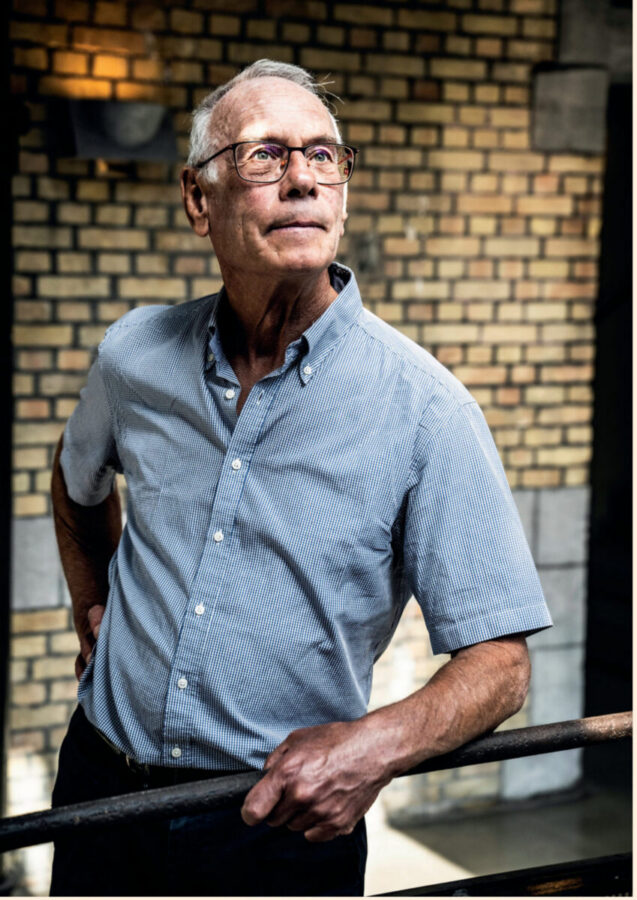
Robert Charlier appelle à un véritable débat sociétal sur les déchets les plus radioactifs et à longue durée de vie. «La question est trop critique pour que le citoyen ne s’en occupe pas.» © SASKIA VANDERSTICHELE
Est-ce bien raisonnable d’enfouir sous terre une énorme poubelle qui va rester toxique pendant des dizaines de milliers d’années, voire plus, un temps bien plus long que celui qui nous sépare des grottes de Lascaux? Moi, je trouve cela glaçant», lance Robert Charlier, qui a travaillé une bonne partie de sa carrière sur l’enfouissement des déchets nucléaires. Professeur émérite de l’ULiège, il est, depuis 2023, membre du conseil scientifique de l’Andra, l’organisme public français chargé de la gestion des déchets radioactifs, l’équivalent de l’Ondraf. Et il a longtemps hésité à prendre la parole publiquement. «J’ai décidé de m’exprimer, parce que j’estime que le sujet des déchets nucléaires n’est pas suffisamment débattu. Petit à petit, je me rends compte que j’ai des collègues qui se posent les mêmes questions, mais qui ne l’expriment qu’en privé. Ce n’est pas facile de défendre des points de vue alternatifs. Mais je veux prendre mes responsabilités.»
Une longue réflexion
Lui-même a pris du temps pour nourrir sa réflexion. Ingénieur en construction, spécialiste de la géomécanique – la science qui étudie le comportement des sols et des roches – il commence à travailler sur les déchets nucléaires dans les années 1990. Après un post-doctorat à Grenoble, il dirige une première thèse sur les laboratoires souterrains pour l’enfouissement des déchets nucléaires, puis participe à un premier projet européen sur le sujet. «Après, à l’ULiège, nous avons eu de manière quasi continue des projets européens et des contrats avec des agences belges comme l’Ondraf et le SCK-CEN, mais aussi l’Andra en France.» Une période durant laquelle Robert Charlier se concentre sur son domaine d’expertise, et se pose peu de questions sur les autres dimensions de la problématique. «Comme chercheur, on creuse son sillon. Et comme prof d’unif, plus les années passent, plus on a d’engagements. J’ai eu une vie trépidante, mais durant laquelle il était difficile de prendre du recul.» Quelques années avant sa retraite, il commence toutefois à élargir son champ de vision. «Ma collègue Céline Parotte, du département de science politique, m’a alors fait découvrir un ‘serious game’ sur l’enfouissement des déchets nucléaires, qui consiste à mettre autour d’une table des personnes qui n’ont pas de connaissances sur le sujet, et à les faire réfléchir.» Ce jeu, il va le pratiquer à plusieurs reprises, avec des étudiants ingénieurs et en science po, mais aussi parfois avec des élèves du secondaire ou le grand public. «Cela ouvre les yeux. Cela permet de se poser des questions qu’on ne se posait pas nécessairement avant.»
Une problématique trop complexe
Une fois pensionné, il y a cinq ans, il décide d’arrêter ses activités dans le domaine. À une exception près: il rejoint le conseil scientifique de l’Andra, qui compte une douzaine de membres, avec des profils et des parcours très variés. «Là, j’ai vraiment découvert la largeur du spectre, perçu la complexité de la problématique, et entendu des points de vue qui parfois m’éclairaient, parfois me sidéraient ou m’inquiétaient.» Sa conviction, aujourd’hui? «Pour les déchets les plus toxiques et avec une longue durée de vie, une question philosophique se pose. L’enfouissement géologique est un sujet d’une complexité telle que personne ne le maîtrise. Et donc, on se retrouve face à un monstre technologique, vu l’ampleur de tout ce qu’il faut contrôler. Il y aura des failles, parce que plus un système est complexe, plus le risque de failles augmente. Je pense que ce n’est pas une solution raisonnable.» On demande à Robert Charlier des exemples de failles potentielles. Il pointe la question des gaz.
«Une partie des déchets sont stockés dans des fûts en acier inoxydable – inoxydable à l’échelle humaine, mais qui va s’oxyder très lentement. Et une fois qu’on aura refermé les tunnels des sites de stockage, il n’y aura plus d’oxygène. L’acier va donc capturer celui de l’eau et libérer de l’hydrogène. Et si cet hydrogène s’accumule, il finira par fracturer la roche. J’ai commencé à travailler sur cette question il y a 20 ans. Et pour moi, elle n’est pas réglée.»
Des alternatives?
Il pointe aussi l’existence de déchets dont on sait qu’on ne pourra pas les stocker en profondeur, dans l’état actuel des choses. «Et dans les projets de nouvelles centrales, notamment des SMR, il y aura encore plus de production de déchets dont on ne sait absolument pas que faire.» Quand on lui fait remarquer qu’il faut à tout le moins trouver une solution pour les déchets déjà produits, et que l’enfouissement semble la plus raisonnable, il répond qu’il a lui-même longtemps tenu ce discours. «Mais, en réalité, on s’est concentrés sur cette option depuis près de 50 ans, et on a très peu travaillé sur les alternatives.» Mais quelles sont les alternatives? «Il existe des recherches sur la transmutation. L’idée, c’est de réduire la durée de la toxicité. Si on peut la ramener de 100.000 ans à 5.000 ans, ce n’est plus du tout la même chose, à l’échelle de l’humanité. Mais la plupart des travaux concluent que c’est possible, mais que ça va être compliqué, et donc, que ce n’est pas une bonne solution.»
Éviter de fermer des portes
La transmutation, c’est l’objectif du projet Myrrha, mené au centre de recherche nucléaire de Mol. On demande à Robert Charlier si on ne risque pas, en misant sur une solution de ce type, de se lancer dans une fuite en avant et de perdre encore quelques dizaines d’années. Il rétorque que cela, c’est le discours du monde nucléaire, qui considère qu’il a une solution pour les déchets. «On nous dit l’enfouissement des déchets nucléaires, c’est Tina: there is no alternative. Et donc, on ne consacre pas beaucoup de financements à chercher d’autres pistes. Au contraire, on ferme des portes. Car si demain, on veut faire de la transmutation, la manière dont on traite les déchets n’est pas pertinente: il faudrait les séparer au maximum.» Et durant les recherches, on peut très bien prolonger le stockage en surface, qui est de toute façon prévu pour plusieurs décennies, argumente-t-il.
Surtout, il réclame un vrai débat sociétal sur le sujet. «Notre société ne veut pas voir cette question, ou ceux qui gèrent ne veulent pas qu’on la voie. Parce que comment serait-il défendable aujourd’hui de construire de nouvelles centrales ou de poursuivre l’exploitation de centrales existantes si on reconnaît qu’on a des déchets aussi toxiques à gérer?» On évoque les changements climatiques, les environnementalistes qui sont devenus pronucléaires. «C’est une question qui n’est pas facile, et chacun a son projet de société. Mais a-t-on le droit de développer une technologie aussi dangereuse, alors qu’elle représente à peine 5% de l’énergie primaire consommée au niveau mondial?» Robert Charlier revient sur la question du débat sociétal. «Je pense que ceux qui sont en charge des déchets nucléaires ont peur des opposants radicalisés. Cela fait 20 ans que je visite régulièrement le laboratoire souterrain français à Bure. C’est impressionnant de voir comment les protections autour de l’entrée de ce laboratoire sont devenues de plus en plus imposantes. La présence policière augmente, il y a des vigiles partout. Et cela conduit à une polarisation du débat. Il est de plus en plus difficile de manifester, et il est de plus en plus difficile de discuter sereinement.» On lui fait remarquer qu’il y a tout de même, en Belgique et en France, eu un débat sociétal, même s’il n’a peut-être pas eu l’ampleur qu’il souhaiterait, qui a conduit à demander une réversibilité du stockage géologique. «En France, c’est un parlementaire, Christian Bataille, qui a réussi à créer un vrai débat sur la question, au début des années 1990. En Belgique, on avance par petits pas, avec des ministres qui ne se pressent pas pour gérer le dossier. Et concernant la réversibilité, j’ai entendu un membre du conseil scientifique de l’Andra dire que le principe de cette réversibilité n’avait été accepté que pour qu’on puisse créer le stockage souterrain.» Le sort des déchets nucléaires mérite un véritable débat, insiste-t-il. «La grande majorité des gens qui s’occupent de l’enfouissement sont des gens très sérieux, qui font leur métier en âme et conscience. Mais c’est un tout petit cercle. La question est trop critique pour que le citoyen ne s’en occupe pas.»
-
Anthropic sort Claude Opus 5.5, OpenAI réplique avec GPT-6 Sol et Luna : la bataille de l’IA est loin d’être finie
Alignement des planètes dans le doux monde de l’intelligence artificielle : OpenAI et Anthropic ont sorti le même jour leurs derniers modèles, GPT-6 Sol et Luna pour le premier, Claude Opus 5.5 pour le second. Une double sortie pour le moins inattendue au vu des récentes déclarations faites par les dirigeants des deux entreprises.
-
Après l'empreinte carbone, voici l'empreinte plastique

C'est l'angle mort des décisions environnementales. Des chercheuses ont créé l'« empreinte plastique particulaire », un indice pour (enfin) quantifier la dissémination des micro et nanoplastiques issue de la lente fragmentation des pneus, t-shirts en polyester, bouteilles...
Lire la suite - Entretien / Pollutions , Plastique
Le bilan carbone n'est pas le bon outil pour évaluer la pollution des objets en plastique. C'est ce que défendent des chercheuses françaises de l'Institut national de recherche pour l'agriculture, l'alimentation et (…) -
Non-lieu requis pour Alexis Kohler dans l’affaire de prise illégale d’intérêts autour de MSC
Le juge d’instruction peut désormais suivre les réquisitions du ministère public, et mettre un terme sans poursuites à ce dossier, ou bien décider de renvoyer tout de même en procès l’ex-bras droit d’Emmanuel Macron, aujourd’hui directeur général adjoint à la Société générale. -
Élections en Allemagne : victoire pour la parité au sein de la gauche
Alors que l’extrême droite gagne du terrain en Allemagne, la gauche radicale s’impose à Berlin, avec une probable nouvelle maire. Résultat d’une politique de quotas : les partis de gauche témoignent tous d’une parité atteinte ou grandissante au sein de leur groupe.
L’article Élections en Allemagne : victoire pour la parité au sein de la gauche est apparu en premier sur Les Nouvelles News.
-
Deux semaines avec l’Apple Watch Ultra 4 : rapide comme l’éclair, mais le coaching sportif reste trop léger

Commercialisée au tarif de 899 euros, l'Apple Watch Ultra 4 est la montre connectée la plus complète chez Apple en 2026-2027. Ses nouveautés ne sont pas très nombreuses, mais les changements effectués sous le capot donnent effectivement l'impression d'utiliser une montre plus moderne (rapidité, capteurs, batterie…). Après deux semaines d'utilisation permanente, sauf sous la douche, voici mon verdict.
-
REVOLUT BUSINESS, MEMO BANK, ou QONTO : quel compte professionnel choisir pour son entreprise ?
Les trois acteurs permettent de gérer l’argent de l’entreprise, mais ils ne proposent pas la même organisation financière. Revolut Business privilégie les paiements internationaux et les devises. Memo Bank se positionne sur l’automatisation des flux et la relation bancaire des entreprises. Qonto rapproche le compte professionnel, les dépenses et la gestion administrative. Derrière le choix …
L’article REVOLUT BUSINESS, MEMO BANK, ou QONTO : quel compte professionnel choisir pour son entreprise ? est apparu en premier sur FRENCHWEB.FR : innovation, tech, network.
-
Gros changement sur YouTube : une chaîne va pouvoir publier 3 versions différentes d’une même vidéo

YouTube a présenté ce mercredi 23 septembre une série de nouveautés pour les créateurs et les spectateurs. Parmi elles, un outil qui permettra de publier jusqu'à trois versions d'une même vidéo : tout le monde ne verra pas la même chose et seule la version la plus performante restera en ligne.
-
Menaces de mort et de viols pour avoir créé la « féminine universelle » : Typhaine D affronte ses cyberagresseurs au tribunal
"J'ai tout de suite vu à quel point le langage était un outil puissant parce qu’il structure la pensée. En minorant et en invisibilisant les femmes par la grammaire, dans chaque phrase qu'on dit et qu'on pense, on valide l'infériorité des femmes et la supériorité des hommes contre elles."
Cet article Menaces de mort et de viols pour avoir créé la « féminine universelle » : Typhaine D affronte ses cyberagresseurs au tribunal est apparu en premier sur La Relève et La Peste.
-
Festival Animaliste. Rencontre avec Pia Shazar + Rencontre avec l'asso PAZ
Quand ?
Le 26 septembre de 15h à 17h30Où ?
Médiathèque de Bagnolet Place Salvador Allende 93170 BagnoletDans le cadre du Festival Animaliste organisé par la Médiathèque de Bagnolet.
Reconsidérons notre rapport aux animaux : il est grand temps de démasquer les mécanismes occultés de leur exploitation !
– 15h : Rencontre avec Pia Shazar, co-autrice de la BD "L'Usine du Pire", une immersion dessinée au coeur des élevages.
C'est l'histoire d'une infiltration. Une plongée saisissante dans ces "villes animales" que notre société préfère ignorer. Pia Shazar est membre de l'Observatoire du Spécisme et viendra présenter son travail et sa BD reportage inédite "L'Usine du pire".
– 16h30 : Rencontre avec l'association PAZ (Projet Animaux Zoopolis) : "Donner les animaux en spectacle ?"
Aujourd'hui en France, les animaux sauvages sont encore massivement détenus et privés de liberté pour nos loisirs. Mais qu'est-ce que la captivité animale ? Quel est le cadre réglementaire ? Combien d'animaux sont utilisés et pour quelles activités ?
L'association PAZ (Projet Animaux Zoopolis) discutera de ces pratiques dans le cinéma, le spectacle, les parcs zoologiques, les aquariums, la fauconnerie... et rappellera qu'il existe désormais des outils pour s'organiser et faire bouger les lignes.
- Voir aussi Médiathèque de Bagnolet
-
Festival ALIMENTERRE 2026. Projection-débat sur le film 'Insecticides. Comment l'agrochimie a tué les insectes'
Quand ?
Le 23 octobre à 19hOù ?
Le champ des possibles 93, boulevard Macdonald, 75019, ParisLe festival ALIMENTERRE a vu le jour en 2007 dans un cinéma parisien. Depuis, il est devenu un événement international sur l'alimentation durable et solidaire organisé chaque année du 15 octobre au 30 novembre. Autour d'une sélection de films documentaires, il amène les citoyens à s'informer et comprendre les enjeux agricoles et alimentaires en France et dans le monde, afin qu'ils participent à la co-construction de systèmes alimentaires durables et solidaires et au droit à l'alimentation.
Le 23 octobre, nous projetterons et discuterons du film "Insecticides, comment l'agrochimie a tué les insectes" dont vous trouverez le synopsis ci-dessous. Amenez de quoi alimenter un apéritif partagé !
Synopsis
Depuis les années 90, 75% de la biomasse des insectes a disparu. En cause, l'utilisation massive des néonicotinoïdes, des insecticides qui se diffusent dans chaque cellule de la plante. Alors que les études scientifiques s'accumulent pour dénoncer les conséquences catastrophiques de l'utilisation de ces neurotoxiques, les multinationales qui les produisent multiplient les efforts pour brouiller les pistes.
Financement d'études approximatives, pression sur les chercheurs et les instituts de recherche, lobbying intensif auprès des autorités de régulation, tous les moyens sont mis en oeuvre pour éviter les réglementations. Pendant ce temps les insectes disparaissent à une vitesse jamais vue, alors qu'ils ont des rôles clé dans la pollinisation ou les chaînes alimentaires.
-
Festival ALIMENTERRE 2026. Projection-débat sur le film 'Être(s) vivants'
Quand ?
Le 30 octobre à 19hOù ?
Le champ des possibles 93, boulevard Macdonald, 75019, ParisLe festival ALIMENTERRE a vu le jour en 2007 dans un cinéma parisien. Depuis, il est devenu un événement international sur l'alimentation durable et solidaire organisé chaque année du 15 octobre au 30 novembre.
Autour d'une sélection de films documentaires, il amène les citoyens à s'informer et comprendre les enjeux agricoles et alimentaires en France et dans le monde, afin qu'ils participent à la co-construction de systèmes alimentaires durables et solidaires et au droit à l'alimentation.
Le 30 octobre, nous projetterons et discuterons du film "Être(s) vivants" dont vous trouverez le synopsis ci-dessous. Amenez de quoi alimenter un apéritif partagé !
Synopsis
Ce film retrace les réflexions d'un groupe d'éleveurs et d'éleveuses et de bergers et bergères qui exercent leur métier avec conviction mais ressentent comme une gêne, un caillou dans la chaussure. Les protagonistes ont échangé entre eux, avec d'autres éleveurs et avec d'autres professionnels accompagnés par le Civam Empreinte.
Pourquoi exercer cette activité souvent mal connue, parfois décriée, qui implique des gestes loin d'être anodins au contact de la vie, de la mort, et des humeurs des corps animaux ? Comment répondre aux attentes parfois contradictoires de la société : maintenir des paysages, assurer le bien-être des animaux, la qualité des produits, respecter les multiples règlementations ? Et comment répondre à leurs propres attentes, à leur vision du métier, de leur vie, de leur place dans le monde ?
-
Le sénateur Laurent Duplomb soupçonné de détournement de fonds publics
En mai 2025, «Mediacités» révélait qu’une collaboratrice parlementaire du sénateur de Haute-Loire Laurent Duplomb avait incité de nombreux élus locaux à adhérer au parti Les Républicains pour soutenir l’élection, en interne, de Laurent Wauquiez. Le parquet de Clermont-Ferrand a depuis ouvert une enquête préliminaire. -
Festival CinéBelleville 2026
Quand ?
Du 3 octobre à 12h au 17 octobre à 23h30Où ?
Divers lieux Belleville 75010, ParisDu 3 au 17 octobre 2026 se tiendra la première édition du Festival CinéBelleville
Une thématique : La parole et la mémoire des habitantes et habitants des quartiers populaires, à Belleville comme ailleurs dans le monde.
Plus de 45 films programmés
Des films inédits et des films du patrimoine, des documentaires et des fictions, des films amateurs et des films professionnels, des longs et des courts métrages, dans une programmation volontairement ouverte et éclectique.
Dans plus de 30 lieux différents
Dans des espaces culturels de l'Est parisien, mais aussi des Centres sociaux, des résidences HLM, des halls d'immeubles, des cafés, des rues et des parcs de Belleville.
Programme ici
Entrée gratuite !
- Voir aussi Canal Marches
-
Avec l’aval de l’Otan, AWS peut proposer son cloud aux armées alliées pour traiter certaines de leurs données classifiées
L’Organisation du traité de l’Atlantique nord (Otan) ouvre davantage son infrastructure numérique aux fournisseurs de cloud commerciaux. Amazon Web Services (AWS) a annoncé le 22 septembre 2026 que certaines de ses capacités avaient été approuvées pour traiter des informations classifiées au niveau « NATO Restricted ». Selon l’entreprise américaine, elle est le premier fournisseur de cloud à obtenir une approbation reconnue par l’ensemble des 32 pays membres de l’Alliance, dont la France fait partie.
-
Du soulèvement de la Genz212 aux luttes des harragas à Sebta
Quand ?
Le 27 septembre à 14h30Où ?
Le DOC 26 Rue du Docteur Potain 75019 ParisDu soulèvement de la Genz212 aux luttes des harragas à Sebta : solidarités avec les révoltes sociales au Maroc et luttes contre le régime colonial des frontières
Événement de soutien aux personnes bloquées à Sebta
Le 27 septembre, plusieurs collectifs et individus se regroupent pour organiser un événement de soutien aux personnes bloquées à Sebta
Deux discussions permettront d'éclairer les révoltes sociales au Maroc, du soulèvement de la Genz212 en septembre 2025 aux franchissement massif de la frontière de Sebta en juillet dernier.
Une première table ronde reviendra sur le mouvement Genz212, un an après le soulèvement, et de la situation politique qui l'entoure. La discussion reviendra sur la genèse du mouvement, ses formes d'actions, les réseaux sociaux comme espace politique, mais aussi la répression - arrestations, poursuites judiciaires, verdicts lourds - et les luttes pour la libération des détenu.es.
Une seconde discussion permettra d'aborder la situation à Sebta, alors que près de 70 000 personnes ont franchi la frontière fin juillet, et qu'environ 10 000 sont encore bloqués dans l'enclave coloniale, subissant un déferlement de haine fasciste et de violences policières et coloniales. Une réponse solidaire et antifasciste à la hauteur de la haine qui s'est répandue en Espagne nous semble importante ! Nous partagerons des témoignages de haragas et des camarades investis sur place depuis fin juillet nous parleront de la situation actuelle et des enjeux politiques autour de cette frontière.
Ce sera aussi l'occasion de partager un repas et d'échanger sur les solidarités possibles depuis la France !
– 14h30 - ouverture des portes
– 15h - début de la première discussion
– 17h - début de la seconde discussion
– 19h - cantine et bar de soutien
– 20h30 - fermeture des portesSur place : infokiosque et sérigraphie
Fuck borders ! Free koulchi !
DOC
26 rue du docteur Potain
75019 paris
métro télégrapheSalle Galop : deux étages sans ascenseur conditionnent l'accès à l'événement - pour toute question sur le sujet contactez-nous : contact@doc.work
Entrée prix libre
Adhésion au DOC obligatoire pour assister à l'événement !
-
DoJ defends Trump media ban: ‘Access to the White House is a privilege’
Justice department cites national security to support ban on CNN, Politico and MS Now as trio file lawsuit in response
The US Department of Justice has defended Donald Trump’s decision to ban three new organizations from the White House, arguing in a court filing that access to the grounds was a “privilege” and citing national security concerns.
Lawyers for the US president doubled down on Trump’s claims about CNN, Politico and MS Now reporting “Fake News”, and insisted the ban did not violate the first amendment because “access to the White House is a privilege, not a right”.
Continue reading... -
Un maire du Marais poitevin fait campagne pour sanctionner les pro-Duplomb

Au nom de la santé publique, le nouveau maire d'Amuré, Loïc Michaud, mobilise les grands électeurs des Deux-Sèvres pour empêcher les réélections des sénateurs ayant adopté la loi d'urgence agricole dite « Duplomb 2 ».
Lire la suite - Reportage / Politique
Amuré (Deux-Sèvres), reportage
Dans la tourbière d'Amuré plane une odeur d'humus. Les pas du nouveau maire sur le sentier s'entendent à peine tant le sol est gorgé d'eau. Entre les rideaux de frênes tissés de lierre perce l'éclat jaune des champs de céréales qui tapissent (…) -
À cause de la venue du pape, la marche climat du 26 septembre remplacée par un rassemblement statique à Paris
 Lors d’un rassemblement pour le climat à Paris, le 8 septembre 2018. © Raphaël Bodin/Survival Media Agency
Dans la capitale, samedi, la «marche pour le climat, le vivant, la paix et la justice sociale» n’en sera pas une. «C’est désormais validé par la préfecture : le rendez-vous sera finalement statique, la venue du pape ne nous permettant pas d’avoir une autorisation de marche», ont indiqué les relais parisiens du mouvement, mardi.
La manifestation initiale, qui devait partir de la place de la Nation à 14 heures, a donc été remplacée par un simple rassemblement place de la République, entre 17 heures et 20 heures. «On a essayé de rassurer la préfecture sur nos capacités d’encadrement, mais ça n’a pas suffi pour les convaincre. Ils pensent que nous serons très nombreux et nous disent qu’ils n’auront pas assez d’unités de maintien de l’ordre ce jour-là», explique à Vert Benjamin Ball, de l’association Bio Consom’acteur, coorganisateur de l’événement.
«À Bordeaux, la mobilisation va être massive»
«On est déçus, bien sûr, déplore-t-il. On aurait aimé faire une grande marche à Paris, mais n’oublions pas que ce mouvement s’appuie d’abord sur les capacités locales : à Bordeaux, la mobilisation va être massive ; à Fontainebleau aussi ; ainsi que dans tous les endroits les plus touchés par la sécheresse.» Selon un dernier recensement, 261 mobilisations devraient fleurir samedi, partout en France.
Mattia Gonget, étudiante de 20 ans et coautrice d’un récent appel de la jeunesse à manifester samedi, abonde auprès de Vert : «C’est forcément une déception mais, le plus important, c’est que les autres villes de France restent mobilisées.» Gabriel Mazzolini, des Amis de la Terre, partage ce sentiment : «Ce qui compte, c’est que cette manifestation nationale, la première depuis cet été, puisse se tenir ; que les parents d’élèves, les locataires, les agriculteurs, les pompiers, puissent se réunir et s’exprimer.»
Parmi l’organisation, personne ne semble regretter le choix de la date, jour de la venue du pape : «On devait absolument installer le mouvement en cette rentrée, sans pour autant empiéter sur les autres mobilisations prévues : le 19 septembre, le 3 octobre ou le 10 octobre contre l’Omnibus pesticides ; c’était la bonne date», juge Benjamin Ball.
Plus d’un millier d’organisations ont rejoint le mouvement
Semaine après semaine, le mouvement grossit. À l’initiative de l’association Bio Consom’acteurs, près de mille personnes ont signé, début août, la lettre ouverte au président de la République à l’origine de la mobilisation.
Appel à images : Vert a besoin de vous !
Afin de documenter l’ensemble de la «marche pour le climat, le vivant, la paix et la justice sociale» en France, nous avons besoin de vidéos courtes d’une action près de chez vous. L’ambition de Vert est de réaliser une vidéo à destination des réseaux sociaux qui reflète les plus de 260 actions prévues samedi partout en France. Pour les besoins d’un article, vous pouvez également nous transmettre quelques photos au format paysage. Cliquez ici pour nous aider.
Cette missive appelait à se mobiliser le 26 septembre pour exiger un plan d’urgence, d’adaptation et d’atténuation face au réchauffement climatique, après les catastrophes de l’été. Ces premier·es signataires ont depuis été rejoint·es par 30 000 autres citoyen·nes et plus d’un millier d’organisations, parmi lesquelles Greenpeace, les Amis de la Terre, Alternatiba ou le Réseau action climat.
Toutes ces personnes forment des groupes locaux que vous pouvez rejoindre avant le 26 septembre.