Conversation
-
Why Saudis Failed to Stop Houthi Advance, Despite Vast Intelligence and Weapons Edge
source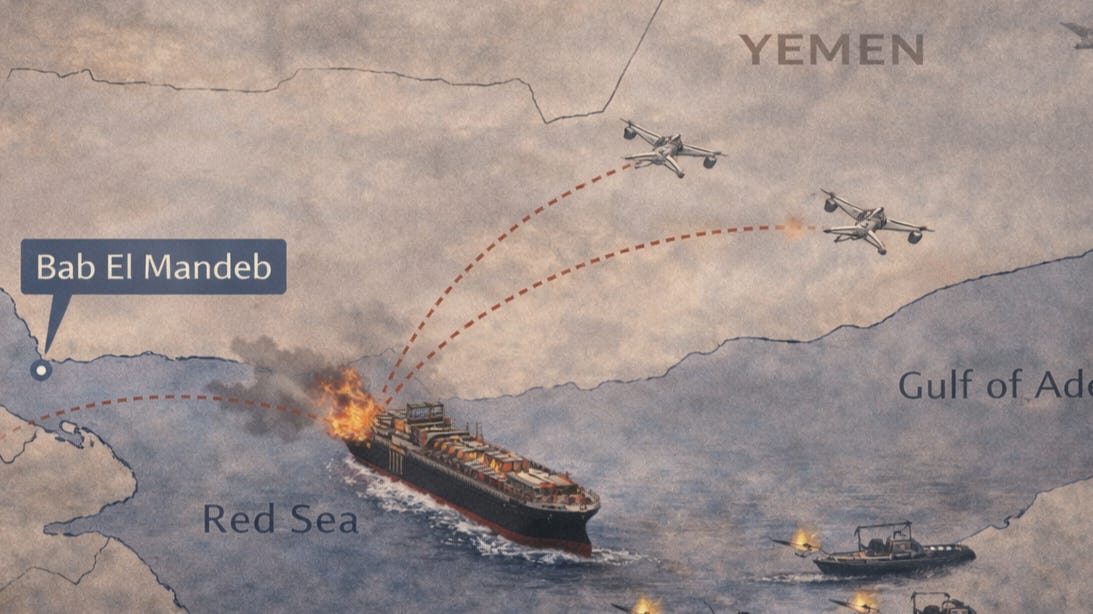 Saudi warplanes never showed up to repulse the Houthis’ capture of the key strategic Bab el Mandeb Strait, analysts say. (LinkedIn illustration)
 When Yemen’s Iran-backed Houthi rebels launched an offensive along the country’s Red Sea coast earlier this month, the government’s Saudi-aligned forces were taken by surprise. As the Yemeni defenders fell back and the Houthis closed in on the western port city of Mokha, Saudi Crown Prince Mohammed bin Salman placed two urgent calls to Donald Trump, pleading for U.S. air strikes to blunt the rebel’s advance. But the president, wary of opening a second front in his war against Iran, refused and told the Saudi leader to order his own air force into the fray. Trump did, however, offer to beef up the U.S.-Saudi intelligence cell already in the country.
But as the fighting intensified, Saudi warplanes—the centerpiece of the kingdom’s $174 billion-purchase of U.S. weaponry over the past two years—never showed up. Over the next few days, the Houthis captured Mokha and swept farther down the coast to seize their most strategic prize—the Bab el Mandeb Strait at the southern entrance of the Red Sea. And so now, from the rocky outcropping of Perim Island in the middle of the narrow waterway, Houthi artillery has choked off the only alternative the Saudis have had, beyond the blocked Strait of Hormuz, for exporting its oil, the lifeline of its—and much of the world’s—economy.
The surprise, speed and success of the Houthi offensive has raised questions about the degree to which the U.S. and Saudis were providing intelligence to Yemeni government forces in the weeks and months before the fighting began. According to the Pentagon, the strengthened U.S.-Saudi intelligence cell now numbers some 200 American military and intelligence personnel working with their Saudi counterparts in Riyadh, mostly on targeting.