Conversation
-
A Hidden Geopolitical Threat to the Global Financial System? Oddities in the U.S.-Japanese Yen Intervention
source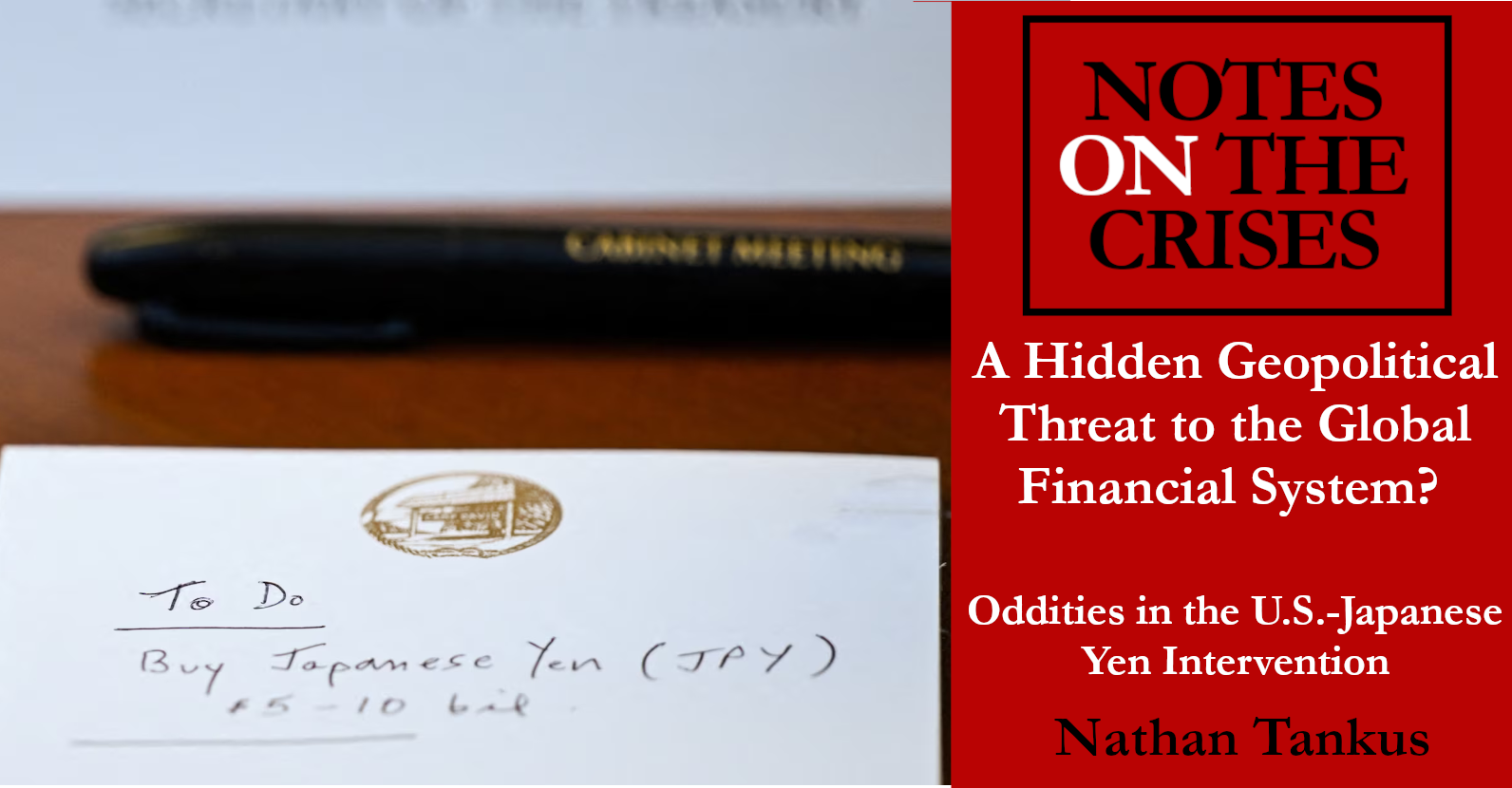
This is a Premium Piece of Notes on the Crises.
Buy a Paid Subscription Give a Tip!I am way overdue on commentary on international financial and currency markets. I hope, by the end of the month, to have my long delayed big picture piece on “Dollar Hegemony After the Second Trump Administration” published. I haven’t written about this topic since my monster piece in April of last year “Is the Trump Tariff Financial Crisis A Crisis of the Dollar? It Doesn’t Seem to Be … Yet”. I haven’t even written a piece confirming that that event appears, in retrospect, to be a “panic” not a “crisis”! Nor have I commented on the swap line Argentina got in October of last year.
There is so much going on in so many different directions in the second Trump administration, it's extremely difficult to keep track- let alone write about all of it! My areas of expertise have not been this interesting, dynamic and multifaceted in a long time. That’s… not good news for the rest of you.
Anyway, things with Japan itself remain roughly where we left off… oddly. I have had some partially finished writing on Japanese government securities, monetary policy and government pension funds sitting around for a couple of years now. Crises since Trump retook office have just gotten in the way. Look out for that later this year. I’ve long thought that the English language commentary on Japan’s monetary policy, or its “fiscal situation”, has been poor and has gotten worse as a new generation of economics and financial journalists believe that the lessons of the 2010s were mirages- if they are even familiar with them at all.
For now what’s important is that the Bank of Japan keeping interest rates lower than all the other major central banks has created “pressure” for the Japanese yen to depreciate relative to other currencies. This, however, has not been a crisis. Significant, persistent but gradual exchange rate depreciation may not be pleasant when it comes to import prices or the cost of traveling, but it is not a financial crisis. The macrofinancial concern is that this depreciation could move from “orderly” to “disorderly” based on broader financial market conditions.
This is what I mean when I say that things are “where we left off”. When Trump’s astounding 104% tariffs on China first came into effect on April 9th, the initial concern was over a shortage of dollar liquidity and a sharp appreciation of the U.S. dollar. Instead, we had shortages of dollar funding issues alongside a depreciating U.S. exchange rate. By the time I published my piece on the potential of a “crisis of the dollar”, it appeared that Asian and European investors may have been selling assets to lower their exposure to the U.S. dollar. Subsequent analysis from the BIS’s Hyun Shin and his coauthors largely substantiated that narrative- except for one crucial point.