TrumpWatch publisher
-
Judge seems inclined to side with media outlets who were banned from White House in lawsuit
www.theguardian.comDue process was not followed, said judge, when CNN, MS Now and Politico were banned from White House
A US district judge on Wednesday heard arguments in the extraordinary showdown between Donald Trump and CNN, MS Now and Politico, suggesting in comments that he was more inclined to side with the media plaintiffs who sued the president on Monday.
Lawyers representing the media organizations have asked Timothy J Kelly, a district judge, to force the White House to return the press badges that were taken over the weekend after Trump banned their journalists from the building. While the judge declined to rule on Wednesday, he acknowledged that due process had not been followed in revoking access.
Continue reading... -
Trump greets Xi Jinping on arrival in rare move as US-China trade truce extended
www.theguardian.comPresident lays out red carpet as treasury secretary announces extension of ‘Busan agreement’ pausing trade war hostilities
Donald Trump has welcomed Xi Jinping to the US, taking the unusual step of greeting the Chinese leader on the tarmac at Joint Base Andrews to kick off his state visit to Washington.
Xi’s plane was met with a lavish arrival ceremony that included a 30-metre-long (100ft) red carpet flanked by US service members, a military flyover by two B-1 bombers and a presentation of the flags and national anthems of both countries.
Continue reading... -
Judge dismisses Trump’s ‘extraordinary’ lawsuit against Iowa newspaper and pollster
www.theguardian.comTrump had accused Des Moines Register of fraudulently publishing inaccurate poll results to damage him
A judge on Wednesday dismissed Donald Trump’s lawsuit accusing the Des Moines Register and its former pollster of misrepresenting the state of the 2024 presidential race, rejecting the president’s claim that the newspaper’s poll coverage violated Iowa’s consumer fraud law.
Calling the case extraordinary, Scott J Beattie, the Iowa district judge, said that the argument could have a chilling effect that “can discourage others from reporting on and debating public affairs”.
Continue reading... -
Trump’s Ban of News Organizations Goes Beyond Obama, Biden Actions
www.factcheck.org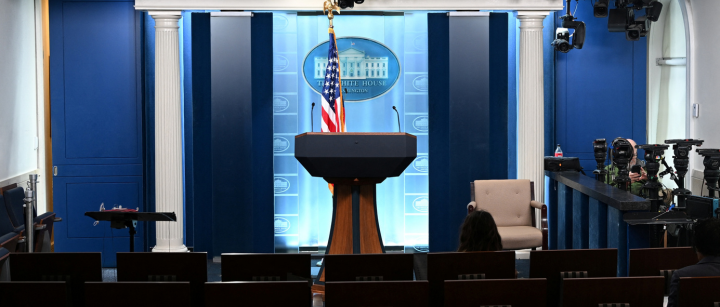
In banning CNN, Politico and MS NOW from the White House, the Trump administration has argued that the move is similar to actions taken by Presidents Barack Obama and Joe Biden. But the ban goes beyond what those presidents did.
 The James S. Brady Press Briefing Room at the White House on Sept. 21. Photo by Alex Wroblewski / AFP via Getty Images.
In a Sept. 21 press release, three days after President Donald Trump said the news organizations would be barred “effective immediately,” the White House said that “[a]ccess changes are nothing new,” and that “Democrat Administrations have restricted, punished, and locked out the press” for “years.” The release listed several examples of incidents involving the press during the Obama and Biden administrations.
“There’s no basis to suggest that Biden and Obama ‘did it too,'” Ken Paulson, director of the Free Speech Center at Middle Tennessee State University, told us. “Trump’s action is singular and unprecedented,” he said, noting that Trump has instituted a “full ban of multiple news media” and “is targeting news organizations because they are publishing content he finds unflattering.
“That violates the First Amendment prohibition against government using its power to punish ideas,” Paulson said.
Trump announced the ban on Sept. 18 in a post on Truth Social, saying it was due to reporting what he called “FAKE NEWS.” When questioned by reporters later that day, Trump repeated that he was doing this “because they’re fake news.” He said the news organizations “purposely write negative news” in order to “try and diminish the Republicans and a Republican administration.”
We’ll explain what happened in some of the instances under Obama and Biden cited in the White House press release and by other Republicans. First Amendment experts told us that Trump’s ban is different.
Amy Kristin Sanders, a professor of First Amendment studies at Penn State University, told us that Trump’s action was “unprecedented,” “particularly when taken in light of President Trump’s public stance about why he banned the news organizations.”
“What the Trump Administration has done is revoke access for news organizations that have already been granted press access while publicly saying it is because President Trump doesn’t like the way he is being covered by those news organizations,” Sanders told us in an email. “These outlets are being targeted specifically because they engaged in critical coverage.”
Aaron Terr, director of public advocacy at the Foundation for Individual Rights and Expression, which defends free speech rights on college campuses and elsewhere, said, “Past presidents have limited outlets’ White House access based on hostility toward their reporting. For example, the Nixon administration, displeased with the Washington Post’s coverage of Watergate, barred one of the paper’s reporters from covering White House social events.” And the Obama administration initially excluded Fox News from a TV reporting pool for one interview (we’ll explain that incident below).
“But I don’t know of any past example of a president indefinitely banning a media outlet from the White House,” Terr told us.
The White House press release defended the president’s ban. “The First Amendment protects their right to publish; it does not entitle them to a hard pass, briefing room seat, or place in the press pool,” the release said.
Terr disagreed. “Just last year, the U.S. Court of Appeals for the D.C. Circuit reaffirmed that when the White House opens its facilities to the press generally, it cannot exclude reporters based on disapproval of their views,” he said, calling the action a violation of the First Amendment.
CNN, Politico and MS NOW sued the administration, asking a federal judge to block enforcement of Trump’s ban and to restore their access to the White House. Administration officials responded in a court filing saying that the news organizations “have failed to maintain basic minimum ‘standards of professionalism and decorum'” by “‘publishing sensitive or classified information.'” A hearing was held Sept. 23.
In response to Trump’s action, the other major TV networks said they wouldn’t participate in pool coverage of the president’s events.
Obama and Fox News
In its press release, the White House highlighted a feud between the Obama White House and Fox News in 2009, early in Obama’s presidency. The Obama White House questioned whether Fox News was a legitimate news organization and excluded “Fox News Sunday” when the president made the rounds on all of the other Sunday news talk shows. And the Treasury Department reportedly tried to limit access for Fox News to an interview with an administration official.
“In 2009, the Obama White House attempted to exclude a Fox News reporter from an interview with an unpaid executive pay consultant for the U.S. Treasury Department. Other news organizations objected to the effort and supported Fox and it never occurred again,” Paulson told us. “Continuance of this practice would have raised significant First Amendment questions.”
In a Sept. 19 talk at Colgate University, Obama commented on Trump’s ban on certain news outlets. “I’m trying to think what would’ve happened if I had said, ‘You know what, Fox News, you’re out of here.’ It’s unimaginable.” Obama didn’t kick out the network from the White House. But his administration took other actions against Fox News, and the Justice Department also surveilled one of the network’s reporters as part of aggressive measures to curtail leaks to the media.
We wrote about these actions in 2018, when Obama said he had “complained plenty about Fox News, but you never heard me threaten to shut them down or call them enemies of the people,” a reference to Trump repeatedly calling the media that. As we said then, Obama did more than complain. He didn’t use the phrase “enemies of the people,” though he did say that Fox News’ “point of view” was “ultimately destructive” to the U.S.
On Sept. 20, 2009, Obama appeared on the Sunday talk shows on NBC, CBS, CNN, ABC and Univision, but ignored “Fox News Sunday.” Asked about the snub, White House spokesman Josh Earnest criticized Fox for not airing Obama’s Sept. 9, 2009, joint address to Congress on healthcare. The speech did air on the Fox News Channel, however — but not the broadcast network. Obama didn’t make it to “Fox News Sunday” until his last year in office.
In October 2009, the White House ramped up its rhetoric. Anita Dunn, the White House director of communications, told the New York Times, “We’re going to treat them the way we would treat an opponent” and said that “we don’t need to pretend that this is the way that legitimate news organizations behave.” When asked about Dunn’s comments, White House senior adviser David Axelrod said that “it’s not just their commentators, but a lot of their news programming, it’s really not news. It’s pushing a point of view.” He added, “We’re going to appear on their shows. We’re going to participate, but understanding that they represent a point of view.”
That same month, the Treasury Department reportedly tried to exclude Fox News from a pool TV interview of an administration official, Kenneth Feinberg, the so-called “pay czar.” The White House disputed that account, saying the issue was merely a miscommunication. But Fox News and other news outlets reported that the Treasury Department had tried to leave Fox News out of the pool, until the other TV networks protested. “All the networks said, that’s it, you’ve crossed the line,” CBS News White House correspondent Chip Reid told his own network.
Fox News did interview Feinberg.
“The Obama administration’s exclusion of Fox News from a pool was rightly condemned as an attack on press freedom,” Terr told us. “The White House also lists a couple of other examples of the Obama administration reportedly restricting or threatening to restrict reporters’ access. Of course, none of that justifies what the Trump administration is doing now. Two wrongs don’t make a right. And the Trump administration’s wrong — a directive from the top to ban three outlets from the White House indefinitely over their critical or negative reporting — appears to be unprecedented in its scope and severity.”
Obama Administration Pursuit of Leaks
The Justice Department under Obama also aggressively investigated leaks of information to the media, surveilling or subpoenaing journalists in the process, including Fox News reporter James Rosen. In 2010, the DOJ tracked Rosen’s movements at the State Department and collected his telephone and email records, according to the Washington Post, which broke the story in 2013.
In the affidavit for a search warrant to obtain emails, the FBI agent described Rosen as “an aider, abettor and/or co-conspirator.”
“Search warrants like these have a severe chilling effect on the free flow of important information to the public,” First Amendment lawyer Charles Tobin told the Washington Post.
In 2012, the DOJ also seized two months of telephone records of reporters and editors at the Associated Press.
In 2017, the Committee to Protect Journalists wrote: “Under the Obama administration, charges were brought against at least eight government employees or contractors accused of leaking information to the media, and several journalists were snared in the process through subpoenas to testify or surveillance of their records. After public outcry, the Department of Justice released revised standards for subpoenaing reporters.”
The aggressive posture against leaks, and reporters, continued under Trump’s first term and has escalated in his second. In an August report, CPJ said the DOJ in Trump’s second term had issued subpoenas involving at least 10 journalists, “marking one of the most aggressive uses of legal powers against the press in the United States in decades.” It cited the U.S. Press Freedom Tracker, which found that over Biden’s term three such subpoenas were issued and just one was issued in Trump’s first term.
Biden’s Stricter Criteria for White House Press Badges
Asked about Trump banning the media outlets from the White House press room, House Majority Leader Steve Scalise falsely equated Trump’s move to a situation during the Biden administration when it placed greater restrictions on those seeking a hard pass allowing access to the White House press facilities.
“Joe Biden removed the press credentials from over 400 different agencies,” Scalise said on ABC’s “This Week” on Sept. 20.
The White House parroted Scalise’s claim in its press release the following day, claiming, “The Biden Administration restricted more than 440 reporters from White House access through a new, retroactive press credentialing process — with independent and conservative journalists taking a heavy share of the hit. The White House Correspondents’ Association barely objected.”
But those claims are misleading at best.
As ABC News’ Jonathan Karl pointed out during the interview with Scalise, “The 400 individual reporters who [lost] credentials did not reapply. There was only one that was actually denied a credential. And all of those who didn’t reapply were allowed to come in.”
“They were removed,” Scalise said.
“They were not banned from the White House,” Karl said. “That did not happen.”
Here’s what did happen. In May 2023, the Biden administration established new, stricter rules for who could obtain a “hard pass” allowing routine access to the White House press areas without an escort. As the Washington Post explained at the time, in order to be eligible for a hard pass, a journalist had to be “employed full time by an organization principally concerned with news dissemination; must reside in the greater Washington, D.C., area; must have gone to the White House for work at least once during the prior six months; and must hold press credentials for either the Supreme Court, Senate or House.”
The White House at the time estimated that 40% of the journalists who had hard passes hadn’t even been to the White House in the previous 90 days.
In August of that year, Politico reported that over the first three months under the new Biden-era rules, the number of hard pass holders dropped from 1,417 to 975. Most of the drop was attributed to journalists who simply didn’t reapply. According to Politico, only one person who applied was denied a pass under the new criteria.
Importantly, though, even journalists without a hard pass could still get access to the White House press briefings by obtaining a daily pass, which required a journalist to provide personal information to clear security.
Jen Psaki, who served as White House press secretary under Biden from January 2021 to May 2022, posted a video to TikTok on Sept. 21 calling Scalise’s taking point “total BS.”
“So what the White House did was they put in place a couple of requirements that are pretty standard,” Psaki said, noting that “there were a lot of people with hard passes out there that had not used it in several years.”
“But [conservative] outlets like Breitbart and Fox and OAN and Newsmax all got hard passes because the criteria had nothing to do with how you were covering the administration,” Psaki said. “It was whether you were meeting those basic standard requirements, which is very much aligned with what the Senate and the House requires as well.”
Reporters who did not regularly cover the White House could still get access to White House press briefings “simply by getting day passes, and that is something that the Biden White House granted to a huge number of people from a range of news outlets,” Psaki said. “None were prevented from getting access to the White House because of their coverage. That is a big difference between then and what’s happening now.”
After his “This Week” interview, Scalise pushed back on X on Karl’s live fact-check.
“This morning, ABC tried to claim the Biden White House didn’t cut off press access for over 400 journalists,” Scalise wrote. “The facts say otherwise.”
He cited a Fox News story in August 2023 that claimed, “More than 440 reporters lose press passes after White House changes requirements.”
The White House correspondent for Today News Africa filed a lawsuit claiming the Biden administration discriminated against him by changing the criteria. However, a D.C. District Court judge ruled in favor of the White House, saying the criteria established by the Biden White House for hard pass credentials was “facially reasonable” and “viewpoint neutral.” As a result, the judge noted, passes were not denied based on the content of stories produced by applicants.
In Trump’s case, Sanders, the Penn State professor, told us, “These outlets are being targeted specifically because they engaged in critical coverage.”
“The Biden administration did change the credentialing requirements for ‘hard pass’ access, causing some journalists not to renew their hard passes and possibly making some journalists ineligible for a hard pass,” Sanders said. “This is different than excluding members of the WHCA from pool coverage based on the viewpoints they express in their journalism.”
The Free Speech Center’s Paulson likened the Biden rules “to a public library requiring patrons to prove residency before renewing a library card. There were no First Amendment issues.”
Terr, at the Foundation for Individual Rights and Expression, said that “there were legitimate concerns about the new rules, including that they disadvantaged smaller outlets and freelancers. The rules also gave the administration discretion to discipline journalists who didn’t act in a ‘professional manner,’ a vague and subjective standard that could be abused to punish aggressive questioning.”
However, Terr said, the Biden administration “used viewpoint-neutral criteria to determine access” and “didn’t go so far as to ban any outlet from the White House over unfavorable coverage.”
Other Instances of Press Access
The White House press release highlighted several other instances of reporters not getting access to certain events.
Boston Herald
The White House said that Obama press officials had raised the issue of fairness when denying the Boston Herald full access to a May 2011 fundraising event.
“Obama White House officials restricted the Boston Herald from coverage — writing that pool slots depended on covering Obama ‘fairly’ — after the paper ran a front page Mitt Romney op-ed,” the White House press release said.
The Herald reported that Matt Lehrich, an Obama White House spokesperson, told the newspaper that the Herald’s request was denied because the White House Correspondents’ Association had already granted local pool coverage to the Herald’s competitor, the Boston Globe. However, Lehrich did suggest that covering Obama “regularly” and “fairly” were factors in which outlets are selected for press pool assignments.
“I tend to consider the degree to which papers have demonstrated to covering the White House regularly and fairly in determining local pool reporters,” the Herald said Lehrich wrote when replying to the Herald’s request for full access to the fundraiser.
In emails with the Herald, Lehrich had brought up the newspaper publishing a front-page editorial critical of Obama that was written by former Massachusetts Gov. Mitt Romney, Obama’s eventual Republican presidential opponent, in March 2011. “My point about the op-ed was not that you ran it but that it was the full front page, which excluded any coverage of the visit of a sitting US President to Boston. I think that raises a fair question about whether the paper is unbiased in its coverage of the President’s visits,” the Herald said Lehrich wrote.
But “Lehrich insisted the Herald may yet be allowed into Obama events,” the Herald said.
San Francisco Chronicle
The White House press release also accurately recounted a conflict between the Obama White House and the San Francisco Chronicle in April 2011. However, the former Chronicle reporter involved said that what happened then is “very different” from what Trump is doing now.
“After a San Francisco Chronicle reporter recorded protesters interrupting an Obama fundraiser, White House officials threatened to strip the outlet from access and warned of retaliation if the paper reported on it,” the White House press release said.
“That’s true,” Carla Marinucci, the Chronicle’s former senior political writer, told the Chronicle for a Sept. 21 story about the incident. She said Obama’s press aides “went insane” on the Chronicle after she posted a video she recorded of the protest, which the press team argued violated pool protocol because the event coverage was limited to print reporters. As a result of the dustup, Marinucci said the Obama White House “blocked us from the local press pool for a year.”
But Marinucci said what Obama’s press aides did is not on the same level as what Trump has done.
“They never accused us of posting fake news. They just didn’t want us to post a video,” Marinucci told the Chronicle. “That’s very different from saying these organizations are fake news and I don’t like what they are doing.”
She called Trump’s actions against the three news organizations a “complete violation of the First Amendment.”
Obama’s 2008 Campaign
The White House press release also said, “In the Obama campaign’s final days, senior campaign officials pulled reporters from three prominent outlets off the traveling press plane — restricting them from coverage after the papers endorsed Obama’s opponent.” The news outlets affected disagreed on whether the endorsements, which came from the editorial pages, played a role.
With three days to go before the 2008 presidential election, the Obama campaign removed journalists with the Washington Times, New York Post and Dallas Morning News from the pool of reporters traveling on Obama’s campaign plane. The campaign said that a lack of seats and high demand necessitated making some changes. Some of the newspapers affected said the move appeared to be retaliation for their individual editorial boards endorsing Obama’s Republican opponent, John McCain.
“This feels like the journalistic equivalent of redistributing the wealth,” John Solomon, then the executive editor of the Washington Times, said at the time.
However, Ryan Rusak, the politics editor at the Dallas Morning News, wrote that the paper didn’t have evidence the endorsement was the reason. “We think the Obama campaign’s decision is to some degree more a function of limited seats,” he wrote on the paper’s website, noting that he and the political reporter “had absolutely no input or knowledge of the endorsement.”
Rusak said an Obama campaign spokeswoman, Linda Douglass, told the paper the campaign needed space for Obama’s wife, Michelle, and her staff and Secret Service, and the endorsement didn’t play a role. “There are news organizations, as you look around you on the plane, whose editorial boards are never friendly to Senator Obama,” Douglass said. Fox News and the Wall Street Journal were still on the plane, Rusak said.
New York Post
Biden’s White House, the Trump administration’s press release said, “blocked New York Post reporter Steven Nelson from covering the President’s only daytime public event — despite empty seats in the room — after the reporter pressed Biden on his family’s shady business dealings.”
That’s a reference to a decision Biden officials made in May 2023 to exclude Nelson from the press covering an event featuring Biden and Transportation Secretary Pete Buttigieg. The Biden White House said Nelson was one of about two dozen reporters it could not accommodate due to a lack of space. But the New York Post said it suspected Nelson had been denied a press spot at the event because he had previously questioned Biden about the Biden family’s alleged dealings with foreign countries and the press staff didn’t want the president to face tough questions..
Editor’s note: FactCheck.org does not accept advertising. We rely on grants and individual donations from people like you. Please consider a donation. Credit card donations may be made through our “Donate” page. If you prefer to give by check, send to: FactCheck.org, Annenberg Public Policy Center, P.O. Box 58100, Philadelphia, PA 19102.
The post Trump’s Ban of News Organizations Goes Beyond Obama, Biden Actions appeared first on FactCheck.org.
-
This Week In The Big Picture
thinkbigpicture.substack.comWith just under seven weeks to Election Day, candidates and parties are starting to make their final arguments for why voters should support them in November.
But with Donald Trump’s support in the country collapsing and Democrats looking increasingly likely to retake the House and even the Senate, Republicans are scrambling. And their closing pitches are starting to go off the rails.
Tomorrow, looks at how Republicans are trying to save their jobs and congressional majorities this November, from their pleas for “another two years,” to their sudden opposition to the war in Iran, to their kicking hundreds of thousands off Obamacare.
And in case you missed it, yesterday did a deep dive into Trump’s ban of CNN, MS NOW and Politico from the White House. How did we get here? Where do the lawsuits challenging the ban stand? And how is the ban backfiring on Trump?
-
Footage shows people fleeing as drone strikes business centre in Kyiv – video
www.theguardian.comVideo shows the moment a drone struck a business centre in Kyiv, in an attack that came hours after Volodymyr Zelenskyy, the Ukrainian president, met Donald Trump to discuss peace efforts. Railway infrastructure, warehouses and fuel stations were also damaged in the attack
Continue reading... -
Why Saudis Failed to Stop Houthi Advance, Despite Vast Intelligence and Weapons Edge
www.spytalk.co Saudi warplanes never showed up to repulse the Houthis’ capture of the key strategic Bab el Mandeb Strait, analysts say. (LinkedIn illustration)
 When Yemen’s Iran-backed Houthi rebels launched an offensive along the country’s Red Sea coast earlier this month, the government’s Saudi-aligned forces were taken by surprise. As the Yemeni defenders fell back and the Houthis closed in on the western port city of Mokha, Saudi Crown Prince Mohammed bin Salman placed two urgent calls to Donald Trump, pleading for U.S. air strikes to blunt the rebel’s advance. But the president, wary of opening a second front in his war against Iran, refused and told the Saudi leader to order his own air force into the fray. Trump did, however, offer to beef up the U.S.-Saudi intelligence cell already in the country.
But as the fighting intensified, Saudi warplanes—the centerpiece of the kingdom’s $174 billion-purchase of U.S. weaponry over the past two years—never showed up. Over the next few days, the Houthis captured Mokha and swept farther down the coast to seize their most strategic prize—the Bab el Mandeb Strait at the southern entrance of the Red Sea. And so now, from the rocky outcropping of Perim Island in the middle of the narrow waterway, Houthi artillery has choked off the only alternative the Saudis have had, beyond the blocked Strait of Hormuz, for exporting its oil, the lifeline of its—and much of the world’s—economy.
The surprise, speed and success of the Houthi offensive has raised questions about the degree to which the U.S. and Saudis were providing intelligence to Yemeni government forces in the weeks and months before the fighting began. According to the Pentagon, the strengthened U.S.-Saudi intelligence cell now numbers some 200 American military and intelligence personnel working with their Saudi counterparts in Riyadh, mostly on targeting.
-
Trump's approval drops as Democrats take double-digit lead in new poll
President Donald Trump's approval rating has taken a noticeable step backward after more than a month of gains, according to a new national poll, while Democrats opened a double-digit advantage on a key midterm election question. The results arrive as New Jersey voters prepare for another high-stakes election cycle and political leaders on both sides of the aisle look toward 2027 statewide contests.www.allsides.com -
The FBI Anti-Corruption Squad Was Circling Susan Collins — Until Trump Got In The Way
www.techdirt.comThis story was originally published by ProPublica and the Texas Tribune. Republished under a CC BY-NC-ND 3.0 license.
In the final weeks of 2019, a top fundraiser for Sen. Susan Collins walked into a perilous meeting at a Corner Bakery in Washington, D.C.
For the first time in her two-decade Senate career, the Republican lawmaker from Maine was in danger of losing her seat. President Donald Trump’s dismal approval ratings were dragging her down in the polls, and she was falling behind her likely 2020 Democratic challenger in fundraising.
Scott Reed, head of the Collins super PAC, was on a mission to close that gap. Reed was meeting that day with three executives from a Hawaiian defense contractor, Navatek. A year earlier, Collins had helped their company land a multimillion-dollar Navy research contract in Maine. Now, seated at a coffee shop not far from the U.S. Capitol, Reed asked them for a $500,000 donation.
Government contractors are banned from making political contributions. More consequentially, for the company to offer donations to Collins in exchange for an official action, or for Collins to accept, would constitute criminal bribery.
But the company did have such a proposal: Navatek was hungry for more government contracts in Maine. If they cut a big check, the CEO told Reed, Navatek wanted Collins to guarantee tens of millions of dollars in additional federal funding.
To skirt campaign finance laws and conceal the source of the funds, Navatek planned to funnel the donation through a shell company. The CEO wanted assurance that Collins would know where the money came from. Reed confirmed that she would, the executive said — and that Navatek would get its government contracts.
After the Corner Bakery meeting, Navatek’s CEO, Martin Kao, sent an initial $150,000 to the Collins super PAC using the shell company. Two months later, he told Navatek executives that Collins committed to getting the company $32 million in naval contracts, according to an internal company email reviewed by ProPublica.
Three years later, Kao holed up in a conference room to recount the Corner Bakery meeting to a group of four FBI agents and federal prosecutors. The FBI had seen through his shell company ruse, and in 2022 a grand jury indicted him for making illegal campaign contributions. No one working for Collins was charged.
Facing years in prison, Kao hoped to do less time by revealing the entire scheme.
What he told them has never before become public. The Corner Bakery meeting, he asserted, was just one episode in a sprawling pay-to-play operation that embroiled some of the most powerful figures in Congress.
Over three days at the U.S. attorney’s office in Honolulu, Kao laid out in devastating detail how his operation worked. He gave agents a 50-page document naming dozens of lobbyists, congressional staffers and members of Congress who he said helped him trade cash for contracts. Kao and his close associates had donated nearly $900,000 to dozens of politicians, allowing Navatek to establish operations in half a dozen states with over $40 million a year in government funding.
Most damningly, Kao told FBI agents and prosecutors, the company’s work for the government was of no real value. Navatek’s research under his stewardship never resulted in products the military wanted to buy, ProPublica found.
Kao’s tell-all interviews with the FBI lasted into late 2024. His confessions opened up an entirely new phase of the investigation. Agents sifted through hundreds of thousands of records seized during Kao’s arrest and found that many were consistent with his account of widespread influence peddling.
Kao had credibility issues. He was now a felon trying to avoid a lengthy prison sentence. And there were other challenges. Building a corruption case against elected officials requires extraordinary proof of a quid pro quo arrangement, in part because the Supreme Court has narrowed what counts as bribery.
Even so, by the end of 2024, the agents had enough evidence to pursue a sweeping bribery probe that could ensnare top lawmakers of both political parties. They asked their supervisors to approve a new investigation and contemplated using undercover operatives to gather more evidence. Although their effort was in its early stages, and it was unclear where it would lead, FBI agents asked Kao extensive questions about his dealings with Collins and her office.
Then Trump returned to the White House. Consumed by a campaign of vengeance, he stacked the Department of Justice with his personal lawyers and demanded a purge of anyone who had ever investigated him.
The specialized FBI and DOJ teams handling public corruption investigations, some of which were involved in Trump-related cases, were eviscerated. One of the agents who had taken Kao’s confession was pushed out as retribution for her role in investigating Trump’s attempt to overturn the 2020 election. Dozens of agents and prosecutors quit amid the department’s destruction, including the career attorney assigned to Kao’s case.
Trump’s Justice Department no longer takes on public corruption in any meaningful fashion, former officials said. The investigation sparked by Kao’s revelations is dead. And the government is no longer talking to an informant who had offered a road map to corruption in Congress.
The White House referred ProPublica to the FBI.
FBI spokesperson Ben Williamson said the agency had investigated claims against Collins years ago “and ultimately found nothing implicating Senator Collins or Senator Collins’ campaign. Any suggestion otherwise is totally false.” Williamson said the Trump administration has removed agents only “if they have been found to have acted unethically, undermined the mission, or engaged in weaponization of law enforcement.”
Williamson did not respond to questions about the new investigation launched in 2024 based on Kao’s previously unreported cooperation with the FBI.
ProPublica is revealing the existence of the case for the first time. We reviewed a trove of evidence gathered by the FBI and thousands of pages of legal records, and interviewed dozens of people familiar with Navatek, its Washington operations, and the FBI inquiry to conduct our own investigation. We independently corroborated much of Kao’s account. Whether or not Kao’s dealings with politicians amount to criminal bribery, the Trump Justice Department has little interest in finding out, and his sheer success reveals how easily influence is purchased in Washington today. This is the first in a series of stories drawn from our reporting.
Of all the politicians Navatek courted under Kao’s leadership, Collins was its most important patron. The senator’s office steered government contracts worth millions toward the company while her campaign was pumping Kao and his network for donations, according to emails seen by ProPublica. Sometimes they cut checks within 24 hours of the annual defense spending bill, which funds military contracts, clearing a key Senate hurdle.
Collins’ office did not specifically address questions about the Corner Bakery meeting, the senator’s relationship with Kao and the millions she helped appropriate for Navatek.
Annie Clark, Collins’ deputy chief of staff, told ProPublica in an email that Collins’ office “vigorously” denies allegations of bribery and pay-for-play made by Kao, calling his claims “outlandish.” Collins’ campaign was not part of the discussions between Kao and the super PAC, and her office “fully cooperated” with the FBI investigation, Clark said.
“The fact that the FBI and Biden-led Department of Justice thoroughly examined the Navatek matter demonstrates this,” Clark wrote. “These issues were resolved in 2021 and concluded when the Collins campaign disgorged the illegal contributions that Martin Kao had made without our knowledge.”
Collins is once again fighting to keep her seat, in a race that could determine control of the Senate. On the campaign trail, she spotlights the funding she directs to Maine while leading the appropriations committee, which she calls “the most powerful committee in the Senate.”
She demonstrated that power with Navatek. After the budgets became law, Collins’ office pushed the Navy to award specific contracts to Navatek, emails seen by ProPublica show, even though awards are supposed to be competitive.
“I spoke with Sen. Collins office regarding the $8M,” a naval official wrote in an email on Feb. 6, 2019. “The interested company is Navatek.”
In a meeting with Collins and two campaign officials, Kao said, the officials told him the senator expected his ongoing support. Collins told him: “You’ve seen me deliver,” Kao said.
Reed knew Kao was behind the $150,000 anonymous donation, emails showed, because Kao told Reed he planned to donate through a shell company. “Very smart,” Reed replied in an email viewed by ProPublica.
Reed did not respond to detailed questions about the Corner Bakery meeting, the $150,000 donation and Kao’s allegations. “I understand Martin Kao is now sitting in federal prison,” Reed wrote in a brief email. “I never had any communications with Senator Collins [or] her staff about Martin Kao and/or Navatek.”
But an email seen by ProPublica suggests that someone must have relayed the news of Kao’s donation to Collins, just like Reed promised to do in Kao’s recounting of the Corner Bakery meeting.
Seven days after the super PAC cashed the check from Kao’s shell company, one of Reed’s subordinates emailed a Navatek lobbyist asking for Kao’s phone number: “Senator Collins would like to call Martin to thank him.”
The Navatek Method
Before Kao’s doomed reign as CEO, Navatek was a sleepy Hawaiian engineering company with a few dozen employees. It was founded in 1978 by Steven Loui, a talented engineer and scion of a powerful Hawaiian shipping family. Navatek was not a profit center but a vehicle for Loui’s passion projects, like an experimental catamaran for navigating Hawaii’s choppy waters.
The company benefited from the largesse of the legendary Hawaii Sen. Daniel Inouye, multiple former Navatek executives and employees said, whose family had been close to the Loui family for generations. Inouye was a master of earmarks, a practice that allowed lawmakers to insert funding for specific companies by name in the federal budget. The self-styled “King of Pork” steered hundreds of millions in federal dollars to Hawaii. Former Navatek employees say he was affectionately referred to as “Uncle Dan.” “Before Inouye took an interest, Congress didn’t even know our companies existed,” a longtime Loui lieutenant wrote in a 1998 op-ed.
In response to ProPublica questions, Loui said that money appropriated by Inouye made up “a minority” of Navatek’s revenue.
Inouye’s death in 2012 made the company’s future uncertain. Not only was Navatek’s direct line to Capitol Hill gone, but Congress was doing away with the abuse-riddled earmark process. Now companies would nominally have to compete on the merits for government contracts.
Kao joined Navatek in 2008 as its chief financial officer. Loui charged him with replacing Navatek’s rainmaker and eventually named Kao CEO. He sold Kao the company in return for a share of the profits.
Kao was an unusual figure among the company’s low-key naval engineers and boat aficionados. He seemed to be aping a Wall Street tycoon, telling employees they could either be “a beast or a bitch,” a former executive said. He drove to work in a Ferrari and abruptly fired subordinates who displeased him — one time, in the middle of the night. “He had very little interest in the technology,” one former employee recalled. “Martin was only interested in dollar signs.”
Kao also exaggerated and lied. He told different people he had stepbrothers whose parents died in a fishing accident or an avalanche, a former employee recalled. He lied to Loui about having law degrees from both the University of California, Los Angeles and New York University. He once told a lobbyist who raised quarter horses that he owned a herd of polo ponies, just to one-up him.
Despite his erratic behavior, former employees agree Kao hit upon an effective way to replace the lost earmarks. If the company could not rely on a benefactor like Inouye, it would develop a stable of them.
Navatek targeted the powerful members who sat on the House and Senate appropriations committees. These members could no longer earmark money for specific military contractors. But they retained the power to budget millions of dollars for equipment or bespoke research and development. Because Pentagon budgets run thousands of pages and are largely prepared in secret, it is easy for appropriators to add a line item intended for a contractor like Navatek without leaving any fingerprints.
Soon, Kao had refined a playbook. Navatek would concoct a research project in partnership with a university in a member’s district or home state, and Kao would make a large initial campaign donation. Working with a team of pricey, well-connected lobbyists, Navatek would get meetings on Capitol Hill to pitch the research to congressional staff. Navatek kept spreadsheets, reviewed by ProPublica, that listed members of Congress as the “specialty” of certain lobbyists.
Separately, Kao later told the FBI, there would be a meeting of just the key players. One engineer, who traveled with Kao to D.C. to explain the technical side of a project, recalled being sent out of the room once the subject of money came up. Sometimes in these smaller meetings, members of Congress directly asked Kao for donations, he told the FBI. In other cases, he said, Navatek’s lobbyists would relay a request from an intermediary for a specific dollar amount.
Kao told the FBI that the lawmakers, lobbyists and Navatek brass understood these donations were bribes and that the payments were essential to the entire scheme. Kao believed he was buying Navatek’s way into the annual defense budget, not winning over members with innovative engineering proposals.
“I’m not red or blue, I’m green,” he would tell congressional staffers, a former Navatek employee recalled.
While a deal was being struck, Navatek and congressional staffers worked closely on the legislative process. Every year, Congress prefaces the defense budget with massive reports describing the purpose of inscrutable line items. Staffers would include a project description so specific that Navatek would be the only logical pick.
Often, Navatek composed language that ended up, word for word, in Senate funding requests, former employees said. In 2019, for example, Navatek’s priorities were tucked into page 185 of the 307-page report released by the Senate Appropriations Committee. The committee set aside $21.5 million for “hybrid composite structures research for enhanced mobility,” “electric propulsion for military craft and advanced planing hulls” and a “test bed for autonomous ship systems.” Although Navatek’s name does not appear on the page, these were all projects the company requested, according to internal documents and interviews with former employees.
Once the budget passed, lawmakers’ staff leaned on Navy officials to award Navatek the money. Former contracting officers told ProPublica they felt pressure to go along because money from those contracts funded their office — and because members of Congress had confronted dissenting naval officials in the past. “There’s only so many battles you can fight,” one said. So Congress sometimes got its way even when Navatek’s projects made little sense.
Inside Navatek, employees referred to this strategy as “the method.” And it enabled the company to string together tens of millions of dollars in contracts. The result was the same as getting earmarks: a reliable, growing revenue stream bankrolled by U.S. taxpayers.
“It was a simple enough play. Let’s find the small states that have complementary universities … [and] let’s get access to their senators,” Eric Schiff, a former Navatek executive, told ProPublica. “I’ve met Susan Collins. You can get access to Susan Collins. Once we got the first things working with Maine, then we said, ‘Well, let’s keep reaching.’ And so we did.”
In a statement to ProPublica, Navatek founder Loui said Kao’s “unethical and illegal method of winning contracts” was a departure from how he operated the company prior to Kao’s ownership.
Kao boosted Navatek’s annual revenue from $10 million around the time Loui sold him the company to almost $40 million when he was arrested in 2020. In the second half of 2019 alone, Navatek paid a roster of five lobbying shops more than $500,000.
Even Navatek’s executives were surprised at how far their money went in D.C. “It was eye-opening for me, frankly. ‘Oh my God, all of it is for sale. It’s all for sale,’” Schiff said.
The key players in Kao’s pay-to-play deals went to great lengths to meet in person and leave no trace of an actual quid pro quo, he told agents. “That is why I literally had to fly to D.C. almost every week,” Kao later told the FBI. “Sometimes for a 15-minute meeting.”
But the FBI compiled emails, which ProPublica reviewed, that were suggestive of illegal bargains. Navatek executives and lobbyists spoke openly as if they were buying lawmakers’ assistance. In one back-and-forth, a lobbyist and a company executive described another senator as “fundamentally transactional” and having “a reputation as a pay-to-play office.”
In another message, Andy Winer, who former executives said was Navatek’s chief strategist, reminded Kao to budget money for political contributions based on how much the company wanted in congressional funding the following year.
Winer was his guide to the political underbelly, Kao said. A consummate insider, Winer had parlayed six years as chief of staff to Democratic Sen. Brian Schatz of Hawaii into a lucrative lobbying career with a firm called Strategies 360. One of Winer’s former colleagues compared him to the slick lobbyist on the Netflix show “House of Cards” who toggles between the political and corporate worlds.
In another email exchange scrutinized by the FBI, Kao asked Winer about making a $5,600 donation to nudge along a senator who seemed keen to work with Navatek: “Would that ‘help?’”
Winer, who had already donated himself, replied, “With my contribution, I think it sends the right message.” He suggested Kao split up his donation to be “less conspicuous.”
The method didn’t always work. Once, Kao complained that a senator had reneged on a deal and he ought to get his donations back.
“You should not feel aggrieved nor should you ever put that in writing,” Todd Webster, another lobbyist Navatek hired, replied. Webster did not respond to detailed questions.
Winer said he stopped working with Navatek following Kao’s arrest. “The political contributions I discussed with Kao were understood by me to be lawful political contributions. I never participated in, witnessed, or had knowledge of any illegal political contribution, bribe, or agreement to exchange a political contribution for an appropriation, contract, or other official action,” Winer said in an email to ProPublica. “I never advised Kao to make a contribution in exchange for official action.”
Strategies 360 has new ownership that did not oversee Winer while he represented Navatek, its CEO, John Oceguera, said.
Navatek employees began to notice members of Congress visiting their East Coast offices. “You would be like, ‘Oh, there’s this senator walking around,’ and we would get a picture with them,” one engineer recalled.
While some projects involved potentially meaningful research, Navatek’s bread and butter was R&D that went nowhere. As a slideshow prepared by an executive explained, “We thrive in the valley of death,” the term for the bureaucratic gap where research languishes without being developed into a product. The slideshow noted that none of the technology had ever actually been deployed.
The Office of Naval Research did not respond to a request for comment.
In Maine, Navatek was studying ways to modify small boats to reduce the “slamming” impact felt by passengers at high speeds. With the help of the University of Maine’s giant 3D printer, Navatek made a prototype and unveiled it at a press conference where a Guinness World Records representative declared it the world’s largest 3D-printed boat. But Navatek executives knew the Navy had no plans to use the new design, former employees said.
“[The work] got rolled into a few PowerPoint slides and a white paper, and that was the deliverable,” recalled one who worked on the project. “The boats weren’t delivered to the Navy — the Navy didn’t even want them.”
Kao to Collins: “Here to Help”
The first time Kao came face-to-face with Collins, in 2018, he told the FBI, he had to pay for the privilege.
Collins would not meet unless he agreed to donate to her campaign, he said. While it is not illegal for politicians to exchange face time for contributions — in this case, just a few thousand dollars — it was not the last time Collins would seek Kao’s support.
Navatek had been eager to expand beyond Hawaii, and Maine was a perfect beachhead — a small, coastal state hungry for high-tech jobs that happened to be represented by a senior member of the Senate Appropriations Committee. Collins, more than most appropriators, likes to trumpet the dollars she brings home.
To work with Collins, Navatek hired a lobbyist, Glen Mandigo, who also lobbied for the University of Maine and was tight with her office. Mandigo asked how much Navatek wanted in funding and how much Kao was willing to support Collins, Kao told the FBI. The University of Maine did not reply to a request for comment.
In that first meeting with Collins and her staff, Kao pitched an $8 million boat hull research project for Navatek and the university. Collins seemed supportive. Not long after, Mandigo called Kao and said Collins wanted him to bundle tens of thousands of dollars for her reelection, suggesting Navatek throw a fundraiser, Kao said.
In an email to ProPublica, Mandigo denied taking part in a pay-to-play arrangement.
“I did not advise Navatek officials, nor would I advise any client, that support from Sen. Collins was contingent on campaign donations,” Mandigo wrote. He said that in his 25 years of working with Collins and the Maine delegation, “I never saw or heard of such behavior from the Senator or her staff.” Clark, Collins’ deputy chief of staff, told ProPublica it was “wholly inaccurate” to say Mandigo was close to their office.
FBI agents had collected voluminous corporate records and email correspondence between Navatek and Collins’ inner circle. Much of that evidence aligned with the story they were now getting directly from Kao.
The FBI had spotted his out-of-the-blue donations in the summer of 2018, just before Collins included $8 million for Navatek’s proposal in the defense budget. Emails showed her staff made it clear to the Navy that it should send the money to Navatek. FBI agents also had evidence of Kao and Mandigo planning a fundraiser starting in April 2019. Their emails — with her scheduler and her campaign’s finance director — freely mixed talk of Navatek’s Collins-backed contract with plans to raise money for her.
The principals settled on hosting Collins for a publicity event at Navatek’s Maine headquarters in August 2019, where she posed for pictures with Kao and a model of the company’s experimental boat. Behind the scenes, the FBI saw in emails and company records, Kao orchestrated over $40,000 in donations from extended family in advance of the event. To avoid the legal cap on individual campaign contributions, the emails show, he told Collins’ team to reallocate his excess contributions to his father — which an agent highlighted and noted is against election law in a presentation to prosecutors — and sent them his father’s full name and address.
“This is perfect,” Amy Abbott, the reelection campaign finance director, emailed Kao after discussing his father’s contribution. “We are so grateful for ALL the Kao support!”
Before the event, Kao said, Collins, Abbott and another staffer met with him in private. One of the staffers told Kao the campaign expected more donations. It was in this meeting that Collins said, “You’ve seen me deliver,” he told the FBI.
Less than one month after the event, the Senate released a draft of the defense budget containing $21.5 million for Navatek’s pet projects in Maine. Kao emailed a Collins campaign fundraiser — who would in theory have nothing to do with a government contract — four days later, saying, “Thanks again for all the support from Sen Collins.”
“I’ve been involved in many tight races in the past and understand last minute ‘needs’ come up,” he continued. “We are here to help anyway we can … financially or whatever.”
Kao’s desire to donate even more money led to the fateful Corner Bakery meeting with the head of the Collins super PAC, called the 1820 PAC, Kao told the FBI. Unlike Collins’ campaign, which could accept only $5,600 per election from individuals, the super PAC could accept unlimited contributions.
The super PAC emailed Kao a memo before the meeting stressing the need to raise money with “urgency.” At the meeting, Kao and Reed, the super PAC’s chair, hammered out a deal for a six-figure donation, Kao told the FBI. Over email, Kao informed Reed of his shell company scheme, saying he had cleared it with his lawyer. “They are super vague and very difficult to get any background info on,” Kao reassured him. “Thanks for doing this,” Reed replied.
Emails Between Martin Kao and Scott Reed, Discussing Contributions to the Susan Collins Super PAC, 1820 PAC
“Hi Scott: Had a chance to discuss 1820 with my CFO and attorney last night. They are suggesting setting up a separate new LLC to make the donations. Name of new LLC: Society of Young Women Scientists and Engineers.
In my personal real estate investments, we often use LLCs that can be set up to “facilitate” transactions. They are super vague and very difficult to get any background info on. Totally legal and typically used in real estate transactions to conceal the identity of buyer/seller. Wanted to get your thoughts/concerns.”
—email from Martin Kao to Scott Reed, Nov. 22, 2019“Very smart and glad your counsel understands. Thanks for doing this.”
—email from Scott Reed to Martin Kao, Nov. 22, 2019“Great! We will proceed on getting this set up ASAP. Have a nice weekend.”
—email from Martin Kao to Scott Reed, Nov. 22, 2019The FBI spoke to the other Navatek executives at Corner Bakery, who confirmed the meeting took place. One, David Kring, the company’s top scientist, told ProPublica he had no memory of what was discussed.
The other, Duke Hartman, told an FBI agent it was just “a get to know you meeting” with the chair of the super PAC and they did not discuss the “particulars of a donation.” Agents, records show, came to believe Hartman was lying about his role in Kao’s pay-to-play operation and would name him as a formal subject of a future investigation. Hartman was not charged. He did not respond to a detailed request for comment.
A few weeks after the $150,000 check to the Collins super PAC cleared, in February 2020, Kao and his team met with Collins’ office and secured a new round of funding.
“We were very warmly received,” Kao reported to his colleagues in an email obtained by the FBI. “Excellent meeting. Total of $32M will be supported.” Records show the Senate allocated at least $10 million that year based on Navatek’s proposals.
Navatek’s ambitions peaked in mid-2020. As the company waited to see if Collins would survive her reelection campaign, executives prepared to ask their champion on the appropriations committee for even more funding the following spring, internal documents show.
Other documents from that time show the company was courting senators from seven additional states and gunning for more than $200 million in new appropriations. Navatek expected to have offices in more than a dozen states by the end of the following year, including a new 15,000-square-foot facility in the Portland, Maine, harbor.
Kao, meanwhile, closed on a $4.5 million beachside home in an exclusive Honolulu neighborhood; the backyard pool had a waterfall feature. He renamed the company Martin Defense Group after himself, joking that it would simplify his future takeover of Lockheed Martin.
“It was working well, and it would have continued to work well,” said Schiff, the former executive. “Martin got greedy. Just got damn greedy.”
Downfall, Cover-up
In early 2020, the Campaign Legal Center, a nonprofit good government group, noticed something strange in the public filings for the Collins super PAC. The PAC had received a $150,000 donation from a newly created LLC with a typo in its name: the Society of Young Women Scientist and Engineers, with no S at the end of “Scientist.”
This was the $150,000 Kao donated after the Corner Bakery meeting. The money had come from Navatek’s account, not Kao’s, violating a ban on government contractors making donations.
 A check for $150,000 to the Collins super PAC 1820 from the Society of Young Women Scientist and Engineers — a shell company that obscured the actual donor.
The center suspected the society was not a real group but a pass-through to hide the identity of a major political donor. It filed a complaint with the Federal Election Commission. It took only a few days for a Hawaii journalist to discover Kao’s wife’s name on the society’s paperwork, linking the shell company to Navatek.
Inside Navatek, Kao shifted into damage control mode. He spoke to Reed and the super PAC’s lawyer, Cleta Mitchell, and began to hatch a cover-up. In an email released in civil litigation, Mitchell suggested the society make charitable donations — preferably in Maine — which would make it seem like a legitimate nonprofit. “I want to be sure that the LLC proceeds with the ideas we discussed — giving scholarships and recognition to women in engineering, etc.,” wrote Mitchell. “That would help both of us, I think.”
Mitchell added, “We should develop a plan and timetable, so there are some scholarships given over the next several months, and particularly, perhaps in Maine, where the bad press was.”
Mitchell, who later played a major role in Trump’s attempts to overturn the results of the 2020 election, did not respond to requests for comment.
Kao and his team settled on donating scholarships to women in STEM. They offered between $5,000 and $25,000 apiece to state universities where they were angling to win government contracts — that way, the cover-up would benefit them politically, too.
But Navatek’s and Kao’s problems were just beginning. Undeterred by scrutiny from the FEC, Kao defrauded the COVID-era Paycheck Protection Program newly passed by Congress. He inflated Navatek’s payroll to amass loans of $13 million, according to a federal indictment. The Navatek founder, Loui, had long since soured on his chosen successor. This was the final straw. He reported Kao to federal authorities.
“This is not how Navatek behaved or conducted business before I sold the company to Martin Kao,” Loui wrote to ProPublica. He said Navatek was successful before Kao’s ownership and had many sources of government funding. After Kao’s arrest, he added, the company fully cooperated with law enforcement.
Loui has since regained control of the company and renamed it PacMar. He is dedicated to restoring its reputation and ability to execute government contracts, he continued. Loui said he fired employees hired during Kao’s tenure who were “not capable of performing quality, professional engineering and science tasks.”
“The company received no Collins-supported funding after Martin Kao’s arrest, nor should it,” Loui added. “What Martin Kao and his cabal did was wrong.”
On Sept. 30, 2020, law enforcement raided Navatek’s Honolulu offices and arrested Kao for fraud. Federal agents in windbreakers seized his laptop and ordered the company’s IT staff to copy the company’s internal servers.
Navatek’s public flameout attracted the attention of Michelle Ball and Kevin Gounaud, two experienced agents in the FBI’s elite anti-corruption unit. Gounaud was a 20-year FBI veteran who had worked on elaborate undercover operations. Ball had made a name for herself taking on politically sensitive cases. In 2018, she led the investigation into Maria Butina, the Russian agent convicted of infiltrating the National Rifle Association in an attempt to influence the Trump campaign.
The agents began digging through thousands of records for details of Navatek’s lobbying operation, donation strategy and ties to politicians.
They zeroed in on Kao’s relationship with Collins. In a 60-slide presentation agents prepared for prosecutors, they highlighted contributions that Kao and his wife made to the senator in 2018, right before Collins placed the $8 million in research funding into the federal budget. Kao had also given Navatek money to various relatives to donate to Collins in 2019, sending her around $33,000 through these illegal straw donors, the indictment said. Kao’s wife and father did not reply to requests for comment.
The government charged Kao in two separate cases: one for defrauding the loan program and another for his campaign finance crimes. His love of talking like a wheeler-dealer — including over email — was a gift to investigators. In one email, he all but admitted the scholarships to young women were a diversion. “Whatever… just a pack of bitches getting free $,” he wrote.
In the face of overwhelming evidence, Kao pleaded guilty in both cases in the fall of 2022. Navatek by then was under court-ordered new management. Awaiting sentencing, Kao worked as a line cook at a Cheesecake Factory.
He began meeting with the same FBI agents and prosecutors who brought him down. For the agents, he was a rare witness: a contractor with deep ties to elected officials saying he would speak candidly about how Washington works.
Kao faced nearly a decade in prison. “My world and life imploded,” he would later recall in a letter to the Hawaii U.S. District Court. “I was fooled and foolish enough to believe that the power elected officials wielded, and [were] actively willing to sell to anyone wealthy enough to pay, was….‘smart business.’”
Over the next two years, Kao sat with agents for at least three dayslong interviews. He told them that politicians, Collins in particular, had been willing participants in his scheme. “It takes two to tangle,” he told them.
Taxpayers funded Navatek’s entire political operation, Kao said. “Most companies of our size do not have the resources to endlessly hire expensive lobbyists and make political donations,” he told the FBI. Navatek solved this by using money from government contracts to hire lobbyists and make campaign contributions, according to interviews, court testimony and internal company records. Diverting money from contracts for lobbying and political donations can be illegal.
For their final meeting, in September 2024, Kao handed the FBI the 50-page document detailing Navatek’s dealings with more than a dozen members of Congress and their staff. It was not only a confession but a road map, with the email addresses and phone numbers of people Kao thought agents ought to subpoena.
Last year, Kao was sentenced to 87 months in prison. The judge in his case offered no leniency based on his cooperation with the FBI. Loui is battling Kao in court to recover the millions he contends Kao stole from the company.
Both Scott Reed and Amy Abbott remain in Collins’ inner circle. Abbott is the finance director for her 2026 reelection effort, and Reed again chairs the main Collins super PAC. Abbott, who is married to Collins’ campaign manager, referred questions to the senator’s communications staff. Clark told ProPublica that Abbott and other campaign staff were interviewed by the FBI and that the campaign was never a target of the investigation.
Earlier this year, Kao agreed to meet a ProPublica reporter at the Federal Prison Camp in Yankton, South Dakota, where he is incarcerated. But on two occasions when guards summoned Kao over the intercom, he refused to enter the visitation room. Over email, he said he was no longer willing to meet, citing the ongoing litigation. He declined through his lawyer to respond to detailed questions.
By late 2024, Ball and Gounaud, the FBI agents, had come to believe there was enough evidence to warrant a broader investigation into bribery of members of Congress, according to a memo seen by ProPublica.
Before they could embark on their new mission, however, they became casualties of Trump’s retribution campaign.
Ball and Gounaud worked for the FBI’s elite anti-corruption unit known as CR-15, which specialized in investigating misconduct by elected officials. When Trump retook power, his new FBI director, Kash Patel, purged the unit agent by agent.
Ball was targeted for her work on the special counsel investigation of Trump’s failed bid to overturn the 2020 election. She was fired in October 2025 in a one-page letter stating she had “weaponized” the Justice Department. She is challenging her firing in a lawsuit. Gounaud was pushed out in early 2026. Both agents declined to comment through their attorney.
Trump also targeted the Justice Department attorneys who worked with CR-15. The team, known as the Public Integrity Section, collapsed spectacularly in February 2025 after staff were ordered to drop a case against New York City Mayor Eric Adams, a Trump ally. The unit’s leadership quit en masse. Trump appointees ordered the remaining prosecutors to halt new corruption cases, just months after Kao made his detailed confession.
Before Ball was fired, however, she managed to take a key step forward.
Based on all the evidence, she persuaded her supervisors to approve a new investigation. It centered on South Carolina, one of the states Navatek eyed for a rapid expansion. The FBI had questions about a steak dinner Kao shared with Sen. Lindsey Graham.
-
‘We hope he’ll accept’: US invites Putin to G20 summit at Trump golf club
www.theguardian.comKremlin yet to respond publicly to US invitation that is likely to raise concerns from Ukraine and EU countries
The United States has invited Vladimir Putin to take part in the meeting of the G20 scheduled in Miami in December in what would be the first major summit with the Russian leader present since he launched his invasion of Ukraine in 2022.
The invitation, which marks a significant reversal by the Trump administration of Russia’s international isolation, was announced by Marco Rubio, the US secretary of state, during a press conference on the sidelines of the United Nations conference in New York.
Continue reading... -
The Guardian view on the future of the UN: more embattled, but more necessary, than ever | Editorial
www.theguardian.comAs the secretary general, António Guterres, prepares to step down, the general assembly is highlighting the scale of the organisation’s challenges
The United Nations was created, its charter states, to “save succeeding generations from the scourge of war”. Donald Trump used his address to the general assembly to threaten Iran, another member state, with annihilation again. The charter also speaks of the obligations of international law. On Venezuela, Mr Trump gloated that “to the victor belong the spoils”. His speech in New York on Tuesday might be regarded as an improvement on last year’s only in that it was not an explicit, full-scale attack on the UN itself, merely on its founding principles.
The absences this year are perhaps as telling as the US president’s hostile presence. Vladimir Putin has not attended for more than a decade. Nor has Xi Jinping – but the snub is more striking as he is in Washington to meet the US president. India’s Narendra Modi is not present; nor are Cyril Ramaphosa, Bola Tinubu or Abdel Fatah al-Sisi – the leaders of Africa’s three giants, South Africa, Nigeria and Egypt. While their reasons are various, the gaps speak collectively to Mr Trump’s wrecking capability and the broader challenges faced by the UN.
Do you have an opinion on the issues raised in this article? If you would like to submit a response of up to 300 words by email to be considered for publication in our letters section, please click here.
Continue reading... -
No signs Chagos deal can be adapted to suit Trump, say UK officials
www.theguardian.comAgreement with Mauritius over Diego Garcia unlikely to be revived unless president changes his mind, insiders believe
The Chagos Islands deal is on hold for as long as Donald Trump objects to it, UK officials believe, with no immediate signs it can be adapted to suit the US president.
After Trump savaged the three-way plan as “a terrible deal” during a meeting with Andy Burnham at the UN general assembly, the prime minister said he was “confident” the UK would be able to find a solution to revive the idea.
Continue reading... -
Ben Jennings on Andy Burnham’s meeting with Donald Trump – cartoon
www.theguardian.com -
Iran’s president hits out at ‘bully’ Trump in UN speech but signals willingness to talk
www.theguardian.comMasoud Pezeshkian says Tehran is ready for dialogue and diplomacy ‘but without the language of force’
Iran’s president, Masoud Pezeshkian, turned the tables on Donald Trump, describing America as the true bully and terrorist in the Middle East while also insisting that Iran had always shown a commitment to the negotiating table.
In a defiant speech to the UN general assembly in New York, his first since the US and Israel launched an all-out war on Iran, Pezeshkian repeatedly vowed that Tehran would never bend the knee to America.
Continue reading... -
Has Burnham proved he can handle Trump? - The Latest
www.theguardian.comAndy Burnham has navigated his way through a first high-stakes meeting with Donald Trump at the UN general assembly in New York. The prime minister’s aides were delighted with how the meeting went, as Trump praised the US-UK relationship and described Burnham as a ‘natural businessman’. The anticipated sticking points – the Chagos Islands, West Bank settlement sanctions and Ireland – appear not to have derailed the talks nor cast a shadow over the future relationship. Lucy Hough speaks to policy editor Kiran Stacey – watch on YouTube
Continue reading... -
Trump Tyranny Tracker | Day 603-605: Sept. 18-20, 2026
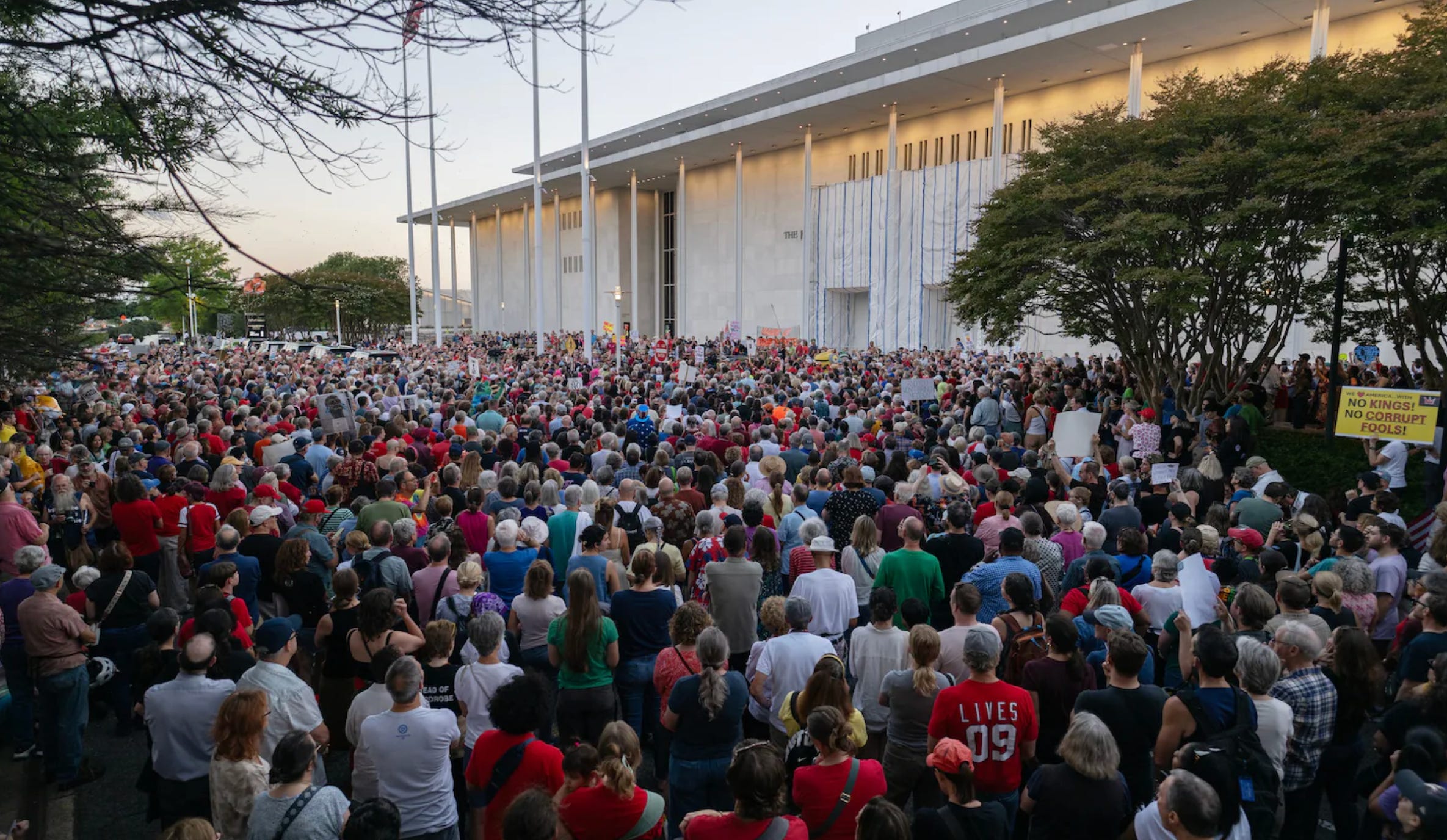
trumptyrannytracker.substack.com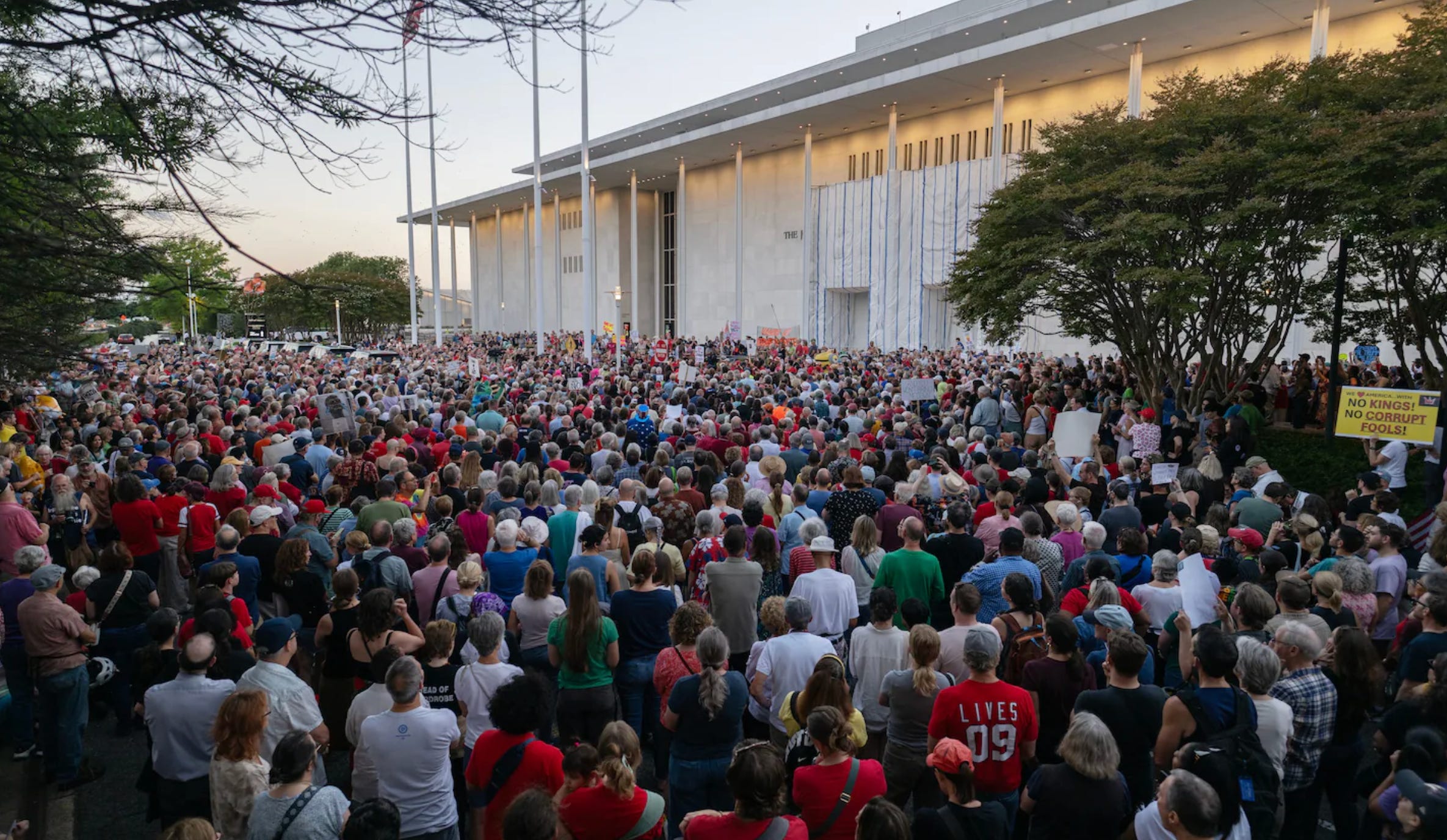 Demonstrators gather outside of the Kennedy Center in protest of Trump’s takeover and closure of the building. (Craig Hudson for The Washington Post)
Welcome to today’s Trump Tyranny Tracker…
Trump officials expanded their focus on the midterms, Trump blocked major news organizations from the White House, and Americans facing more increases in everyday costs are among the top stories this weekend.
This Weekend at a Glance
Election Pressure — DHS circulated a list of jurisdictions providing multilingual voting materials alongside DOJ guidance for prosecuting election crimes.
Press Suppression — Trump banned CNN, MS NOW and Politico from the White House over coverage he dislikes.
Affordability Crisis — Prices continue rising as mortgage rates near 7% and wages fail to keep pace with inflation.
What We Need to Pay Attention To
A DHS email raises new questions about the Trump administration’s election plans
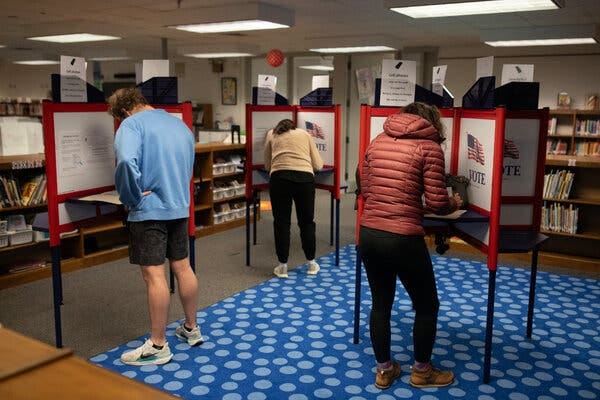
What Happened: An internal DHS email included a 78-page list of states and counties that provide voting materials in languages other than English, along with DOJ guidance on prosecuting election crimes. DHS is also putting more resources into investigating noncitizen voting ahead of the midterms.
Why It Matters: Federal law requires many states to provide voting materials in other languages. Using immigration or criminal enforcement against these communities is meant to intimidate eligible voters and discourage them from voting.
Source: NPR
Corruption
Secret contracts reveal undisclosed terms in Trump’s drug-pricing deals
What Happened: Confidential agreements with Pfizer and Eli Lilly reveal that Trump officials gave pharmaceutical companies tariff protections and other benefits, and encouraged them to raise drug prices overseas. Key details about pricing and what the companies received in return were redacted.
Source: The Washington Post
‘My Money:’ Trump’s Claim That He Controls MAGA Super PAC Draws Watchdog Complaint
What Happened: The Campaign Legal Center filed an FEC complaint accusing Trump of violating campaign finance law by directing the spending of MAGA Inc., a super PAC with more than $400 million. Trump has repeatedly called it “my money that I control” and said he decides how it is spent.
Why It Matters: Trump reportedly is violating campaign finance law while the agency responsible for enforcing it has been gutted and cannot investigate him. This is the lawlessness and corruption that happens when government watchdogs are purged.
Source: New York Times
Power Consolidation
It’s illegal for armed federal officers to be at polls. Lawsuits seek to ensure that
What Happened: Two lawsuits are seeking to block federal officers from polling places after Trump officials repeatedly left open the possibility of deploying them during the midterms. Federal law restricts armed federal personnel at polls, and the Voting Rights Act prohibits voter intimidation.
Why It Matters: Armed federal agents at polling places are meant to intimidate voters. Using federal law enforcement around voting is an authoritarian tactic designed to make people afraid to exercise their rights.
Source: NPR
State blames mail delivery issues for dozens of ballots from rural Alaska not counting in primary
What Happened: Seventy-five ballots cast in person in seven rural Alaska communities arrived too late to be counted in the August primary because of mail delays. Election officials are changing how the ballots are routed for the general election to prevent it from happening again.
Source: Associated Press
Weaponization of Institutions
White House budget chief pushes for scrutiny of NIH grants in Oval Office clash
What Happened: Russell Vought pushed Trump to create a White House commission to review NIH research grants and reject funding that conflicts with Trump’s priorities. Political appointees would have control over billions of dollars in biomedical research funding normally awarded through scientific peer review.
Why It Matters: Trump and Vought are using federal research funding to control what scientists can study. Scientists are being forced to conform to his political agenda or lose funding.
Source: The Washington Post
Attorney General Blanche’s appearances at political events blur Justice Department boundaries
What Happened: Attorney General Todd Blanche appeared at a Republican Senate campaign rally and the GOP midterm convention, where he praised Trump and promoted Republican positions on crime and the economy. DOJ says the appearances were in his personal capacity and were cleared by ethics officials.
Why It Matters: The attorney general controls the country’s most powerful federal law enforcement agency. Campaigning for a political party erases the separation between enforcing the law and partisan politics.
Source: Associated Press
Media Suppression & Authoritarian Tactics
CNN, MS NOW, Politico say their journalists have been denied access to the White House
What Happened: Trump banned CNN, MS NOW and Politico from the White House after accusing them of producing negative and “fake” coverage. Reporters from all three outlets were denied entry and had their press credentials disabled or confiscated.
Why It Matters: Banning news organizations from the White House because Trump does not like their coverage is a direct attack on press freedom and the First Amendment. Using government power to punish and intimidate the press is straight out of an authoritarian playbook.
Source: The Hill
Disney says Trump threats against reporters should prompt court to block FCC action
What Happened: Disney and ABC asked a federal court to block the FCC’s early review of eight ABC station licenses, arguing FCC Chair Brendan Carr is carrying out Trump’s demands against broadcasters whose coverage he dislikes. The FCC ordered the reviews one day after Trump called for ABC to fire Jimmy Kimmel, even though the licenses were not due for renewal until 2028.
Source: Reuters
Human & Civil Rights Abuses
ICE agent shoots and wounds man in Austin, Texas, officials say
What Happened: An ICE agent shot 28-year-old Venezuelan Wilber Rafael Garces Perez during a traffic stop in Austin, leaving him seriously wounded. Mayor Kirk Watson called for an independent investigation rather than allowing ICE to investigate the shooting itself.
Source: Politico
Trump officials sending undocumented children to Texas sparks fears of mass deportation
What Happened: More than 90% of unaccompanied children entering new immigration proceedings in August were sent to Texas shelters that operate without state licenses and where very few children have lawyers. Federal officials are looking for additional facilities that could hold up to 3,000 children.
Why It Matters: Trump officials are sending children to unlicensed facilities where most don’t have lawyers while ICE is preparing to detain thousands more. Children are being stripped of basic protections and put through a detention system that will cause lasting psychological trauma.
Source: The Guardian
US appeals court rejects Trump policy allowing swift deportations to third countries
What Happened: A federal appeals court upheld a ruling that Trump’s policy allowing migrants to be rapidly deported to third countries without enough time to raise safety concerns is unlawful. More than 25,000 migrants have been sent to at least 29 countries under Trump’s third-country deportation agreements.
Source: Reuters
Men deported from US bound and beaten in Equatorial Guinea detention hotel, lawyers say
What Happened: Two men deported from the U.S. to Equatorial Guinea were bound, hooded, beaten and taken to prison after speaking about conditions at the hotel where U.S. deportees are being held, according to witnesses and human rights lawyers. About 30 other deportees are still being held there, many without legal status or ties to the country.
Why It Matters: The U.S. sent people to a country known for torture and arbitrary detention. Now people deported by the U.S. are being bound, beaten, and imprisoned there.
Source: The Guardian
Government Disruption
Hill investigates after F-35 parts diverted to Hong Kong
What Happened: F-35 components being shipped from Australia to the U.S. for repairs were diverted to Hong Kong, and some remain missing. The shipment included a cockpit canopy containing stealth technology. Congress and the Pentagon are investigating what happened.
Why It Matters: This is a surreal national security failure. Sensitive F-35 technology was diverted to Hong Kong, and some parts disappeared. The Pentagon still does not know who has the missing components or whether China got access to the technology.
Source: Politico
US military had close call after using AI for false intelligence report, sources say
What Happened: The U.S. military prepared to intercept and potentially board a Chinese ship after an AI-assisted intelligence report falsely identified its cargo as components for a nuclear weapons program. Military aircraft were already in the air when officials discovered the intelligence was false and stopped the operation.
Why It Matters: The same AI Trump sees no need to regulate produced false intelligence that nearly got the U.S. military into war with China. Aircraft were already in the air and armed troops were preparing to board. Nothing to see here.
Source: CNN
US judge strikes down Education Department’s anti-DEI grant policy
What Happened: A federal judge struck down the Education Department policy used to cancel more than 90% of grants in two teacher training programs, finding that it provided no clear standard for what counted as DEI and was “arbitrary and capricious.” More than $600 million in grants had been canceled under the policy.
Source: Reuters
Judge rules EPA illegally terminated $7 billion solar program intended to help poorer Americans
What Happened: A federal judge ruled that Trump’s EPA illegally terminated the $7 billion Solar for All program, which was designed to bring solar power to more than 900,000 lower-income households. The judge found that EPA did not have the authority to cancel grants Congress had already funded.
Source: Associated Press
Census Bureau Directs Staff to Keep Quiet During Comment Period for Controversial New Rule
What Happened: Census Bureau leadership ordered employees to halt outside events related to the 2030 Census during the public comment period for a proposed rule that would exclude many noncitizens from the population count and eliminate race and ethnicity questions.
Source: Talking Points Memo
Imperial & Geopolitical Watch
Trump Ramps Up Bid to Dismantle International Criminal Court
What Happened: Trump officials are preparing sanctions against the International Criminal Court that would block most transactions with the court and cut it off from U.S. dollars and much of the global financial system. Trump has already sanctioned individual ICC judges and prosecutors.
Why It Matters: Trump is trying to cripple the court responsible for prosecuting war crimes, genocide, and crimes against humanity. That includes cases involving Russia’s genocidal invasion of Ukraine and the arrest warrant for Putin.
Source: Wall Street Journal
U.S. Probes Iran Link to Cyberattacks on Texas-Bound Energy Tankers
What Happened: U.S. officials are investigating whether Iran was behind cyberattacks on two energy tankers traveling through the Strait of Gibraltar toward Texas. The Coast Guard and FBI boarded both vessels after they reached the Gulf of Mexico to investigate and secure their systems.
Source: Wall Street Journal
What to know after a week of Houthi attacks that threaten Saudi oil and have rattled world markets
What Happened: Iran-backed Houthis seized the strategic Yemeni port of Mokha and nearby Red Sea islands while attacking Saudi oil infrastructure and shipping. The fighting has displaced roughly 125,000 Yemenis and added pressure to global fuel prices.
Source: Associated Press
Far-Right & Russian Influence Watch
Russia Aims to Inject Chaos Into Elections, U.S. Intelligence Finds
What Happened: U.S. intelligence found that the Kremlin authorized a new online influence campaign targeting the November midterms, using covert disinformation to deepen divisions and undermine confidence in the election. Russia’s AI-generated videos are also targeting candidates in battleground Senate races.
Source: New York Times
Economic News
Farmer who voted for Trump talks about impact of high costs of Iran war, tariffs: “We’re all just in survival mode”
What Happened: North Carolina farmer Matt Bell says his diesel costs have nearly doubled from last year while prices on fertilizer, equipment, seeds and other expenses have also increased. Bell, who voted for Trump, says some farmers are considering leaving the industry because they can no longer afford the rising costs.
Why It Matters: Higher fuel, fertilizer and equipment costs are making it more expensive to produce food. Those higher costs will mean higher prices for Americans at the grocery store.
Source: CBS News
Weeks Before the Midterms, Almost Everything Is Getting More Expensive
What Happened: Consumer prices are up 3.4% from a year ago, gasoline is near its highest level since 2022, mortgage rates are approaching 7%, and wages have failed to keep pace with inflation for five straight months. The Federal Reserve also raised interest rates for the first time in three years, adding to borrowing costs.
Source: Wall Street Journal
Resistance
Check out 50501 for local and nationwide events…
Source: 50501
Protesters form human chain at Kennedy Center amid Trump’s threats to demolish it
What Happened: Thousands protested outside the Kennedy Center after Trump threatened to close or “rip down” the center unless he gets recognition for its renovation. A federal judge has blocked Trump’s name from being added to the building and ordered 30 days’ notice before any demolition.
Source: ABC News
By the Numbers
$400+ million — Money controlled by MAGA Inc., the super PAC Trump says is “my money”
90%+ — Unaccompanied children entering new immigration proceedings who were sent to Texas shelters in August
25,000+ — Migrants sent to at least 29 third countries under Trump’s deportation agreements
$7 billion — Solar for All program Trump’s EPA illegally terminated
$600+ million — Teacher training grants canceled under the Education Department’s anti-DEI policy
3.4% — Increase in consumer prices over the past year
Nearly 7% — Current mortgage rates
5 months — Wages have failed to keep pace with inflation
What to Watch Next
Trump is expanding control in the midterms — What other federal agencies will be pulled into election enforcement before November?
Trump is banning news organizations from the White House — Will more outlets lose access over coverage he does not like?
Russia has launched another operation targeting the midterms — What other Russian influence operations will U.S. intelligence uncover?
Prices are rising while wages fall behind — How much more will Americans pay as higher fuel costs, tariffs, and interest rates spread through the economy?
Key Takeaways
Election Control — DHS is putting more resources into election enforcement as Trump officials refuse to rule out sending federal agents to polling places.
Media Suppression — Trump banned three major news organizations from the White House while the FCC faces accusations that it is using licensing power against broadcasters he dislikes.
Government Weaponization — Trump officials are pushing political control over scientific funding while the attorney general campaigns for Republicans.
Immigration Cruelty — Children are being sent to unlicensed facilities with little access to lawyers while thousands of migrants have been deported to third countries.
Affordability Crisis — Prices are up, mortgage rates are nearing 7%, wages have fallen behind inflation for five straight months, and farmers are warning that rising costs are becoming impossible to absorb.
Call to Action
Document Everything: Document purges, corruption, and power grabs. Share credible information with journalists, watchdogs, and legal experts. Silence enables authoritarianism—see something, say something.
Defend Press Freedom: Support independent journalism by subscribing to and sharing reporting that challenges Trump’s power grab.
Mobilize for Action: Organize or join legal efforts and resistance movements to protect democracy and human and civil rights.
Support Whistleblowers: Encourage legal defense funds for government workers facing retaliation for exposing corruption.
Follow my work on YouTube → Subscribe to Unmasking Russia
https://youtube.com/@unmaskingrussia
Thanks for reading the Trump Tyranny Tracker. Stay tuned for more updates.
-
Has Burnham proved he can handle Trump? - The Latest
www.theguardian.comAndy Burnham has navigated his way through a first high-stakes meeting with Donald Trump at the UN general assembly in New York. The prime minister’s aides were delighted with how the meeting went, as Trump praised the US-UK relationship and described Burnham as a ‘natural businessman’. The anticipated sticking points – the Chagos Islands, West Bank settlement sanctions and Ireland – appear not to have derailed the talks nor cast a shadow over the future relationship. Lucy Hough speaks to policy editor Kiran Stacey – watch on YouTube
Continue reading... -
What The Trump Administration Can Do Right Now To Lower Gas Prices
Saturday night, Ukraine attacked the Kapotnya refinery in Moscow. At a time when the supply chain is already stretched, the news is extremely unwelcome. Here are some things we can do to mitigate increased energy costs. If you have bothered to fill up a diesel tank lately you cannot help but notice that things have gotten really expensive. Diesel is selling at all-time highs, with the national average about $6.30 per gallon. California is even worse, averaging $8.00 per gallon. Ships, trucks, and trains rely heavily on diesel and if it gets more expensive, nearly everything else does.www.allsides.com -
Trump Backs Temporary Diesel Export Ban as Fuel Costs Ripple Through Economy
With diesel regularly notching up record highs, President Donald Trump has called for a temporary ban on exports of the fuel from the United States. He was reminded that several Republican senators had called for a diesel export ban at the U.N. during a joint press conference with Ukraine's President Volodymyr Zelenskyy. "Well, I've called for that too. I've said, let's not send out the diesel," Trump said on Sept. 22...www.allsides.com -
Trump’s UN speech was delusional and dangerous | Kenneth Roth
www.theguardian.comIt is sad and dangerous that at such a perilous moment, the United States is saddled with a president like Trump
Donald Trump’s speech on Tuesday to the United Nations general assembly was an object lesson in his lawless rule and remarkable capacity for self-delusion. Disregarding the UN charter’s emphasis on the peaceful resolution of disputes, he doubled down on his violent unilateralism while denigrating the global issues that the UN is designed to address.
For many, the headline remark was his musing about whether to “annihilate the Islamic Republic” of Iran. “Do I drive them into hell with no chance of survival and no hope of future greatness or generations?”
Kenneth Roth is a Guardian US columnist, a senior fellow at Yale University and a former executive director of Human Rights Watch. He is the author of Righting Wrongs: Three Decades on the Front Lines Battling Abusive Governments
Continue reading... -
America Must Win Back Its Global Standing
From this day forward, a new vision will govern our land," President Donald Trump declared in his inaugural address in January 2017. "From this moment on, it's going to be America First." An insular, populist nationalism, coupled with an antipathy toward globalist ideas and institutions, became the central theme and the clarion call of both his terms in the White House. President Trump has spent considerable energy lambasting the United Nations, an institution the United States helped create 80 years ago and has shaped ever since. He has derided it as an "unelected, unaccountable, global bureaucracy," and little more than "a talking shop."...www.allsides.com -
DoJ defends Trump media ban: ‘Access to the White House is a privilege’
www.theguardian.comJustice department cites national security to support ban on CNN, Politico and MS Now as trio file lawsuit in response
The US Department of Justice has defended Donald Trump’s decision to ban three new organizations from the White House, arguing in a court filing that access to the grounds was a “privilege” and citing national security concerns.
Lawyers for the US president doubled down on Trump’s claims about CNN, Politico and MS Now reporting “Fake News”, and insisted the ban did not violate the first amendment because “access to the White House is a privilege, not a right”.
Continue reading... -
Delcy Rodríguez poses with Trump in New York as Maduro languishes in jail nearby
www.theguardian.comVenezuela’s interim president hails ‘historic meeting’ and does not say whether she will visit snatched predecessor
Venezuela’s interim president, Delcy Rodríguez, has celebrated a “historic” meeting with Donald Trump in New York, posing for a smiley photo with the US president, less than nine months after he ordered the abduction of her boss, Nicolás Maduro.
The former foes met at a five-star hotel a few blocks from Trump Tower in Manhattan late on Tuesday on the sidelines of the UN general assembly. The hotel is about 7 miles from the Brooklyn prison where Maduro has been held since he was snatched during a special forces raid on Caracas in January.
Continue reading... -
AI, trade, Taiwan and climate: what will and won’t be on agenda at Trump-Xi summit
www.theguardian.comTwo leaders could discuss tech safety issues and US-China trade ties but may skip over climate emergency
The leaders of the world’s two superpowers are meeting in the US this week. It is Xi Jinping’s first state visit to the US in more than a decade. The last time the Chinese president was hosted in Washington (by Barack Obama in 2015), the issues on the agenda included cybercrime, technology, the climate crisis and human rights. The star of the day was Ne-Yo, who serenaded Xi and his wife, Peng Liyuan, with Peng reportedly singing along at the state dinner.
This time, Xi is meeting Donald Trump, who has overhauled the world order and recalibrated the US-China relationship. Trump is contending with a China that is in a much stronger position than it was 10 years ago. Here are five things to look out for at this week’s US-China summit.
Continue reading... -
Trump Set to Sign Deal on U.S. Presence in Greenland
The United States was set on Tuesday to sign an agreement about Greenland, the Arctic island that has been one of President Trump's obsessions. Mr. Trump said last week that after months of negotiations between the United States, Denmark and Greenland, a semiautonomous Danish territory, his administration had reached a deal to expand the U.S. security presence on the island.www.allsides.com -
U.S. to build two military bases on Greenland as part of deal
U.S President Donald Trump has confirmed that the United States will build two military bases on Greenland as part of the deal he signed Tuesday with the leaders of the Arctic island and Denmark. During a signing ceremony at the United Nations, Mr. Trump had nothing but praise for Greenland and his two counterparts − Prime Minister Jens-Frederik Nielsen of Greenland and Danish Prime Minister Mette Frederiksen.www.allsides.com -
Trump inks landmark Greenland deal at UNGA after months of tensions
The U.S., Denmark and Greenland formally signed President Donald Trump's new Greenland security agreement on the sidelines of the U.N. General Assembly Tuesday, cementing permanent U.S. military rights on the strategically vital Arctic island after months of negotiations over Trump's push for greater American control. Trump, Prime Minister Mette Frederiksen of Denmark and Prime Minister Jens-Frederick Nielsen of Greenland met Tuesday morning for a trilateral signing ceremony, where the three parties praised each other's defense cooperation over the past 75 years, through World War II and the Cold War.www.allsides.com -
Burnham survived his first Trump meeting. His nice hair may have had something to do with it | Emma Brockes
www.theguardian.comThe PM’s shiny newness could explain the easy ride he got this time. But who would dare predict the ever-shifting weather in the president’s head?
Watching footage of Andy Burnham at the UN general assembly on Tuesday was like watching your child from behind a tree in the playground. Are they making friends? How normal do they seem relative to the average? How will they react when they come into contact with that hulking great child who seems to be running things? Burnham’s first face-to-face with Donald Trump was billed as a knife-edge encounter that, due to the latter’s capriciousness, could go either way. In the event, it was drama-free, leaving observers to ask: was it Burnham’s brilliance or simply the weather in Trump’s head?
To viewers at home, Burnham’s performance at the press conference looked like that of a man who had worked out his best approach was to go for the sheepish, slightly cheeky air of the junior partner. Burnham is 24 years younger than Trump, on top of everything else – which can afford a certain licence to the less powerful person in any exchange. At the last minute, the meeting had been moved behind closed doors and afterwards, in a windowless room at the UN, the two men appeared side by side, mirroring each other’s body language: just two guys, legs akimbo, shoulders hunched, hanging on a bench in the locker room.
Emma Brockes is a Guardian columnist
Continue reading... -
Trump lawyers defend president banning journalists from White House ahead of court hearing – live
www.theguardian.comTrump lawyers say White House access is ‘a privilege, not a right’; CNN, Politico and MS Now to present case in court after president banned outlets from White House grounds
Rubio also briefly addressed Trump’s meeting with Delcy Rodriguez, the interim Venezuelan president, who last night posed for a friendly photo with Trump at a Manhattan hotel only miles from where her predecessor, Nicolás Maduro, was incarcerated.
“It was a short meeting, but it was a very important meeting,” Rubio said.
Continue reading... -
Stung by Trump, machinists union campaigns for affordability in midterms
www.theguardian.comOne of the largest labor unions in the US targets eight battleground states in ‘workers v billionaires’ campaign
The International Association of Machinists and Aerospace Workers (IAM), one of the largest labor unions in the US, has launched a “workers v billionaires” political campaign tour targeting members in eight battleground states and encouraging them to support pro-worker candidates in the midterms.
IAM has nearly 700,000 active and retired members in North America, covering workers at corporations that include Boeing, Lockheed Martin, United Airlines and Harley-Davidson. The union is targeting members and voters in Maine, Pennsylvania, Michigan, Texas, Ohio, Georgia, Arizona, Nevada and Illinois.
Continue reading... -
Iran denies dropping preconditions amid ‘very productive’ three-hour UN talks in New York
www.theguardian.comTrump says further talks possible as barrel of Brent crude falls to below $100 for first time in two weeks
Iran has pushed back on claims that it dropped former preconditions for reopening the strait of Hormuz in surprise talks held in New York under the mediation of Qatar between Tehran’s foreign minister, Abbas Araghchi, and Donald Trump’s envoys Steve Witkoff and Jared Kushner.
Trump said the three-hour talks held in a room at the UN headquarters had gone very well and been very productive. He suggested further talks were possible imminently, which led to the price of a barrel of Brent crude to fall to below $100 (£75) for the first time in two weeks. Witkoff said the talks had been “encouraging, constructive and successful”.
Continue reading... -
What the Senate Might Look Like
emptywheel.net
John Curtis, the junior Senator from Utah, sent a letter to Chuck Grassley yesterday asking him to hold a hearing on familial influence peddling.I therefore respectfully request that the Senate Judiciary Committee launch an investigation into the use of presidential family relationships for private financial benefit, preferential treatment, or access by domestic and foreign interests. As part of that investigation, I urge the Committee to subpoena Donald Trump Jr. and Hunter Biden to testify regarding their past business dealings, relationships with foreign individuals and entities, gifts, or other benefits they have received, and any instances in which their relationship to the President was invoked or understood to provide value.
The purpose of such an inquiry should be straightforward: establish the facts, determine whether existing ethics, disclosure, or anti-corruption laws apply, and identify reforms necessary to prevent the presidency from becoming a vehicle for private enrichment by those closest to it.
Curtis named Hunter Biden in the letter, but the real purpose would be to review Don Jr’s corruption.
More recently, questions have arisen about the relationships of President Trump’s eldest son, Donald Trump Jr., with foreign business figures and the acceptance of significant gifts. These include a lavish wedding afterparty, on a private island, provided by Russian oligarch Umar Kremlev, who reportedly traveled to China as part of a delegation accompanying Vladimir Putin shortly before giving the gift.5
These concerns are compounded by Donald Trump Jr.’s active promotion of family-backed cryptocurrency ventures,6 his continued pursuit of international real estate deals involving direct meetings with foreign heads of state, and his reported investments in defense contracting.7 This pattern extends to his significant financial and advisory ties to prediction-market platforms8 that depend on favorable federal regulatory decisions being considered by the Commodity Futures Trading Commission.
These reports raise legitimate questions about foreign access to members of a sitting president’s family and whether such relationships can create actual or perceived expectations of favorable treatment. They also may create expectations of a returned favor that would not be in the best interests of the American people or our allies, and could even create national security vulnerabilities.9
It was a cautious letter — a performative bid to make a request of Grassley rather than doing something himself in the Foreign Affairs Committee, on which he is a member. But it’s one of a number of things that lead me to believe Curtis might be persuadable for certain kinds of votes in a new Senate, if Democrats win the majority (and I think Curtis is one of the Republicans likely to vote to convict Whiskey Pete Hegseth when impeachment gets to the Senate).
That, in turn, led me to try to envision what the Senate will look like, especially if Dems win a majority, particularly given the certainty the Senate will get at least some impeachments sent their way.
Democrats are expected to start with 42 seats plus Fetterman (who will be a nuisance and who probably might flip if he made the difference in the Senate). If they win six or seven of the growing number of swing races, they will get the majority.
Once all is said and done, the number of batshit Republicans will be 25 or larger. If Dems get a majority, the big question will be what the remaining Republicans will do.
Update: This Politico review of the state of the race quotes a GOP pollster complaining, “The map is hilariously big right now,”
Update: Semafor describes issues — in addition to Curtis’ subpoena request and the war, Roger Wicker criticized Trump’s welcome for Xi Jiping — on which Republicans are trying to distance themselves from Trump.
Dems
- Angela Alsobrooks D-MD]
- Tammy Baldwin [D-WI]
- Michael Bennet [D-CO]
- Richard Blumenthal [D-CT]
- Lisa Blunt Rochester [D-DE]
- Maria Cantwell [D-WA]
- Catherine Cortez Masto [D-NV]
- Tammy Duckworth [D-IL]
- Ruben Gallego [D-AZ]
- Kirsten Gillibrand [D-NY]
- Maggie Hassan [D-NH]
- Martin Heinrich [D-NM]
- Mazie Hirono [D-HI]
- Tim Kaine [D-VA]
- Mark Kelly [D-AZ]
- Andy Kim [D-NJ]
- Angus King [I-ME]
- Christopher Murphy [D-CT]
- Patty Murray [D-WA] Appropriations
- Alex Padilla [D-CA]
- Jack Reed [D-RI] Armed Services
- Jacky Rosen [D-NV]
- Bernie Sanders [I-VT] HELP
- Brian Schatz [D-HI] Most likely to replace Schumer if a challenge is made
- Adam Schiff [D-CA]
- Chuck Schumer [D-NY] Leader
- Elissa Slotkin [D-MI]
- Chris Van Hollen [D-MD]
- Raphael Warnock [D-GA]
- Elizabeth Warren [D-MA]
- Peter Welch [D-VT]
- Sheldon Whitehouse [D-RI] Likely Judiciary
- Ron Wyden [D-OR]
Ugh
John Fetterman [D-PA]
Safe Dems
- Cory Booker [D-NJ]
- Chris Coons [D-DE]
- Juliana Stratton [D-IL] Don Tracy [R-IL] (Replaces Durbin)
- John Hickenlooper [D-CO]
- Ben Ray Luján [D-NM]
- Ed Markey [D-MA]
- Jeff Merkley [D-OR]
- Mark Warner [D-VA] Intelligence
Swing
As Trump drags his party down, this list is getting longer — for example, with two polls showing the megachurch minister challenging Roger Marshall in Kansas leading in the polls.
Democrats need to win six (or seven, given Fetterman’s unreliability) of these to win a majority.
- Jon Ossoff [D-GA] Mike Collins [Nazi-GA]
- Roy Cooper [D-NC] Michael Whatley [R-Trump]
- Chris Pappas [D-NH] John Sununu [R-NH]
- Peggy Flanagan [D-MN] Michele Tafoya [R-somewhere else]
- Mary Peltola [D-AK] Dan Sullivan [R-AK]
- James Talarico [D-TX] Ken Paxton [R-TX] (Replaces Cornyn)
- Abdul El-Sayed [D-MI] Mike Rogers [R-FL]
- Sherrod Brown [D-OH] Jon Husted [R-OH
- Troy Jackson [D-ME] Susan Collins [R-ME]
- Josh Turek [D-IA] Ashley Hinson [R-IA] (Replaces Ernst)
- Roger Marshall [R-KS] Adam Hamilton [D-KS]
- Pete Ricketts [R-NE] Dan Osborn [I-NE]
- Ashley Moody [R-FL] Angie Nixon [D-FL] (corrected)
- Darline Graham Nordone [R-SC] Annie Andrews [D-SC]
Who Knows
These are all considered safe GOP seats, but for one reason or another (chatter about closer poll numbers than they should be, a possible Callais swing, especially in MS), I’ve put them here. In a crazy year, one or another of these could turn into a surprise, and it looks to be a crazy year.
- Mike Rounds [R-SD] Brian Bengs [I-ND]
- Julia Letlow [R-LA] Jamie Davis
- Tom Cotton [R-AR] Hallie Shoffner Intelligence
- Kurt Alme [R-MT] Seth Bodnar [I-MT] Alani Bankhead [D-MT]
- Cindy Hyde-Smith [R-MS] Scott Colom [D-MS]
- Andy Barr [R-KY] Charles Booker [D-KY] (Replaces McConnell)
- James Risch [R-ID] Todd Achilles [I-ID]
Safe GOP
These are safe GOP seats about which I’ve seen no chatter to question that.
- Shelley Moore Capito [R-WV]
- Kevin Hern (OK) N’Kiyla Thomas (replaces Markwayne Mullin)
- Harriet Hageman [R-WY] James Byrd (replaces Cynthia Lummis)
- Bill Hagerty [R-TN]
- Barry Moore [R-AL] Everett Wess [D-AL] (replaces Tuberville)
Governor Gone
Both Blackburn and Klobuchar are expected to win their gubernatorial races. Both would appoint their successor.
- Marsha Blackburn [R-TN]
- Amy Klobuchar [D-MN]
Gettable
I consider gettable Senators those who, at least on some issues (war and civil liberties for Rand Paul, anti-trust for Josh Hawley), sometimes break with their party.
- John Curtis [R-UT]
- Josh Hawley [R-MO]
- John Neely Kennedy [R-LA]
- Lisa Murkowski [R-AK]
- Rand Paul [R-KY] Homeland Security
Workable
By “workable,” I mean those Senators who take their job seriously (except in the case of Jim Justice who rarely shows up to work), and so might cooperate with Democrats.
- Katie Britt [R-AL]
- Kevin Cramer [R-ND]
- Deb Fischer [R-NE]
- John Hoeven [R-ND]
- Jim Justice [R-WV]
- James Lankford [R-OK]
- Jerry Moran [R-KS]
- John Thune [R-SD] Leader
- Roger Wicker [R-MS] Armed Services
- Todd Young [R-IN]
Nutjobs
These are returning Senators who are stark-raving nutjobs. A number of the likely incoming Senators, like Hagerman and whoever Blackburn appoints to replace herself, will join this list. With other expected GOP wins and people like Hawley who are normally nutjobs, this list will end up being over 25 Senators.
- Jim Banks [R-IN]
- John Barrasso [R-WY]
- John Boozman [R-AR]
- Ted Budd [R-NC]
- Mike Crapo [R-ID]
- Ted Cruz [R-TX] Running for President
- Chuck Grassley [R-IA]
- Ron Johnson [R-WI]
- Mike Lee [R-UT] Judiciary
- Dave McCormick [R-PA]
- Bernie Moreno [R-OH]
- Eric Schmitt [R-MO]
- Rick Scott [R-FL]
- Tim Scott [R-SC]
- Tim Sheehy [R-MT]
The post What the Senate Might Look Like appeared first on emptywheel.
-
Republican jitters grow as unpopular Trump fuels midterm ‘bloodbath’ fears
www.theguardian.comIran war, rising prices and president’s low ratings give Democrats advantage, but Republicans have poured cash into key races – could it be decisive?
Donald Trump pulled out all the stops at the Republican party’s midterm convention two weeks ago. In speeches aimed at the voters who will soon decide whether to keep Republicans in control of Congress for the final phase of his presidency, the president dangled $5,000 checks, and warned the United States would turn into a “communist country” if Democrats are elected.
The unprecedented political gathering amounted to a hail-mary pass at retaining control of Congress, which history indicated Trump’s Republican allies had always been likely to lose in the 3 November vote. Two weeks later, with election administrators in several states already sending out mail ballots, there is no indication the gambit has worked.
Continue reading... -
Gretchen Carlson on press under Trump: ‘It’s my hope journalists will start speaking up’
www.theguardian.comIn an interview before the White House’s media ban, Carlson called on reporters to push back against Trump’s misogyny
Donald Trump has achieved something rarely seen in Washington: uniting rival television networks against him. When he banned CNN and MS Now – along with Politico – from the White House, their competitors suspended shared coverage of the US president’s events.
Gretchen Carlson, a journalist, author and former Fox News host, hopes this will not be the only example of solidarity from a White House press corps facing what she describes as an “outright onslaught” from the administration.
Continue reading... -
Wednesday briefing: Can Burnham seek a different path to Trump’s world order?
www.theguardian.comIn today’s newsletter: The PM’s first face‑to‑face with the US president marks a fragile reset
Good morning. In the early hours of Tuesday a plane carrying Andy Burnham, a handful of UK ministers, an excited group of British political journalists, and Burnham’s wife, Marie France, landed at a New York airport for one of Burnham’s first major outings as prime minister: a face-to-face meeting with Donald Trump.
Considering the president once described Burnham as the mayor of “a town,” and the prime minister once said Trump wouldn’t be welcome in said town (Manchester), the meeting yesterday afternoon went remarkably well.
UN general assembly | Donald Trump has called on nations to unite to isolate Tehran and bring down global energy prices, as he gave a bellicose defence of his administration’s foreign policy and decision to strike Iran.
The far right | Charities have condemned footage of a far-right activist using a blade to slash an inflatable dinghy in the Channel while a rescue worker was onboard, in a further escalation of organised anti-immigration protest.
UK news | Children as young as 13 in the UK have been referred to a specialist clinic for a “devastating” bladder condition linked to sustained use of ketamine.
West Bank | British banks and financial institutions are receiving warnings from MPs that they should not invest in Israel’s E1 settlement project.
UK politics | Andy Burnham has opened the door to fighting the next election on the UK rejoining the EU, but said his immediate priority was continuing to rebuild bridges with European allies.
Continue reading... -
Burnham navigates diplomatic rapids in first Trump meeting, but turbulent waters lie ahead
www.theguardian.comBritish aides express relief, as the prime minister’s team say the meeting was at the ‘top end of their expectations’
On the flight out to New York this week, one of Andy Burnham’s senior aides warned him that meeting Donald Trump would be the political equivalent of white water rafting.
While there is a well-known playbook the US president deploys when he first meets other world leaders, he remains a deeply unpredictable figure and any dealings with him can leave you crashing into the rocks.
Continue reading... -
Washington Policy Review: September 22, 2026
washingtonpolicyreview.substack.comToday’s Report
1. Overview
2. White House News
3. Truth Social Posts
4. Government Department News
5. Selected Democratic Officials
6. AI & Tech Company News
7. Congressional Watch
1. Overview
The White House announced President Donald J. Trump signed a security agreement with Denmark and Greenland to modernize the Pituffik Space Base and restrict non-partner control of sensitive sectors. Separately, First Lady Melania Trump convened the Fostering the Future Together coalition at the United Nations, announcing new technology partnerships with companies including Amazon, Google, and Intel. President Trump also addressed the 81st United Nations General Assembly, stating American strength is “back” and pledging to defend sovereignty.
On Truth Social, President Trump highlighted a report alleging an agent in the Jack Smith case was unaware that subpoenaed phone data belonged to Congress. Regarding national defense, he asserted the United States is not low on munitions and is increasing production. Additionally, Trump expressed support for Johnny Damon, describing him as a “total winner.”
The State Department announced Under Secretary of State Allison Hooker pledged $31 million in aid to Nepal for flood recovery. The Department also asserted that leaders of warring factions in Sudan are ineligible to govern and announced intentions to “raise the cost of continued conflict.” Secretary of State Marco Rubio met with Shield of the Americas leaders to discuss countering “narco-terrorist” groups. The Department of War announced ten contract awards, including a $400 million cyber electromagnetic activities contract for Trideum Corp. HHS Secretary Robert F. Kennedy, Jr. announced an EPA partnership for glyphosate review and $3.5 million in IHS tribal nutrition grants. Deputy Secretary of the Treasury Francis Brooke stated the administration has repurchased nearly $500 billion in securities to support market resilience.
Governor Gavin Newsom launched California’s participation in Climate Week NYC and announced $886 million in utility bill relief. He also signed legislation regarding data center regulations. Governor Gretchen Whitmer announced $110.6 million in state tax capture support for the Arbor South mixed-use project in Ann Arbor. Governor Wes Moore announced SBA loan approval for Anne Arundel County businesses, outlined an AI protection framework, and attended the opening of a Microsoft Discovery Center. Governor JB Pritzker signed Executive Order 2026-07 to create the Illinois AI Cabinet to assess state-level risks.
OpenAI published its priorities for third-party AI safety assessments, stating these evaluations are “a critical part of balancing” the responsibilities of deployment. Anthropic released its Claude Opus 5.5 model, which the company claims performs at the level of Claude Fable 5.1 while costing 40% less. The company stated access to this model for biology and cybersecurity research is restricted to vetted organizations.
According to Congressional Watch records for September 21, 2026, the Senate was not in session. The House of Representatives held a pro forma session where members introduced 20 bills and 7 resolutions. The Speaker announced the certification of a criminal referral for Leon D. Black for his refusal to comply with a congressional subpoena.
2. White House News
President Trump Inks Historic Arctic Security Agreement
President Donald J. Trump signed a security agreement with Denmark and Greenland, which the White House describes as an “unprecedented agreement” granting the U.S. lasting security control. The pact guarantees permanent basing rights and bars adversaries from establishing a military presence or sensitive investments without approval. Proponents, including various lawmakers and commentators, characterize the deal as a “decisive victory” and “historic,” noting it strengthens NATO’s Arctic position. Conversely, officials emphasized the agreement respects the sovereignty of Denmark and the self-determination of the Greenlandic people.
Reference: Original White House release
First Lady Melania Trump Unveils New Fostering the Future Together Technology Alliances, International Events, and Membership Expansion
First Lady Melania Trump reconvened the Fostering the Future Together coalition during the 81st United Nations General Assembly, expanding the initiative to fifty-seven nations. The White House announced new private-sector technology partnerships with Adobe, Amazon, Intel, Starlink, Google, and Zoom. Stating, “the future of our world will be determined by what we do for our children today,” the First Lady unveiled 2026 events, including a G20 meeting in Miami. She urged leaders to empower youth to “bend the boundaries of imagination” through technology and education.
Reference: Original White House release
President Trump at the United Nations: “While Others Have Talked, I Have Acted”
At the 81st session of the United Nations General Assembly, President Donald J. Trump stated that “American strength and resolve is back.” The White House reported that President Trump declared America is now “stronger than ever” under his leadership. He pledged to utilize this strength to “confront our enemies, protect our interests, forbid communism, reject global control, and always defend our sovereignty.”
Reference: Original White House release
AGREEMENT BETWEEN THE GOVERNMENT OF THE UNITED STATES OF AMERICA AND THE GOVERNMENT OF THE KINGDOM OF DENMARK TOGETHER WITH THE GOVERNMENT OF GREENLAND
The United States, Denmark, and Greenland signed an agreement to amend their 1951 Defense Agreement. The White House states this pact facilitates necessary measures to “defend the North Atlantic Treaty area, Greenland, and the American continent,” including modernizing Pituffik Space Base and establishing new defense areas. The Parties support increased NATO engagement in the Arctic to address security challenges. Furthermore, the agreement restricts non-NATO, non-EU, or non-partner states from controlling sensitive sectors and mandates prioritizing Greenlandic sources for defense-related contracts to ensure economic benefits.
Reference: Original White House release
3. Truth Social Posts
Trump highlighted a report stating that an agent in the Jack Smith case alleged he was kept in the dark regarding the fact that subpoenaed phone data belonged to Congress.
Regarding national defense, Trump asserted that “cowards and traitors” would like to claim the United States is low on munitions, maintaining that “it’s not true.” He stated that the country has more munitions than it could ever use and is currently increasing production to “levels we have never seen before.”
In a separate post, Trump thanked Johnny Damon, calling him a “total winner,” in response to a report that the former MLB player refused to apologize for his stated opinion on the president.
Reference: https://truthsocial.com/@realDonaldTrump
4. Government Department News
State Department (state.gov)
United States to Provide Additional $31 Million to Support Nepal’s Flood Recovery Efforts
Under Secretary of State for Political Affairs Allison Hooker announced $31 million in additional U.S. assistance for Nepal following devastating floods. The package includes $10 million for U.S.-sourced bridges, $8 million for humanitarian relief, and $13 million in U.S.-made drones for disaster recovery. This funding increases total U.S. aid for Nepal’s flood response to over $36 million. The Department stated it will continue collaborating with the Nepalese government to identify further assistance needs.
Efforts to Achieve Peace in Sudan
The United States stated that President Trump is “committed to ending the world’s worst humanitarian crisis.” The Department asserted that the Sudanese Armed Forces and Rapid Support Forces have failed to commit to a truce, instead escalating combat operations. The U.S. announced its intention to “raise the cost of continued conflict” for belligerents and their supporters. The Department declared that current leaders of the warring factions do not represent legitimate constitutional governance and are “ineligible to govern the country.”
Secretary of State Marco Rubio addressed the Shield of the Americas initiative, describing it as an alliance of democratic leaders focused on countering transnational “narco-terrorist” groups. Secretary Rubio characterized these groups as sophisticated entities that often rival states in financial and military resources. He stated the alliance aims to foster cooperation on economic and diplomatic fronts, allowing member nations to act in unison. Secretary Rubio noted that two additional members have joined the alliance since its previous meeting.
Joint Statement on Defending Hemispheric Sovereignty
Participating nations of the Shield of the Americas announced a joint framework based on three pillars: economic cooperation, security, and multilateral coordination. The nations intend to pursue sanctions, asset freezes, and visa restrictions against 24 designated narco-terrorist organizations. The group plans to request a meeting of the Organization of American States Permanent Council to facilitate collective action under the Rio Treaty. Participants aim to strengthen resilience through intelligence sharing, critical minerals supply chain security, and the defense of democratic governance.
Department of War (war.gov)
The Department of War announced ten contract awards. Trideum Corp. received a $400,000,000 cyber electromagnetic activities contract. Korte Construction Co. was awarded $52,361,853 for a nuclear command facility. General Dynamics Land Systems Inc. received a $49,295,084 vehicle modification. Strategic ACI Inc. was awarded $49,163,047 for technical services. Interdyne Corp. secured a $40,000,000 maintenance contract. Mike Hooks LLC received $22,146,860 for dredging. Manson Construction Co. was awarded $17,316,250 for dredging, AM General LLC $14,936,206 for vehicles, Gideon Contracting LLC $14,771,477 for renovations, and HGS LLC $12,268,037 for construction.
Department of Health and Human Services (hhs.gov)
HHS and EPA Announce New Scientific Partnership to Strengthen Glyphosate Review
HHS and the EPA have entered a Memorandum of Understanding to enhance scientific coordination during the EPA’s registration review of glyphosate. The partnership establishes a joint technical working group to share information and address research gaps regarding human health effects. HHS Secretary Robert F. Kennedy, Jr. stated the initiative advances the “Make America Healthy Again agenda.” EPA Administrator Lee Zeldin emphasized the EPA retains sole decision-making authority, noting the agreement provides scientists access to HHS research capacity to strengthen the evidentiary record.
Indian Health Service Awards $3.5 Million for Tribal Food and Nutrition Initiatives
The Indian Health Service (IHS) awarded $3.5 million to 14 Tribal and urban Indian communities to implement Phase 2 of the Produce Prescription Pilot Program. The funding supports community-driven programs aimed at reducing food insecurity and improving nutrition through access to fruits, vegetables, and traditional foods. HHS Secretary Robert F. Kennedy, Jr. described the investment as a way to “fight chronic disease at its source.” IHS Director Mark Cruz stated the program builds on successful strategies to improve access to healthy, traditional first foods.
Treasury Department (home.treasury.gov)
Remarks by Deputy Secretary of the Treasury Francis Brooke before the Treasury Market Conference
Deputy Secretary of the Treasury Francis Brooke stated that the Trump Administration is focused on ensuring the U.S. Treasury market remains “robust and resilient.” Brooke reported that the Treasury has repurchased nearly $500 billion in securities, utilizing liquidity support and cash management buybacks to improve market functionality. Additionally, the Department is supporting SEC efforts to expand central clearing in the Treasury market, which Brooke noted can “enhance market resilience, improve netting opportunities, and standardize risk management.”
5. Selected Democratic Officials
Gavin Newsom (gov.ca.gov)
Governor Newsom Builds Global Climate Partnerships at Climate Week NYC
Governor Newsom launched California’s participation in Climate Week NYC by establishing international partnerships, including a Memorandum of Understanding with Spain to cooperate on clean energy, electrification, and methane reduction. The Governor met with global leaders to discuss strengthening energy security and economic competitiveness amidst global instability. Additionally, California officials addressed efforts to improve grid resilience and extreme heat preparation, emphasizing that “cutting climate pollution and leading the clean energy transition is an economic growth strategy.”
Lawmakers and Leaders Applaud New California Data Center Legislation
Governor Newsom signed legislation intended to increase community control over the water, electricity, and land-use impacts of data centers. Supporters, including state senators and advocacy organizations like TURN and Net-Zero California, state these measures ensure data centers absorb infrastructure costs and protect ratepayers from utility bill increases. Assemblymembers noted that the laws aim to enhance transparency, enforce air and water standards, and support sustainable energy planning, with proponents asserting that the state has “met the moment with a robust set of protections.”
California Delivers $886 Million in Utility Bill Relief
Governor Newsom announced that millions of California households are receiving automatic climate credits on their electricity bills during August and September, providing an average of $75 per household. Funded by the state’s Cap-and-Invest Program, the $886 million initiative targets relief during peak summer energy usage. The Governor stated that these credits ensure “polluters foot the bill, not ratepayers.” The program, managed by the California Air Resources Board, has historically supported climate investments and clean energy infrastructure, contributing to California’s goal of 100% clean electricity by 2045.
Gretchen Whitmer (michigan.gov)
Gov. Whitmer Announces MSF Support for Ann Arbor Mixed-Use Development, Business Growth
Governor Gretchen Whitmer announced Michigan Strategic Fund (MSF) board approval for projects supporting housing and business growth. The Arbor South project in Ann Arbor received an Act 381 Work Plan with $110,699,520 in state tax capture. Developed by Eisenhower State Land Development Company, LLC, the $651 million project aims to revitalize over 2.2 million square feet, adding 1,069 housing units—including 200 permanently affordable units—alongside retail, hotel, and office space. Quentin L. Messer, Jr., CEO of the MEDC, stated the project reflects the state’s economic development strategy.
Wes Moore (governor.maryland.gov)
Governor Moore announced the Small Business Administration approved his request for Economic Injury Disaster Loans to support small businesses and nonprofits impacted by the Empire Towers structural emergency. According to the Governor, the assistance provides “critical resources” for those navigating the incident’s economic effects. The Maryland Department of Emergency Management will open a Disaster Loan Outreach Center in Glen Burnie from September 24 to October 9, 2026, to assist eligible organizations with the application process.
Governor Moore Outlines AI Framework to Protect Marylanders
Governor Moore announced an artificial intelligence framework centered on three principles: protecting citizens’ rights and privacy, centering workers’ dignity and safety, and keeping children safe. The administration intends to mitigate risks in the absence of federal regulation. The Governor stated, “Marylanders deserve guardrails that safeguard their rights, privacy, and dignity.” The agenda builds on previous state legislation, including the Artificial Intelligence Governance Act of 2024, and includes a partnership with RAISE US to prepare the workforce for an AI-driven economy.
Governor Moore attended the opening of Microsoft’s Discovery Center, a hub for quantum technology research at the University of Maryland. This project is part of the “Capital of Quantum” initiative, a public-private partnership aiming to catalyze over $1 billion in investments. According to the Governor, the initiative “creates jobs, stimulates our economy, and drives innovation.” The state and university have reached over $500 million in pledged investments, attracting several quantum startups and firms to the university’s Discovery District.
JB Pritzker (gov.illinois.gov)
Gov. Pritzker Establishes Illinois Artificial Intelligence (AI) Cabinet
Governor JB Pritzker signed Executive Order 2026-07 to create the Illinois AI Cabinet, a cross-sector group tasked with assessing AI-related risks to public safety, infrastructure, and state assets. The Cabinet will provide policy recommendations and strategic guidance to the state government. Governor Pritzker stated that while he believes AI has “enormous potential,” Illinois must act to establish “guardrails” due to a “lack of federal action.” Members, including representatives from various state agencies and academic experts, will be announced in the coming weeks.
[UPDATED] Daily Public Schedule: Tuesday, September 22, 2026](https://gov-pritzker-newsroom.prezly.com/daily-public-schedule-tuesday-september-22-2026) On September 22, 2026, Governor Pritzker is scheduled to participate in a fireside chat with Gina McCarthy at The Forum in New York City.
6. AI & Tech Company News
OpenAI (openai.com)
Priorities and principles for effective third party assessments
OpenAI announced its commitment to supporting independent, third-party technical safety assessments for frontier AI models. The organization states that such assessments are “a critical part of balancing” the responsibilities of training and deploying AI. OpenAI proposes four priority areas for deeper assessment, emphasizing that these evaluations must maintain “strong independence mechanisms, scientific rigor, robust security practices, and clear responsibilities.” These efforts are described as “longer-term and launch-agnostic,” intended to test safety claims and cases beyond pre-deployment work.
Anthropic (anthropic.com)
Anthropic released Claude Opus 5.5, which the company states performs at the level of Claude Fable 5.1 and costs 40% less to run than Opus 5. Tested by Frontier Design and METR, it is described as the “strongest-performing model” on the company’s automated behavioral audit. The model features improvements in coding, safety, and natural communication. Access for biology and cybersecurity research is limited to vetted organizations. Claude Sonnet 5.5 and Haiku 5.5 are expected to follow in the coming weeks.
7. Congressional Watch
Covers the 2026-09-21 session — the Congressional Record is published with a one-day delay.
Senate
The Senate was not in session on September 21, 2026. The chamber stands adjourned until September 22, 2026.
None — No actions taken [None]
House of Representatives
The House met for a brief pro forma session, during which members introduced new legislation and resolutions. The Speaker also announced the certification of a criminal referral for Leon D. Black regarding a failure to comply with a congressional subpoena.
H.R. 10510–10529 and others — Introduction of 20 public bills and 7 resolutions [None]
Announcement by the Chair — The Speaker certified the refusal of Leon D. Black to comply with a subpoena to the U.S. Attorney [None]
Committee Highlights
None - None — No hearings or markups were held
Coming Up
The Senate is scheduled to meet on Tuesday, September 22, 2026, to resume consideration of the nomination of Angela Veronica Colmenero. The House of Representatives will meet in a pro forma session on Thursday, September 24, 2026.
Reference: Congressional Daily Digest — 2026-09-21
-
Washington Policy Review: September 20 & 21, 2026
washingtonpolicyreview.substack.comSeptember 21, 2026
Today’s Report
1. Overview
2. White House News
3. Truth Social Posts
4. Government Department News
5. Selected Democratic Officials
6. AI & Tech Company News
7. Congressional Watch
1. Overview
The White House announced that President Donald J. Trump and First Lady Melania Trump will host President Xi Jinping and Madame Peng Liyuan for a state visit beginning September 24, 2026. The White House also stated that it removed CNN, MS NOW, and Politico from its grounds, asserting that “access has always been a privilege” and describing media coverage as a “hostile operation.” Additionally, the White House reported that the G20 Energy Abundance Ministerial concluded on September 16, 2026, with outcomes including the repeal of Biden-era power plant greenhouse gas requirements, which the White House described as “the largest power sector deregulatory action in American history.”
President Trump used Truth Social to characterize CNN, Politico, and MS NOW as “Third Rate Clowns” and stated he is instituting an “assault on the FAKE NEWS,” which he labeled a national security threat. He urged Senate Republicans to end the filibuster to prevent Democrats from controlling voting mechanisms. President Trump also expressed support for expanding artificial intelligence, requested public input on naming the technology, and announced a deal to import potash from Belarus. Additionally, he endorsed three congressional candidates and praised the completion of a new White House heliport.
The Department of State announced that First Lady Melania Trump’s “Fostering the Future Together” initiative secured private-sector partnerships with companies including Adobe, Google, and Starlink to support youth education and digital skills. Secretary of State Marco Rubio met with Iraqi Prime Minister Ali al-Zaidi to discuss dismantling terrorist militias and with Kenyan President William Ruto regarding commercial diplomacy. Separately, the Department of State imposed visa restrictions on 32 individuals linked to the Prince Group, a transnational criminal organization. The Department of War announced multiple contract awards, including $697,686,693 to GM Defense LLC for Infantry Squad Vehicle engineering. The Department of Health and Human Services announced over 20 initiatives to transition toward human-based research, with Secretary Robert F. Kennedy, Jr. stating the goal is to “modernize outdated regulations.”
Governor Gavin Newsom signed legislation to streamline electric vehicle charger deployment and seven bills regulating data centers, asserting that the state does not “have to sell out Californians or sacrifice our well-being to innovate.” Governor Newsom also announced that California reduced greenhouse gas emissions by 3.9% in 2024 and proclaimed a state of emergency for El Niño preparedness. Governor Gretchen Whitmer announced three business expansions expected to create 243 jobs and signed bipartisan bills concerning rental fees and higher education capital projects. Governor JB Pritzker announced the appointment of Dustin Ramage to the Capital Development Board. Senator Jon Ossoff stated he is cosponsoring the Streamline Transit Projects Act to reduce transit project delays.
OpenAI published guidelines regarding third-party assessments, asserting that external experts are necessary to “challenge our assumptions.” The organization also advocated for international standards to address risks associated with artificial general intelligence. NVIDIA introduced “NVIDIA Halos” as a full-stack safety system for robotics and autonomous vehicles. The company also described AI security as an engineering challenge, recommending that organizations implement human approval for consequential actions and use open-source tools like OpenShell to sandbox agent activities.
No Congressional Record was found for 2026-09-20.
2. White House News
White House Access Is a Privilege — Not a Right
The White House states that President Donald J. Trump removed CNN, MS NOW, and Politico from its grounds, asserting that “access has always been a privilege.” The White House argues that such changes are not new, citing instances between 2008 and 2023 where the Obama and Biden administrations allegedly restricted specific news outlets and journalists. The White House claims that media coverage is “more like a political operation with cameras than a free press,” maintaining that the President is not required to host a “hostile operation.”
Reference: Original White House release
G20 Energy Abundance Ministerial Concludes with Four Consensus Outcomes
On September 16, 2026, G20 Energy Ministers concluded the Energy Abundance Ministerial in Houston, reaching consensus on energy access, infrastructure, water resilience, and supply chain security. The White House reports these outcomes support “common sense solutions” championed by President Trump. Secretary Doug Burgum emphasized diversifying supply to avoid overreliance, while Secretary Chris Wright noted the goal of expanding affordable energy. Additionally, EPA Administrator Lee Zeldin announced the repeal of Biden-era power plant greenhouse gas requirements, described by the White House as “the largest power sector deregulatory action in American history.”
Reference: Original White House release
First Lady Melania Trump Releases Details Ahead of His Excellency Xi Jinping, President of The People’s Republic of China, and Madame Peng Liyuan’s Visit to The White House
The White House announced that President Donald J. Trump and First Lady Melania Trump will host President Xi Jinping and Madame Peng Liyuan for an official state visit starting September 24, 2026. Events include a State Arrival Ceremony featuring 479 military personnel and a flyover, a visit to the Smithsonian National Museum of Asian Art, a State Dinner, tea in the Red Room, and a tour of the National Archives. The White House describes this event as “a significant milestone in the relationship between the two countries.”
Reference: Original White House release
3. Truth Social Posts
Trump criticized CNN, Politico, and MSNOW, asserting they are “Third Rate Clowns” who “distort, twist, and degrade” coverage of his administration, and stated that he is instituting an “assault on the FAKE NEWS,” which he labeled a threat to national security. In response to a lawsuit brought by these organizations for White House access, Trump noted the case is presided over by Judge Tim Kelly, whom he previously appointed, and indicated he would appeal should the ruling be unfavorable. Additionally, he shared a report regarding the banning of these outlets from the White House. Regarding domestic policy, Trump urged Senate Republicans to terminate the filibuster, warning that Democrats would otherwise gain control of voting mechanisms and prevent future Republican electoral victories. He also highlighted potential cost savings from EPA rollbacks and shared concerns regarding disrepair at the Kennedy Center.
In the realm of technology and foreign policy, Trump maintained that he intends to encourage the growth of artificial intelligence, which he described as potentially larger than the Industrial Revolution, and asked for public preference on naming the phenomenon “SUPER INTELLIGENCE VS. SUPERIOR INTELLIGENCE.” He announced that the United States is working on a deal to purchase potash from Belarus at lower prices than those currently paid to Canada. Furthermore, he remarked that Russia has lost control of its diesel industry due to the war with Ukraine and expressed the view that the conflict “must be ended.” Trump also shared an article concerning prosecutors’ focus on John Brennan regarding the Trump-Russia collusion narrative.
Trump offered his “Complete and Total Endorsement” to Michael Baumgartner for re-election in Washington’s 5th Congressional District, Joe Mitchell for Iowa’s 2nd Congressional District, and Mike Bouchard for Michigan’s 10th Congressional District. He thanked the CEO of Lockheed Martin, construction workers, and stone masons for their work on a new White House heliport, describing it as a “valuable contribution” that he successfully completed after 25 years of government planning. Finally, he noted he was en route to Gracie Mansion in New York City, where he was invited by Mayor Mamdani.
Reference: https://truthsocial.com/@realDonaldTrump
4. Government Department News
State Department (state.gov)
First Lady Melania Trump’s “Fostering the Future Together” initiative secured partnerships with Adobe, Amazon, Google, Intel, N50, Starlink, and Zoom to support children globally. Announced during the 81st UN General Assembly, the initiative aims to empower youth through four pillars: AI in Education, EdTech Tools, Online Protection, and Digital Skills. The program, which has unified fifty-seven member nations, seeks to equip the next generation for the digital age through private-public partnerships coordinated by the Department of State and the White House.
This fact sheet details specific commitments from tech partners: Adobe is expanding AI-powered tools globally; Amazon is increasing student access to AI engineering agents and launching infrastructure training programs; Google is dedicating $4 million to an AI Educator Series; Intel is scaling AI and digital literacy programs across ten countries; N50 is piloting an AI education device project in Uganda; Starlink is improving connectivity in Papua New Guinea; and Zoom is granting $2.75 million for education and workforce development.
Secretary Rubio’s Meeting with Iraqi Prime Minister Al-Zaidi
Secretary of State Marco Rubio met with Iraqi Prime Minister Ali al-Zaidi to discuss the future of the U.S.-Iraq partnership. The officials reached an agreement regarding the necessity for Iraq to dismantle terrorist militias, prevent attacks originating from its territory, and fully exercise its sovereignty.
Secretary Rubio’s Meeting with Kenyan President Ruto
Secretary Rubio met with Kenyan President William Ruto to discuss commercial diplomacy, regional peace, and security. The discussion included opportunities for U.S. firms to engage in Kenya’s critical minerals sector. The Secretary noted Kenya’s role as a major non-NATO ally, expressed appreciation for its implementation of the America First Global Health Strategy, and highlighted the country’s importance in regional conflict resolution. Spokesman Tommy Pigott stated that Kenya remains a “vital United States partner for shared priorities in the region.”
Secretary Rubio’s Meeting with Arctic Allies
Secretary Rubio met with Foreign Ministers from Canada, Denmark, the Faroe Islands, Finland, Greenland, Iceland, Norway, and Sweden. The group discussed the “strategic imperative” of investing in Arctic security to deter strategic competitors. Discussions centered on developing sovereign military and economic capabilities and funding resilient infrastructure. The Secretary promoted the Icebreaker Collaboration Effort (ICE) Pact as a model for industrial cooperation and noted President Trump’s commitment to expanding the U.S. icebreaker fleet.
The Department of State is imposing visa restrictions on 32 individuals linked to cyber-enabled scams, specifically targeting members of the Prince Group, a transnational criminal organization. All valid visas for these individuals have been revoked under Section 212(a)(3)(C) of the Immigration and Nationality Act. The Department stated that in 2025, such groups defrauded Americans out of $18.2 billion. The administration announced it will continue using available tools to “dismantle criminal scam networks” and deny entry to those complicit in such activities.
Department of War (war.gov)
The Department of War announced multiple contract awards. GM Defense LLC received a $697,686,693 modification for Infantry Squad Vehicle engineering. Kesser International Inc. was awarded $15,533,425 for Deer Island restoration, and K & K Industries Inc. received $13,649,923 for a B-21 program storage facility. Affolter Contracting Co. Inc. secured $11,756,279 for Corpus Christi Ship Channel improvements. Dayton T. Brown Inc. was awarded a $55,838,189 modification for P-8 system materials, while Poplicus Inc. received a $41,550,000 contract for Ark SaaS operational capability. Raytheon Co. received a $34,364,909 order.
Department of Health and Human Services (hhs.gov)
HHS Accelerates Shift to Human-Based Research, Reduces Reliance on Animal Testing
On September 21, 2026, HHS announced over 20 initiatives to transition toward human-based research methods, such as organoids and AI, to reduce animal testing. Secretary Robert F. Kennedy, Jr. stated the goal is to “modernize outdated regulations” and “end unnecessary animal testing.” FDA issued a final rule removing animal testing references, while NIH closed its last intramural beagle lab. CDC is reducing its animal colony, and ARPA-H is utilizing AI through its CATALYST program to enhance drug safety predictions.
United States Trade Representative (ustr.gov)
The Office of the United States Trade Representative (USTR) scheduled a public hearing for September 22, 2026, to examine Germany’s acts, policies, and practices concerning the underpayment for innovative pharmaceutical products. The hearing is set for 10:00 am ET at the U.S. International Trade Commission in Washington, DC. According to the USTR, the proceeding will be on the record, though livestreaming and external video recording are prohibited. A transcript will be published on ustr.gov following the hearing.
5. Selected Democratic Officials
Gavin Newsom (gov.ca.gov)
Strong Support for New Laws Expanding EV Access
Governor Newsom signed a legislative package—including SB 969, SB 1283, AB 1820, SB 1213, SB 1267, and SB 615—to accelerate the transition to clean transportation. These laws aim to streamline electric vehicle charger deployment, expand consumer choice, and increase transparency for zero-emission truck incentives. Supporters, including clean-air organizations and industry stakeholders, stated the measures cut “unnecessary costs” and “red tape,” helping Californians access reliable charging infrastructure. The legislation specifically addresses charger permits for apartment buildings and supports renewable energy storage components for charging stations.
California Reduces Climate Pollution Amid Economic Growth
Governor Newsom announced that California reduced greenhouse gas emissions by 3.9% in 2024 while the state economy grew by 3.2%. According to data from the California Air Resources Board, emissions are now 28% below 2004 peak levels. The Governor stated, “California refuses to choose between building a strong economy and cutting pollution,” adding that the state will continue building a “clean energy economy.” Transportation, electricity, and industrial sectors contributed to the decline, while renewable energy sources and battery storage expansion supported grid reliability.
State of Emergency Proclaimed for El Niño Preparedness
Governor Newsom proclaimed a state of emergency to prepare for a potentially historic El Niño season. The action streamlines state resource mobilization and procurement to protect infrastructure and communities from severe weather, including floods and landslides. The Governor stated the measure is intended to give “first responders the tools to do their jobs” and provide families confidence in state readiness. State agencies are directed to pre-position emergency supplies, fast-track permitting for flood protection, and expand multilingual public communications regarding storm risks and emergency alerts.
New Laws Enacted to Regulate Data Centers
Governor Newsom signed seven bills (AB 1577, AB 2383, AB 2469, AB 2619, SB 886, SB 887, and SB 1168) increasing reporting requirements for data centers regarding water, electricity, and land use. The laws require data centers to pay for grid upgrades and prevent cost shifting to ratepayers. The Governor asserted that “we don’t have to sell out Californians or sacrifice our well-being to innovate and succeed.” These measures remove blanket environmental exemptions and mandate that projects meet state standards for energy and water consumption.
Gretchen Whitmer (michigan.gov)
Governor Gretchen Whitmer announced three small business expansions expected to create at least 243 jobs and $64.8 million in capital investment. The projects involve U.S. Farathane, Wausau Supply, and Cooper Standard. Governor Whitmer stated, “Michigan is on the move and open for business, competing for and winning big projects up and down the auto manufacturing supply chain.” U.S. Farathane will receive a $747,500 Michigan Business Development Program grant for a new facility in Port Huron, creating 115 jobs.
Gov. Whitmer Signs Bills Protecting Renters from Excessive Fees on Rent
Governor Whitmer signed four bipartisan bills intended to protect consumers. Senate Bill 373 requires landlords to provide at least one fee-free payment method, while Senate Bill 22 simplifies security deposit returns via electronic transfer. Senate Bill 1013 prohibits insurance companies from setting rates based on a customer’s willingness to pay more. Senate Bill 1052 clarifies that federally approved patient incentives are not kickbacks. Governor Whitmer stated, “Michiganders deserve affordable systems that work for them.”
Governor Whitmer signed eight bipartisan bills to support higher education capital projects and balance the Fiscal Year 2027 budget without raising taxes. The measures include $1.3 billion in total capital outlay authorizations for 27 institutions. Senate Bill 729 allows for additional capital outlay investments to modernize campus facilities. State Budget Director Jen Flood stated, “This budget funds new labs, renovated classrooms, and modern facilities so students and faculty across the state have what they need to succeed.”
Governor Whitmer Makes Appointments to Boards and Commissions
Governor Whitmer announced several appointments to state boards and commissions, including the State Police Retirement Board, Commission on Services to the Aging, and the MI-STEM Council. Notable appointments include reappointing Mitchell Stevens to the State Police Retirement Board and Heidi Maltby-Skodack and Adam Zemke to the MI-STEM Council. Ayana King was appointed to the Commission on Services to the Aging. These bodies provide oversight and advisory functions for various state programs and regulatory areas.
JB Pritzker (gov.illinois.gov)
Gov. Pritzker Announces One Appointment to Boards and Commissions
Governor JB Pritzker announced the appointment of Dustin Ramage as a Member of the Capital Development Board on September 21, 2026. Ramage is currently the Business Manager with Downstate Illinois Laborers’ District Council and a Special International Representative with the Laborers’ International Union of North America. His previous professional experience includes serving as President of LIUNA Local 100. This appointment is pending confirmation by the Illinois Senate.
Daily Public Schedule: Monday, September 21, 2026
Governor JB Pritzker has no public events scheduled for Monday, September 21, 2026.
Jon Ossoff (ossoff.senate.gov)
Sen. Ossoff Working to Improve Public Transportation Across Georgia
Sen. Ossoff is cosponsoring the bipartisan Streamline Transit Projects Act, introduced by Sens. Mike Lee and Reverend Raphael Warnock, to reduce transit project delays by streamlining environmental reviews. Sen. Ossoff stated the legislation will “help expand transit programs across Georgia by cutting back on unnecessary and costly administrative delays.” The release notes Sen. Ossoff’s efforts to upgrade infrastructure via the bipartisan infrastructure law, including previous announcements of $122,457,266 in transit funding, Railroad Crossing Elimination grants, and federal funding for The Stitch and regional trail connections.
6. AI & Tech Company News
OpenAI (openai.com)
Priorities and principles for effective third party assessments
OpenAI states that third-party assessments are essential for accountability and safety, allowing external experts to “challenge our assumptions, identify risks we may have missed, and reach their own conclusions.” The organization proposes focusing on four priority areas for independent assessment, emphasizing the need for scientific rigor and security. OpenAI defines a “safety claim” as an assertion about a model that can be tested, and a “safety case” as a structured argument supported by evidence to explain how risks are managed.
Building standards for the next phase of AI
OpenAI states its mission is to ensure artificial general intelligence “benefits all of humanity,” aiming to navigate AI progress, deliver economic and scientific benefits, and empower individuals. The company notes that automated AI research could accelerate progress and improve safety, but warns that “recursive self-improvement” must not be pursued unless it can be done safely to maintain human control. OpenAI advocates for international standards to address potential risks, citing concerns regarding global fragmentation, the need for collective action, and uneven technical capacity.
NVIDIA (nvidia.com)
Why Deploying Physical AI at Scale Demands Safety at Every Layer
NVIDIA states that Physical AI requires safety measures across hardware, software, and deployment lifecycles. NVIDIA Halos is introduced as a full-stack safety system for autonomous vehicles and robotics. The company highlights that its Halos AI Systems Inspection Lab, accredited as an ISO/IEC 17020 inspection body, supports system-level certification. Various industry partners are using NVIDIA platforms for development, and the company notes that achieving functional safety is essential for transitioning from prototypes to scalable, trusted systems in real-world environments.
AI Security Is an Engineering Problem — How to Solve It at Every Layer of the Agent Stack
NVIDIA characterizes AI security as an engineering challenge requiring defined controls and verified protections. The company suggests that because AI agents can reason and use tools, security boundaries must remain independent of agent decisions. NVIDIA describes its open-source OpenShell runtime as a tool for enforcing policies and sandboxing agent activities. The article emphasizes that organizations should verify tool integrity, implement human approval for consequential actions, and maintain traceable logs to ensure systems remain secure as models and workflows evolve.
7. Congressional Watch
Covers the 2026-09-20 session — the Congressional Record is published with a one-day delay.
No Congressional Record found for 2026-09-20.
September 20, 2026
1. Overview
The White House sent Yom Kippur wishes; Donald Trump compared past and current gas prices; Governor Gavin Newsom signed multiple legislative bills.
The White House issued a message for Yom Kippur, characterizing the day as the “Sabbath of Sabbaths” and stating it allows those of the Jewish faith to renew an “unwavering relationship with the Creator.” The White House announced that its “Administration is resolved to defend every American’s sacred right to freedom of religion” as the High Holy Days conclude.
Donald Trump asserted that gas and other prices were much higher under the Biden administration than under his own presidency. He also noted on Truth Social that he is “Hitting balls with Bryson D.”
Governor Gavin Newsom announced he signed a wide range of legislation covering public utility regulations, criminal procedures, and environmental policies. Additionally, he signed SB 931 to establish Dolly Parton Day on September 25; Governor Newsom stated the day serves as a reminder to live “joyfully, graciously, and with a whole lot of heart,” while supporters Senator Shannon Grove and Senator John Laird highlighted the singer’s philanthropy.
Governor Newsom also signed measures to prepare for the 2028 Olympic and Paralympic Games, including AB 2411, AB 2436, and AB 191. LA28 CEO Reynold Hoover stated these actions show an ambition to benefit host communities, and Assemblymember Tina McKinnor remarked on the importance of coordinating public safety. Furthermore, Governor Newsom signed a package of bills to streamline electric vehicle charger deployment. He described the package as a way to “free families and businesses from dependence on oil,” asserting that California is building a future powered by local innovation. Governor JB Pritzker reported he has no public events scheduled for September 20, 2026.
2. White House News
Presidential Message on Yom Kippur
The White House sent best wishes to the Jewish community for Yom Kippur, described as the “Sabbath of Sabbaths.” The White House stated that this day empowers those of the Jewish faith to renew their “unwavering relationship with the Creator through fasting, prayer, and charity.” As the High Holy Days conclude, the White House announced that its “Administration is resolved to defend every American’s sacred right to freedom of religion.” The statement concluded with a wish for the Almighty to bless the United States of America.
Reference: Original White House release
3. Truth Social Posts
Trump compared gas and other prices under the Biden administration to those under “TRUMP,” asserting that prices were much higher during the Biden presidency.
Trump noted that he is “Hitting balls with Bryson D.”
Reference: https://truthsocial.com/@realDonaldTrump
4. Government Department News
No relevant government department updates found for this date.
5. Selected Democratic Officials
Gavin Newsom (gov.ca.gov)
Governor Newsom issues legislative update 9.20.2026
Governor Gavin Newsom announced that he signed a series of legislative bills, including measures regarding solid waste landfills, the California Endangered Species Act, short-lived climate pollutants, criminal procedure, elder abuse reporting, academic exchange programs, state university workforce requirements, a pilot program for Mexican-licensed dentists, teacher credentialing, sideshow accountability, student mental health leaves, water utility sales, sexual battery, CalWORKS, and various public utility and safety regulations.
California establishes Dolly Parton Day
Governor Newsom signed SB 931, which designates September 25 as Dolly Parton Day. The date 9-25 was chosen to honor Parton’s song “9 to 5.” Governor Newsom stated the day serves as an annual reminder to live “joyfully, graciously, and with a whole lot of heart.” Supporters Senator Shannon Grove and Senator John Laird highlighted Parton’s philanthropy, particularly her Imagination Library program. The legislation commemorates her career in music, film, and her humanitarian efforts in support of marginalized communities and early literacy.
Governor Newsom signs bills as Los Angeles readies for 2028 Olympic and Paralympic Games
Governor Newsom signed legislation to support Los Angeles’ preparations for the 2028 Olympic and Paralympic Games, including $7 million in new investments. AB 2411 establishes a public safety command for the event, AB 2436 permits resident tuition for Team USA student-athletes, and AB 191 implements statutory amendments to support event delivery. LA28 CEO Reynold Hoover stated these actions demonstrate a shared ambition to benefit host communities, while Assemblymember Tina McKinnor emphasized the importance of coordinating public safety agencies to protect visitors and workers.
Governor Newsom signed a package of bills—including SB 969, SB 1283, AB 1820, SB 1213, SB 1267, and SB 615—to streamline electric vehicle charger deployment and increase clean transportation accessibility. The laws aim to simplify permitting for chargers, particularly in multifamily housing, and improve transparency for zero-emission truck incentives. Governor Newsom described the package as a means to “free families and businesses from dependence on oil,” asserting that California is building a future powered by local innovation rather than global oil markets.
JB Pritzker (gov.illinois.gov)
Daily Public Schedule: Sunday, September 20, 2026
Governor Pritzker has no public events scheduled for Sunday, September 20, 2026.
6. AI & Tech Company News
No relevant AI & tech company updates found for this date.
7. Congressional Watch
Covers the 2026-09-19 session — the Congressional Record is published with a one-day delay.
No Congressional Record found for 2026-09-19.
-
Japan PM pledges support for international criminal court after Trump calls it ‘out of control’
www.theguardian.comSanae Takaichi has been under domestic pressure to publicly support the ICC, after the US sanctioned the court and its Japanese president
Japan’s prime minister, Sanae Takaichi, has voiced her country’s “consistent support” for the international criminal court (ICC), after Donald Trump urged member states to abandon the body, calling it “out of control”.
In her speech to the UN general assembly in New York on Tuesday, Takaichi said postwar Japan had “emphasised the rule of law in the resolution of all conflicts” – a commitment she said was reflected in its support for multilateral organisations such as the ICC.
Continue reading... -
AI looms large over Trump-Xi meeting amid deep distrust between US and China
www.theguardian.comFears persist about Trump ‘sucking up’ to Xi on Taiwan, but few concrete outcomes anticipated from US meeting
When Xi Jinping, China’s leader, touches down in Maryland on Wednesday, he will step out into the arms – perhaps a hug, if Donald Trump’s wishes come true – of a US president who has shown China more bonhomie than any of his recent predecessors.
The meeting between Xi and Trump this week will be the second time that the leaders of the world’s two biggest economies have talked face to face this year. At the previous summit, held in Beijing in May, there was much talk of building a “strategic stability” between the two powers. But there was little by way of concrete outcomes: the countries remain at loggerheads over trade, export controls and geopolitics.
Continue reading... -
Trump Tyranny Tracker | Day 602: Sept. 17, 2026
trumptyrannytracker.substack.com The Homeland Security Department is on the verge of a shutdown as lawmakers have been unable to reach an agreement on federal immigration enforcement funding ahead of Saturday. Heather Diehl / Getty Images
Welcome to today’s Trump Tyranny Tracker…
Trump broke with decades of election monitoring ahead of the midterms, ICE was accused of violating nearly 100 court orders, and DHS is sending immigrants to Guantánamo are among today’s top stories.
Today at a Glance
Election Oversight — Trump broke with more than two decades of practice by not inviting international observers to monitor the midterms.
DOJ Politicization — Attorney General Todd Blanche is campaigning for Republican candidates while running the Justice Department.
Iran War — Eighteen U.S. troops have been killed and 824 wounded as Iranian attacks continue hitting American bases across the Middle East.
What We Need to Pay Attention To
Blanche’s Political Activity Breaks an Ethical Norm Going Back to Watergate
What Happened: Attorney General Todd Blanche has repeatedly participated in Republican campaign events since taking office, including speaking at the GOP midterm convention and appearing at a campaign rally for North Carolina Senate candidate Michael Whatley.
Why It Matters: The attorney general controls the country’s most powerful federal law enforcement agency. Campaigning for a political party erases the separation between enforcing the law and partisan politics.
Source: New York Times
Corruption
Trump and Rubio allies are vying for control of Cuba’s assets if regime falls
What Happened: Trump’s sanctions are pushing foreign companies out of Cuba while politically connected U.S. investors pursue the assets they are leaving behind. Trump allies Ray Washburne and Albert Huddleston are competing for Cuban mining interests, while other investors are pursuing hotels and other assets.
Source: The Guardian
Trump’s Friends Are Already Signing Deals to Take Venezuela’s Oil
What Happened: Harold Hamm’s Continental Resources signed a preliminary deal to develop a massive Venezuelan oil field as Trump opens the country’s oil sector to U.S. investment. Hamm is a longtime Trump supporter and energy adviser.
Why It Matters: Trump is reshaping U.S. policy toward Venezuela while a longtime political ally stands to profit from the enormous oil opportunities being created.
Source: Mother Jones
Power Consolidation
Trump Quietly Dumps Longtime Election Observer Group
What Happened: Trump has not invited the OSCE to observe the 2026 midterms, breaking with a practice followed for every U.S. federal election since 2002. The organization says it is still waiting for an invitation as early voting approaches.
Why It Matters: Trump is shutting out independent international observers while expanding control of the midterms. That removes another layer of outside scrutiny over how the election is run.
Source: The New Republic
Weaponization of Institutions
Virginia Attorney General: D.H.S. May Have Broken State Laws in Voter Fraud Investigation
What Happened: Virginia Attorney General Jay Jones ordered DHS to stop investigating the state’s voter rolls, saying federal agents may have illegally accessed voters’ personal information. The investigation is part of a nationwide operation involving hundreds of DHS agents searching state voter rolls for noncitizens.
Why It Matters: Trump officials are using federal immigration agents to investigate state voter rolls ahead of the midterms. Virginia now says they may have broken state law while doing it.
Source: New York Times
Judge Warns Blanche of Possible Contempt Charges Over Epstein Files
What Happened: Federal Judge Emmet Sullivan warned Attorney General Todd Blanche that he could face contempt if DOJ continues failing to comply with court orders involving Epstein records. Blanche has until Sept. 24 to comply with several outstanding requirements.
Source: The Washington Sun
Media Suppression & Authoritarian Tactics
Trump’s Minnesota Surge Threatened Democracy, Judge Warns
What Happened: Federal Judge Patrick Schiltz said ICE violated nearly 100 court orders during January’s Operation Metro Surge in Minnesota. Schiltz said most violations appeared to result from incompetence and understaffing rather than deliberate defiance, but called the repeated violations a “grave threat to the rule of law.”
Source: New York Times
Urgent motion filed to stop carving of Trump’s name into US Institute of Peace building
What Happened: Ousted U.S. Institute of Peace board members filed an emergency motion to stop Trump’s name from being permanently carved into the institute’s Washington headquarters. A contractor has already been selected, and Trump’s name was added to the building with removable lettering in December.
Source: Politico
The Democratic fundraising machine under GOP investigation is fighting back
What Happened: ActBlue presented congressional investigators with an outside review finding that it properly verified nearly all donations from foreign addresses and did not mislead Congress about its safeguards. Republican-led House committees and DOJ are continuing their investigations.
Why It Matters: Using government institutions to attack the opposition, cripple its political infrastructure and criminally prosecute political opponents is a hallmark of authoritarian rule.
Source: The Washington Post
Human & Civil Rights Abuses
Former ‘Alligator Alcatraz’ detainee says he was placed in phone booth-sized cage for 15 hours
What Happened: Former detainee Raúl Suárez Herrero says officers kept him in a metal cage roughly the size of a phone booth for more than 15 hours after he prayed aloud for another detainee. A DHS watchdog confirmed the facility used the cages and found they violated standards for humane treatment.
Why It Matters: The U.S. is putting people in cages and subjecting them to inhumane conditions. This is more evidence of human rights abuses being carried out by the Trump regime.
Source: NBC News
Pediatricians raise the alarm on the effect of Trump’s immigration crackdown on kids
What Happened: A national survey found 40% of pediatricians have seen families avoid medical care because of immigration fears, while 30% reported families avoiding programs such as Medicaid. Doctors also reported children being kept home from school because families fear immigration enforcement.
Why It Matters: Trump’s draconian immigration policies are causing children to lose access to healthcare, education and public benefits because their families are afraid of the government. The crackdown is harming children regardless of their immigration status.
Source: NPR
The Trump Administration Is Imprisoning Somali Immigrants in Gitmo
What Happened: ICE sent 12 Somali men to Guantánamo Bay after telling them they were being deported to Somalia, with seven or eight still detained there. One detainee, Adam Abdullah, was living legally in Minnesota with a work permit and has no criminal record.
Why It Matters: The U.S. is using an offshore military prison to hold immigrants, including an asylum seeker with legal work authorization and no criminal record, while cutting them off from attorneys, families and their communities.
Source: Mother Jones
ICE officer charged in non-fatal shooting arrested by Minnesota authorities
What Happened: ICE officer Christian Castro was arrested on assault and false reporting charges after prosecutors say he fired through the closed door of a Minneapolis home and shot 24-year-old Julio Cesar Sosa-Celis in the leg. Prosecutors say Castro then lied that he had been attacked with a broom and shovel. He also faces federal charges for lying to investigators.
Source: ABC News
Government Disruption
Scientists challenge US NIH grant screening as unconstitutional
What Happened: Scientists filed a class action lawsuit alleging NIH is using a list of 235 keywords, including “gender,” “Latinx” and “climate change,” to flag research grants for termination, denial or forced changes. The lawsuit argues the screening violates the First Amendment.
Why It Matters: Trump is using federal research funding to control what scientists can study. Scientists are being forced to conform to his political agenda or lose funding.
Source: Reuters
Kennedy tells anti-vaccine group he previously led that he’ll ‘stay in this fight’
What Happened: RFK Jr. delivered the keynote address to Children’s Health Defense, the anti-vaccine group he previously led, and told attendees they have a “strong and steadfast friend” in the White House. Kennedy vowed to “stay in this fight” as HHS continues reshaping federal vaccine policy.
Why It Matters: Kennedy is using his position as a top health official to push policies backed by anti-vaccine conspiracy theorists. His policies are driving vaccination rates down while the U.S. faces its largest measles outbreak in decades and other preventable diseases are returning.
Source: CNN
Imperial & Geopolitical Watch
Russia and China Veto U.S. Resolution to Renew U.N. Monitoring of Iran Nuclear Program
What Happened: Russia and China vetoed a U.S. resolution to continue U.N. monitoring of Iran’s nuclear sanctions and efforts to evade them. The vote came weeks after the International Atomic Energy Agency reported that Iran was blocking inspectors from its nuclear facilities.
Source: New York Times
Pentagon weighs pulling nearly a third of U.S. forces from Europe
What Happened: The Pentagon is considering withdrawing roughly 25,000 U.S. troops from Europe, nearly a third of the approximately 80,000 stationed there. The proposal comes as NATO countries warn of escalating Russian attacks across Europe.
Why It Matters: A major U.S. troop withdrawal from Europe would be another big gift from Trump to Russia. Trump is considering pulling 25,000 troops while his own intelligence agencies warn that Russia could launch a military attack against a NATO country.
Source: NBC News
Trump Says Allowing Canada to Become Associate Member of EU Could Be ‘Hostile Act’
What Happened: Trump said allowing Canada to become an associate member of the EU could be a “hostile act” and threatened Europe with heavy tariffs or cutting off trade in some areas. His threat came as Canada moves closer to Europe after months of attacks from Trump.
Source: Wall Street Journal
Photos show extensive damage to US Middle East bases
What Happened: Iranian attacks have damaged or destroyed hundreds of buildings and structures at U.S. bases across the Middle East. Eighteen U.S. service members have been killed and 824 wounded since the war began.
Source: ABC News
A timeline of US strikes on boats that have killed at least 230
What Happened: The U.S. military has killed at least 230 people and destroyed at least 79 vessels since launching strikes on boats last September. The government has not publicly provided evidence that drugs were aboard the targeted boats or that everyone killed was a cartel member.
Why It Matters: The U.S. military is killing people accused of drug trafficking without arrest, trial or jury. Furthermore, the Pentagon has not released any evidence used to justify the killings.
Source: CNN
Far-Right & Russian Influence Watch
Poland warns Russia is planning drone or rocket strikes on NATO territory
What Happened: Polish Prime Minister Donald Tusk said intelligence from NATO, Ukraine and the U.S. shows Russia is preparing drone or missile attacks against countries on NATO’s eastern flank and could disguise them as accidents. He said the goal would be to weaken NATO’s willingness to respond collectively.
Source: Associated Press
Russia Taps North Korean Workers to Make Drones Under Fake Visas
What Happened: As many as 25,000 North Koreans are working in Russia’s drone industry, including at the Alabuga facility that produces drones used against Ukraine. Workers are entering Russia on student visas to evade sanctions, with most of their wages confiscated by the North Korean government.
Why It Matters: Russia gets thousands of workers to expand drone production while North Korea gets money and experience from Russia’s war in Ukraine. Pyongyang can use that experience to improve its own drone warfare, increasing the threat to South Korea and Japan.
Source: Bloomberg
Economic News
Here’s what a Fed rate hike means for your mortgage, car loan and credit cards
What Happened: The Federal Reserve raised interest rates for the first time since 2023 as it tries to bring persistent inflation under control. Mortgage rates have already climbed to an average 6.76%, while credit cards, adjustable-rate mortgages and some auto loans will also become more expensive.
Source: The Washington Post
How record diesel prices will rip through the U.S. economy. Trucks, rails are only the start
What Happened: U.S. diesel hit a record $6.31 a gallon Wednesday as Trump’s war in Iran disrupts global energy supplies. Higher fuel costs are already hitting trucking and rail and feeding into shipping and delivery costs.
Why It Matters: Nearly everything Americans buy moves by diesel at some point. Record fuel prices mean higher costs for groceries, deliveries, home heating and other everyday expenses.
Source: CNBC
Resistance
Check out 50501 for local and nationwide events…
Source: 50501
By the Numbers
25,000 — U.S. troops the Pentagon is considering withdrawing from Europe
18 — U.S. service members killed in the Iran war
824 — U.S. service members wounded in the Iran war
230 — People killed in U.S. military strikes on boats
100 — Federal court orders ICE violated during Operation Metro Surge in Minnesota
25,000 — North Koreans working in Russia’s drone industry
235 — Keywords NIH is accused of using to flag research grants
40% — Pediatricians who report families avoiding medical care because of immigration fears
12 — Somali immigrants ICE sent to Guantánamo
$6.31 — Record price for a gallon of U.S. diesel
6.76% — Average U.S. mortgage rate
What to Watch Next
Trump is shutting out international election observers — What other safeguards will Trump target as the midterms get closer?
Trump is considering pulling 25,000 U.S. troops out of Europe — Will the Pentagon move forward as U.S. intelligence warns that Russia could attack a NATO country?
Diesel prices have hit a record $6.31 a gallon — How much will higher transportation costs push up prices for groceries, deliveries and other everyday expenses?
The Iran war is taking a growing toll on U.S. forces — How much more damage and casualties will American troops face as Trump’s war continues?
Key Takeaways
Election Control — Trump is shutting out international election observers while federal immigration agents investigate state voter rolls ahead of the midterms.
Political Weaponization — The attorney general is campaigning for Republicans while DOJ investigates a major part of Democratic fundraising infrastructure.
Human Rights Abuses — Immigrants are being held in cages, sent to Guantánamo and cut off from attorneys and families.
Gift to Russia — Trump is considering removing 25,000 U.S. troops from Europe as Russia escalates attacks across Europe and U.S. intelligence warns of a possible attack on NATO.
Rising Costs — Interest rates are going up and diesel has hit a record $6.31 a gallon, pushing borrowing, shipping and everyday costs higher.
Call to Action
Document Everything: Document purges, corruption, and power grabs. Share credible information with journalists, watchdogs, and legal experts. Silence enables authoritarianism—see something, say something.
Defend Press Freedom: Support independent journalism by subscribing to and sharing reporting that challenges Trump’s power grab.
Contact Lawmakers: Demand accountability for Trump’s unchecked power and war on oversight.
Mobilize for Action: Organize or join legal efforts and resistance movements to protect democracy and human and civil rights.
Support Whistleblowers: Encourage legal defense funds for government workers facing retaliation for exposing corruption.
Follow my work on YouTube → Subscribe to Unmasking Russia
https://youtube.com/@unmaskingrussia
Thanks for reading the Trump Tyranny Tracker. Stay tuned for more updates.
-
Cuban delegation walks out as Trump calls country a 'failed state' at the United Nations – video
www.theguardian.comCuban delegates left the room during the US president's speech to the UN general assembly, where he called Cuba 'a failed state' and said the country 'will fall'. The US has maintained a trade embargo on Cuba for more than 60 years, and Trump's administration has stepped up pressure on the communist-controlled island nation.
Continue reading... -
Ukraine war briefing: Zelenskyy ready for ‘energy ceasefire’, as Nato warns Putin becoming ‘increasingly cavalier’
www.theguardian.comMeeting on sidelines of UN general assembly, Ukrainian leader says Kyiv open to deal not to attack energy targets if Russia agrees. What we know on day 1,673
Volodymyr Zelenskyy discussed with Donald Trump on Tuesday efforts to end the 4-year-old war with Russia, including a potential bilateral ceasefire on energy-related targets. “We are ready for any kind of format of energy ceasefire” if Russia agrees to “not attack our energy system,” Zelenskyy told journalists after meeting with Trump at the UN headquarters in New York. The Ukrainian leader expressed hope the “American side will find a way … to bring them to any kind of negotiations.” Zelenskyy said that he also was ready to meet the Russian president, Vladimir Putin, at a trilateral meeting with Trump.
Trump insisted he was working with both sides to end the war, despite little evidence of Putin being open to any settlement. “It’s going to happen, I think, more quickly than people understand,” Trump said in his UN speech. Efforts led by Washington to broker a deal to end the hostilities, which have raged since Russia launched its all-out invasion of Ukraine in February 2022, have stalled in recent months as the US has shifted focus to its war against Iran.
Zelenskyy claimed the war with Russia would end if Trump applied more pressure on Putin, and if China and India stop buying oil from Russia. “It’s enough to stop them, they will not have enough money,” Zelenskyy told The Wall Street Journal on Tuesday. Zelenskyy said Russia’s energy sales to China, India and Turkey were propping up Russia’s economy. During the same interview, Zelenskyy said that Trump on Tuesday did not ask him to stop bombing Russian oil refineries. However, he acknowledged the issue has been raised before by American partners over concerns of rising energy prices.
Zelenskyy also met with the UK prime minister, Andy Burnham, in New York, who said he lobbied Trump to press for a Ukraine-Russia energy ceasefire in his meeting with his Ukrainian counterpart. Burnham promised further financial support to Kyiv for infrastructure.
Putin is becoming “increasingly cavalier, dangerous and risk accepting,” as his war in Ukraine drags on and as he seeks to divide western allies, Nato’s deputy commander in Europe said Tuesday. Air Chief Marshal Sir John Stringer spoke to The Associated Press at a security conference in Estonia amid warnings from some European leaders that Moscow is planning to test Nato’s collective defence pact with bolder attacks that have already included sabotage and espionage. Stringer warned that Nato members need to be aware of the “febrile environment” and be careful in their response because Putin would like to provoke the alliance into an “overreaction”.
Officials in Estonia, Latvia and Lithuania, which border Russia, have been more cautious about the prospect of a serious escalation. “Ukraine is fighting. Russia is absorbed in Ukraine. We do not observe any buildup near our borders. And from that part, I think that most would agree that the perspective of direct military attack is not correct,” Latvian president Edgars Rinkevics told reporters on the sidelines of the UN meeting. European countries have already faced multiple incursions of Russian drones – and several missiles – as well as a campaign of covert Russian disruption which began after the war.
Ukraine has continued to press the US for more Patriot interceptors to defend against Russia’s ballistic missiles, but is yet to get any confirmation, Zelenskyy told reporters. “They are positive to help us, but I didn’t get the very concrete answer,” he said. Defence experts say the US has been experiencing a global shortage of Patriot interceptors because many have been expended to defend against Iranian attacks on US and allied bases in Middle East. Zelenskyy spoke of the urgency of needing the weapons, which can shoot down Russia’s more advanced ballistic missiles. The shortage in Ukraine has left Kyiv and other cities increasingly exposed to devastating attacks.
Continue reading... -
China Confirms Xi Jinping to Visit U.S. on Wednesday
The Chinese Foreign Ministry confirmed on Monday morning that genocidal dictator Xi Jinping will be traveling to the United States on Wednesday for meetings with President Donald Trump and other senior American officials.www.allsides.com -
Judge appointed by Trump will oversee news outlets' lawsuit over White House ban
The emergency lawsuit by three media organizations seeking to lift President Donald Trump's ban on White House access has landed in the courtroom of U.S. District Judge Timothy Kelly .www.allsides.com -
Trump Tyranny Tracker | Day 601: Sept. 16, 2026
trumptyrannytracker.substack.com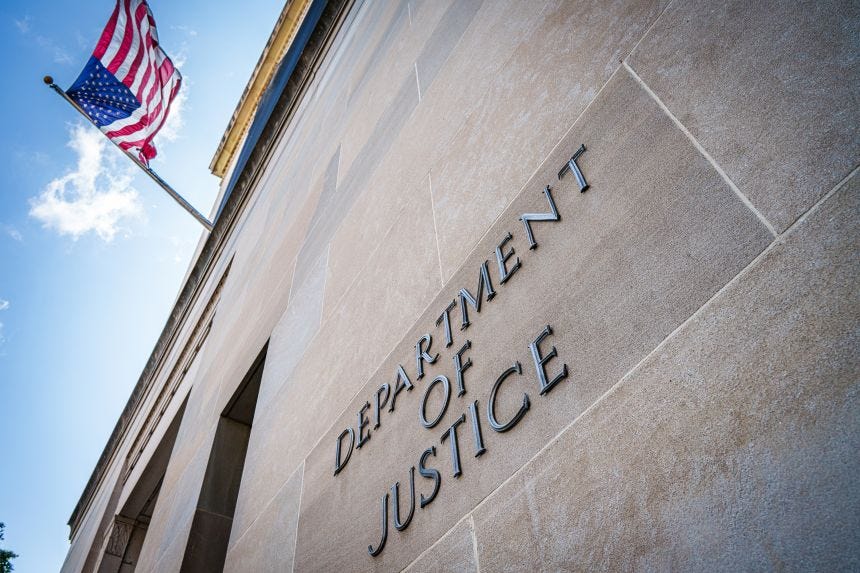 A US flag flies on the side of the Department of Justice headquarters building on September 15, 2024, in Washington, DC. J. David Ake/Getty Images
Follow my work on YouTube & Subscribe to Unmasking Russia
https://youtube.com/@unmaskingrussia
Welcome to today’s Trump Tyranny Tracker…
Federal involvement in the midterms, expanding use of government power against universities and protected speech, and the growing human and financial costs of the Iran war are among today’s top stories.
Today at a Glance
Election Pressure — Democrats are training 10,000 volunteers amid concerns about possible federal law enforcement at polling places.
Government Power — DOJ has expanded investigations into more than 100 universities as federal officials consider tying research funding to compliance with their demands.
Iran War — Eighteen U.S. service members have been killed and more than 750 wounded as American bases face repeated Iranian missile and drone attacks.
What We Need to Pay Attention To
DOJ seeking reporter’s LinkedIn records in secretive First Amendment court fight
What Happened: The Justice Department is seeking records covering roughly 1,900 LinkedIn interactions involving six users as part of a national security leak investigation involving a journalist. A federal judge approved the demand and barred LinkedIn from notifying the affected users, while LinkedIn is fighting the order as overly broad.
Why It Matters: Secretly targeting a journalist’s communications and sources is an authoritarian tactic used to intimidate the press and identify who is talking to reporters. It threatens press freedom and makes whistleblowers and other sources less likely to come forward.
Source: Politico
Corruption
Billions in Taxes Go Unpaid. Under Trump, the I.R.S. Won’t Say How Much
What Happened: The IRS has delayed its annual estimate of the “tax gap,” the amount of taxes owed but not paid on time. The last estimate put the gap at nearly $700 billion for 2022. The 2023 estimate was due last fall and remains unpublished after Trump cut IRS staffing and enforcement.
Why It Matters: Trump is weakening tax enforcement while the IRS stops publishing a key measure of how much money is going uncollected. That makes it harder to see who is avoiding taxes and how much revenue the government is losing.
Source: New York Times
Power Consolidation
Trump says Kennedy Center could be ‘ripped down’ if he doesn’t get ‘recognition’
What Happened: Trump said the Kennedy Center could close or be “ripped down” if he cannot put his name on the building. A federal judge blocked the name change, and Trump responded by saying the center’s $257 million renovation would not move forward unless the ruling is overturned.
Source: ABC News
How Democrats Are Mobilizing to Counter Potential Election Interference Amid Trump Concerns
What Happened: Democratic state parties are training at least 10,000 volunteers to monitor polling places, document potential intimidation, and help de-escalate conflicts during the midterms. The effort comes as Trump has said he would do “anything necessary” during the election, and concerns increase over him deploying possible federal agents to voting sites.
Why It Matters: Armed federal agents at voting sites are a hallmark of authoritarian states, where government power is used to intimidate voters and interfere with free elections.
Source: TIME
Weaponization of Institutions
Trump Expands Fight Against Elite Colleges With Focus on ‘the DEI Problem’
What Happened: The Justice Department has expanded investigations into more than 100 universities, targeting diversity programs, admissions and hiring practices, foreign funding and international students. Federal officials are also considering shifting research funding toward schools that comply with their demands.
Why It Matters: Trump is using federal investigations and billions of dollars in research funding as leverage over universities. Schools that refuse to conform to his ideological agenda face investigations and the loss of federal money.
Source: Bloomberg
The Census Bureau Is Overrun With Staffers From a MAGA Think Tank
What Happened: At least seven people affiliated with the Trump-aligned America First Policy Institute have been placed inside the Census Bureau with access to sensitive data. Members of the group helped produce a dubious report claiming thousands of noncitizens voted in 2020 that Census experts said relied on flawed methodology.
Why It Matters: Census data determines congressional representation and federal funding. Trump allies now have access to sensitive data and a role in producing election-related statistics at an agency that is supposed to remain independent.
Source: WIRED
Trump’s arch will harm historic sites but must proceed, federal officials say
What Happened: National Park Service officials acknowledge Trump’s proposed 250-foot triumphal arch would harm Arlington National Cemetery, the Lincoln Memorial and dozens of other historic sites. Despite those findings, federal officials say the project must move forward at its planned location.
Source: The Washington Post
Media Suppression & Authoritarian Tactics
Man Who Criticized ICE Was Protected by First Amendment, Judge Says
What Happened: Federal agents went to David Streever’s home after he sent an email criticizing ICE leadership and warned him he could face prosecution if he continued. A federal judge ruled that his email was protected political speech and said the warning likely violated the First Amendment.
Why It Matters: Agents showed up at a citizen’s home and threatened prosecution because he criticized the government. Using law enforcement to intimidate people over protected political speech is another classic authoritarian tactic.
Source: New York Times
US Senate panel approves bill to bar government officials from pressuring networks on free speech
What Happened: The Senate Commerce Committee approved a bipartisan bill allowing people to sue federal employees who pressure private companies to suppress First Amendment-protected speech. Lawmakers cited pressure on broadcasters by Trump officials.
Source: Reuters
Human & Civil Rights Abuses
Exiled Nicaraguan journalist Luis Galeano detained by ICE in Florida
What Happened: ICE detained veteran Nicaraguan journalist Luis Galeano, who fled to the U.S. in 2018 after Nicaragua’s government targeted him for his reporting. He has a pending asylum application and work authorization and was stripped of his Nicaraguan citizenship in 2023.
Source: The Guardian
Change in human trafficking policy could make some minors easier to deport
What Happened: Trump officials ordered caregivers for migrant children to stop reporting suspected labor and sex trafficking directly to the federal office responsible for protecting trafficking victims. Cases must now go through the Office of Refugee Resettlement, which decides which cases reach trafficking specialists.
Why It Matters: Trafficked children can now be deported before their case reaches the officials responsible for protecting them. Trump’s draconian immigration enforcement is being prioritized over protecting child trafficking victims.
Source: Associated Press
U.S. Fast-Tracked Deportation of Ecuadorean Politician Despite Torture Fears
What Happened: U.S. immigration authorities deported former Ecuadorean official José Serrano after three Trump-appointed immigration appeals judges overturned a ruling that found he was likely to be tortured if returned to Ecuador. The panel ruled one day after receiving the government’s appeal, and Serrano was deported within five hours.
Source: New York Times
Government Disruption
‘Sitting ducks’: Military families live in fear as U.S. troops face undisclosed missile attacks
What Happened: U.S. troops across the Middle East are facing repeated Iranian missile and drone attacks that the Pentagon has not publicly disclosed. Iranian strikes damaged or destroyed hundreds of structures at U.S. bases, while 18 service members have been killed and more than 750 wounded in the war.
Why It Matters: Tens of thousands of troops sent to the region on routine deployments are serving under fire, while families and the public have barely any information about the frequency of attacks and the full toll on U.S. forces and the scale of the war.
Source: MS NOW
States Delayed in Getting Covid Shots for Children’s Immunization Program
What Happened: States have been unable to order Covid vaccines through the CDC’s Vaccines for Children program, which provides free vaccines to roughly half of U.S. children. Privately insured patients can already get the new shots, while children and uninsured or underinsured people who depend on federal programs are still waiting.
Why It Matters: The delay is creating unequal access to vaccines based on insurance and income, leaving millions who depend on federal programs without the same access available to privately insured patients. And that puts millions of children at risk.
Source: Wall Street Journal
US Postal Service chief told associates he wants to quit
What Happened: Postmaster General David Steiner has told associates he wants to resign as the Postal Service faces worsening financial problems and scrutiny over Trump’s effort to involve the agency in mail ballot verification.
Source: Reuters
Vaccination rates drop to 10-year low for Michigan’s school–age children
What Happened: Michigan’s school vaccine exemption rate rose to 7.1% in 2025, the highest level in more than a decade and the fifth consecutive annual increase. Nearly 25,000 students received exemptions, while kindergarten exemptions reached 7.7%, well above the national average.
Source: Associated Press
Pennsylvania measles cases top 700 after four outbreak-related deaths reported
What Happened: Pennsylvania reported 731 measles cases, 38 more than just two days earlier, with 141 patients hospitalized. Four unvaccinated people have died in connection with the outbreak, while the U.S. has recorded more than 3,200 cases just this year.
Source: Reuters
Trump administration has cut or frozen $177 billion in grants across every state, analysis shows
What Happened: Trump has cut, frozen or delayed up to $177 billion in federal grants across every state and Washington, D.C. Health, nutrition, environmental programs and disaster relief account for the largest share of the disrupted funding.
Source: Associated Press
Imperial & Geopolitical Watch
U.S. Probes Iran Link to Cyberattacks on Texas-Bound Energy Tankers
What Happened: U.S. officials are investigating whether Iran or an Iran-linked actor was behind cyberattacks on two energy tankers traveling through the Strait of Gibraltar toward ports in Texas. Coast Guard and FBI teams boarded both vessels, and investigators confirmed malicious cyber activity aboard at least one ship.
Source: Wall Street Journal
U.S. Intelligence Warns of China Theft Over Sale of F-35 Jets to Saudis
What Happened: U.S. intelligence agencies warn that China could gain access to sensitive F-35 technology through Trump’s $24 billion sale of 48 fighter jets to Saudi Arabia. A Defense Intelligence Agency report points to China’s military presence at Saudi bases and Chinese technology throughout the country’s telecommunications networks.
Source: New York Times
EU chief floats associate membership for Canada after U.S. trade attacks
What Happened: European Commission President Ursula von der Leyen proposed making Canada the EU’s first “associate member,” a status that does not currently exist under EU treaties. Canada is seeking deeper trade, defense, and supply chain ties with Europe amid its escalating trade conflict with the U.S.
Why It Matters: Trump’s attacks are pushing one of America’s closest allies toward establishing deeper economic and security ties with Europe. Canada, like other U.S. allies, is looking for ways to reduce its dependence on the United States.
Source: Axios
Far-Right & Russian Influence Watch
Iran has improved targeting of US assets. Here’s how Russian satellites likely have helped
What Happened: Fourteen Russian intelligence satellites passed over a U.S. military base in Saudi Arabia two days before an Iranian attack. U.S. officials and international intelligence sources told CNN that Russian satellite intelligence was supplied to Iran and helped Tehran carry out more precise strikes against American targets.
Why It Matters: Russia continues to provide Iran with intelligence that is helping it carry out precise attacks against U.S. forces. That puts American troops and military assets in the region in greater danger.
Source: CNN
 Unmasking RussiaRussia Shifts Its Matryoshka Network Toward the U.S. MidtermsAfter a decade of Russian operations aimed at helping Trump win elections while attacking his opponents, the Russians are at it again and have shifted their focus to the upcoming midterms…Read more6 days ago · 251 likes · 16 comments · Olga Lautman
Economic News
Fed Raises Rates in First Major Step by Warsh to Contain Inflation
What Happened: The Federal Reserve unanimously raised interest rates by a quarter point to 3.75%–4%, its first increase since 2023, as inflation remains elevated. Most Fed officials expect at least one more increase this year.
Why It Matters: Trump’s war and tariffs have pushed prices higher, forcing the Fed to raise interest rates. Americans will pay even more for mortgages, credit cards, auto loans, and other borrowing.
Source: New York Times
The World Economy Is Becoming Wary of the U.S
What Happened: Foreign governments and investors are diversifying away from U.S. assets as federal debt tops $40 trillion and Treasury yields rise above 5%, their highest level since 2007. Norway’s sovereign wealth fund plans to reduce its U.S. Treasury holdings, while France and the Netherlands have moved portions of their gold reserves out of the U.S.
Source: New York Times
Resistance
Check out 50501 for local and nationwide events…
Source: 50501
By the Numbers
$24 billion — Value of Trump’s proposed sale of 48 F-35s to Saudi Arabia
1,900 — LinkedIn interactions DOJ is seeking in a leak investigation involving a journalist
$177 billion — Federal grants cut, frozen or delayed across all 50 states and Washington, D.C.
$40 trillion — U.S. federal debt
5%+ — Treasury yields, their highest level since 2007
14 — Russian intelligence satellites that passed over a U.S. base before an Iranian attack
10,000 — Volunteers being trained by Democratic state parties to monitor polling places
100+ — Universities facing DOJ investigations
250 feet — Height of Trump’s proposed triumphal arch
731 — Measles cases reported in Pennsylvania
4 — Deaths connected to Pennsylvania’s outbreak
3,200+ — Measles cases nationwide this year
18 — U.S. service members killed in the Iran war
750+ — U.S. service members wounded
What to Watch Next
Trump’s push to seize control of elections continues — How much further will federal agencies go in interfering in voting, voter data, and election administration before November?
Trump is using federal money as leverage over universities — How many schools will face investigations or lose research funding for refusing to comply with his policies?
American troops are facing repeated attacks across the Middle East — How much longer can the Pentagon keep the full scale of the attacks and casualties from the American public?
Russia is helping Iran improve its targeting of U.S. forces — Will Congress address Russia’s role in helping Iran target American troops?
Inflation has forced the Fed to raise rates — How much more will Americans pay for mortgages, credit cards, and other borrowing as war and tariffs continue increasing prices?
Key Takeaways
Election Interference — Worries over federal involvement in the midterms are serious enough that Democratic state parties are training 10,000 volunteers to monitor polling places.
Weaponization of Federal Agencies — Federal investigations, funding, and access to government data are being used to pressure universities and reshape institutions, including the Census Bureau.
Free Speech — Federal agents threatened a citizen over protected political speech while DOJ is secretly seeking thousands of interactions connected to a journalist’s account.
Iran War — Eighteen U.S. service members have been killed and more than 750 wounded as American bases face repeated attacks, while Russian intelligence is helping Iran improve its targeting.
Rising Costs — Inflation remains elevated, and the Fed has raised rates for the first time since 2023, increasing borrowing costs for households and businesses.
Call to Action
Document Everything: Document purges, corruption, and power grabs. Share credible information with journalists, watchdogs, and legal experts. Silence enables authoritarianism—see something, say something.
Defend Press Freedom: Support independent journalism by subscribing to and sharing reporting that challenges Trump’s power grab.
Contact Lawmakers: Demand accountability for Trump’s unchecked power and war on oversight.
Mobilize for Action: Organize or join legal efforts and resistance movements to protect democracy and human and civil rights.
Support Whistleblowers: Encourage legal defense funds for government workers facing retaliation for exposing corruption.
Follow my work on YouTube → Subscribe to Unmasking Russia
https://youtube.com/@unmaskingrussia
Thanks for reading the Trump Tyranny Tracker. Stay tuned for more updates.
-
California and New York sue over Trump push to halt wind energy projects
www.theguardian.comUS officials have begun to buy back wind leases as president seeks to block renewables in favor of fossil fuels
Democratic attorneys general from California and New York have sued the Trump administration over its plans to buy back offshore wind leases as Donald Trump seeks to discourage the expansion of wind energy in favor of fossil fuels.
California’s attorney general, Rob Bonta, said he was suing over removal of a project off his state’s coast planned by Chicago-based Invenergy. The Trump administration said in June it was buying back the company’s US offshore wind leases for four wind projects on the east and west coasts.
Continue reading... -
Trump invades the UN with a brutish speech | Ted Widmer
www.theguardian.comGone was any shred of US idealism. It was a spectacle of raw power – a power that is likely to only diminish in the years ahead
Expectations were low for Donald Trump’s address to the UN on Tuesday, and yet somehow it was even worse than expected. He does not perform well in formal settings, like chambers of government, preferring a blingier room, like Mar-a-Lago, or an outdoor rally. For years, he has made no secret of his hostility to the UN, and the very principles of international order that define it.
In recent years, that hostility has deepened into something more like a full-on assault, with frequent attacks on the international criminal court (perhaps out of fear that he will someday be indicted), on the UN’s climate agenda, and on Unesco (which the US decided to withdraw from in July 2025).
Continue reading... -
Iran and US have held talks on sidelines of UN summit, says Donald Trump
www.theguardian.comSenior Iranian official indicates willingness to reopen strait of Hormuz if US takes steps to ease pressure on Tehran
Iranian officials held three hours of talks with US special envoy Steve Witkoff on the sidelines of the UN general assembly, Donald Trump disclosed on Tuesday.
He said there would a further meeting in the very near future.
Continue reading... -
Trump Tyranny Tracker | Day 600: Sept. 15, 2026
trumptyrannytracker.substack.com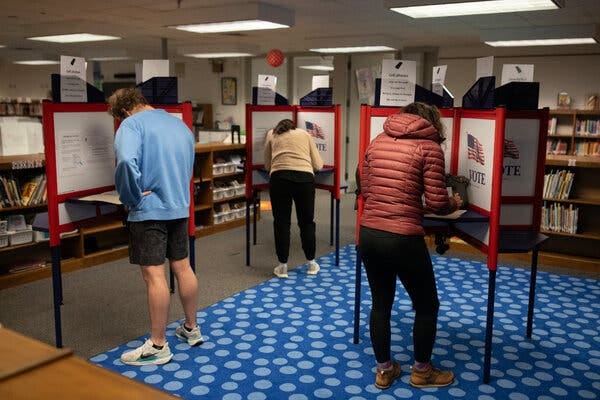 U.S. law has long barred armed federal officers or military personnel from being deployed “at any place where a general or special election is held.”Credit...
Follow my work on YouTube & Subscribe to Unmasking Russia
https://youtube.com/@unmaskingrussia
Welcome to today’s Trump Tyranny Tracker…
Trump’s efforts to exert control over the midterms, DOJ’s expanding investigations of his opponents, and the mounting military and economic costs of the Iran war are among today’s top stories.
Today at a Glance
Election Interference — FBI Director Kash Patel refused to rule out sending agents to polling places during the midterms.
Weaponization — DOJ is continuing investigations of former officials involved in investigations of Trump, including former CIA Director John Brennan.
Iran War — The war has cost the Pentagon about $38 billion and is continuing to drain U.S. missile defense inventories.
What We Need to Pay Attention To
Patel Suggests F.B.I. Agents May Be Sent to the Polls
What Happened: Kash Patel refused to rule out sending agents to polling places during the midterms, telling senators the FBI has election crime coordinators in all 56 field offices and would not “shy away” from election enforcement. Federal law generally prohibits armed federal officers from being deployed at election sites.
Why It Matters: Armed federal agents at polling places are meant to intimidate voters. Using federal law enforcement around voting is an authoritarian tactic designed to make people afraid to exercise their rights.
Source: New York Times
Corruption
Papa Johns, Propaganda and Putin: How a MAGA Influencer With Ties to Russia Became Trump’s Arctic Adviser
What Happened: Trump appointed venture capitalist Thomas Dans to chair the U.S. Arctic Research Commission despite having no formal scientific background. Dans has longstanding business ties to Russia, has promoted closer U.S.-Russia relations and pro-Kremlin content, and used his government position to champion a Dutch shipbuilder while his consulting firm was helping the company pursue a federal icebreaker contract.
Why It Matters: Dans has access to sensitive government information while his financial interests remain hidden from the public. Trump put a man with longstanding Russian business ties and overlapping private interests in a position to shape U.S. policy in one of the world’s most strategically important regions.
Source: ProPublica
Power Consolidation
Trump’s push to restrict mail ballots has failed. Other efforts to reshape the midterms are ongoing
What Happened: The Supreme Court blocked Trump’s plan to overhaul mail voting before the midterms, but other federal election efforts are continuing. DOJ is demanding sensitive voter data and preserving 2024 election records, DHS is investigating voter rolls for noncitizens, and Trump officials have asked the Supreme Court to restore a federal voter verification system blocked by a lower court over privacy concerns.
Why It Matters: One of Trump’s election schemes was stopped, but the larger push continues. Trump is using multiple federal agencies to expand federal control over elections just weeks before the midterms.
Source: Associated Press
Trump Threatens to Block Kennedy Center Renovations Over Naming Dispute
What Happened: A federal judge again blocked the Kennedy Center from putting Trump’s name on the building or grounds without congressional approval. Hours later, the Trump-chaired board voted to close the center, and Trump said the $257 million renovation will not proceed unless the ruling is overturned and his name is added.
Why It Matters: Trump is holding the future of a national institution hostage to whether it bears his name. Using presidential power to turn public institutions into monuments to the leader is a classic authoritarian tactic.
Source: Wall Street Journal
Weaponization of Institutions
‘Grand conspiracy’ probe of Trump foes goes on after prosecutor’s departure
What Happened: DOJ is continuing its mass investigation of former officials who investigated Trump. Former CIA Director John Brennan has been subpoenaed to testify before a grand jury in October, and multiple grand jury investigations remain active despite the resignation of the prosecutor overseeing the probe.
Source: The Washington Post
DOJ seeks to revive cases against Comey, James a year after dismissals
What Happened: DOJ is asking a federal appeals court to revive criminal cases against James Comey and Letitia James that were thrown out after a judge ruled that Lindsey Halligan, the Trump-appointed prosecutor who secured the indictments, had been unlawfully serving as interim U.S. attorney.
Source: The Washington Post
DHS agents allegedly directed to ‘misrepresent’ themselves to access state voter rolls, whistleblower claims
What Happened: A federal whistleblower alleges DHS ordered immigration officers to pose as individual voters to access state voter databases as part of its “Unlawful Voter Initiative.” Officers were given less than two hours of training and told to review up to 40 people a day using DHS data that the whistleblower says can conflict with state records.
Source: ABC News
Media Suppression & Authoritarian Tactics
Democracy indicators in US at lowest levels for 50 years, data shows
What Happened: International IDEA’s Global State of Democracy report found key U.S. democracy indicators have fallen to their lowest levels in 50 years. The organization pointed to expanding executive power, retaliation against perceived enemies, and the weakening of the rule of law.
Why It Matters: The erosion of American democracy is now measurable across decades of data. Trump and Republicans are attacking judicial independence, press freedom, elections, and checks on government power, and the data shows the damage.
Source: The Guardian
Pentagon Wants Only the Fittest Troops to Attend Upcoming Hegseth Speech
What Happened: The Pentagon is asking commanders to handpick troops for Pete Hegseth’s Sept. 30 “State of the Force” address who meet fitness and waist-to-height requirements and have “impeccable” grooming and uniforms.
Why It Matters: Handpicking troops based on appearance turns the military into political theater, using service members to project an image of strength and conformity around political leadership.
Source: Wall Street Journal
Human & Civil Rights Abuses
Alligator Alcatraz detainees were put in small cages, DHS watchdog report finds
What Happened: A DHS inspector general investigation found detainees at Florida’s Alligator Alcatraz were confined for up to nearly two hours in small metal cages staff called “calming areas.” Investigators said the cages violated standards for humane treatment. They also documented overcrowding, insect-infested showers, insufficient access to showers and recreation, and inadequate access to legal information.
Why It Matters: The U.S. is putting people in cages and subjecting them to inhumane conditions. This is more evidence of human rights abuses being carried out by the Trump regime.
Source: Washington Post
Government Disruption
Federal Employees Were Paid $9.5 Billion Not to Work in 2025 Under DOGE Effort
What Happened: Federal agencies spent an estimated $9.5 billion paying employees on administrative leave in 2025, six times the 2023 level, according to the Government Accountability Office. About $6.7 billion was tied to DOGE’s deferred resignation program as part of an effort to dismantle federal agencies. The program paid workers who agreed to leave the government while they stopped working.
Source: New York Times
FEMA Could Still Lose More Jobs Despite Court Ruling
What Happened: A federal judge ruled that DHS officials illegally planned to cut FEMA’s workforce roughly in half and improperly deleted Signal messages about the plan. The ruling does not reverse thousands of earlier departures or prevent future cuts as Trump shifts more disaster response responsibility to states. FEMA now has nearly 4,000 fewer deployable workers than it did at the start of 2024.
Source: New York Times
Iran war has cost the US more than $38B, budget office says
What Happened: Trump’s Iran war cost the Pentagon more than $38 billion through August 1 and is costing up to another $3 billion a month, according to the Congressional Budget Office. CBO estimates disruptions to oil and shipping will push inflation about half a percentage point higher in early 2027.
Why It Matters: Americans are paying for the war twice: tens of billions in military spending and higher prices at home. Trump’s war is also depleting key missile defense inventories that will take years to rebuild.
Source: Associated Press
Pennsylvania measles-associated deaths climb to four as outbreak grows
What Happened: Pennsylvania reported two additional measles-associated deaths, bringing the state’s total to four. All four people were unvaccinated, and Pennsylvania has recorded 693 cases across 38 counties as U.S. cases have climbed above 3,200 this year.
Source: Reuters
Air pollution spiked after the Trump administration stopped embassy monitoring
What Happened: Trump shut down a State Department program that publicly monitored air quality at more than 80 U.S. embassies and consulates in March 2025. A new study found pollution increased 24% to 33% across 46 cities after the monitoring stopped, with the largest increases in places with few alternative sources of air quality data.
Source: NPR
Imperial & Geopolitical Watch
The U.S. Is Burning Through Its Supply of Interceptors to Counter Iran’s Attacks
What Happened: U.S. forces fired 60 to 70 Patriot interceptors and more than a dozen THAADs against roughly 20 Iranian ballistic missiles targeting a U.S. base in Jordan last week. Some missiles still struck American aircraft at the base.
Why It Matters: Trump’s Iran war is burning through limited U.S. missile defense stockpiles at an astonishing rate. Dozens of interceptors are being fired against individual Iranian attacks, draining weapons the U.S. needs to defend its forces and prepare for other conflicts.
Source: Wall Street Journal
US Republican lawmaker seeks Hegseth’s impeachment over Iran
What Happened: Republican Rep. Thomas Massie filed articles of impeachment against Pete Hegseth, accusing him of abusing his office by carrying out military action against Iran without congressional authorization. Massie filed the resolution as privileged, requiring the House to address it within two legislative days.
Source: Reuters
More than 300 South Korean workers are challenging the Trump administration over its Georgia immigration raid
What Happened: More than 300 South Korean workers detained during last year’s raid on a Hyundai-LG battery plant in Georgia have begun filing claims against nine federal agencies, alleging unlawful detention and mistreatment. The raid detained 475 people even though the search warrant identified just four targets, none of whom were the Korean workers.
Source: CNN
Far-Right & Russian Influence Watch
Unmasking RussiaWho Were the Russians at Donald Trump Jr.’s Wedding?Yesterday, ProPublica published an excellent in-depth investigation revealing that Umar Kremlev, a Russian businessman close to Putin who runs the International Boxing Association, spent hundreds of thousands of dollars helping pay for Donald Trump Jr.’s intimate wedding in the Bahamas earlier this year. Kremlev attended the wedding alongside a group of Russians whose presence reportedly left some of the 50 guests wondering who they were…Read more7 days ago · 418 likes · 25 comments · Olga LautmanUnmasking RussiaA Very Active Day Across Europe as Russia EscalatesToday has been such an active day across Europe that I wanted to do a quick post to document it. I will also be doing a Substack Live with Julie Roginsky today at 5:30 pm ET to discuss. There is a lot happening and every time I check the news another incident is being reported…Read more7 days ago · 235 likes · 26 comments · Olga LautmanEconomic News
Iran war expected to cause a spike in US inflation, according to budget watchdog
What Happened: The Congressional Budget Office estimates the Iran war will add 0.5 percentage points to U.S. inflation in early 2027 as disruptions to oil, natural gas, and shipping drive up energy costs. The war had already cost the Pentagon about $38 billion through August 1.
Source: CNN
US-Canada trade war further taxes small businesses as costs rise during the Iran war
What Happened: U.S. and Canadian tariffs cover about $20 billion in goods on each side, with some products facing taxes as high as 50%. Small businesses report canceled orders, lost customers and higher costs for equipment, materials and shipping as Trump’s Iran war drives up fuel and transportation expenses.
Source: Associated Press
Resistance
Check out 50501 for local and nationwide events…
Source: 50501
By the Numbers
$38 billion — Estimated Pentagon cost of the Iran war through August 1
0.5 percentage points — Estimated increase in U.S. inflation in early 2027 from disruptions caused by the Iran war
60–70 — Patriot interceptors fired against roughly 20 Iranian ballistic missiles in a single attack
$9.5 billion — Estimated amount federal agencies spent paying employees on administrative leave in 2025
$257 million — Kennedy Center renovation Trump said would not proceed unless his name is put on the building
4 — Measles-associated deaths reported in Pennsylvania
693 — Measles cases reported across 38 Pennsylvania counties
3,200+ — Measles cases reported nationwide this year
80+ — U.S. embassies and consulates previously covered by the air quality monitoring program
300+ — South Korean workers challenging their detention during the Georgia immigration raid
$20 billion — Approximate value of goods subject to tariffs on each side of the U.S.-Canada trade dispute
50% — Tariff rate imposed on some U.S.-Canada goods
56 — FBI field offices with election crime coordinators, according to Kash Patel
What to Watch Next
Trump’s push into elections is continuing — How much further will federal agencies go in seeking voter data, scrutinizing voter rolls and expanding federal involvement in elections before the midterms?
DOJ’s investigations of Trump’s former investigators are continuing — Who else will be targeted as multiple grand jury investigations remain active?
FEMA is already operating with thousands fewer workers — Will Trump push ahead with further cuts despite the court ruling, and what will that mean when the next major disaster hits?
The Iran war is draining U.S. missile defenses — How long can the Pentagon continue burning through limited Patriot and THAAD interceptors faster than they can be replaced?
The economic costs of the Iran war are reaching Americans at home — How much further will energy, transportation and consumer prices rise as the war continues?
Key Takeaways
Election Control — Trump’s mail ballot order was blocked, but multiple federal agencies are still taking actions involving voter rolls, election records and voter verification.
Weaponization of DOJ — DOJ continues investigating former officials involved in investigations of Trump while seeking to revive cases against Comey and James.
Government Hollowing — Federal workforce cuts have left FEMA with thousands fewer deployable workers while taxpayers spent billions paying other federal employees not to work.
Iran War — Trump’s war has cost tens of billions of dollars, driven up energy costs, and rapidly depleted critical U.S. missile defense inventories.
Rising Costs — Trump’s Iran war and U.S.-Canada tariffs are hitting Americans and small businesses through higher energy, transportation, material and shipping costs.
Call to Action
Document Everything: Document purges, corruption, and power grabs. Share credible information with journalists, watchdogs, and legal experts. Silence enables authoritarianism—see something, say something.
Defend Press Freedom: Support independent journalism by subscribing to and sharing reporting that challenges Trump’s power grab.
Contact Lawmakers: Demand accountability for Trump’s unchecked power and war on oversight.
Mobilize for Action: Organize or join legal efforts and resistance movements to protect democracy and human and civil rights.
Thanks for reading the Trump Tyranny Tracker. Stay tuned for more updates.