TrumpWatch publisher
-
Let them eat SUVs: Trump White House orders fleet of luxury cars as Americans struggle
www.theguardian.comAmericans are facing a deepening affordability crisis but at least Trump and co have ... 250 new Cadillac Escalades
This was originally published in This Week in Trumpland. Sign up to receive it in your inbox every Wednesday
Gas prices are up almost a dollar a gallon since the day Donald Trump took office; mortgage rates just hit their highest level in nearly a year, and over the weekend a prominent economist said the Iran war is costing the average US household more than $1,200.
Americans are struggling through a deepening affordability crisis caused largely by Trump’s ill-fated war against Iran. They are in need of a boost, something to lift the spirits. Perhaps the president could give a speech, letting the people know that we are all in this together.
Continue reading... -
Trump Tyranny Tracker | Day 556: July 29, 2026
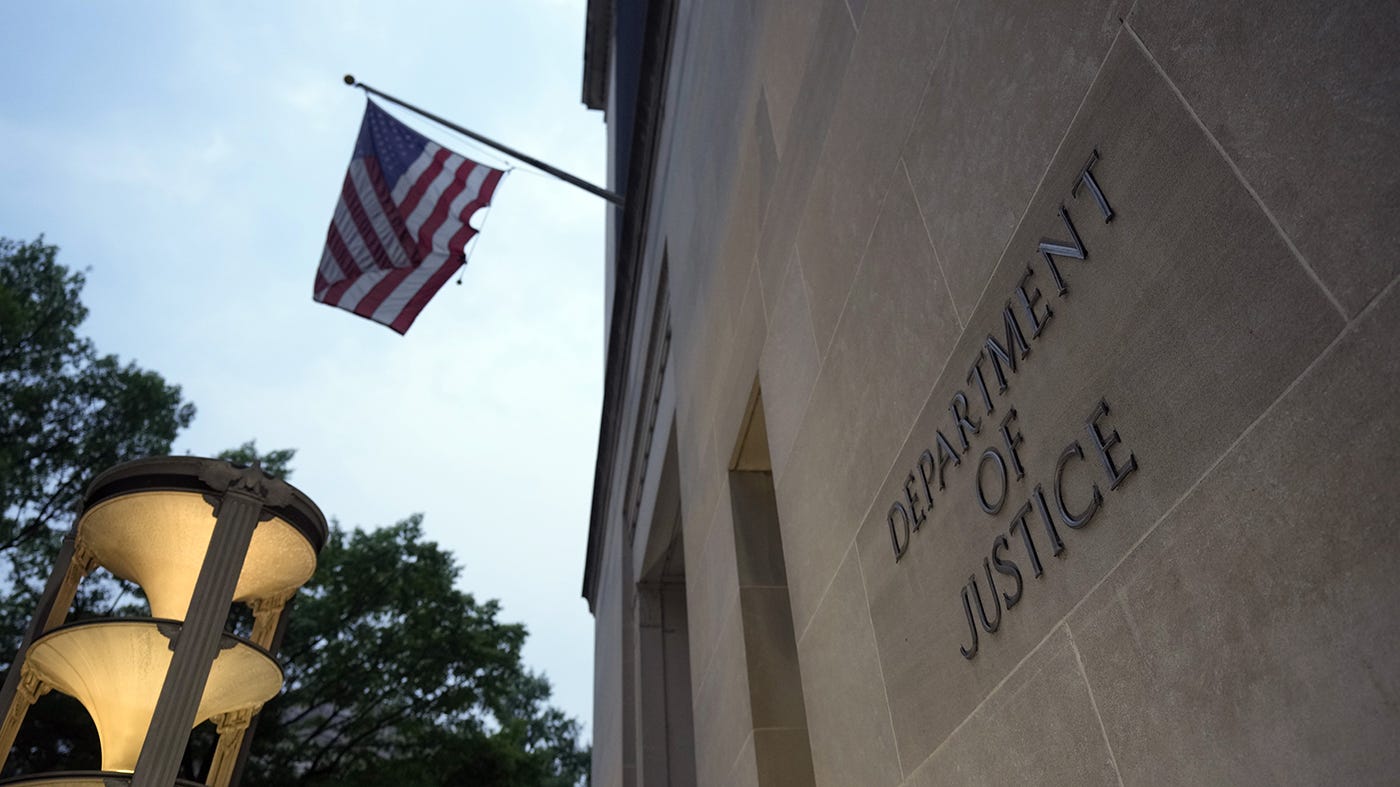
trumptyrannytracker.substack.com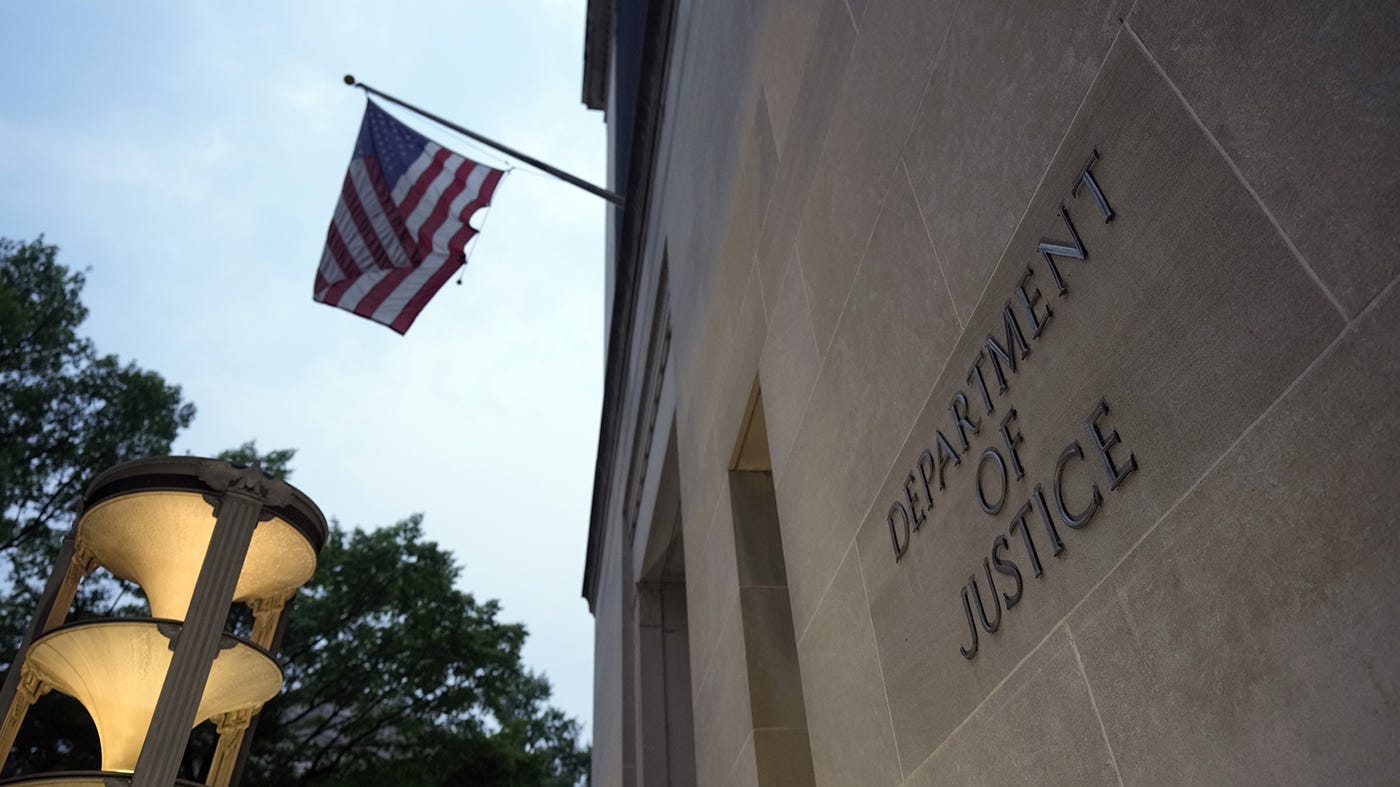 Photo Credit: (AP Photo/Manuel Balce Ceneta)
Welcome to today’s Trump Tyranny Tracker…
Musk's multimillion-dollar push to boost Republicans, new revelations about Secret Service pressure to surveil James Comey, and renewed U.S. strikes on Iran were among today's biggest stories.
Today at a Glance
• Trump overruled FEMA to deny disaster aid to Democratic-led states.
• California’s largest ICE detention center failed to provide adequate medical care.
• Federal judge rejects DOJ bid for New Jersey’s unredacted voter rolls.
What We Need to Pay Attention To
DHS testimony confirms raid of Newsom press conference was ‘political,’ ‘a stunt’
What Happened: Homeland Security Investigations agents testified in court that an immigration operation outside California Gov. Gavin Newsom’s press conference was “purely political” and “a political stunt,” contradicting DHS’s earlier claim that it was an immigration enforcement action.
Why It Matters: DHS agents admitted under oath that the operation was political. Using federal agencies for political theater and intimidation sets a dangerous precedent for elections and other politically sensitive events.
Source: MS NOW
In Corruption News
Musk plans massive push for GOP in midterms
What Happened: Elon Musk plans to spend millions through his America PAC to help Republicans in the 2026 midterm elections by turning out voters. The effort comes as his companies continue to receive and pursue billions of dollars in federal contracts.
Source: Axios
This MAGA Influencer Runs a Charity to Teach Kids Civics. Much of the Money Goes to Him Instead.
What Happened: A ProPublica investigation found that the Foundation for Liberty and American Greatness, founded by Nick Adams, whom Trump appointed earlier this year as a special presidential envoy, paid Adams and his mother more than half its revenue while raising $7.7 million over the past decade. The investigation found little evidence the charity carried out its stated civics education mission or that its advertised $1 million sweepstakes prize was ever awarded.
Why It Matters: Nick Adams is the latest Trump appointee to face allegations of self-dealing or financial misconduct, adding to a growing pattern of ethics concerns among Trump officials.
Source: ProPublica
Judge orders Trump to turn over financial documents in BBC defamation case
What Happened: A federal judge ordered Trump to turn over financial records from the Donald J. Trump Revocable Trust as part of his $10 billion defamation lawsuit against the BBC. The records will help determine whether Trump suffered the financial losses he claims.
Source: The Hill
In Power Consolidation News
Trump overrode his own agencies to deny 4 Democratic disaster requests
What Happened: Trump overruled FEMA and NOAA recommendations to deny disaster aid to New Jersey, Massachusetts, Rhode Island, and New York after federal officials determined the states met the requirements for assistance.
Why It Matters: Trump rejected disaster aid after federal agencies determined the states qualified. It’s another example of federal dollars being used to reward allies and punish political opponents.
Source: Politico
Trump’s attacks on mail balloting and concerns over delays turn midterms spotlight on Postal Service
What Happened: State election officials in California, Kansas, Michigan, and Wisconsin raised concerns about mail ballot delays as the Postal Service prepares for the midterm elections. This comes as Trump asks the Supreme Court to reinstate key parts of his executive order restricting mail voting, including a requirement that the Postal Service use a federal voter eligibility list when distributing ballots.
Source: Associated Press
In Weaponization of Institutions News
Secret Service felt pressure from administration to surveil James Comey, new documents reveal
What Happened: Newly released court filings show Secret Service officials raised legal concerns after senior Trump officials pressured them to secretly track former FBI Director James Comey’s phone following his “86 47” social media post. Internal records show some agents believed there was no imminent threat and questioned whether the surveillance was legally justified.
Why It Matters: Trump officials sought to use the Secret Service to track his political adversary despite internal concerns that the surveillance was not legally justified. That's a dangerous expansion of how federal protective resources are used.
Source: MS NOW
With Blanche Nomination at Stake, Payouts to Trump Allies Continue
What Happened: The Justice Department agreed to a seven-figure settlement with anti-abortion activist Paul Vaughn, whom Trump pardoned after his conviction for blocking access to an abortion clinic. The payment makes Vaughn the latest Trump ally to receive taxpayer-funded compensation. This comes as senators questioned Todd Blanche about the department’s proposed $1.776 billion fund for additional payouts, including to insurrectionists.
Source: New York Times
ICE’s New Detention Center Contracts Declare State Laws ‘Shall Not Apply’
What Happened: One day after a federal judge ruled an ICE detention center in Washington must allow state health inspectors access, ICE released draft contract language stating that state and local laws “shall not apply” to four privately run detention centers.
Why It Matters: Instead of complying with a federal court ruling, ICE is trying to insulate its detention centers from state oversight by writing state-law exemptions into its contracts.
Source: WIRED
In Media Suppression and Authoritarian Tactics News
The professor facing prison in ‘antifa’ case: ‘They want to scare all who oppose ICE’
What Happened: Federal prosecutors charged Erik Davis, a Minnesota college professor, with conspiracy to impede ICE officers, alleging he helped organize protests and coordinate resistance to immigration enforcement. The indictment does not accuse Davis of personally committing violence, and he has denied the allegations.
Why It Matters: A professor who is not accused of committing violence is facing federal conspiracy charges tied to protests against ICE. Using conspiracy charges against protest organizers is an authoritarian tactic meant to discourage others from organizing and protesting.
Source: The Guardian
In Human and Civil Rights Abuses News
California’s largest ICE facility did not provide adequate medical care, monitor says
What Happened: A court-appointed monitor found that California’s largest ICE detention center failed to provide adequate medical care and violated a federal court order requiring improvements. The findings were based on a site inspection, interviews with staff and detainees, and a review of more than 140 medical records.
Why It Matters: A federal court ordered the facility to improve medical care, yet detainees remain in immediate and long-term danger. The latest findings show ICE continues to commit serious human rights abuses and ignore court orders.
Source: Reuters
Trump policy clears way for civil commitment of homeless in some states
What Happened: Federal agencies have begun implementing Trump’s executive order on homelessness by encouraging states to institutionalize homeless people with mental illness or substance use disorders. The policy also prioritizes federal funding for states that adopt broader commitment laws and stricter enforcement against homeless encampments.
Why It Matters: Trump is using federal funding to push states toward institutionalizing homeless people instead of housing them. It marks a major shift away from the decades-long “Housing First” approach and toward criminalizing homelessness.
Source: CBS News
Loss of work authorization sows confusion for thousands of Haitian immigrants and their US employers
What Happened: Hundreds of thousands of Haitians with Temporary Protected Status lost their work authorization after Trump allowed their employment protections to expire following a Supreme Court ruling. Employers across the country have begun suspending workers as uncertainty spreads over their legal status.
Source: Associated Press
Trump administration forced treatment on hunger striker in ICE detention
What Happened: An internal ICE Health Service Corps document states that at least one immigration detainee on a hunger strike was subjected to forced medical treatment, including force feeding, hydration, urinary catheterization, or involuntary blood draws. The report also documented at least seven hunger strikers in ICE custody during the reporting period.
Source: The Guardian
Government Services Disruption and Collapse Watch
US Patriot interceptor stockpile diminished by some 65% during Iran war, think tank estimates
What Happened: A new analysis by the Center for Strategic and International Studies estimates the U.S. has used about 65% of its Patriot interceptor stockpile since Trump’s Iran war began. The report says replenishing the missiles will take years at the current production rates.
Why It Matters: The longer Trump's war continues, the more it will strain U.S. weapons stockpiles. Replacing those interceptors will cost taxpayers billions of dollars while leaving the military less prepared for other crises.
Source: ABC News
Data shows some veterans wait months to see a therapist for the first time. The VA secretary has his own numbers
What Happened: The VA’s Access to Care data found that about two-thirds of VA facilities exceeded the agency’s 20-day target for an initial mental health appointment, with some veterans waiting more than five months. The findings contradict VA Secretary Doug Collins’ public claim that veterans wait an average of 15 days for their first mental health visit.
Source: CNN
The IRS Is Imploding
What Happened: IRS customer service has deteriorated after the agency lost nearly one-third of its workforce, according to the IRS Taxpayer Advocate Service and tax professionals. A June report found fewer calls were answered by live agents, hold times increased significantly, and many callers were disconnected before receiving assistance.
Source: Mother Jones
HHS violated 5,000 probationary employees’ rights with 2025 terminations
What Happened: A third-party arbitrator ruled that HHS violated its collective bargaining agreement by firing about 5,000 probationary and trial employees in 2025. The arbitrator found the agency carried out the purges without following required procedures or negotiating with the union.
Why It Matters: HHS was found to have bypassed required procedures by disguising a mass layoff as routine probationary terminations. The ruling adds to a growing number of decisions finding Trump’s purges violated legal protections.
Source: Federal News Network
How Trump’s “America First” Administration Could Shut U.S. Scientists Out of the Next Nobel-Worthy Discovery
What Happened: The White House proposed a rule granting political appointees greater authority to award and terminate billions of dollars in federal grants, including scientific research funding. Scientists, universities, state officials, and nonprofits warn it would inject politics into funding decisions and discourage international research collaborations.
Why It Matters: The proposal would expand political control over hundreds of billions of dollars in federal grants, allowing the White House to exert influence over decisions that have been made independently.
Source: ProPublica
Imperial and Geopolitical Watch
US Launches New Strikes Against Iran as War Escalates Again
What Happened: U.S. forces launched a new wave of strikes against Iranian targets after Iran fired ballistic missiles at a U.S. military base in Jordan in a surprise attack. The attacks ended another brief pause.
Why It Matters: As Trump’s Iran war drags on, the risk of broader regional escalation, additional U.S. military involvement, and disruptions to global energy markets continues to grow with no end in sight
Source: Bloomberg
Two Ships Hit in Apparent Drone Strike at Egyptian Port
What Happened: Two ships, including a U.S.-owned natural gas storage tanker, caught fire after an explosion at Egypt’s Port of Damietta. Maritime security firms said the incident appeared to be caused by a drone strike. Egyptian authorities have not confirmed the cause or identified who was responsible.
Source: New York Times
Canadian visits to U.S. plummet amid Trump tariffs, ‘51st state’ talk
What Happened: Canada reported that travel to the United States fell 25% in 2025, dropping from 39 million to 29.1 million visits. Canadians spent $2.3 billion less in the U.S. while increasing travel elsewhere, reflecting a sharp shift in sentiment following Trump’s tariffs and repeated and unhinged “51st state” threats.
Source: The Washington Post
Far-Right & Russian Influence Watch
8 killed, 15 injured across Ukraine as Russia launches massive ballistic missile, drone attack
What Happened: Russia launched another large-scale overnight attack across Ukraine, firing dozens of ballistic and cruise missiles along with hundreds of drones at cities across the country. At least eight people, including two children, were killed and 15 others injured as residential buildings, warehouses, and other civilian sites were struck from Kyiv to Lviv.
Source: Kyiv Independent
In Trump Economic Downturn News
Oil prices jump up as US-Iran tensions escalate
What Happened: Oil prices rose above $90 a barrel after Iran fired missiles at a U.S. base in Jordan and Trump vowed a forceful military response, raising fears of a broader regional conflict.
Why It Matters: Trump’s escalating war with Iran is hitting Americans at the pump. Higher oil prices will ripple through the economy and raise the cost of transportation, groceries, and other everyday goods.
Source: The Hill
In Resistance News
Check out 50501 for local and nationwide events…
Source: 50501
Federal judge rejects DOJ attempt to obtain unredacted NJ voter rolls
What Happened: A federal judge dismissed the Justice Department’s lawsuit seeking New Jersey’s unredacted voter rolls, ruling the state can continue withholding voters’ driver’s license numbers and partial Social Security numbers. The decision is the latest in a series of court rulings rejecting similar DOJ efforts to obtain detailed voter registration data.
Source: Politico
By the Numbers
4 — Disaster aid requests Trump rejected after FEMA recommended approval
65% — Share of the U.S. Patriot interceptor stockpile used since Trump’s Iran war began
1/3 — Share of the IRS workforce lost, worsening customer service
5,000 — HHS employees whose terminations were ruled illegal
350,000 — Haitians who lost work authorization after TPS protections expired
7 — ICE detainees on hunger strike during the reporting period
140+ — Medical records reviewed exposing systemic medical failures at California's largest ICE facility
25% — Drop in Canadian travel to the U.S. in 2025
$2.3 billion — Reduction in Canadian visitor spending in the U.S.
$1 million — Sweepstakes prize a Trump appointee’s charity promoted with no record it was awarded
$10 billion — Damages Trump is seeking from the BBC in his defamation suit
What to Watch Next
Trump's Iran war keeps expanding — How much higher will the economic and military costs climb if the fighting continues?
ICE keeps testing the limits — Will the courts stop the agency from bypassing state oversight and expanding its powers?
The crackdown on Haitians begins — How many people will lose their jobs or face detention as Temporary Protected Status protections expire?
Government services keep deteriorating — How much longer will agencies be able to function after staffing purges and political interference?
Trump’s legal battles continue — What will Trump’s financial records reveal as more courts order them turned over?
Key Takeaways
Affordability Crisis — Rising oil prices, higher transportation costs, and growing economic uncertainty are making it harder for Americans to afford everyday essentials.
Military Strain — Renewed strikes on Iran and a 65% drop in Patriot interceptors are leaving the U.S. military less prepared for future crises.
Political Weaponization — Pressure to surveil Comey and a political ICE raid on Gavin Newsom’s press conference underscore federal law enforcement being used against Trump’s perceived opponents.
Unchecked Enforcement — Forced treatment of a hunger striker, inadequate medical care at California’s largest ICE facility, and contracts declaring state law “shall not apply” leave ICE operating with no oversight or accountability.
Abuse of Power — Disaster aid, taxpayer-funded payouts to Trump allies, and control over scientific research funding are being used to reward political allies.
Call to Action
Document Everything: Document purges, corruption, and power grabs. Share credible information with journalists, watchdogs, and legal experts. Silence enables authoritarianism—see something, say something.
Defend Press Freedom: Support independent journalism by subscribing to and sharing reporting that challenges Trump’s power grab.
Contact Lawmakers: Demand accountability for Trump’s unchecked power and war on oversight.
Mobilize for Action: Organize or join legal efforts and resistance movements to protect democracy and human and civil rights.
Thanks for reading the Trump Tyranny Tracker. Stay tuned for more updates.
-
Trump’s pick for US attorney general Todd Blanche in jeopardy as vote postponed
www.theguardian.comRepublican John Cornyn says he will not back nomination without written confirmation $1.8bn slush fund is dead
Todd Blanche’s hopes of becoming US attorney general seemed to be in jeopardy on Wednesday after the Department of Justice did not provide written assurances to a key Republican senator that a $1.8bn slush fund was dead.
The US Senate judiciary committee postponed a vote scheduled for Thursday on whether to advance Blanche’s nomination.
Continue reading... -
Trump announces $22bn plan to rebuild Dulles international airport
www.theguardian.comPlanned overhaul forms part of president’s broader pattern of directing changes in Washington after arch and ballroom
Donald Trump announced on Wednesday a $22bn plan to rebuild Washington’s Dulles international airport on Wednesday after the US president personally weighed in on the design of the capital’s main international gateway.
“In the end, you can end up with – I think – maybe the best airport, and one of the biggest airports, anywhere in the world, and it’s going to be a great thing for Washington DC,” the president said during an announcement at the Oval Office on Wednesday.
Continue reading... -
Major Driver of Worsening Canadian Wildfires Is Climate Change, Not Forest Mismanagement
www.factcheck.org
President Donald Trump has blamed improper forest management for Canadian wildfires whose smoke drifted into the Midwestern and Northeastern U.S. earlier this month. But climate change — and not a lack of “Debris Removal,” as Trump suggested — is the main factor leading to worsening Canadian wildfires and smoke pollution, experts from both sides of the border told us.
Large-scale strategies to manage Canada’s vast boreal forest — part of the belt of high-latitude forests circling the North Pole — would be both infeasible and likely ineffective at solving the problem, they said.
Trump claimed in a July 17 Truth Social post that Canada is “not properly maintaining their Forests, and Brush therein, and the United States is being unnecessarily invaded by filthy, polluted, and unhealthy air, the quality of which is dangerous, and totally unacceptable!”

“Canada has refused to engage in basic Forest Management and Debris Removal, knowing that such refusal will lead to exactly this result,” he continued. “This is Willful Negligence, and becoming a yearly occurrence,” he added, threatening to add the cost of the pollution to tariffs on Canadian goods.
The president, who has in the past called climate change a “hoax” and “the greatest con job ever perpetrated on the world,” did not mention a role for the warming climate in worsening the fires.
On July 19, Trump again blamed the fires on Canada’s “forest management” while telling members of the press that “if you go back four or five years, I don’t remember ever having a problem like this.”
Speaking of Canada, he told the press on July 21: “If they managed their forests, they wouldn’t have the fires.”
Experts told us it would be neither possible nor desirable to eliminate fires in the boreal forest, which is the primary forest type in Canada and the main source of the smoke.
“This forest is built to burn,” Jen Beverly, an associate professor of wildland fire at the University of Alberta, told us, explaining that in most parts of the boreal forest, fires return every 100 to 150 years. It’s an “ecosystem that thrives and is resilient and persists with regular disturbance,” she said. “The problem is human-induced climate warming that’s making it easier for those forests to burn.”
It is unclear what exactly Trump was suggesting Canada should do to better manage its forests, and the White House did not reply to our email asking for more information. In some contexts, so-called fuel treatment strategies that reduce flammable vegetation, such as thinning trees or prescribed burns, can help mitigate fires or make it easier to defend communities.
However, Beverly and others said the boreal forest’s fundamental characteristics make any sort of extensive fuel management impractical.
“The boreal forest in Canada is a large, near contiguous forest ecosystem. The largest in the world,” Cordy Tymstra, a consultant and formerly a wildfire science coordinator for the province of Alberta, told us via email. “It is not possible to manage this ecosystem at scale,” he said, adding that climate change is the “primary cause” of the increased fires.
“I don’t think the evidence supports the notion that forest management in infrequent, high intensity fire regimes in remote locations is a silver bullet for smoke or even feasible at scale,” Matthew Thompson, a Colorado-based wildfire risk consultant who formerly worked for the U.S. Forest Service, told us. “And the evidence does support the notion that climate change is making hotter and drier conditions where these forests are more receptive to burning.”
Researchers also criticized the logic behind blaming Canada for the smoke.
Carbon emissions from burning fossil fuels are driving climate change, Peter Frumhoff, a lecturer at Harvard University and senior science policy adviser at the nonprofit Woodwell Climate Research Center, told us via email. “As the historically largest emitter of these emissions, the US has distinctive responsibility for the warming that is driving increases in Canadian wildfires and the increased smoke and harms to public health that are resulting from them.”
Moreover, “smoke doesn’t respect boundaries” and travels both ways over the border, said Beverly, who formerly worked as the leader of a helicopter crew fighting wildfires, including traveling to help fight fires in the U.S. She spoke to us last week while on a camping trip in British Columbia as smoke from wildfires in Washington and Oregon drifted across the border into the province. “The U.S. right now is sending smoke into Canada,” she said. “I’m breathing it.”
Tymstra pointed out that four “large fires in Minnesota contributed to smoke as well” during the recent smoke event Trump was referencing.
Fire in the Boreal Forest
Trump has a long history of blaming wildfires in his own country on poor forest management. During his prior administration, he suggested “raking and cleaning” forest floors and that authorities “do burns and cut fire stoppers,” while also falsely implying that it’s possible to eliminate fires from California.
As we wrote previously, forest management strategies such as thinning trees and prescribed burns can be helpful in mitigating fires in certain areas of the American West. But even within the U.S., Trump has often applied this idea to regions or situations where this would likely not help, while omitting a role for climate change or other factors in worsening fires.
In now applying these comments to fires in Canada’s boreal forest, Trump is again off base, wildfire scientists said.
 The Statue of Liberty in New York City on July 17. Photo by Spencer Platt/Getty Images.
The smoke Trump was referencing mainly came from northwestern Ontario, Beverly said. On July 20, Ontario Premier Doug Ford reported that fires in the province covered 735,000 hectares, or more than 2,800 square miles. Overall, 2.8 million hectares had burned in Canada this year as of mid-July, on pace for a slightly higher-than-typical but not record-setting fire year, according to the blog the Climate Brink.
Compared with the dry forests in parts of British Columbia and the U.S, boreal forests naturally burn less frequently but more intensely, Beverly said.
Forests in the boreal regions, which make up 75% of Canada’s forests, “are born of fire and they die of fire,” she explained.
The trees there “evolved to be a fuel ladder,” with branches starting near the ground that bring fire up to the canopy, Carly Phillips, a senior research scientist at the nonprofit advocacy group the Union of Concerned Scientists who has studied boreal forest fires, said.
The tendency toward such high-intensity crown fires means “prescribed burning in the boreal is not really an option” in most cases, Beverly said, since people have “little control” over such fires once started.
Speaking from the U.S. context, Thompson explained that a goal of forest management is to reduce density and prevent crown fires. This can include removing some trees, followed by burning so-called residual fuels like cut branches, brush or grass, he said.
These strategies are effective in dry forests in the U.S. and southern British Columbia because the trees there evolved to survive low-intensity fire, Beverly said. “The natural regime is a softer kind of a fire that comes through and kind of just maintains the clean forest floor,” she said.
Beverly said she has seen tree thinning strategies fail in the boreal forest. A black spruce forest, for instance, has “small, stick-like” trees, with branches going down to the ground, that grow close together, she said. After they are thinned, the trees “just die and fall over, and now you’ve got an even worse mess from a fire and fuel perspective,” she said.
And of course, even if one did want to try to thin the trees in the boreal forest, “the sheer scope of it is staggering in terms of how vast an area it is,” Beverly said.
“Land management is really important,” Tianjia Liu, an assistant professor at the University of British Columbia who studies remote sensing of wildfires and fire-related air quality, told us. “But we also have to consider the sheer scale of the number of fires and how they’re spread out all across Canada, and especially in these very remote areas where people don’t live.”
Part of the logic for fuel treatment in certain areas is that fires were successfully fought and suppressed over long periods and fuels built up to unnatural levels, leading to more intense fires, Thompson said.
Beverly said this logic does not apply in the boreal forest. “If fire is supposed to come back every 15, 20, 25 years, and you put fire out for 60 or 70 years, you’re creating an ecosystem that’s now outside of its natural structure,” she said. But the effects of suppressing fires are less significant when a forest’s normal cycle of burning is very long, she said, particularly under extreme weather conditions.
Furthermore, in remote northern areas of the boreal forest without timber harvesting and with few people, “they don’t actively suppress fire because it’s not even possible to,” Beverly said. “There hasn’t been suppression, and there’s still lots of fire there.”
Canada’s Efforts to Manage Forests and Fires
Despite Trump’s claim that “Canada has refused to engage in basic Forest Management and Debris Removal,” various groups in Canada do engage in forest management practices. These include fuel treatments, prescribed fires and cultural burning — or burning as part of historical practices of Indigenous peoples.
However, these activities are concentrated in more populated areas, and not in remote stretches of the boreal forest.
A spokesperson for Natural Resources Canada told us the government agency was “unable to comment on political commentary” but sent us several links to government websites with information on wildfire, climate change and forest management.
“Preventing and reducing the risk of wildland fire is a key component of climate change adaptation,” one page said. “Equally important is reducing [greenhouse gas] emissions, which contribute to climate change. Proactive forest management has the potential to decrease fire intensity and/or fire risk by altering fuel load type and quantity.”
Fuel management strategies are especially part of the conversation in southern British Columbia and the more densely populated regions of Canada near the U.S. border, Phillips said.
“In terms of fuel management and land management, Canada is doing some — mostly in areas where people are living because those are the priority areas,” Liu said. “But it’s really impossible to do fuel treatments in the far north in the boreal forest, where it’s very remote and hard to access.”
“The fires that may be most problematic from a broader regional — if not international — public health perspective are not necessarily coinciding with the locations where we would want to actively do forest management,” Thompson explained.
There is evidence that Indigenous people in the boreal forest have done burns in the “shoulder seasons, particularly in the spring, to kind of clear brush to protect a community,” Phillips said, or to increase food production or access to certain animals. But these sorts of smaller-scale community efforts are different from attempting to manage the boreal forest at scale. “I am not aware of any evidence that suggests fuel treatments of any type could be used to reduce fire severity in boreal forests,” she said.
Boreal communities in some cases clear areas and make fuel breaks, which firefighters can use while fighting fires, Phillips said, giving people time to evacuate. The goal is to “help humans stay safe and give firefighters a fighting chance,” she said.
Climate Change Worsens Fires and Smoke
Trump’s perception that large fires and major smoke events have become more common is based in reality. But a warming climate is driving this change.
“Wildfire in northern boreal forests is natural and important,” Harvard and Woodwell Climate Research Center’s Frumhoff said. “But climate change is lengthening fire seasons, and increasing temperatures, causing fuels to dry out more intensely than in the past. Climate change is also increasing lightning strikes, the main ignition source for these wildfires. As a result, wildfires in boreal Canada (and also Alaska) are more frequent and severe.”
These intensifying fires are a “key driver of the very high levels of wildfire smoke that we’ve been seeing this summer and in other recent years, notably 2023,” he said.
Liu said that areas at higher latitudes are warming faster than the world on average. “In the Arctic boreal, it’s warming about four times faster than the global average,” she said. “So, you can imagine how temperatures are increasing much more rapidly in those regions and contributing to these fire weather days that we see.” She also said that with warmer nights, fires are now “burning through the night,” rather than stopping or slowing with cooler conditions as they used to.
Climate change makes fuel management even more challenging, researchers said.
The windows where conditions to do prescribed burns are safe are “rapidly narrowing” due to climate change, Phillips said. “And again, that would not be feasible or appropriate in a boreal forest.”
Climate change also makes thinning less effective, Beverly said. “Fires under the explosive conditions that they’re burning under these days — and that’s due to climate change, that’s due to weather — they burn right through” recently harvested areas of the forest or areas that have been thinned, she said. “If there’s any kind of fuel, it becomes available to burn when you’ve got extended drought,” she said. “It doesn’t matter if they’re spaced out.”
She added that climate change is challenging a natural feature of the boreal forest that has historically limited the size of fires. The periodic fires in the forest have created a patchwork, with trees of varying ages in different areas, including areas of younger trees that are less liable to burn.
“That patchwork is sort of acknowledged as a constraining factor for large fires,” she said. “But here’s the thing: Under extreme weather, fires burn through regardless of the age.” Climate change is causing more of these extreme conditions. “When you have drought, when you have really hot, dry, windy conditions, fires are burning young stands just as much as they’re burning older stands,” Beverly said.
Large forest fires in the boreal regions are a source of carbon, both from the burning trees themselves and from stored carbon released from the soil, Phillips said. This creates a positive feedback loop, with more warming leading to more of these fires and more fires leading to more warming.
Unlike in regions with more frequent fires, increasing fire suppression in the boreal forest could help return fires to their historical, infrequent patterns, some researchers have suggested. In a 2022 paper, Phillips, Frumhoff and their colleagues calculated the costs of stepping up fire suppression in the boreal forest, finding that this might be cost-effective compared with other climate mitigation strategies.
However, Phillips said that these conclusions were based on Alaska, and not the boreal forest of Canada. “Alaska is obviously huge, but to my knowledge, is very different from the vast boreal forest in the northern part of Canada,” she said. And even in Alaska, the suggestion has raised questions about whether it would divert limited resources from communities needing protection, she said.
“California and Canada have around the same amount of population, the same number of people,” Liu said. “But in terms of land area, Canada has about 25 times the land area. And so it’s a lot to ask for, suppressing all of the fires, and there’s not enough manpower to do that.”
Other potentially helpful developments for fighting fires include a wildfire-monitoring satellite Canada plans to launch in 2029, Liu said.
But the root causes of the increasing fire and smoke come back to climate change.
“In terms of climate change, we all know that fossil fuel usage has to slow down,” Liu said. “Otherwise, with the kind of temperature changes in especially the Arctic boreal region, if this continues, we’re going to see more fires, and then also more fires moving into higher latitudes as well. It becomes even harder to control.”
Editor’s note: FactCheck.org does not accept advertising. We rely on grants and individual donations from people like you. Please consider a donation. Credit card donations may be made through our “Donate” page. If you prefer to give by check, send to: FactCheck.org, Annenberg Public Policy Center, P.O. Box 58100, Philadelphia, PA 19102.
The post Major Driver of Worsening Canadian Wildfires Is Climate Change, Not Forest Mismanagement appeared first on FactCheck.org.
-
Trump says US will 'beat the f–king s–t' out of Iran after surprise missile attack
President Trump vowed Wednesday to "beat the f–king s–t out of" Iran in response to a surprise missile attack by the Islamic Republic targeting US troops stationed in Jordan. "We'll be hitting them hard," Trump told Fox News chief foreign affairs correspondent Trey Yingst in a brief interview early Wednesday. "They're going to get a beating." The president's warning came after the US and Saudi Arabia already launched joint strikes on Iran-aligned terrorists in Iraq on Tuesday following the attempted ambush. US Central Command said Tuesday that the regime's Islamic Revolutionary Guard Corps (IRGC) directed more than 30 drone attacks in the last three days on US forces in the region — all of which were unsuccessful...www.allsides.com -
Iran Launches Surprise Missile Attack on U.S. Forces
Iran launched a surprise ballistic-missile attack on American forces in Jordan, a U.S. official said, a violent escalation that piles new pressure on President Trump to renew the war in earnest. The missiles were all successfully intercepted, the U.S. military said. But the assault raised the prospect that American forces would have to respond, just as negotiations to reopen the Strait of Hormuz and eventually jump-start broader peace talks were picking up speed...www.allsides.com -
Trump says US will give Iran a 'beating' after surprise attack
President Donald Trump on Wednesday said he will order heavy strikes on Iran in retaliation for its "surprise attack" on U.S. forces overnight, which punctured a multiday pause in fighting in the Middle East. "We'll be hitting them hard. They're going to get a beating," Trump told a Fox News reporter. "We are going to beat the f------ s--- out of them," Trump added, according to Fox. Iran targeted American forces in the Middle East with ballistic missiles late Tuesday stateside, U.S. Central Command said...www.allsides.com -
Trump Tyranny Tracker | Day 555: July 28, 2026
trumptyrannytracker.substack.com Iranian ballistic missiles displayed in Azadi Square in Tehran on July 24. Photo: Fatemeh Bahrami/Anadolu via Getty Images
Welcome to today’s Trump Tyranny Tracker…
Court rulings against Trump, an expanding deportation campaign, and growing judicial condemnation of the Justice Department were among today’s biggest stories.
Today at a Glance
Federal judges openly question the Justice Department’s credibility.
DOJ expands denaturalization campaign.
Appeals court blocks Trump’s mail-in voting order.
What We Need to Pay Attention To
Trump administration takes steps to gain access to personal emergency room records
What Happened: The Consumer Product Safety Commission is seeking personally identifiable emergency room records from major hospital systems, including patients’ names, addresses, diagnoses, and other medical information. The data would be shared with a private contractor as part of a new injury surveillance system.
Why It Matters: A consumer safety agency is seeking access to medical records it never collected before. It is another example of the federal government expanding the collection and sharing of sensitive personal data.
Source: MS NOW
Corruption
Republicans spent years targeting progressive dark money. That could now boomerang on Trump.
What Happened: A House Republican tax bill would require charities to disclose more information about fiscal sponsorship arrangements. The proposal could also apply to Freedom 250, the nonprofit helping organize Trump's America250 celebration. The bill would require additional disclosure about the project's finances and management, but not its individual donors.
Source: CBS News
Company at center of US cyclospora outbreak complained to White House, source says
What Happened: Taylor Farms, whose lettuce has been linked by the FDA to the cyclospora outbreak, privately met with White House and FDA officials to complain about the government's inspection process while the investigation was underway. House Oversight Democrats have opened an inquiry into whether the company sought to influence the federal response.
Why It Matters: A company linked to a foodborne illness outbreak sought White House intervention while federal investigators were preparing to announce a recall. It’s actions like this that further undermine public trust in the government.
Source: Reuters
Power Consolidation
Federal Judges Chastise Trump’s Justice Department for “Unlawful,” “Unethical” and “Unseemly” Conduct
What Happened: There were more than 40 cases where federal judges questioned whether the Justice Department could still be trusted to act in good faith. Judges accused government lawyers of misleading courts, withholding information, making false statements, and ignoring court orders. Judges appointed by both Republican and Democratic presidents said they could no longer rely on the government's representations.
Why It Matters: The Justice Department's credibility is essential to the rule of law. When federal judges no longer trust the government's lawyers to act in good faith, the system built on that trust begins to break down.
Source: ProPublica
Weaponization of Institutions
Pentagon relabels U.S. casualties caused by Iran amid scrutiny of wartime transparency
What Happened: The Pentagon moved U.S. troops killed and wounded in the Iran war into a new “Overseas Contingency Operations” category instead of listing them under Operation Epic Fury, after lawmakers questioned the temporary removal of casualty records. Veterans’ advocates warn the change could also affect how service members and their families access benefits and medical care in the future.
Why It Matters: Every service member killed or wounded in war deserves to be counted. Reclassifying casualties makes it harder for the public to track the true human cost of the war and could complicate access to benefits and care for troops and their families.
Source: The Washington Post
Trump’s Interim Spy Chief Makes Deep Cuts to Intelligence Staff
What Happened: Acting DNI Bill Pulte announced a fifth round of cuts across the U.S. intelligence community, purging staffing by about 30% in recent weeks. The announcement came hours before the Senate was scheduled to vote on Jay Clayton's nomination.
Source: Bloomberg
Media Suppression & Authoritarian Tactics
Records Reveal How Homeland Security Agents Surveilled ICE Protesters
What Happened: Internal Spokane Police records show a Homeland Security Investigations task force officer collected license plate numbers, identities, vehicle information, and social media data on peaceful anti-ICE protesters and others near an ICE facility. The records do not allege any crimes. Some of the information was entered into the Evidence.com digital evidence management system.
Why It Matters: Peaceful protesters who weren’t accused of breaking any laws had their personal information entered into a law enforcement evidence database. Treating protected First Amendment activity like investigative evidence is a dangerous expansion of government surveillance.
Source: Mother Jones
Senate Democrats Press Blanche on Times Subpoenas
What Happened: Senate Democrats demanded answers from acting AG nominee Todd Blanche after the Justice Department subpoenaed NYT journalists who reported on security concerns involving Trump's Qatari jet. Lawmakers are investigating whether Trump or White House officials pressured the department to issue the subpoenas before they were withdrawn.
Source: New York Times
Trump's diversity crackdown reverberates through US boardrooms
What Happened: Appointments of women and racial minorities to S&P 500 corporate boards fell to their lowest level since 2014. Recruiters and analysts told Reuters the decline follows Trump's crackdown on diversity, equity, and inclusion programs and growing legal and political pressure on companies to crack down on diversity initiatives.
Source: Reuters
Human & Civil Rights Abuses
Asylum seekers could be sent directly to deportation court under new rule
What Happened: Trump officials implemented a rule allowing U.S. Citizenship and Immigration Services to transfer up to 444,724 pending asylum cases directly to immigration court. The rule took effect immediately and allows some asylum claims to be dismissed without a full hearing.
Why It Matters: The new rule speeds asylum seekers into deportation proceedings and could deny some applicants a full hearing before an immigration judge. It fundamentally changes how hundreds of thousands of asylum cases are handled.
Source: The Washington Post
ICE Arrests Surge at Airports, Opening New Front in Deportation Drive
What Happened: ICE expanded airport arrests to include travelers with expired visas, people with pending green card or work visa applications, spouses of U.S. citizens, and asylum seekers. The operation has expanded to at least 15 U.S. airports as Trump pushes ICE to increase daily arrest totals.
Source: New York Times
Thousands of children, sponsors arrested by ICE after tips from US child migrant agency
What Happened: Internal government data shows the Office of Refugee Resettlement shared more than 460,000 records with ICE since January 2025, leading to the arrests of more than 12,000 migrant children, sponsors, and household members. The policy dismantled longstanding protections separating child welfare programs from immigration enforcement and increased the average time children spend in government custody from 30 to 194 days.
Why It Matters: Families gave this information to reunite with their children. It is now being used to find and arrest them, turning a child welfare agency into an immigration enforcement tool that separates more families and deepens the trauma children experience.
Source: Reuters
Federal judge orders release of witness to Houston ICE shooting
What Happened: A federal judge ordered the release of Jose Trinidad Rojas Pliego, the key witness to the fatal ICE shooting of Lorenzo Salgado Araujo, ruling his continued detention without an individualized bond hearing was unconstitutional. Rojas Pliego was a passenger in the vehicle when ICE officers killed Salgado Araujo during a July 7 traffic stop.
Source: ABC News
Government Disruption
U.S. Strategic Petroleum Reserve faces stress as emergency releases strain old infrastructure
What Happened: The U.S. Strategic Petroleum Reserve has fallen to its lowest level since 1983 after emergency oil releases during Trump’s war with Iran. A Government Accountability Office report found aging infrastructure has left more than a quarter of the reserve unavailable for emergency use, with Energy Department officials warning parts of the system are being held together with “Band-Aids.”
Why It Matters: The Strategic Petroleum Reserve is a critical emergency energy stockpile, and reduced capacity and aging infrastructure weaken America’s ability to respond to future energy crises.
Source: CNBC
DHS official resigns, cites administration’s ‘war on immigrants’ after exiting
What Happened: Marc Rosenblum, the Department of Homeland Security's top statistics official, resigned, saying he was leaving because of Trump's "war on immigrants," "war on feds," and "war on facts." Rosenblum oversaw DHS's Office of Homeland Security Statistics and is one of the highest-ranking career officials to publicly criticize Trump after leaving government.
Source: MS NOW
Trump Administration to End Medicare Drug Plan Subsidy
What Happened: Trump announced the Medicare Part D premium stabilization program will end after 2026. Officials estimate about 45% of Part D enrollees will see higher monthly premiums next year, while others will see smaller increases or none.
Why It Matters: The program has provided billions of dollars to stabilize Medicare drug plan premiums. Millions of seniors will pay more for prescription drug coverage next year after Trump ends the subsidy program.
Source: Wall Street Journal
Congress Budgeted Billions for Big Transit Projects. Trump Isn’t Spending It.
What Happened: Trump has not approved a single new grant under the Federal Transit Administration's Capital Investment Grants program since returning to office, leaving more than $7 billion in congressionally approved transit funding unspent. Projects across the country are stalled despite Congress approving the funding.
Source: New York Times
Imperial & Geopolitical Watch
US says it intercepted Iranian ballistic missile attack on American forces in the Middle East
What Happened: U.S. Central Command said Iran launched multiple ballistic missiles at American forces in the Middle East one day after Trump announced the U.S. had halted strikes on Iran. U.S. forces intercepted every missile, and no casualties were reported.
Why It Matters: Trump sold the war as a way to restore stability, but five months later U.S. forces remain under attack. His quagmire continues to destabilize the region, threatening U.S. personnel, global energy markets, and the economy.
Source: CNN
Houthis Claim Strike on Another Saudi Oil Tanker
What Happened: The Iran-backed Houthis claimed they targeted a Saudi oil tanker in the Red Sea with missiles, the latest reported attack since declaring a blockade of Saudi shipping. Saudi officials did not immediately confirm the strike, though the military said it intercepted drones launched by Iran-aligned militias for a second straight day.
Why It Matters: Iran and its Houthi proxies are squeezing two of the world's most critical shipping routes at the same time. The result is higher energy costs, disrupted global trade, and a more unstable Middle East.
Source: New York Times
U.S. Walks Out In Protest During France’s United Nations Remarks. Here’s Why
What Happened: The U.S. delegation walked out of a U.N. Security Council meeting after France criticized the United States’ human rights record and condemned its opposition to a second term for U.N. High Commissioner for Human Rights Volker Türk. U.S. officials called France’s remarks “disingenuous grandstanding.”
Source: TIME
Far-Right & Russian Influence Watch
NATO member Romania shoots down stray drones from Ukraine war after years of incursions
What Happened: Romania shot down three Russian drones over its territory in three days, the first time it has used force against drones entering its airspace since Russia’s full-scale invasion of Ukraine. Romania also summoned Russia’s ambassador and expelled a Russian diplomat after determining the drones were Russian.
Source: Associated Press
Trump says he’ll ask Putin about Russia’s role in assisting Iran during U.S. war
What Happened: Trump said he will ask Putin whether Russia assisted Iran during the U.S.-Iran war, despite U.S. officials publicly stating that Moscow supported Tehran. Pete Hegseth told Congress Russia was “enabling some of the things Iran is doing,” and Ukrainian officials say they shared intelligence showing Russian assistance to Iran.
Why It Matters: Trump is looking to Putin, not his own intelligence and defense officials, for information about Russia's assistance to Iran. Once again, he is publicly elevating Putin over the assessments of the U.S. government and endangering the U.S. in the process.
Source: MS NOW
 Unmasking RussiaHow Ukraine's Strike on a Russia-Iran Supply Route Sparked an Information WarWithin hours of Ukraine’s weekend strike against Russian vessels in the Caspian Sea, the conversation almost immediately shifted away from the strike. Instead of discussing Russia and Iran’s continued use of the Caspian Sea to move military cargo more than four years into Russia’s genocidal invasion of Ukraine, the countless warnings Kyiv has issued about this logistics corridor since 2022, or even whether Russia was transporting weapons to Iran for use in its war against the United States and Israel, much of the discussion shifted to whether Ukraine had “attacked Iran” and whether Volodymyr Zelenskyy was trying to “merge two wars” to drag the United States into Russia’s war against Ukraine…Read more2 days ago · 160 likes · 9 comments · Olga Lautman
Economy Watch
U.S. Consumer Sentiment Edged Down in July, Conference Board Says
What Happened: The Conference Board’s consumer confidence index fell from 92.2 in June to 90.8 in July, missing economists’ expectations. Consumers reported weaker views of business conditions and the job market for a third straight month.
Source: Wall Street Journal
Resistance
Check out 50501 for local and nationwide events…
Source: 50501
By the Numbers
1983 — Last time the Strategic Petroleum Reserve was this low
444,724 — Asylum cases now eligible for direct transfer to deportation court
40+ — Cases where federal judges have questioned the DOJ’s good faith
30% — Intelligence community staffing purged in recent weeks
15 — U.S. airports where ICE has expanded arrests
460,000+ — Records shared between the child migrant agency and ICE since January 2025
12,000+ — Migrant children, sponsors, and household members arrested as a result of records being shared
194 days — Average time children spend in custody, up from 30
45% — Medicare Part D enrollees facing premium increases next year
4,100+ — Confirmed cases nationwide
7,400 — Additional suspected cyclospora cases
$7 billion — Congressionally approved transit funding left unspent
What to Watch Next
Nearly 450,000 asylum cases are being fast-tracked — How many cases will be dismissed without a full hearing before courts intervene?
The intelligence community keeps shrinking — How much experience and expertise will be lost before a permanent DNI is confirmed?
A child welfare agency is an ICE pipeline — Will Congress restore the separation between protecting vulnerable children and enforcing immigration laws?
The oil reserve sits at a 40-year low — What happens if the war with Iran escalates while the U.S. has so little emergency oil in reserve?
Consumer confidence keeps falling — Will three straight months of decline turn into a broader economic slowdown?
Key Takeaways
Rising Costs — Falling consumer confidence, planned Medicare premium hikes, and higher energy costs are putting even more financial pressure on Americans.
Trust Erodes — Judges repeatedly questioning the Justice Department’s credibility and a senior DHS official resigning over a “war on facts” show confidence in federal institutions breaking down.
Surveillance Expands — Medical records, child welfare data, and protest monitoring are being used to expand government surveillance and immigration enforcement.
Mass Deportation Accelerates — Fast-tracked asylum cases, arrests of legal visa holders, and expanding immigration enforcement show Trump's deportation campaign rapidly widening.
America Grows More Isolated — Growing friction with allies, Russian aggression in Europe, and Trump publicly siding with Putin over his own defense officials underscores an erratic foreign policy.
Call to Action
Document Everything: Document purges, corruption, and power grabs. Share credible information with journalists, watchdogs, and legal experts. Silence enables authoritarianism—see something, say something.
Defend Press Freedom: Support independent journalism by subscribing to and sharing reporting that challenges Trump’s power grab.
Contact Lawmakers: Demand accountability for Trump’s unchecked power and war on oversight.
Mobilize for Action: Organize or join legal efforts and resistance movements to protect democracy and human and civil rights.
Support Whistleblowers: Encourage funding for legal defense for government workers facing retaliation for exposing corruption.
Thanks for reading the Trump Tyranny Tracker. Stay tuned for more updates.
-
Canada blames Trump for drop in US travel, but data tells a more complex story
The Canadian government released a new report this week detailing declining tourism numbers to the U.S. and blaming the Trump administration for it. Turns out, the numbers may not be as bad as government officials are putting on. In a new report, the Canadian government said travel to the U.S. fell 25% in 2025, with Canadians making 29.1 million trips to the U.S., down from 39 million the year before.www.allsides.com -
Trump's DOJ 'Simply Refuses' To Formally Kill Anti-Weaponization Fund, Senator Says
The Senate Judiciary Committee is scheduled to vote Thursday on whether Blanche's nomination as attorney general should move forward to a full Senate vote, and with Democrats unilaterally opposing Blanche, every single Republican senator needs to vote for him for his nomination to move forward. Cornyn and Sen. Thom Tillis, R-N.C., have suggested they could oppose Blanche unless the DOJ makes "written modifications" to the IRS settlement, which included a $1.776 billion "anti-weaponization fund" for people who feel the judicial system was "weaponized" against them and an agreement that appears to give Trump, his eldest sons and other parties widespread legal immunity.www.allsides.com -
Red state governor pummeled online after defying Trump's deportation orders
A Republican governor in a state that voted to elect President Donald Trump is facing intense backlash online after an interview arguing against the president's order to end Temporary Protected Status (TPS) migrants from the United States. Republican Gov. Mike DeWine's state is home to an estimated 30,000 Haitian TPS holders. He told CBS earlier this week that the Haitians shouldn't be sent back to their country of origin.www.allsides.com -
The Guardian view on selling off the World Cup: a red-card offence by Gianni Infantino | Editorial
www.theguardian.comFifa’s president hopes to sell stakes in the planet’s most watched sporting event. In the wider interests of football, he must be resisted
Like a sporting Dr Pangloss, Fifa’s president, Gianni Infantino, would like to persuade football followers that they are living in the best of all possible worlds. Maddeningly for him, many disagree. On Monday, Mr Infantino published a 15-page Instagram rant in which he bemoaned the “hate and false rumours” in circulation during the recent men’s World Cup. White House interference over a crucial refereeing decision, prohibitive ticket prices, unnecessary but lucrative hydration breaks; it was all, as his best friend in politics, Donald Trump, would say, “fake news”.
But where the president of world football’s governing body sees haters, others see lovers of the game rightly concerned over where he is taking it. On Tuesday, Fifa confirmed that it hopes to sell stakes in the World Cup and other tournaments to private investors who may include Joshua Kushner, the brother of Mr Trump’s son-in-law Jared. The investors would buy into a new $20bn company, Fifa Forward Enterprise, which would sell all of Fifa’s commercial rights, including ticketing, and take charge of “operational delivery” of World Cups.
Continue reading... -
Trump administration formally bans gain-of-function research
The Trump administration announced Tuesday it has officially banned gain-of-function research, claiming it has the potential to threaten lives and undermine national security if not properly restricted and controlled. The State and Health and Human Services departments claim that although biomedical research has produced lifesaving vaccines and medical breakthroughs, it must never come at the expense of public safety or national security...www.allsides.com -
This Week In The Big Picture
thinkbigpicture.substack.comWith fewer than 100 days left until Election Day, how are Democrats faring in their effort to retake the House and maybe even the Senate?
Whether it’s generic ballot polls or specific polls of some of the top tier House and Senate races, as November approaches we are getting a better sense of how the winds are blowing for Democrats this cycle.
In tomorrow’s piece, digs into the most-watched races, what the polls say about them, and how past blue waves such as 2006 and 2018 can give us clues to how November will go.
And in case you missed it, yesterday dug into the details of Donald Trump’s corrupt mail-in ballot executive order, now that he has appealed to the Supreme Court to reverse lower court decisions blocking it in most of the blue states. But as Jay noted, the damage and distrust Trump hopes to sow is already in motion no matter how SCOTUS rules.
-
Trump Was Right. Six Months Post-Maduro, Venezuelan Recovery Defies Critics
When President Donald Trump ordered an early morning raid to arrest Venezuelan President Nicolás Maduro in January and brought him to the United States to face trial on narco-terrorism charges, the warnings came fast. House Armed Services Committee ranking Democratic member Adam Smith cautioned that United States military intervention always "ends badly," citing Iraq and Libya as examples. Representative Jim Himes, the ranking Democrat on the House Intelligence Committee, drew the parallel directly. "This is exactly the euphoria we felt in 2002 when our military took down the Taliban in Afghanistan," Himes said, "in 2003 when our military took out Saddam Hussein, and in 2011 when we helped remove Muammar Qaddafi from power in Libya."...www.allsides.com -
Inside Bibi's pivotal White House meeting with Trump
Israeli Prime Minister Benjamin Netanyahu expressed skepticism during his meeting with President Trump about the chance of a deal with Iran and discussed increasing economic pressure on Iran "through kinetic and non-kinetic means," a senior Israeli official said in a briefing with reporters. Why it matters: Tuesday's meeting was the first between Netanyahu and Trump since the start of the war on Feb. 28. It came as Trump is still trying to reach a deal with Iran but also considering a return to major combat operations. Several hours after the sitdown, Iran launched a missile attack on an American base in Jordan for the first time since Trump paused U.S. strikes in Iran on Friday...www.allsides.com -
Take Action: Stand with Maj. Watson
citizensimpeachment.comThe fight for Congress has already begun.
If we’re going to hold Trump and his cronies accountable, we need representatives who are willing to do it. That’s where our Courage Candidates come in! They have committed to bringing impeachment on their first day in Congress. Find your Courage Candidate today!
On July 2nd, Air Force Major Jason Watson was arrested at the Capitol for demonstrating, and peacefully calling for the impeachment of Donald Trump. He will almost certainly face other consequences as an active military service-member. He knew the consequences he could face, and did so anyway, because it is the right thing to do.
As Trump’s abuses continue, some in Congress are beginning to come to terms with reality: Nothing will change until Trump is removed from office. Rep. Adam Smith (WA-09) has said that Trump needs to be impeached and removed from office! Senator Ed Markey (MA) has also called for impeachment, saying “Trump must be impeached for undermining and subverting our free and fair elections.” And Rep. Al Green (TX-09) has (again!) announced that Trump will face articles of impeachment.
This is a big deal! Elected officials are being forced to act, and to uphold their oath of office.
We are renewing our call for ALL elected representatives to stand with Major Watson, join with their colleagues, and pursue impeachment.
Select a Representative:SelectUse the following template to schedule an email to the appropriate office. Send the email as soon as possible.
DON’T FORGET TO ADD YOUR NAME AT THE BOTTOM OF THE EMAIL.
Want to grow your power?
We put out regular calls to action. Clear, simple ways that you can use your voice to fix our democracy. We’re here to empower you — because holding Trump and his ghouls accountable is going to take all of us. Sign up today.
The post Take Action: Stand with Maj. Watson appeared first on Citizens' Impeachment.
-
Take Action: Trump’s Illegal War is STILL Impeachable
citizensimpeachment.comThe fight for Congress has already begun.
If we’re going to hold Trump and his cronies accountable, we need representatives who are willing to do it. That’s where our Courage Candidates come in! They have committed to bringing impeachment on their first day in Congress. Find your Courage Candidate today!
Trump’s reckless squandering of the United States’ military might has left us mired in another war in the Middle East. In doing so, he has cost us numerous deaths of US military personnel along with Iranian civilians, including school children. Of course, there have been monetary costs as well with fuel costs spiking worldwide and estimates as high as 200 billion taxpayer dollars.
Trump must be impeached. Simple War Powers votes in the House and Senate are insufficient to rein in a lawless president.
Select a Representative:SelectUse the following template to schedule an email to the appropriate office. Send the email as soon as possible.
DON’T FORGET TO ADD YOUR NAME AT THE BOTTOM OF THE EMAIL.
Want to grow your power?
We put out regular calls to action. Clear, simple ways that you can use your voice to fix our democracy. We’re here to empower you — because holding Trump and his ghouls accountable is going to take all of us. Sign up today.
The post Take Action: Trump’s Illegal War is STILL Impeachable appeared first on Citizens' Impeachment.
-
Take Action: The Self-serving Slush Fund is Impeachable
citizensimpeachment.comReady to take the next step?
If you’re fed up with cowardly representation by those who are unresponsive to their constituents, you should meet our Courage Candidates! They have committed to bringing impeachment on their first day in Congress. Please consider supporting Courage for Democracy if you believe in our mission. Or contribute directly to a Courage Candidate as they fight for a better future!
To settle a ludicrous ten billion dollar from Trump the citizen against the Trump administration, the Department of Justice — headed by Trump’s personal attorney, Todd Blanche — has created a $1.7 billion slush fund for victims of “weaponization” of the department under Biden. This is plain corruption, benefiting Trump’s allies at the expense of U.S. taxpayers. To make it worse, Trump has the unilateral authority to fire anyone charged with administering the fund, and any payments from the fund are completely opaque — all this despite the fact that it’s public money.
Impeachment is the only acceptable response to this tyrannical, corrupt behavior, and Congress must act now.
Select a Representative:SelectUse the following template to schedule an email to the appropriate office. Send the email as soon as possible.
DON’T FORGET TO ADD YOUR NAME AT THE BOTTOM OF THE EMAIL.
Want to grow your power?
We put out regular calls to action. Clear, simple ways that you can use your voice to fix our democracy. We’re here to empower you — because holding Trump and his ghouls accountable is going to take all of us. Sign up today.
The post Take Action: The Self-serving Slush Fund is Impeachable appeared first on Citizens' Impeachment.
-
Take Action: The Senate must push impeachment
citizensimpeachment.comReady to take the next step?
If you’re fed up with cowardly representation by those who are unresponsive to their constituents, you should meet our Courage Candidates! They have committed to bringing impeachment on their first day in Congress. Please consider supporting Courage for Democracy if you believe in our mission. Or contribute directly to a Courage Candidate as they fight for a better future!
Impeachment is already defining the November midterm elections. And your senator needs to be prepared to convict!
No matter how much Hakeem Jeffries wants to discourage impeachment, preparations are already starting to impeach Trump on the first day Democrats take back the House. We couldn’t have gotten this far without you! Your consistent pressure has made impeachment the issue that won’t go away. Meanwhile, our Courage Candidates have brought the fight to incumbents, creating a litmus test for elected Democrats. Now, it’s time to email your Senators and prepare them to vote to convict!
Take action now, and push them to start coordinating with their House colleagues to remove Trump from office.
Select a Representative:SelectUse the following template to contact your state’s senators. You will need to find and complete the contact form on their website!
DON’T FORGET TO ADD YOUR NAME AT THE BOTTOM OF THE MESSAGE.
Senator,
Donald Trump’s impeachment in the House is increasingly becoming a certainty. If not now, then when the Democrats take control of Congress after the midterm elections. As one of your constituents, I urge you to collaborate with your House colleagues to make the case for, and secure a conviction in the Senate.
Plainly, Trump is unfit for office. His genocidal threats against Iran, the deaths of Alex Pretti and Renee Good under his authority, suppression of the Epstein files in violation of a near-unanimously passed law, and a hundred other reasons make it clear that he must be removed from office. We urge you: Please begin making the public case for impeachment, conviction, and removal. In November, voters must have confidence that their fears and anxieties will be addressed, and that the Constitution they love will be defended. As elected officials, you have immense power to guide the conversation and build the will for action to be taken. And you have the responsibility to stand up for the Constitution, according to your oath of office.
You must take this seriously. Begin working with your House colleagues, and begin setting in motion the accountability that is so desperately needed.
Thank you for your time.
The post Take Action: The Senate must push impeachment appeared first on Citizens' Impeachment.
-
Citizens’ Impeachment movement: One Year In
citizensimpeachment.comMartin Falbisoner, CC BY-SA 3.0 https://creativecommons.org/licenses/by-sa/3.0, via Wikimedia Commons
On April 7, 2025 600 people sent 600 emails to 435 members of Congress, asking every single representative from every single district to pursue impeachment. Three weeks later, the article of impeachment we provided was brought to the House floor. That’s how fast Congress can move when it wants to. That glimpse of how much impact a coordinated, citizen-led movement can have has powered Citizens’ Impeachment for the last year. We know beyond a shadow of a doubt that Congress CAN move to hold this administration accountable. They’re simply choosing not to.
Since then, Citizens’ Impeachment has grown to nearly 13,000 members and sent over 16,000 emails to congressional staff. We’ve helped more than 50 constituents meet their representative’s staff, sometimes for the very first time, and coordinated district office visits with other grassroots organizations. As Executive Director, I’ve moved to DC to continue the lobbying work in person, sitting down with staffers to emphasize that their boss holds the power to reign in this administration and choosing not to is a dereliction of duty.
We know they are listening because their leadership has shifted from refusing to take up the question of impeachment in June of 2025 to simply standing aside and voting “PRESENT” in a December 2025 vote that saw a 77% surge in support for impeachment. In January, leadership moved even further towards accountability when Minority Leader Jeffries told CNN how and why each member of the House has both the privilege and the responsibility to bring articles of impeachment to a vote.
Make no mistake, Jeffries hates the idea of impeachment and will do everything in his power to prevent it, especially if he is not the one to coordinate the effort. But he can no longer deny that impeachment is a constitutional power he and every other representative has, and that is a start.
The single most infuriating part of this work is learning deep in my bones how little members of Congress respect the oath they took and the citizens they serve. I have heard constituents pour out their hearts only to be stonewalled by staffers patently uninterested in them. Sometimes, staffers can barely contain their disdain for their oath and their constituents. Offices have even told constituents that “the representative sleeps well at night.” (Rep. Peters, CA-50; DeLauro, CT-03).
As the Trump administration celebrates is 3,000th undemocratic action, this Congress continues to believe they are doing enough. I have watched as the smug dismissiveness of these offices radicalizes their constituents into my boldest volunteers: our constitutional scholar joins us from Rep. Raskin’s district; Rep. Peters’ constituent is celebrating one year with our organization; and Rep. DeLauro’s constituent Andrew Rice, is now one of our Courage Candidates, running to replace a complacent member of Congress that sees nothing, does nothing, and says nothing except “send me $5.”
Andrew is not the only Courage Candidate in Connecticut – there are Courage Candidates in all five Connecticut districts and the Governor’s race. In fact, Courage for Democracy is home to more than 120 pro-impeachment, pro-democracy Courage Candidates running in 38 states and more than 105 districts. Every single one of them has pledged to introduce articles of impeachment on Day 1 of their term.
Just one year after Citizens’ Impeachment started pushing Congress to act, establishment Democrats worried about these younger primary challengers are introducing articles of impeachment. And guess what? As of last week, Congress apparently ALSO has a plan to begin impeachment proceedings on Day 1.
The Courage Candidates didn’t need 18 months to decide that the Trump administration had to be held accountable. This Congress has chosen not to uphold their oath of office. They are only starting to change their tune because the Courage Candidates are coming for their job.
Why this work matters.
Congress and their staffers apparently see their work as outlasting this administration rather than outfighting them.
While Congress waits, we die.
We die from lack of healthcare and from filthy conditions in detention centers. We are shot in broad daylight and on camera. Our soldiers die overseas as part of the abject strategic failure that is Trumps’ Iran War.
Every single issue voters are concerned about – affordability, threats to democracy, taxes and spending, the actions of ICE and immigration raids, and the clawback of benefits programs – stem from specific impeachable actions of this President, actions that Congress has failed to meaningfully address in any way, shape, or form. The usurpation of War Powers a second time to bomb Iran? Impeachable. The usurpation of the power of the purse to claw back benefits? Impeachable. Repeated violations of the first and fifth amendments and most recently an effort to subvert the 14th amendment? Impeachable. Tariffs, now deemed illegal by the Supreme Court? Violates Article 1, Section 8, Clause 1. Impeachable. The deployment of paramilitary forces to American cities to harm American people? Treason: impeachable, and one of the only crimes the Constitution names in the impeachment clause.
We cannot debate policy while our democracy is in crisis.
After a surreal week in which the President threatened genocide, picked a fight with the Pope, and posted images of himself as Jesus on social media, it seems that there has been a change in the conversation. Liberal pundits are coming around.
Robert Reich said he’s leaving the Democrats’ sanctioned message of affordability, endorsing impeachment in a column titled “How to impeach the bastard, for real.” Elie Mystal thinks that while impeachment might not make Trump a normal president, it would probably stave off the vaporization of an entire people. And Ralph Nader, the eternal champion of the people, has called for exactly what my organization is here to do; a citizens’ impeachment movement to galvanize our spineless Congress and hold their feet to the fire.
Year 2: Conviction and removal
We couldn’t be prouder of our volunteers, our candidates, and our members. In April of 2025, the atmosphere was one of intense fear. Folks were worried they’d be punished for speaking their mind, and they worried about being “put on a list.” They showed up anyway to call for accountability. They met the moment in a way that members of Congress – the people charged by the Constitution with removing an unfit president – have repeatedly failed to do.
In the space of a year, Citizens Impeachment has changed the accountability conversation so dramatically that members of Congress are filing articles of impeachment on their own (even if they aren’t ready or willing to force a vote on those articles). This is due in no small part to the Courage Candidates: firefighters, social workers, teachers, and healthcare professionals willing to leave theri careers to replace this do-nothing Congress. These are the impeachment midterms, and our primary challengers are forcing even long-time incumbents like John Larson (CT-01) to take action.
The question now is not if, but when impeachment will happen. That means our job is to focus on the next step: conviction and removal. We need to go after the Senate.
Just as we did with the House, we will put the Senate on the record as to whether or not they support the impeachment, conviction and removal of Donald Trump. Just as we did with the House, it will be constituents that carry this message to their electeds. And just like the House, Citizens’ Impeachment will force the Senate to take notice and take action to hold this government accountable.
Citizens’ Impeachment and Courage for Democracy are the foundation of a new kind of politics. We do not follow the crowd, we lead it into the future we want to see. We work with people who have integrity, who can say what they mean, and who know how to commit to a course of action and see it through. And most importantly, we show up. We show up in every race, in every representative’s inbox, and in every district across the nation.Every single member of Congress swore an oath to support and defend the Constitution.
We will hold every single one of them responsible for and accountable to that oath.
And if they fail the American people, we will replace them.
The post Citizens’ Impeachment movement: One Year In appeared first on Citizens' Impeachment.
-
Trump Vows ‘Retaliation’ After ISIS Kills Three Americans in Syria
www.washingtonsun.com Mark Schiefelbein/APPresident Donald Trump over the weekend promised retaliation against the Islamic State, also known as ISIS, after the reported deaths of three American citizens, including two soldiers, in a late-night attack in Syria.
“This was an ISIS attack against the U.S., and Syria, in a very dangerous part of Syria, that is not fully controlled by them,” Trump posted Saturday on Truth Social. “The President of Syria, Ahmed al-Sharaa, is extremely angry and disturbed by this attack. There will be very serious retaliation.”
Three American military personnel and two members of Syrian security forces were also wounded in the attack, along with the two U.S. Army soldiers and a civilian interpreter. The American soldiers killed were part of an Iowa National Guard contingent assigned to the Syria mission.
The group came under fire from a lone gunman while supporting counterterrorism operations against the Islamic State in central Syria, The New York Times reported.
“I can tell you in Syria there will be a lot of damage done to the people that did it,” Trump said about the attack during a Sunday afternoon speech from the White House. “They got the person, the individual person, but there’ll be big damage done."
Central Command said in a post on X that the identities of those killed “will be withheld until 24 hours after their next of kin have been notified.”
Defense Secretary Pete Hegseth also condemned the attack, writing in a post on X, “if you target Americans — anywhere in the world — you will spend the rest of your brief, anxious life knowing the United States will hunt you, find you, and ruthlessly kill you.”
The U.S. has been slowly ramping down its presence in Syria since Trump assumed office, pulling nearly half of the 2,000 American troops stationed in the country. American troops have had a presence in the country since 2014, working for most of that time with the Syrian Democratic Forces, a Kurdish-led militia that controls much of the nation’s northeast, to provide training and equipment in their efforts to counter the Islamic State.
The stability of the Syrian state continues to fracture following a rebellion that ousted the country’s dictator Bashar al-Assad, who led the country through 14 years of civil war.
Trump welcomed Syria’s new president, Ahmed al-Sharaa, who led the rebel forces against al-Assad and previously had a $10 million U.S. bounty on his head due to his ties to Al Qaeda, to the White House last month. Shortly after, the country announced that it had joined the U.S.-led international coalition fighting against the Islamic State.
“We want to see Syria become a country that's very successful, and I think this leader can do it,” Trump said in November. “I really do. I think this leader can do it. And people said he's had a rough past. We have all had rough pasts.”
Democratic Sen. Jack Reed, the ranking member of the Armed Services Committee, said during an interview on “Fox News Sunday” that he hoped the U.S. and the new Syrian government could work together to accomplish their shared goal of “defeating ISIS.”
“We have to be very aggressive and work with the new government in Syria. We have our opportunity, for the first time in a long time, to work with a Syrian government that shares many of our own hopes and aspirations in terms of defeating ISIS,” Reed
said.
Trump and al-Sharaa first met in May in Saudi Arabia, according to NPR, the first official encounter between the U.S. and Syrian leaders since 2000, when then-President Bill Clinton met with Bashar al-Assad’s father, then-President Hafez al-Assad.
Speaking Sunday morning on "Fox News Sunday," Republican Sen. Lindsey Graham celebrated the administration’s hard-line response to the attack, saying “ISIS would come here if they could.”
“God bless President Trump for wanting to retaliate,” Graham added. -
Trump Vows ‘Retaliation’ After ISIS Kills Three Americans in Syria
washingtonsun.comMark Schiefelbein/APPresident Donald Trump over the weekend promised retaliation against the Islamic State, also known as ISIS, after the reported deaths of three American citizens, including two soldiers, in a late-night attack in Syria.
“This was an ISIS attack against the U.S., and Syria, in a very dangerous part of Syria, that is not fully controlled by them,” Trump posted Saturday on Truth Social. “The President of Syria, Ahmed al-Sharaa, is extremely angry and disturbed by this attack. There will be very serious retaliation.”
Three American military personnel and two members of Syrian security forces were also wounded in the attack, along with the two U.S. Army soldiers and a civilian interpreter. The American soldiers killed were part of an Iowa National Guard contingent assigned to the Syria mission.
The group came under fire from a lone gunman while supporting counterterrorism operations against the Islamic State in central Syria, The New York Times reported.
“I can tell you in Syria there will be a lot of damage done to the people that did it,” Trump said about the attack during a Sunday afternoon speech from the White House. “They got the person, the individual person, but there’ll be big damage done."
Central Command said in a post on X that the identities of those killed “will be withheld until 24 hours after their next of kin have been notified.”
Defense Secretary Pete Hegseth also condemned the attack, writing in a post on X, “if you target Americans — anywhere in the world — you will spend the rest of your brief, anxious life knowing the United States will hunt you, find you, and ruthlessly kill you.”
The U.S. has been slowly ramping down its presence in Syria since Trump assumed office, pulling nearly half of the 2,000 American troops stationed in the country. American troops have had a presence in the country since 2014, working for most of that time with the Syrian Democratic Forces, a Kurdish-led militia that controls much of the nation’s northeast, to provide training and equipment in their efforts to counter the Islamic State.
The stability of the Syrian state continues to fracture following a rebellion that ousted the country’s dictator Bashar al-Assad, who led the country through 14 years of civil war.
Trump welcomed Syria’s new president, Ahmed al-Sharaa, who led the rebel forces against al-Assad and previously had a $10 million U.S. bounty on his head due to his ties to Al Qaeda, to the White House last month. Shortly after, the country announced that it had joined the U.S.-led international coalition fighting against the Islamic State.
“We want to see Syria become a country that's very successful, and I think this leader can do it,” Trump said in November. “I really do. I think this leader can do it. And people said he's had a rough past. We have all had rough pasts.”
Democratic Sen. Jack Reed, the ranking member of the Armed Services Committee, said during an interview on “Fox News Sunday” that he hoped the U.S. and the new Syrian government could work together to accomplish their shared goal of “defeating ISIS.”
“We have to be very aggressive and work with the new government in Syria. We have our opportunity, for the first time in a long time, to work with a Syrian government that shares many of our own hopes and aspirations in terms of defeating ISIS,” Reed
said.
Trump and al-Sharaa first met in May in Saudi Arabia, according to NPR, the first official encounter between the U.S. and Syrian leaders since 2000, when then-President Bill Clinton met with Bashar al-Assad’s father, then-President Hafez al-Assad.
Speaking Sunday morning on "Fox News Sunday," Republican Sen. Lindsey Graham celebrated the administration’s hard-line response to the attack, saying “ISIS would come here if they could.”
“God bless President Trump for wanting to retaliate,” Graham added. -
Climate change has sent coffee prices soaring. Trump’s tariffs will send them higher.
grist.orgEight years ago, when Debbie Wei Mullin founded her company Copper Cow, she wanted to bring Vietnamese coffee into the mainstream.
Vietnam, the world’s second-largest exporter of coffee, is known for growing robusta beans. Earthier and more bitter than the arabica beans grown in Brazil, Colombia, and other coffee-growing regions near the Equator, robusta beans are often thought of as producing lower-quality coffee.
In an effort to rebrand robusta, Mullin signed deals with coffee farming cooperatives in Vietnam and created smooth blends. Over the years, she helped a cohort of farmers convert their operations to organic. “We put in huge investments and were certified as the first organic specialty-grade coffee farms ever in Vietnam,” said the CEO and founder. In a few weeks, Copper Cow is planning to launch its first line of organic coffee at Whole Foods and Target.
But the second Trump administration has changed the calculus of her business. Mullin said she “was bullish” about her company’s prospects when President Donald Trump first took office, believing that Vietnam would likely be exempt from exorbitant tariffs since the president has many supporters in the coastal Southeast Asian country. Then, in April of this year, the White House announced a 46 percent tariff on goods from Vietnam.
The shock left Mullin rethinking the very thesis she had set out to prove. “A big part of our mission is about how robusta beans, when treated better, can provide this really great cup of coffee at a lower price,” she said. “Once you put a 46 percent tariff on there, does this business model work anymore?”
Trump soon paused his country-specific tariffs for a few months, replacing them with a near-universal 10 percent tax. This month, Trump announced on social media that he would lower Vietnam’s eventual tariff from 46 to 20 percent — a sharp price hike that still worries Mullin. Meanwhile, Trump has threatened to impose an astounding 50 percent tariff on goods from Brazil, the nation’s largest importer of coffee, starting August 1.
“I joke with my partner that I feel like I’m in a macroeconomics class,” said Mullin. In lieu of raising its prices, Copper Cow, which sells directly to consumers as well as to retailers, has scrambled to cut costs by reconsidering its quarterly team get-togethers and slowing down its timeline for helping more farmers go organic. The price of coffee hit an all-time high earlier this year, a dramatic rise due in part to ongoing climate-fueled droughts in the global coffee belt. As the U.S. considers fueling a trade war with coffee-producing countries, “it just feels like such an insult to an injury,” said Mullin. “It’s like, let’s have an earthquake hit a place that is in the middle of a hurricane.”
 Coffee beans being roasted in a traditional coffee roasting store in India.
Abhishek Chinnappa / Getty Images
Coffee beans being roasted in a traditional coffee roasting store in India.
Abhishek Chinnappa / Getty Images
Economists like to say that demand for coffee is relatively inelastic — drinkers are so attached to their daily caffeine fix that they keep buying it even when prices increase. As the Trump administration mounts its retaliatory trade agenda, that theory will be put to the test. Coffee growers, as well as the roasters and sellers that purchase them in the U.S., are now facing unforeseen geopolitical and economic challenges. “We have not seen tariffs of this magnitude before,” said David Ortega, a professor of food and economics policy at Michigan State University. “There’s no playbook for this.”
Should Trump’s threatened tariffs go into effect next month, it will likely hurt consumers, as many businesses will pass on the costs by raising prices. But it could also have ripple effects on coffee farms, as companies may cut costs by pulling back on investments in environmentally-conscientious practices like organic or regenerative agriculture. “Our goal was always to slowly convert the rest of our products to certified organic,” said Mullin. “And we feel like that is not an option anymore because of the tariffs.”
Even if the tariffs do not go into effect in August, the ongoing economic uncertainty will likely impact coffee growers in Brazil, which provided 35 percent of America’s unroasted coffee supply as of 2023. As U.S. coffee companies navigate the Trump administration’s evolving trade policies, they are likely to seek out new, cheaper markets for coffee beans. “Suddenly, they become less attached to where they source their coffee from,” said João Brites, director of growth and innovation at HowGood, a data platform that helps food companies measure and reduce carbon emissions along their supply chain.
The problem with that, according to Ortega, is that other countries in the coffee belt, such as Colombia, do not have the production capacity to match Brazil’s and meet U.S. demand for coffee. If the threat of punitive tariffs on Brazil kickstarts an increase in demand for coffee from other countries, that will likely raise prices. For coffee drinkers, “there are very few substitutes,” said Ortega.
These pressures on coffee farmers and buyers are coming after a period of worsening climate impacts. A majority of coffee grown in Brazil — about 60 percent — comes from smallholder farms, grown on about 25 or fewer acres of land. “The current reality they’re operating in is that they’re already very stretched,” particularly because of weather disruptions, said Brites. Coffee grows best in tropical climates, but in recent years unprecedented droughts in Brazil have stunted growers’ yields, forcing exporters to dip into and almost deplete their coffee reserves. Vietnam has been rocked by drought and heat waves — and though robusta beans need less water to grow than arabica beans, making them a relatively climate-resilient crop, growers have also seen their yields decline. (Mullin said she is seeing early signs of harvests rebounding this year.)
Brites speculated that U.S. companies buying from smallholder farms in Brazil may be able to pressure growers into selling their beans at lower prices, adding to the economic precarity that these growers face. “For a lot of these coffee growers, the U.S. is such a big market,” he said, adding that it would take time for them to find new buyers in other markets.
 Charts showing President Donald Trump’s country-specific “reciprocal tariffs” on April 2 in Washington, DC.
Alex Wong / Getty ImagesGrowers themselves are worried. Mariana Veloso, a Brazilian coffee producer and exporter, said producers are facing logistical challenges — and anticipating more. “If we want to ship a coffee in the next month, we will probably not be able to,” said Veloso, remarking that sometimes cargo ships holding coffee sit at Brazilian ports for weeks before setting out. Shipping companies seem to be delaying shipments from Brazil, said Veloso, perhaps in anticipation of the looming tariffs.
In the U.S., not every coffee company sources from Brazil or Vietnam. But the Trump administration’s existing 10 percent across-the-board tariffs are still rattling the coffee business. “We source coffees from all around the world. So we’re not immune to anything,” said Kevin Hartley, founder and CEO of Cambio Roasters, an aluminum K-cup coffee brand. He added, “You know, 10 percent here and 30 percent there, that’s not trivial.”
Hartley added that one of the impacts of droughts on coffee growers is that younger farmers worried about the future are considering leaving the business. “In coffee farming families around the world, it’s a tough life and the current generation is showing reticence to take off where their parents began,” he said.
Regardless of whether the U.S. imposes prohibitive tariffs on individual coffee-growing countries, climate change is already taking a toll on this workforce. “Everyone’s looking for a solution for this,” said Mullin, who believes robusta beans can offer a drought-resistant alternative to the ever-popular arabica beans.
Copper Cow has even started experimenting with a lesser-known varietal of coffee beans called liberica, which requires even less water to grow than robusta beans. “And it’s delicious,” Mullin said. It’s an extremely labor-intensive crop because the coffee plant grows so tall, but one of the farmer cooperatives she works with is starting to plant them now, thinking the investment will be worth it as temperatures keep rising.
This new era of environmental, economic, and geopolitical challenges has shaken coffee brands. “Everybody’s wondering, in 50 years, will there be much coffee anymore? People are trying to be really realistic about what that world is going to look like,” said Mullin. In the midst of that broader uncertainty, the impact of Trump’s tariffs is another question only time can answer.
This story was originally published by Grist with the headline Climate change has sent coffee prices soaring. Trump’s tariffs will send them higher. on Jul 29, 2025.
-
Trump Is Not Getting Sentenced in New York Anytime Soon
washingtonsun.com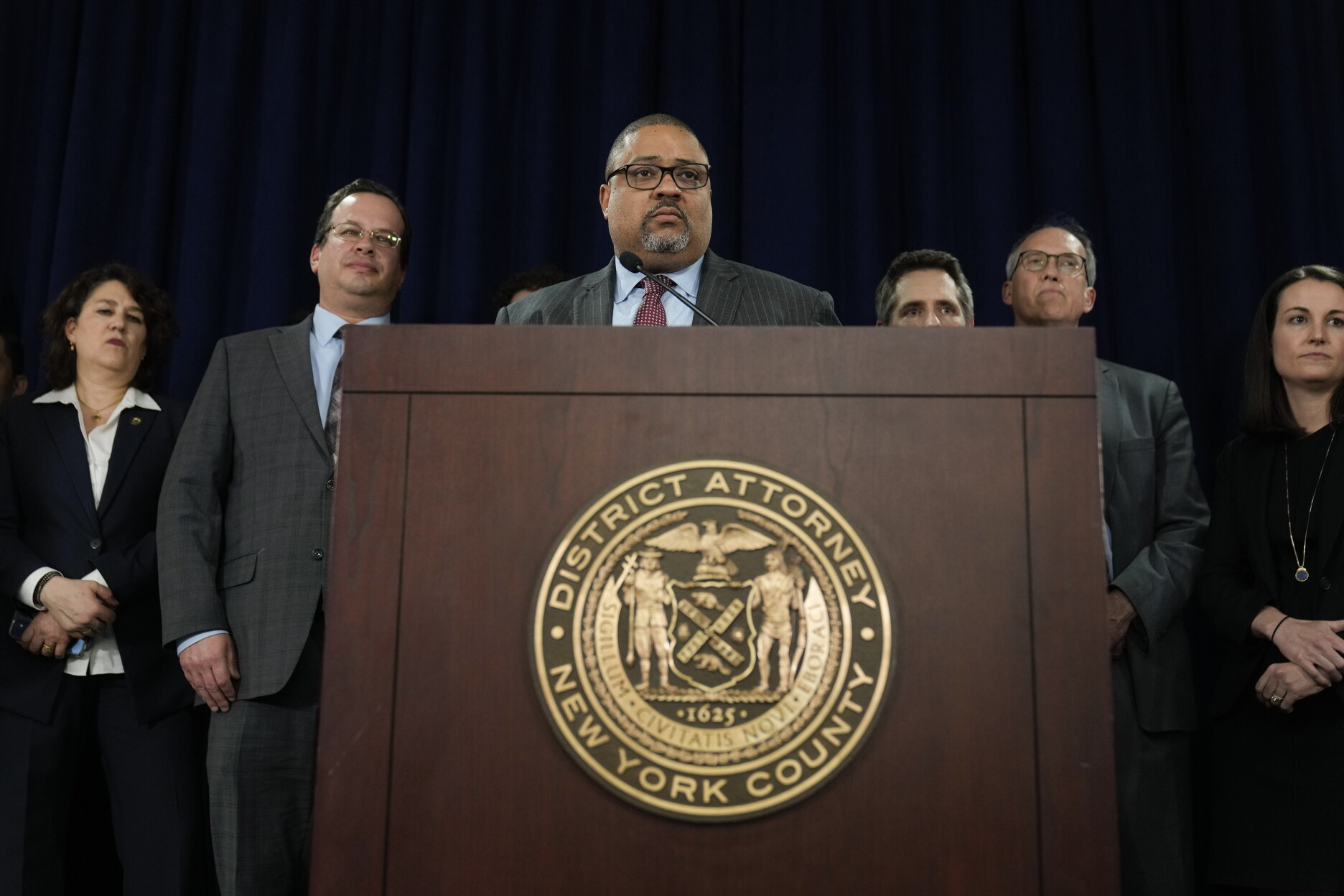 A jury found Trump guilty on 34 felony counts of falsifying business records stemming from the hush money case. Seth Wenig/APDonald Trump isn’t getting sentenced in New York anytime soon, with local prosecutors effectively pausing the hush money case as they fight off the president-elect’s attempts to dismiss his criminal conviction altogether.
Manhattan District Attorney Alvin Bragg Jr. indicated his team will continue to back the jury’s guilty verdict even after he returns to the White House. Though, Bragg’s office also showed an openness to a four-year freeze, until Trump — who will become the first felon ever to serve as president — is done with his term.
“The people deeply respect the office of the president, are mindful of the demands and obligations of the presidency, and acknowledge that defendant’s inauguration will raise unprecedented legal questions. We also deeply respect the fundamental role of the jury in our constitutional system,” Bragg wrote in a letter to the court Tuesday.
“Consideration must be given to various non-dismissal options … such as deferral of all remaining criminal proceedings until after the end of defendant’s upcoming presidential term,” he added, quoting a 2000 Justice Department memo about presidential protections when noting that “immunity should not lead to consequences that ‘forever thwart the public’s interest in enforcing its criminal laws.’”
With only 62 days until Inauguration Day, it’s unclear what this legal fight will look like. Expect letters, maybe a judicial order, and appeals — but no definitive sentencing. Former prosecutors and judges have told NOTUS there’s no chance Trump could be forced to appear in court for a sentencing after he’s back in office.
Prosecutors had until Tuesday to lay out how they plan to proceed with the case. This morning, Bragg himself authored a letter asking the state court judge to wipe out any remaining deadlines in the case — including a sentencing scheduled to take place next week — so that both sides can duke it out.
“The people believe that further proceedings before this court should be adjourned,” Bragg wrote.
If New York Supreme Court Justice Juan Merchan agrees, the case that was about to reach its much-anticipated conclusion will instead take a circular detour that relitigates one of the basic issues that has dogged every prosecution against Trump thus far: whether prosecutors can chase after him in the first place.
Trump’s felony conviction in New York is only one of several cases currently in limbo.
In Georgia, an indictment against him for 2020 election interference is on pause as a higher court considers whether Fulton County District Attorney Fani Willis should be yanked off the case. In Florida, a federal judge dismissed the indictment that accused Trump of mishandling classified records after she concluded that Justice Department special counsel Jack Smith didn’t have the authority to even bring the case. And in Washington, Smith has already begun to wind down his federal case for election interference, anticipating that Trump will kill the investigation as soon as he takes office.
That leaves only the Manhattan DA’s case, where a jury of 12 New Yorkers in May found that Trump was guilty of 34 felony counts of faking business records in an attempt to cover up a hush money deal that kept porn star Stormy Daniels from exposing their extramarital sexual affair before the 2016 presidential election.
But Tuesday’s letter makes clear that prosecutors and Trump’s defense team are about to spar over whether a president-elect is somehow immune from accountability by the mere nature of his political status.
The DA’s decision to wipe the calendar follows a Nov. 8 letter to the court from Trump defense lawyer Todd Blanche, who wrote that “dismissal is required because a sitting president may not be prosecuted.”
“A sitting president is completely immune from indictment or any criminal process, state or federal, and the same immunity extends to a president-elect during his transition into the presidency,” Blanche asserted.
Trump’s legal team more or less ensured this chaotic final stretch by relentlessly pushing to delay the New York case while simultaneously seeking a friendly ruling from the U.S. Supreme Court on presidential immunity. Defense lawyers have since latched onto that high court ruling by claiming that some evidence should never have been presented at trial, like the fact that Trump was at the Oval Office when he signed checks to his lawyer, Michael Cohen.
In Tuesday’s letter, Bragg acknowledged that his office’s options are few and narrow. He noted that even if the judge keeps the case alive and intends to inch toward sentencing, Trump’s team will surely appeal that decision and halt proceedings anyway.
—
Jose Pagliery is a reporter at NOTUS. -
Trump Is Not Getting Sentenced in New York Anytime Soon
www.washingtonsun.comA jury found Trump guilty on 34 felony counts of falsifying business records stemming from the hush money case. Seth Wenig/APDonald Trump isn’t getting sentenced in New York anytime soon, with local prosecutors effectively pausing the hush money case as they fight off the president-elect’s attempts to dismiss his criminal conviction altogether.
Manhattan District Attorney Alvin Bragg Jr. indicated his team will continue to back the jury’s guilty verdict even after he returns to the White House. Though, Bragg’s office also showed an openness to a four-year freeze, until Trump — who will become the first felon ever to serve as president — is done with his term.
“The people deeply respect the office of the president, are mindful of the demands and obligations of the presidency, and acknowledge that defendant’s inauguration will raise unprecedented legal questions. We also deeply respect the fundamental role of the jury in our constitutional system,” Bragg wrote in a letter to the court Tuesday.
“Consideration must be given to various non-dismissal options … such as deferral of all remaining criminal proceedings until after the end of defendant’s upcoming presidential term,” he added, quoting a 2000 Justice Department memo about presidential protections when noting that “immunity should not lead to consequences that ‘forever thwart the public’s interest in enforcing its criminal laws.’”
With only 62 days until Inauguration Day, it’s unclear what this legal fight will look like. Expect letters, maybe a judicial order, and appeals — but no definitive sentencing. Former prosecutors and judges have told NOTUS there’s no chance Trump could be forced to appear in court for a sentencing after he’s back in office.
Prosecutors had until Tuesday to lay out how they plan to proceed with the case. This morning, Bragg himself authored a letter asking the state court judge to wipe out any remaining deadlines in the case — including a sentencing scheduled to take place next week — so that both sides can duke it out.
“The people believe that further proceedings before this court should be adjourned,” Bragg wrote.
If New York Supreme Court Justice Juan Merchan agrees, the case that was about to reach its much-anticipated conclusion will instead take a circular detour that relitigates one of the basic issues that has dogged every prosecution against Trump thus far: whether prosecutors can chase after him in the first place.
Trump’s felony conviction in New York is only one of several cases currently in limbo.
In Georgia, an indictment against him for 2020 election interference is on pause as a higher court considers whether Fulton County District Attorney Fani Willis should be yanked off the case. In Florida, a federal judge dismissed the indictment that accused Trump of mishandling classified records after she concluded that Justice Department special counsel Jack Smith didn’t have the authority to even bring the case. And in Washington, Smith has already begun to wind down his federal case for election interference, anticipating that Trump will kill the investigation as soon as he takes office.
That leaves only the Manhattan DA’s case, where a jury of 12 New Yorkers in May found that Trump was guilty of 34 felony counts of faking business records in an attempt to cover up a hush money deal that kept porn star Stormy Daniels from exposing their extramarital sexual affair before the 2016 presidential election.
But Tuesday’s letter makes clear that prosecutors and Trump’s defense team are about to spar over whether a president-elect is somehow immune from accountability by the mere nature of his political status.
The DA’s decision to wipe the calendar follows a Nov. 8 letter to the court from Trump defense lawyer Todd Blanche, who wrote that “dismissal is required because a sitting president may not be prosecuted.”
“A sitting president is completely immune from indictment or any criminal process, state or federal, and the same immunity extends to a president-elect during his transition into the presidency,” Blanche asserted.
Trump’s legal team more or less ensured this chaotic final stretch by relentlessly pushing to delay the New York case while simultaneously seeking a friendly ruling from the U.S. Supreme Court on presidential immunity. Defense lawyers have since latched onto that high court ruling by claiming that some evidence should never have been presented at trial, like the fact that Trump was at the Oval Office when he signed checks to his lawyer, Michael Cohen.
In Tuesday’s letter, Bragg acknowledged that his office’s options are few and narrow. He noted that even if the judge keeps the case alive and intends to inch toward sentencing, Trump’s team will surely appeal that decision and halt proceedings anyway.
—
Jose Pagliery is a reporter at NOTUS. -
Republicans Are Starting to Ask a New Question: Do They Need to Be More Like Trump to Win?
washingtonsun.com Evan Vucci/APThere’s at least one thing almost every Republican candidate who ran this year had in common: They got fewer votes than Donald Trump.
In states across the country, the president-elect performed better than Republican candidates running for Congress and other statewide positions, often exceeding their support by enough votes to make the difference between victory and defeat. Trump did so much better, in fact, that he scored a decisive victory in the presidential race even as Republicans made significant but still relatively modest gains in the Senate and little new headway in the House.
The over-performance was a reversal from his two previous presidential runs, when Trump frequently received fewer votes than GOP candidates running down the ballot. And it raises a provocative question for a party that has spent much of the last decade trying to carve out ways to differentiate itself from its polarizing leader: Should Republican candidates in future elections try to be more like Donald Trump?
“You can’t authentically replicate the Trump persona,” Giancarlo Sopo, a Republican strategist, said. “But what you can do is take a look at parts of his policies that do appeal to people and embrace them.”
Sopo and other party operatives cautioned that replicating Trump’s appeal is, at some level, impossible. They add that amid an ongoing postelection assessment from the party, they aren’t yet exactly sure why the former president did better than his Republican allies.
But that Republicans are even contemplating such a question is a testament to how Trump is poised to further re-create the party in his own image, driven by his popularity with voters beyond even the Republican base.
“Candidates matter, and that’s the most important thing,” Alex Stroman, a Republican strategist, said. “Donald Trump is a super candidate and is finally maybe getting recognition for that.”
Eric Hovde (2024 RNC) AP-24198836581741 (4896x3264, AR: 1.50)
Trump’s strong returns compared to many Republican lawmakers, especially in the Senate, is a reason they might find it difficult to resist even the most controversial nominations for his cabinet, including his selection of Fox News host Pete Hegseth as secretary of defense, former Rep. Tulsi Gabbard as director of national intelligence and Rep. Matt Gaetz for attorney general.
Trump’s 2024 election results speak for themselves, especially in states with marquee Senate races that doubled as presidential battlegrounds. In Wisconsin, for instance, he received about 50,000 more votes than GOP Senate nominee Eric Hovde, winning the state by 1 percentage point while Hovde lost it by roughly 1 percentage point. In Pennsylvania, the former president outperformed Republican Senate candidate Dave McCormick by nearly 150,000 votes. (Hovde lost his race against Democratic Sen. Tammy Baldwin, while McCormick defeated Democratic Sen. Bob Casey.)
In Nevada, the gap was even bigger as a share of the overall vote: Trump won a majority of voters, per vote tallies posted Thursday, besting Kamala Harris by more than 40,000 votes. But GOP Senate nominee Sam Brown received just over 46% of the vote, trailing Trump’s vote total by roughly 75,000 votes.
In those three states, GOP Senate candidates took on entrenched Democratic incumbents, who traditionally outrun their party’s top of the ticket. But even in open-seat contests, where the GOP candidates were at less of a disadvantage, Trump still won more votes.
In Michigan, Trump won about 2.8 million votes, with 49.7% of the vote, on his way to victory. But GOP Senate nominee Mike Rogers managed fewer than 2.7 million votes, losing with just 48.3% of the vote.
The difference was larger in another open-seat race in Arizona, where Trump was on track to better Republican Senate nominee Kari Lake by more than 4 percentage points, winning more than 52% of the vote compared to her total of less than 48%. With 99% of precincts reporting Thursday, Lake had received 200,000 fewer votes than Trump.
The Republican presidential nominee outran GOP Senate candidates in nearly every competitive Senate race, in fact, including in Montana, Ohio, Texas, Florida and Nebraska.
Comparisons to House races, where results of the presidential race were not always immediately known, are more difficult. But in at least one key race, in Maine’s 2nd Congressional District, Trump won the district’s lone electoral vote easily, with nearly 53% of the vote, while the GOP House nominee appeared to fall short of defeating Democratic Rep. Jared Golden.
In North Carolina, Trump performed better than not only scandal-plagued Republican gubernatorial nominee Mark Robinson, but also Republican candidates down the ballot like attorney general nominee Dan Bishop. The difference helped Democrats in the state win a handful of competitive races even as Trump won a relatively comfortable majority of the vote in the presidential contest.
Trump hadn’t fared nearly as well compared to other Republican candidates during his prior campaigns, when GOP contenders frequently earned more votes than he did.
In 2016, Trump underperformed Republican Senate nominees in swing states like Pennsylvania, Florida and New Hampshire. That year, GOP Sen. Ron Johnson easily outran Trump in Wisconsin, winning 50.2% of the vote while Trump received only 47.8% of the vote.
The outcomes were more mixed in 2020. But Republican Senate nominees like John James in Michigan and Susan Collins in Maine still received a higher share of the vote than Trump that year.
Dave McCormick AP- 24310157105515 (4237x2825, AR: 1.50)
Trump did better this year, according to veteran Republican strategist Brad Todd, in part because many of his former critics, including those within the GOP, had reconciled with him by 2024.
“And part of it was because they decided they had more to worry about with the Democrats,” Todd said.
Republican strategists cautioned that a complete assessment of where and why Trump did better than other GOP candidates remains in process.
Some also point out that, even this year, there were multiple examples of Republicans who performed much better than the president-elect, citing Rep. Don Bacon in Nebraska’s 2nd Congressional District, Senate nominee Larry Hogan in Maryland and gubernatorial nominee Kelly Ayotte in New Hampshire. All candidates exceeded Trump’s vote total in the suburbs, where he has usually struggled the most.
But Trump’s overperformance was also hardly a surprise to many GOP strategists in the weeks leading up to the election. The National Republican Congressional Committee, the House GOP’s political arm, issued a preelection memo touting the former president’s popularity as the top reason it was poised to retain a congressional majority.
His popularity, the memo said, would help counteract House Democrats’ heavy spending advantage in many races, one reason GOP strategists say their candidates often underperformed Trump. Many Democratic Senate candidates, like Baldwin and Casey, had also developed specialized appeal to their states, winning reelection multiple times and tailoring their message to their state’s specific demographics.
Republicans are set to gain four seats in the Senate, boosting their membership from 49 members to a majority-making 53. The outcome of several key House races remains uncertain, but Republicans will retain their majority narrowly.
In Wisconsin, that background and appeal helped Baldwin perform better among the state’s rural voters and farming communities, according to one GOP strategist who reviewed the state’s election results.
Todd, who advised the successful McCormick campaign, said Casey did better with blue-collar men, though the differences between the Senate campaign and Trump’s campaign were overall minute.
“We did a little bit better with college men. He did better with non-college men,” Todd said. “That’s pretty much it.”
Republicans say they suspect that many new voters who turned out in 2024, a cohort of young men, backed Trump but potentially left the rest of their ballot blank. Trump’s campaign aggressively courted those voters during the campaign, trying to persuade many of them to cast a ballot for the first time.
“He draws people to the polls who would otherwise not vote,” Sopo said. “Your typical podcast bro does not care about his local Senate race — but he will show up and vote for Trump.”
“Trump embodies a middle finger to the cultural establishment,” Sopo added. “So if you don’t like your corporate DEI department or the excessively politically correct HR lady, you’re going to channel that energy through him. He’s a proxy for those frustrations."
Donald Trump AP-21012750712028 (3743x2495, AR: 1.50)
Winning over voters who turned out for Trump but ignored other GOP candidates should be a goal for the party in future elections, said GOP strategists, adding that they could help the party win a multitude of swing states and battleground districts.
That also might be easier said than done, they said, especially for candidates who try to emulate the brash personality of perhaps the most unique presidential candidate in recent American history.
“If you model yourself on Trump, or try to be a mini-me, it’s not going to have the same authenticity,” said David Urban, a former Trump campaign adviser. “It’s not going to be authentic.”
Republican candidates, like Lake in Arizona, who did seem to embrace Trump the most also suffered the worst defeats last week.
But Republicans nonetheless urged the party to take some lessons from Trump’s victory. They focused, for instance, on his campaign’s emphasis on finding nontraditional Republican voters, a strategy that saw him making appearances on podcasts and campaigning in solidly blue states like New York and California.
The influx of younger and more working-class voters into the GOP gives the party a chance to win voters who campaigns might otherwise ignore, strategists said.
“Candidates have to understand this shift and make sure they’re reaching out outside these traditional Republican constituencies, because it certainly worked for Donald Trump,” Stroman said.
Other operatives cited his professed support for entitlement programs like Medicare and Social Security as a policy platform for others to adopt.
Todd also praised Trump and his campaign’s willingness to attack Democrats over issues like transgender athletes in school sports, which he said has the support of four-fifths of the public but scares away too many Republicans. That boldness should be embraced by other Republicans, he said.
“When you see the number 80/20, you have to believe it,” Todd said. “And the Trump campaign was willing to go to the 80/20 issue that wasn’t in the normal matrix of issues, and that’s a lesson.”
—
Alex Roarty is a reporter at NOTUS. -
Republicans Are Starting to Ask a New Question: Do They Need to Be More Like Trump to Win?
www.washingtonsun.comEvan Vucci/APThere’s at least one thing almost every Republican candidate who ran this year had in common: They got fewer votes than Donald Trump.
In states across the country, the president-elect performed better than Republican candidates running for Congress and other statewide positions, often exceeding their support by enough votes to make the difference between victory and defeat. Trump did so much better, in fact, that he scored a decisive victory in the presidential race even as Republicans made significant but still relatively modest gains in the Senate and little new headway in the House.
The over-performance was a reversal from his two previous presidential runs, when Trump frequently received fewer votes than GOP candidates running down the ballot. And it raises a provocative question for a party that has spent much of the last decade trying to carve out ways to differentiate itself from its polarizing leader: Should Republican candidates in future elections try to be more like Donald Trump?
“You can’t authentically replicate the Trump persona,” Giancarlo Sopo, a Republican strategist, said. “But what you can do is take a look at parts of his policies that do appeal to people and embrace them.”
Sopo and other party operatives cautioned that replicating Trump’s appeal is, at some level, impossible. They add that amid an ongoing postelection assessment from the party, they aren’t yet exactly sure why the former president did better than his Republican allies.
But that Republicans are even contemplating such a question is a testament to how Trump is poised to further re-create the party in his own image, driven by his popularity with voters beyond even the Republican base.
“Candidates matter, and that’s the most important thing,” Alex Stroman, a Republican strategist, said. “Donald Trump is a super candidate and is finally maybe getting recognition for that.”
Eric Hovde (2024 RNC) AP-24198836581741 (4896x3264, AR: 1.50)
Trump’s strong returns compared to many Republican lawmakers, especially in the Senate, is a reason they might find it difficult to resist even the most controversial nominations for his cabinet, including his selection of Fox News host Pete Hegseth as secretary of defense, former Rep. Tulsi Gabbard as director of national intelligence and Rep. Matt Gaetz for attorney general.
Trump’s 2024 election results speak for themselves, especially in states with marquee Senate races that doubled as presidential battlegrounds. In Wisconsin, for instance, he received about 50,000 more votes than GOP Senate nominee Eric Hovde, winning the state by 1 percentage point while Hovde lost it by roughly 1 percentage point. In Pennsylvania, the former president outperformed Republican Senate candidate Dave McCormick by nearly 150,000 votes. (Hovde lost his race against Democratic Sen. Tammy Baldwin, while McCormick defeated Democratic Sen. Bob Casey.)
In Nevada, the gap was even bigger as a share of the overall vote: Trump won a majority of voters, per vote tallies posted Thursday, besting Kamala Harris by more than 40,000 votes. But GOP Senate nominee Sam Brown received just over 46% of the vote, trailing Trump’s vote total by roughly 75,000 votes.
In those three states, GOP Senate candidates took on entrenched Democratic incumbents, who traditionally outrun their party’s top of the ticket. But even in open-seat contests, where the GOP candidates were at less of a disadvantage, Trump still won more votes.
In Michigan, Trump won about 2.8 million votes, with 49.7% of the vote, on his way to victory. But GOP Senate nominee Mike Rogers managed fewer than 2.7 million votes, losing with just 48.3% of the vote.
The difference was larger in another open-seat race in Arizona, where Trump was on track to better Republican Senate nominee Kari Lake by more than 4 percentage points, winning more than 52% of the vote compared to her total of less than 48%. With 99% of precincts reporting Thursday, Lake had received 200,000 fewer votes than Trump.
The Republican presidential nominee outran GOP Senate candidates in nearly every competitive Senate race, in fact, including in Montana, Ohio, Texas, Florida and Nebraska.
Comparisons to House races, where results of the presidential race were not always immediately known, are more difficult. But in at least one key race, in Maine’s 2nd Congressional District, Trump won the district’s lone electoral vote easily, with nearly 53% of the vote, while the GOP House nominee appeared to fall short of defeating Democratic Rep. Jared Golden.
In North Carolina, Trump performed better than not only scandal-plagued Republican gubernatorial nominee Mark Robinson, but also Republican candidates down the ballot like attorney general nominee Dan Bishop. The difference helped Democrats in the state win a handful of competitive races even as Trump won a relatively comfortable majority of the vote in the presidential contest.
Trump hadn’t fared nearly as well compared to other Republican candidates during his prior campaigns, when GOP contenders frequently earned more votes than he did.
In 2016, Trump underperformed Republican Senate nominees in swing states like Pennsylvania, Florida and New Hampshire. That year, GOP Sen. Ron Johnson easily outran Trump in Wisconsin, winning 50.2% of the vote while Trump received only 47.8% of the vote.
The outcomes were more mixed in 2020. But Republican Senate nominees like John James in Michigan and Susan Collins in Maine still received a higher share of the vote than Trump that year.
Dave McCormick AP- 24310157105515 (4237x2825, AR: 1.50)
Trump did better this year, according to veteran Republican strategist Brad Todd, in part because many of his former critics, including those within the GOP, had reconciled with him by 2024.
“And part of it was because they decided they had more to worry about with the Democrats,” Todd said.
Republican strategists cautioned that a complete assessment of where and why Trump did better than other GOP candidates remains in process.
Some also point out that, even this year, there were multiple examples of Republicans who performed much better than the president-elect, citing Rep. Don Bacon in Nebraska’s 2nd Congressional District, Senate nominee Larry Hogan in Maryland and gubernatorial nominee Kelly Ayotte in New Hampshire. All candidates exceeded Trump’s vote total in the suburbs, where he has usually struggled the most.
But Trump’s overperformance was also hardly a surprise to many GOP strategists in the weeks leading up to the election. The National Republican Congressional Committee, the House GOP’s political arm, issued a preelection memo touting the former president’s popularity as the top reason it was poised to retain a congressional majority.
His popularity, the memo said, would help counteract House Democrats’ heavy spending advantage in many races, one reason GOP strategists say their candidates often underperformed Trump. Many Democratic Senate candidates, like Baldwin and Casey, had also developed specialized appeal to their states, winning reelection multiple times and tailoring their message to their state’s specific demographics.
Republicans are set to gain four seats in the Senate, boosting their membership from 49 members to a majority-making 53. The outcome of several key House races remains uncertain, but Republicans will retain their majority narrowly.
In Wisconsin, that background and appeal helped Baldwin perform better among the state’s rural voters and farming communities, according to one GOP strategist who reviewed the state’s election results.
Todd, who advised the successful McCormick campaign, said Casey did better with blue-collar men, though the differences between the Senate campaign and Trump’s campaign were overall minute.
“We did a little bit better with college men. He did better with non-college men,” Todd said. “That’s pretty much it.”
Republicans say they suspect that many new voters who turned out in 2024, a cohort of young men, backed Trump but potentially left the rest of their ballot blank. Trump’s campaign aggressively courted those voters during the campaign, trying to persuade many of them to cast a ballot for the first time.
“He draws people to the polls who would otherwise not vote,” Sopo said. “Your typical podcast bro does not care about his local Senate race — but he will show up and vote for Trump.”
“Trump embodies a middle finger to the cultural establishment,” Sopo added. “So if you don’t like your corporate DEI department or the excessively politically correct HR lady, you’re going to channel that energy through him. He’s a proxy for those frustrations."
Donald Trump AP-21012750712028 (3743x2495, AR: 1.50)
Winning over voters who turned out for Trump but ignored other GOP candidates should be a goal for the party in future elections, said GOP strategists, adding that they could help the party win a multitude of swing states and battleground districts.
That also might be easier said than done, they said, especially for candidates who try to emulate the brash personality of perhaps the most unique presidential candidate in recent American history.
“If you model yourself on Trump, or try to be a mini-me, it’s not going to have the same authenticity,” said David Urban, a former Trump campaign adviser. “It’s not going to be authentic.”
Republican candidates, like Lake in Arizona, who did seem to embrace Trump the most also suffered the worst defeats last week.
But Republicans nonetheless urged the party to take some lessons from Trump’s victory. They focused, for instance, on his campaign’s emphasis on finding nontraditional Republican voters, a strategy that saw him making appearances on podcasts and campaigning in solidly blue states like New York and California.
The influx of younger and more working-class voters into the GOP gives the party a chance to win voters who campaigns might otherwise ignore, strategists said.
“Candidates have to understand this shift and make sure they’re reaching out outside these traditional Republican constituencies, because it certainly worked for Donald Trump,” Stroman said.
Other operatives cited his professed support for entitlement programs like Medicare and Social Security as a policy platform for others to adopt.
Todd also praised Trump and his campaign’s willingness to attack Democrats over issues like transgender athletes in school sports, which he said has the support of four-fifths of the public but scares away too many Republicans. That boldness should be embraced by other Republicans, he said.
“When you see the number 80/20, you have to believe it,” Todd said. “And the Trump campaign was willing to go to the 80/20 issue that wasn’t in the normal matrix of issues, and that’s a lesson.”
—
Alex Roarty is a reporter at NOTUS. -
Matt Gaetz Resigns From His House Seat After Trump Attorney General Nomination
washingtonsun.com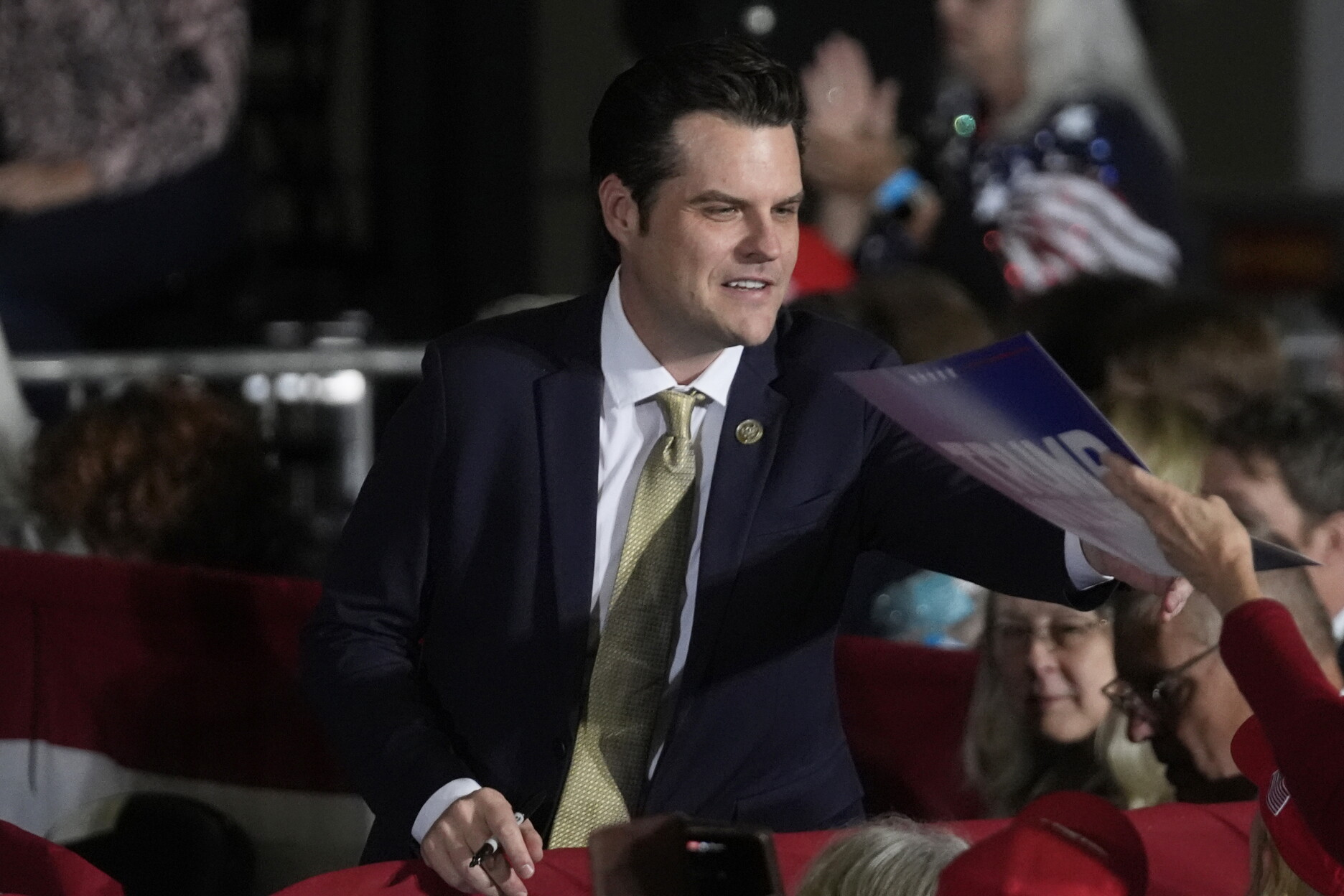 Gaetz stepped down the same day Donald Trump nominated him to serve as attorney general. John Bazemore/APRep. Matt Gaetz resigned from his House seat hours after Donald Trump announced he would nominate the Florida congressman to serve as attorney general.
Speaker Mike Johnson said Gaetz would resign effective immediately.
The resignation comes as the House Ethics Committee was investigating Gaetz for alleged sex trafficking of a minor. Now with his resignation, the committee will immediately cease their investigation and no report will be released.
Given the slim margin in the House, Johnson said Gaetz told him the resignation would give Republicans an opportunity to run a special election to fill the seat quickly.
"I think out of deference to us, he issued his resignation letter effective immediately, of Congress. That caught us by surprise a little bit. But I asked him what the reasoning was, and he said, 'Well, you can't have too many absences,'" Johnson said.
Under Florida law there's "about an eight-week period to select and fill in a vacancy," and Johnson hoped that Gov. Ron DeSantis would start the clock in order to get the seat filled before Jan. 3.
The FBI previously investigated Gaetz for allegedly paying for sex with a 17-year-old girl. Federal prosecutors did not charge Gaetz, but he has since been under investigation in the House.
"It is true that the House Ethics Committee, with a former member of Congress, would have no further jurisdiction over that person ... so that would not be unprecedented," Johnson said when asked about the timing of the resignation in regard to the ethics investigation. "But as far as the timing of the release of the report, the speaker of the House is not involved in that."
Senators met the news of the Gaetz nomination with shock, and there were doubts he would be able to get through a Senate confirmation process.
Gaetz did not respond to a request for comment.
This is a breaking story and will be updated.
—
Reese Gorman is a reporter at NOTUS. Oriana González, a reporter at NOTUS, contributed to this story. -
Matt Gaetz Resigns From His House Seat After Trump Attorney General Nomination
www.washingtonsun.comGaetz stepped down the same day Donald Trump nominated him to serve as attorney general. John Bazemore/APRep. Matt Gaetz resigned from his House seat hours after Donald Trump announced he would nominate the Florida congressman to serve as attorney general.
Speaker Mike Johnson said Gaetz would resign effective immediately.
The resignation comes as the House Ethics Committee was investigating Gaetz for alleged sex trafficking of a minor. Now with his resignation, the committee will immediately cease their investigation and no report will be released.
Given the slim margin in the House, Johnson said Gaetz told him the resignation would give Republicans an opportunity to run a special election to fill the seat quickly.
"I think out of deference to us, he issued his resignation letter effective immediately, of Congress. That caught us by surprise a little bit. But I asked him what the reasoning was, and he said, 'Well, you can't have too many absences,'" Johnson said.
Under Florida law there's "about an eight-week period to select and fill in a vacancy," and Johnson hoped that Gov. Ron DeSantis would start the clock in order to get the seat filled before Jan. 3.
The FBI previously investigated Gaetz for allegedly paying for sex with a 17-year-old girl. Federal prosecutors did not charge Gaetz, but he has since been under investigation in the House.
"It is true that the House Ethics Committee, with a former member of Congress, would have no further jurisdiction over that person ... so that would not be unprecedented," Johnson said when asked about the timing of the resignation in regard to the ethics investigation. "But as far as the timing of the release of the report, the speaker of the House is not involved in that."
Senators met the news of the Gaetz nomination with shock, and there were doubts he would be able to get through a Senate confirmation process.
Gaetz did not respond to a request for comment.
This is a breaking story and will be updated.
—
Reese Gorman is a reporter at NOTUS. Oriana González, a reporter at NOTUS, contributed to this story. -
Trump’s Pete Hegseth Nomination Has Left Republicans Confused On and Off the Hill
washingtonsun.com Andrew Harnik/APWhen Donald Trump announced Pete Hegseth as his secretary of defense nominee, House Republicans were, to say the least, surprised.
In a private conversation on the House floor, one Republican lawmaker remarked: “Who the fuck is this guy?” per sources familiar with the conversation.
On Capitol Hill, Hegseth’s appointment raised a lot of eyebrows and didn’t garner much immediate praise. An opinion host on Fox News and a National Guard officer, his résumé is punctuated by years worth of controversial comments, from “we should not have women in combat roles” to advocating for then-President Trump to pardon convicted war criminals.
Do Republicans think Hegseth has enough experience to be the Secretary of Defense?
"What matters is that the President elect believes so," one House Republican told NOTUS over text.
The confusion extends beyond the Hill: One defense industry lobbyist reportedly asked the exact same question as the one expressed on the House floor, per Politico, telling the outlet they were hoping for “someone who actually has an extensive background in defense. That would be a good start.”
Publicly, House Republicans weren’t shy about their lack of familiarity with Hegseth — though notably shared as much with less colorful language.
“I honestly don’t know enough about him. I want to research, certainly familiar with his work on TV,” Rep. Nick LaLota told NOTUS.
Even the chairman of the House Armed Services Committee said he isn’t aware of who Hegseth is.
“I just know him from his being on TV,” Rep. Mike Rogers said. When asked if Hegseth had the experience needed to be the secretary of defense, he gave a similar answer.
“I have no idea. You know as much about Pete Hegseth as I do,” he said.
Sen. John Hoeven was similarly unaware of his background and assumed Hegseth must have been in the Marines like his dad.
“So he’s a Marine, and I’m a big fan of Marines, and I’m looking forward to getting to know him,” Hoeven said. “He’s got an excellent track record, both in the military and he’s been a tremendous success at everything he’s done.”
As an Army combat veteran with experience in Afghanistan and Iraq, Hegseth’s résumé overseas is what many Republicans in Congress are leaning into in support of him. House Speaker Mike Johnson was quick to point out his deployments while still playing up Hegseth’s public attacks on the current “woke” military leadership.
“Pete is dedicated to ensuring that our military is focused on lethality and readiness, not woke ideology,” Johnson said. “He served our country faithfully in Guantanamo, Afghanistan and Iraq and is a believer in peace through strength and the America First agenda.”
Earlier this month, Hegseth was a guest with podcaster and former Navy SEAL Shawn Ryan. The two talked at length about Hegseth’s fears around “the institutions going sideways” and becoming more “woke.”
“Any general that was involved, general, admiral, whatever, that was involved in any of the DEI, woke shit, has got to go,” he said.
Republicans are spinning Hegseth’s lack of experience as an upside for the job. One Republican lawmaker, also a veteran, said they see it as part of the reason Hegseth got the nomination.
“President Trump is following through on his promise,” they said, “to shake up the entrenched bureaucracy in our government, including the Pentagon.”
But even his defenders say Hegseth will need a solid staff. Republicans said they expect he’ll have the support of extremely “experienced deputies” who “know their way around” the Pentagon. They expect him to be “saddled with success.”
—
John T. Seward is a NOTUS reporter and an Allbritton Journalism Institute fellow. -
Trump’s Pete Hegseth Nomination Has Left Republicans Confused On and Off the Hill
www.washingtonsun.comAndrew Harnik/APWhen Donald Trump announced Pete Hegseth as his secretary of defense nominee, House Republicans were, to say the least, surprised.
In a private conversation on the House floor, one Republican lawmaker remarked: “Who the fuck is this guy?” per sources familiar with the conversation.
On Capitol Hill, Hegseth’s appointment raised a lot of eyebrows and didn’t garner much immediate praise. An opinion host on Fox News and a National Guard officer, his résumé is punctuated by years worth of controversial comments, from “we should not have women in combat roles” to advocating for then-President Trump to pardon convicted war criminals.
Do Republicans think Hegseth has enough experience to be the Secretary of Defense?
"What matters is that the President elect believes so," one House Republican told NOTUS over text.
The confusion extends beyond the Hill: One defense industry lobbyist reportedly asked the exact same question as the one expressed on the House floor, per Politico, telling the outlet they were hoping for “someone who actually has an extensive background in defense. That would be a good start.”
Publicly, House Republicans weren’t shy about their lack of familiarity with Hegseth — though notably shared as much with less colorful language.
“I honestly don’t know enough about him. I want to research, certainly familiar with his work on TV,” Rep. Nick LaLota told NOTUS.
Even the chairman of the House Armed Services Committee said he isn’t aware of who Hegseth is.
“I just know him from his being on TV,” Rep. Mike Rogers said. When asked if Hegseth had the experience needed to be the secretary of defense, he gave a similar answer.
“I have no idea. You know as much about Pete Hegseth as I do,” he said.
Sen. John Hoeven was similarly unaware of his background and assumed Hegseth must have been in the Marines like his dad.
“So he’s a Marine, and I’m a big fan of Marines, and I’m looking forward to getting to know him,” Hoeven said. “He’s got an excellent track record, both in the military and he’s been a tremendous success at everything he’s done.”
As an Army combat veteran with experience in Afghanistan and Iraq, Hegseth’s résumé overseas is what many Republicans in Congress are leaning into in support of him. House Speaker Mike Johnson was quick to point out his deployments while still playing up Hegseth’s public attacks on the current “woke” military leadership.
“Pete is dedicated to ensuring that our military is focused on lethality and readiness, not woke ideology,” Johnson said. “He served our country faithfully in Guantanamo, Afghanistan and Iraq and is a believer in peace through strength and the America First agenda.”
Earlier this month, Hegseth was a guest with podcaster and former Navy SEAL Shawn Ryan. The two talked at length about Hegseth’s fears around “the institutions going sideways” and becoming more “woke.”
“Any general that was involved, general, admiral, whatever, that was involved in any of the DEI, woke shit, has got to go,” he said.
Republicans are spinning Hegseth’s lack of experience as an upside for the job. One Republican lawmaker, also a veteran, said they see it as part of the reason Hegseth got the nomination.
“President Trump is following through on his promise,” they said, “to shake up the entrenched bureaucracy in our government, including the Pentagon.”
But even his defenders say Hegseth will need a solid staff. Republicans said they expect he’ll have the support of extremely “experienced deputies” who “know their way around” the Pentagon. They expect him to be “saddled with success.”
—
John T. Seward is a NOTUS reporter and an Allbritton Journalism Institute fellow. -
‘He Has No Chance’: Matt Gaetz’s Ethics Probe Takes Center Stage After Attorney General Nomination
www.washingtonsun.com Alex Brandon/APDonald Trump announced on Truth Social that Rep. Matt Gaetz is his nominee for attorney general of the United States, appointing him to oversee a Justice Department that once investigated the Florida Republican for sex trafficking a minor.
“It is my Great Honor to announce that Congressman Matt Gaetz, of Florida, is hereby nominated to be The Attorney General of the United States,” Trump wrote in his post, going on to call him a “tenacious attorney.”
Trump said Gaetz would be charged with ending “Weaponized Government” and restoring “Americans’ badly-shattered Faith and Confidence in the Justice Department,” in addition to addressing the border.
Just two years ago, the FBI investigated Gaetz for allegedly paying for sex with a 17-year-old girl — allegations that were supported by Venmo transactions and a confession letter written by his friend, disgraced local tax official Joel Greenberg. Greenberg said Gaetz would use him as a middleman for arranging sexual encounters. Gaetz has denied allegations that he ever had sex with a minor or engaged in sex trafficking.
Gaetz sought a presidential pardon during Trump’s first term, according to testimony delivered to the House Jan. 6 Committee. Former White House aide John McEntee testified that Gaetz had told him that “he did not do anything wrong, but they are trying to make his life hell, and you know, if the president could give him a pardon, that would be great.”
Federal prosecutors ultimately declined to criminally charge the congressman. Since, the House Ethics Committee has recommenced its own probe into Gaetz. The Ethics panel had previously paused its investigation, deferring the matter to the DOJ.
The investigation by the committee is ongoing; it is specifically looking at allegations of “sexual misconduct and illicit drug use.” Sources have previously told NOTUS that the probe is centered around the allegation that he had sexual relations with a minor.
Separately, a civil lawsuit involving one of Gaetz’s friends, a Florida lobbyist, has revealed additional details about drug-fueled sex parties with young women. Legal documents filed to a Florida federal court cited sealed affidavits from three eyewitness testimonies that place Gaetz at a 2017 sex party, where minors were present, as NOTUS previously reported.
This ongoing controversy has people close to Trump skeptical of Gaetz’s ability to get through a Senate confirmation process.
“He has no chance at getting confirmed,” one source close to Trump told NOTUS. “I’d be shocked if his nomination makes it out of committee.”
When the news was announced, House members were at a hotel on Capitol Hill for leadership elections.
In the lobby, a congressman shared the news with three other lawmakers. “Y’all are gonna love this,” they said. In response, one lawmaker put their hands over their face in shock, and another said, “Seriously, he put Matt Gaetz?”
Gaetz has remained a stout defender of Trump and the MAGA movement, dubbing himself a “firebrand.” Gaetz’s remained loyal to Trump, despite Florida Gov. Ron DeSantis’ presidential campaign.
Politics is a family business in the Gaetz family. The House Republican’s father, Don Gaetz, was a powerhouse in local politics, before serving as the state’s Senate president until 2014. Before getting elected to Congress, Matt Gaetz was a lawyer and state representative.
Read more:
• New Court Filings Place Matt Gaetz at a Party at the Center of the Sex Trafficking Scandal
—
Reese Gorman and Jose Pagliery are reporters at NOTUS. -
‘He Has No Chance’: Matt Gaetz’s Ethics Probe Takes Center Stage After Attorney General Nomination
washingtonsun.comAlex Brandon/APDonald Trump announced on Truth Social that Rep. Matt Gaetz is his nominee for attorney general of the United States, appointing him to oversee a Justice Department that once investigated the Florida Republican for sex trafficking a minor.
“It is my Great Honor to announce that Congressman Matt Gaetz, of Florida, is hereby nominated to be The Attorney General of the United States,” Trump wrote in his post, going on to call him a “tenacious attorney.”
Trump said Gaetz would be charged with ending “Weaponized Government” and restoring “Americans’ badly-shattered Faith and Confidence in the Justice Department,” in addition to addressing the border.
Just two years ago, the FBI investigated Gaetz for allegedly paying for sex with a 17-year-old girl — allegations that were supported by Venmo transactions and a confession letter written by his friend, disgraced local tax official Joel Greenberg. Greenberg said Gaetz would use him as a middleman for arranging sexual encounters. Gaetz has denied allegations that he ever had sex with a minor or engaged in sex trafficking.
Gaetz sought a presidential pardon during Trump’s first term, according to testimony delivered to the House Jan. 6 Committee. Former White House aide John McEntee testified that Gaetz had told him that “he did not do anything wrong, but they are trying to make his life hell, and you know, if the president could give him a pardon, that would be great.”
Federal prosecutors ultimately declined to criminally charge the congressman. Since, the House Ethics Committee has recommenced its own probe into Gaetz. The Ethics panel had previously paused its investigation, deferring the matter to the DOJ.
The investigation by the committee is ongoing; it is specifically looking at allegations of “sexual misconduct and illicit drug use.” Sources have previously told NOTUS that the probe is centered around the allegation that he had sexual relations with a minor.
Separately, a civil lawsuit involving one of Gaetz’s friends, a Florida lobbyist, has revealed additional details about drug-fueled sex parties with young women. Legal documents filed to a Florida federal court cited sealed affidavits from three eyewitness testimonies that place Gaetz at a 2017 sex party, where minors were present, as NOTUS previously reported.
This ongoing controversy has people close to Trump skeptical of Gaetz’s ability to get through a Senate confirmation process.
“He has no chance at getting confirmed,” one source close to Trump told NOTUS. “I’d be shocked if his nomination makes it out of committee.”
When the news was announced, House members were at a hotel on Capitol Hill for leadership elections.
In the lobby, a congressman shared the news with three other lawmakers. “Y’all are gonna love this,” they said. In response, one lawmaker put their hands over their face in shock, and another said, “Seriously, he put Matt Gaetz?”
Gaetz has remained a stout defender of Trump and the MAGA movement, dubbing himself a “firebrand.” Gaetz’s remained loyal to Trump, despite Florida Gov. Ron DeSantis’ presidential campaign.
Politics is a family business in the Gaetz family. The House Republican’s father, Don Gaetz, was a powerhouse in local politics, before serving as the state’s Senate president until 2014. Before getting elected to Congress, Matt Gaetz was a lawyer and state representative.
Read more:
• New Court Filings Place Matt Gaetz at a Party at the Center of the Sex Trafficking Scandal
—
Reese Gorman and Jose Pagliery are reporters at NOTUS. -
John Thune Picked to Lead Senate Republicans Over Trumpworld Objections
washingtonsun.com Mariam Zuhaib/APSen. John Thune will be the new Republican majority leader, ushering in the first leadership shift in 18 years but a sign that senators aren’t totally willing to relinquish the Mitch McConnell era.
Thune won, 29-24, on the second ballot against Sen. John Cornyn, despite an intense outside pressure campaign led by conservative commentators and MAGA allies in favor of Florida Sen. Rick Scott. Scott positioned himself as the most Trump-aligned of the three men running but lost on the first ballot.
Still, in his first press conference as leader, Thune vowed to be a unifying force for the GOP with a single-minded mission: advancing Donald Trump’s agenda and unwinding Joe Biden and Chuck Schumer’s record.
“This Republican team is uniting,” Thune said. “We are on one team.”
Thune had just four public backers heading into the conference meeting: Sens. Mike Rounds, Markwayne Mullin, Kevin Cramer and NRSC Chair Steve Daines. Scott had more public supporters, but in a closed-door process via secret ballot, Thune had the numbers where Scott had met his ceiling. Thune has been a loyal McConnell ally and is currently his top deputy in the Senate. McConnell has led Senate Republicans since 2007, two years into Thune’s first term as senator.
Despite not making a public endorsement in the race, Trump’s influence loomed large. He has criticized Thune for years, calling him a RINO and openly pushing South Dakota Gov. Kristi Noem to primary him in 2022 (Noem, now being tapped to lead the Department of Homeland Security, declined). Earlier this week, senators told NOTUS that Trump staying out of the race was a good thing and they hoped he would continue to do so — despite some of his fiercest allies like billionaire Elon Musk publicly advocating for Scott.
With a secret-ballot process unlike the House, senators were largely shielded from the criticism that could come from Trump acolytes for backing Thune.
Scott largely ran on his Trump bona fides. In a postelection statement, he said, “While it isn’t the result we hoped for, I will do everything possible to make sure John Thune is successful in accomplishing President Trump’s agenda.” Whether that means he’ll make Thune’s reign as leader harder or easier remains to be seen.
In February, McConnell announced he would be stepping down from leadership after the election, though he will remain in the Senate (his term expires in 2027).
Immediately after McConnell’s announcement, the two “Johns” emerged as the two contenders. But some conservative senators looking to fundamentally shake up the Senate coalesced around Scott.
Scott touted himself as an outsider compared to Thune and Cornyn, though he led the NRSC in 2022 through a disastrous cycle, losing races in Georgia, Nevada, Arizona and Pennsylvania that were seen as winnable but stymied by weak candidates and poor fundraising under Scott’s leadership. Scott then challenged McConnell for leadership in 2022 — the first challenge of McConnell’s tenure — and lost 37-10. This time, Scott only picked up three additional votes on the first ballot, earning 13 votes vs. Cornyn’s 15 and Thune’s 23 votes.
Thune and Cornyn ran on largely similar platforms geared toward opening the amendment process and engaging senators on legislation well ahead of votes. McConnell’s critics on the right point to his strong-arming of power among leadership, weakening the committee chairs and other senators’ ability to push amendments or shape legislation in a meaningful way.
Thune is pushing to open the process, but as McConnell’s number two, wasn’t seen by senators as the leader to shake the Senate to its core.
What Thune does bring to the table is a depth of relationships among colleagues and a strong fundraising arm that Scott lacks.
Thune transferred $4 million to the NRSC in September, the largest ever transfer for a Senate Republican. He broke his own record of $2 million in 2016.
One of Thune’s top supporters, Sen. Kevin Cramer, told NOTUS after the election that he’s feeling “great.”
But he also signaled that the new leader might already have his hands full balancing his conference and Trump, particularly over a procedural move to fast-track nominations that the president-elect has pressured Thune to approve.
“I’d like to avoid them, if I can,” Cramer said. “I think the separation of powers is pretty fundamental.”
—
Katherine Swartz, Casey Murray and Claire Heddles are NOTUS reporters and Allbritton Journalism Institute fellows. Riley Rogerson is a reporter at NOTUS. -
John Thune Picked to Lead Senate Republicans Over Trumpworld Objections
www.washingtonsun.comMariam Zuhaib/APSen. John Thune will be the new Republican majority leader, ushering in the first leadership shift in 18 years but a sign that senators aren’t totally willing to relinquish the Mitch McConnell era.
Thune won, 29-24, on the second ballot against Sen. John Cornyn, despite an intense outside pressure campaign led by conservative commentators and MAGA allies in favor of Florida Sen. Rick Scott. Scott positioned himself as the most Trump-aligned of the three men running but lost on the first ballot.
Still, in his first press conference as leader, Thune vowed to be a unifying force for the GOP with a single-minded mission: advancing Donald Trump’s agenda and unwinding Joe Biden and Chuck Schumer’s record.
“This Republican team is uniting,” Thune said. “We are on one team.”
Thune had just four public backers heading into the conference meeting: Sens. Mike Rounds, Markwayne Mullin, Kevin Cramer and NRSC Chair Steve Daines. Scott had more public supporters, but in a closed-door process via secret ballot, Thune had the numbers where Scott had met his ceiling. Thune has been a loyal McConnell ally and is currently his top deputy in the Senate. McConnell has led Senate Republicans since 2007, two years into Thune’s first term as senator.
Despite not making a public endorsement in the race, Trump’s influence loomed large. He has criticized Thune for years, calling him a RINO and openly pushing South Dakota Gov. Kristi Noem to primary him in 2022 (Noem, now being tapped to lead the Department of Homeland Security, declined). Earlier this week, senators told NOTUS that Trump staying out of the race was a good thing and they hoped he would continue to do so — despite some of his fiercest allies like billionaire Elon Musk publicly advocating for Scott.
With a secret-ballot process unlike the House, senators were largely shielded from the criticism that could come from Trump acolytes for backing Thune.
Scott largely ran on his Trump bona fides. In a postelection statement, he said, “While it isn’t the result we hoped for, I will do everything possible to make sure John Thune is successful in accomplishing President Trump’s agenda.” Whether that means he’ll make Thune’s reign as leader harder or easier remains to be seen.
In February, McConnell announced he would be stepping down from leadership after the election, though he will remain in the Senate (his term expires in 2027).
Immediately after McConnell’s announcement, the two “Johns” emerged as the two contenders. But some conservative senators looking to fundamentally shake up the Senate coalesced around Scott.
Scott touted himself as an outsider compared to Thune and Cornyn, though he led the NRSC in 2022 through a disastrous cycle, losing races in Georgia, Nevada, Arizona and Pennsylvania that were seen as winnable but stymied by weak candidates and poor fundraising under Scott’s leadership. Scott then challenged McConnell for leadership in 2022 — the first challenge of McConnell’s tenure — and lost 37-10. This time, Scott only picked up three additional votes on the first ballot, earning 13 votes vs. Cornyn’s 15 and Thune’s 23 votes.
Thune and Cornyn ran on largely similar platforms geared toward opening the amendment process and engaging senators on legislation well ahead of votes. McConnell’s critics on the right point to his strong-arming of power among leadership, weakening the committee chairs and other senators’ ability to push amendments or shape legislation in a meaningful way.
Thune is pushing to open the process, but as McConnell’s number two, wasn’t seen by senators as the leader to shake the Senate to its core.
What Thune does bring to the table is a depth of relationships among colleagues and a strong fundraising arm that Scott lacks.
Thune transferred $4 million to the NRSC in September, the largest ever transfer for a Senate Republican. He broke his own record of $2 million in 2016.
One of Thune’s top supporters, Sen. Kevin Cramer, told NOTUS after the election that he’s feeling “great.”
But he also signaled that the new leader might already have his hands full balancing his conference and Trump, particularly over a procedural move to fast-track nominations that the president-elect has pressured Thune to approve.
“I’d like to avoid them, if I can,” Cramer said. “I think the separation of powers is pretty fundamental.”
—
Katherine Swartz, Casey Murray and Claire Heddles are NOTUS reporters and Allbritton Journalism Institute fellows. Riley Rogerson is a reporter at NOTUS. -
Will a More Diverse Trump Coalition Mean a More Diverse Administration?
washingtonsun.com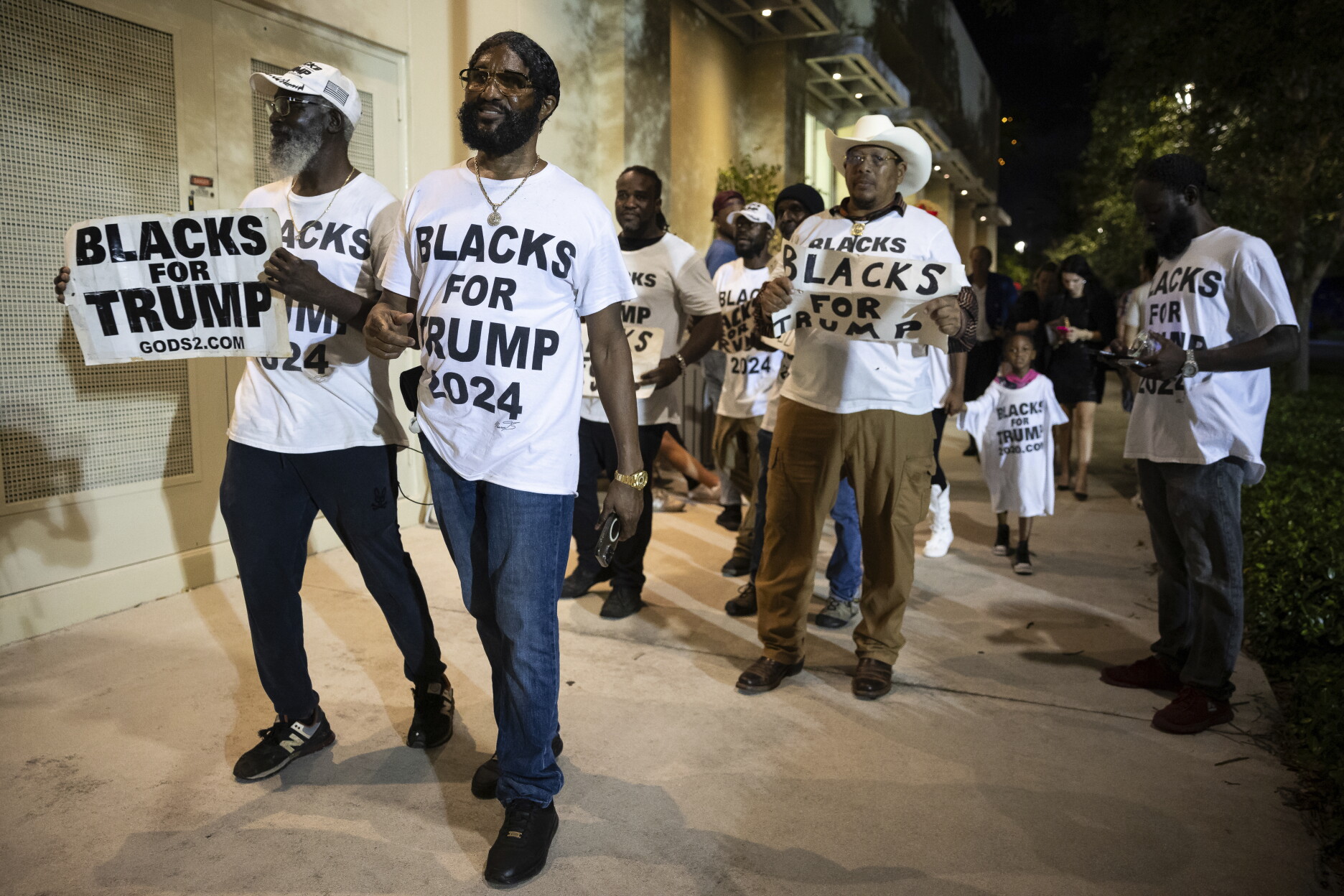 Early vote totals show Trump doubled his 2020 numbers with young Black men. Francis Chung/POLITICO via APDonald Trump’s slight but significant gains with Black and Hispanic voters have Republicans grappling with how to maintain his winning coalition. Already, operatives and Trump allies are discussing the need for policy wins and building a ground game.
Where there’s less consensus? Whether diversity should be a priority for Trump’s second administration.
The Republican Party has long decried identity politics and diversity initiatives. But now, some say intentional representation wouldn’t hurt Republicans’ efforts to build a more diverse coalition.
Trump is already expected to appoint Sen. Marco Rubio as his secretary of state, which would make him the highest-ranking Hispanic cabinet official in history. He also tapped Vivek Ramaswamy (along with Elon Musk) to lead a new Department of Government Efficiency. Having Black representation in the administration wouldn’t hurt either, one Black Trump campaign surrogate told NOTUS.
Though this person — and every Republican NOTUS spoke to — was quick to caveat that merit is the primary criteria.
“It would be great to see more minorities front facing like in our campaign,” the campaign surrogate said. “It was very diverse, which is something that he’s been proud of. We have the first female chief of staff. That’s something no one else has done yet, right? Because Susie [Wiles] is the best, regardless of being a woman, she is the best option.”
A former Trump administration staffer said something similar.
“Success is the biggest thing,” this Black former Trump administration official said. “We don’t really prioritize the DEI like representation matters … that’s not in our party. But on top of your success, it does help when you elevate qualified individuals to roles in which they have more visibility in the White House.”
Early numbers show that Trump chipped away at Democrats’ hold on Black, Hispanic and women voters. He doubled his 2020 numbers with young Black men, getting the vote of about 3 in 10 Black men under 45, according to AP VoteCast. His share of the vote from women increased from 43% against Joe Biden to 46% against Kamala Harris. NBC News exit polls show Trump has had a 13-point gain in Hispanic voters since 2020.
To keep that base, Trump allies argue that his administration will need to deliver on its promises.
Appointing minorities to the Trump administration is simply smoke and mirrors, said Pastor Lorenzo Sewell, a Trump ally in Detroit who spoke on the Republican National Convention stage in July.
“That means absolutely nothing,” he said. “The only thing that matters is one thing: that he regulates the resources that are already in poor Black communities.”
Policy matters more, Sewell said, rather than how many people of color are installed in the administration.
This was a common refrain among Trump’s supporters.
“The First Step Act was a receipt,” said a Black Georgia delegate of the Republican National Committee. “The permanent funding for HBCUs was a receipt. Extending a pardon to Alice Johnson was a receipt. Opportunity zones were a receipt. There were very specific things that helped Black people. So if he delivers the receipts again, we’ll be fine.”
However, this delegate acknowledged that Black leaders don’t have the same opportunities as their counterparts.
“In the party, Black people who earn it are respected and Black people who don’t earn it are not,” the delegate said. “We have to earn it differently than white folks, but guess what? That’s everywhere. It’s always going to be that way. It has always been that way.”
Republicans who wave away the need for diversity initiatives, focused discussions around outreach tactics. Trump’s 2024 campaign put a significant amount of resources into a legal operation to purge states’ voter rolls, create tighter regulations for mail-in ballots and restrict methods of mobile voting — all in an effort, Republicans say, to ensure that noncitizens did not vote. In doing so, it enlisted the help of independent conservative organizations to run ground game operations. Investing heavily into those groups will be essential to keeping the party’s gains, these Republicans say.
“Organizations like ours, the infrastructure needs to be developed and built out from now,” said John Jose, founder of the American Tomorrow Project, a GOP outreach organization focusing on Asian, Black and Hispanic voters. “That’ll help maintain the relationships we’ve already built with community leaders and communicate the policy results they’ve trusted us to achieve.”
Orlando Owens, a Black GOP operative and founder of Project Move the Needle, agreed. His grassroots organization focused on minimizing Democrats’ margin of victory in the deep blue Milwaukee County. “There was no one on the ground here for Republicans the way we were,” Owens told NOTUS.
As Republicans strategize to maintain their gains with minorities, Democrats are reckoning with their slippage with voters of color, despite putting forward a historic candidate. A senior adviser to one member of the Congressional Black Caucus, who chalks Trump’s gains with Harris’ failure to woo the working class, said the party may need to revisit its approach to this voting bloc.
“What probably hurt us with this group is a disconnect in our tone when talking directly to working-class Americans,” the adviser said. “Trump just has a way of tapping into any frustration people have with the way the economy is going. [Democrats] have to break that wall.”
—
Calen Razor is a NOTUS reporter and an Allbritton Journalism Institute fellow. -
Will a More Diverse Trump Coalition Mean a More Diverse Administration?
www.washingtonsun.comEarly vote totals show Trump doubled his 2020 numbers with young Black men. Francis Chung/POLITICO via APDonald Trump’s slight but significant gains with Black and Hispanic voters have Republicans grappling with how to maintain his winning coalition. Already, operatives and Trump allies are discussing the need for policy wins and building a ground game.
Where there’s less consensus? Whether diversity should be a priority for Trump’s second administration.
The Republican Party has long decried identity politics and diversity initiatives. But now, some say intentional representation wouldn’t hurt Republicans’ efforts to build a more diverse coalition.
Trump is already expected to appoint Sen. Marco Rubio as his secretary of state, which would make him the highest-ranking Hispanic cabinet official in history. He also tapped Vivek Ramaswamy (along with Elon Musk) to lead a new Department of Government Efficiency. Having Black representation in the administration wouldn’t hurt either, one Black Trump campaign surrogate told NOTUS.
Though this person — and every Republican NOTUS spoke to — was quick to caveat that merit is the primary criteria.
“It would be great to see more minorities front facing like in our campaign,” the campaign surrogate said. “It was very diverse, which is something that he’s been proud of. We have the first female chief of staff. That’s something no one else has done yet, right? Because Susie [Wiles] is the best, regardless of being a woman, she is the best option.”
A former Trump administration staffer said something similar.
“Success is the biggest thing,” this Black former Trump administration official said. “We don’t really prioritize the DEI like representation matters … that’s not in our party. But on top of your success, it does help when you elevate qualified individuals to roles in which they have more visibility in the White House.”
Early numbers show that Trump chipped away at Democrats’ hold on Black, Hispanic and women voters. He doubled his 2020 numbers with young Black men, getting the vote of about 3 in 10 Black men under 45, according to AP VoteCast. His share of the vote from women increased from 43% against Joe Biden to 46% against Kamala Harris. NBC News exit polls show Trump has had a 13-point gain in Hispanic voters since 2020.
To keep that base, Trump allies argue that his administration will need to deliver on its promises.
Appointing minorities to the Trump administration is simply smoke and mirrors, said Pastor Lorenzo Sewell, a Trump ally in Detroit who spoke on the Republican National Convention stage in July.
“That means absolutely nothing,” he said. “The only thing that matters is one thing: that he regulates the resources that are already in poor Black communities.”
Policy matters more, Sewell said, rather than how many people of color are installed in the administration.
This was a common refrain among Trump’s supporters.
“The First Step Act was a receipt,” said a Black Georgia delegate of the Republican National Committee. “The permanent funding for HBCUs was a receipt. Extending a pardon to Alice Johnson was a receipt. Opportunity zones were a receipt. There were very specific things that helped Black people. So if he delivers the receipts again, we’ll be fine.”
However, this delegate acknowledged that Black leaders don’t have the same opportunities as their counterparts.
“In the party, Black people who earn it are respected and Black people who don’t earn it are not,” the delegate said. “We have to earn it differently than white folks, but guess what? That’s everywhere. It’s always going to be that way. It has always been that way.”
Republicans who wave away the need for diversity initiatives, focused discussions around outreach tactics. Trump’s 2024 campaign put a significant amount of resources into a legal operation to purge states’ voter rolls, create tighter regulations for mail-in ballots and restrict methods of mobile voting — all in an effort, Republicans say, to ensure that noncitizens did not vote. In doing so, it enlisted the help of independent conservative organizations to run ground game operations. Investing heavily into those groups will be essential to keeping the party’s gains, these Republicans say.
“Organizations like ours, the infrastructure needs to be developed and built out from now,” said John Jose, founder of the American Tomorrow Project, a GOP outreach organization focusing on Asian, Black and Hispanic voters. “That’ll help maintain the relationships we’ve already built with community leaders and communicate the policy results they’ve trusted us to achieve.”
Orlando Owens, a Black GOP operative and founder of Project Move the Needle, agreed. His grassroots organization focused on minimizing Democrats’ margin of victory in the deep blue Milwaukee County. “There was no one on the ground here for Republicans the way we were,” Owens told NOTUS.
As Republicans strategize to maintain their gains with minorities, Democrats are reckoning with their slippage with voters of color, despite putting forward a historic candidate. A senior adviser to one member of the Congressional Black Caucus, who chalks Trump’s gains with Harris’ failure to woo the working class, said the party may need to revisit its approach to this voting bloc.
“What probably hurt us with this group is a disconnect in our tone when talking directly to working-class Americans,” the adviser said. “Trump just has a way of tapping into any frustration people have with the way the economy is going. [Democrats] have to break that wall.”
—
Calen Razor is a NOTUS reporter and an Allbritton Journalism Institute fellow. -
Rep. Garret Graves in Discussions to Become Secretary of Transportation
washingtonsun.com Rep. Garret Graves departs a House Republican Conference meeting at the Capitol Hill Club. Francis Chung/POLITICO/APRetiring Rep. Garret Graves of Louisiana is in talks with Donald Trump’s transition team about the possibility of him becoming secretary of transportation, according to two sources.
While there hasn’t been an official offer — and nothing is final until Trump says it — Graves is supposedly a contender to lead the Department of Transportation.
Graves, who is leaving Congress at the end of this year, is currently a member of the House Transportation and Infrastructure Committee. Before he ran for Congress, Graves served as a staffer for the Transportation committees in the House and Senate, among other congressional positions.
In 2008, Graves left Capitol Hill and then-Gov. Bobby Jindal appointed him to chair the Louisiana Coastal Protection and Restoration Authority, where he was the lead trustee and negotiated on behalf of the state over the Deepwater Horizon oil spill.
On Capitol Hill, Graves is known for his policy prowess on infrastructure and transportation issues, with President Joe Biden inviting him and seven other members to the White House in 2021 to start negotiations on a bipartisan infrastructure bill. (Graves eventually voted against the legislation.)
Selecting Graves would be one work-around for GOP reservations about taking any more Republicans out of the House for the administration, while also giving the House GOP another one of their own working for Trump. Graves chose not to run for reelection after redistricting left him with a deep blue seat.
Trump has already announced that he plans to nominate Rep. Mike Waltz to be his national security adviser and Rep. Elise Stefanik to be ambassador to the United Nations, leaving Speaker Mike Johnson to say on Tuesday that he didn’t think Trump intended to tap any more House Republicans for the administration given the tight numbers in the House.
“President Trump fully understands and appreciates the math here, and it’s just a numbers game,” Johnson said.
Trump already made major transition news Tuesday when he shared his intentions to nominate Fox News personality Peter Hegseth to become the secretary of defense, and said he wanted to create a new agency — the Department of Government Efficiency, or “DOGE” — that Elon Musk and Vivek Ramaswamy would lead.
Meanwhile, asked for comment about Graves being considered for secretary of transportation, the Trump team recycled their standard transition statement.
“President-Elect Trump will begin making decisions on who will serve in his second Administration soon. Those decisions will be announced when they are made,” Karoline Leavitt, a spokesperson for Trump, said.
—
Reese Gorman is a reporter at NOTUS. -
Rep. Garret Graves in Discussions to Become Secretary of Transportation
www.washingtonsun.com Rep. Garret Graves departs a House Republican Conference meeting at the Capitol Hill Club. Francis Chung/POLITICO/APRetiring Rep. Garret Graves of Louisiana is in talks with Donald Trump’s transition team about the possibility of him becoming secretary of transportation, according to two sources.
While there hasn’t been an official offer — and nothing is final until Trump says it — Graves is supposedly a contender to lead the Department of Transportation.
Graves, who is leaving Congress at the end of this year, is currently a member of the House Transportation and Infrastructure Committee. Before he ran for Congress, Graves served as a staffer for the Transportation committees in the House and Senate, among other congressional positions.
In 2008, Graves left Capitol Hill and then-Gov. Bobby Jindal appointed him to chair the Louisiana Coastal Protection and Restoration Authority, where he was the lead trustee and negotiated on behalf of the state over the Deepwater Horizon oil spill.
On Capitol Hill, Graves is known for his policy prowess on infrastructure and transportation issues, with President Joe Biden inviting him and seven other members to the White House in 2021 to start negotiations on a bipartisan infrastructure bill. (Graves eventually voted against the legislation.)
Selecting Graves would be one work-around for GOP reservations about taking any more Republicans out of the House for the administration, while also giving the House GOP another one of their own working for Trump. Graves chose not to run for reelection after redistricting left him with a deep blue seat.
Trump has already announced that he plans to nominate Rep. Mike Waltz to be his national security adviser and Rep. Elise Stefanik to be ambassador to the United Nations, leaving Speaker Mike Johnson to say on Tuesday that he didn’t think Trump intended to tap any more House Republicans for the administration given the tight numbers in the House.
“President Trump fully understands and appreciates the math here, and it’s just a numbers game,” Johnson said.
Trump already made major transition news Tuesday when he shared his intentions to nominate Fox News personality Peter Hegseth to become the secretary of defense, and said he wanted to create a new agency — the Department of Government Efficiency, or “DOGE” — that Elon Musk and Vivek Ramaswamy would lead.
Meanwhile, asked for comment about Graves being considered for secretary of transportation, the Trump team recycled their standard transition statement.
“President-Elect Trump will begin making decisions on who will serve in his second Administration soon. Those decisions will be announced when they are made,” Karoline Leavitt, a spokesperson for Trump, said.
—
Reese Gorman is a reporter at NOTUS. -
Alaska Gov. Mike Dunleavy Has Discussed Becoming Interior Secretary With Trump’s Transition Team
washingtonsun.com Alaska Gov. Mike Dunleavy speaks to reporters during a news conference on his proposed budget. Becky Bohrer/APAlaska Gov. Mike Dunleavy and Donald Trump’s transition team have discussed the prospect of him becoming the next secretary of the interior, three sources familiar with the conversations told NOTUS.
Trump and Dunleavy have a strong relationship dating back to 2018, when he first ran for governor. The then-president endorsed Dunleavy when he was facing a recall in 2019 and when he was up for reelection in 2022. The Alaska governor was an early endorser of Trump in August of 2023, when Trump was facing a full GOP primary field.
But it’s not just Trump and Dunleavy who are close; the Alaska governor also has a strong relationship with Linda McMahon, the co-chair of Trump’s transition team, the three sources told NOTUS. At Trump’s Madison Square Garden rally last month, Dunleavy spent the majority of his time in a private box with McMahon.
Since Trump won the election, the transition team has courted Dunleavy and discussed the interior secretary position, the three sources said. One of the sources also noted that Trump and Dunleavy talk regularly.
As with most things in Trumpworld, nothing is final until it comes out of Trump’s mouth — and even then it can change.
“President-Elect Trump will begin making decisions on who will serve in his second Administration soon. Those decisions will be announced when they are made,” Karoline Leavitt, a spokesperson for Trump, said in a recycled statement to NOTUS.
Jeff Turner, a spokesperson for Dunleavy, said in a statement, “The Governor has spoken on this many times.” He directed NOTUS to two interviews with a local television station, KTUU, on Wednesday.
When asked if he’s entertaining any positions in a Trump administration or if he’d been approached by the president-elect, Dunleavy said in one interview he hadn’t talked with Trump “about any positions in Washington.”
“Will there be discussions about potential positions in Washington?” he added. “There may be. But I’ve got two years left in my term.”
It’s no secret in Alaska, however, that Dunleavy has had an eye on a Trump cabinet appointment. In an Alaska Beacon story on Monday, one state senator called it “the worst-kept secret in Juneau.”
Dunleavy would be an eager partner to Trump’s “drill, baby, drill” approach to resource development. During Trump’s first administration, the two men worked to roll back the so-called “roadless rule,” a controversial policy that exempted more than 9 million acres of Tongass National Forest from development. They also pursued oil and gas leasing in the Arctic National Wildlife Refuge and permitting the 200-mile Ambler Road through northwest Alaska to access mining.
Most recently, Dunleavy posted a video message from Trump on X where the president-elect vowed to build the $38 billion Alaska liquefied natural gas export project.
“We will ensure the gas line project gets built to provide affordable energy to Alaska and allies all over the world,” Trump said in the message.
For his part, Dunleavy said last week that Trump “sees Alaska’s oil resources, our gas resources, our mining resources, our timber resources, our location on the globe, our military, as assets not just for Alaska, but as solutions to the country’s problems.”
Sen. Markwayne Mullin of Oklahoma is also being considered for interior secretary, NOTUS reported on Monday, and the transition team is also considering Mullin for secretary of veterans affairs.
Trump has started making appointments to his incoming administration, with the president-elect announcing on Monday alone that he wants Rep. Elise Stefanik to serve as U.S. ambassador to the United Nations and former Rep. Lee Zeldin to take the reins of the Environmental Protection Agency.
Trump has previously appointed Susie Wiles as his incoming chief of staff, former Immigration and Customs Enforcement Director Tom Homan as the border czar, and CNN reported on Monday that hard-line anti-immigration activist Stephen Miller would serve as the new White House deputy chief of staff.
—
Reese Gorman and Riley Rogerson are reporters at NOTUS. -
Alaska Gov. Mike Dunleavy Has Discussed Becoming Interior Secretary With Trump’s Transition Team
www.washingtonsun.com Alaska Gov. Mike Dunleavy speaks to reporters during a news conference on his proposed budget. Becky Bohrer/APAlaska Gov. Mike Dunleavy and Donald Trump’s transition team have discussed the prospect of him becoming the next secretary of the interior, three sources familiar with the conversations told NOTUS.
Trump and Dunleavy have a strong relationship dating back to 2018, when he first ran for governor. The then-president endorsed Dunleavy when he was facing a recall in 2019 and when he was up for reelection in 2022. The Alaska governor was an early endorser of Trump in August of 2023, when Trump was facing a full GOP primary field.
But it’s not just Trump and Dunleavy who are close; the Alaska governor also has a strong relationship with Linda McMahon, the co-chair of Trump’s transition team, the three sources told NOTUS. At Trump’s Madison Square Garden rally last month, Dunleavy spent the majority of his time in a private box with McMahon.
Since Trump won the election, the transition team has courted Dunleavy and discussed the interior secretary position, the three sources said. One of the sources also noted that Trump and Dunleavy talk regularly.
As with most things in Trumpworld, nothing is final until it comes out of Trump’s mouth — and even then it can change.
“President-Elect Trump will begin making decisions on who will serve in his second Administration soon. Those decisions will be announced when they are made,” Karoline Leavitt, a spokesperson for Trump, said in a recycled statement to NOTUS.
Jeff Turner, a spokesperson for Dunleavy, said in a statement, “The Governor has spoken on this many times.” He directed NOTUS to two interviews with a local television station, KTUU, on Wednesday.
When asked if he’s entertaining any positions in a Trump administration or if he’d been approached by the president-elect, Dunleavy said in one interview he hadn’t talked with Trump “about any positions in Washington.”
“Will there be discussions about potential positions in Washington?” he added. “There may be. But I’ve got two years left in my term.”
It’s no secret in Alaska, however, that Dunleavy has had an eye on a Trump cabinet appointment. In an Alaska Beacon story on Monday, one state senator called it “the worst-kept secret in Juneau.”
Dunleavy would be an eager partner to Trump’s “drill, baby, drill” approach to resource development. During Trump’s first administration, the two men worked to roll back the so-called “roadless rule,” a controversial policy that exempted more than 9 million acres of Tongass National Forest from development. They also pursued oil and gas leasing in the Arctic National Wildlife Refuge and permitting the 200-mile Ambler Road through northwest Alaska to access mining.
Most recently, Dunleavy posted a video message from Trump on X where the president-elect vowed to build the $38 billion Alaska liquefied natural gas export project.
“We will ensure the gas line project gets built to provide affordable energy to Alaska and allies all over the world,” Trump said in the message.
For his part, Dunleavy said last week that Trump “sees Alaska’s oil resources, our gas resources, our mining resources, our timber resources, our location on the globe, our military, as assets not just for Alaska, but as solutions to the country’s problems.”
Sen. Markwayne Mullin of Oklahoma is also being considered for interior secretary, NOTUS reported on Monday, and the transition team is also considering Mullin for secretary of veterans affairs.
Trump has started making appointments to his incoming administration, with the president-elect announcing on Monday alone that he wants Rep. Elise Stefanik to serve as U.S. ambassador to the United Nations and former Rep. Lee Zeldin to take the reins of the Environmental Protection Agency.
Trump has previously appointed Susie Wiles as his incoming chief of staff, former Immigration and Customs Enforcement Director Tom Homan as the border czar, and CNN reported on Monday that hard-line anti-immigration activist Stephen Miller would serve as the new White House deputy chief of staff.
—
Reese Gorman and Riley Rogerson are reporters at NOTUS.