TrumpWatch publisher
-
In Ending Case against Davey Hearn, Judge Declares: No Crime Was Committed
emptywheel.net
I confess I always expected that Judge Todd Edelman would dismiss, with prejudice, the case charging Davey Hearn with damaging the reflecting pool. It was simply a too volatile case to leave Hearn hanging. I just didn’t know how he’d do it: Whether he’d comment on the seeming false claims from a National Park witness or misconduct from Jeanine Pirro’s people, or simply write a cautious opinion.His opinion dismissing the case with prejudice is fairly modest — and as such will be virtually unassailable if Jeanine Pirro or some replacement flunky decides to do Trump’s bidding again. It endorses no claims of misconduct from Hearn’s team, however well substantiated (though it does gently question Pirro’s claim they rushed to indict this to deter others, noting that most Superior Court cases take most of the nine months they have to indict). With one exception (his citation of a NYT story describing the contractor taking blame, which came out on September 11), he relies exclusively on the evidence the government and Hearn (in a still-sealed exhibit) submitted about the renovation. Even where it cites Donald Trump’s interference in the case — and that’s almost the entirety of where Edelman places the responsibility for his decision — Edelman explicitly “has set aside descriptions of the President’s non-public statements and thought processes that appear in various news articles cited by the defense.”
But after listing 6 of Donald Trump’s rants in the wake of the dismissal of this case, Edelman then points to Trump’s lingering threat as the ongoing harm, including a harm that might chill political activism, that necessitates dismissing with prejudice.
But in this case, Mr. Hearn faces an additional—and practically unprecedented— type and degree of risk should the Court dismiss this case without prejudice. As elucidated supra, the government has conceded that its prosecution of Mr. Hearn was meritless and cannot identify any potential evidence or avenue of investigation that would allow it to reinstitute the case in good faith. Despite the existence of substantial evidence that Mr. Hearn committed no crime, the President of the United States himself has repeatedly and publicly criticized the government’s decision to dismiss the case and pushed it to recharge Mr. Hearn.13 Notwithstanding the compelling evidence cited by the Office of the United States Attorney attributing the damage to the Reflecting Pool to the misfeasance of the contractor, President Trump has repeatedly declared that vandals (including Mr. Hearn) were responsible.14 He has made his opinion that the government should not have moved to dismiss this case abundantly clear, calling that decision “terrible” and “stupid,”15 ridiculing United States Attorney Pirro for having “choked”16 and “folded like an umbrella,”17 and adding that those who disagree with his assessment need to “go back to Law School.”18 The President has stated that United States Attorney Pirro – his appointee – should reconsider her “hastily made decision” to drop the prosecution.19 Most concerningly, he has suggested a political basis for his requests, maintaining that that the government should reinstitute this criminal prosecution “especially since” Mr. Hearn has donated to ActBlue, a Democratic Party-affiliated fundraising platform,20 and is represented by Mr. Eisen.21 And the President has indicated that he has not decided whether to fire the United States Attorney regarding her decision not to pursue this case.22 The government acknowledges, of course, that it could change its mind regarding its decision to prosecute Mr. Hearn – that it could even do so “[t]en minutes from now,” 9/4/26 Tr. at 11:13 – and that President Trump can fire and replace the United States Attorney and any of her assistants at any time, id. at 14:20-24.
The President’s public posts and comments illuminate the extraordinary nature of the risk to Mr. Hearn should the Court dismiss this case without prejudice. Although the prosecutors assigned to this case have deemed it meritless, the President of the United States has repeatedly disparaged them and pressured them to change course. Mr. Hearn thus finds himself differently situated than any of the other defendants who have had their cases dismissed in Superior Court: while the prosecutors admit that the evidence indicates that he committed no crime, the President’s statements create a risk that Mr. Hearn will be prosecuted nonetheless, either because the current United States Attorney and her assistants will eventually yield to his public pressure campaign or because the President will replace them with prosecutors more likely to carry out his wishes. Additionally, Mr. Hearn would have to await the decision as to whether the government revives a criminal case against him knowing that should he engage in political activity, his conduct could be viewed by the President as a reason to reinstate the prosecution. [my emphasis]
Edelman says Hearn’s case is “practically unprecedented.” But then he limits his comparators to what he knows, the DC Superior Court.
Because, of course, Hearn is not unique. Judges all over the country are struggling with how to achieve justice in these wildly politicized cases.
And to that end, Edelman repeats one thing over and over: No crime was committed.
Because that’s the kind of judgment that Hearn can use to pursue further justice.
The post In Ending Case against Davey Hearn, Judge Declares: No Crime Was Committed appeared first on emptywheel.
-
Judge dismisses DC reflecting pool damage case against former Olympian
www.theguardian.comJudge barred further charges against David Hearn, whom Trump blamed for damage caused by flawed installation
Federal prosecutors in Washington DC can never again charge the former Olympic canoeist David Hearn over damage to the Lincoln Memorial reflecting pool, a judge ruled on Thursday, closing a case the US attorney’s office had already conceded it should not have brought.
Judge Todd Edelman, of the DC superior court, dismissed the case with prejudice, siding with Hearn’s lawyers over the office of the US attorney Jeanine Pirro, which had wanted to keep the option of refiling.
Continue reading... -
Trump doesn’t rule out declaring state of emergency before midterm elections
www.theguardian.comPresident also dismissed low poll ratings as ‘fake numbers’ and deflected responsibility for Iran war in Time interview
Donald Trump deflected responsibility for misleading Americans about the length of the Iran war, dismissed low poll ratings as “fake numbers” and refused to rule out the possibility of declaring a state of emergency before the midterms, in a wide-ranging interview with Time magazine.
When confronted with questions about the length of the Iran war, the US president blamed the media for reporting his remarks in which he said the conflict was projected to last “four to five weeks”, in March.
Continue reading... -
Lawmakers call for action on ‘plainly illegal’ taxpayer-funded ads to promote Trump
www.theguardian.comHouse Democrats say officials may have illegally misused public funds to pay for president’s ‘narcissistic ego trips’
The Trump administration is facing growing questions over whether it illegally used taxpayer money to air television ads promoting Donald Trump five weeks before the US midterm elections.
Two congressional Democrats, Jamie Raskin of Maryland and George Whitesides of California, have asked federal watchdogs to investigate the ads.
Continue reading... -
White House removes CNN from press pool for second time in a week
www.theguardian.comNetwork was listed as primary TV pool covering Thursday’s presidential activities but then was abruptly removed
For a second time in a week, the White House has unilaterally removed CNN from its assignment as the primary television pool representative covering Donald Trump.
CNN was excluded on Saturday from pool duty onboard Air Force One, despite a district judge’s ruling – two days earlier – overturning the White House’s ban on the network and two other media organizations.
Continue reading... -
In Claiming Misconduct, Trent McCotter and Stan Woodward Fabricated Key Claims
emptywheel.net
Yesterday, Principal Assistant Deputy Attorney General Trent McCotter — who got his position by legalizing alleged bribery — and Associate Attorney General Stan Woodward — who got his by attempting to reward pro-Trump terrorists — filed a judicial complaint that they say targets “at least seven” Minnesota judges, but names just two: Judge Patrick Schiltz and Judge John Tunheim. They base that complaint off this NYT story, which described how DOJ’s stupid decisions in January DDOSed (my word) rule of law in MN and — contrary to the complaint’s claim — names several of the other judges who sat for interviews with NYT’s Mattathias Schwartz.I’ll do a follow-up to explain how McCotter and Woodward cover up how Harmeet Dhillon’s attacks on judges in Minnesota led far right trolls with a history of ginning up criminal violence to target Douglas Micko, which I laid out here. I suspect McCotter and Woodward are attempting to salvage cases in which DOJ and HSI’s misconduct have led those cases to the point of collapse.
But for now, I want to show how unethical the construction of their complaint is.
As I show below, most of what they “quote” Judge Schiltz to have said actually consists of paraphrases, which are marked in pink below. In one case (the one at the center of their argument that Schiltz is partisan), they lump together phrases that appear in entirely different places in the story, changing at least the context if not the meaning entirely. Moreover, they put what they claim to be offending comments out of order, which further disrupts their context.
For most of this, the best way to see what McCotter and Woodward have done is to compare what appears in the complaint with what appears in the story. Below, I’ve put both side by side. Language from the complaint is italicized; where the complaint quotes Schwartz’ paraphrase rather than a direct quote, I’ve marked it in pink. The actual quotes from the story appear in bold. I’ve put them in the order they appear in the complaint, but the annotations in my PDF of the story show the order they appear in the story.
I will examine just the two most egregious misrepresentations.
McCotter and Woodward base their complaint on two parts of the judicial canon, one, 2A, which requires judges to act in a manner that promotes public confidence in the integrity of the judiciary, and another 3A(6), that prohibits judges from commenting on the merits of a matter pending in any court, a duty that continues until the appellate process is complete.
McCotter and Woodward claim citations from a publicly docketed document is an abuse
Regarding the second, the complaint names just two pending cases (though invokes pending DHS cases generally). US v. Levy Armstrong, the Cities Church case, which McCotter and Woodward themselves violate DOJ guidelines by calling “outrageous violations of federal law,” and Avila v. Bondi, which implicates Judge Tunheim, and which is on appeal before SCOTUS.
They claim that Schiltz improperly comments on the Cities Church case by describing, to Schwartz, what happened after he refused to immediately approve complaints against (among others) Don Lemon and Georgia Fort, as follows.
-The Trump Administration has also “gone over his head” (and “gone around him”) “to an appeals court” after Judge Schiltz had advised Minnesota’s U.S. Attorney that Judge Schiltz would not review a magistrate judge’s decision to deny a search warrant application until “after the bench met in person the following week.”
On Jan. 23, Judge Schiltz was at home cooking lunch when he received an email informing him the Trump administration had gone over his head to an appeals court.
[snip]
Minnesota’s U.S. attorney, Daniel Rosen, then took the unusual step of requesting that another judge review Judge Micko’s decision. Judge Schiltz had told Mr. Rosen that he would decide on that after the bench met in person the following week.
That timeline wasn’t fast enough for the Justice Department. The Jan. 23 email informed Judge Schiltz that the administration had gone around him.
None of these “comments” are direct quotes. Three — what I’ve labeled 4a, 4b, and 4c — are by Schwartz’ description all sourced to an email that Schiltz received or are Schwartz’ own description. They leave out what, from Judge Schiltz’ description, are direct quotes;
“I had to sit down and represent myself,” he recalled.
When Judge Schiltz found himself in the spotlight, he said he drew on his experience clerking for Justice Scalia, who he recalled was “utterly unmoved by criticism,” and taught him that “you have to have a thick skin and, you know, uphold your oath.
Worse, the single paraphrase that must come from Judge Schiltz — that he told Dan Rosen to wait until after the full bench met — is a direct quote but not (necessarily) from the interview. It (and some of the other discussion here) appears in one of two letters Judge Schiltz wrote to Eighth Circuit Chief Judge Steven Colloton, the guy to whom this complaint is also addressed!!!!
I informed the U.S. Attorney that because he was asking me to do something that was unprecedented, and because my colleagues had strong and differing views on how our district should respond to such a request, I would not decide whether to issue the five warrants sought by the government until I had a chance to discuss the issue with my colleagues at our bench meeting,
That letter has been public for months!! (I wrote about both letters here.)
So the substance of McCotter and Woodward’s claim that Schiltz was commenting inappropriately about the Cities Church case was utterly fabricated and may entirely be Schwartz’ own description or directly sourced to the publicly docketed letter addressed to the same guy their complaint is.
McCotter and Woodward cut-and-paste to impugn Judge Schiltz as partisan
They lay out their primary complaint about what they claim is partisan commentary in a separate paragraph, which gloms together various “comments” made in the complaint, which I’ve marked below.
Judge Schiltz’s comments are both overtly political and concern matters that are pending before him or still in the appellate process. Oddly, Judge Schiltz accused the Trump Administration of undermining the rule of law while alternately arguing that any violations of court orders were due to staffing shortages and what he characterized as “incompetence.” [3,7] But that characterization, while less charged than an accusation of intentional malfeasance, is itself political. Judge Schultz’s analogy between the Administration’s actions and the behavior of foreign adversaries such as [9] Russia. China, and North Korea is equally outrageous. Statements like these (to say nothing of the accompanying photograph posed for a New York ‘Times photographer) plainly support the inference that Judge Schiltz consciously or subconsciously covets publicity. And purporting to educate or [8] “help Americans better understand” these issues is not a justification to violate ethical rules.
But, once again, McCotter and Woodward are the ones manufacturing things. What they describe as an “outrageous” “analogy” between Trump and Russia (as if that would really bother Trump!) is actually created by taking a comment that appears in the subhed and ¶6, which is not attributed to Trump directly but to the backlog in the courthouse created by Trump’s disregard for orders.
In a rare 90-minute interview seven months later, Judge Schiltz said his order had been prompted by concern that the Trump administration’s disregard for court orders was clogging his courthouse to a near standstill, contributing to rising tensions in the protest-filled city and, ultimately, putting the constitutional order at risk.
What happened in Minnesota’s federal court, he said, “created a grave threat to the rule of law.”
And then lump it together in their complaint, and this paragraph, with this passage, which appears 50-some paragraphs later, at the very end of the story.
At the same time, he said, the violations needed to be taken seriously. The lack of resources led to a result, he said, that should have been anticipated, and that threatened the foundations of the legal system.
Obedience to court orders, Judge Schiltz said, is why people feel secure owning a home, saving money, getting married and having children.
“You walk down the street, and you assume you’re generally safe because of the law,” he said. “It’s the rule of law. If you don’t have it, you have either anarchy or you have authoritarianism. You have Russia or you have China or you have North Korea.
They literally completely fabricate the central argument in their complaint.
So in addition to violating the due process rights of the Cities Church defendants — effectively committing the very crime of which they accuse Judge Schiltz — their complaint consists of three levels of deceit:
- Treating paraphrases as direct quotes without clearly making the distinction clear (and in one case, statements that can be sourced to a public document)
- Quoting those paraphrases out of order
- For their central claimed analogy, completely manufacturing the analogy themselves.
There’s more here to refer Trent McCotter and Stan Woodward for judicial sanctions than Judge Schiltz.
Comparisons
The Trump Administration has a “disregard for court orders[.]
This purported “disregard” had “clogg[ed] his courthouse to a near standstill, contributing to rising tensions in the protest-filled city [of Minneapolis] and, ultimately, putting the constitutional order at risk.”
Judge Schiltz said his order had been prompted by concern that the Trump administration’s disregard for court orders was clogging his courthouse to a near standstill, contributing to rising tensions in the protest-filled city and, ultimately, putting the constitutional order at risk.
3)
-Judge Schiltz’s “impression was that most, if not all,” of the purported “noncompliance was due to incompetence,… not due to conscious defiance of orders,” but “[t]he lack of resources led to a result… that should have been anticipated, and that threatened the foundations of the legal system.“
“My impression was that most, if not all, of the noncompliance was due to incompetence,” he said, “not due to conscious defiance of orders.”
At the same time, he said, the violations needed to be taken seriously. The lack of resources led to a result, he said, that should have been anticipated, and that threatened the foundations of the legal system.
-The Trump Administration has also “gone over his head” (and “gone around him”) “to an appeals court” after Judge Schiltz had advised Minnesota’s U.S. Attorney that Judge Schiltz would not review a magistrate judge’s decision to deny a search warrant application until “after the bench met in person the following week.”
On Jan. 23, Judge Schiltz was at home cooking lunch when he received an email informing him the Trump administration had gone over his head to an appeals court.
[snip]
Minnesota’s U.S. attorney, Daniel Rosen, then took the unusual step of requesting that another judge review Judge Micko’s decision. Judge Schiltz had told Mr. Rosen that he would decide on that after the bench met in person the following week.
That timeline wasn’t fast enough for the Justice Department. The Jan. 23 email informed Judge Schiltz that the administration had gone around him.
5)
-Judge Schiltz “would apologetically explain why he needed to check his phones constantly” to friends, because if he did not “[t]he cost…could be somcbody waking up in New Mexico the next day when they shouldn’t have.”
At dinners with friends, Judge Schiltz said he would apologetically explain why he needed to check his phones constantly. “The cost of me enjoying a movie could be somebody waking up in New Mexico the next day when they shouldn’t have,” he recalled.
6)
-Normally “government agencies act as ‘partners’ to judges in tackling challenges to the system,” “[bļut they weren’t this time.”
In the interview, Judge Schiltz said that normally government agencies act as “partners” to judges in tackling challenges to the system.
“But they weren’t this time,” he said. “We were really on our own.”
7)
-Judge Schiltz had said, “This just never happens,” aloud to himself, referring to purportedly “violated orders and other unusual behavior by the Justice Department.”
He said he thought the violations were largely the result of incompetence and staffing shortages, but also worried that the Justice Department had not taken their corrosive effect seriously enough.
“I would say aloud to myself, ‘This just never happens,’” he added, referring to the violated orders and other unusual behavior by the Justice Department.
8)
Judge Schiltz “hoped the portrait of how the bench had handled the crisis would help Americans better understand how the United States’ system of government depends on the rule of law.”
Judge Schiltz said he hoped the portrait of how the bench had handled the crisis would help Americans better understand how the United States’ system of government depends on the rule of law.
-The Trump Administration’s actions “created a grave threat to the rule of law,”without which “you have either anarchy or you have authoritarianism. You have Russia or you have China or you have North Korea.
What happened in Minnesota’s federal court, he said, “created a grave threat to the rule of law.”
[snip]
“You walk down the street, and you assume you’re generally safe because of the law,” he said. “It’s the rule of law. If you don’t have it, you have either anarchy or you have authoritarianism. You have Russia or you have China or you have North Korea.”
The post In Claiming Misconduct, Trent McCotter and Stan Woodward Fabricated Key Claims appeared first on emptywheel.
-
Trump and his allies credit deportations with record low crime. Experts disagree
www.theguardian.comAdministration says increased immigration enforcement led to fewer homicides, but they have been on the decline since Joe Biden’s term
Over the last year and a half, the US has seen a historic drop in homicides. Researchers and reporters are still puzzling through the complex set of reasons why - from the easing of pandemic-era stressors and the Biden administration’s investments in community-based violence prevention to policing and other factors.
But for the Trump administration, there’s one easy explanation: increased immigration enforcement. As the midterm elections approach, the White House has been doubling down on this message, saying its crackdown against immigrants is why US crime rates are now falling.
Continue reading... -
Is Trump to blame for Americans getting explosive diarrhea? | Arwa Mahdawi
www.theguardian.comAs the midterms approach, Americans’ digestive health has become a bizarre talking point
Donald Trump seems to spend an unusual amount of time thinking about toilets.
Back in 2019, he bizarrely claimed: “People are flushing toilets 10 times, 15 times as opposed to once.” He repeated this claim at a Michigan rally the following year. “Ten times, right, 10 times,” Trump complained. “Not me, of course not me, but you,” he added while pointing at an unfortunate audience member.
Continue reading... -
Trump’s ‘Morally Binding’ New AI Guardrails Are Meaningless Pudding
www.techdirt.comCorporations have long enjoyed creating toothless “self-regulatory” regimes that exist primarily to pre-empt real government oversight. While the quality of these orgs can vary somewhat, generally they’re just a toothless pantomime designed to pretend that corporate power can effectively police itself for ethical and competitive breaches. U.S. history has a thing or two to say on their real-world effectiveness.
This week, Trump met with most of the major tech industry AI leaders, who once again demonstrated they’re enthusiastic supporters of the most corrupt and autocratic administration in U.S. history (they’ll then turn around with puzzlement at why the public might be hostile to their products).
They met, in part, to celebrate two very silly things. One, the president’s random decision to arbitrarily try to rename AI as “superintelligence” via executive order. And to announce they’d all struck a completely voluntary agreement to try and maybe do better when it comes to developing software automation responsibly, securely, and ethically.
Basically, our richest tech titans wanted to help Trump pretend he’s competent and powerful, and stall any real public interest accountability, whether it’s for the environmental impact of data center turbines on marginalized populations, the sloppy failure to secure their own automated hacking software, or their reckless and comical disregard for U.S. consumer privacy.
The 308-word “AI accord” is a load of bullshit and fluff. One, it’s worth noting it couldn’t even spell “United States” properly. Two, most of it is just vaguely urging AI companies to do things they were already doing (poorly), such as this recommendation:
“Empower an internal team to ensure all of the controls, monitoring, and detection are operating as intended, and that any issues are remediated.”
Why hadn’t anybody thought of that?
Or this one:
“Implement robust internal controls to monitor the capabilities and alignment of its models during training and deployment around areas like cybersecurity, biosecurity, and chemical threats, and to ensure that its models do not hack or access technical systems in unintended ways.”
To be clear, several of the high-profile agentic AI hacks in recent months attributed to doomsday sentience were in reality just big and unethical companies simply failing to do very basic things: like confirming third-party vendors had adequately isolated their automated hacking software from the internet, or failing to monitor their automatic hacking software in real time.
Of course they’re not doing a great job on this sort of thing because they’re all hungrily eyeing multi-trillion dollar IPOs based largely on fraudulent accounting and are in a mad dash toward the trough. They’re also not doing a better job because they know their support for a corrupt autocrat also involves him defanging corporate oversight and the regulatory state, ensuring no real penalties or liability.
Politely recommending that big corporations with more money than sense try to do a better job on quality control, privacy, and security isn’t actually accomplishing anything. None of the requests are actually real things, despite Trump comically trying to insist they were “morally binding.”
Down at the bottom of the document, it insists that “over time, it may make sense to codify these steps into laws or regulations.” That’s particularly amusing given that Congress is currently too corrupt to function, and the Trump administration has taken an absolute hatchet to already shaky U.S. consumer protection, corporate oversight, and regulatory independence.
Most of the corporate media coverage of the AI announcement was negligently shallow (see: Reuters, Politico, Axios), not only failing to point out that the AI accord was meaningless, but that Trump has actively defanged all of the federal government oversight systems you might otherwise lean on to hold these companies accountable down the road.
You can wind your way through this whole Reuters story, for example, without the slightest hint that this proposal might not be a real boy. Or that Trump clearly, indisputably remains overtly hostile to corporate accountability or public interest guardrails of any meaningful kind. Most of our big news outlets simply put the lies right in the headline, completely unchallenged.

It’s “almost like a constitution,” guys!
Here in reality, Trump’s captured Supreme Court has actively ensured that any regulator that tries to hold companies accountable for literally anything will find themselves swatted on the nose for exceeding their regulatory authority. This administration has ensured that already shaky corporate oversight no longer functions — and our corporate press doesn’t think that’s useful context worth mentioning.
They’ve all adopted the Libertarian and corporate Republican framing that government regulation exists exclusively to “stifle innovation” and ruin everybody’s good time. And that corporate pinky swearing has real worth when it comes to environmental, labor, and consumer protection law, despite a generation of very ugly and indisputable evidence to the contrary.
If AI regulation does come in the new year, it will most likely be written by the biggest tech companies with an eye on legalizing all their worst impulses, banning Chinese AI (to “protect U.S. consumer privacy and national security), and box out open source, on-device, open-weighted, or other competitive threats to the biggest companies’ cloud-software walled-garden domination.
The corruption and regulatory capture are disgusting enough, but it’s positively grotesque that the U.S. lacks an establishment press that’s capable of explaining any of this to the public at large.
-
Ukraine persists with Russian oil refinery strikes in defiance of Trump
www.theguardian.comUS president blames attacks for driving up fuel prices before midterms, though analysts say his Iran war is main cause
Ukraine is pressing on with strikes on Russian oil refineries, defying Donald Trump, who blames the attacks for exacerbating a global diesel shortage and pushing up fuel prices.
Kyiv struck an oil facility in Russia’s southern Samara region overnight, Volodymyr Zelenskyy said on Thursday in a statement on social media. The Ukrainian president added that a Russian vessel in the Black Sea was hit, as well as a launch and storage site for attack drones in the Oryol region.
Continue reading... -
Hilton blames Democrats. Becerra blames Trump. Little was learned in governor's race debate
The first and probably only face-to-face debate between the two candidates for California governor Wednesday night established its pattern right off the bat. The two CNN anchors who conducted the event in Burbank, Jake Tapper and Dana Bush, would raise one of the state's most pressing issues and seek responses from Democrat Xavier Becerra and Republican Steve Hilton.www.allsides.com -
Xavier Becerra gets battered by Steve Hilton in debate — then resorts to desperate tactic
Xavier Becerra may be ahead in the polls, but lost badly to Steve Hilton in Wednesday night's gubernatorial debate on CNN. Hilton, the Republican outsider, ran circles around Becerra, the Democrat, who seemed unable to answer basic questions about his record or his policies. Becerra wanted to debate President Donald Trump — deeply unpopular in California — but walked into one trap after another.www.allsides.com -
White House airs new taxpayer-funded ad praising Trump’s war on Iran
www.theguardian.comNew ad features audio from Trump’s declaration of war and Pete Hegseth saying ‘if you kill Americans … we will kill you’
The latest in a series of pro-Trump television ads aired using taxpayer funds in the run-up to the the midterm elections is a one-minute spot that celebrates Donald Trump’s decision to go to war with Iran.
The ad aired during a commercial break on Fox News on Wednesday night, according video posted online by MeidasTouch, a leftwing outlet.
Continue reading... -
‘Page one of repressive playbook’: critics warn of Trump’s conspiratorial attacks
www.theguardian.comPresident’s outlandish and extensive conspiracy theories endanger US freedoms, health and science, experts say
Since the start of his second presidency, Donald Trump has often launched outlandish conspiratorial attacks on critics and foes that mock them and label their views as hoaxes, prompting scholars and legal experts to say Trump’s attacks endanger US freedoms, public health and science.
Trump’s extensive use of conspiracy theories is the hallmark of an authoritarian leader that has weakened trust in the coming midterm elections, dangerously ignored scientific evidence, and often pushed for prosecutions of his political enemies in ways that seriously erode civil liberties, say critics.
Continue reading... -
Trump the environmentalist? How his Iran war exposed the fragility of dirty energy
www.theguardian.comGavin Newsom says Trump is a ‘gift’ to the climate cause for dispelling notions of fossil fuel energy security
Of all the epithets hurled at Donald Trump since he became US president, perhaps the most unusual was delivered last week – that he is, in fact, some sort of environmentalist.
Trump is the “greatest gift” to the environmental movement, argued Gavin Newsom, California’s governor, due to the fallout from the US-Israel war on Iran.
Continue reading... -
Main DOJ’s Bigfooting in Broadview 6
emptywheel.net
I made a mistake in this post, in which I described how DOJ breached its own privilege when it chose to respond to Sheri Mecklenburg pawning the decision to charge the Broadview 6 with a felony conspiracy charge off on US Attorney Boutros.I assumed that Chicago’s US Attorney’s office responded by debunking Mecklenburg — that Boutros was the one to breach those privilege claims. But as exonerees note in their notice of Mecklenburg’s retirement letter, the Chicago Tribune describes Chicago as staying mum.
A spokesman for the U.S. attorney’s office could not immediately be reached.
But Main DOJ blabbing about what Mecklenburg put into writing.
In a statement Friday, the Department of Justice said that claim was “false.”
“Mecklenburg’s recommendation in writing to the supervisory chain of the U.S. Attorney’s Office included the section 372 felony as the strongest charge,” a DOJ spokesman said in an email.
That makes things still worse for DOJ, as I’ll explain.
All of this may come to a head — or at least further unravel — today. At 1PM Chicago time, Judge April Perry will hold a hearing in the Broadview 6 case to consider both exonerees’ request for discovery, sanctions, and a special prosecutor, and Sheri Mecklenburg’s motion to intervene in the just latter two issues. I had a grand post planned to refocus on how Mecklenburg’s mic drop makes US Attorney Andrew Boutros’ earlier choices riskier for him, but I never got it done (though have pulled links over, below). A less weedy version follows as way of laying out what may happen today.
First, note that it’s not clear everyone will be focused on the same arguments today. Before she added Mecklenburg’s motion to the hearing, Judge Perry said the hearing would consider Dockets 226 (motion for sanctions), 227 (motion for special prosecutor), and three motions for Hyde Amendment payments (210, 206, 201); she wrote them in that order. That leaves off Docket 225, which addressed whether exonerees could still get discovery after DOJ agreed to pay their attorney fees but before they did so. But DOJ has largely blown off all those Hyde Amendment filings, addressing them in strictly procedural fashion separately. In spite of purporting to address Docket 225, the response to 225, 226, and 227 that Boutros put his name on almost entirely ignores the Hyde Amendment. So DOJ may not be prepared to address that today.
Instead of addressing the Hyde Amendment (for which the standard is whether a prosecution is “vexatious, frivolous, or bad faith”) Boutros dedicated a separate 5-page section of his response to addressing vindictive and selective prosecution. He did that even though he said right from the start of that section that any vindictive and selective claims were mooted when he dismissed the case. He did that even though he manufactured a focus, from exonerees, on the topic. They barely addressed it … except by chronicling that’s where all these discovery requests come from and citing Judge Perry raising it on May 21. Ultimately, Boutros finally gets around to admitting Perry’s the one who raised this, too.
[T]his Court brought up those allegations during the May 21, 2026, morning hearing—albeit before the charges were dismissed with prejudice—the Government addresses them here to allay any such potential concerns.
Which is to say, Boutros spends more than 10% of his brief addressing a topic that’s not technically among the three motions he planned to address or the three other motions he may not have, but which Judge Perry has placed before him. I get that decision, but not how he tried to address Perry’s concerns.
In that 5-page section, Boutros did not adopt DOJ’s favorite means of dismissing claims that Trump or someone else has ordered up prosecutions, which is to emphasize that so long as the prosecutor who made the prosecutorial decision had no animus, it doesn’t matter what Trump or other people at Main DOJ think (which I wrote about here). Instead, he gave a bullshit account of how he (not Sheri Mecklenburg) made the decision. To explain the (misdemeanor) assault charges, he laid out several pieces of evidence that he takes threats to cops seriously, without ever mentioning all the ICE invasion assault cases he had given up on without presenting them three times to a grand jury, nor mentioning any evidence that the exonerees had assaulted the ICE goon who drove into them. To explain the conspiracy charge, he claimed without evidence that all the exonerees had touched the car that most touched (if they did) because it drove into them. Nowhere does Boutros describe why he decided to criminalize getting hit by a car. Boutros also invoked the rationalization for the charges he offered at that May 21 hearing, a rationalization that pissed off Judge Perry when he made it the first time.
Particularly given that he claims this is all moot, Boutros’ approach to this question contrasts in interesting fashion with his office’s past attempts to rebut claims of vindictive or selective prosecution. The first time DOJ responded to that argument (in a discovery response written by Mecklenburg shortly before she left the case), DOJ only addressed selective prosecution, while arguing that defendants weren’t entitled to communications with anyone outside of prosecutors. The second time DOJ responded to that argument (in a response motion by William Hogan), DOJ again focused exclusively on selective prosecution, while replacing the argument about standards of discovery with bluster and invective.That second response then led to an exchange exonerees did harp on throughout all these filings: Hogan’s representation to Judge Perry that there were no communications of any nature from anyone outside Chicago about investigatory or charging decisions.
The decisions about who and what to charge were made by the USAO prosecutors and their supervisors based solely on positive identifications of the defendants and evaluations of their individual criminal conduct. Considerations such as defendants’ political affiliations, activities, views, or positions were not considered in any way as part of the investigation or charging decisions. Accordingly, there are no communications of any nature from, to, or with anyone outside the USAO (other than the local FBI investigators assigned to the case) regarding any investigatory or charging decisions. To be crystal clear, this specifically includes anyone in the White House and all components and offices of Main Justice. 2
2 The first time the USAO communicated with Main Justice about the identity of the defendants in this case only came after a draft indictment was approved internally and was for the limited purpose of complying with the letter and spirit of Justice Manual Section 9- 85.500.
And then Judge Perry’s reliance and misstatement of that categorical claim in ruling against discover on such issues in April.
The defendants have expressly predicated their theory of vindictive and selective prosecution on external forces having some type of impact on the Chicago-based prosecutors. They stated in writing repeatedly that they are not alleging any animus by the line AUSAs or the Chicago U.S. Attorney’s Office. To the end, the prosecutors agreed to provide evidence of external forces communicating with the Chicago U.S. Attorney’s Office about this case, and they have now said there is no such evidence. There are no White House communications, there are no main justice communications, and I quote, There are no communications of any nature from, to, or with anyone outside of the U.S. Attorney’s Office other than local FBI investigators assigned to the case regarding any investigatory or charging decisions.
Hogan limited his comment to investigative and charging decisions. Perry did not. Add that to the list of misimpressions Hogan left undisturbed.
Boutros’ own filing debunks that claim anyway, conceding there was a meeting on September 27 at which a video that is exceedingly likely to be the one that Kat Abughazaleh posted, to which far right extremists and far right Senators, including Aakash Singh buddy Mike Davis, responded by demanding she be prosecuted.
[T]here was a virtual meeting on September 27, 2025, among Main Justice lawyers, the Chicago U.S. Attorney’s Office, lawyers from at least one other U.S. Attorney’s Office on the West Coast, and many federal law enforcement agencies where the September 26 “Broadview” incident was mentioned (and a public video played) as part of a broader discussion of incidents and conduct against ICE during that time.
While all this briefing was going on, Boutros’ First AUSA, Jason Yonan, issued a correction that got far less notice that Mecklenburg’s mic drop. He described that the seemingly inconsistent answer Diane MacArthur offered exonerees about this precise question — the nature of conversations between Chicago and Main DOJ — was his fault.
On August 11, 2026, former Defendants’ counsel emailed again asking whether there were other communications between the Front Office and Department of Justice officials concerning this case that did not involve “direction.” R 255-1 at 3. The AUSA consulted with the First Assistant United States Attorney, who misunderstood this request as relating to communications that predated the charging decision made by the U.S. Attorney’s Office locally. Accordingly, after consulting with the United States Attorney, the First Assistant United States Attorney directed the AUSA to respond to former Defendants’ counsel by referencing a September 27, 2025, virtual meeting in which a video of the incident in question was played and the incident discussed but the identities of the individuals in the incident were unknown to the U.S. Attorney’s Office.
That response did not accurately answer former Defendants’ request because, as the government has previously stated, there were communications with Main Justice after the charging decision had been made by the U.S. Attorney’s Office locally. See R. 110 at 3, 4 n.2; R. 247 at 3, 40-41 n.15. There are no communications between the U.S. Attorney’s Office and the White House regarding this matter.
This correction is consistent with Footnote 15, the one that revealed Hogan misled Judge Perry. Someone at DOJ showed the video of the protest — again, almost certainly Abughazaleh’s video — amid a discussion of charging anyone who touched an ICE goon; folks in Chicago investigated it just as Mike Davis ordered them to solely by linking communications of Abughazaleh or, remarkably, knowing to Google “guitar girl Broadview ICE,” which would bring you to this Facebook post, describing how a rubber bullet went through Joselyn Walsh’s guitar and hit her in her leg, which is how she got charged. And based off that, if we are to believe DOJ’s account, they came to a decision to charge Abughazaleh and five others before even reviewing Broadview cops’ video of the event, which showed several of them walking away from the SUV that had just driven into them.
Which brings us to the conflict between Mecklenburg and DOJ. She says Boutros “sent an office-wide email laying responsibility at my feet for a felony prosecution that you personally directed over my objection that the case was better suited to misdemeanor charges.” DOJ breached its own privilege to say, “Mecklenburg’s recommendation in writing to the supervisory chain of the U.S. Attorney’s Office included the section 372 felony as the strongest charge.”
These are not remotely incompatible claims. DOJ doesn’t say what Mecklenburg meant by “strong.” Did she mean, the most draconian? Did she mean a 18 USC 372 felony conspiracy charge was stronger than a 18 USC 371 felony conspiracy charge, which is what Mike Davis ordered Boutros to charge. Did she mean 18 USC 372 was more likely to survive as a felony charge than assault, 18 USC 111, which Davis also ordered Boutros to charge?

More importantly, as we discuss the one felony charge Boutros kept trying to charge while he let a bunch of other felony charges go, no one has said when these conversations took place. DOJ’s pat answer has always been that they didn’t discuss any of this (aside from the video the day after the protest) with Main DOJ until after they first drafted the indictment in advance of the first October 9 grand jury presentation. But that pat answer is completely consistent with discussing it — and sharing the grand jury transcript that Boutros pinky swears he didn’t read — after the grand jury no-billed the first time and then reassessing whether to keep trying for a felony.
Perhaps that’s when Mecklenburg objected: when Boutros ordered her to go back and keep trying to charge that felony. That would be pretty interesting, because what happened that day — with at least two and probably more grand jurors getting kicked out — is precisely what Aakash Singh had ordered other people to do when a grand jury found their charges to be a “crock of shit.” Throw those people out until you have a grand jury that will indict.
But at some point — either in real time, when Mecklenburg was objecting, or as DOJ has tried to scapegoat her to protect the even more corrupt people — Main DOJ got her charging recommendation which is (and this is undoubtedly why exonerees distinguish in their notice between the mum spox in Chicago and the blabby one in DC) yet more proof of Main DOJ’s direct involvement in this case. When did they get her communications, and was it part of bigfooting a charging decision or scapegoating her?
Until a week ago, when Mecklenburg dropped her mic, DOJ might have gotten away with a discussion of standards: at what point can Judge Perry use her inherent authority to start sanctioning people, which she lists first among the issues before her? But now, particularly with Main DOJ’s decision to blab away, today’s hearing is likely to focus at least partly on these contested facts. Sheri Mecklenburg will be right there in the room, where Boutros tried to exclude her back in May.
That doesn’t change the standards, which are still quite high. But it does change what today’s hearing may look like.
Docket 201 (June 2): Hyde Amendment Motion for 4 exonerees. Includes timeline of misconduct and lays out standards for “vexatious, frivolous, or in bad faith”
- Exhibit A: 251203 Discovery Letter
- Exhibit B: 251218 DOJ Discovery Response
- Exhibit C: 260121 DOJ Discovery Response (initial Selective/Vindictive)
Docket 206 (June 4): Hyde Amendment Motion to conduct discovery. Includes discovery requests.
June 5: DOJ tells defendants they will not contest Hyde Act Motion
Docket 210 (June 5): Cat Sharp request to join.
June 9: Hearing on grand jury transcripts.
Docket 225 (June 16): Exonerees reiterate request for discovery.
Docket 226 (June 16): Motion for sanctions. Recalls that Judge Perry declined for information about searches relating to outside influence, rebuts presumption of regularity, raises new information about Aakash Singh, requests Perry order a search.
- Exhibit A: Kilmar Abrego opinion. Outlines Aakash Singh’s close involvement and uses that to find vindictive prosecution.
Docket 227 (June 16): Motion for special counsel. Lays out Boutros’ personal involvement.
- Exhibit A: Kilmar Abrego opinion. Outlines Aakash Singh’s close involvement and uses that to find vindictive prosecution.
Docket 238 (July 7): DOJ response to Hyde Amendment (201, 206, 210, 211 225). Purports to moot further discovery. Filed by Maxwell Lisy.
Docket 239 (July 14): Reply on Hyde Amendment discovery. Notes no offer of payment has been made.
July 15: Exonerees ask again about communications.
July 27: Exonerees follow up again on communications.
Docket 247 (August 4): DOJ Response (225, 226, 227).
August 11: Exonerees and Diane MacArthur exchange on communications.
August 14: MacArthur stands by footnote (DOJ would correct this answer on September 25).
August 17: Exonerees ask again for clarity.
Docket 255 (September 15): Exonerees Reply (225, 226, 227).
- Exhibit A: Emails
- Exhibit B: Excerpt October 16, 2025 grand jury
- Exhibit C: Excerpt October 23, 2025 grand jury
September 23: Judge Perry sets hearing for October 1, 1PM
Docket 261 (September 24): Mecklenburg moves to intervene
Docket 263 (September 24): Exonerees response to Mecklenburg motion to intervene. Corrects one of two claims Mecklenburg says was false, that she did nothing about grand jury redactions.
The post Main DOJ’s Bigfooting in Broadview 6 appeared first on emptywheel.
-
Americans are paying millions for a batch of pro-Trump ads | Margaret Sullivan
www.theguardian.comThe spots, including a recycled campaign ad, are funded by taxpayers and present the president as a hero
The US government is spending millions of taxpayer dollars to get a blatantly partisan message in front of voters as the midterm elections loom.
And while these TV ads aren’t explicitly campaign ads, they might as well be.
Continue reading... -
Trump doesn’t rule out sending ICE to polling sites; US supreme court to review policy to detain immigrants challenging deportation – live
www.theguardian.comJustices will consider whether immigrants have a right to a hearing to determine if they should remain detained while challenging their possible deportation
The White House has, again, blocked CNN from covering Donald Trump as part of the rotating press pool.
The outlet was scheduled to be a part of the group of media traveling to Texas and Oklahoma with the president today, but was removed from list of newsrooms in place for the trip, per the White House schedule.
Continue reading... -
ICE got ‘quieter’ – then killed a father in Maine. Now watch groups are shifting their tactics too
www.theguardian.comICE-watchers get creative after the killing of Johan Sebastián Durán Guerrero, as Trump’s immigration crackdown takes a more secretive approach
Most of the time, the scene outside the Immigration and Customs Enforcement (ICE) facility in the small, coastal town of Scarborough, Maine, could be confused for a nature watch in “Vacationland”, the slogan on state license plates.
People sitting in lawn chairs under a tent. Birds chirping. The sound of the breeze moving through the trees.
Continue reading... -
War, power games and impunity. I watched the farce that is the UN general assembly: what a tragedy, what a mess | Nesrine Malik
www.theguardian.comUkraine, Iran, Palestine and Sudan: it has so many problems to confront and fails to do so. Seen up close, it is a study in stasis and decline
UN general assembly meetings are not usually riveting occasions. But this year’s encapsulated a world in flux and crisis, an international law and organisation structure that is falling apart, and a humanitarian order machine running hot. What unfolded was less a gathering for resolution and resolve than a display of showboating, frustration and fractiousness.
It was a snapshot for the history books of four huge destabilising conflicts for which there seems to be no means of, or interest in, resolution – Ukraine, Iran, Palestine and Sudan. Volodymyr Zelenskyy delivered an account of five years of Russian aggression: the staggering loss of life – hundreds of thousands killed on both sides – the porousness of the sanctions on Russia, the “madness” of it all. Donald Trump once again threatened to “annihilate” Iran if it did not make a deal, a promise that has now been made so many times its restating only reveals its hollowness. Iran’s president, Masoud Pezeshkian, responded in his own speech by saying that Iran has been the victim of US terrorism and aggression, and would defend itself with the “utmost strength”. The sole US delegation representative in the room walked out.
Nesrine Malik is a Guardian columnist
Continue reading... -
Steve Hilton, Xavier Becerra clash in testy California governor’s race debate
www.theguardian.comThe candidates running to replace Gavin Newsom sparred over taxes, immigration and regulating AI
Xavier Becerra and Steve Hilton, the candidates running to be California’s next governor, clashed on Wednesday over taxes, immigration and regulating artificial intelligence in a testy debate held days before voters begin receiving their ballots in the heavily Democratic state.
Hilton, the former Fox News host endorsed by Donald Trump, used the hourlong matchup, hosted by CNN in its studio in Burbank, California, to argue that Becerra, a former congressman who served as the US health and human services secretary during the Biden administration, was not actively campaigning and instead taking voters for granted.
Continue reading... -
PROOF EXCLUSIVE: Ten More Ways Trump and His Agents Are Rigging the Coming Elections
sethabramson.substack.com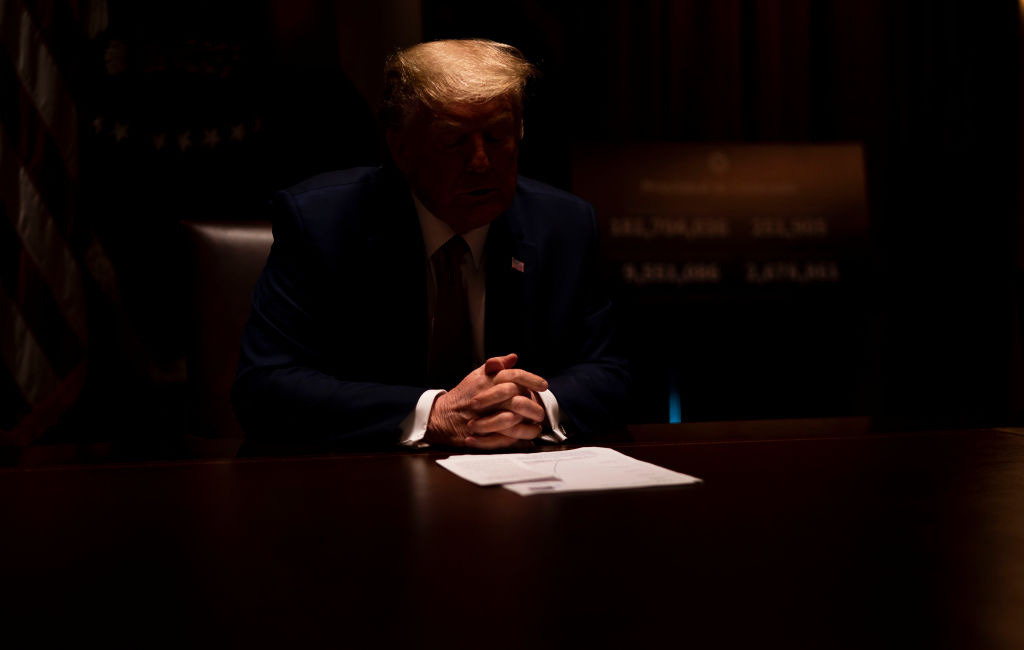
Introduction
A Proof reader of Part I of this series commented below that report, “This is scary on an unprecedented level.”
And it was. The report exhaustively outlined twelve unprecedented ways that Donald Trump is rigging the 2026 midterm elections.
But for as scary and without precedent as that Proof report and its contents were, this author and many readers suspected that it detailed only a fraction of the story. It was clear—even when that report was published on September 21—that a Part II, Part III, and maybe even parts beyond that would eventually become necessary, even urgent.
Why? Because no president or political party has done more to try to rig a federal election than Donald Trump and the Republicans are doing right now in 2026, a fact made all the more grotesque by the fact that it’s these same entities who have spent the last decade crying wolf about supposed election theft as a justification for their own election crimes.
But this isn’t the first election Republicans have tried to steal. Or second. Or fourth.
In 2000, bussed-in Republican operatives led by Trump friends including Roger Stone staged a fake riot—the so-called Brooks Brothers Riot—to stop all vote-counting in Florida just as Democratic presidential candidate Al Gore was about to pull ahead in the state.
A plainly right-leaning Supreme Court then implicitly blessed that riot as dispositive by insisting that vote-counting in the state of Florida stop, though (a) there was time to complete it, and (b) it was the role of the Florida Supreme Court, not SCOTUS, to determine and when and whether Florida state election laws had been violated. To aid the Republican theft of the election the Court had to develop a new definition of the Fourteenth Amendment that it immediately opined would never ever be applied again.
In 2004, as discussed in much greater detail below—so it won’t be belabored here—an Ohio elected official linked to far-right Supreme Court Justice Clarence Thomas (and his wife Ginni Thomas, who informally ran White House personnel decisions for Mr. Trump in his first term) orchestrated a conspiracy to disenfranchise just enough Black and poor and college-aged Ohioans that that’s likely what gave the Republican George W. Bush victory in the election by a mere 50,000-vote swing in the Buckeye State. It goes without saying that just as there was no punishment, and indeed much reward, for Florida’s Secretary of State Katherine Harris’s rigging of state election protocols for Mr. Bush in Florida in 2000—Republicans soon gifted her with a seat in Congress to better underscore the party’s dedication to premeditated election-rigging—Ohio’s Kenneth Blackwell was granted ever more and more power in the Thomases’ circle once it was clear that he would steal the franchise from hundreds of thousands of his fellow Black Americans.
In 2016, scores of unreported collusive contacts between the Trump campaign—run by a Kremlin agent Trump well knew was a Kremlin agent when he hired him, Paul Manafort—dovetailed beautifully with the Kremlin’s own micro-targeting operations, a “British” micro-targeting operation devised by a Russian and overseen by Trump campaign CEO Steve Bannon, and a foreign policy quid pro quo involving proposed Trump Organization business in Russia negotiated by Trump fixer Michael Cohen at Trump’s explicit behest. The collusion, most of it never investigated by Robert Mueller (for all that Trump fans pretended it had been) was so comically obvious that it saw Manafort handing over proprietary campaign polling data to a known Kremlin agent in Manafort’s personal and professional circle, Konstantin Kilimnik, in Trump lawyer Rudy Giuliani’s favorite New York City cigar bar; not just one Donald Trump son but two (Donald Trump Jr. and Jared Kushner) meet alongside Mr. Manafort with multiple Kremlin agents in Donald Trump’s own house; and Trump’s eldest son Don trying (as did Trump adviser Roger Stone) to coordinate secretly with the Kremlin-asset WikiLeaks operation—a clearinghouse for the criminally stolen Democratic files Donald Trump had on national television successfully urged his Kremlin friends to try to get access to.
All this strategic dovetailing may well have turned the tide in a tight election.
In 2024, Trump ran for president while a private citizen, making it virtually impossible to track all the promises he made to would-be foreign election interferers to try to get them to help him. Suffice to say that we know this much: Donald Trump stole highly classified documents from the American people across months and months of federal criminal conspiring in late 2020 and early 2021, and his own subsequent statements—which focused on his right to sell such materials as he claims former GOP president Richard Nixon did—make clear that he intended to distribute those classified materials, which include his secret plans for a future war in Iran, to the highest bidder.
The point here is a fairly simple one: since 1988—when George W. Bush’s father beat Democratic presidential candidate Michael Dukakis, who’d been leading him for almost the entire election season—by agreeing to air what at the time was the most racist television ad the American electorate had ever seen, the Willie Horton Ad, the Republican Party has had no demonstrated ability to win a popular vote in the United States. The Willie Horton Ad was created by the business partner of Trump pal Roger Stone, Lee Atwater, and Trump friend Roger Ailes, confirming that the nihilistic and diabolical thinking of Trump and his circle has infected American life for decades.
Indeed, for 38 years now the GOP—and now MAGA—playbook has been to suppress the vote, conspire with foreign agents, spread mass disinformation, wrongly purge citizens from voter rolls, call in bomb threats, stage violent riots and rebellions, and engage in other more esoteric but equally illicit conduct that easily meets at least the ordinary definition of treason in order to win elections. Democrats may well pander cynically to their base, and may rightly work diligently to especially ensure that their base is able to vote easily, but only Republicans have become known more for feckless “election ratfuckery” than even attempting to develop a policy agenda American voters are interested in.
These are historical facts—not partisan spin. And they’re the backdrop for this report.
Ten More Ways Trump and His Agents Are Rigging the Coming Elections
-
Hegseth says he will cut number of US generals by 20% in anti-diversity speech – as it happened
www.theguardian.comThis live blog is now closed.
Rachel Leingang and Riley Messer
Some of the biggest food and agriculture corporations in the US are funding a campaign that pays social media influencers to combat elements of Robert F Kennedy Jr’s Make America Healthy Again platform, according to an investigation by the Guardian and Documented, an investigative watchdog and journalism project.
Continue reading... -
4 takeaways from the MAHA Summit
Trump administration officials mingled with insurers, corporate executives and wellness influencers at the second Make America Healthy Again (MAHA) summit. They discussed issues ranging from affordability, the U.S. food supply and the food pyramid, as well as the use of artificial intelligence in healthcare. Along with many other mainstream outlets, The Hill was not granted press credentials to attend but watched a free livestream. Here are takeaways from the event.www.allsides.com -
Trump’s AI chatbot turns on its master
www.theguardian.comThe famously fact-averse president rolled out a new AI tool – but its answers don’t conform to his version of reality
Donald Trump, in a development that could almost be from a Greek tragedy, appears to have invented something that is willing to do what no one in his orbit will: tell him the truth.
The president launched America.gov on Tuesday, an AI platform which the White House says will make it easier for Americans to interact with the federal government and eventually complete services like renewing passports and enrolling in Medicare.
Continue reading... -
‘There’s Always A Way’: Jaime Santos
davidlat.substack.comEarlier this month, Jaime Santos joined Proskauer Rose, making her the latest in a series of appellate advocates to switch firms in 2026. She came from Goodwin, where she practiced for more than a dozen years and served as co-head of the Supreme Court and appellate practice.
What led Jaime to make the move, and what does she think is driving all the lateral hiring in the space? With a new Supreme Court Term starting this coming Monday, which cases is she watching? And as the first ERISA and employee-benefits lawyer I’ve had on the podcast (after more than 100 episodes), what does she see as the key emerging issues in the field?
Thanks to Jaime for such an interesting and inspiring conversation, and congratulations to her on joining Proskauer.
Show notes:
Jaime Santos bio, Proskauer Rose LLP
Goodwin Supreme Court Group Chief Santos Bolts for Proskauer, by Meghan Tribe and Jacklyn Wille for Bloomberg Law
Proskauer Hires Goodwin Procter’s Supreme Court Co-Head, by Kevin Penton for Law360
Sponsored by:

NexFirm helps Biglaw attorneys become founding partners. To learn more about how NexFirm can help you launch your firm, call 212-292-1000 or email careerdevelopment@nexfirm.com.
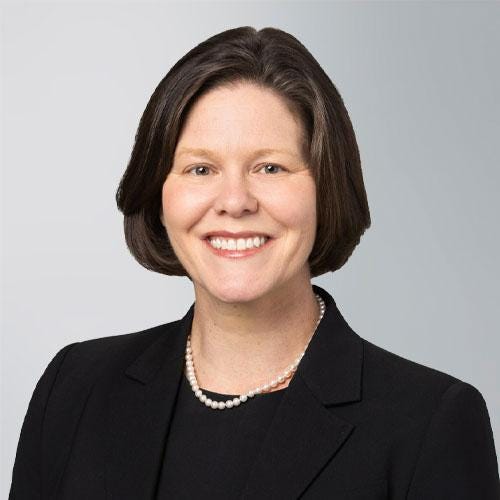 Jaime Santos (courtesy photo)
Three quick notes about this transcript. First, it has been cleaned up from the audio in ways that don’t alter substance—e.g., by deleting verbal filler or adding a word here or there to clarify meaning. Second, my interviewee has not reviewed this transcript, and any transcription errors are mine. Third, because of length constraints, this newsletter may be truncated in email; to view the entire post, simply click on “view entire message” in your email app.
David Lat: Welcome to the Original Jurisdiction podcast. I’m your host, David Lat, author of a Substack newsletter about law and the legal profession also named Original Jurisdiction, which you can read and subscribe to at davidlat dot substack dot com. You’re listening to the 106th episode of this podcast, recorded on Wednesday, September 23.
Thanks to this podcast’s sponsor, NexFirm. NexFirm helps small and midsize law firms offer Biglaw-caliber benefits at small-firm prices. To learn how NexFirm can improve your employee benefits program, call 212-292-1002 or email betterbenefits at nexfirm dot com. Want to know who the guest will be for the next Original Jurisdiction podcast? Follow NexFirm on LinkedIn for a preview.
My guest today is Jaime Santos, co-chair of the Compensation and Benefits Litigation Practice at Proskauer Rose and one of the nation’s leading appellate and ERISA litigators. We began our conversation by covering Jaime’s impressive and inspiring career path, which took her from a trailer park in a tiny town in Indiana to Harvard Law School, followed by two federal clerkships and partnership at two top law firms. We then discussed how she built her practice in appellate and ERISA litigation, her recent move from Goodwin Procter to Proskauer, and her thoughts on the game of musical chairs now unfolding in the Supreme Court and appellate bar. We concluded by talking about her most meaningful matters over the years, including her victory before the high court in Wilkinson v. Garland, as well as the most interesting cases in the Supreme Court’s upcoming Term and in the world of ERISA and employee-benefits litigation. Without further ado, here’s my conversation with Jaime Santos.
Jaime, thank you so much for joining me.
Jaime Santos: Thank you. I’m excited to be here.
DL: Tell us about your background and upbringing. Where did you grow up?
JS: I grew up in the Midwest, in this tiny town in Indiana called Rensselaer—basically in the middle of a cornfield. I was raised by a single mom with one sibling, and we grew up in a trailer park. When I was 14, we moved to St. Louis, Missouri—the inner city, which is the opposite of a rural Indiana cornfield. My aunt, who lived in St. Louis at the time, basically told my mom, “You cannot raise these children in Indiana with only corn and white people. Move to St. Louis. We will help out, and we’ll get these kids through high school and make sure they have a good future.”
DL: I wouldn’t have guessed that you were from the Midwest because you went to college out on the West Coast and law school out on the East Coast. Do you have any lawyers in the family?
JS: No lawyers in the family. My mom, before I was born, worked in the South Chicago steel mills, and then, when I was growing up in Indiana, she was a bookkeeper for a small printing company. My dad left when I was a year old. So I don’t even know that I met any lawyers until after undergrad.
It was funny: I went to the University of San Diego mostly because I wanted to get as far away from home as possible. When I was applying to schools, I got this beautiful glossy magazine—this is how we used to apply to undergrad—and it had beautiful pictures of the ocean. I applied, immediately got in, and got a full scholarship, so I didn’t apply anywhere else. I thought, “Well, this is the objective: get into college and have someone else pay for it.” And I spent four years there.
DL: What did you major in when you were there?
JS: I majored in ethnic studies, sociology, and Spanish.
DL: And what were you thinking in terms of your career at the time?
JS: I didn’t really know. I thought maybe I wanted to be a professor or maybe I wanted to work for nonprofits. I didn’t do debate or anything like that. I was really involved in student government, the multicultural center, and student leadership. To help pay for things, I also worked a ton through undergrad: I was a sandwich delivery person and a telemarketer, and I worked at the registrar.
I did have this one professor—my favorite professor, Dr. Rafik Mohamed—who taught a class called Sociology of Law. At the very beginning of the class, he taught us, just for a few minutes, how people sometimes write case briefs—the notes that law students keep to track cases and what they mean. We went through the class, and at the end of the semester, I went to his office and said, “Hey, that thing you taught us at the beginning—I decided to do that with every case we read.” I showed him all the notes I’d put together and said, “I’ve noticed a bunch of patterns across cases.” He said, “You’re a weirdo who does this for fun. You definitely need to go to law school.”
I didn’t at the time. I worked for four years after undergrad—as an event planner at a nonprofit, then at a law firm. But eventually I realized he was right, and I really wanted to use my brain. And event planning was fun, but it’s just not a very brainy activity. So I studied really hard for the LSAT, got into Harvard, and ended up going there about four years after I graduated from undergrad.
DL: When you were at HLS, did you have an idea of what type of law you wanted to practice?
JS: Going in, I definitely didn’t, because I was so excited just to be there. Harvard was the one place, when I was growing up, that anyone in my family would have known—other schools, we didn’t know as well. I was the first in my family to go to college; my mom and dad didn’t go, and neither did my grandparents.
I was so excited to go that I completely threw myself into everything; I studied crazy hard. I was afraid I was going to be the dumbest person at Harvard, surrounded by all these fancy people who’d gone to Ivy League undergrads. So I studied nonstop, at least the first two years.
I had more fun my third year. I got onto Law Review, I RA’d for a bunch of different professors, and I took really hard classes. Dan Meltzer had this super hard Fed Courts class—it was a five-credit class that felt like a 20-credit class—and I studied so hard that I literally sprained my neck. I had to get treatment because I sprained my neck studying too hard.
Coming out of that, I thought maybe I wanted to do labor and employment work. But when I was clerking—first on the Central District of California, then on the Ninth Circuit—I realized pretty quickly that I didn’t actually care about subject matter. I just liked complicated issues that were really hard.
Going into the clerkships, I thought, “I probably want to do labor or employment work.” Coming out of them, I thought, “I just want to do nerd stuff.”
DL: Which did you do first, the Ninth Circuit clerkship or the Central District clerkship?
JS: The Central District clerkship, though I actually got my Ninth Circuit clerkship first. I interviewed with Judge Raymond Fisher—I think it was probably in the fall right before my 3L year—and after I got that clerkship, he helped me talk to some district judges as well. Then I went through the normal interview timing process for district court clerkships at the time, which was just the year before graduation. Now it’s apparently the year you’re born—but back then, it was more human.
DL: Yes, I totally agree, and it’s really unfortunate how the timing has shaken out. But it’s interesting that you went to the district court right after law school, because I actually think a district court clerkship is, in many ways, the harder job, and a little overwhelming if you go straight from law school, whereas a circuit clerkship is more like a transition from law school to the practical world. And so that first clerkship must have been a demanding experience.
JS: It was. I clerked for Judge George King, who was then the chief judge of the Central District of California, and he was a particularly demanding judge to work for. He was really smart and really great, and I learned a ton. But we were working 80- to 100-hour weeks, every week, the entire year. It was very demanding.
For Judge Fisher, I think part of why he liked clerks who had clerked on the district court first was that it broke them in—or at least gave them a much better understanding of what district courts were doing, because he liked to defer to district courts on things they did better, and not defer on things that were really classic appellate issues. And I was absolutely a better Ninth Circuit clerk because I had been through the district court clerkship and understood what the dockets looked like and the incredible caseload and what trials looked like and how everything gets resolved.
DL: I totally agree. I think clerks who’ve clerked for a district court before a circuit court are probably less inclined to recommend reversal in everything, because they know how tough that job is and respect the discretion district judges have over so many areas. So I’m sure it made you a better clerk.
JS: I hope so. I don’t know that Judge Fisher would say I was the best clerk; I would often get in trouble for trying to come up with new arguments no one had proposed. One time I wrote a very long memo about Heck v. Humphrey and how the whole case failed. And I remember he wrote at the top of my bench memo something like, “This looks great. Did anyone argue it?” And I said, “No, Judge….” And he said, “Okay, let’s deal with what the parties argued.”
DL: Party presentation: it’s a thing. So you probably felt right at home once you got into practice.
JS: Absolutely. After my clerkship, I joined Goodwin Procter. The timing was funny: I finished my clerkship when I gave birth to twins, who were born a month early—only about seven business days before the end of my clerkship. I felt very bad about that, like I’d abandoned Judge Fisher.
So I finished my clerkship, gave birth to twins, and then twelve weeks later started at Goodwin. It was funny, because Willy Jay—who’s now at Paul Weiss—had just started there maybe the year before. I wasn’t hired by him or into the appellate group at all; I was just hired into litigation generally. I had a mentor at the firm who helped me weasel my way into the appellate group, basically by trying to make myself completely indispensable on any appeal.
When I started, Willy had just hired two recent Supreme Court clerks who weren’t allowed to work on Supreme Court matters for a couple of years. They didn’t really have much of an appellate group otherwise. So once I’d weaseled my way in and shown that I had a strong work ethic and would do literally anything I was asked to do, Willy started putting me on his Supreme Court matters. I also had—at the time, and still have—a raging case of imposter syndrome. I think of it as an asset, even though a lot of people see it as a weakness. It made me really good at my job because it made me question what I was doing, in constructive ways: I made sure that my arguments were airtight, that I researched more, and that I worked harder than other people.
Once I’d shown my value, I got to do more appellate work. I had a turning point around 2015. I worked with Willy on Teva v. Sandoz, a patent case, and I’d also argued two Ninth Circuit pro bono appeals. That work, taken together, left me completely hooked on appellate work, and I knew that was what I wanted to focus on. After the Teva argument, I told Willy that it had almost made me want to apply for a Supreme Court clerkship. He said, “What are you talking about? Why did you never apply?” I said, “I didn’t clerk for a feeder judge, and I just thought I wouldn’t have a chance.” He said, “You should definitely apply.”
So I applied for clerkships, and I got an interview with Justice Sonia Sotomayor. I didn’t end up getting the clerkship, but I spent the last month of my maternity leave with my youngest child basically prepping for that interview. I read the last three years of Supreme Court opinions, I read every opinion Justice Sotomayor had ever written, and I spent a month reflecting on what I wanted to do and where I wanted to go.
When I didn’t get the clerkship, I asked my firm if I could move down to D.C., because I wanted to immerse myself in the appellate world and learn from Willy and build our D.C. appellate practice, if he’d have me. The firm was incredibly supportive; they said, “Absolutely.” I moved a few months later.
Once I got down there, I was facing a bit of a conundrum: I tend to be a Type A, ambitious person, and I really wanted to be the most successful appellate lawyer I could be. But I knew I didn’t have the credentials that a lot of your former guests have—folks like Lisa Blatt, Paul Clement, Easha Anand, and Willy as well. But I really wanted to be good at this and get to a very high level.
So I thought, “You’re going to have to find a different way, Jaime. It’s not the normal path. Supreme Court to OSG [Office of the Solicitor General] isn’t going to work for you, and you’re going to have to find another way to get there.” I spent the next five-plus years trying, on the one hand, to get really good at honing my appellate craft and learning as much as I could, and, on the other, trying to figure out how to raise my profile and expand my network so I could succeed in the long term. You can only go so far being smart and hardworking. In D.C., that doesn’t actually get you very far, and it doesn’t get you hired.
I started doing a lot of public speaking, at law schools and conferences, and talked about anything: diversity in the legal profession, what it’s like to be a working mom, appellate practice. I got the chance to work with a group of current and former law clerks to advocate on issues of judicial misconduct in the federal courts, and then ended up working with a bunch of judiciaries across the country on their own judicial misconduct procedures, and that gave me the chance to testify before the Senate Judiciary Committee and the Judicial Conference. I helped start a podcast. I ended up serving as secretary of the Inn of Court in D.C., which is where the 200 biggest appellate nerds meet once a month during the Supreme Court Term for cocktails and panels. I thought, “This is a ton of work, but it’ll give me the chance to know everyone.” So I did all of these things as my side gig, while also trying to learn to be a really good appellate lawyer.
DL: What you just described is exactly what lawyers who want to build a practice need to be doing—because as you say, and I know it’s a cliché, being smart and hardworking is table stakes. You need to stand out in some other way.
So you were very modest when you said you “started a podcast.” Tell us what podcast that was.
JS: Back in the day, pre-pandemic, I helped start Strict Scrutiny. I was on it for the first year, then left, and it has continued to grow.
DL: It’s now one of the largest, most successful, and most influential legal podcasts—or podcasts, period, anywhere. What led you to leave after a year?
JS: There were a number of different factors. It was never going to be a long-term option for me, in part because when I do something important, I put a lot of work into it. I was spending 15 to 20 hours a week on the podcast, which was awesome. I loved it. I got to know everything about the Court, and I got to talk every week with three other brilliant women. But long-term, there was just no way—unless I stopped sleeping entirely—that I could keep doing that. So that was a piece of it.
The other piece of it is that it’s hard to do what Strict Scrutiny became and also be an effective advocate. Especially toward the end of my tenure, I felt like the tone was a little different than what I was necessarily comfortable with. I love edgy commentary, but if you’re trying to advocate before the Supreme Court, being on a podcast that sometimes takes a mocking tone toward the justices or the advocates isn’t a great idea. It’s also just not my style as much. So I thought that I could do smart, interesting commentary on the Supreme Court in other venues, and it might be time to give it a rest, while continuing to support the people who do that work.
DL: I have a couple of thoughts. First, I’m not surprised that you spent that much time on the podcast. People need to know that we try to make these things look relatively easy, but it takes a lot of work to prepare for a podcast. When I have guests, I’ve researched them, I’ve read their writing, I’ve listened to oral arguments—I’ve done all sorts of things. And for a news-driven podcast like Strict Scrutiny, Leah Litman, Kate Shaw, and Melissa Murray are really busting their tails to follow the news of the day.
On your point about being outspoken or candid, being a law professor is good for that kind of work, because (a) they have tenure—they can afford to be outspoken and don’t have to worry about clients or judges being upset—and (b) law professors work hard, but they have a lot of flexibility. You have clients, and you’re a working parent. So I don’t know how you’d find another 15 or 20 hours a week—unless you stopped sleeping, as you said. So I totally understand that.
You were working hard and dealing with imposter syndrome, and it clearly worked: you wound up being, alongside Willy Jay, the co-head of appellate at Goodwin. How long did you spend at Goodwin? You were there for a good long stretch.
JS: Yes—13 years. I think the last two or three years I was co-chair of the practice. Willy had gone on to become co-chair of the non-IP litigation group at Goodwin generally, and when he moved into that role, I moved into the co-chair role, along with my former colleague Kevin Martin, who’s in Massachusetts. I loved that role. Leadership is just in my DNA—getting the chance to lead the group, help expand it, and instill a sense of business development and proactiveness in everyone. I got to hire people and help promote people, and the group there is really phenomenal. It was a great place to spend 13 years.
DL: You recently made a move. This was certainly in the news, and once again, you have a leadership role too. Maybe you can tell us about that.
JS: Yes. I recently joined Proskauer Rose, straddling the litigation department and the employee benefits practice.
I definitely wasn’t looking to leave Goodwin. I really loved my colleagues, and my practice was growing there. Proskauer approached me through a friend who’s also a recruiter—shout-out to Karen Vladeck, whose lesser-known husband is Steve Vladeck. I’ve known her and Steve since I was on the Harvard Law Review and was the supervising editor for his book review; it’s funny how things come full circle.
So Proskauer approached me. The firm has this really incredible benefits platform, and an important part of my practice on the appellate side has always been ERISA litigation; I made that an intentional part of my practice. Their benefits practice and their benefits relationships are really conducive to the ERISA piece, and they wanted to invest heavily in that space. They also wanted to invest more broadly in their litigation practice. They’ve been building their trial practice, including folks who’ve joined on the antitrust side. My colleague Bart Williams joined from Munger about ten years ago and really turbocharged their trial practice.
So it seemed like a really great match for the two pieces of my practice I’d been building, and it was a super intensive process. I’ve heard of people switching firms in a month or so, and I don’t know how that would work. I spent three or four months interviewing, I visited three different offices, and I probably interviewed with 30 partners. Part of that is the firm wanting to make sure it’s recruiting people who culturally fit, but it was also very much me wanting to get a real feel for the place—because if I was going to leave this nerdy group of people I adore at Goodwin, I needed to feel sure of it.
And so I ended up coming to Proskauer, and I have been here for about a month.
DL: I have a couple of thoughts. First, you picked a great platform. Given your focus on ERISA, employee benefits, and executive compensation, Proskauer is really tops in that substantive area. I’m not surprised you were steered in the right direction by Karen, who’s one of the best recruiters in the industry—and a former law firm partner herself, so she knows the ins and outs.
I’m curious how you developed this additional expertise beyond the Supreme Court and appellate work. How did you come by the ERISA and employee-benefits focus?
JS: When I mentioned earlier that I didn’t have the normal path available to me and had to find a new way to do this, it was around the same time I was trying to figure it all out. I like being a generalist appellate lawyer, because I get bored doing the same thing too much. But on the appellate side, in terms of strategically building a practice, it’s really helpful to have one or two niche areas you know really well; you can market yourself, and you can speak on them.
I remember sitting in my D.C. office thinking, “What do I want my niche to be?” I thought about patent work; there’s a lot of work there. But there were a ton of, for lack of a better term, fancy gray-haired men with lots of credentials who were already the go-to lawyers in the space. Willy is one of them, Seth Waxman another—and no one’s going to hire me over Seth Waxman for a patent appeal. I thought about antitrust; I really like antitrust cases, but the dynamic was the same there. And bankruptcy—Roy Englert is amazing, the bankruptcy appellate god. I liked product-liability work. But Goodwin had largely wound down its product-liability practice, so that wasn’t going to be a good match.
I was going through the specialties, and I came to ERISA. I had done some ERISA cases, and I really liked them—because there’s a combination of administrative law, statutory interpretation, and some common law. It’s also very complicated, and everyone else hates it. So then I thought, “Who on the ERISA defense side is the appellate person?” And there wasn’t anyone; there was literally no one who was the overwhelming ERISA appellate person. On the plaintiffs’ side, there certainly were lawyers like David Frederick, Peter Stris, and Matt Wessler. But they do that work on the plaintiffs’ side, not on the defense side. And I thought, “This is an area where I can really carve out a place, be really good, and get to argue the appeals I lead.”
It turned out to be great for me in the long term, because it’s the one area where I feel I don’t have to fight over arguments or field the question, “Should she be the one who argues?” Even after I’d argued in the Supreme Court and argued en banc in the Sixth Circuit, in other areas, like patent, I’d have clients say, “I think someone with more experience, who’s done more Federal Circuit appeals, might be better.” That doesn’t happen on the ERISA side, because there isn’t someone more experienced—some gray-haired man who’s better suited. I’m the person, and I really like these cases. It was a strategic move that’s been great for my practice and a lot of fun.
DL: If you’re the managing partner of a boutique or midsize law firm, attracting and retaining great people is your most important responsibility. Competing with Biglaw for talent is difficult when your benefits don’t measure up. NexFirm helps you offer Biglaw-caliber benefits at a price built for smaller firms. To learn more, call 212-292-1002 or email betterbenefits at nexfirm dot com.
So I just want to highlight the wisdom of your approach. I spoke to a very successful lawyer at the top of their particular niche, and this person told me that when advising law students or young lawyers on choosing a practice, their advice is this. First, find something you’re genuinely interested in; don’t go into something just because it’s hot or trendy. Next, ask yourself whether there’s already a go-to person in that field—someone like Roy Englert or Seth Waxman. And then, if there’s no one who is that person, go be that person. So I guess you went and became that person for your field.
Let me now ask you about another topic. You’re an appellate and Supreme Court lawyer who moved in 2026, so join the club. It seems like pretty much every appellate and Supreme Court litigator moved in 2026. I won’t go through all of them, lest I leave somebody out—but what is up with this?
JS: It’s a very fair question, and I think there are a bunch of things going on. Some people are probably just chasing money. There’s a crazy amount of money kicking around, based on what I’ve heard about what some firms are willing to pay for an appellate practice.
For others, it’s more complicated. There are firms that have been undergoing a massive amount of change over the last ten years, increasing their transactional practice and shrinking their litigation practice. For litigators, and appellate litigators in particular, that can be really problematic. It can create bigger conflicts landscapes when you have big tech practices, especially if you’re representing smaller or mid-cap companies, since that can mean you can’t handle matters for Fortune 100 companies.
And with more of a focus on transactional practice, there’s less high-stakes litigation—and without high-stakes litigation, it’s really hard to have a successful appellate practice, unless you’re Paul Clement and people just pick up the phone and call you. It’s Paul, and Lisa Blatt, and Elizabeth Prelogar, and that’s basically it; there are probably a couple of others, but for the rest of us mortals, it doesn’t work that way. So as firms have changed their strategy, some appellate lawyers have taken a hard look at their practices and asked, “Is this really the right platform for me, or might I thrive somewhere else?”
And maybe the other piece is that if you look back 10 to 15 years, that was when you started to see litigation practices think, “I need an appellate practice to support my litigation practice—I’m losing pitches because we don’t have a good litigator here.” So a lot of people joined appellate practices 10 to 15 years ago, including Willy, and they might just want a change now. When you’ve been at the same place for a long time, you might just want a new experience. If you enjoy building a practice, you can start to feel antsy being part of one that’s already built—and that’s also a good reason to try something new.
DL: Looking back over the course of your career as a Supreme Court, appellate, and ERISA and benefits litigator, is there a particular matter you’re most proud of? I have one guess in my head, but I’ll let you tell us.
JS: I’ll give two—one appellate, one ERISA. The appellate one is probably obvious: I argued Wilkinson v. Garland in the Supreme Court a couple of years ago, on behalf of an immigrant, Situ Wilkinson, who was seeking relief from deportation under the cancellation-of-removal provision of the INA [Immigration and Nationality Act]. He was arguing that his removal would cause serious harm to his minor son, a U.S. citizen, and that he should therefore be allowed to stay in the United States. The Third Circuit had held there was no jurisdiction to review the immigration agency’s decision. We convinced the Supreme Court to take up the case, and it reversed.
There were a couple of reasons it was meaningful. The obvious one is that it was amazing to be entrusted by Situ to argue a case where his life and his family were on the line. You’re probably aware of this, but there are so many budgetary pressures in law firm practice that sometimes it feels like you’re just trying to get words on paper while spending as little time as possible. Getting to litigate a case the way I really wanted to—chasing down every thread, going down every rabbit hole, reading every case on the subject—is just a fun way to litigate, and I don’t get to do it that often.
It was also very meaningful because my family was there, and my mom came out from St. Louis to watch me argue. I talk to my husband and kids about my work, but I don’t really talk to my growing-up family about my work that much. I think part of it is that when I was growing up as a poor kid, people didn’t really talk about their jobs; you usually didn’t enjoy your job that much. It just wasn’t part of the culture I grew up in. And my work is complicated, technical, and not particularly intuitive, so I don’t talk to my mom much about what I do. But she could come out to the Supreme Court and completely understand the gravity of what I was doing, and having her there was a real point of pride.
Two of my three kids came. (One said, “That sounds too boring, Mommy, I’d rather go to school,” and went to school instead of watching me argue.) One of my kids got in trouble at the Court for trying to lie down on my husband’s lap, and she was told that wasn’t allowed. I remember thinking to myself, “You don’t wake up the justices when they fall asleep—why Emily?” So that was very meaningful to me.
The other reason it was meaningful is that I was proud to have gotten this coalition of justices. You have to count to five, and in an immigration case, that can be hard. But we got all three of the justices appointed by President Trump, plus Justice Kagan and Justice Sotomayor, to combine on this majority opinion. It goes to show that if you find the right case, make the right arguments, and do it with care, you can prevail. And I made sure to involve immigration advocates at every stage of briefing and at every moot. I don’t think it’s fair or just or right to take a case up to the Supreme Court that you have no chance of winning on behalf of a marginalized population, just to get an argument. I would never do that. I think it’s problematic, and I know some members of the bar do it, and I’m completely against it. But this was a case we really thought we had a chance at winning. We could make a good textual argument, we had good precedent, and we thought we could build a coalition. And we did, and it created good precedent nationwide.
DL: And what was the trial court matter?
JS: I’m going to anonymize it a bit, because it’s a case that’s still pending, but it’s an ERISA case—part of a series of cases that have gone almost 100% against ERISA defendants. There are something like 70 or 80 cases in this genre, and on almost every issue raised, courts have ruled in favor of ERISA plaintiffs. I see that pretty often in ERISA cases: you get one decision, and then another district court thinks, “I hate ERISA cases… This judge said this, I’ll go along with it.” It gathers steam, and everyone just keeps citing the original case.
There was an associate at my prior firm, Isabel Marin, who is awesome, and she and I basically crafted these arguments—really just administrative law and standing arguments that no one had started briefing when we started working on these cases. We went into court and told the judge, “We know that 25 courts have ruled against us, but these are really good arguments. Most of them weren’t raised, and if they were, they were poorly briefed; you can see it in the decisions, which say things like, ‘This issue was raised, but barely briefed.’ Please just take an independent look at this.”
We won an across-the-board decision, with the judge going against a wall of adverse authority: 100% of courts had gone the other way on Article III standing. I felt like it was a situation where the quality of the advocacy actually made a difference. Sometimes you don’t feel like it matters, but this time it really felt like it did. And even though it was an ERISA victory, it felt just like a normal appellate, ad-law, constitutional victory.
DL: That’s a great example. So much of lawyering comes down to creativity and to seeing arguments that haven’t been raised before.
I can also understand how amazing it must have been to have your mother in the audience when you argued Wilkinson v. Garland. It probably wasn’t easy for her as a single mom, and I got a bit of a chill or shiver as you were just telling me about how meaningful it must have been for her to watch her daughter argue before the highest court in the land.
Speaking of the highest court in the land, we’re recording this shortly before the start of the upcoming Supreme Court Term. Just an hour ago, I finished presenting on a CLE panel previewing the Term. For listeners who don’t follow the Court as closely as we do, what would you identify as some of the biggest cases or cases worth following?
JS: There aren’t a lot of high-profile cases that have been granted yet for this Term, but I always say that in September, and then the Court goes and grants a billion cases that give me heartburn. I think the Court is also leaving room in its docket for election cases this fall, in case they come up.
Probably the biggest case I’m keeping an eye on is the Suncor Energy case, which is about whether litigants can use state tort law to sue companies that have contributed to climate change. It’s interesting because, from my read, the defendant below was really trying to rely on general federal preemption principles—the idea that federal law, whether common law or statutory, supersedes state tort law. But the Supreme Court right now really does not like anything that starts with the word “implied”: implied private right of action, implied preemption, implied remedies—it’s a no-go. So the defendant has had to shift the argument toward a more constitutional, separation-of-powers argument, and it’ll be interesting to see how the justices come out on this and how principled the decision is. That’s one I’m keeping an eye on.
Another one—I call it the “Blockbuster Video bandanas case,” which isn’t what it actually is—it’s a case about the Video Privacy Protection Act, the statute passed many years ago so that Blockbuster couldn’t secretly reveal that George Clooney really liked binge-watching Teletubbies. It kept companies from disclosing people’s video-watching history, but the statute is written broadly enough that it could plausibly cover any transaction for any goods or services by a company that puts videos online. Think Home Depot self-help videos—my husband watches those all the time. Does this VPPA statute mean Home Depot can’t disclose that he bought a humidifier last year? I don’t know. The plaintiff says, “Yes—look at the statute, those words are on the page.” The defendant says, “What are you talking about? That’s not what the statute was meant to do.”
I think this is another case where the Court’s commitment to textualism versus contextualism is really going to be tested. I kind of believe the Court is textualist until it is not, and then you get this purposivism that masquerades as contextualism. Or maybe it’s just a better way of taking a look at the bigger picture, while still operating under a textualist method. But in both of these cases, I’ll be curious to see how principled the decision is.
DL: I totally agree with those picks—those are two of the most interesting cases. My husband Zach is the executive editor of SCOTUSblog, and he and I have gone back and forth on Suncor, because as a policy matter, you can understand why…
JS: It’s crazy, there’s no way…
DL: … you don’t want state or local officials being able to go after national or multinational companies. I understand that. But what’s the hook? As you mentioned, the Court doesn’t like anything “implied.” So what’s the concrete textual hook for ruling in favor of the companies? I don’t know; we’ll see. It’ll be interesting.
And on the VPPA case, this is the statute that was passed around the time of the Robert Bork nomination, when someone leaked his video-rental history—which had nothing scandalous in it, but people didn’t like the fact that it had been leaked. Doesn’t this case involve the plaintiff being served ads based on their viewing? We’re all served ads based on what we watch; it’s just a fact of modern life. So that’s an interesting one too.
JS: Yeah, it’s a question of how you deal with a statute that clearly wasn’t aimed at this, using this textualist approach the Court is taking. I could easily see a decision where the Court says, “Those words are on the page. Congress can amend it.” That also seems kind of insane as a policy matter, but maybe that’s just a policy issue.
DL: Are there any cases that you would mention or identify as sleeper cases, some important cases that are on the docket for the Court but maybe not getting the buzz they deserve?
JS: So there are two cases. One is a case my former colleague, Will Evans, who’s amazing and wonderful, is arguing: Montoya Palacios v. Liggins. It’s about EAJA fees—Equal Access to Justice Act fees, which a prevailing plaintiff who sues and wins against the government can generally recover, as long as it’s not a tort case and as long as certain standards are met.
Does EAJA apply in habeas cases? They’re technically civil cases, but they don’t always feel very civil all the time. This is a really important case right now, given all of the immigration raids the administration has been conducting—habeas has been the only avenue for relief in many cases. Even the government has said, in some instances, “You can only do this through habeas; you can’t bring a class action, you can’t bring an APA lawsuit.” Many of the groups doing this work are civil-rights organizations, nonprofits, or solo practitioners—teeny tiny little practices. So if they can’t recover EAJA fees when they win, even when the government wasn’t justified in its actions, it’ll be really hard for them to take on this work.
And the availability of EAJA fees affects what the government does in the first instance. When our client, Situ Wilkinson, was in immigration detention—he’d been there for years—we filed a habeas action to try to get him a bond hearing, which he’d been denied. The government, when we filed, agreed to release him as long as we agreed not to seek EAJA fees. I don’t know that he would’ve gotten out if there hadn’t been that risk of EAJA fees; why not just keep litigating? So it affects primary conduct, and it’s certainly important to the work immigration lawyers are doing.
DL: And then you mentioned there was maybe one other matter you wanted to highlight.
JS: Yes—there’s an ERISA case, obviously, which is the most important case of the Term. Luke McCloud, my friend from law school, is arguing it: Andersen v. Intel. It’s about what an ERISA plaintiff needs to show, when challenging an investment-plan lineup in a retirement plan, to state a viable claim. It’ll probably bore a generalist audience, but the Supreme Court granted cert in a similar case a few years ago, Hughes v. Northwestern University, and kind of punted on this issue. So I’ll be curious whether the Court digs in this time.
My experience with ERISA cases at the Supreme Court is that it usually writes very short, unanimous opinions that don’t really say that much. Maybe the justices are bored, or maybe they’re just worried about getting that area of law wrong. I’ll be curious whether they actually dig in, or just issue another very short, nine-page unanimous opinion from Justice Sotomayor.
DL: Well, it’s funny, I feel like ERISA is almost like a sleeper topic. It’s vitally important, but it doesn’t get as much attention as I think it deserves. And full disclosure, I’m something of an ERISA nerd myself. For those of you who aren’t familiar, it’s the Employee Retirement Income Security Act of 1974. I took ERISA in law school, I later worked with my professor as a research assistant on his ERISA casebook, and my father-in-law is a pension actuary—so I actually have this weird interest in ERISA.
So I’m curious—I’ve had more than 100 guests on this podcast, including a number of Supreme Court and appellate advocates, but you’re actually the first ERISA and employee-benefits lawyer I’ve had on. Besides what’s happening at the Supreme Court, what’s an issue that’s really on the minds of ERISA lawyers right now? It doesn’t have to be something on appeal. What’s an issue in the trenches that some of your clients are concerned about?
JS: Historically, over the last 15 or 20 years, most ERISA litigation—the class action litigation I focus on—has been on the retirement-plan side. And there’s been a recent push toward health-plan litigation. I think that creates an enormous amount of risk for employers who sponsor health plans, because those plans are incredibly complicated. They often involve hundreds of millions of dollars—a lot of it employer money, since employers are often heavily subsidizing health plans—and a lot of people don’t understand them at all. So a plaintiff, or a plaintiff’s lawyer, can come in and wreak a lot of havoc without really understanding how things operate, and make things look very factually complicated. I’ve seen a number of health-plan class actions over the last couple of years starting to wind their way through the courts.
On the ERISA appellate side in particular, the areas most interesting to appellate courts, and especially the Supreme Court, are a bit like patent law—where you find something that’s ERISA, but not too ERISA. Think of where ERISA intersects with Article III standing or with class actions. There’s a bunch of issues percolating about the standing of plan participants who claim there was some violation of ERISA but can’t show they would have been in any different position even if ERISA had been complied with.
There’s also an issue winding through the courts about whether you can certify a mandatory, no-opt-out class of ERISA plan participants who are seeking money. For basically 15 years, courts almost uniformly said, “Yes, absolutely, a non-opt-out class is fine.” The Fourth Circuit recently said, “Wait—no, that’s a Rule 23(b)(3) class. You can’t do that.” It was the first court to go against this wall of authority, and I’ve already seen that issue pending in one other circuit.
So those are the kinds of issues I think can reach the Supreme Court despite being ERISA cases.
DL: Do you think that that last issue is going to result in a split perhaps?
JS: Absolutely. I think it’s only a matter of time.
DL: Interesting—well, I hope you’re the one to argue it.
So, turning to my speed round, these are four questions, and they are the same for all my guests. My first question is, what do you like the least about the law? And this can be the practice of law, or law as an abstract system.
JS: It’s probably somewhere in between the two: I really dislike the purity test that exists right now on both the conservative and progressive sides of the legal world. I’ve gotten a lot of flak from the progressive movement for… I have a lot of friends who are conservative lawyers or judges, and I sometimes have views that diverge from the left side of the political spectrum. I think that’s a good thing; it’s good to maintain relationships with people who feel differently from you. But I think there’s a sense right now that if you don’t violently agree with everyone in your ideological tribe, you’re a fraudster or a sellout.
I’ll give just one example of this. I remember when the SEC v. Jarkesy case came out a Term or two ago, and it was about whether the SEC could do in-house adjudication of claims for civil penalties instead of going to court. And I remember reading through the majority opinion, and I called a friend of mine and I said, “Okay, so quick question. I’m a progressive, so I know I’m supposed to hate this, but why? Don’t progressives like due process? Don’t we like access to courts? Do we really like immigrants being subject to in-house adjudication where the Department of Justice and DHS are the judge, jury, and prosecutor? Absolutely not. And so why would we like it for the SEC?”
So I feel like that kind of thinking can paint you as a pariah, and I don’t like that—and I know it happens on the conservative side, too. And I just wish we could be a little bit more open-minded and listen a little bit more.
DL: I totally agree with you there; you’re preaching to the choir. My second question is, what would you be if you were not a lawyer?
JS: So I would like to say an adventure tour guide, because I mentioned I’m an adrenaline junkie. When we go to Disney World with the kids, I’m the roller-coaster parent; my husband is the hold-the-bags parent. But realistically, I probably am too risk-averse for that. So maybe a baker? I really love baking. I like the precision. I like the creativity. I like that you immediately know if you have succeeded or failed, instead of having to wait a year for an opinion after argument. So maybe a baker.
DL: I’m with you on the baking. I like the precision. I do not have the judgment or discretion to be a cook and say, “Oh, I’ll throw in a little more of this or that.” With baking, if you follow the recipe, it works.
JS: Exactly, exactly.
DL: My third question is, how much sleep do you get each night?
JS: Currently, I probably average about six to seven hours a night, which is not too bad. It has gotten better. My first four years out of law school, I was averaging probably two to four hours, which is awful, but part of this was I had newborn twins who did not sleep, and I was practicing, and that was really tough, and I had demanding clerkships.
But more recently, I really need more sleep. As I get older, I really, really, really need more sleep. One thing I’ve noticed is that the time I go to sleep matters sometimes more than the amount of sleep I get. So if I go to sleep at 1:00 a.m., my sleep is trash; it doesn’t matter how much I try to get. If I go to sleep earlier, I’m in a much better situation.
Before argument, I prioritize sleep over everything, because I definitely notice that I am sharper and I can use my brain more efficiently when I have better sleep. So the two nights before argument, I always try to get at least eight hours of sleep, and my Friday night fun is to try to go to bed at 9:00 p.m.—that’s my favorite thing ever.
DL: Well, getting good sleep before an oral argument is good advice, and that brings me to my last question: any final words of wisdom, such as career advice or life advice for my listeners?
JS: Sure—so maybe two, but I might come up with a third by the end. The first is to be kind. I think this is going to sound too Pollyannish, but kindness for me is one of the most underrated characteristics that people have. And for my part—especially living in D.C., where everyone is smart and hardworking—I am so much more impressed by people who treat each other well than by someone who is super smart. And I’m talking about being kind to everyone—not just the people above you, but judges, their clerks, the staff, the leaders of your group, the IT people, the TSA agents—saying thank you, just being kind. If you are kind to people, they will have your back, they will be loyal to you, and when you make a mistake or say something stupid, like I do all of the time, they will forgive you and be understanding. So number one, be kind; that’s my governing principle.
The number two piece of advice is to try to focus more on raising other people up than yourself. There are so many people, in D.C. especially, who are just always focused on promoting themselves. And in my experience, if you focus on promoting other people and what they are doing—whether it’s making your client look good, making your colleague look good, making a junior lawyer look good, making a friend look good—you’ll be happier, other people will do better, and then the universe just kind of has a way of making sure it works out from a karma perspective. So try to help other people instead of yourself.
And then maybe a third one is, “There’s always a way.” There’s a way to do what you want to do, and you just have to find that way. I remember saying, after I did not get the clerkship with Justice Sotomayor, “Okay, this door is closed, so I have to do a little light breaking and entering and find a crawl space or break a window.” There’s always a way to do what you want to do. It might not be immediately apparent, but I try to find a way. If I have a bad day or a bad argument or get a bad decision, I let myself have 24 hours to sulk, and then I have to get myself up and figure out what to do. So take your 24 hours and then get your butt up and start figuring out another option.
DL: Well, you have definitely found a way to have a fascinating and really inspiring career. Jaime, thank you so much for joining me.
JS: Thank you. It was really fun.
DL: Thanks so much to Jaime for joining me, and congratulations to her on joining Proskauer.
Thanks again to NexFirm for sponsoring the Original Jurisdiction podcast. NexFirm helps boutique law firms offer Biglaw-caliber benefits at small-firm prices. To learn how NexFirm can help your firm attract and retain exceptional talent, call 212-292-1002 or email betterbenefits at nexfirm dot com.
Thanks to Tommy Harron, my sound engineer here at Original Jurisdiction, and thanks to you, my listeners and readers. To connect with me, please email me at davidlat at substack dot com, or find me on Twitter, Facebook, and LinkedIn, at davidlat, and on Instagram and Threads at davidbenjaminlat.
If you enjoyed today’s episode, please rate, review, and subscribe. Please subscribe to the Original Jurisdiction newsletter if you don’t already, over at davidlat dot substack dot com. This podcast is free, but it’s made possible by paid subscriptions to the newsletter.
The next episode should appear on or about Wednesday, October 14. Until then, may your thinking be original and your jurisdiction free of defects.
-
Federal Reserve watchdog finds no criminal violations for building renovation cost overruns
www.theguardian.comTrump criticized $2.4bn rehab amid attempts to pressure then Fed chair Jerome Powell into lowering interest rates
An internal watchdog said the Federal Reserve mismanaged costs associated with a $2.4bn renovation of its Washington DC headquarters, but noted that no criminal violations occurred, according to a report released on Wednesday.
For over a year, Donald Trump has centered his attacks against the Fed and former chair Jerome Powell around the renovations, including a months-long Department of Justice criminal investigation that was dropped in April.
Continue reading... -
This Week In The Big Picture
thinkbigpicture.substack.comDemocrats are poised to retake the U.S. House majority in this year’s midterms. The question remaining is what their margin of victory will be.
Thanks to Donald Trump’s mid-decade redistricting scheme and the Supreme Court’s Callais decision, Republicans were able to redraw themselves a cushion of three or four more seats that Democrats will have to overcome to achieve even a bare majority. But in a potential Democratic wave election, where the environment may favor Dems by as much as +9 or +10 points, it’s worth asking whether those redrawn districts are even safe for the GOP.
In tomorrow’s piece, will take a look at the state of Republicans’ gerrymanders ahead of the November 3 election. It’s no accident that Trump is traveling to Alabama this week to help shore up what was supposed to be a slam dunk gerrymandered seat.
And in case you missed it yesterday, explored five stories of Republican political malpractice, which together paint a picture of a party that has lost complete touch with the voters that sent them to Washington. They provide a glimpse into why Republicans are likely to be booted from power in just over 30 days.
-
‘President of the Unites States’: White House’s AI accord includes spelling error
www.theguardian.comDonald Trump and six tech executives voluntarily signed the document, which included a misspelling, committing to safely developing AI
The White House misspelled “United States” under the signature of Donald Trump on an accord he signed with AI executives on Tuesday.
At the bottom of the accord on “Super Intelligence”, the term Trump has used to rebrand artificial intelligence, the president’s signature appeared as “President of the Unites States”.
Continue reading... -
Chuck Grassley and Far Right Propagandists Covering Up How Trump Defrauded MAGAts
emptywheel.net
In spite of the amusement we all had at Eric Schmitt’s considerable expense, yesterday’s Jack Smith hearing was a shitshow, not least because Democrats were grandstanding just as much as right wingers. As a result, when a very feeble Chuck Grassley played his tired trick of generating outrage over something easily explained, Democrats rarely used their time to give Smith a chance to explain the bullshit right wingers were pretending to be outraged over.There were three investigative prongs that have fairly obvious answers but which answers Democrats did not elicit from Smith:
- Why Smith obtained a bunch of information on Trump’s fundraising (including the PAC fundraising he used to pay legal fees for witnesses who did not incriminate Trump), including checks from large and small donors alike.
- Why Smith collected information on all the GOP entities that that fundraising flowed into, instead of paying for what Trump said he had raised it for, election integrity.
- Why it is normal — boring even!! — that Smith obtained communications with journalists from the devices he exploited.

Far right propagandists, including everyone from the Federalist, John Solomon, Murdoch properties, and Washington Times squealed and squealed and squealed, as if collecting journalists’ request for comment from newsmakers about topics they were in the process of making public were some grave assault on the First Amendment.

This is not just performative outrage, but it’s a confession on the part of the far right propagandists of how stupid they are.
It has been public for years that investigators obtained communications involving journalists (indeed, that happens in virtually every investigation of a newsworthy person, including both Jim Comey investigations Solomon has been gleeful over). In fact I showed, in detail, how useful they were in this case three years ago, when I laid out how Josh Dawsey’s queries about the corrupt fundraising Trump was doing between the election and January 6 elicited discussions within the Trump campaign (and, presumably, the White House) about covering up how corrupt that fundraising was.
The fundraising aspect of Trump’s Big Lie has been accessible to investigators, even beyond the fact that there’s boatloads of financial evidence available with a subpoena, because reporters, including Josh Dawsey, were able to track Trump’s fundraising in real time back in 2020, and when they saw what he was doing, they asked the Director of Communications for Trump’s campaign, Tim Murtaugh, about it.
Dawsey wrote a story on December 1, 2020, over a month before the Big Lie led to an insurrection, reporting on this scam.
President Trump’s political operation has raised more than $170 million since Election Day, using a blizzard of misleading appeals about the election to shatter fundraising records set during the campaign, according to people with knowledge of the contributions.
The influx of political donations is one reason that Trump and some allies are inclined to continue a legal onslaught and public relations blitz focused on baseless claims of election fraud, even as their attempts have repeatedly failed in court and as key states continue to certify wins for President-elect Joe Biden.
Much of the money raised since the election is likely to go into an account for the president to use on political activities after he leaves office, while some of the contributions will go toward what is left of the legal fight.
[snip]
The donations are purportedly being solicited for the Official Election Defense Fund, whose name is featured prominently atop the Trump campaign’s website.
There is no such account, however. The fundraising requests are being made by the Trump Make America Great Again Committee, a joint fundraising effort of the Trump campaign and the Republican National Committee. As of Nov. 18, that committee also shares its funds with Save America, a new leadership PAC that Trump set up in early November and that he can use to fund his activities after the presidency.
The day after Dawsey wrote that story, a Trump supporter in Colfax, LA, donated $1,000 that they wanted used, “fighting for election [illegible]” (other of the hundreds of checks Grassley released yesterday even more specifically said they wanted their money spent on election integrity — though many were for the later period when the funds went directly to pay for friendly witnesses).

Back in 2020, Dawsey appears to have gotten no response from Murtaugh.
What happened with his inquiry instead — along with one Politico’s Maggie Severns sent on November 11 and a follow-up question CNN’s Jeremy Diamond sent on November 24, all among the 16 outlets listed by Grassley yesterday — is that Murtaugh, who could have no conceivable attorney client privilege, sent the query to Justin Clark, who otherwise would have attorney-client privilege, along with a bunch of other senior campaign officials, to ask whether they should “still ignore” press inquiries about the fundraising.
In the case of Dawsey’s email, they said things like this to each other:
On Nov 30, 2020, at 7:03 PM, Tim Murtaugh <tmurtaugh@donaldtrump.com> wrote:
I side with no comment. He’s going to write about the split and if we say stuff about legal expenses it will serve to highlight the argument that the fundraising pitch is misleading.
From: Jason Miller <jmiller@donaldtrump.com> Sent: Monday, November 30, 2020 7:24 PM
To: Tim Murtaugh <tmurtaugh@donaldtrump.com> Cc: Sean Dollman <sdollman@donaldtrump.com>; Justin Clark <jclark@donaldtrump.com>; Bill Stepien <BStepien@donaldtrump.com>
Subject: Re: [EXTERNAL]$$$$$$
Fair points. Sean -what are the reporting deadlines for these respective entities -12/15? It will be tougher to dodge such answers after reporters can find it themselves.
[snip]
Re: [EXTERNAL]$$$$$$
We should talk tomorrow about whether to just announce this by press release like we would any other fundraising announcement. If we have the numbers we can discuss how the breakdown among entities needs to be messaged. Also key, as Jason pointed out, that POTUS is on board with how it will be described. [my emphasis]
In response to Dawsey’s query back on November 30, 2020, Murtaugh, Clark, Jason Miller, CFO Sean Dollman, and Campaign Manager Bill Stepien exchanged emails recognizing that the fundraising pitch they were using was misleading, strategizing how they were going to continue to distract journalists from the misleading aspect of their pitches after they had to disclose their fundraising, and noting that they were going to ask Trump if he was comfortable with them fluffing journalists on how they were misleading small donors.
And sure enough, it was misleading. That $1,000 from a Louisiana Trump supporter didn’t go to election integrity. It lined the pockets of, among other things, Melania’s favorite dress designer.
For example, from July 2021 to the present, Save America has been paying approximately $9,700 per month to Dan Scavino,171 a political adviser who served in the Trump administration as White House Deputy Chief of Staff.172 Save America was also paying $20,000 per month to an entity called Hudson Digital LLC. Hudson Digital LLC was registered in Delaware twenty days after the attack on the Capitol, on January 26, 2021,173 and began receiving payments from Save America on the day it was registered.174 Hudson Digital LLC has received payments totaling over $420,000, all described as “Digital consulting.”175 No website or any other information or mention of Hudson Digital LLC could be found online.176 Though Hudson Digital LLC is registered as a Delaware company, the FEC ScheduleB listing traces back to an address belonging to Dan and Catherine Scavino.177
[snip]
Through October 2022, Save America has paid nearly $100,000 in “strategy consulting” payments to Herve Pierre Braillard,195 a fashion designer who has been dressing Melania Trump for years.196
[snip]
From January 2021 to June 2022, Save America has also reported over $2.1 million in “legal consulting.” Many firms perform different kinds of practice, but more than 67% of those funds went to law firms that are representing witnesses involved in the Select Committee’s investigation whowere subpoenaed or invited to testify.
That Louisiana voter was defrauded. And far right propagandists like John Solomon and Margot Cleveland are outraged that someone investigated — using communications asking for details about such things — attempts to defraud loyal MAGAts.
The post Chuck Grassley and Far Right Propagandists Covering Up How Trump Defrauded MAGAts appeared first on emptywheel.
-
Seth Meyers on Trump canceling $1bn in federal funds: ‘Is he adding a waterslide to the reflecting pool?’
www.theguardian.comLate-night hosts weighed in on Trump’s relationship with tech leaders and the White House’s new AI-powered site
On Tuesday night, late-night hosts discussed a Maha summit in Washington DC, the White House’s new AI-powered website and Donald Trump once again falling asleep on live TV.
Continue reading... -
Trump ally urges administration to ‘step back’ and rethink immigration agenda
www.theguardian.comRepublican senator Jim Justice of West Virginia criticizes immigration crackdown as ranchers’ associations condemn ICE activity
A close political ally of Donald Trump has broken from the administration’s aggressive immigration enforcement agenda and recommended it “step back” to evaluate what it could do better.
“To get better, the first thing you got to do is admit you’re doing something wrong,” Jim Justice, a Republican senator of West Virginia, told Politico. “And in this situation, with all that’s going on and all the stuff, we probably got to step back from it and say: ‘Maybe we’re doing something wrong here or there,’ and then adjust to that.”
Continue reading... -
How Trump is meddling in Brazil's election – explainer
www.theguardian.comBrazil will head to the polls on 4 October for the first vote in its presidential race. The incumbent, Luiz Inácio Lula da Silva, is neck-and-neck with Flávio Bolsonaro, the son of the former president Jair Bolsonaro, who is in prison for plotting a military coup. There are fears and accusations that the US is interfering in the election, and these follow similar allegations in a string of elections across Latin America won by Donald Trump-backed candidates in what is being called 'the orange wave'.
The Guardian's Latin America correspondent, Tom Phillips, explains the tactics Trump and his administration have been using in recent months and what impact another Bolsonaro government could have on the region, and the world
Continue reading... -
Burundi agrees to receive ‘third-country’ migrant deportees from US
www.theguardian.comBurundi joins several other African nations in accepting people deported under Trump’s hardline policy
Burundi has agreed to join a clutch of other African nations in receiving migrants from other countries deported from the US under Donald Trump’s hardline immigration policy.
However, Burundi will only accept those not accused of crime or terrorism links, said Nancy Ninette Mutoni, a spokesperson for the country’s president, Évariste Ndayishimiye. Tuesday’s announcement gave no details of numbers, timing or financial details.
Continue reading... -
‘So much uncertainty’: Michigan’s Arab American businesses navigate Trump’s Canada trade war
www.theguardian.comArab communities on both sides of the border grapple with ongoing tensions as US-Canada relations continue to sour
In Dearborn, Michigan, home to the largest community of Arab Americans in the US, one industry has risen above all others in recent years: Yemeni cafes.
At the forefront is Qahwah House, a powerhouse in the burgeoning Yemeni cafe world with 32 branches open across the country. Three of those are here in Dearborn, with more on the way, and they attract people from near and far.
Continue reading... -
Trump meets with AI executives, says they signed 'morally binding' document
President Donald Trump on Tuesday announced the rollout of America.gov, which is an artificial intelligence portal for the federal government that can answer questions people may have for various agencies. Also Tuesday, Trump met with AI executives, where he said they signed a "morally binding" document amid rising concerns over the emerging technology's capabilities. Industry executives sounded a cautious but positive note after meeting with the president.www.allsides.com -
Trump touts America.gov, but its government-sourced AI answers undercut many of his statements
The Trump administration has lauded its revamped website America.gov as a way to simplify Americans' access to information and services scattered across a plethora of agency sites, but President Donald Trump probably won't like some of the answers his new site says are sourced from government information. Asking the site — which says it's sourced via artificial intelligence from "official government sources" — questions about who won the 2020 election or about the name of the federal department that operates out of the Pentagon yields answers contrary to those Trump himself frequently proclaims.www.allsides.com -
We Asked Trump's New AI Government Site About His Controversial Claims
The Trump administration's newly launched America.gov chatbot provided direct answers Tuesday to a series of questions about the 2020 election, presidential term limits, impeachment proceedings and other politically sensitive topics when Newsweek tested the system shortly after its debut. The administration has promoted the AI-powered platform as a tool that draws information from official government sources and could become a public-facing gateway to federal information.www.allsides.com -
In the “Unites States” of “Super Intelligence,” “Issues Are Remediated”
emptywheel.net
As many people before me have pointed out, once you notice that the signature page for Trump’s “morally binding” agreement on AI safety spells “United States” “Unites States,” the entire charade becomes more ominous than it already was.
Over the course of the day yesterday, Trump first posted a seating chart showing himself surrounded by some of the most powerful (and/or perhaps fraudulent) men in the world, then had lunch with them, then had them sign a non-binding and totally inadequate document (only the signatures of the most powerful men appeared on the same page as Trump’s), then signed an Executive Order (which binds the US government) renaming AI “Super Intelligence.”

This was elder care masquerading as world-saving policy, stringing together some of Trump’s favorite activities — proximity to power, document signings, and arbitrary renamings — for an entire day. I found myself wondering (since he’s not on the seating chart) what was Stephen Miller doing while he had the richest men in history babysitting his ward?
The agreement itself is totally inadequate fluff, like something McKinsey might dream up with no mechanism to ensure it works.
In order to build a positive future for the American people and the world, we believe every company is responsible for developing its own technology safely and in a way that builds trust with customers and the public.
This starts with every company that is training and deploying frontier models having robust internal processes and controls to ensure that their technology behaves as intended and that any issues are promptly identified and resolved. Therefore, in addition to any other precautions, we believe each company should implement the following four layers of controls and audits:
- Implement robust internal controls to monitor the capabilities and alignment of its models during training and deployment around areas like cybersecurity, biosecurity, and chemical threats, and to ensure that its models do not hack or access technical systems in unintended ways.
- Empower an internal team to ensure all of the controls, monitoring, and detection are operating as intended, and that any issues are remediated.
- Partner with an independent external auditor or evaluator to carry out independent assessments of whether the controls, monitoring, and detection are operating as intended.
- Designate an independent committee of the board of directors to oversee and receive reports from the teams operating the controls and the internal and external auditors and evaluators, as well as to ensure any issues identified are remediated.
Together, these steps will give each company, its customers, and the public confidence that the technology is operating as intended.
The participating companies will meet regularly to establish standards and best practices to improve the safety of their systems.
Over time, it may make sense to codify these steps into laws or regulations. Regardless of whether this is required of companies, we believe that implementing these controls and audits is critical to ensuring a safe future for everyone, and each of our companies are committed to doing this. [my pink emphasis]
Underneath all the bullet points and active verbs, this agreement is designed to be useless, for two main reasons. First, it only requires AI to operate “as intended;” (and the parallel structure in bullet 1 would envision hacks so long as they do what they are intended to do). The self-imagined Masters of the Universe who signed it don’t have to provide assurances about their intentions, which are mostly malign.
In addition, the single thing that such documents must do is assign accountability for implementing it — naming the person who will go to jail for hacks that do not function as intended. This does not. Bullet 2 “empowers” an internal team to ensure that “any issues identified are remediated,” but it doesn’t say that that internal team (or anyone else) has to do the remediation. Bullet 4 requires a committee on the board that will “receive reports” and “ensure any issues identified are remediated.” But it doesn’t hold them accountable for remediating those issues themselves. The passive voice lurks where it is most dangerous, where someone is accountable for remediating the things that go wrong.
But even if the document weren’t so inadequate and the official renaming so pathetic, there is no one left inside the Oval Office with the self-respect or competence to spell “United States” correctly. There is no one inside the Oval Office who gave a rat’s ass to make this propaganda at least look serious.
This was not a commitment to make AI safe for humanity. Rather, it was a commitment to collectively tell the public that the Masters of the Universe can take care of this themselves, without regulation.
And even the propaganda was too slovenly to get basic details right.
The post In the “Unites States” of “Super Intelligence,” “Issues Are Remediated” appeared first on emptywheel.
-
Trump signs executive order rebranding AI as 'Super Intelligence' as tech titans ink separate SI accord
President Donald Trump on Tuesday signed an executive order directing the federal government to replace the term "artificial intelligence" with "Super Intelligence" across the executive branch, cementing a rebranding effort he has championed in recent weeks.www.allsides.com -
Trump campaign ads paid with public money violate federal law, critics say
www.theguardian.comWhite House has labeled ads ‘public service announcements’ and has responded defiantly to criticism
Federal regulators have been urged to stop the broadcast of White House advertisements promoting Donald Trump that critics say amount to government propaganda and violate laws against using public money to promote partisan causes.
Public Citizen, an advocacy group, called on the Federal Communications Commission (FCC) and the Federal Trade Commission (FTC) to intervene and block further airing of three ads it said were “designed to boost the image and character of Donald Trump” as part of the Republicans’ campaign for November’s midterm elections.
Continue reading... -
The Nation Learned What Missouri Has Known for Years about Eric Schmitt
emptywheel.net

If Eric Schmitt is “all hat and no cattle,” this is what the hat looks like
This has not been a good month for Missouri Attorneys General.
First it was the current AG, Catherine Hanaway, and the fight over the gerrymandered map created by the GOP members of the Missouri Legislature. She got a conservative Missouri Supreme Court to systematically and quite thoroughly dismantle her arguments in a unanimous opinion, and then in three separate petitions to the US Supreme Court, had them repeat the beatdown three times with all the understated legal brutality you can pack into a brief per curiam opinion.
Then it was time for the AG that Hanaway was appointed to replace, Andrew Bailey. Bailey left the Missouri AG position to take on the co-deputy directorship of the FBI when it became obvious that the then-current deputy was incapable and rather uninterested in doing that job. Part of the enticement was that Kash Patel was on thin ice, and having Bailey in place would make it easy to elevate him to the top job when Trump tired of the problems created by Patel, which were piling up on DOJ head, Pam Bondi. Sadly for Bailey, while Bondi got the boot, Patel managed to weather the storm and hold his job, and Todd Blanche was elevated to take Bondi’s job. Yesterday, Bailey called it quits on his waiting game, and announced he was leaving the FBI and DC to (checks notes) spend more time with his family back in Missouri.
And today was Eric Schmitt’s turn.
Plenty of others have taken apart what happened in the Senate Judiciary committee in his confrontation with Jack Smith, so go read them for the accounts of that idiocy. Lots of folks expressed surprise at the mess, including Lawrence O’Donnell who put a lot of the fault on Schmitt’s senate staffers. You know who wasn’t surprised at this? Missourians. I’m sorry, Lawrence, but you can’t blame this on poor staff work or lazy staff work. This is who Eric Schmitt is, and has been for quite a while.
He wasn’t always like this. As Jason Hancock wrote in the Missouri Independent,
Schmitt won a seat in the state legislature in 2008 with 55% of the vote in the middle-class suburbs along Interstate 44. Over eight years, he built a conservative record that regularly involved working with Democrats.
He stood with Democratic Gov. Jay Nixon to push insurance coverage for autism treatment. He helped legalize CBD oil for people with intractable epilepsy, drawing on his son Stephen’s experience. After Ferguson, he championed legislation limiting municipalities’ reliance on traffic fines and court fees.
The AFL-CIO endorsed him in 2012.
In a 2014 video tour of the Missouri Senate chamber in Jefferson City, Schmitt said lawmakers’ different backgrounds and opinions made respect important, and that the room reminded him of the need for “a more civil tone in politics, now more than ever.”
Schmitt said he had been inspired by Jack Kemp to “take that conservative message outside of the Republican echo chamber.”
The goal wasn’t merely to beat people who disagreed with you. It was to persuade them.
Schmitt was term-limited out of the state senate in 2016, and was named Missouri’s AG by then-Governor Mike Parsons, to replace the former AG, Josh Hawley, who left for the US Senate after only two years as MO AG.
But a funny thing happened, when Schmitt moved to the AG office. He, like Hawley before him, began looking ahead at the upcoming Senate contest, and decided to seek to become the one to replace retiring GOP Senator Roy Blunt. That’s not the funny part – that’s bog-standard political ladder climbing. What was funny is that the pressures of the GOP primary began to change his approach to politics.
As one of his former conservative GOP colleagues in the MIssouri Senate described in an off-the-record conversation with a Jefferson City acquaintance, Schmitt discovered that whenever he announced an indictment against Democrats or liberals over things like mask requirements or discrimination against white people, his campaign began seeing a nice little bump in his campaign contributions. Then, he realized that if he announced that he would be seeking an indictment, the money would flow in. Then he discovered that if he simply announced he was opening an investigation, the money came in.
And one by one, his GOP primary opponents fell in the polls as Schmitt rose.
Gone was any effort to follow Kemp’s path to go “outside the Republican echo chamber.” Schmitt put himself in the center of the echo chamber, enthusiastically and with his eyes wide open, and started shouting.
When Schmitt headed to take his seat in the US Senate, he left behind him various ongoing legal cases, one of which I’ve discussed here at Emptywheel before:
In late 2021, Schmitt made a big deal about twisting a case in St. Louis county involving the state’s Department of Health and Senior Services into a precedent giving him the power to prohibit schools from enforcing any mask mandates. He sent cease and desist letters to school districts with such mandates, threatening a lawsuit if they did not rescind their policies. Some did just that, but others did not, including the Lee’s Summit Reorganized District #7 in the KC suburbs. Instead, the lawyer for the LSR7 district responded to Schmitt’s letter with one of his own, announcing their intention to file a countersuit, filing a huge shot across Schmitt’s bow.
The letter is a real gem, gutting Schmitt’s claims on numerous grounds. Most damning, from my point of view, was this from the end:
We don’t need to rely on just these general statutes to demonstrate the Attorney General’s lack of authority in this matter. Consider what the Legislature has authorized school districts to do in the face of a pandemic. Under RSMo. § 167.191:
It is unlawful for any child to attend any of the public schools of this state while afflicted with any contagious or infectious disease, or while liable to transmit such disease after having been exposed to it. For the purpose of determining the diseased condition, or the liability of transmitting the disease, the teacher or board of directors may require any child to be examined by a physician, and exclude the child from school so long as there is any liability of such disease being transmitted by the pupil.
This law speaks for itself. Not only may a school district exclude from school a child who has COVID; it may exclude from school a child who has been exposed to COVID and who is liable to transmit it pending a medical test or examination to confirm that the child is not afflicted with the disease.
In short, the duly elected Lee’s Summit R-7 Board of Education will not abandon its statutory duty to govern the operations of the school district. If you follow through on your threat to sue the District, we will defend that suit vigorously, and pursue all remedies available to the District resulting from any suit that violates Missouri Supreme Court Rule 55.03, which requires among other things that any claim “is not presented or maintained for any improper purpose” and that the claim “is warranted by existing law.”
Schmitt was a dummy, and filed the suit anyway, despite the letter from the school district’s attorney. After he won election to the US Senate, the case landed in Andrew Bailey’s lap. Bailey immediately realized exactly what a turd of a case he had on his hands, so he did the right thing. He dropped his suit and asked the school district to do the same with their countersuit. They refused. Instead, they took their Bailey and the state to trial, and when the judge ruled, it was as to affirm the schools all the way down the line. As the KC Star said at the time (paywalled, sorry):
Judge Marco Roldan, in his 18-page ruling, found that Schmitt, a Republican who was elected to the U.S. Senate last year after four years as state attorney general, did not follow Missouri law when he ordered the Lee’s Summit School District to stop enforcing its COVID-19 mitigation efforts in 2021.
“There exists no Missouri law allowing the Attorney General to involve himself in a School District’s efforts to manage COVID-19 or other disease within its schools,” Roldan wrote in his ruling. The ruling offers a scathing rebuke of Schmitt, who had sued Lee’s Summit and dozens of other school districts at the height of the pandemic.
Schmitt regularly touted the suits on social media and used them to elevate himself in his Senate campaign.
“Parents and students followed the Attorney General’s lead, leading to even greater confusion than the pandemic had already caused,” Roldan wrote.
So what happened in the Senate Judiciary Committee meeting with Schmitt getting his butt handed to him by Jack Smith is *exactly* what those of us in Missouri expect of Schmitt, because we’ve seen this guy operating like this for years. He took Trump’s approach on the “perfect phone call” and used it as a guide for his approach to his work as Missouri AG, and has continued to do this in the US Senate. He, like Trump, has embraced the Three Great Premises of Idiot America.
1. Any theory is valid if it sells books, soaks up ratings, or otherwise moves units.
2. Anything can be true is someone says it loudly enough.
3. Fact is that which enough people believe. Truth is measured by how fervently they believe it.From Hanaway to Bailey to Schmitt, it hasn’t been a good month for current and former Republican Attorneys General of Missouri. There’s one more former Republican AG from Missouri that hasn’t spectacularly faceplanted yet this month – Josh Hawley. But the month isn’t over yet.
Wait – did you hear that? Did I just hear Hawley say “hold my beer” or was that simply my imagination?
*sigh*
Thanks to Jack Smith, the rest of you have learned what we in Missouri have known for years. Schmitt is a publicity-loving hack, who believes his own press releases, who believes truth is what anyone who shouts loudly enough says it is. That wonderful image out of Texas and the old West fits Schmitt to a T: he’s all hat and no cattle. For that matter, I’m not convinced he’s even got hat. Unless, that is, it’s a ten gallon hat made out of tinfoil.
(apologies/thanks to Dr. Keys for the image)
The post The Nation Learned What Missouri Has Known for Years about Eric Schmitt appeared first on emptywheel.
-
Historic $15B Iowa steel plant signals Trump tariff strategy is taking shape, industry leader says
Kevin Dempsey says tariff protections are giving companies confidence to pour private capital into new American steel millswww.allsides.com -
Trump Unveils $15 Billion Iowa Steel Project
Announcement comes as president is looking for wins ahead of tough midterm election for Republicanswww.allsides.com -
Trump, 80, Promptly Falls Asleep After Announcing New Steel Plant
Donald Trump struggled to stay awake during the Oval Office press conference.www.allsides.com -
Trump announces vague ‘morally binding’ AI deal among tech CEOs for ‘tremendous self-policing’
www.theguardian.comUS president also issues executive order officially rebranding ‘artificial intelligence’ as ‘superintelligence’
Donald Trump announced on Tuesday that the heads of the largest US tech and AI companies had signed on to a “morally binding” agreement to put controls on artificial intelligence. He announced the deal, called the Joint Commitment On Frontier Responsibilities, following a White House luncheon with top tech executives.
“It’s almost like a constitution in a way, and the biggest people in the world signed that, and I signed it as president, and it really is a form of protection,” Trump said.
Continue reading... -
Kash Patel Has Gotta Go
www.spytalk.co Kash Patel (AOL screen grab)
Imagine you were an undercover FBI agent in a Mexican warehouse with Russian gangsters last week when your phone buzzed with this headline: “Hackers Say They Have Data on All FBI Employees.”
All FBI employees. Job applicants, too, reportedly.
That actually was the headline last Tuesday at 404 Media, the reporter-owned independent news outlet that broke the astounding, not to mention alarming, story.
The ShinyHunters hackers: 20-somethings with an anarchist streak and a taste for millions in bitcoin ransom loot.
“The hack appears to have swept up home addresses, Social Security numbers, secretive job assignments and much more,” The New York Times reported after analyzing some of the records. “Many FBI employees first learned about the hack when news reports about it surfaced on Tuesday, according to current and former officials.”
Imagine that: You’re on the street in a dangerous place and your phone lights up with that headline.
And what did FBI management do? According to news accounts, they “instructed employees to remain vigilant at home and at work, report any unsolicited contacts or threats, avoid answering calls from unknown numbers and set up voice mail accounts with A.I.-generated voices.”
Oh sure. Kind of a shelter-in-place advisory.
Imagine how that went down with the FBI rank-and-file, but especially agents working on ultra-sensitive penetrations of, say, a violent drug gang, a Chinese spy ring or, for that matter, an organization of criminal hackers with tentacles in Russia.
“Remain vigilant?” You’ve got to be joking. But here’s the punch line: “The next day, FBI. staff received an email reminding them that October is cybersecurity awareness month,” The Times said.
History as Prelude
It was only six weeks ago that The Atlantic magazine reminded us that the Trump administration has been shredding cyber defenses since the day it took office, starting with the Cyber Infrastructure and Security Agency (CISA) at the Department of Homeland Security, apparently because its professional director, Christopher Krebs, refused to backstop Trump’s baseless, insidious claims that the 2020 election was stolen from him.
“During the DOGE fever of the first few months of Trump’s return, CISA’s budget was reduced and its staff cut by one-third,” wrote The Atlantic’s Nick Miroff and Yvonne Wingett Sanchez. “The agency hasn’t had a permanent, Senate-confirmed director since Trump retook office. In April, the White House proposed deeper cuts to CISA’s budget …”
Patel did his part, replacing the FBI’s assistant director for cyber operations, Brian Vorndran, who left the Bureau. Patel turned to Brett Leatherman, a veteran agent with over two decades at the bureau, who took over the cyber division in June 2025. It looked like a normal, solid succession, but a former FBI agent said the cyber division was struggling with the shock of the radical political transition—Patel was firing anyone associated with the Russia-Trump and Jan. 6 probes—and shifting mission priorities—“a disruption investigative teams are usually shielded from,” as the Information Security Media Group noted. When Democrats on the Senate Judiciary Committee accused Patel of not filling other senior cyber posts, he responded with an undocumented claim that cyber crime arrests had risen by “40 to 60 per cent” and refused to identify any of the replacements.
Six months later, this past March, CNN reported that Patel fired a dozen agents and staff from a counterintelligence unit tasked with monitoring Iranian threats—days before Trump unleashed U.S. strikes on Iran. Rank incompetence in the service of misguided loyalties.
All this, mind you, comes 11 years after China’s cybertheft of more than 20 million records from the Office of Personnel Management, which holds the personal data of all federal employees (outside the CIA and other intelligence agencies). It was an event “considered so catastrophic that officials and lawmakers vowed to never let something like it happen again,” as the Times put it last week.
But it did happen again, and at the FBI, no less—our premier domestic security agency. Who’s to say whether Chinese, Russian, Iranian or even North Korean cyber warriors, supercharged with AI bots, haven’t been rooting around in those files for months?
The FBI released a video Tuesday featuring Agent Leatherman looking fiercely into the camera and declaring: “We know how to find you”—peak, on-brand Trump TV.
In a normal time, under a normal administration, Patel would have been instantly removed—or fallen on his sword—for this dreadful, possibly catastrophic dereliction of duty. But, seemingly protected by his ideological twin in the White House, Steven Miller, there seems no bottom to the shame Patel can bring to the FBI, whose initials, its best employees—and dewey-eyed boosters— still like to say, stand for “Fidelity, Bravery, Integrity.”
That brand has surely frayed since early 2025. (National security historian Garrett M. Graff did a marvelous, albeit blood-boiling recounting today of Patel’s many shortcomings and missteps—the drinking, the absenteeism, the investigations grand-standing, the Las Vegas apartment, the FBI jet flights with the girlfriend, to the Olympics hockey game, etc, etc.—so I need not burden you with them again.)
The bottom line is that Patel’s just gotta go. The cyber breach shows yet again he’s way out of his depth, at the very least. God forbid some hostile state, terrorist group or religious nuts mounts a mass drone and/or biological warfare attack on Washington, New York, L.A.—or Silicon Valley. How confident are you that Kash Patel’s FBI can defeat them?
Not much, I’d guess.
I’m tired of writing about Trump’s feckless, malignant security agency heads. By tradition, the intelligence beat is generally free of partisan politics. I wish we could get back to that. Meantime, the work goes on. SpyTalk is a reader-supported publication. To receive new posts and support my work, consider becoming a free or paid subscriber.
-
The GOP Crisis: Five Separate Stories, One Looming Disaster
thinkbigpicture.substack.com Photo Credit: Dan Scavino Jr./x.com
Most weeks for this column, I take one big story and pull back to show the larger picture. Today I’m working in the other direction, taking a snapshot of the past week’s headlines and walking through how, taken together, they tell a single story: a Republican Party in crisis, with 35 days before the midterm elections.
These headlines help explain the abysmal numbers now making their own headlines. Trump’s disapproval rating reached 60.4 percent this week, his worst mark across both terms. A top Republican strategist advising several federal campaigns told Axios, “It looks worse than 2018 now.” A new Emerson College poll has Democrats leading the generic congressional ballot by a striking 11 points, 53 to 42 percent. The news is even worse among independents, who backed Trump in 2024 and now favor Democrats 60 percent to 31 percent. Even Republicans are wavering: Trump’s approval among them fell nine points, from 82 to 73 percent, in a single week of Reuters/Ipsos polling.
Trump, backed by Republican allies in Congress, has made a string of truly damaging choices, and the results now belong to the whole party. Rather than admit their mistakes and attempt to fix them, Republicans are blaming everyone else and, in some cases, acting astonishingly tone-deaf.
Don’t stop the party
On Saturday, White House Deputy Chief of Staff Dan Scavino posted a six-second, AI-generated video. In it, Scavino rides a gold luggage cart down a fictionalized White House corridor with his wife, Erin, and Lara Trump as Eric Trump pushes. Scavino sprays champagne to Pitbull’s “Don’t Stop the Party,” and President Trump greets the group at the end.
Frat-boy antics aside, many saw it as a big middle finger to struggling Americans. Some of the sharpest criticism came from the right.
“This is precisely the midterm messaging the GOP needs from the Deputy White House Chief of Staff,” Jonah Goldberg, the editor in chief of the center-right Dispatch, wrote sarcastically. On Sunday afternoon, Scavino answered the backlash with another AI-generated video of the imagined afterparty. “…as the typical nutters are losing their s--t over AI created content, well done! It is AI, correct?” he posted.
The imagined celebration followed a real one: Thursday’s state dinner for Chinese President Xi Jinping, Xi’s first state visit to the United States in more than a decade. On Instagram, Scavino called his video his “post State Dinner party.”
The irony runs deeper. A White House fact sheet on Xi’s visit, released Friday, noted that Trump “urged President Xi to increase production of refined petroleum products to stabilize global supply.”
But it was the United States that disrupted that supply, driving up prices that are now devastating consumers, shippers and rural families. On Monday, AAA put the national average for diesel at $6.45 a gallon, compared with $3.68 a year earlier. Diesel first crossed the psychologically important $6 mark in mid-September before spiking even higher. The surge arrived just as farmers entered harvest, the most fuel-intensive stretch of the agricultural year. The USDA projects farm fuel and oil expenses of roughly $22 billion this year, up nearly 29 percent from 2025. The American Farm Bureau Federation expects farmers to operate below break-even again.
Carrie Prejean Boller, a former Miss California USA and longtime Trump backer, addressed Scavino directly. “Many Americans can’t afford groceries, gas or their mortgage payment, and you post a tone deaf AI video of you and your buddies partying at the People’s House.”
A “Chinese psyop”
House Speaker Mike Johnson wasn’t having a very good week, either. On Fox Business on Monday, host Cheryl Casone asked him about opposition to data centers.
“Don’t buy it. It is a Chinese psyop. I really believe that. It’s not a conspiracy theory. I think they’re pushing those ideas,” he said, dismissing the widespread public backlash against data center projects across the country. Johnson cast the backlash as a Democratic ploy for the midterms.
This is how the GOP turns a kernel of truth into a full-blown crisis. Foreign influence operations have in fact targeted the debate over data centers. In August, Elon Musk’s X platform claimed it had identified about 200 accounts, within a suspected Chinese bot farm of roughly 200,000, whose posts could manipulate the American debate over AI and energy policy. But Jessica Brandt, a former Office of the Director of National Intelligence official who tracked foreign influence efforts, emphasized to The New York Times, “Foreign actors aren’t manufacturing American debates over the future of A.I., they are exploiting them.” Jim Prosser, a Silicon Valley communications consultant and former head of corporate communications at Twitter, put it more bluntly: “If you can get both Greg Abbott and Kathy Hochul agreeing on something, it’s probably not a Chinese psyop, it’s probably not a mass delusion people are having on these issues.”
The “psyop” explanation was already making the rounds among tech investors that month and has landed one of its promoters in federal court. Kevin O’Leary, the “Shark Tank” investor behind the proposed Stratos data center in Box Elder County, Utah, went on Fox News and accused local opponents of operating as “two cells inside of Utah” on behalf of the Chinese Communist Party. He later posted that he had no evidence tying them to China, and Fox News apologized. Two of the people he named have sued him and the network for defamation.
The real anger isn’t manufactured in China. It comes straight from people who live next to these facilities. As I noted in The Big Picture in August, neighbors have complained of diesel generator fumes and the constant hum from cooling systems and fans. Backup generators at some sites reach 105 decibels. A Meta facility in El Paso is projected to draw about 480,000 gallons of water a day on average, and as much as 2.5 million on the hottest days.
Then come the bills: The average residential Georgia Power bill rose more than $43 a month between 2022 and 2025, an increase utility watchdogs have tied in part to building out the grid for large data center customers.
Voters have already punished Republicans over data centers. In Utah, state Senate President J. Stuart Adams, one of the most powerful Republicans in the state, lost his June primary after backing the Stratos project near the Great Salt Lake. Lee Perry, a former Box Elder County commissioner who was defeated over the same project, was blunt about the cause: “Do I think that the data center vote cost me the election? Yes I do.”
Much of the opposition comes from Johnson’s own Republican Party. A Fox News poll released last week found that 71 percent of voters oppose building AI data centers in their area. A July survey reported by The Hill found 60 percent of Republicans, and even 53 percent of MAGA Republicans, opposed to a data center near them.
In Ohio, Nvidia agreed in August to guarantee up to $105 billion in land, lease and power obligations for a single OpenAI campus, with no accompanying commitment on ratepayer costs. At the time, Ohioans faced projected average summer electricity costs above $800, up 17 percent from the year before. The National Republican Senatorial Committee warned in a memo that same month that Sen. Jon Husted of Ohio could lose his seat due to voter anger about data centers.
Hey, at least he served 60 days!
The last thing Republicans want to talk about is how they went easy on or covered up for child sexual predators. Yet Texas Attorney General Ken Paxton brought it up himself, right in the thick of a pitched battle for a U.S. Senate seat.
Defending his office’s involvement in a slap-on-the-wrist deal for a man accused of years of child sexual abuse, Paxton said, “The criticism has been that I let a child predator out, having one day. Well, guess what? They served 60 days. It wasn’t what we wanted, but we did not control that situation. We did our best to present the case. The jury decided what it was.”
Paxton was responding to an ad from his opponent, Democrat James Talarico, attacking his office’s handling of the case against Adam Hoffman, a former Waco attorney. The record contradicts him on every point.
Hoffman was indicted on a charge of continuous sexual abuse of a child, which carries a sentence of 25 years to life. After his trial ended in a hung jury, Paxton’s office declined to retry the case and instead negotiated a plea deal that reduced the felony to two misdemeanors. Under the initial offer, Hoffman would serve just one day in jail and avoid the sex offender registry. In his signed plea, Hoffman admitted to touching the child sexually without consent. When Judge Roy Sparkman balked at the one-day offer, prosecutors came back with 30. The boy’s mother appeared at sentencing to object, and Sparkman raised the sentence to 60 days and ordered Hoffman to surrender his law license for five years. Hoffman served just 29 days.
Talarico’s ad is part of a larger case against Paxton. “Ken Paxton is the most corrupt politician in America,” Talarico told supporters when he launched his general election campaign in May. He noted that the Republican-controlled Texas House impeached Paxton on corruption allegations in 2023 before the state Senate acquitted him. Talarico has likened the Hoffman plea to an “Epstein-style sweetheart deal.”
The victim’s mother voiced a similar sentiment, saying her son’s case “was treated differently because of who Adam Hoffman was and who represented him.” Hoffman’s attorney, Gerry Morris, also represented Nate Paul, the real estate developer and big Paxton donor at the center of Paxton’s impeachment. Paxton was accused of using his office to help Paul in exchange for favors, including a job for Paxton’s alleged mistress and renovations to his home. Morris has called any connection between his work for Paul and the Hoffman case “an absolute, total falsehood,” and has said Paxton played no part in the plea negotiations.
There’s also the cover-up angle. Paxton’s office has kept its records on the case hidden. In July, it rejected an open records request from Talarico’s campaign for communications tied to the plea deal, documents Talarico calls the “Hoffman Files.” This month in Dallas, Talarico appeared with survivors of Jeffrey Epstein and accused Paxton of “a history of covering up abuse.”
The charge lands with a public already convinced that the powerful are shielded from the consequences of grievous crimes. In a Reuters/Ipsos poll in June, three-quarters of Americans said they believe the federal government is still hiding information about Epstein’s alleged clients. Eighty-four percent, including similar shares of Republicans, Democrats and independents, said the Epstein files show that powerful people in America are rarely held accountable.
The war comes to farm country
On Monday afternoon in the Oval Office, Trump announced that Mesabi Metallics would build a $15 billion steel mill in Iowa. He was joined by Iowa Republicans facing competitive races, including Rep. Ashley Hinson, the party’s Senate nominee, and Rep. Mariannette Miller-Meeks, whose district will host the mill.
The show of unity masked an important break. Both Iowa officials standing beside Trump, who appeared to be dozing off at times during the event, had recently split with him over the war in Iran because of the toll it is taking on the agricultural economy of their state. Hinson had regularly voted against resolutions to limit Trump’s war powers, but last week she reversed course and called for an immediate end to the war. “Iowans are being squeezed and shouldn’t have to foot the bill at the pump or the checkout line for the war in Iran,” she wrote. Miller-Meeks, who had also opposed earlier resolutions, voted for one this month. “Americans do not want another forever war,” she said.
But Trump has shown no sign of ending the war. At a rally in North Carolina earlier this month, he called rising gas prices “a very inexpensive price to pay for what we’ve done,” and added, “Frankly, even if it was a lot more.” On Saturday, he rejected an Iranian proposal to reopen the Strait of Hormuz within seven days, saying it “would not be acceptable.” He has told aides he expects a renewed bombing campaign against Iran after the midterm elections.
Other Republicans have changed their words while keeping their votes. On Monday, Sen. Shelley Moore Capito of West Virginia said, “So, would I tell the president, ‘End the war now?’ Yes, I would.” Earlier this month, she had said she would not vote to limit his military authority. Husted told Politico that “the war needs to come to an end as quickly as possible so that we can lower gas prices.” Two days later, he voted against another war powers resolution. It failed in the Senate, 49-50.
Gas prices aren’t the only problem
The war’s costs have now spread from the gas pump to the price of borrowing. On Sept. 16, the Federal Reserve raised interest rates for the first time since 2023, lifting its benchmark rate to a range of 3.75 percent to 4 percent as the Iran war helped drive up global energy prices and fueled overall inflation. Fed officials signaled one more increase before year’s end.
As I wrote in The Status Kuo, Trump handpicked Kevin Warsh as Fed chair with the understanding that Warsh would cut, not raise, rates. While the nomination was still pending, Trump said he would not have chosen Warsh if Warsh wanted rate hikes. At the swearing-in, Trump nevertheless told his new chair to “be totally independent... don’t look at me.” Warsh and all 11 of his colleagues voted for the increase. At his press conference, Warsh referred repeatedly to geopolitics, hot spots around the world and commodity prices, pressures presumably aggravated by Trump’s tariffs and his war with Iran. Within hours, Trump posted that interest rates “should be 1%, or less.”
The bond market has added its own pressure. The yield on the 10-year Treasury note, the benchmark mortgage rates closely follow, has climbed above 5 percent to its highest level since 2007. Large federal deficits and heavy government borrowing have helped drive up the extra return investors demand to hold long-term debt. Treasury Secretary Scott Bessent has expanded bond buybacks in an effort to ease long-term rates, measures with limited power against the forces pushing yields up.
Republicans added to those deficits last year. The Congressional Budget Office estimated that the tax and spending law Trump signed in July 2025 would add nearly $3.4 trillion to deficits through 2034. One bond strategist told CNBC that markets are “demanding a higher term premium for persistent inflation, fiscal risks, heavy issuance and rising capital demand.”
Homebuyers are now paying for it. On Monday, the average rate on a 30-year fixed mortgage hit 7.5 percent in Mortgage News Daily’s index, the first time since April 2024.
“Let them drink champagne”
The bad economic news, including sky-high fuel costs during harvest and rising interest rates, is not being taken seriously. Instead, Trump insists that we are in a Golden Age, while top aides post AI videos of themselves having a grand time.
Meanwhile, top GOP officials routinely dismiss legitimate voter concerns, from community-disrupting data centers to cover-ups and sweetheart deals for child sexual predators.
If this remains the GOP’s message and attitude through the final weeks of the midterms, the party will only have itself to blame if voters punish Republicans by stripping them of their House majority and, once unthinkably, even of control of the Senate.
-
Experts Question the White House’s Defense of Taxpayer-Funded Ads
www.factcheck.org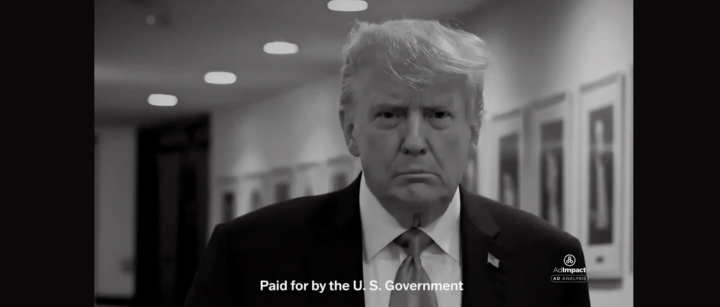
The White House has defended three taxpayer-funded advertisements featuring President Donald Trump by comparing them to ads that were paid for by past presidential administrations. But some legal experts have said the Trump White House commercials are political messages intended to influence the 2026 midterms and may violate U.S. laws, including a prohibition against using federal funds for propaganda.
The White House described its ads as “public service announcements” in a Sept. 25 press release pushing back on criticism. It said, “The announcements are very clearly not campaign ads; President Trump is not on the ballot and there is no call to action. Instead, the announcements are a reminder for Americans to love their country and know why it’s worth defending — at home, at the border, and abroad.”
The release went on to say that “[a]dministrations of both parties have used public service announcements to explain policy and make the case for the nation’s direction,” citing examples of ads from the George W. Bush, Obama and Biden administrations, among others.
A legal expert we consulted did not see a correlation.
“I just think you’re not going to find any comparison at all,” Richard Painter, a corporate law professor and former White House ethics lawyer for George W. Bush, told us in an interview. Painter said the Trump White House ads are “so clearly propaganda,” which generally refers to government communications intended to manipulate or influence public opinion.
John G. Geer, a professor of political science at Vanderbilt University and author of “In Defense of Negativity: Attack Ads in Presidential Campaigns,” also told us, “I just think that the ads are different enough so that I personally don’t buy the argument” that the ads from the Trump administration and recent presidents are all the same. He said his perception is that the Trump White House ads are more political. “We’ll see what the courts say,” he said — if a lawsuit brings the matter to the judiciary.
Later, we’ll go over the cited examples of federally funded ads that were run under Presidents Bush, Barack Obama and Joe Biden.
The first Trump White House message to air includes images of Trump as he says, “Together we will defeat communism, socialism, and Marxism in America. America will never be a communist country.” Viewers repeatedly hear the words “love me,” which are lyrics from a JMSN song of the same name. Near the end of that 30-second spot, Dana White, the UFC CEO, compliments Trump and talks about him “fighting so hard for the country he loves.”
 A screen capture from the 2026 black-and-white White House ad that is almost exactly the same as an ad released by Trump’s 2024 campaign.
The third ad, in black and white, shows Trump walking and staring into the camera as he says in a voiceover, “we will demolish the deep state,” “expel the warmongers from our government,” “drive out the globalists,” and “cast out the communists, Marxists and fascists.” The ad ends with: “We will rout the fake news media, and we will liberate America from these villains once and for all.” The video is almost identical to an ad from Trump’s 2024 presidential campaign.
The second ad, a minute long, features video and audio from Trump’s July 3 speech from a site near Mount Rushmore, as the president says, “We are the freest people on Earth, and by the grace of God, the United States of America is the most successful, most accomplished, most exceptional nation ever to exist in human history.” The ad ends with him saying, “This is only the beginning of the golden age of America.”
All three ads were released on or after Sept. 23 and include a “Paid for by the U.S. Government” disclaimer. The ads have aired on broadcast and/or streaming platforms, including during Sunday political talk shows and college and NFL football games.
“Our tax dollars are hard at work. And, we believe, probably illegally so,” Painter and three other ethics experts wrote in a Sept. 28 piece in the online publication the Contrarian. For the post, Painter was joined in criticizing the Trump White House ads by Norman L. Eisen, former White House special counsel to Obama; Virginia R. Canter, former White House associate counsel to Obama and President Bill Clinton; and Christopher J. Swartz, who worked for the Office of Government Ethics across multiple administrations and was briefly acting chief of the Ethics Law and Policy Branch in 2025, during Trump’s second term.
“These videos are not ‘public service announcements’ as the White House claims,” the authors wrote. “They are clear attempts to boost Republicans’ chances in the impending midterm elections given their sagging poll numbers. The timing, content, and format of the videos all suggest they are covert attempts directed at the success of the Republican party.”
The White House said “Trump is not on the ballot” this November, but the president has told wavering Republican voters to pretend he is. The legal experts also noted in their piece that two of the White House ads highlighting Trump include references to defeating communism or communists, which is what Trump regularly calls democratic socialists running for Congress. (We’ve written that democratic socialists and communists do not have the same political or economic ideology, and democratic socialists make up a small minority of congressional candidates.)
“Even during the height of the McCarthy era and the Cold War, the United States government never came anywhere close to making an ad like this,” the experts said, adding that under the Hatch Act, a federal employee other than the president or vice president “may not use his official authority or influence for the purpose of interfering with or affecting the result of an election.” The statute would apply to other federal employees who participated in making or disseminating the ads, the experts said.
Also, annual appropriations bills passed by Congress have long included language prohibiting taxpayer funds from being used for “publicity or propaganda purposes within the United States.”
A few Republicans have spoken out against the Trump White House ads as well. “I like the message, but it shouldn’t be paid for with taxpayer dollars,” Senate Majority Leader John Thune told reporters about the ads on Sept. 28. The day prior, on CBS’ “Face the Nation,” Sen. John Kennedy of Louisiana said, “I don’t think any public official, including President Trump … should spend public money on private ads for themselves.”
A federal worker who violates the Hatch Act could face penalties such as “removal from federal service, reduction in grade, debarment from federal employment for a period not to exceed 5 years, suspension, reprimand, or a civil penalty not to exceed $1,000,” according to the U.S. Office of General Counsel.
In addition, Citizens for Responsibility and Ethics in Washington has written that the Government Accountability Office previously found that using federal funds for unauthorized publicity or propaganda violates the Antideficiency Act, which, “in severe cases,” could lead to administrative penalties, or a fine of up to $5,000 or up to 2 years in prison.
Painter told us that Congress could also ask to be reimbursed for an improper use of taxpayer funds. The ads combined have cost at least $2.5 million, according to the ad-tracking service AdImpact.
Obama Administration Ads/Outreach
One of the examples the White House cited under Obama sparked controversy, and the Government Accountability Office determined the public outreach campaign had violated federal laws. The other example is similar to ads run under Trump, promoting the open enrollment period for Affordable Care Act insurance plans.
Under Obama, the Environmental Protection Agency in 2014 and 2015 used a public outreach campaign through social media to encourage support for its proposed rule on clean drinking water. The New York Times called it “a campaign that tests the limits of federal lobbying law.” The effort was aimed at ginning up support during a public comment period on the proposed rule, which concerned EPA regulation of water sources.
The EPA argued that it wasn’t violating the Anti-Lobbying Law because its outreach didn’t tell the public to contact or lobby Congress.
But in December 2015, the GAO concluded that the EPA had violated federal laws prohibiting the agency from spending federal dollars for “publicity or propaganda purposes” and prohibiting the use of federal appropriations for “indirect or grassroots lobbying in support of or opposition to pending legislation.”
In particular, the GAO faulted the EPA for using a social media tool that resulted in some messages not identifying the EPA as the source of the information. Instead, to some members of the public, “it appeared that their friend independently shared a message of his or her support for EPA and clean water,” GAO said, calling this “covert propaganda.” (The messages shared through people’s social media accounts said, “Clean water is important to me. I support EPA’s efforts to protect it for my health, my family and my community.”)
GAO said that the violation of grassroots lobbying occurred when the EPA’s blog posts linked to outside groups, whose pages included prompts to contact Congress in support of EPA’s proposed rule.
The Trump White House also pointed to the Obama administration running TV ads about HealthCare.gov, the website people use to sign up for Affordable Care Act health plans, during the open enrollment periods in 2015 and 2016. The ads didn’t feature the president, but rather everyday people talking about how they had signed up for low-cost insurance.
In one spot, run in November 2015, a woman who’s going for a run says that her premium was $22 a month and that signing up was “very easy.” A guy who appears to be going to a university says he got “exactly the kind of coverage I wanted at the price I wanted,” with the words “$57/month” on screen. A woman and her child are shown with the words “$405/month family of 4.” The ad then says that “most people who sign up on HealthCare.gov qualify for financial help to make coverage more affordable.” It ends by encouraging people to “sign up by Dec. 15.” The ad says at the bottom that it is “sponsored by the U.S. Department of Health & Human Services.”
Another example from 2015 similarly says that most people can get financial help with their premiums.
The Obama administration also ran ads in the run up to the 2016 open enrollment period, which began Nov. 1 — meaning that those ads ran shortly before and after that year’s presidential election. One example from November 2016 is similar to the 2015 ads, showing various people and saying that most people signing up “can find plans for $50-$100/mo. with financial help.”
One could argue that Obama, who signed the Affordable Care Act into law in 2010, had a vested political interest in getting people to sign up and having the program succeed. But the Trump administration also has run ads to inform the public about the open enrollment periods. Like the Obama-era ads, these three examples from late 2025 featured people talking about how they easily enrolled in an insurance plan, and the ads said that “4 out of 5 customers can find a health plan for $21 or less per month with financial help.”
Biden Administration Ads
As the Trump administration pointed out, the Biden administration also used taxpayer dollars for an ad campaign using television, digital, radio and print spots to encourage people in early 2021 during the COVID-19 pandemic to get vaccinated.
The Trump press release said the Biden administration “poured hundreds of millions of dollars” into an ad campaign “to drive a nationwide public health message.”
But as the Washington Post story the press release links to explains, the campaign used a $250 million contract that the Trump administration signed with consultancy Fors Marsh the previous year. According to the article, “Officials have said they held the campaign until vaccines were widely available to maximize its impact.”
Ironically, numerous Democrats expressed concern in September 2020 after the Trump administration hired Fors Marsh for a campaign from HHS that sought to “defeat despair, inspire hope and achieve national recovery” amid the pandemic.
In a Sept. 11, 2020, letter to HHS, Democratic Rep. Frank Pallone, then chair of the Energy and Commerce Committee, wrote, “Among other things, the Committee is concerned that HHS may use more than a quarter-billion dollars in taxpayer funds on private communications consultants charged with distorting the facts and misleading the public about the Trump Administration’s failed response to the COVID-19 pandemic.”
A letter from three other Democratic leaders in the Senate similarly stated, “We have grave concerns that, rather than focus on planning and executing a national strategy to contain the coronavirus, the Trump Administration is using a quarter of a billion dollars in taxpayer money to fund what appears to be a political propaganda campaign just two months before a presidential election.”
Under Biden, the “We Can Do This” campaign directed by Fors Marsh sought to appeal to “a group known as the ‘movable middle’ — people who were hesitant but not necessarily opposed to getting vaccinated — with highly customized, science-based communications and messages of empowerment,” according to the consultancy.
The ads featured images of Americans and encouraged people to visit the Centers for Disease Control and Prevention’s website or vaccines.gov for more information.
At the time, Trump was also encouraging people to get vaccinated. At the Conservative Political Action Conference on Feb. 28, 2021, Trump boasted that his administration had helped deliver the vaccine in “record time” and later said, “So, everybody go get your shot.”
“I encourage them to take it,” Trump told Fox News’ Sean Hannity in April 2021.
George W. Bush Administration Ads
The Trump administration also pointed to a controversial $9.5 million ad campaign produced by the George W. Bush administration in 2004 touting the prescription drug benefits in the Medicare Prescription Drug, Improvement, and Modernization Act of 2003.
The TV ad and flyers claimed the law, which passed largely along partisan lines, provided the same Medicare with “more benefits.”
At the time, Democratic Sen. Frank Lautenberg criticized the ad as “a propaganda effort with taxpayer dollars.”
At least one network, CBS, pulled the ad while the General Accounting Office (later renamed the Government Accountability Office) — at the request of Lautenberg and other Democrats — investigated whether it violated prohibitions on federal funds being used for “publicity or propaganda” purposes. Democrats argued the ad was inaccurate and was intended to promote the reelection of Bush that year.
The GAO concluded that while the TV ad and accompanying flyers contained “notable omissions and other weaknesses,” they were “not so partisan as to be unlawful.”
By way of omissions, Anthony H. Gamboa, general counsel of the GAO, said that the ad failed to note that people might be charged $30 for the new drug discount cards “and that savings may vary across covered drugs.” He further criticized the flyer’s indication that beneficiaries would pay a premium of “about $35 a month” for the prescription drug benefit, when in fact that was an estimated average.
“The omissions notwithstanding, we do not find the content of the flyer and its cover letter or the advertisements to be purely partisan in violation of the publicity or propaganda prohibition,” Gamboa wrote.
“This is not to say that the content is totally free of political tone,” he added. “Without a doubt, the future of the Medicare program is the subject of ongoing and highly spirited discussion and debate at the national level. In this context, the references in the flyer and print and television advertisements to ‘Same Medicare. More Benefits’ and ‘preserve and strengthen’ may appear to some as an attempt to persuade the public to the Administration’s point of view regarding the newly enacted benefit.”
Nonetheless, he wrote, the “publicity or propaganda prohibition, however, does not bar materials that may have some political content or express support for a particular view. … The content of these publications does not constitute a purely partisan message.”
Two months later, however, GAO said during the course of its investigation, “we learned that the Centers for Medicare & Medicaid Services … had prepared as part of this campaign video news releases or VNRs, including a news story for television broadcast, to provide information to the television medium.” Because the prepackaged stories did not note they had been prepared by CMS, the GAO concluded their use ”violated the restriction on using appropriated funds for publicity or propaganda purposes.”
The White House further noted that in 2002, the Bush administration paid more than $3 million for two Super Bowl ads that said buying illegal drugs could help support terrorists; it also created anti-drug YouTube ads in 2006.
Editor’s note: FactCheck.org does not accept advertising. We rely on grants and individual donations from people like you. Please consider a donation. Credit card donations may be made through our “Donate” page. If you prefer to give by check, send to: FactCheck.org, Annenberg Public Policy Center, P.O. Box 58100, Philadelphia, PA 19102.
The post Experts Question the White House’s Defense of Taxpayer-Funded Ads appeared first on FactCheck.org.
-
‘You make me want to throw up’: Republicans attack ex-special counsel Jack Smith at Senate hearing
www.theguardian.comGOP senators lash out on Smith, who led criminal cases against Trump, with invective and inaccurate information
Jack Smith, the former special counsel who led two criminal cases against Donald Trump in 2023, faced attacks from Republicans in a wide-ranging hearing on Tuesday that included a basketball mix-up, a reference to the tooth fairy and accusations of perjury.
In the Senate judiciary committee hearing on Tuesday, the Republican senator Eric Schmitt, of Missouri, raised perjury allegations against Smith, seemingly over a mix-up about the Atlanta Hawks and University of Iowa Hawkeyes basketball teams.
Continue reading...